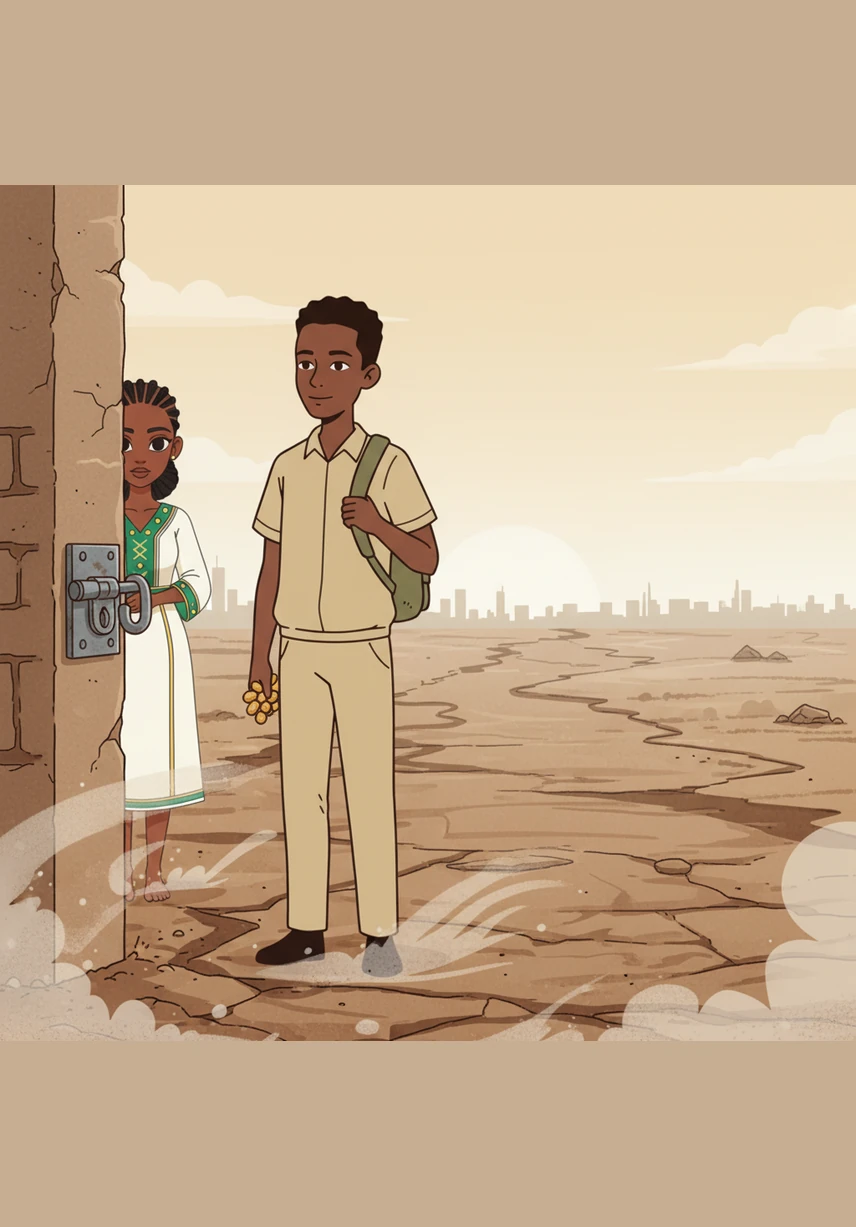
A poignant journey through the bustling streets of Addis Ababa, where two teenagers navigate the delicate balance between ancestral traditions and their own modern dreams. This beautifully illustrated tale captures the essence of hope, friendship, and the search for identity in a rapidly changing city.
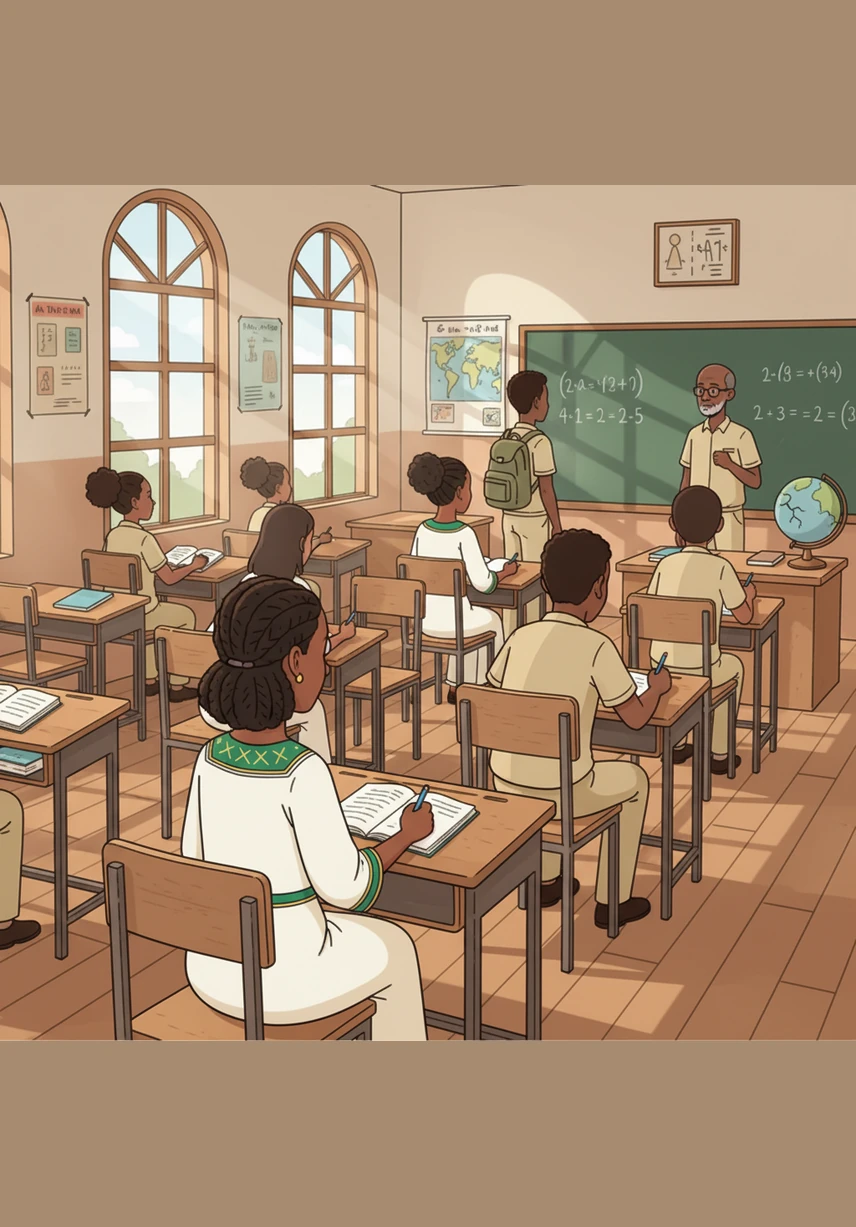
The afternoon sun filters through the dusty windows of the Grade 11 classroom in the Arada district. While the teacher’s voice drones on about history, Dawit focuses on the rhythmic creak of the ceiling fan and sketches his father’s old blue-and-white Lada taxi in the margins of his notebook.
When the final bell rings, the school courtyard transforms into a surging sea of beige uniforms and excited chatter. Dawit weaves through the crowd, his eyes searching for Selam amidst the chaos of students rushing toward the street side kiosks for a quick snack of kolo.
He finds Selam near the heavy school gate, her braids slightly loosened after a long morning of difficult exams. She looks exhausted, her backpack sagging as they step out into the hum of the city's constant traffic and the low-frequency vibration of the taxis.
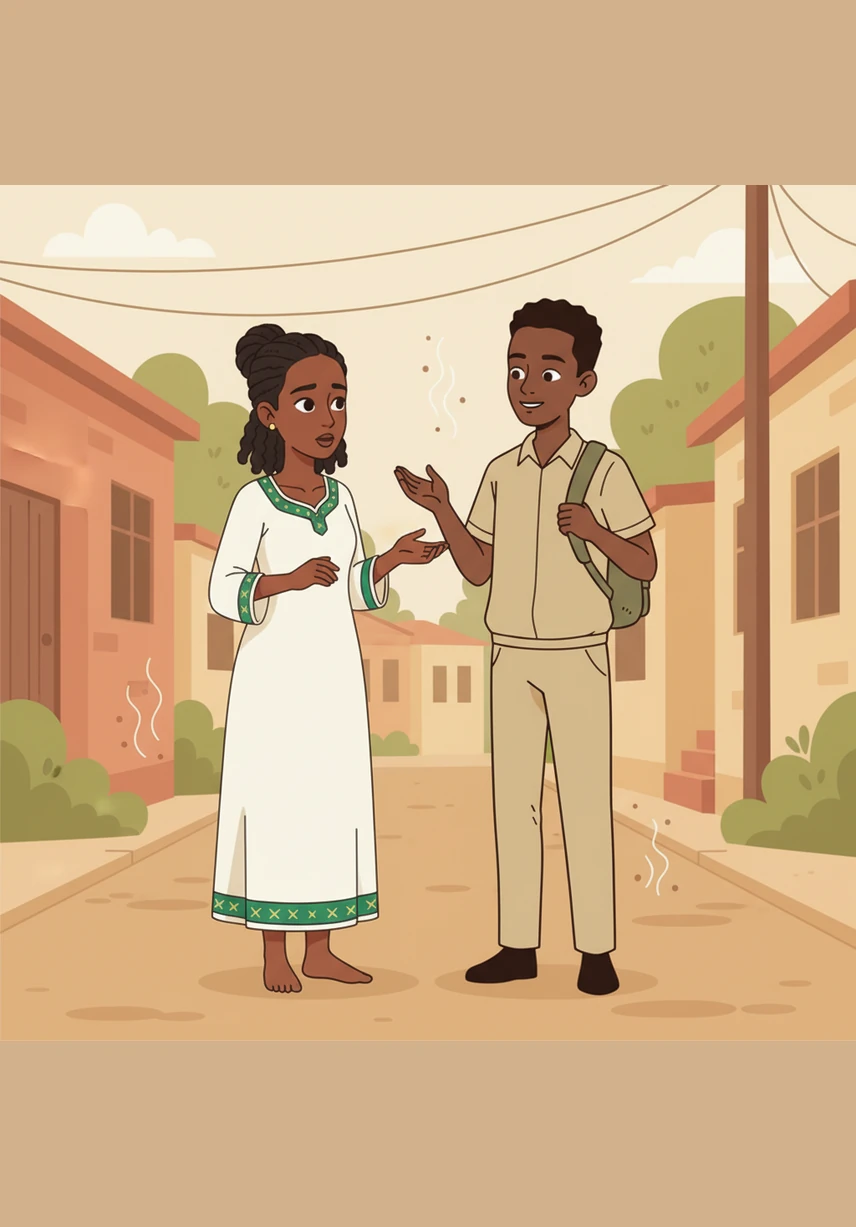
As they begin their walk, Selam explains that she cannot go to the café because her aunt needs help with a traditional coffee ceremony for the neighbors. The scent of roasting beans already seems to linger in the air, a reminder of the domestic duties waiting for her at home.
Dawit suggests bringing her chemistry books so they can study complex formulas while the beans turn dark and fragrant over the coals. Selam smiles sadly, noting that her aunt believes scientific equations are a distraction from the soul of a neighborhood conversation.
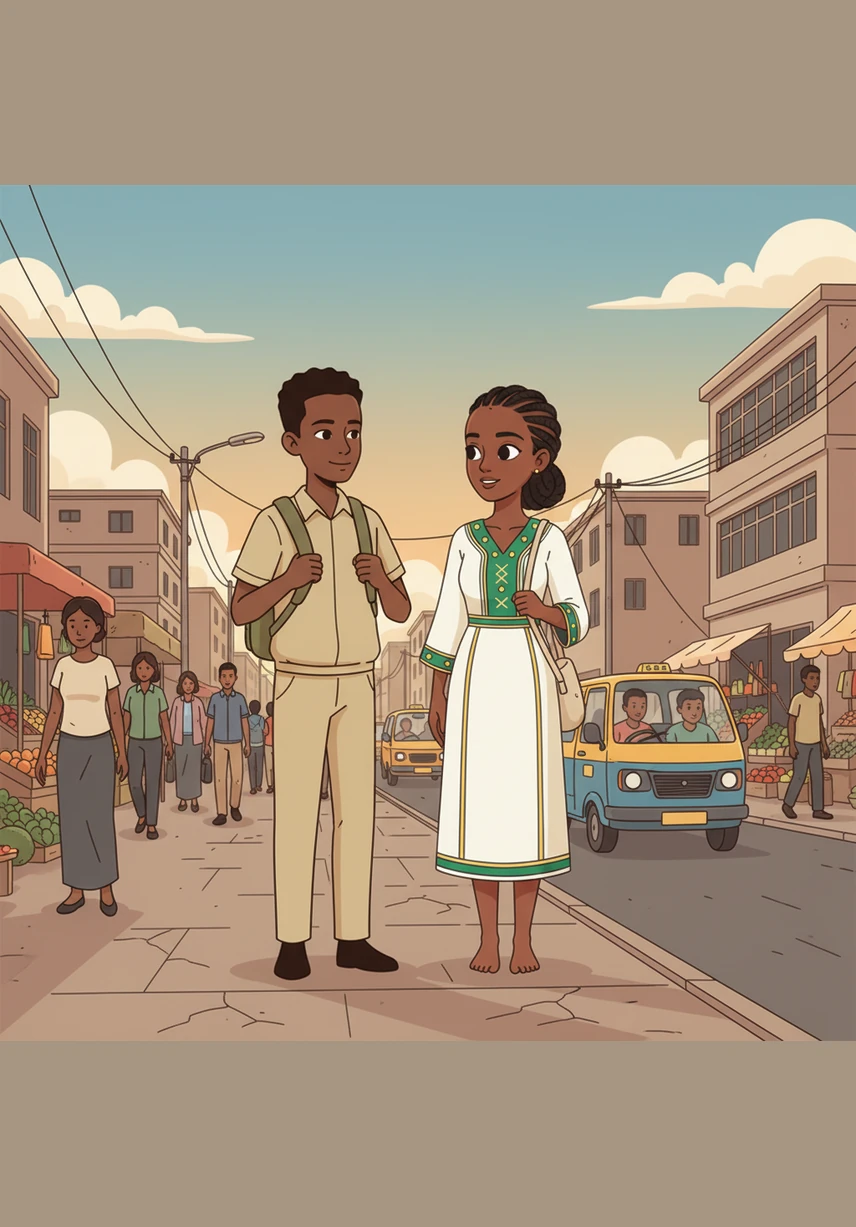
They trek toward the neighborhood of Megenagna, the afternoon sun bathing the cracked sidewalks in a hazy, golden glow. Around them, the city is a vibrant tapestry of street vendors shouting the prices of avocados and the constant motion of a city in flux.
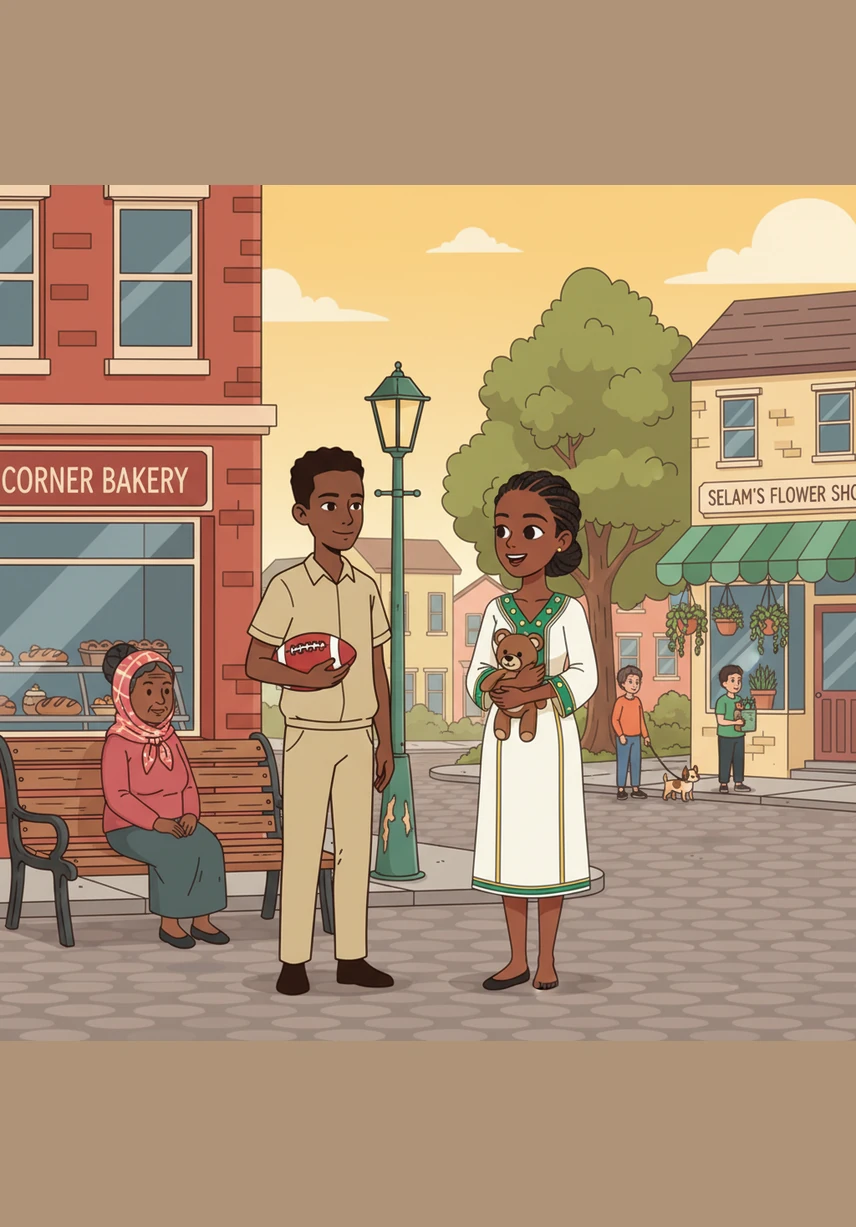
At a familiar corner, they pass Gashe’s shop, where the elderly owner is in the middle of a heated argument with a delivery driver over a stack of water crates. The scene is a typical snapshot of the neighborhood's daily rhythm, loud, spirited, and full of life.
Dawit pauses and asks Selam if she ever feels like they are stuck on a bridge between their parents' rigid expectations and the changing world outside. He wonders aloud when the 'real' Addis Ababa will finally begin for them, or if they are just spectators.
They reach Selam’s home, where the blue paint on the corrugated metal gate is peeling away in long, thin strips. She looks at him with a softening expression, reminding him that even if they are standing on a bridge, the view of the distant mountains is still beautiful.
After Selam hands him a handful of dabo kolo and disappears behind the heavy metallic latch, Dawit walks the rest of the way alone. The dry wind kicks up dust around his shoes as he wonders if he will ever be the one driving out of the city toward a new horizon.
مطالبة التوليد(سجّل الدخول لرؤية المطالبة الكاملة)
The air in the Arada district was thick with the scent of roasting coffee and the low-frequency hum of the city’s blue-and-white taxis. At the back of the Grade 11 classroom, Dawit was barely listening to the teacher's lecture on history. Instead, he was focused on the rhythm of the ceiling fan, which creaked like an old man’s knees with every rotation. He spent the hour sketching a portrait of his father’s old Lada taxi in the margins of his notebook, wondering if it would ever pass its next inspection. Most of the kids in his row were just waiting for the lunch bell so they could sprint to the kiosks for kolo or a greasy sambusa. When the bell finally signaled the end of the shift, the courtyard became a sea of beige uniforms. Dawit caught up with Selam near the school gate, her braids slightly frayed from a long morning of exams. “Are you going to the café today?” he asked, adjusting the strap of his worn backpack. Selam shook her head, her eyes tired. “I have to help my aunt with the coffee ceremony for the neighbors. She’s been complaining about her back again.” “Bring the books with you,” Dawit suggested. “I can help you with the chemistry problems while you roast the beans.” “My aunt doesn’t think ‘formulas’ belong in a living room, Dawit. She thinks they’re a distraction from the conversation.” She sighed, looking toward the bustling street where a street vendor was shouting the price of avocados. “Maybe tomorrow. If I don't fall asleep standing up.” They walked together toward the neighborhood of Megenagna. The afternoon sun turned the dusty sidewalks into a hazy gold. They passed the corner shop where the owner, a man everyone called 'Gashe,' was arguing with a delivery driver over a crate of bottled water. “Do you ever feel like we’re just stuck in the middle of a bridge?” Dawit asked suddenly. “What bridge?” “Between what our parents want and whatever is actually happening out there. Like we’re just waiting for the 'real' Addis to start for us.” Selam stopped in front of her compound's corrugated metal gate, the blue paint peeling in long strips. She looked at him, her expression softening for just a second. “Every day,” she said quietly. “But the bridge has a good view of the mountains, at least.” She reached into her pocket, pulled out a small handful of dabo kolo, and dropped it into his hand. “Eat. You look like you’re fading away. See you tomorrow.” Dawit watched the gate click shut, the heavy latch making a sharp, metallic sound. He walked the rest of the way home alone, the dry wind kicking up dust around his shoes, wondering if he’d ever be the one driving out of the city or if he was just another character in a story that never quite gets to the ending.