Join young Leo on an engineering adventure as he discovers how simple machines can do incredible work! From seesaws to wheelbarrows, this beautifully illustrated guide makes the complex science of levers easy and fun for every young inventor. Perfect for students looking to master the physics of the world around them.
Leo stands in front of a massive, heavy boulder that is blocking the entrance to his secret forest workshop. He pushes and pulls with all his strength, but the stubborn rock refuses to move even a single inch.
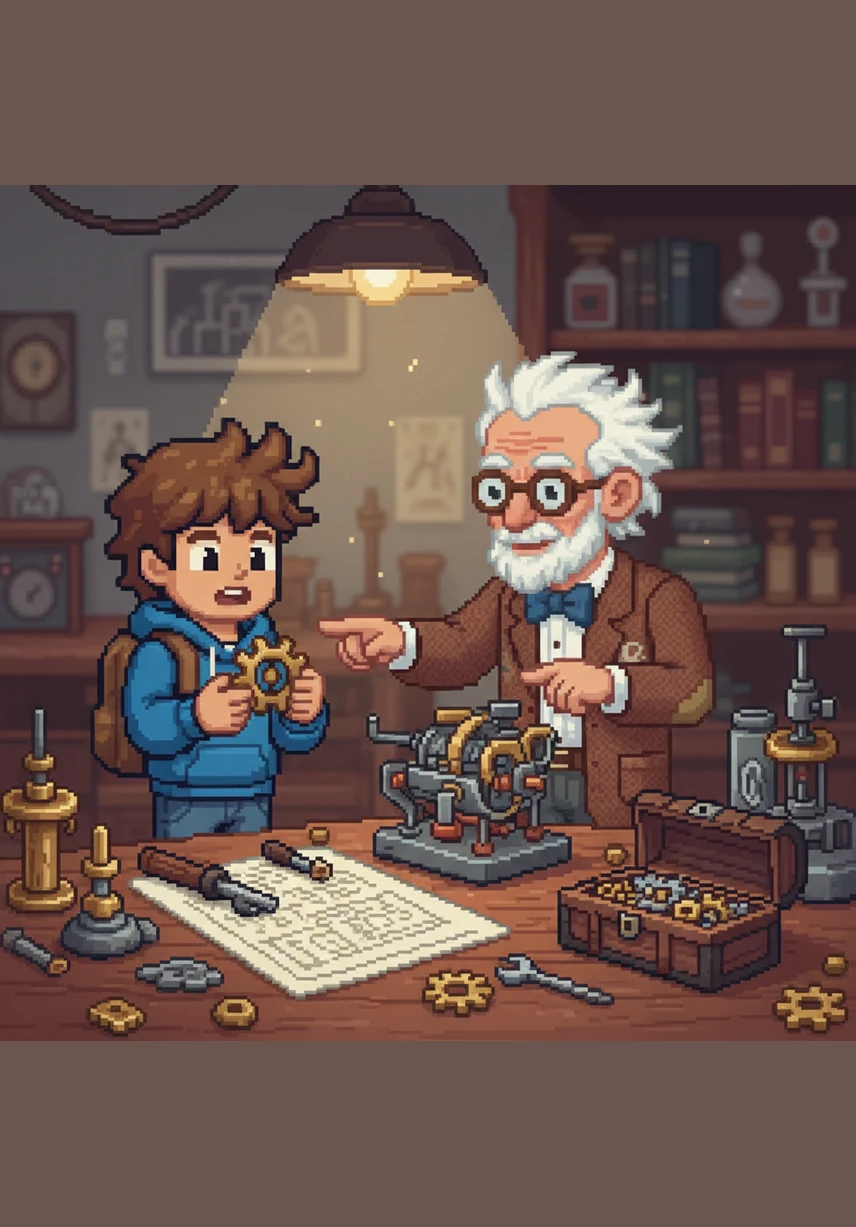
Suddenly, Professor Pivot appears with a long wooden beam and explains that Leo needs a mechanical system to help him. He introduces the concept of a lever, a simple machine that uses a pivot point to multiply human force.
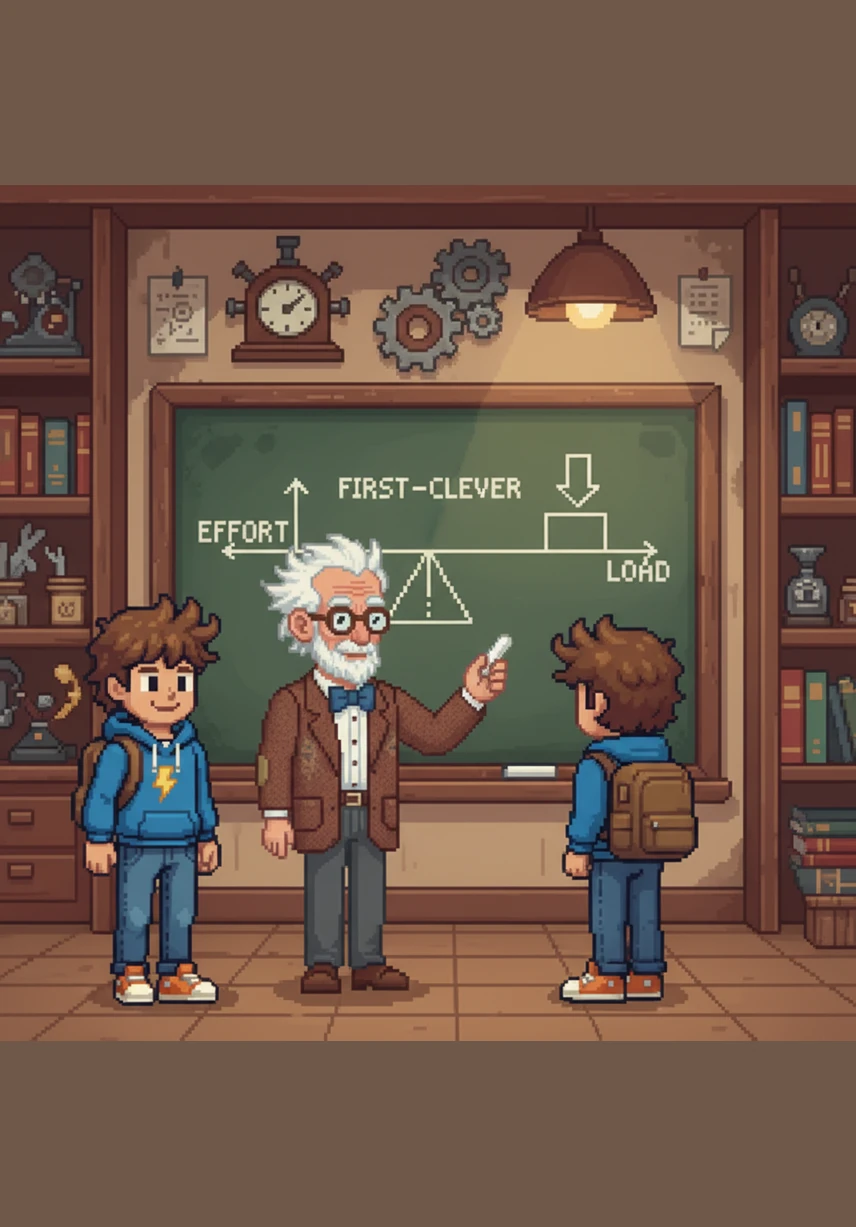
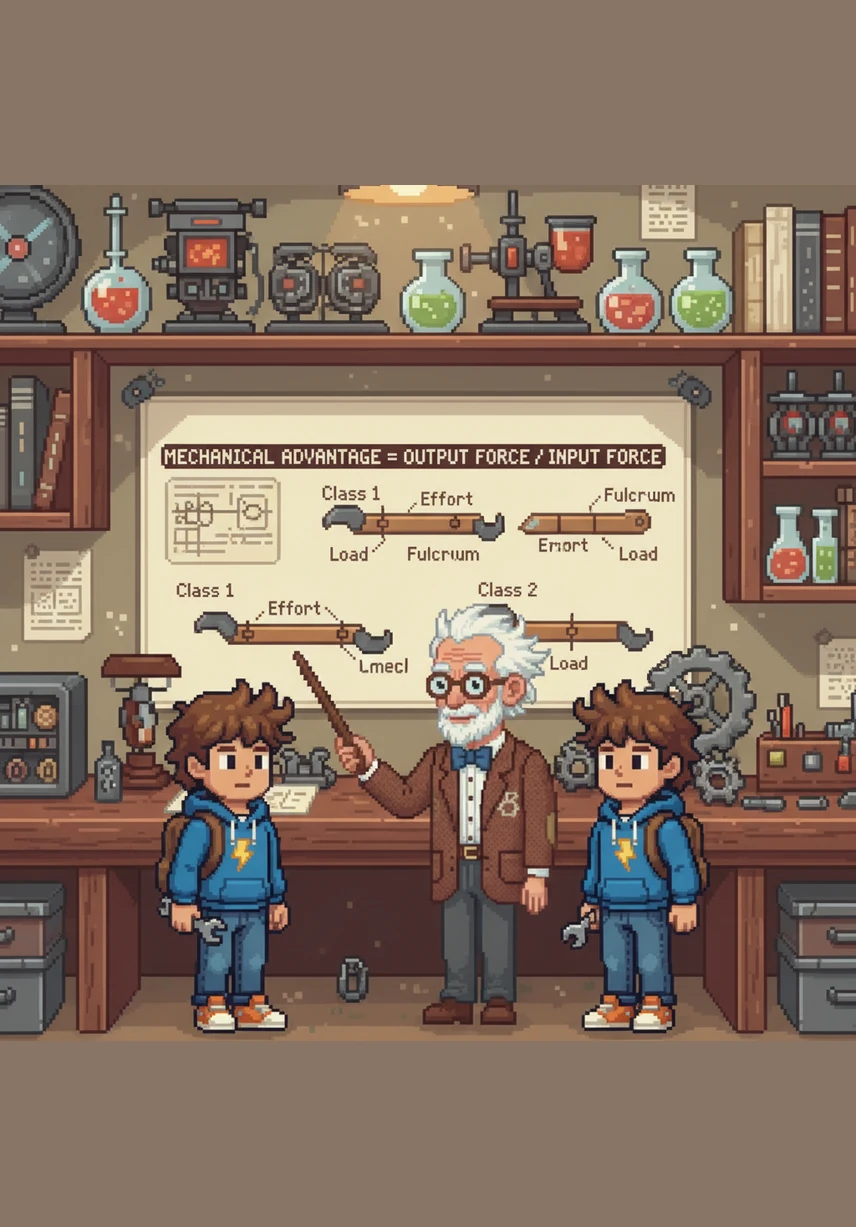
The Professor draws a clear diagram of a First-class lever, where the fulcrum is positioned exactly between the effort and the load. He explains that by moving the fulcrum closer to the load, Leo can gain a significant mechanical advantage.
Leo finds a sturdy metal crowbar and wedges it under the boulder, using a smaller stone as his fulcrum. With the fulcrum in the middle, he pushes down on the long end, and the massive boulder easily flips over and out of the way.
Next, they need to transport a pile of heavy bricks, so the Professor illustrates a Second-class lever. In this diagram, the load is placed in the center, with the fulcrum at one end and the effort applied at the opposite end.
Leo loads the bricks into a bright yellow wheelbarrow, which serves as a perfect real-life Second-class lever. The wheel acts as the fulcrum while Leo lifts the handles, making the heavy load of bricks feel light enough to move across the grass.
To pick up a tiny, delicate screw he dropped in the dirt, the Professor shows Leo a diagram of a Third-class lever. This time, the effort is applied in the middle, while the fulcrum is at one end and the load is at the very tip.
Leo uses a pair of long tweezers to carefully retrieve the screw, realizing that his own arm and the tweezers are both Third-class levers. Although they require more effort to use, they provide the precision and speed needed for small, careful tasks.
The Professor explains that the goal of every lever is to achieve Mechanical Advantage, which is the ratio of the output force to the input force. By understanding these three classes, Leo can now choose the right tool for any job in his workshop.
With the boulder gone and the bricks moved, Leo stands proudly in his completed forest workshop surrounded by his tools. He realizes that science isn't just in books; it is a powerful way to master the physical world using the magic of simple machines.
Generation Prompt(Sign in to view the full prompt)
You are required to create a narrative artefact in the form of a storybook or comic strip to assist learners in developing a clearer understanding of levers and the three types of levers. Note: Use digital tools such as Book Creator https://bookcreator.com/ [Accessed 26 January 2026], and Canva https://www.canva.com/[Accessed 26 January 2026]. Your narrative artefact must include the following: A labelled diagram of each of the three classes of levers (First-class, Second-class, and Third-class). An explanation of the lever as a mechanical system using key principles from research and credible sources such as Fulcrum, Effort, Load, Force and Mechanical Advantage. Examples of each type of lever in daily life, shown through your story characters using them in real-life contexts. A short story or narrative using the audio element that connects these diagrams and explanations, making the concept of mechanical systems more engaging and easier to understand for Grade 7 learners.