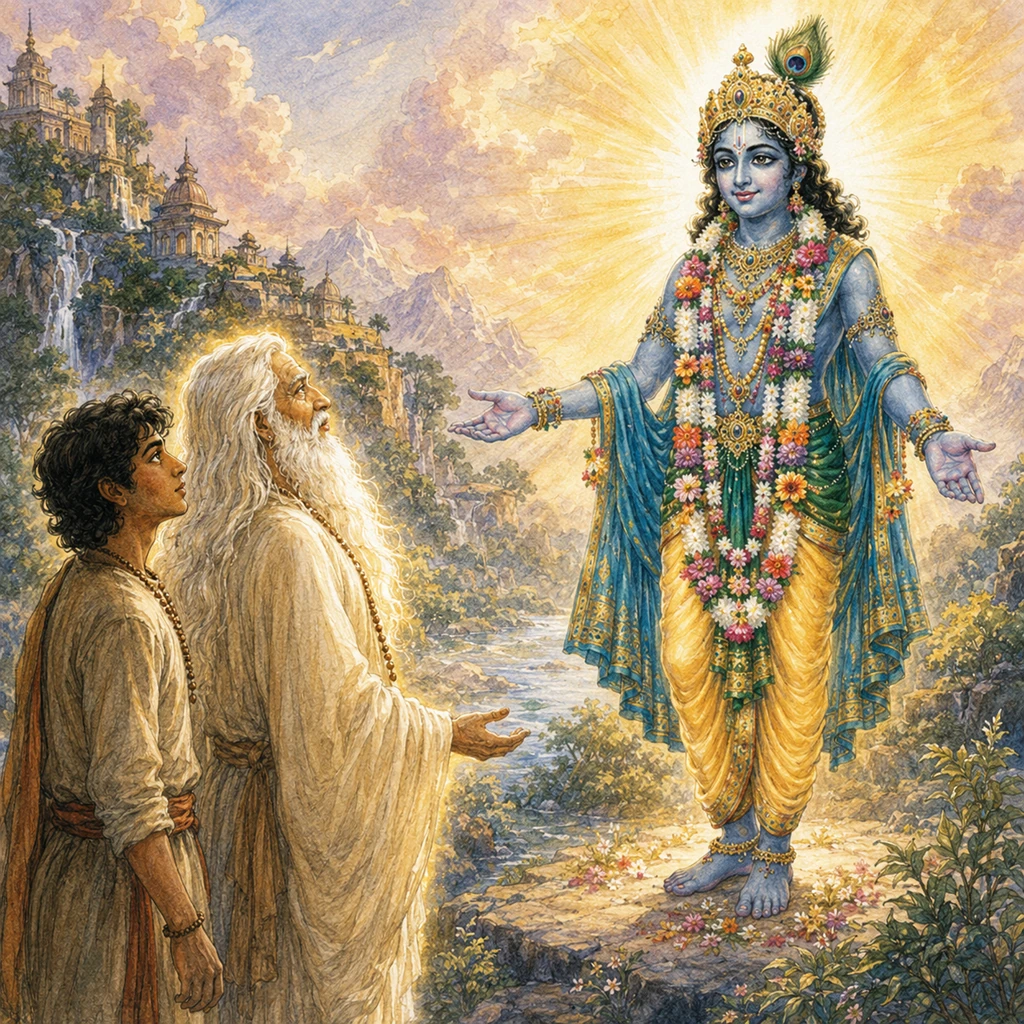
Witness the epic origin story of the world’s most beloved hymn in this grand mythological journey. Follow Tulsidas from a lonely childhood to a divine encounter with Lord Hanuman, where earthly pain transforms into celestial poetry. A cinematic tale of devotion, destiny, and the spiritual awakening that changed the world forever.
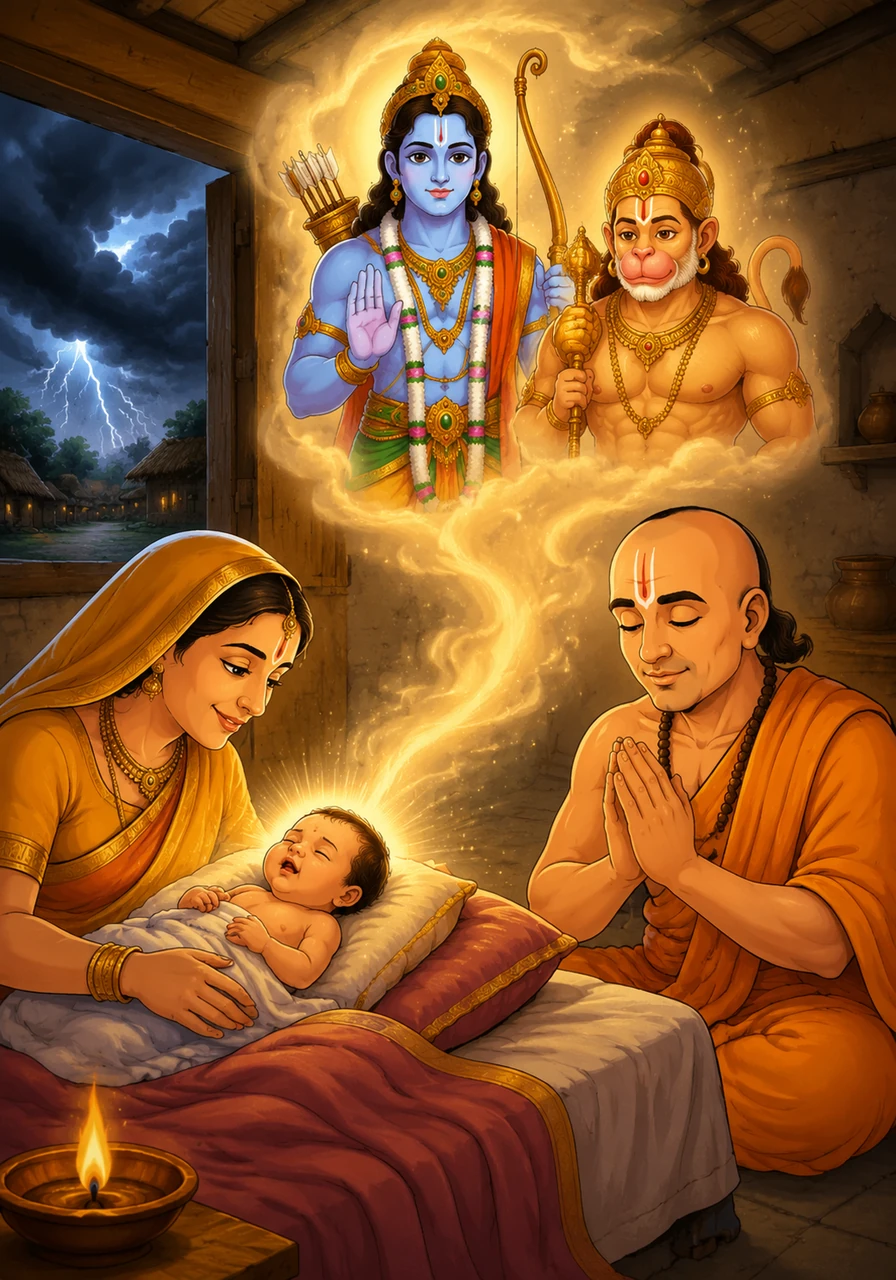
Under a swirling, tempestuous sky in an ancient village, a child is born not to a life of ease, but to a divine purpose. As the first breath leaves his lungs, the soft vibration of the name Ram echoes through the room, signaling the arrival of a soul chosen by the heavens.
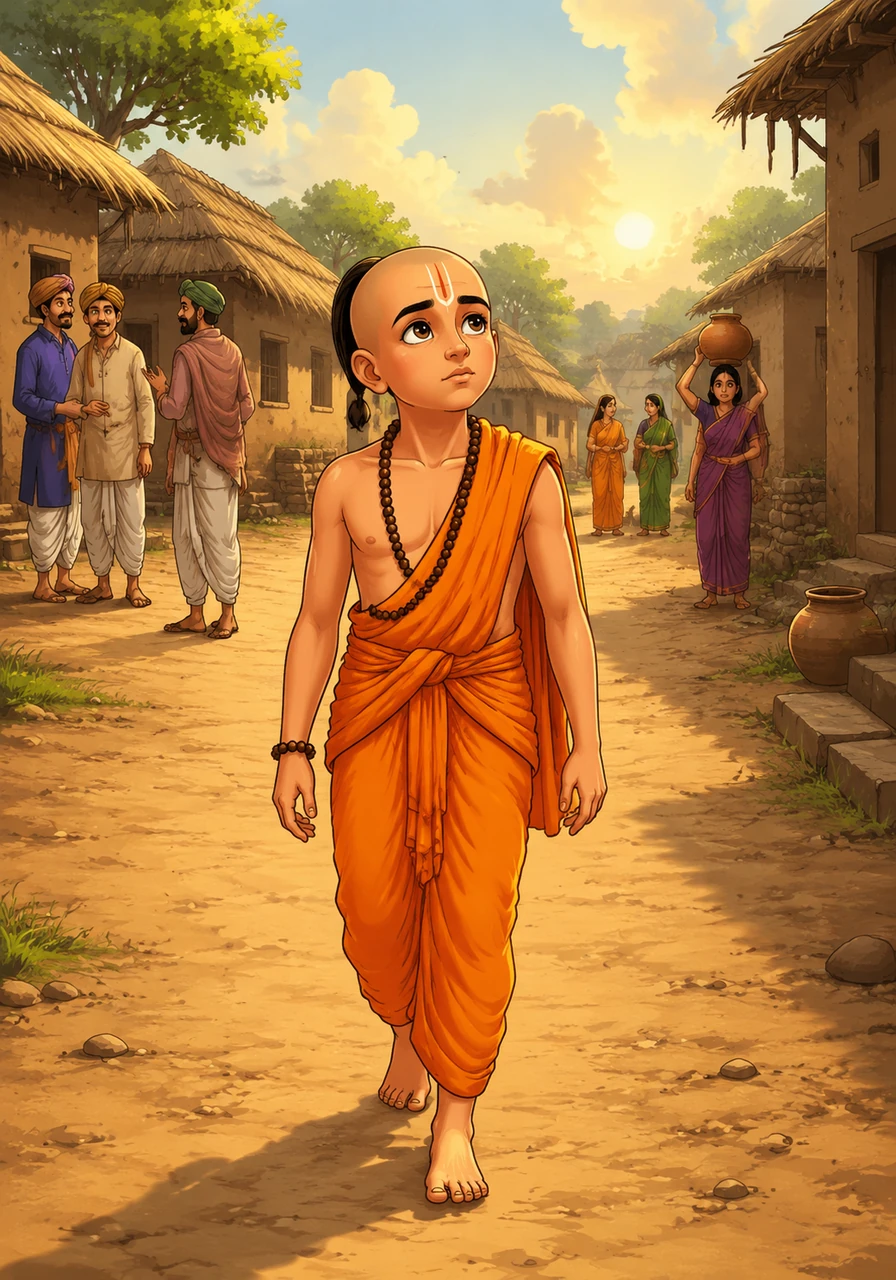
The young boy, known as Rambola, wanders through the dusty streets of his village, a solitary figure amidst a world that feels distant and strange. He seeks a connection that the earth cannot provide, his eyes always searching the horizon for a light only he can sense.
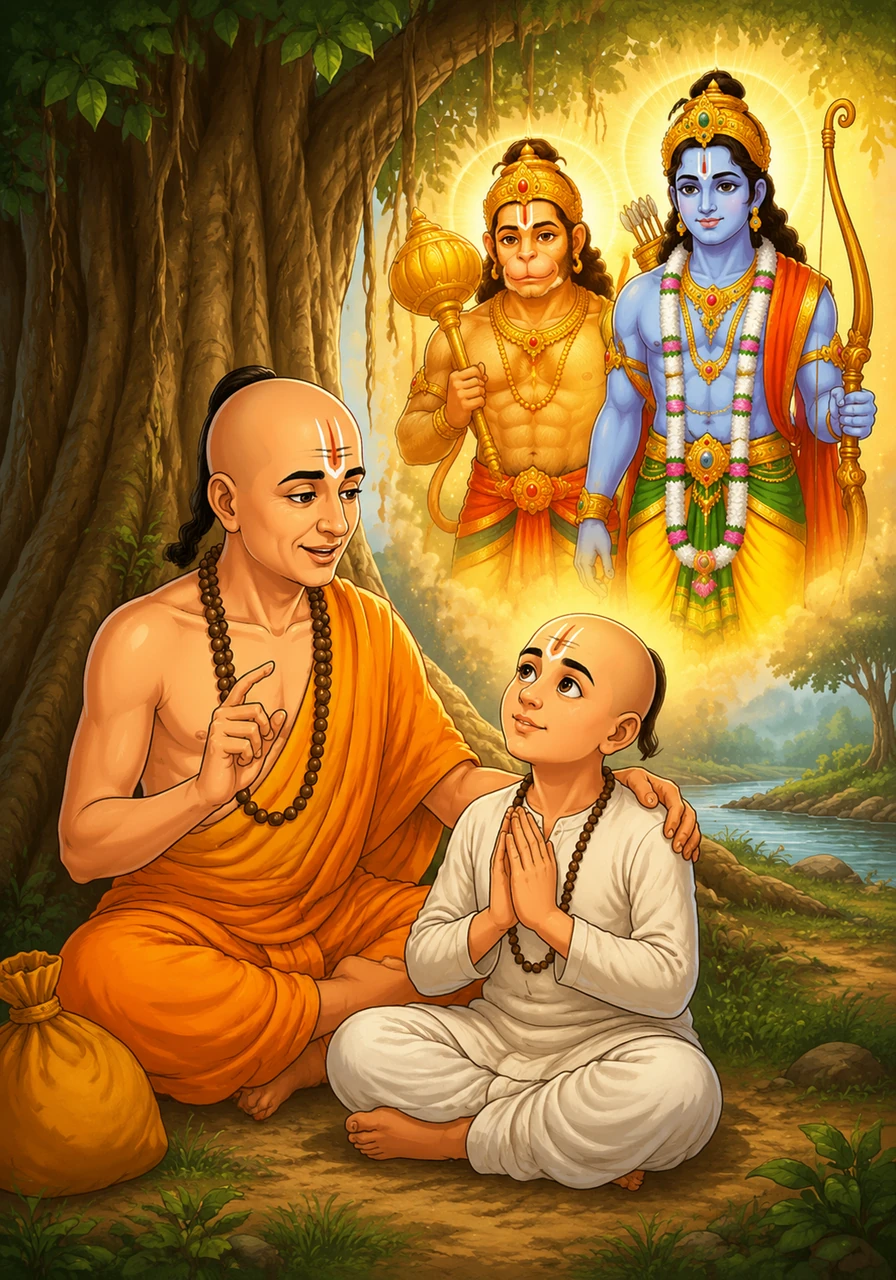
Beneath the sprawling branches of a sacred tree, the venerable Guru Narharidas places a steadying hand on the boy’s shoulder. In this moment of grace, the darkness of loneliness begins to fade as the Guru whispers the ancient stories of the Lord, igniting a flicker of eternal devotion.
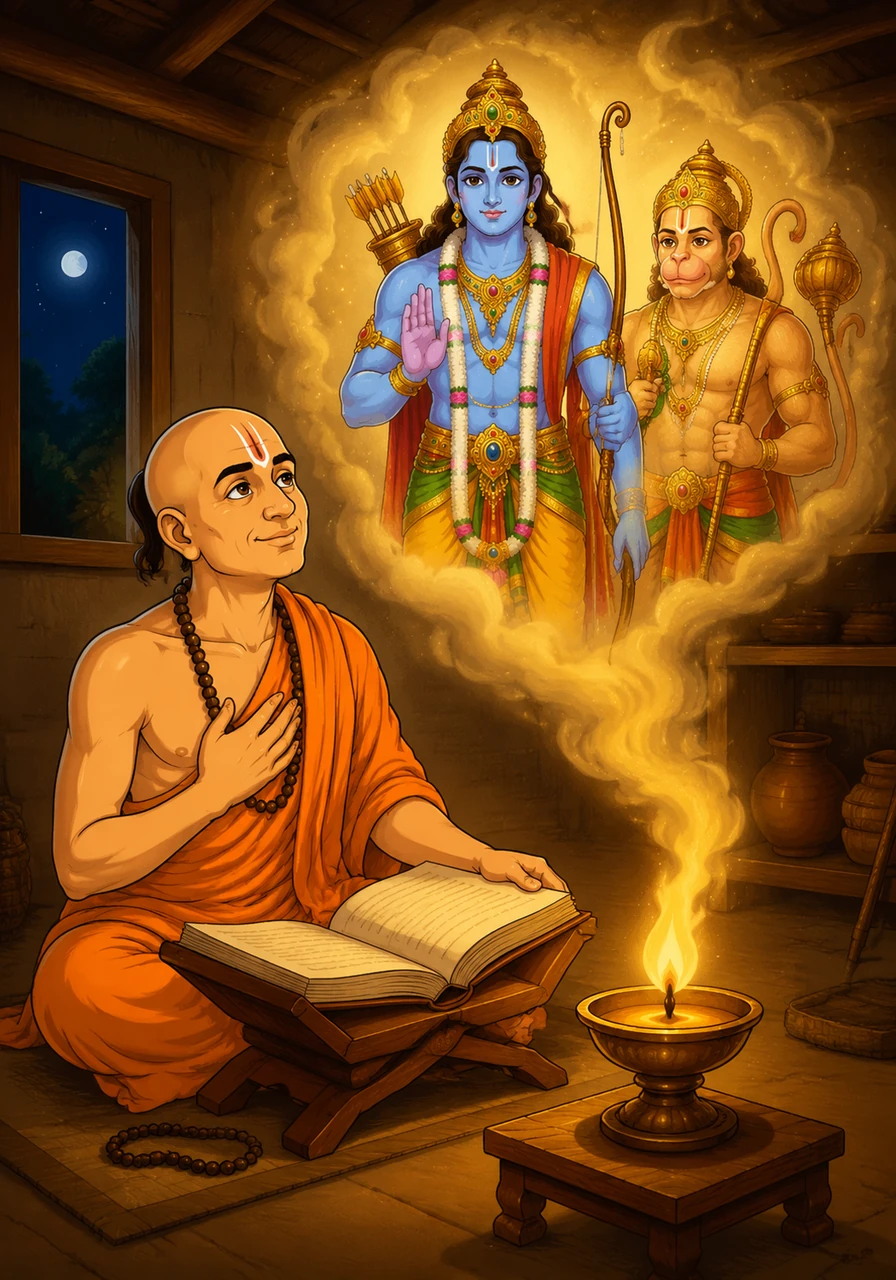
Deep within the quiet sanctuary of the ashram, Rambola spends his nights by the flickering glow of a single oil lamp, lost in the sacred verses of the Ramayana. In the dancing flame, he sees the golden reflection of Lord Ram, a vision that begins to consume his every thought and heartbeat.
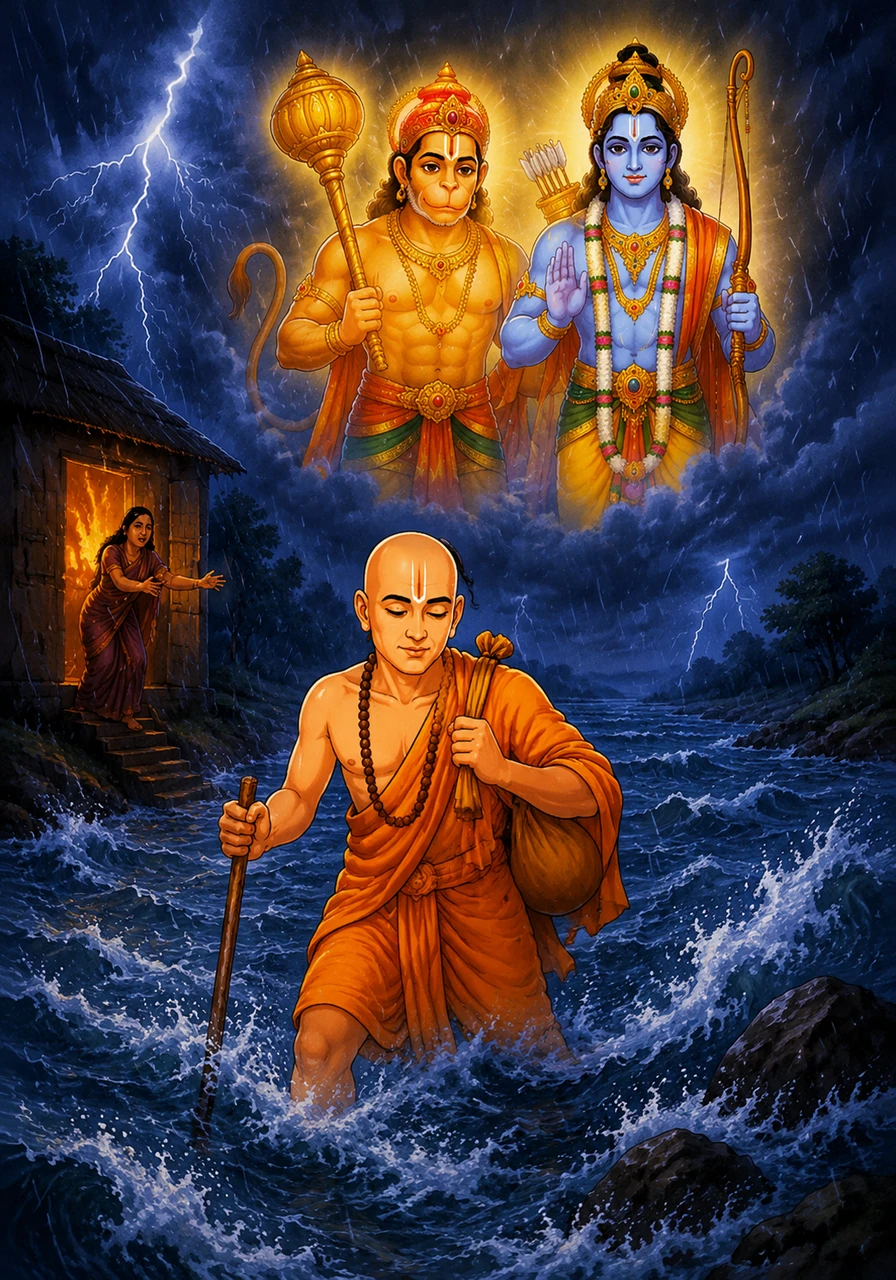
On a night of crashing thunder and torrential rain, a profound realization shatters the chains of earthly attachment. Tulsidas crosses a raging river, leaving behind his former life and worldly desires to surrender completely to the divine calling that pulls at his soul.
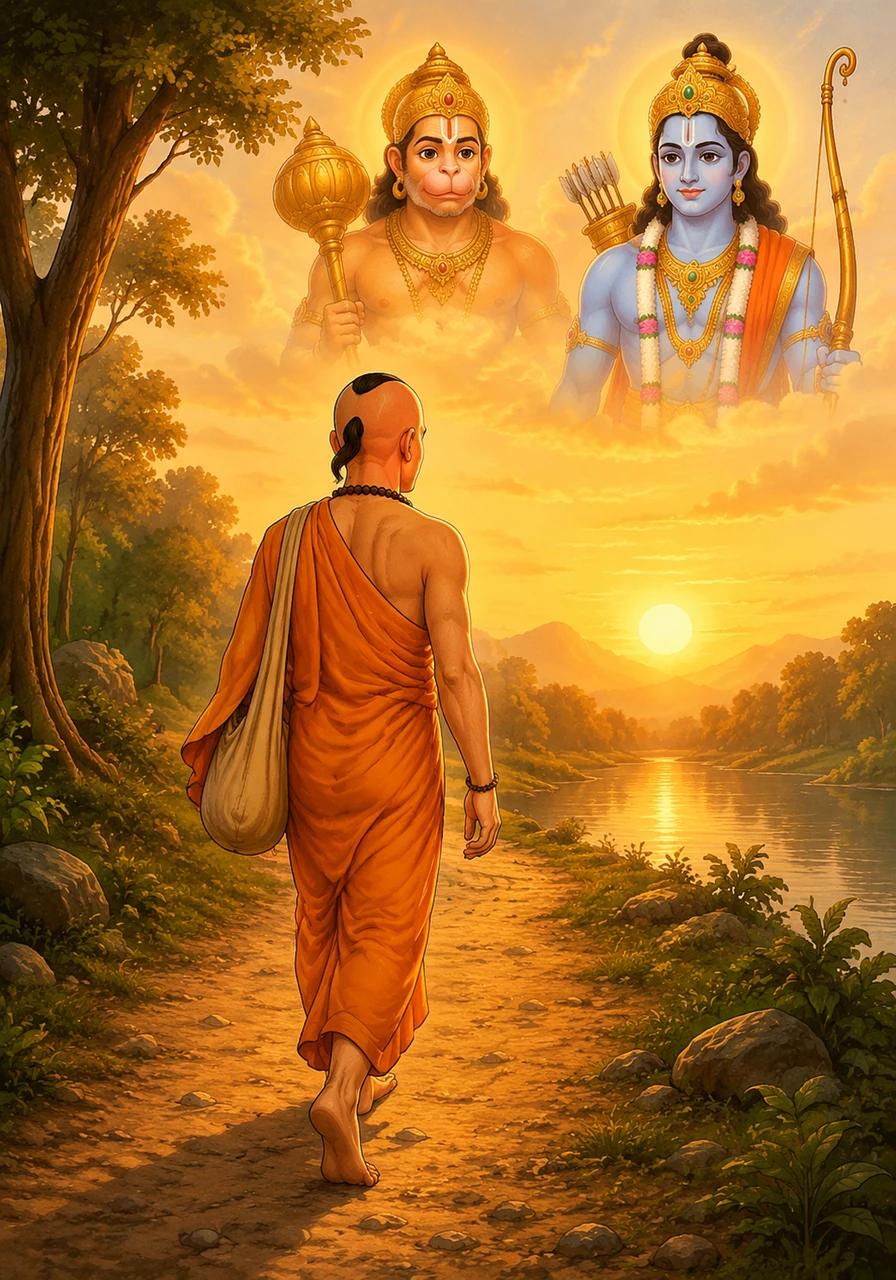
Draped in simple saffron robes, Tulsidas walks alone toward the rising sun, his face etched with a peace that surpasses human understanding. He has become a wanderer of the spirit, his footsteps marking a path of total renunciation as he seeks the one true master of his heart.
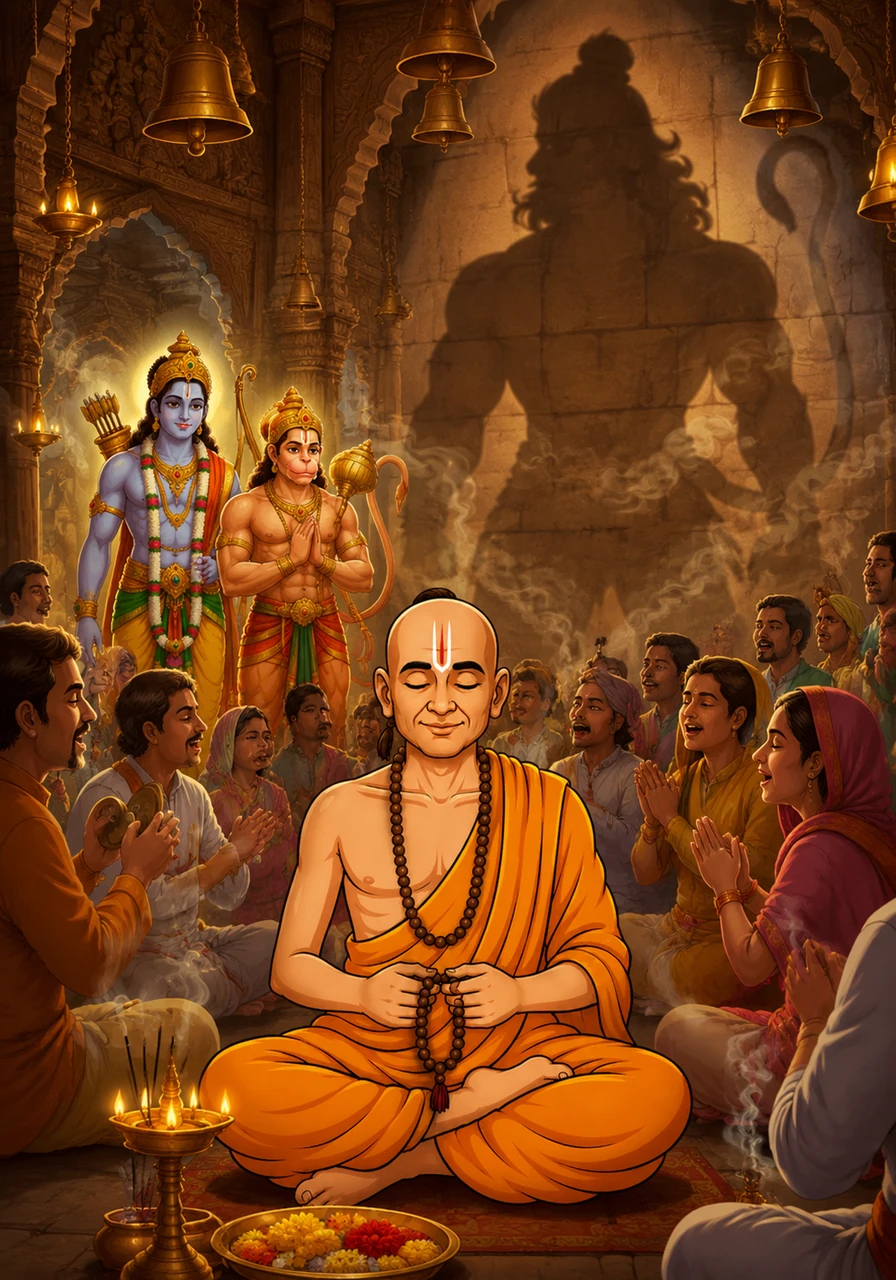
While chanting the holy name in a crowded temple, Tulsidas feels a presence that is both immense and hidden. In the swirling incense smoke and the ring of temple bells, a massive, muscular shadow looms against the stone walls—a silent protector watching over the faithful devotee.
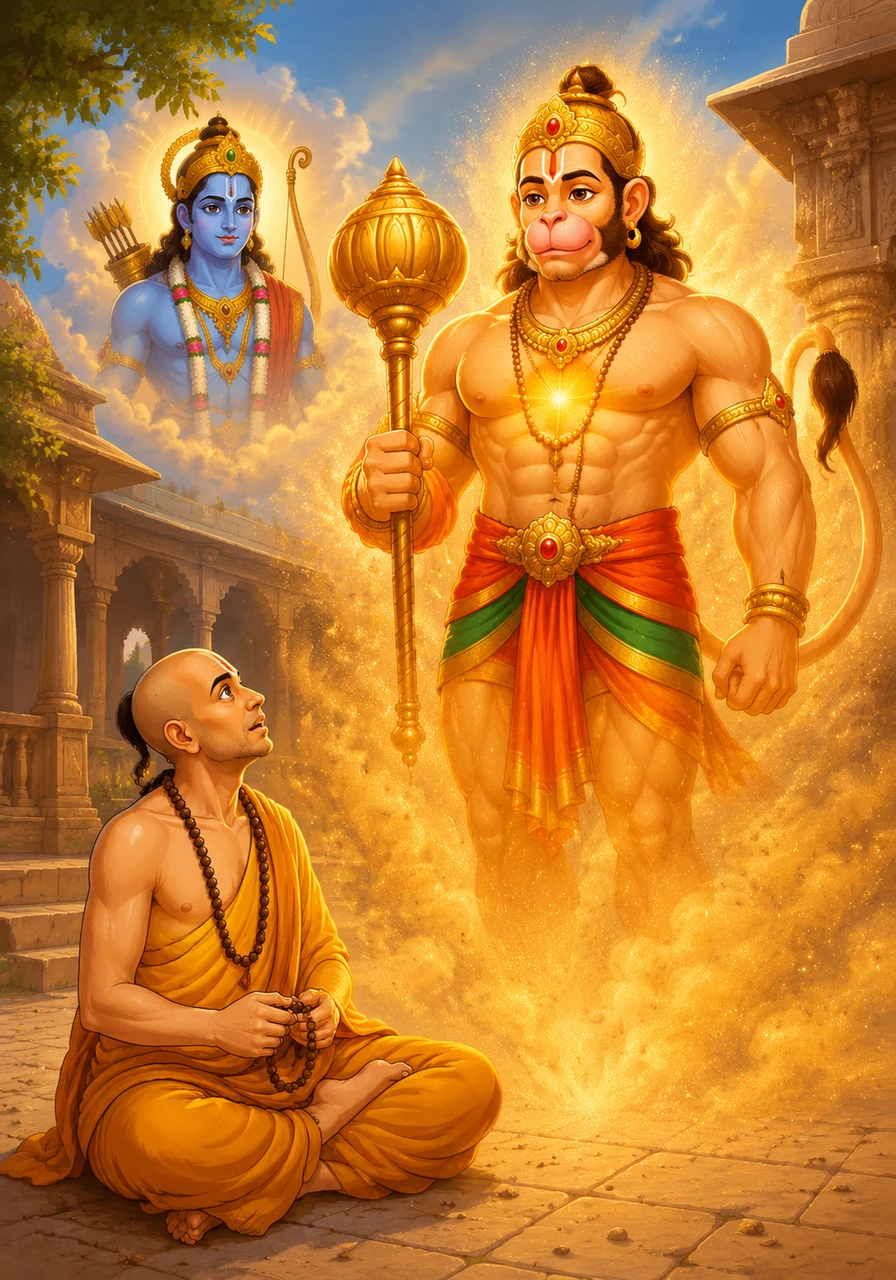
The air grows thick with spiritual energy as a majestic figure slowly emerges from the golden dust of the temple courtyard. Tulsidas gazes up in awe at the calm, divine face of Lord Hanuman, whose very presence radiates a strength that could move mountains and a devotion that knows no bounds.
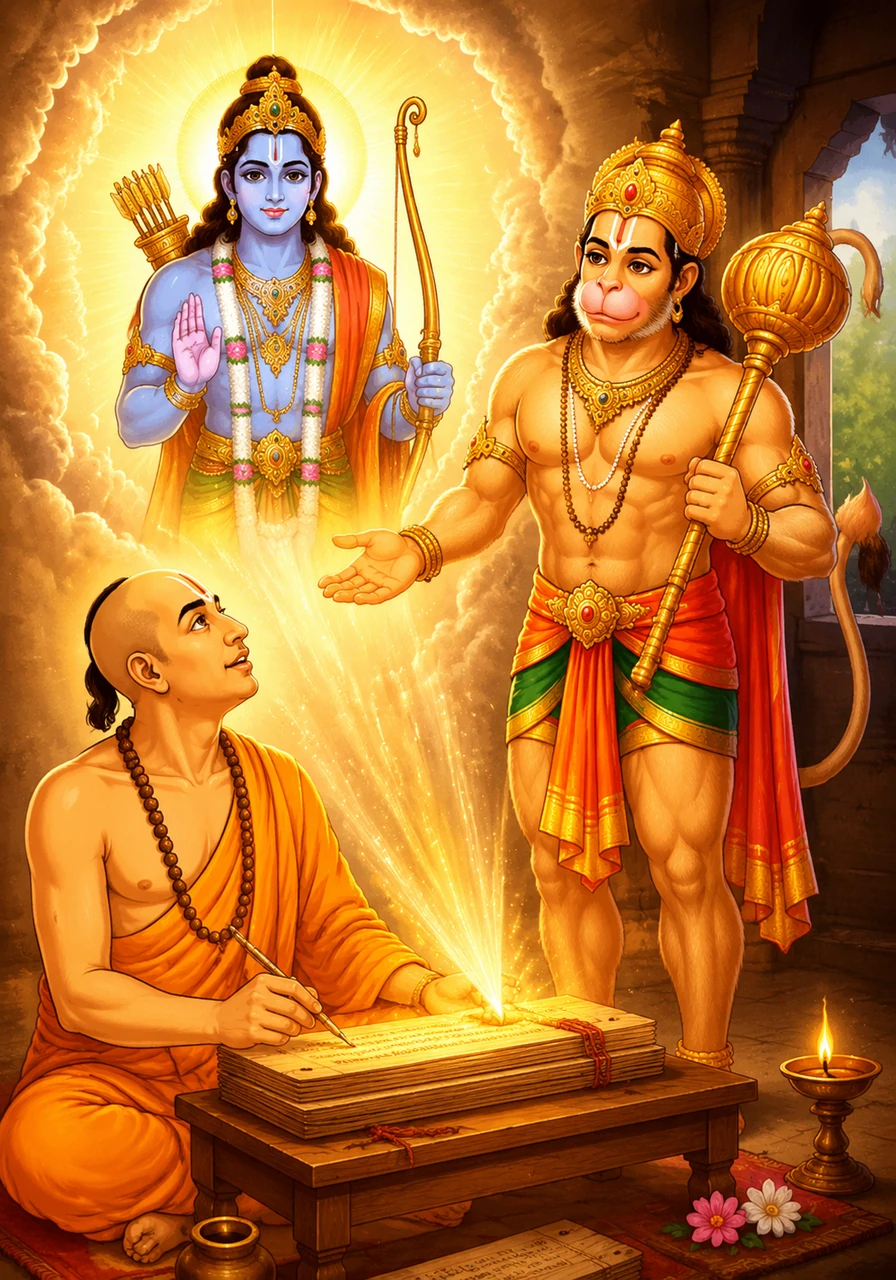
With a gesture of supreme grace, Hanuman grants Tulsidas a celestial vision of Shri Ram, illuminating the sage's inner world with a blinding, holy light. As the vision unfolds, golden ink begins to appear spontaneously on the palm-leaf manuscript before him, as if the heavens themselves are writing through his hands.
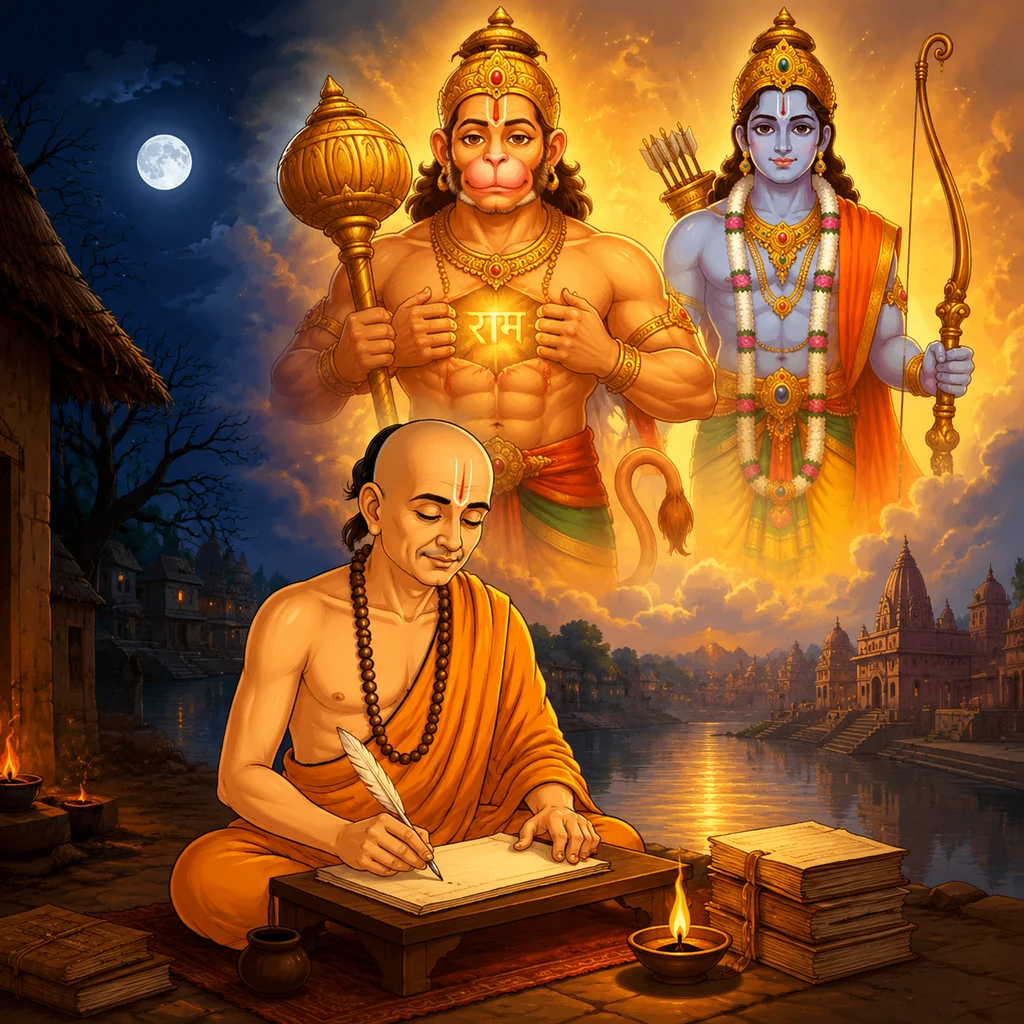
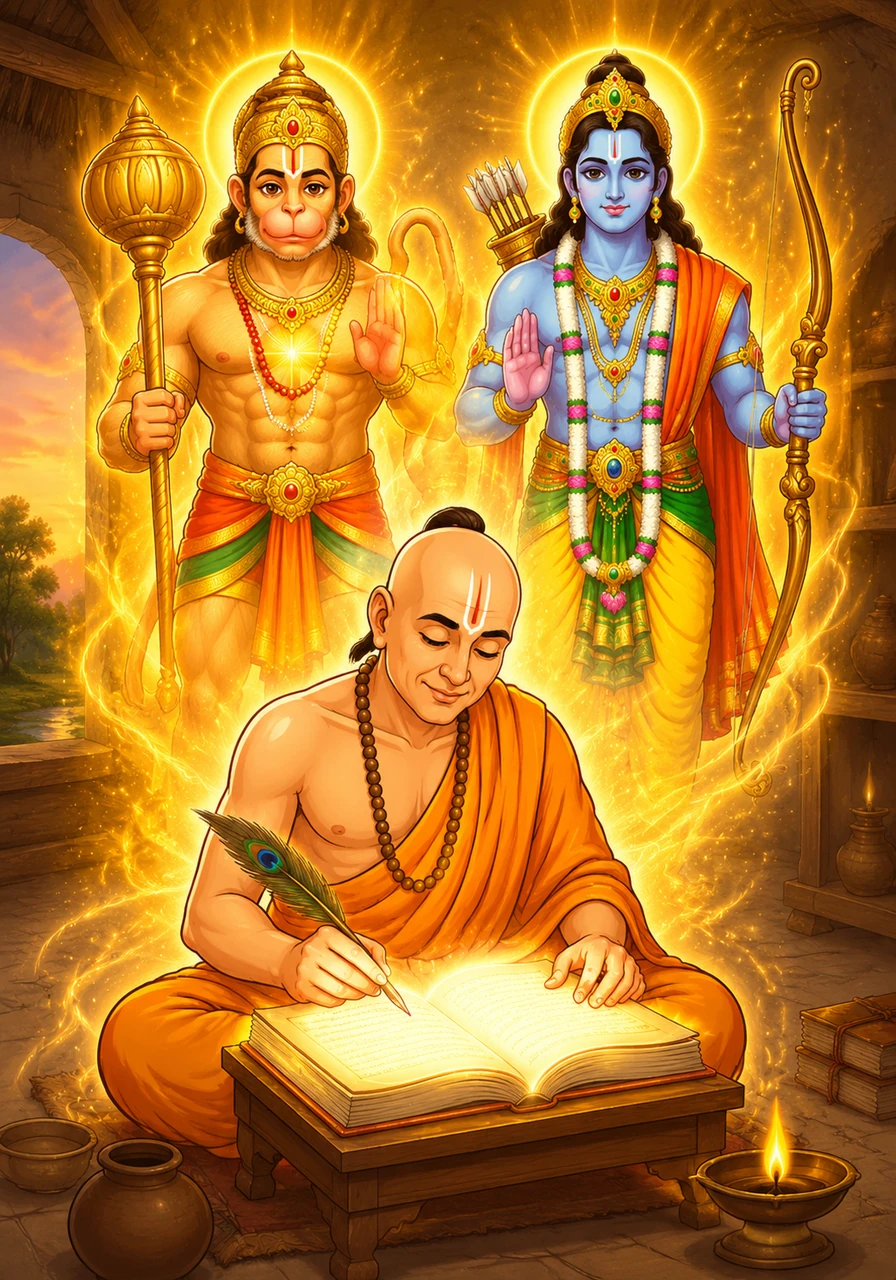
Surrounded by an aura of divine energy, Tulsidas completes the final verses of the Hanuman Chalisa, his heart overflowing with the darshan he has witnessed. The manuscript glows with a soft, eternal light, marking the moment a simple prayer became a cosmic hymn that would echo through the ages.
Prompt di generazione(Accedi per vedere il prompt completo)
Haan, samajh gaya. Ye link **“Krishnavataram Part 1: The Heart / Hridayam” official trailer** ka lag raha hai. YouTube page directly open nahi ho paya, but search result se title identify ho gaya. ([Facebook][1]) Aapka Hanuman Chalisa film bhi isi treatment mein ja sakta hai: ## Direction Lock **Film ka style:** Grand mythological trailer style, emotional origin story, divine prophecy, cinematic narration, heavy spiritual atmosphere, slow reveals, powerful music build-up, and larger-than-life godly visuals. ## Part 1 Treatment ### “Before The Chalisa: The Vision of Tulsidas” Is part mein hum Tulsidas ji ko ek **normal saint biography** ki tarah nahi dikhayenge. Isse ek **mythological origin film** ki tarah build karenge. Mood hoga: **mystery + devotion + destiny + pain + divine calling** Jaise trailer mein Krishna ka divine journey feel hota hai, waise hum Tulsidas ji ki journey ko show karenge: **Rambola ka janm → akelapan → Guru kripa → Ram naam → moh ka टूटना → virakti → Hanuman ji ka darshan → Ram darshan → Hanuman Chalisa ka janm** ## Trailer Storytelling Format ### Opening Dark, emotional, spiritual birth moment. **VO:** “कुछ आत्माएँ जन्म नहीं लेतीं… उन्हें एक उद्देश्य के लिए भेजा जाता है।” Visual: stormy night, ancient village, newborn child, first word “Ram” as a soft sound vibration. ### Middle Build Rambola ka loneliness, Guru Narharidas ka entry, Ram katha, inner devotion. **VO:** “जिस बालक के मुख से पहला नाम राम निकला… उसी के जीवन में भक्ति सबसे बड़ी परीक्षा बनकर आई।” Visual: child walking alone, guru hand on head, diya flame mein Ram ka reflection. ### Emotional Turn Ratnavali episode, attachment breaking into devotion. **VO:** “जिस प्रेम ने उसे बाँधा… उसी प्रेम ने उसे मुक्त कर दिया।” Visual: storm, river, realization, saffron cloth, sunrise walk. ### Divine Mystery Hanuman ji ka presence pehle hidden rahega. Direct reveal nahi. Shadow, wind, temple bell, vanar-like silhouette, unseen protector. **VO:** “राम तक पहुँचने का मार्ग… एक ऐसे भक्त से होकर जाता था, जिसने अपना सब कुछ राम को समर्पित कर दिया था।” Visual: Tulsidas chanting, mysterious figure in crowd, diya flame bends, golden particles gather. ### Grand Reveal Locked Hanuman ji reveal — calm face, divine body, straight gada, orange inner energy optional, heart mein “राम” subtle under-skin glow. **VO:** “और फिर… उसे दर्शन हुए उस शक्ति के… जो बल भी है, भक्ति भी है, और सेवा भी।” ### Climax Hanuman ji Tulsidas ji ko Shri Ram ka darshan karvate hain. **VO:** “जब मन शुद्ध हुआ… तब शब्द नहीं लिखे गए… दर्शन लिखे गए।” Visual: palm-leaf manuscript, golden ink, first doha appears. ### Final Hook **Title Reveal:** **Before The Chalisa: The Vision of Tulsidas** **VO:** “यह कहानी है उस क्षण से पहले की… जब जन्म हुआ हनुमान चालीसा का।” ## Visual Rule From That Trailer Style Use these consistently: **1. Slow divine reveals** Character ekdum direct nahi dikhega. Pehle shadow, feet, gada, hand, eyes, tail, then full reveal. **2. Emotional VO-driven story** Har scene ko dialogue se nahi, powerful Hindi narration se carry karna hai. **3. Grand but devotional music** Mridang, shankh, deep choir, temple bells, low cinematic drums. **4. Mythological scale** Even small moments should feel epic — diya flame, dust, rain, river, manuscript sab divine scale mein. **5. Part 1 human emotion, Part 2 divine vision** Part 1: Tulsidas ji ka human journey. Part 2: Hanuman Chalisa ka cosmic devotional visualization. ## Final Film Positioning Line **“Hanuman Chalisa likhi nahi gayi thi… woh Tulsidas ji ke antar-man mein darshan bankar utri thi.”** [1]: https://www.facebook.com/61579605675214/posts/7215ee9c/122152434440986855/?utm_source=chatgpt.com "https://youtu.be/KIwC1m7etLE?si=7aBuFvXgSMgQ4gvh"