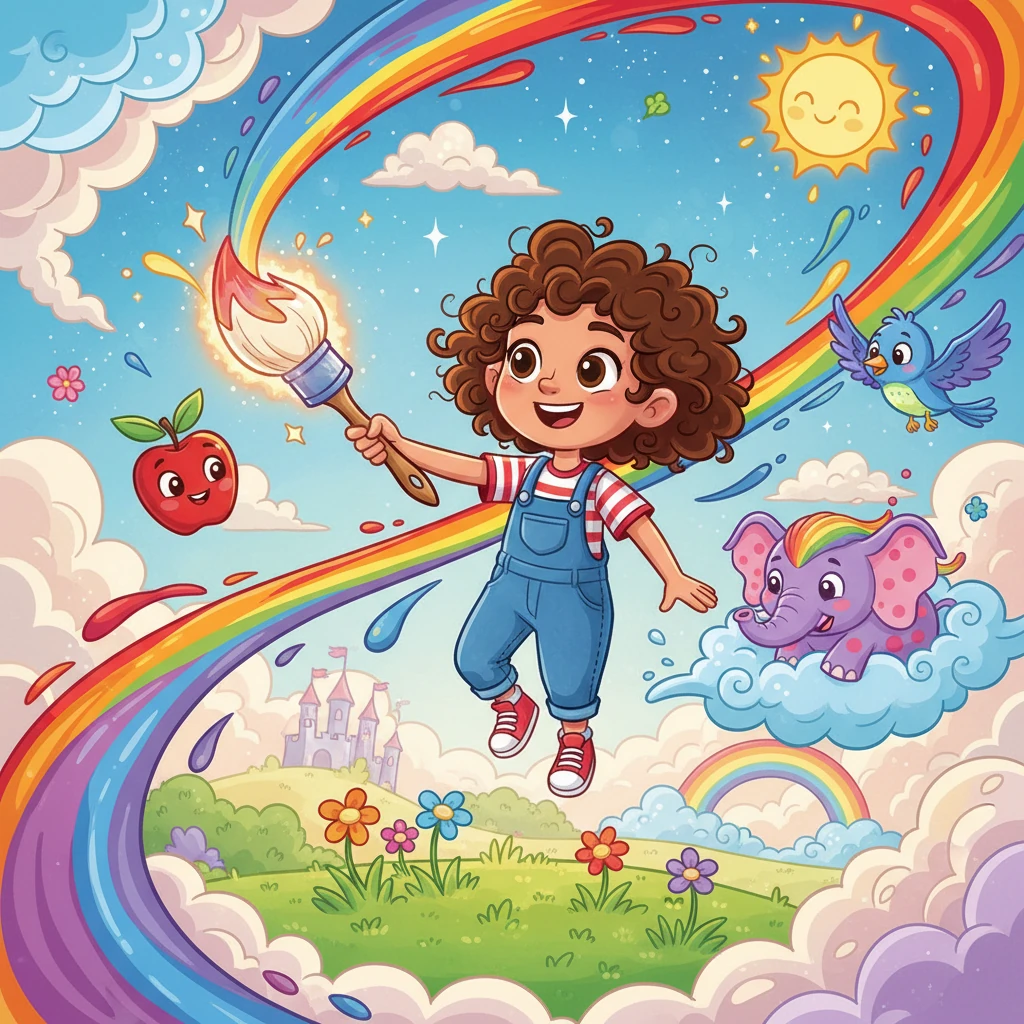
Join Lila on an enchanting adventure as she discovers the vibrant world of colors with her special paintbrush! This delightful bilingual Arabic–English storybook introduces young children to basic colors through familiar objects and playful repetition, making learning a joyful experience. A charming tale that celebrates the beauty colors bring to our world.
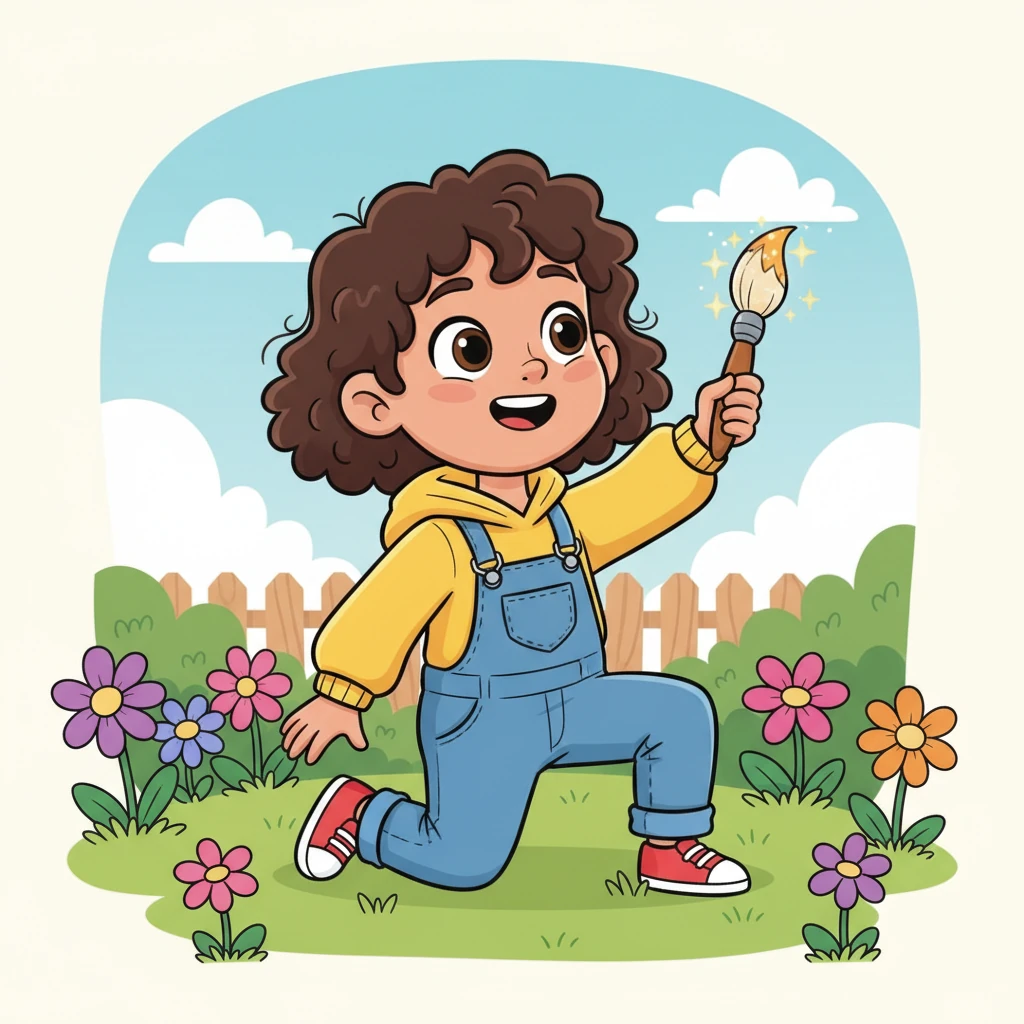
A cheerful little girl named Lila, with big, curious eyes and a wide smile, kneels in a vibrant green garden. She holds up a shimmering paintbrush that sparkles with tiny lights, looking surprised and delighted. Colorful flowers bloom around her.
English: Lila found a sparkly paintbrush in her garden.
Arabic: وجدت ليلى فرشاة لامعة في حديقتها.
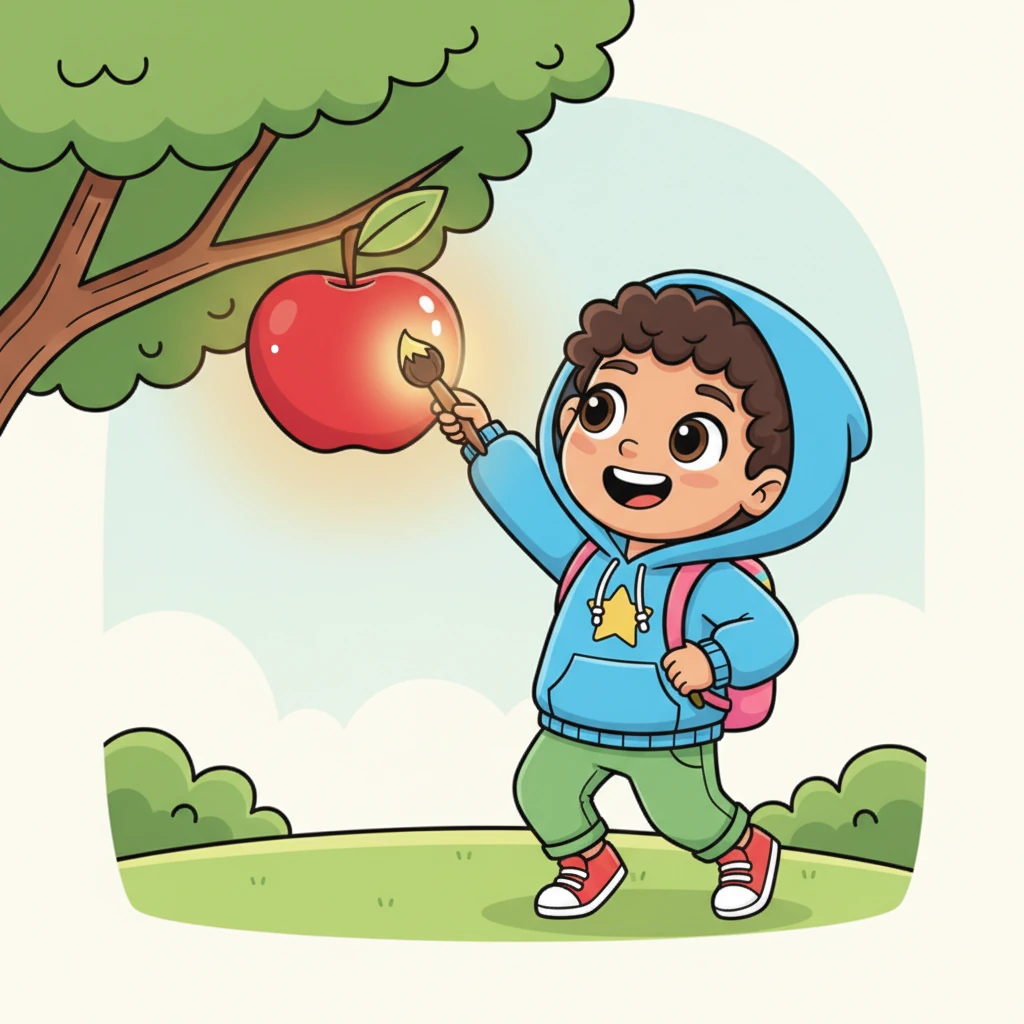
Lila, with her magical brush, playfully taps a perfectly round, glossy red apple hanging from a tree. The apple glows softly where the brush touches it, and Lila's face lights up with wonder.
English: She touched a big, red apple. This is RED!
Arabic: لمست تفاحة حمراء كبيرة. هذا أحمر!
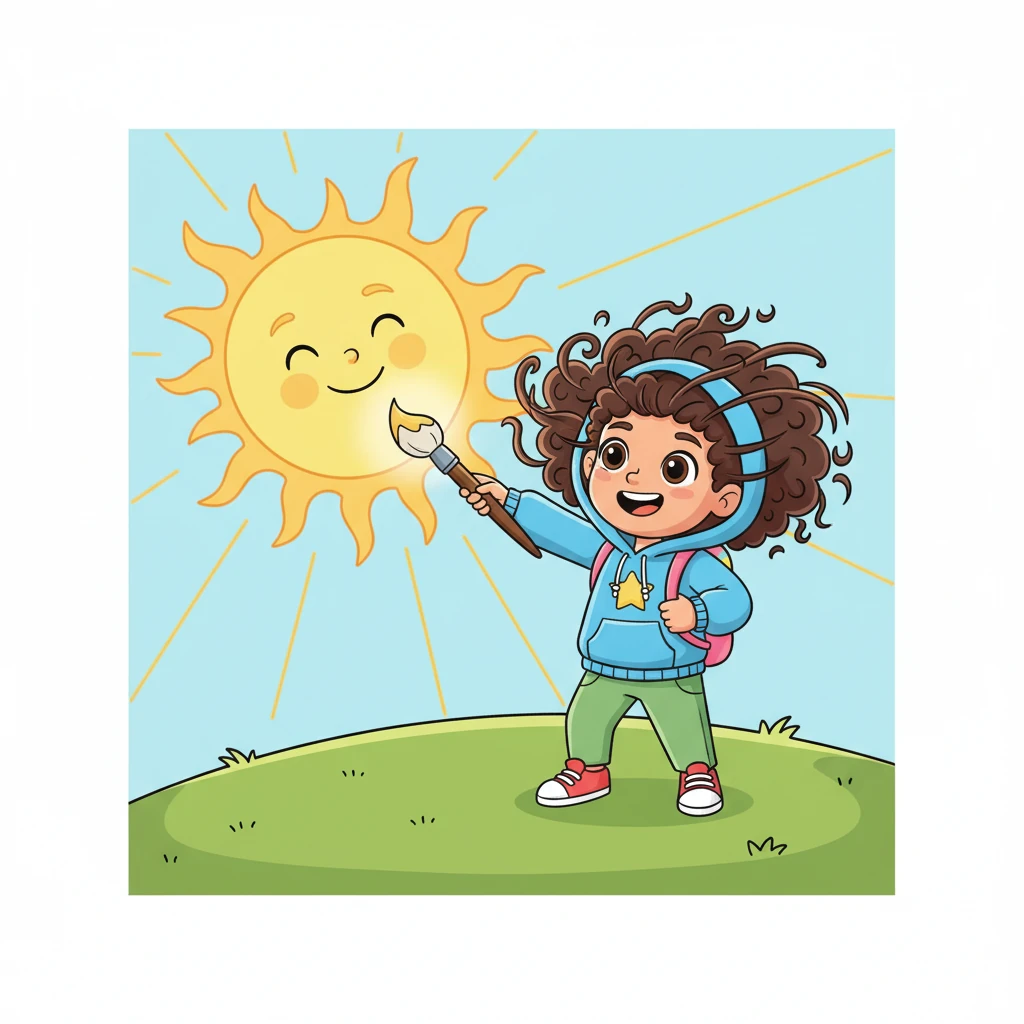
Lila stands on a grassy hill, pointing her magical brush towards a huge, smiling yellow sun in the sky. Golden rays stretch out playfully, and Lila's hair seems to dance in the light.
English: Lila saw the bright, yellow sun. This is YELLOW!
Arabic: رأت ليلى الشمس الصفراء الساطعة. هذا أصفر!
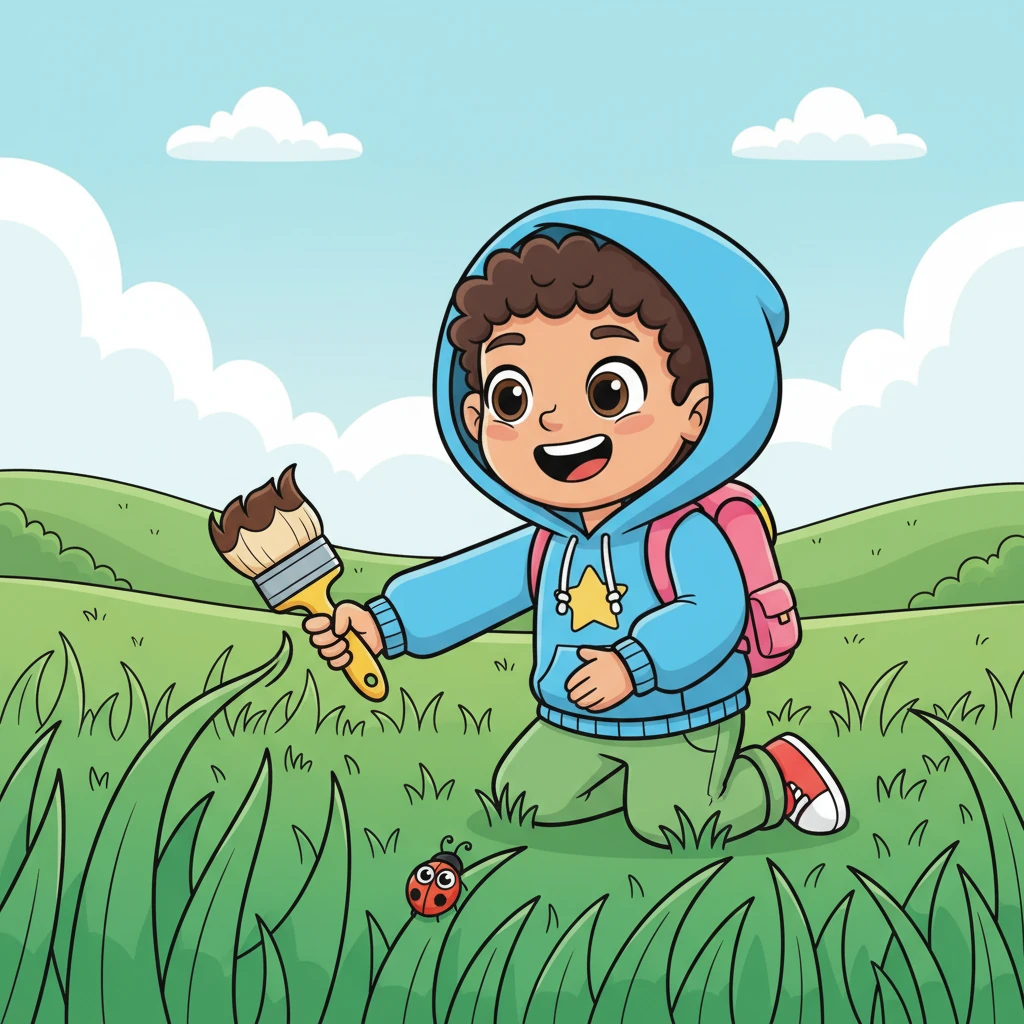
Lila giggles as she gently sweeps her brush across a lush, wavy field of green grass. The blades of grass seem to tickle her fingers, and a tiny ladybug peeks out from the vibrant greenery.
English: She touched the soft, green grass. This is GREEN!
Arabic: لمست العشب الأخضر الناعم. هذا أخضر!
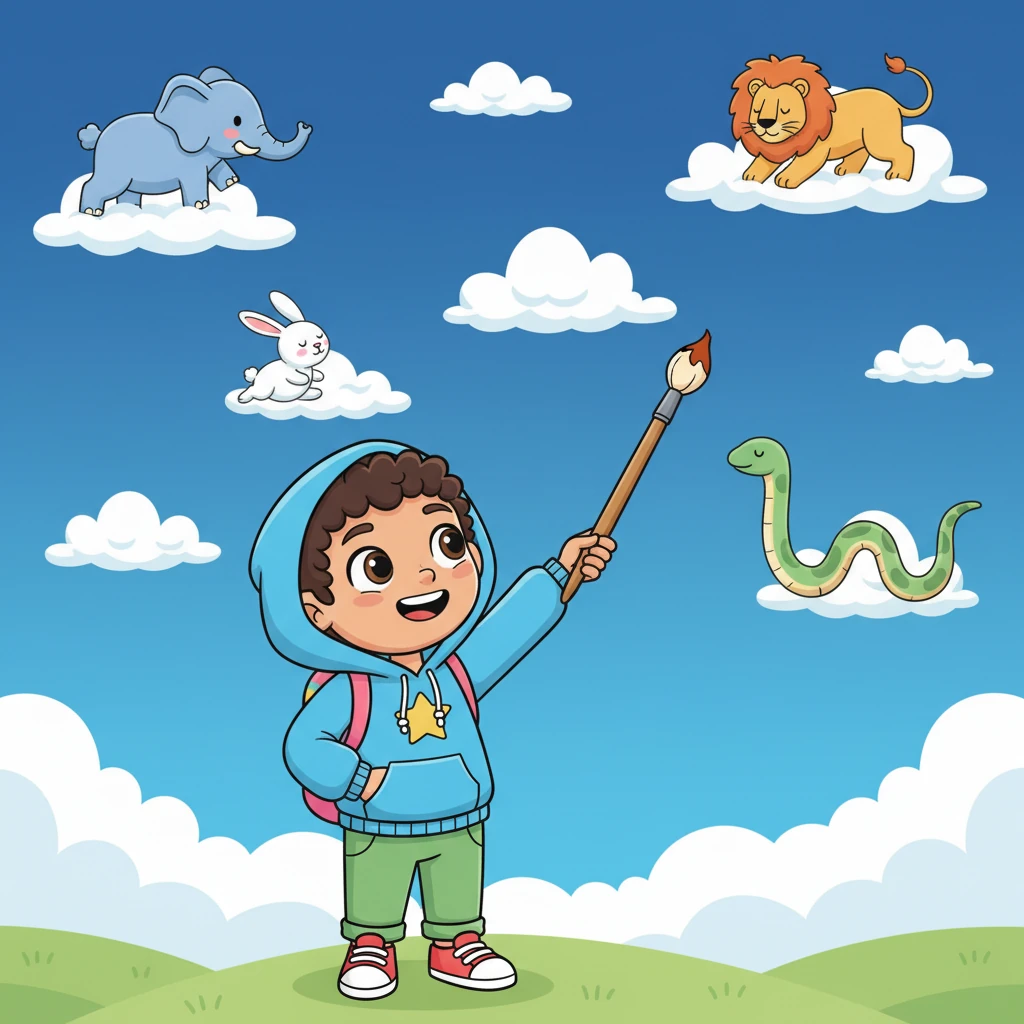
Lila gazes up at a vast, clear blue sky, dotted with fluffy white clouds shaped like playful animals. She extends her brush towards the sky, her eyes wide with fascination.
English: Lila looked at the big, blue sky. This is BLUE!
Arabic: نظرت ليلى إلى السماء الزرقاء الكبيرة. هذا أزرق!
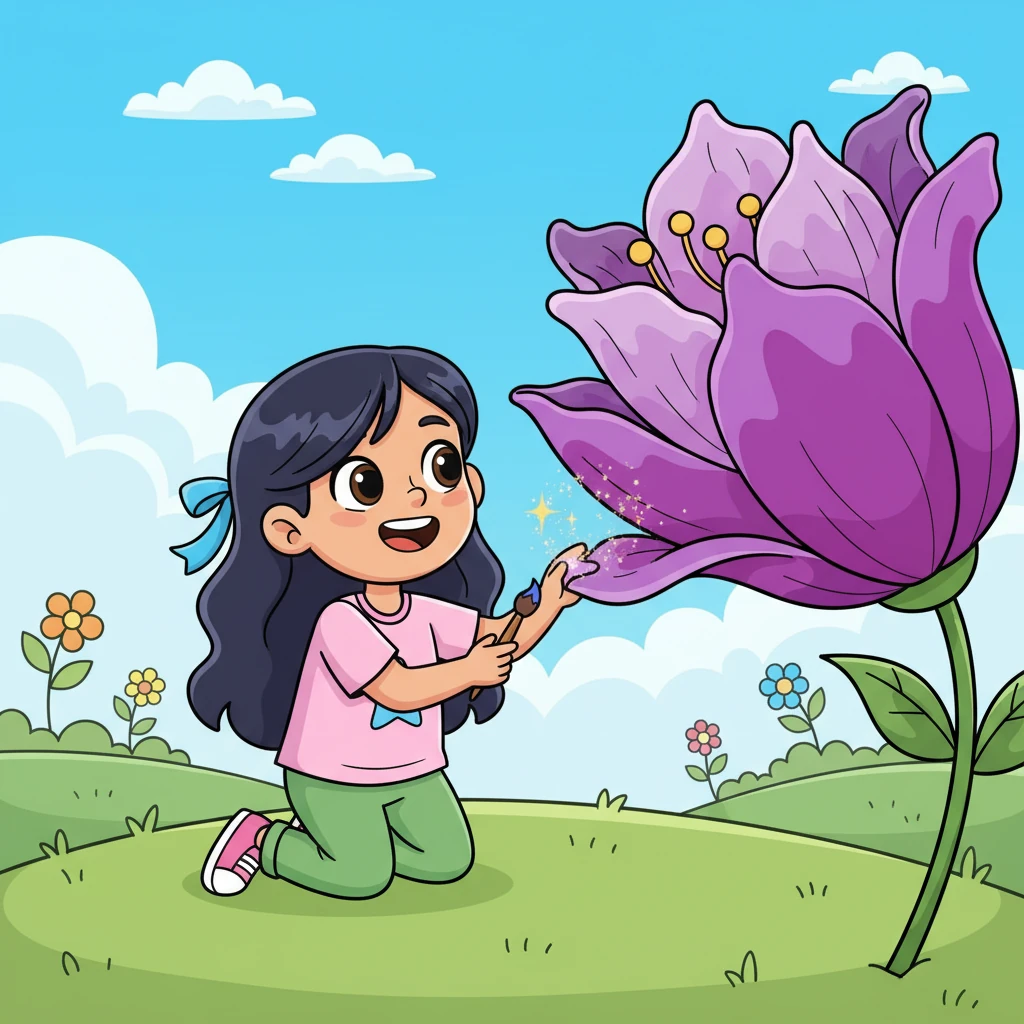
Lila kneels beside a magnificent, large purple flower with swirling petals. She gently touches one petal with her brush, and the flower seems to shimmer with extra vibrancy.
English: She found a lovely, purple flower. This is PURPLE!
Arabic: وجدت زهرة بنفسجية جميلة. هذا بنفسجي!
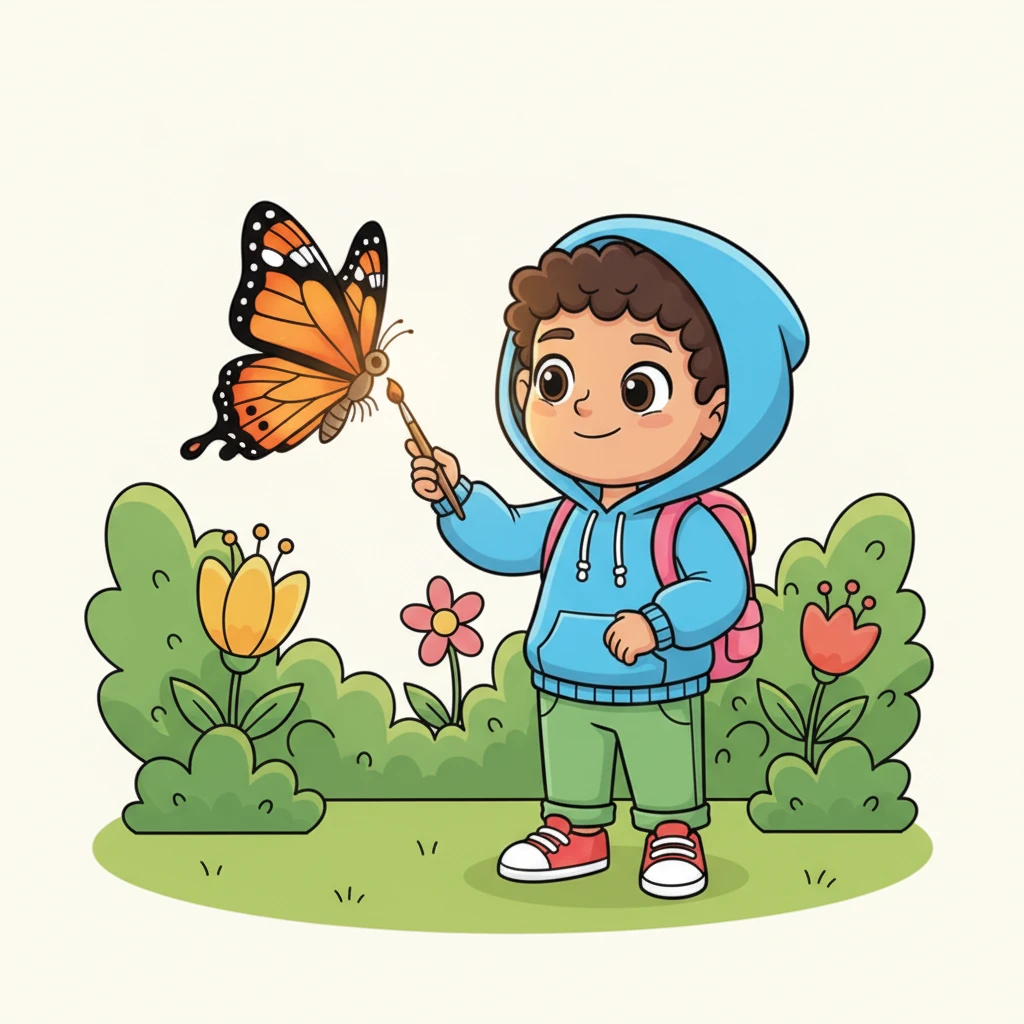
A graceful orange butterfly with intricate patterns on its wings flutters gently near Lila. She carefully points her brush at it, a soft smile on her face as the butterfly seems to glow.
English: Lila saw a pretty, orange butterfly. This is ORANGE!
Arabic: رأت ليلى فراشة برتقالية جميلة. هذا برتقالي!
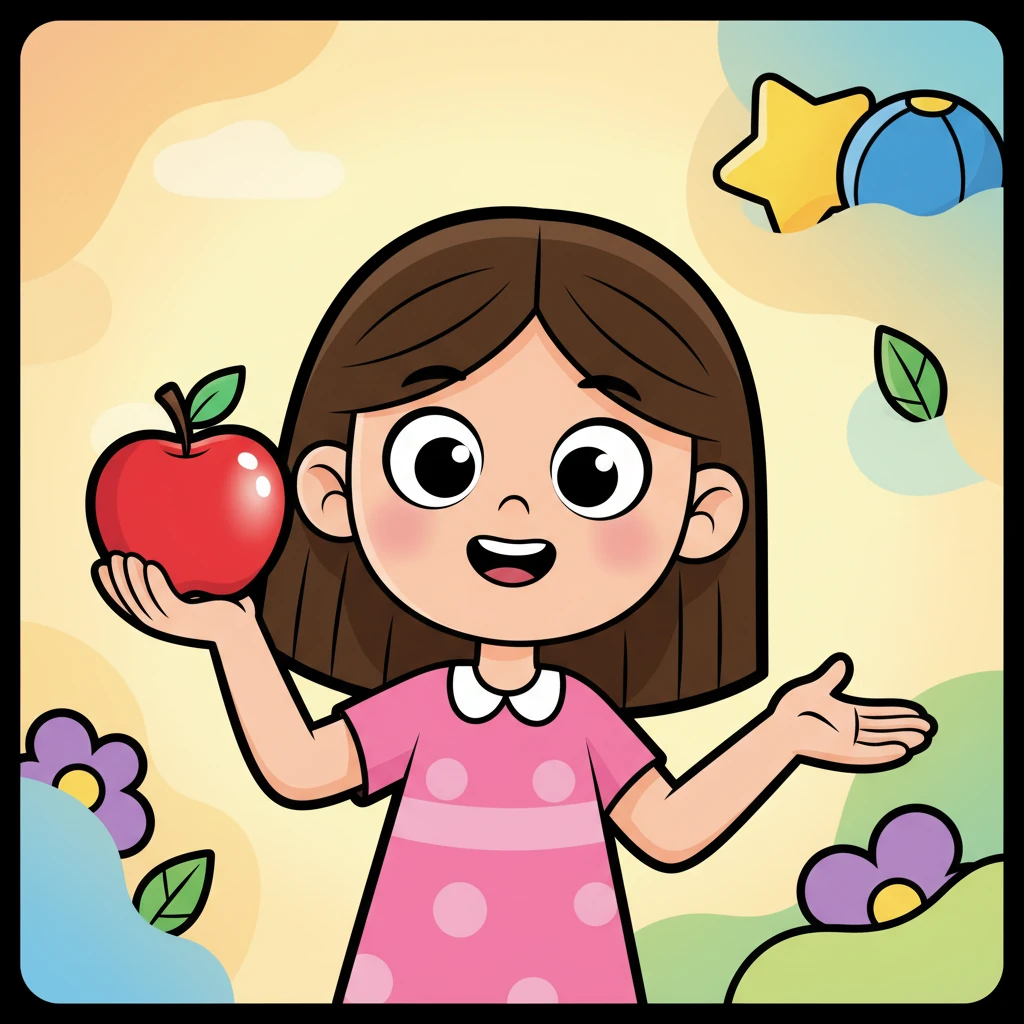
Lila holds up the red apple from before, its color shining brightly. She looks at the viewer with an inviting smile, as if asking a question. The background shows glimpses of the other colorful objects she found.
English: What color is this apple? It is RED!
Arabic: ما لون هذه التفاحة؟ إنها حمراء!
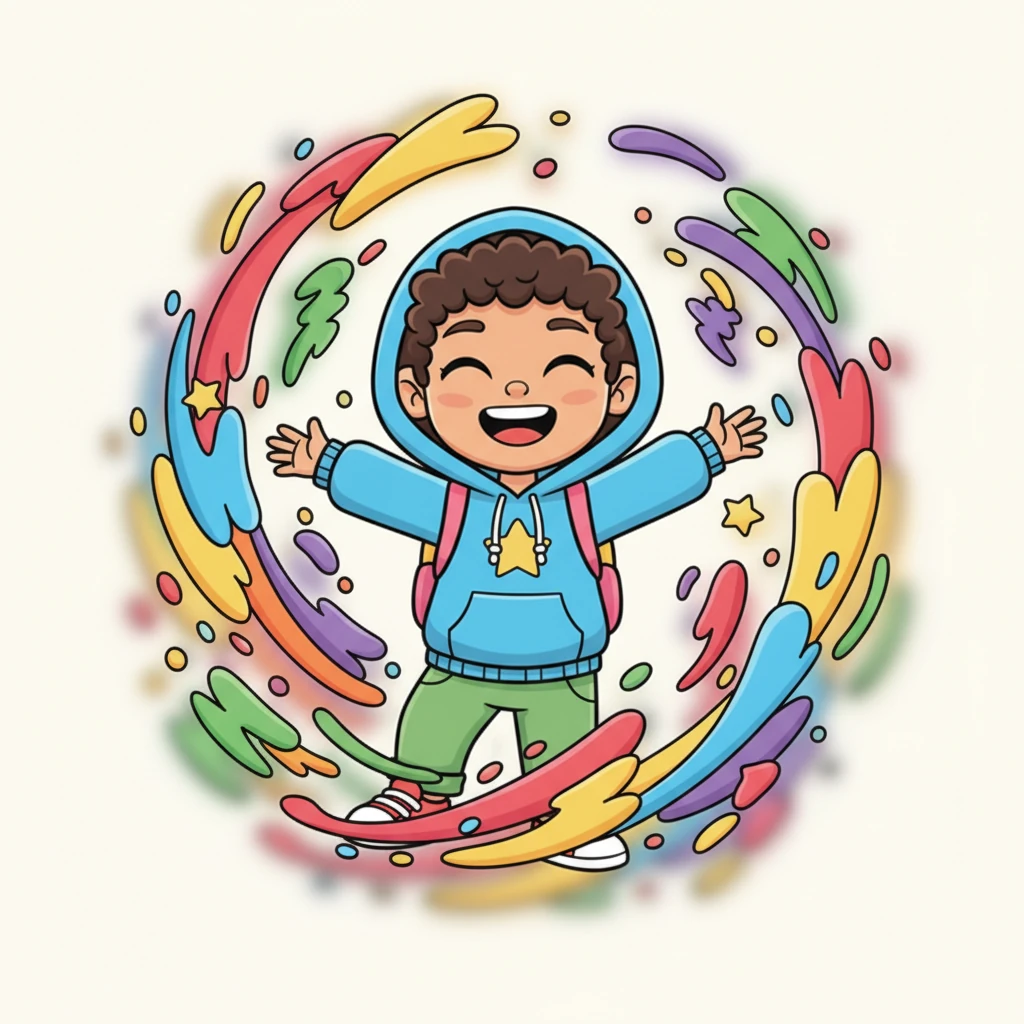
Lila stands in the middle of a swirling, joyful vortex of colors: red, yellow, green, blue, purple, and orange. The colors form playful shapes and patterns around her, making her laugh with delight.
English: All the colors danced around Lila!
Arabic: رقصت كل الألوان حول ليلى!
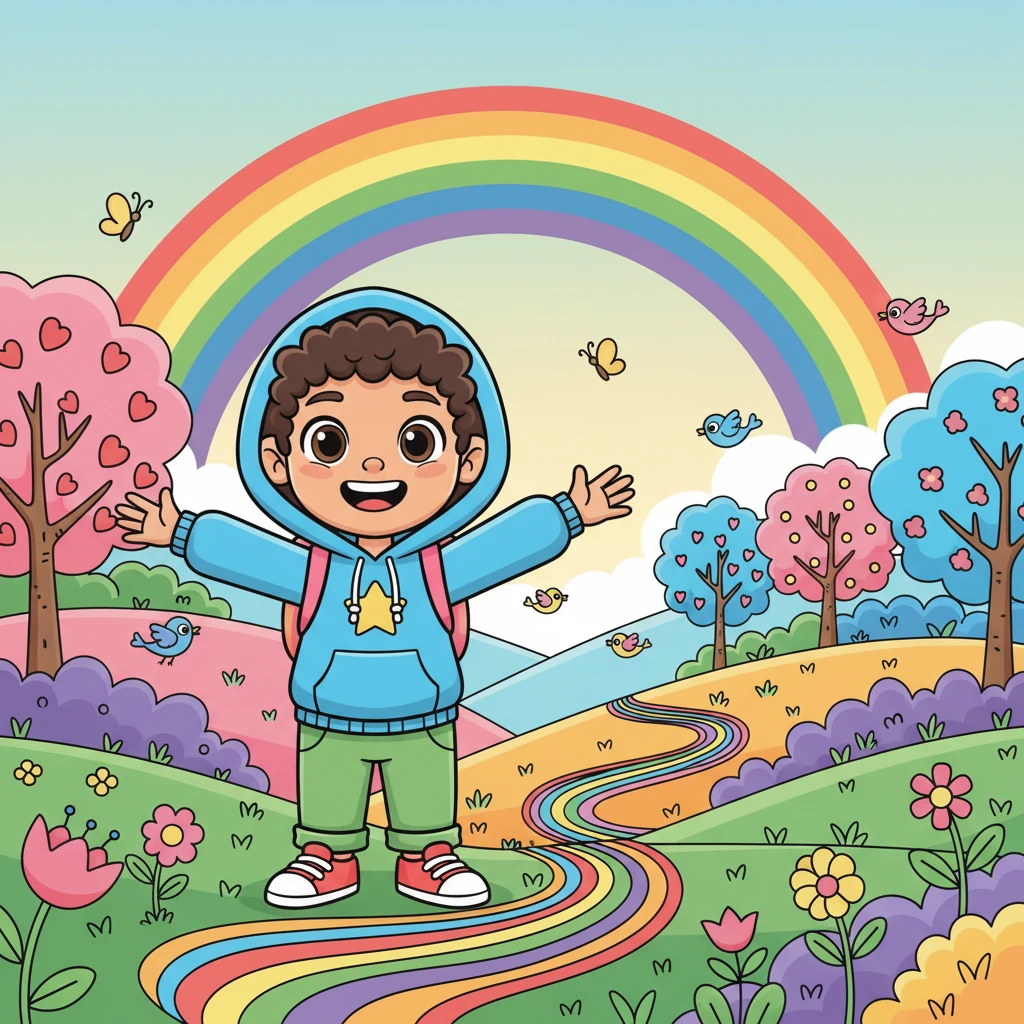
Lila beams brightly, surrounded by a vibrant landscape filled with all the colors she discovered. A rainbow arches overhead, and the entire scene is bursting with cheerful hues, showing a world full of beauty.
English: Colors make our world beautiful and bright!
Arabic: الألوان تجعل عالمنا جميلاً ومشرقاً!
Prompt di generazione(Accedi per vedere il prompt completo)
Create a bilingual Arabic–English storybook for kindergarten children (ages 4–6) about colors. The story should have a clear storyline with a beginning, middle, and end. The main character should be a young child (for example, Sami or a little girl) who discovers colors in a magical or playful way (such as finding a magic paintbrush, going on a colorful adventure, or exploring the world). The story must: Be written in simple, short sentences suitable for kindergarten. Include one short sentence in English and one short sentence in Arabic on each page. Introduce one color at a time naturally within the story. Use familiar objects (apple, sky, sun, grass, balloon, etc.). Include repetition to help children remember color words. Include at least one interactive question like “What color is this?” or “What is your favorite color?” Have a positive ending that explains how colors make the world beautiful.