Delve into the dark heart of Scotland in this cinematic retelling of Shakespeare’s classic tragedy. Witness how the whispers of ambition and the sharp edge of emotional manipulation drive a noble hero toward a path of blood and ruin, exploring the devastating power of persuasion.
A jagged silhouette of a stone castle stands defiant against a swirling sea of thick, grey fog. Above, the sky churns with the violet and black of a gathering storm, signaling a world where nature itself reflects the chaos of the human heart.
An ancient, ink-stained manuscript lies open on a heavy wooden table, its edges curling with age. The flickering candlelight casts long, dancing shadows that suggest the invisible strings of fate and the heavy weight of words that can change the course of history.
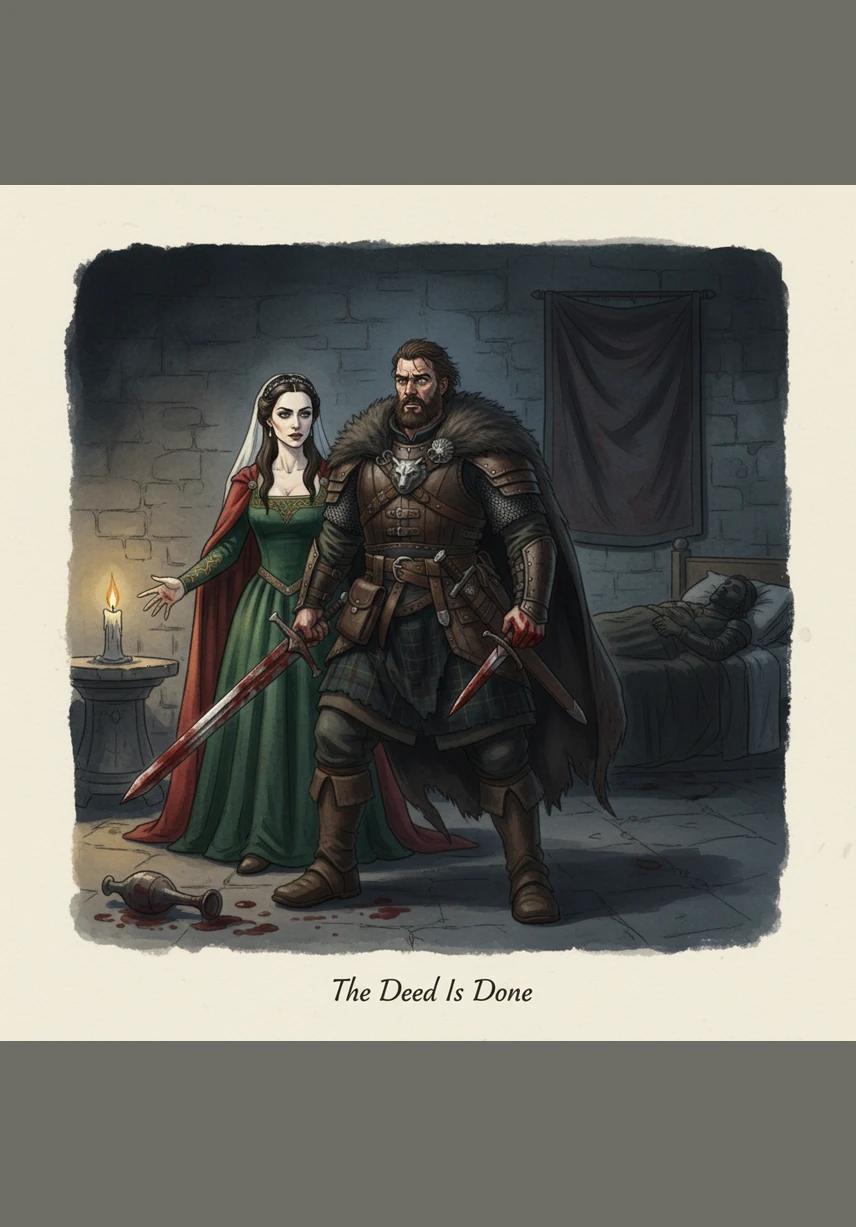
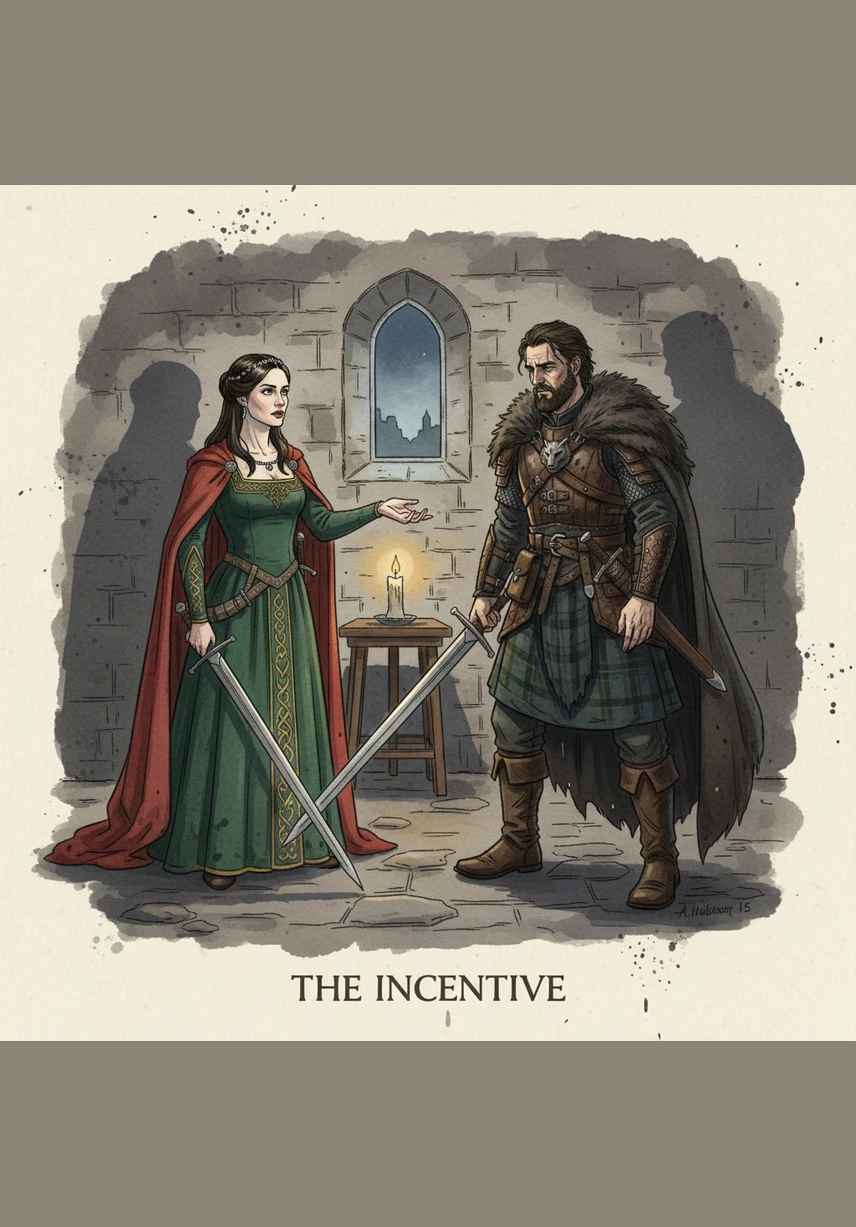
In the dim glow of the hearth, Lady Macbeth stands tall, her eyes burning with a cold, piercing intensity as she confronts her husband. She leans in close, her expression one of sharp challenge, questioning his strength and mocking the hesitation that keeps him from his crown.
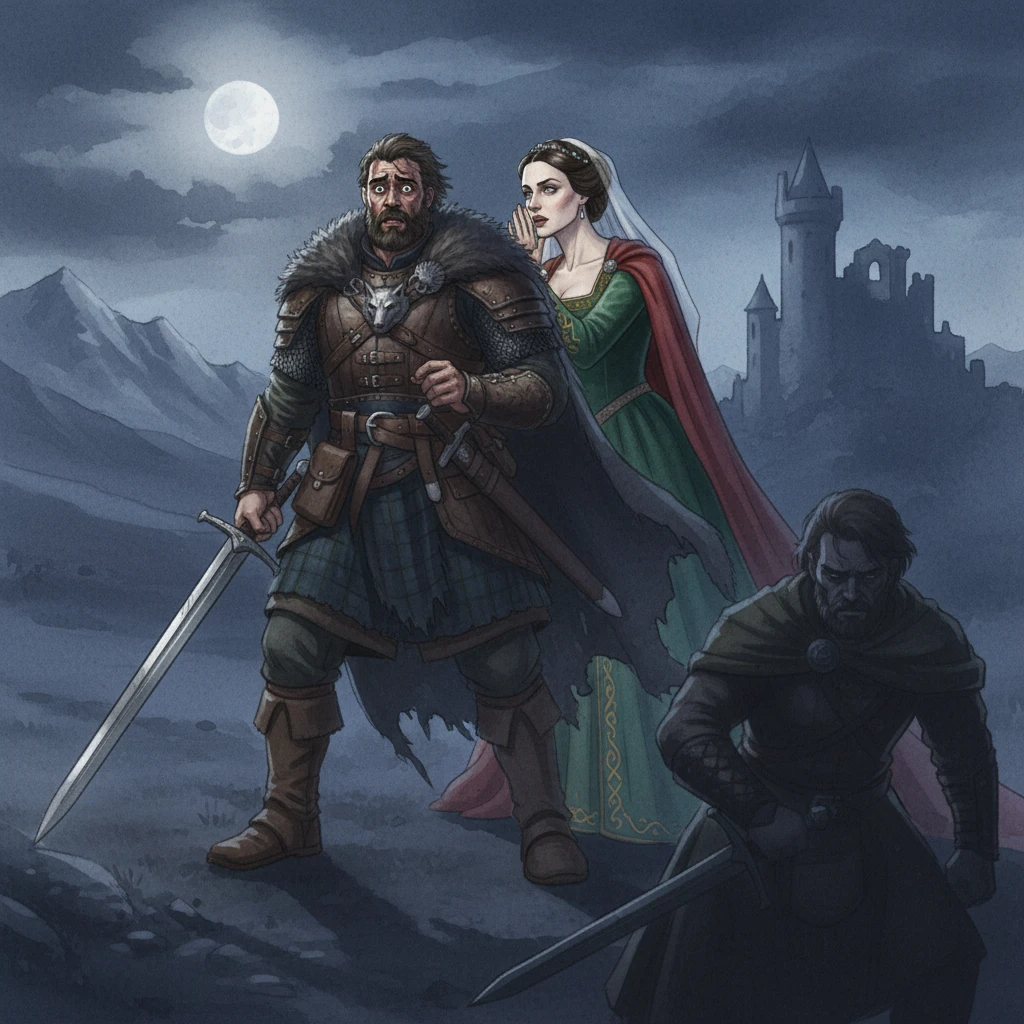
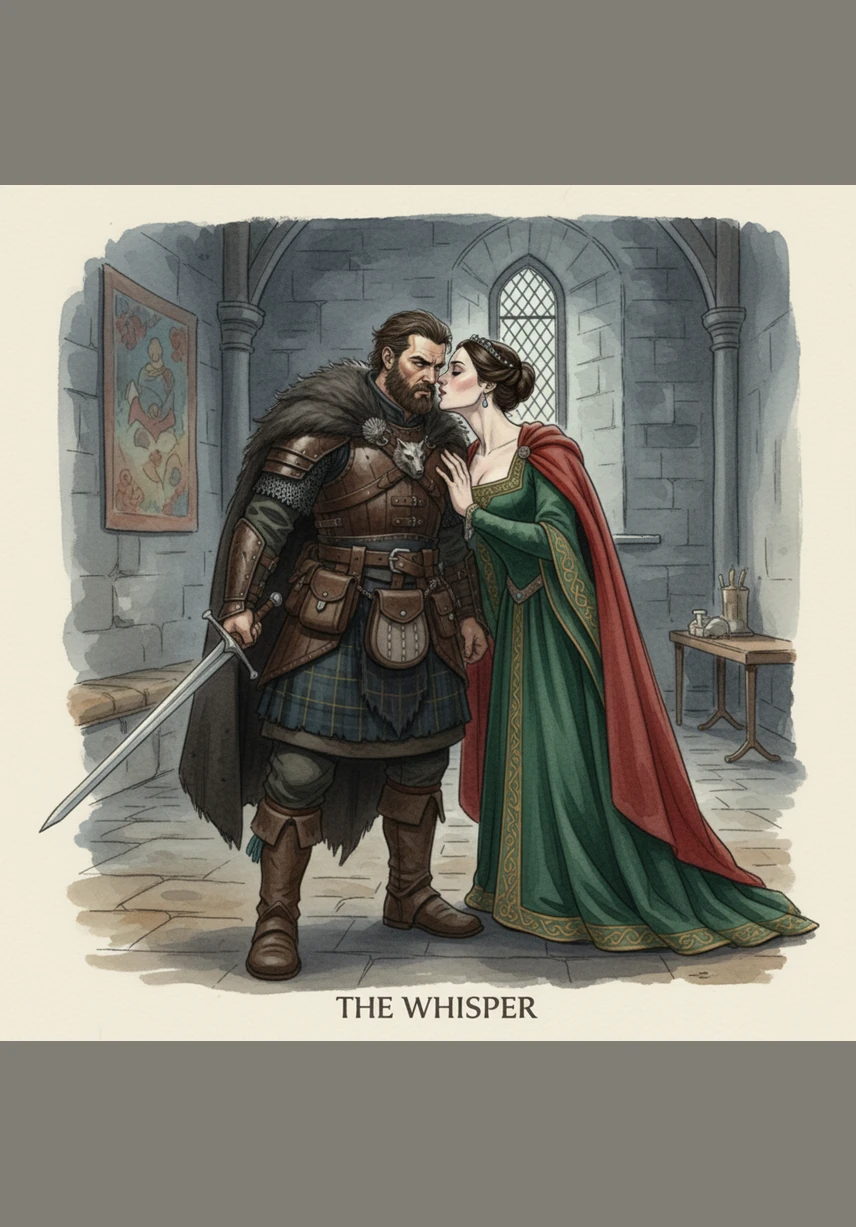
Shadows wrap around the couple like a shroud as Lady Macbeth whispers directly into Macbeth’s ear, her hand gripping his arm with iron-like conviction. The atmosphere is thick with the pressure of her will, urging him to cast aside his moral doubts and tighten his resolve for the deed ahead.
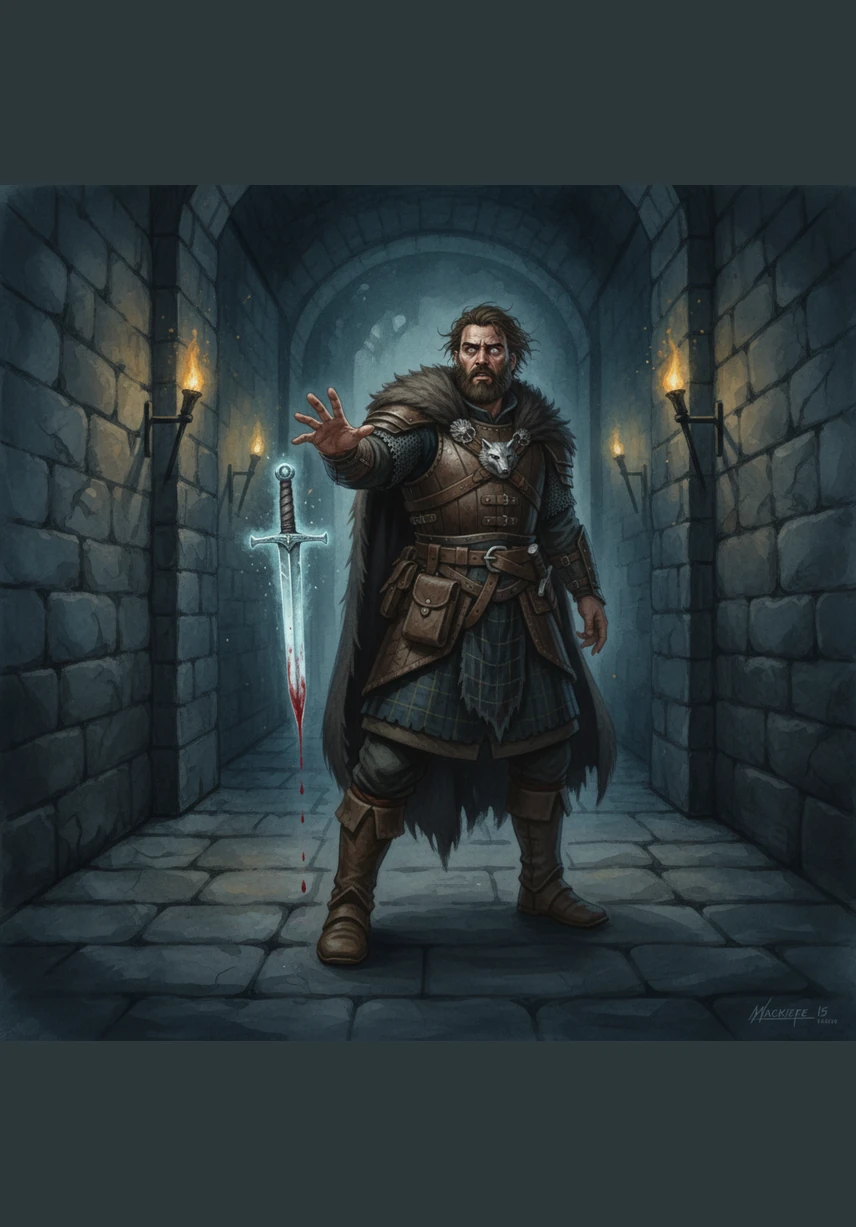
Macbeth reaches out into the empty air of a dark corridor, his eyes wide with a mix of terror and fascination. Before him hovers a spectral, translucent dagger, its hilt turned toward his hand and its blade dripping with imaginary blood, symbolizing the total collapse of his reason.
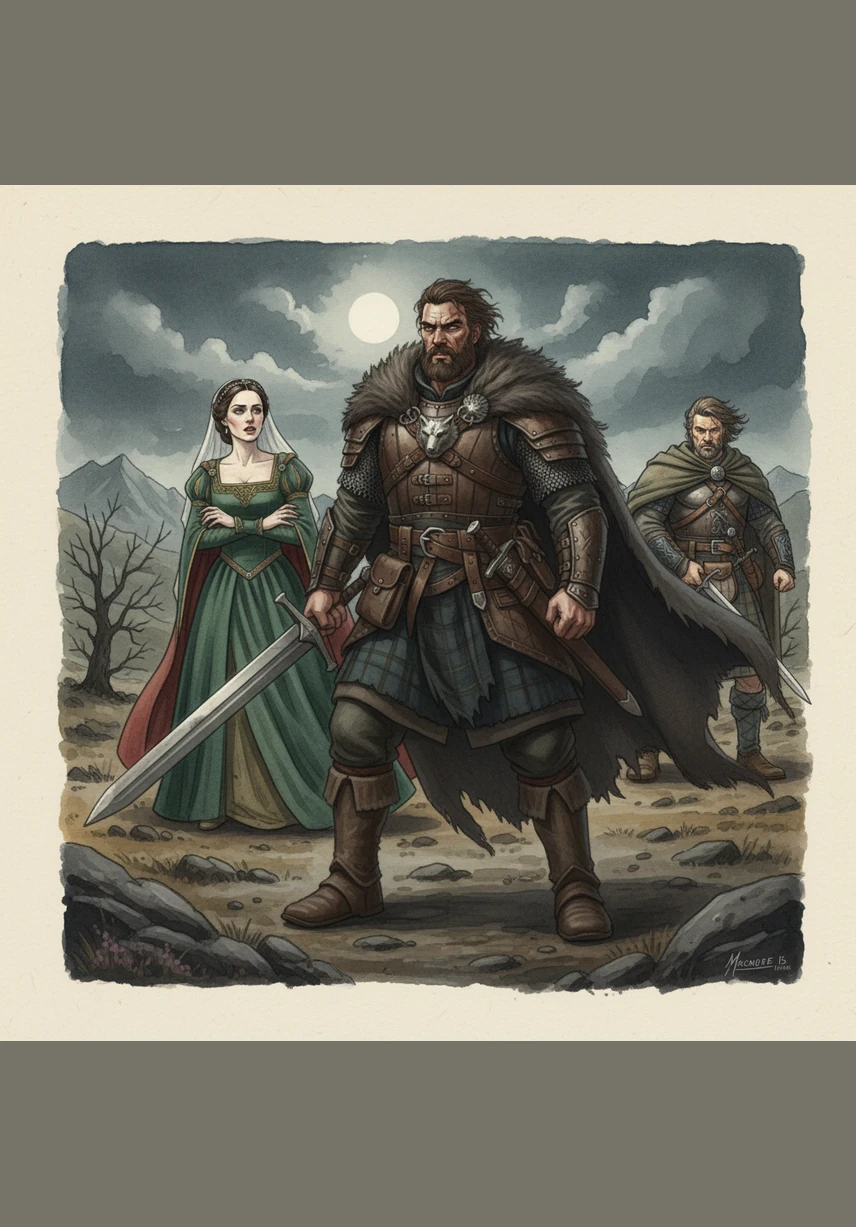
Standing with an air of absolute command, Lady Macbeth looks down upon the world with a chilling confidence. Her posture is regal and unyielding, projecting an authority that Macbeth finds impossible to resist, leading him to surrender his own judgment to her dark vision.
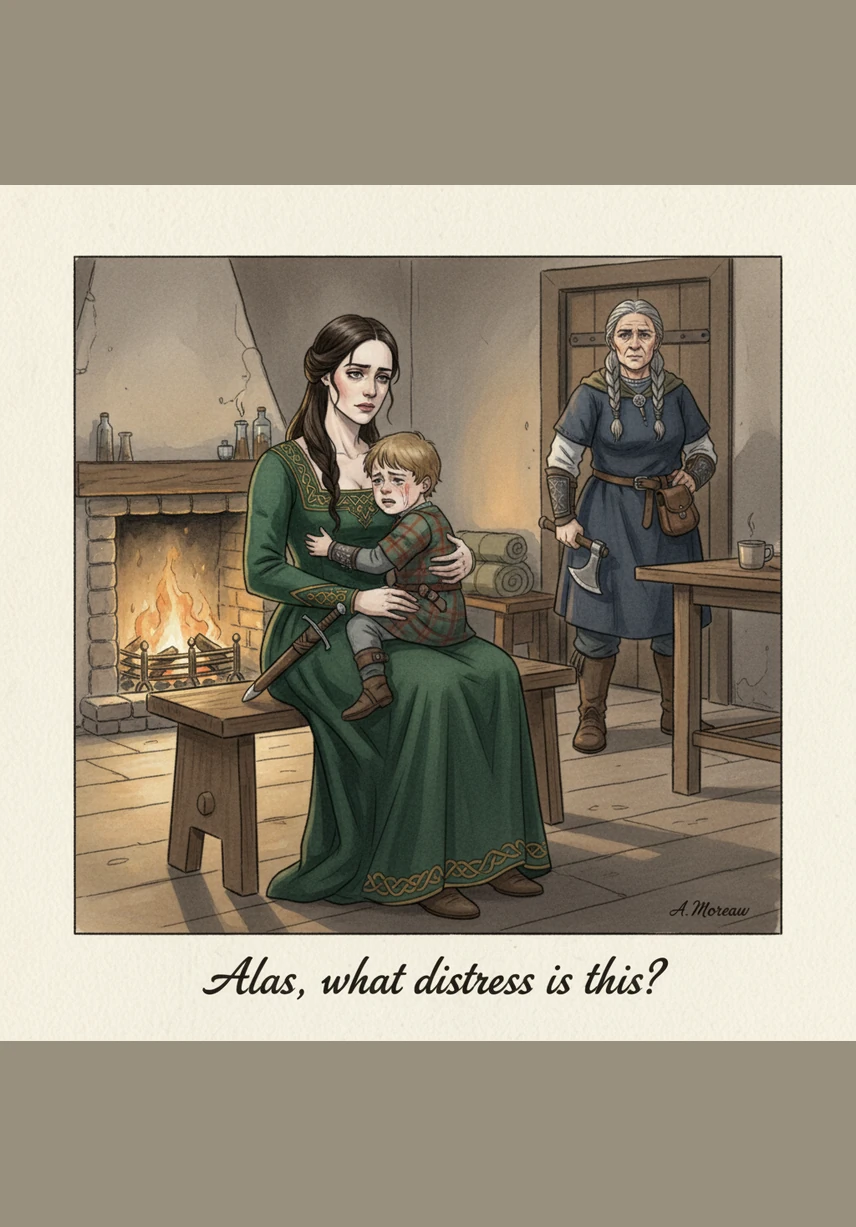
The scene shifts to a tender, heartbreaking moment where a mother holds her young child close in a quiet room. The warm, soft light of their innocence is surrounded by encroaching shadows, representing the tragic destruction of the blameless as Macbeth’s tyranny spreads across the land.
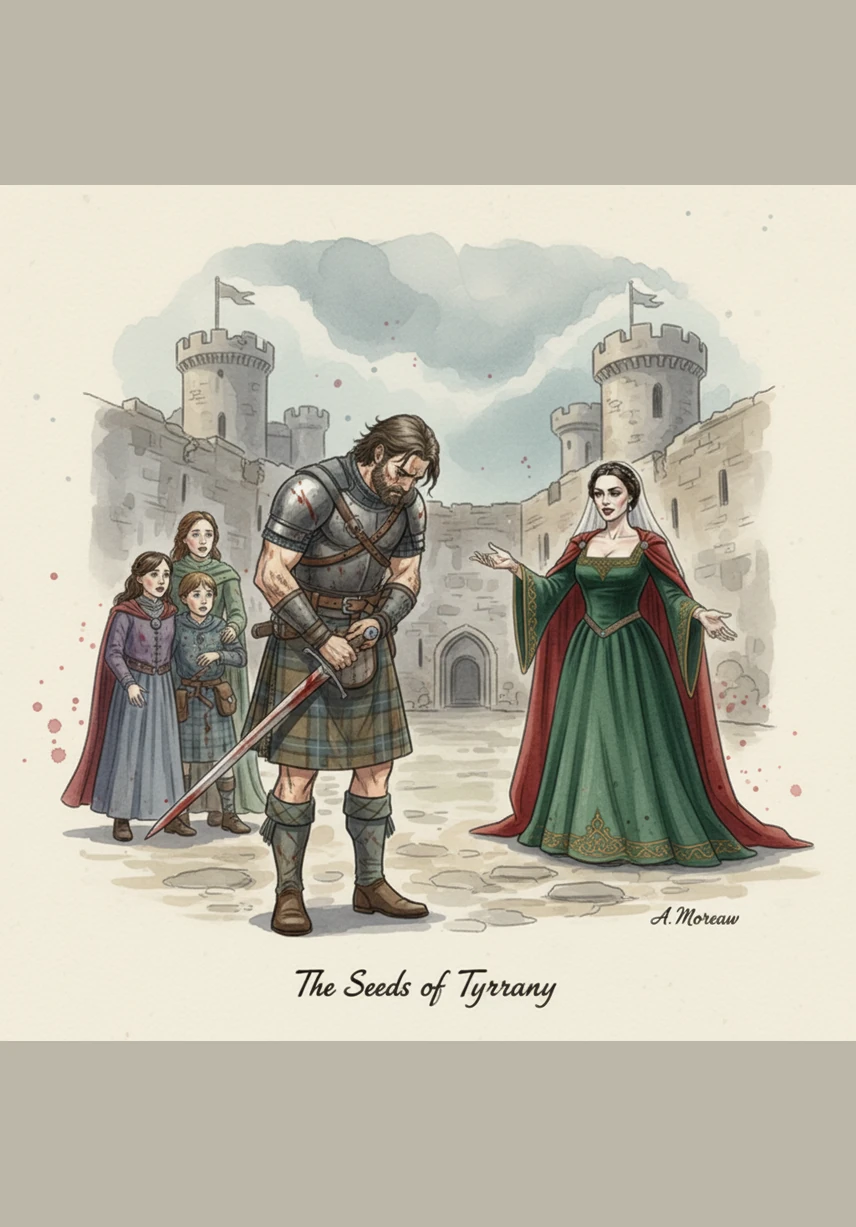
A weary warrior bows his head, not in defeat, but in profound and honest grief as he learns of his family’s fate. His face shows the deep lines of sorrow, proving that true manliness is found in the courage to feel and the strength to mourn, contrasting sharply with the tyrant's coldness.
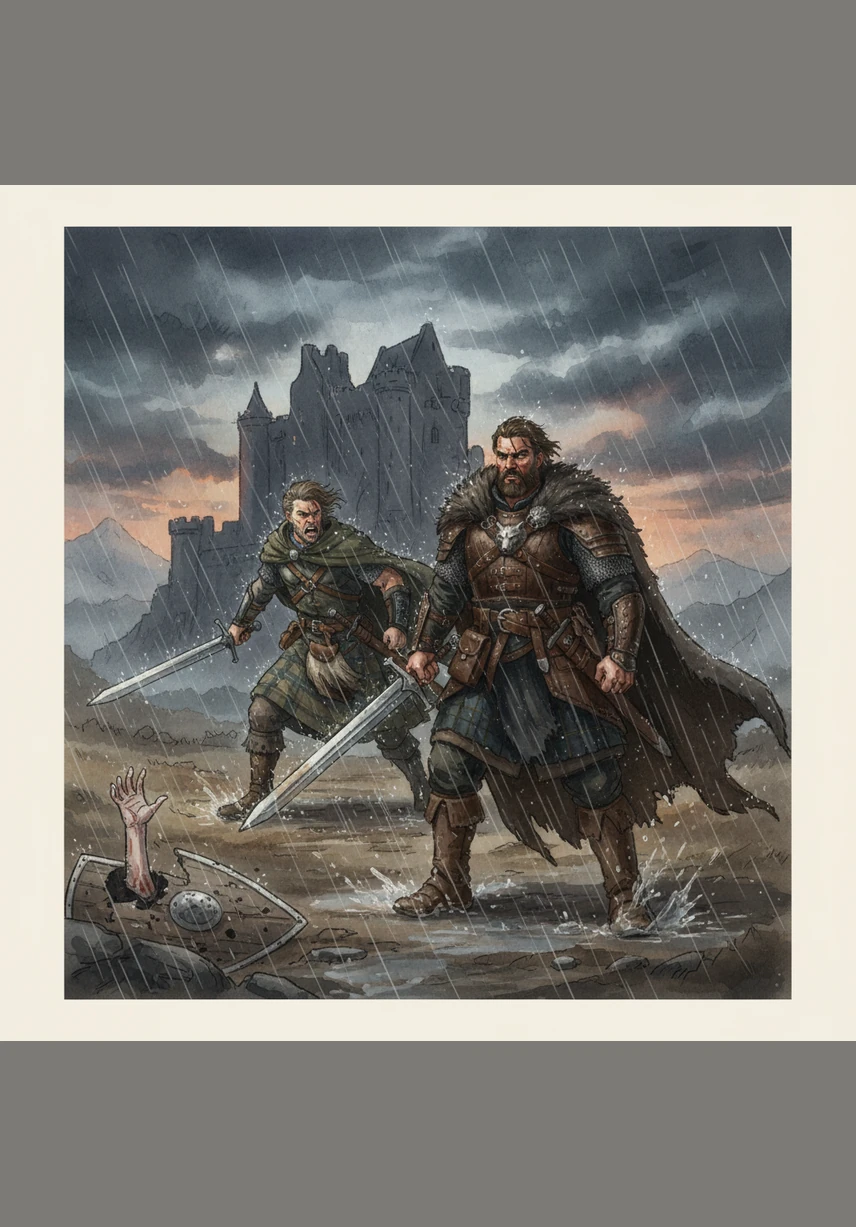
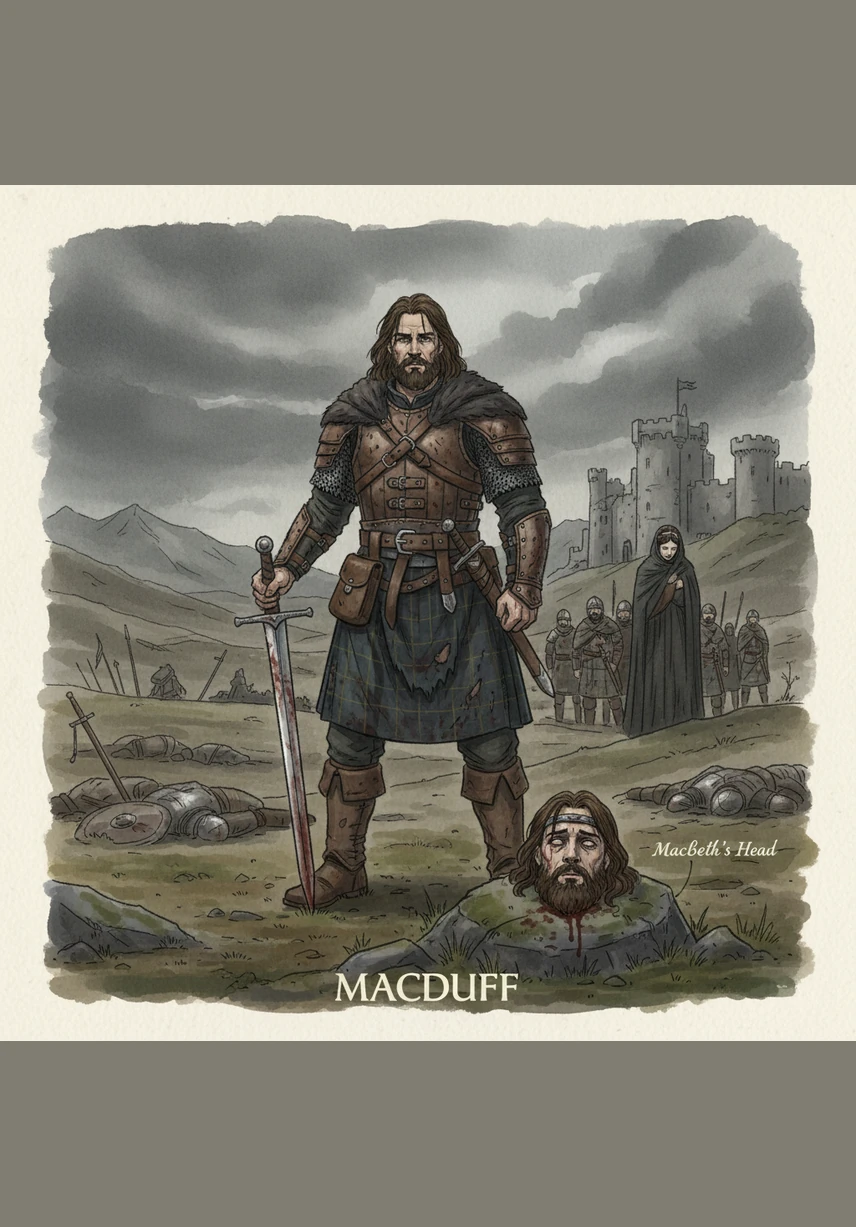
A golden crown lies discarded in the mud of a blood-stained battlefield, its jewels dulled by the grey, overcast sky. The silence of the aftermath speaks of the ultimate price of unchecked ambition, where the pursuit of power ends only in hollow victory and total destruction.
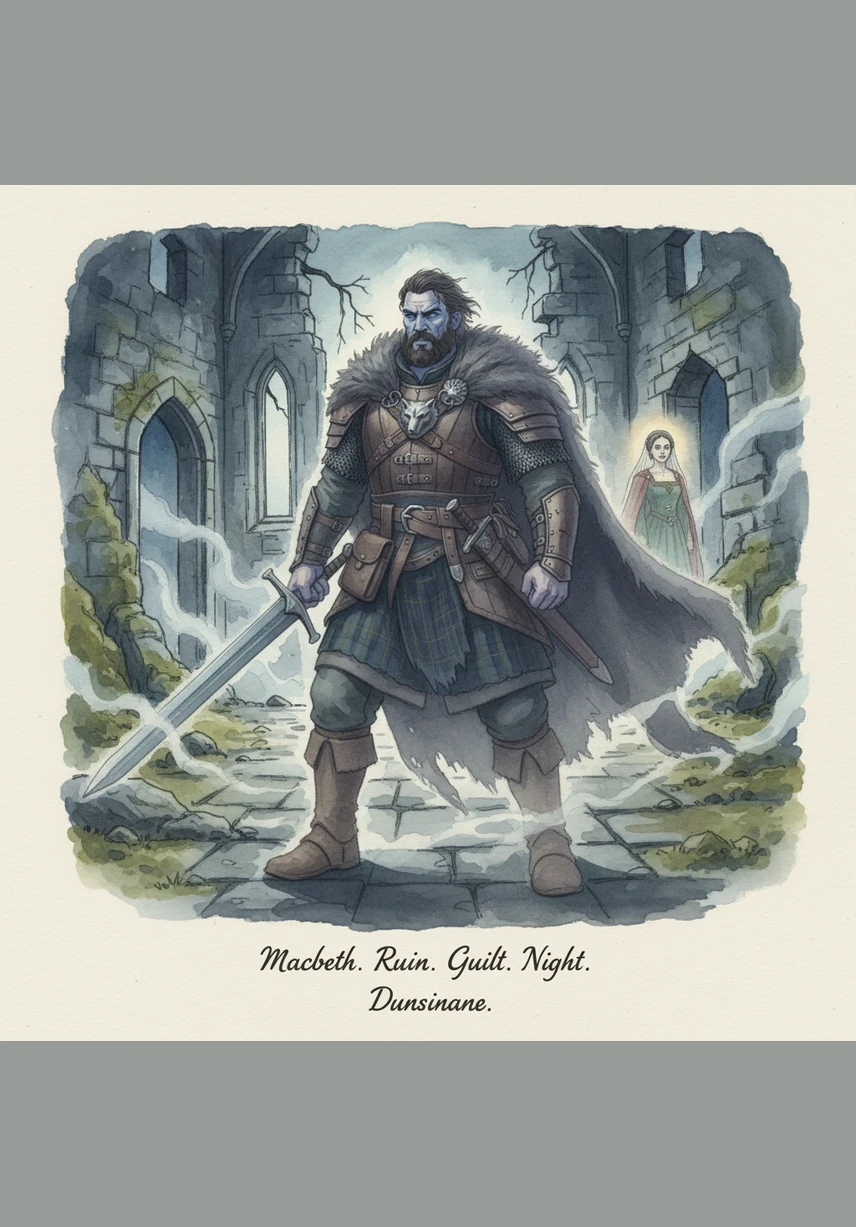
The ghost of a king walks through the desolate halls of a crumbling fortress, a solitary figure haunted by the echoes of the voices that led him there. The cycle of persuasion and blood concludes in a haunting tableau of isolation, reminding us that the strongest chains are those forged by our own desires.
Prompt di generazione(Accedi per vedere il prompt completo)
Create a 2–3 minute digital story video about Macbeth by William Shakespeare. Theme: Ambition, Power, and Persuasion Focus on this thesis: Emotional manipulation (pathos) is the most powerful force in Macbeth, as Lady Macbeth uses fear, guilt, and attacks on masculinity to control Macbeth and lead him to destruction. Structure the video into 9 scenes with cinematic transitions, dark theme, and dramatic background music. For EACH scene include: - Visual description (what image to show) - On-screen text (short keywords or quote) - Voice-over narration (clear and simple) ----------------------------------- Scene 1 – Hook Visual: Dark castle in fog, stormy sky Text: Ambition. Power. Persuasion. Voice: Power begins with a thought, but in Macbeth it grows through persuasion. A hero becomes a tyrant through manipulation. Scene 2 – Thesis Visual: Shakespeare portrait or old manuscript Text: Pathos controls Macbeth Voice: In Macbeth by William Shakespeare, emotional manipulation is the strongest force. Lady Macbeth uses fear and guilt to control Macbeth and lead him to destruction. Scene 3 – Pathos Visual: Lady Macbeth persuading Macbeth Text: “When you durst do it, then you were a man” Voice: Lady Macbeth attacks Macbeth’s masculinity, making him feel weak and ashamed. This emotional pressure forces him to act. Scene 4 – Pathos (continued) Visual: Lady Macbeth whispering intensely Text: “Screw your courage to the sticking-place” Voice: She pushes him further, encouraging him to ignore fear. Her emotional control is stronger than his moral judgment. Scene 5 – Logos Visual: Floating dagger, dark hallucination Text: Logic vs Emotion Voice: Macbeth tries to think logically, asking if they might fail. However, he hallucinates a dagger, showing that emotion has taken control. Scene 6 – Ethos Visual: Lady Macbeth standing powerful and confident Text: “Leave all the rest to me” Voice: Lady Macbeth uses authority and confidence to influence Macbeth. He trusts her, allowing her to control his decisions. Scene 7 – Act 4 (Innocence) Visual: Mother and child, dark tragic tone Text: Innocence Destroyed Voice: Macbeth becomes a tyrant and kills innocent people, including Macduff’s family. A child is described as an “egg,” symbolizing innocence. Scene 8 – Masculinity Visual: Warrior showing emotion, grief Text: “I must also feel it as a man” Voice: Macduff shows that true strength includes emotion. Unlike Macbeth, he does not see violence as the only form of manhood. Scene 9 – Conclusion Visual: Fallen crown on battlefield, dark sky Text: Power leads to Destruction Voice: Shakespeare shows that emotional manipulation can destroy even strong individuals. Power without control leads to tragedy. ----------------------------------- Style: - Dark cinematic theme (black, red, grey) - Slow zoom transitions - Dramatic music (low volume) - Clear voice narration - Minimal text on screen Output: A polished digital story video suitable for a school project with strong analysis, clear visuals, and engaging storytelling.