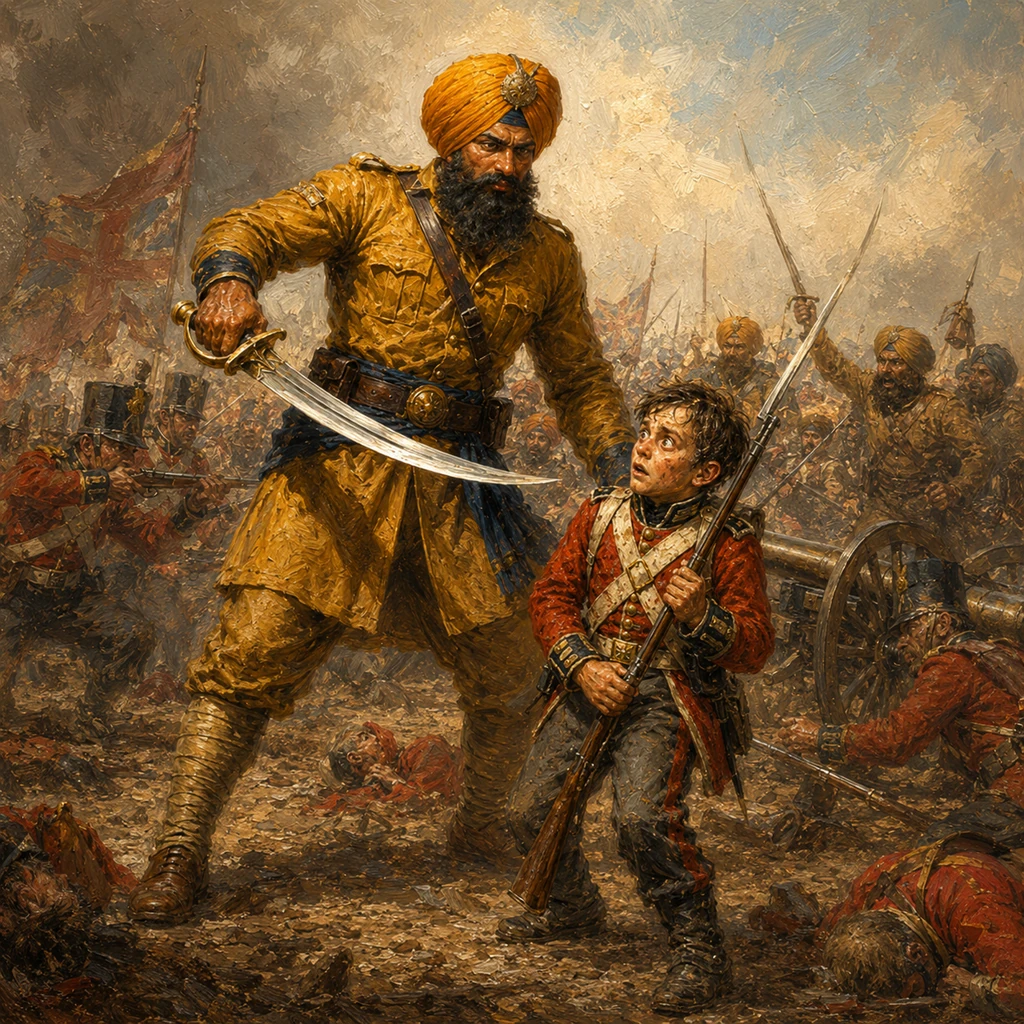
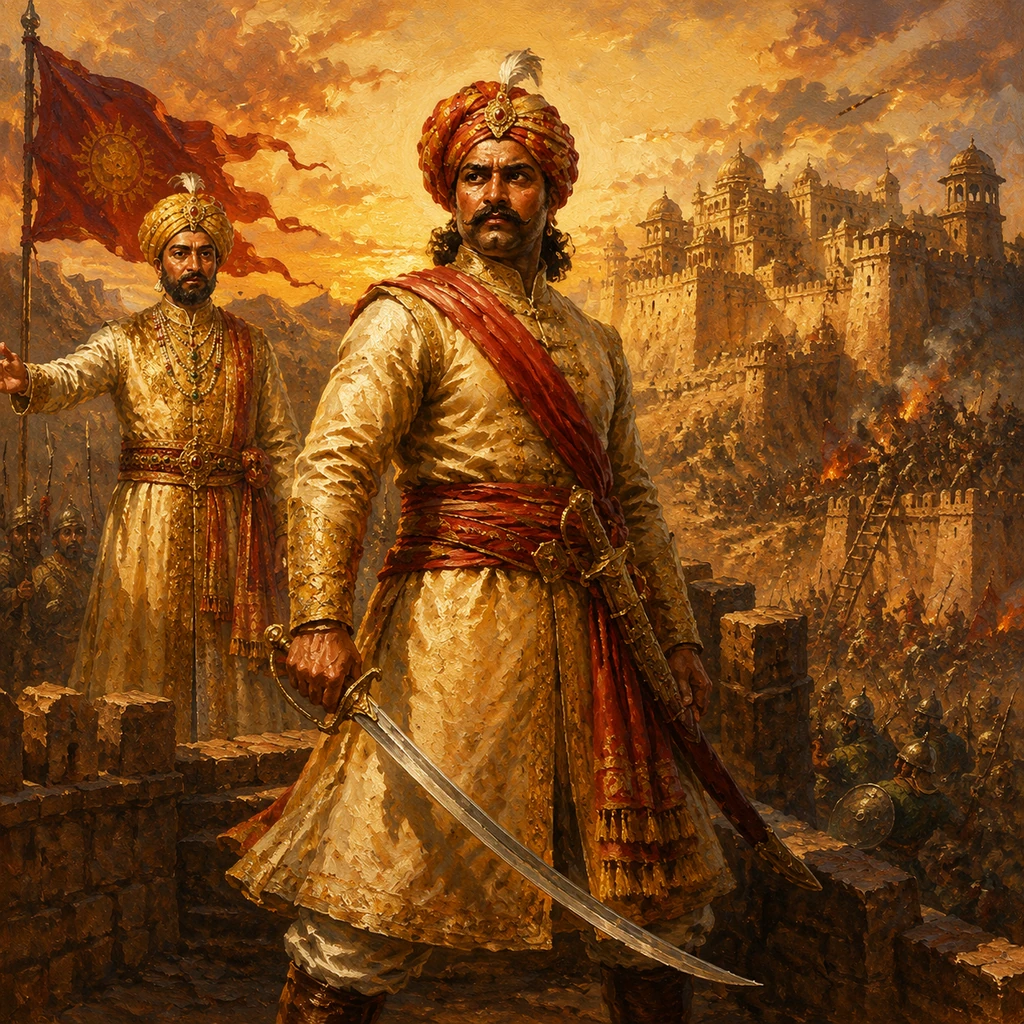
Step into the smoke and thunder of 1846 with a gripping historical tale of bravery, survival, and overwhelming odds. Through the eyes of a young soldier, readers will experience the breathtaking intensity of the Battle of Aliwal, where ordinary men clashed with legendary warriors. A powerful testament to courage, resilience, and the harrowing reality of historical warfare.
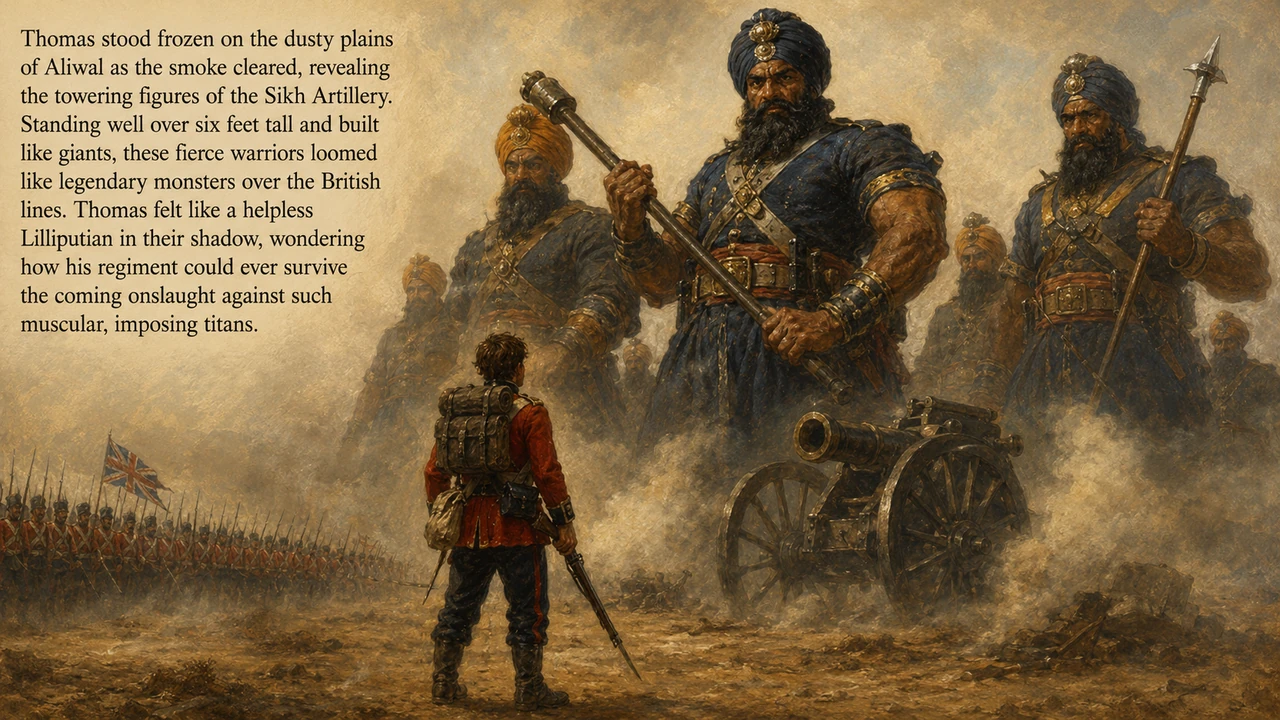
Thomas stood frozen on the dusty plains of Aliwal as the smoke cleared, revealing the towering figures of the Sikh Artillery. Standing well over six feet tall and built like giants, these fierce warriors loomed like legendary monsters over the British lines. Thomas felt like a helpless Lilliputian in their shadow, wondering how his regiment could ever survive the coming onslaught against such muscular, imposing titans.
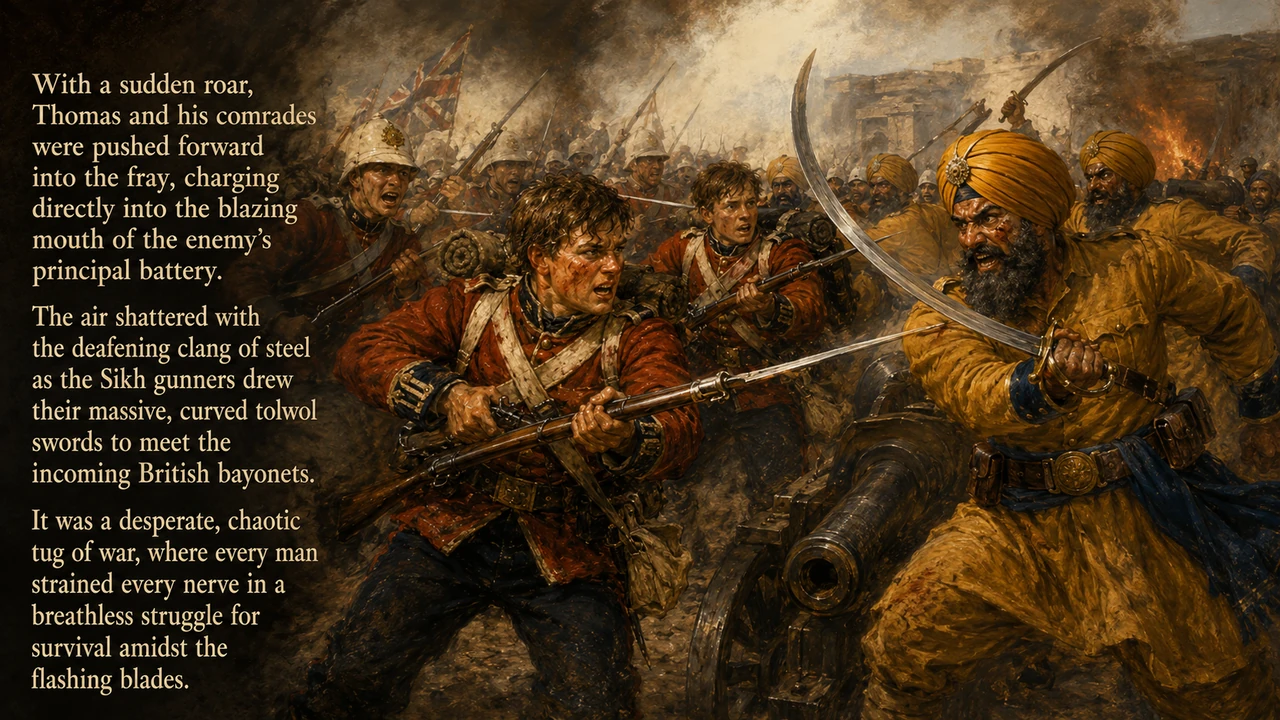
With a sudden roar, Thomas and his comrades were pushed forward into the fray, charging directly into the blazing mouth of the enemy's principal battery. The air shattered with the deafening clang of steel as the Sikh gunners drew their massive, curved tolwol swords to meet the incoming British bayonets. It was a desperate, chaotic tug of war, where every man strained every nerve in a breathless struggle for survival amidst the flashing blades.
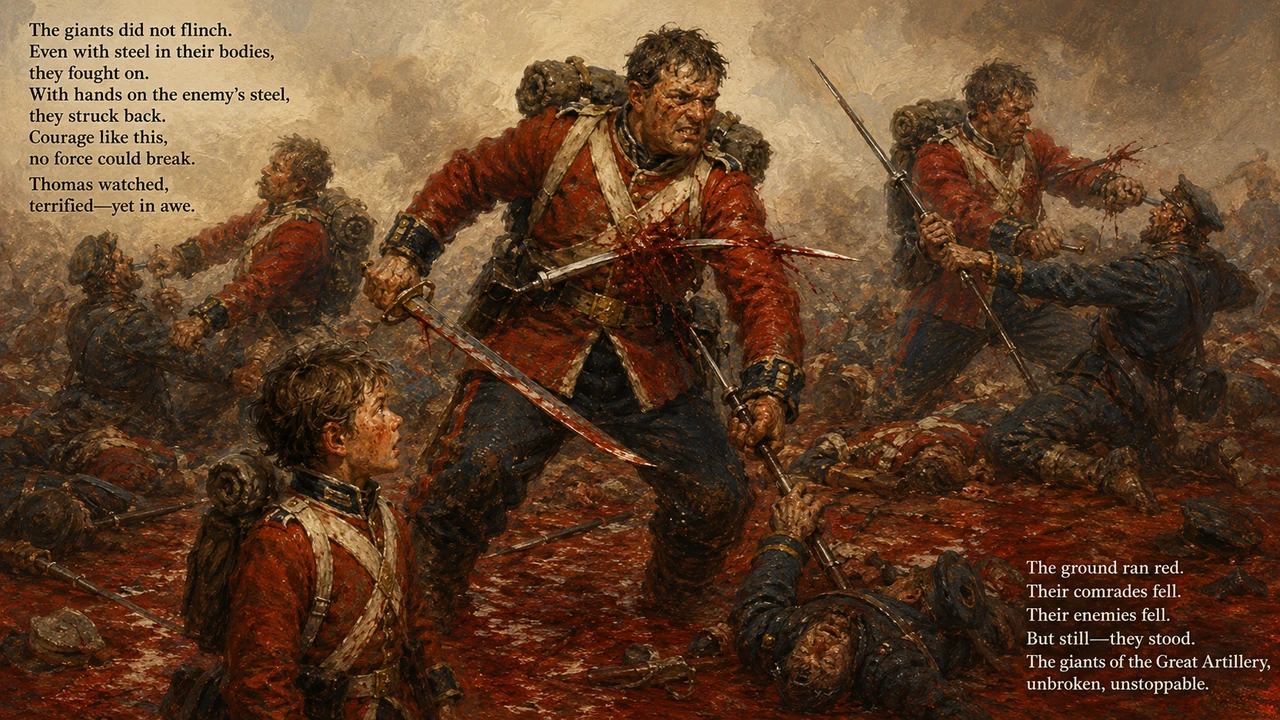
The ground quickly turned crimson as the brutal, hand-to-hand combat reached its peak. Thomas watched in absolute awe and terror as the giant artillerymen fought with unmatched courage, even holding onto the sockets of the bayonets that pierced them to strike back with their heavy swords. Surviving the ferocious clash, Thomas could only marvel at the sheer valor of his fallen comrades and the unstoppable giants they had faced.
Prompt di generazione(Accedi per vedere il prompt completo)
“The Seikh Artillery, with whom we contended, were picked men, both for valour and size; the were indeed gigantic, their usual stature being from six feet to six feet three inches, muscular and active in proportion. We were only like Lilliputians in comparison with those huge monsters, and I marvel they did not kill us all and swallow us slick out the way. Had they been without tasting food for a while, I am sure we would have been but a scanty meal for their numerous army, but fortunately they had been well fed, or possibly we might have become their prey….. We lost lots of men before we got to the enemy’s principal battery, for we were pushed, as it were, into the lion’s mouth; when we did reach it, the gunners resorted to their tolwols (giant swords) and we our bayonets, then came the tug of war with clashing steel in earnest. In describing, to the best of my ability, the most desperate conflict which took place, I might present to your imagination such scenes of horror as were never witnessed in this country. What a picture of horror I beheld when we and the Seikhs were straining every nerve to deeds of barbarity, wholly bent on mutual destruction, wielding sanguinary weapons, swords and bayonets. The ground in a few minutes was sprinkled with the blood of hundreds of brave men. Those overgrown brutes of artillery men had great advantage over us, and they fought with unusual courage, many of their lives being bought at the price of ours, i.e, when some of our men plunged their bayonets into the Seikhs, they held them fast by the sockets with their left hands, and cut our men’s heads off with their massive tolwols, with deep regret I saw several of my comrades thus killed”. At the Battle of Aliwal 1846