Step into the fast-paced world of software development where young engineer Laura faces her toughest challenge yet. It's not a complex bug or a crashing server, but the invisible barrier of poor communication that threatens to derail her team's biggest project. Discover a captivating modern tale about teamwork, clarity, and the unspoken art of understanding one another.
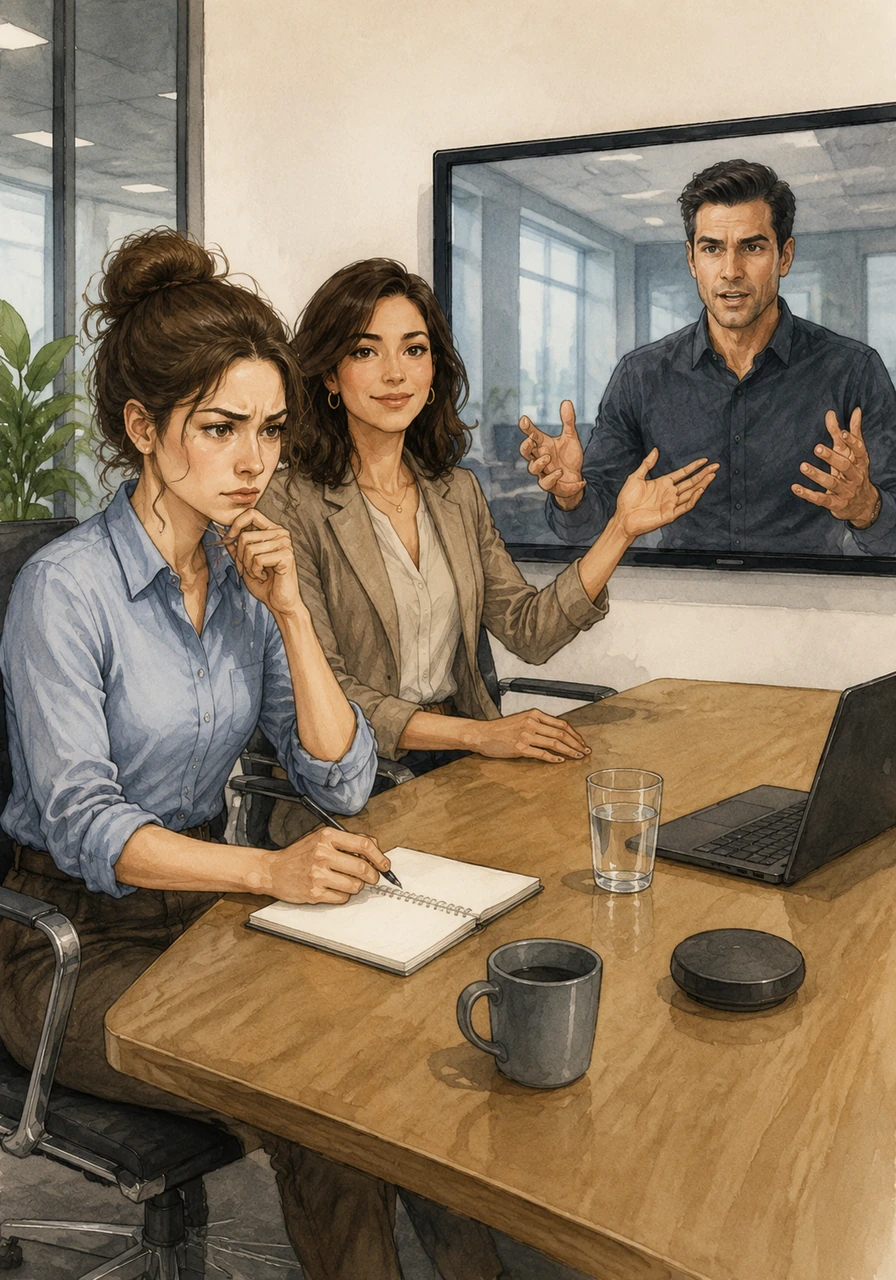
Laura sits in a bright, modern meeting room, staring intently at a glowing virtual conference screen. Sofía, the project manager, smiles as she introduces Andrés, the new external client who gestures expansively while describing his dream app. Laura balances a pen over her notebook, her brow furrowing slightly as she realizes the client's grand ideas lack any concrete technical requirements.
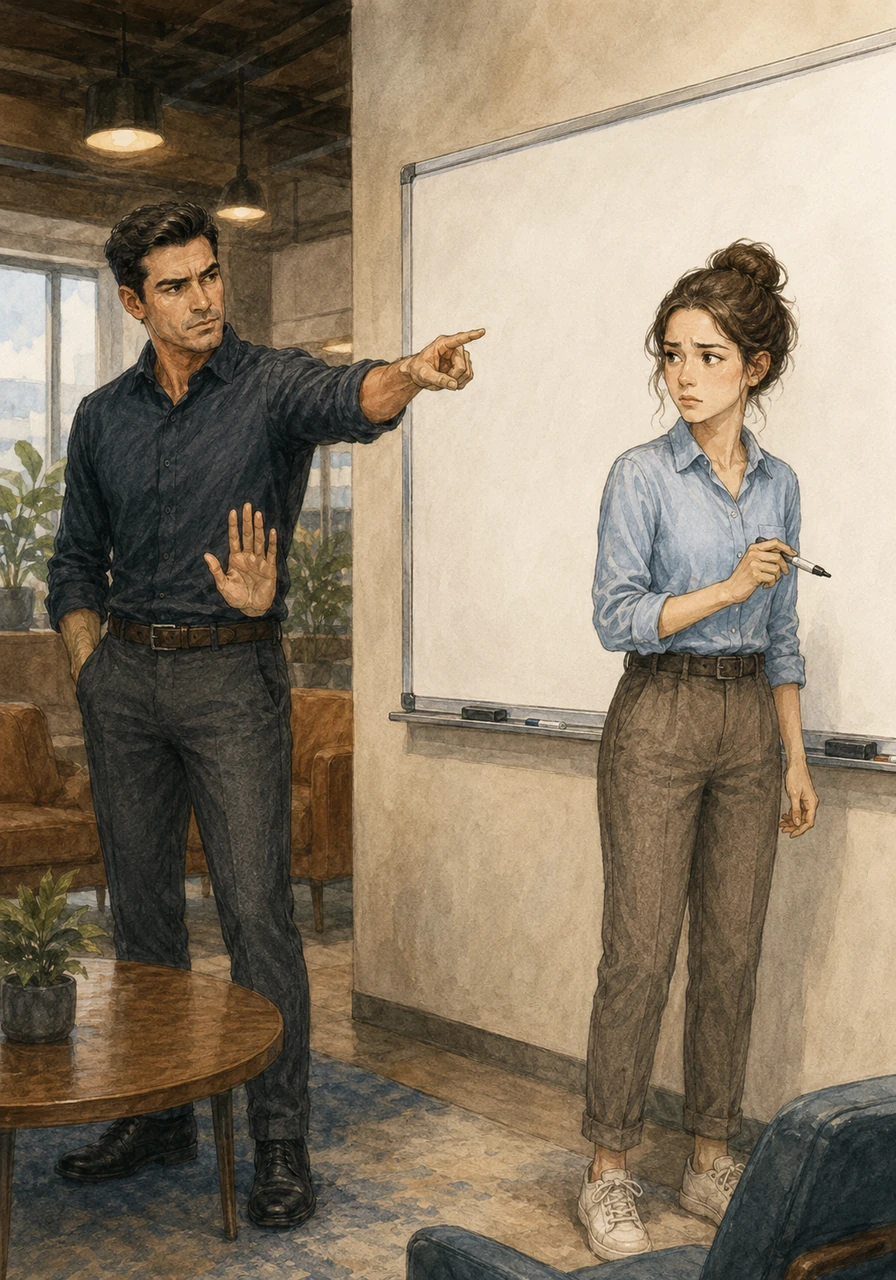
Back in the internal team lounge, Carlos, the senior tech lead, casually points to a whiteboard while giving Laura her next assignment. He brushes off her questions with a quick wave of his hand, telling her to just start building the user module immediately. Laura stands before the blank board with a dry-erase marker, feeling completely lost as she is forced to build a foundation entirely on assumptions.
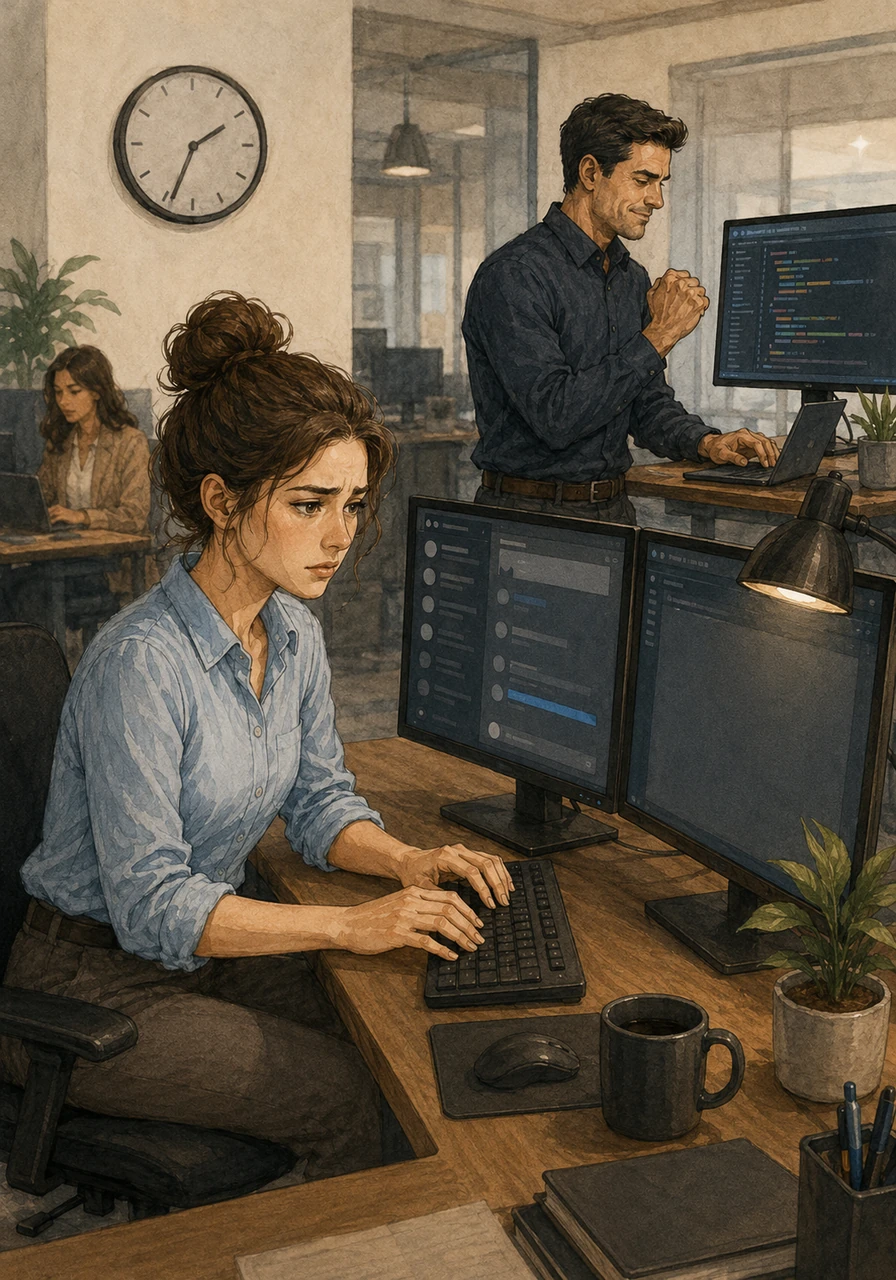
Seated at her dual-monitor desk surrounded by the quiet hum of the office, Laura types an urgent question into the team's internal chat channel. Hours tick by on the wall clock behind her, but her screen remains entirely silent, showing no replies from her teammates. Nearby, a colleague blissfully commits new code to the repository, completely unaware that his work is about to clash with hers.
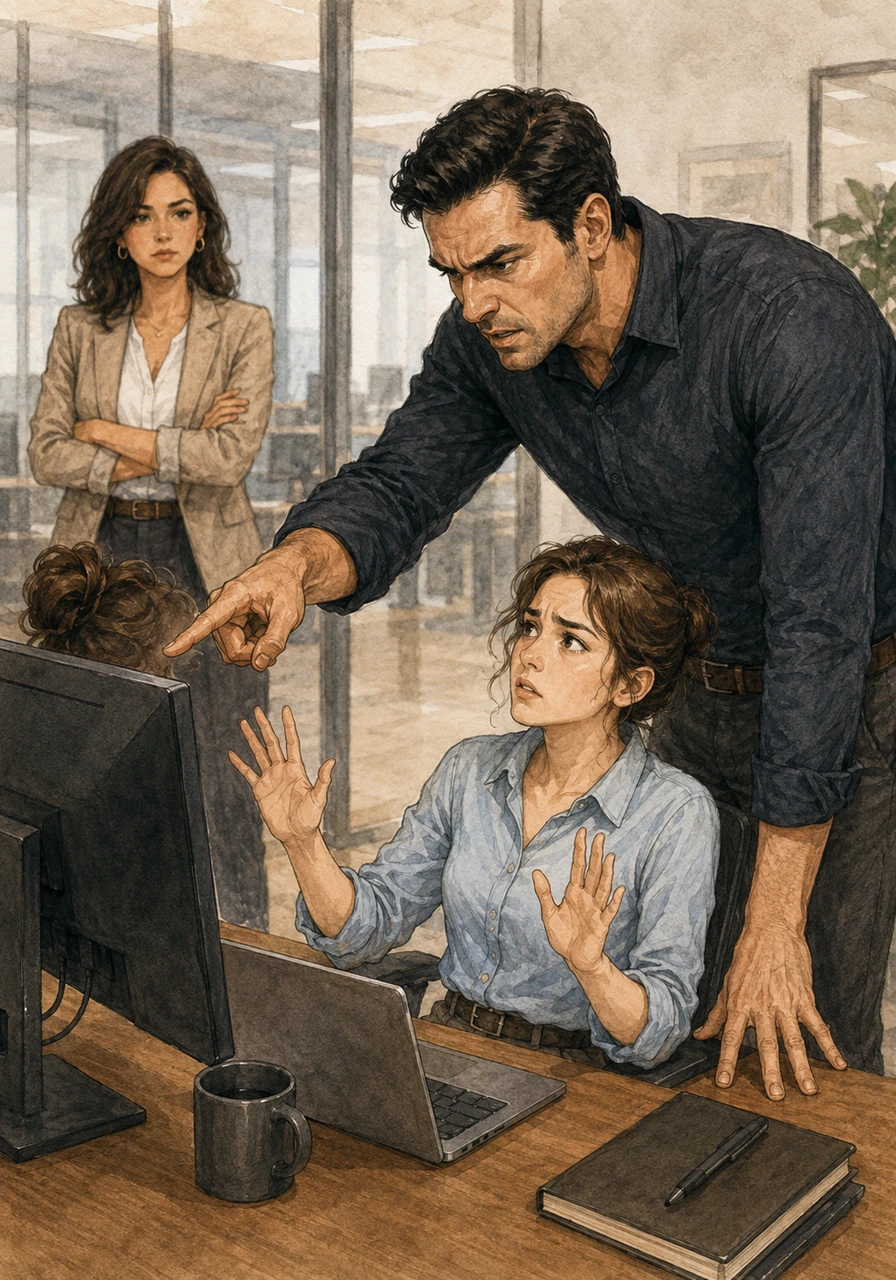
Carlos stands over Laura's desk during a tense code review, pointing aggressively at her screen with a deeply frustrated expression. Laura looks up at him with a mix of exhaustion and defense, holding up her hands to explain that no architecture was ever documented. The heavy air between them highlights the painful gap between his unspoken expectations and reality.
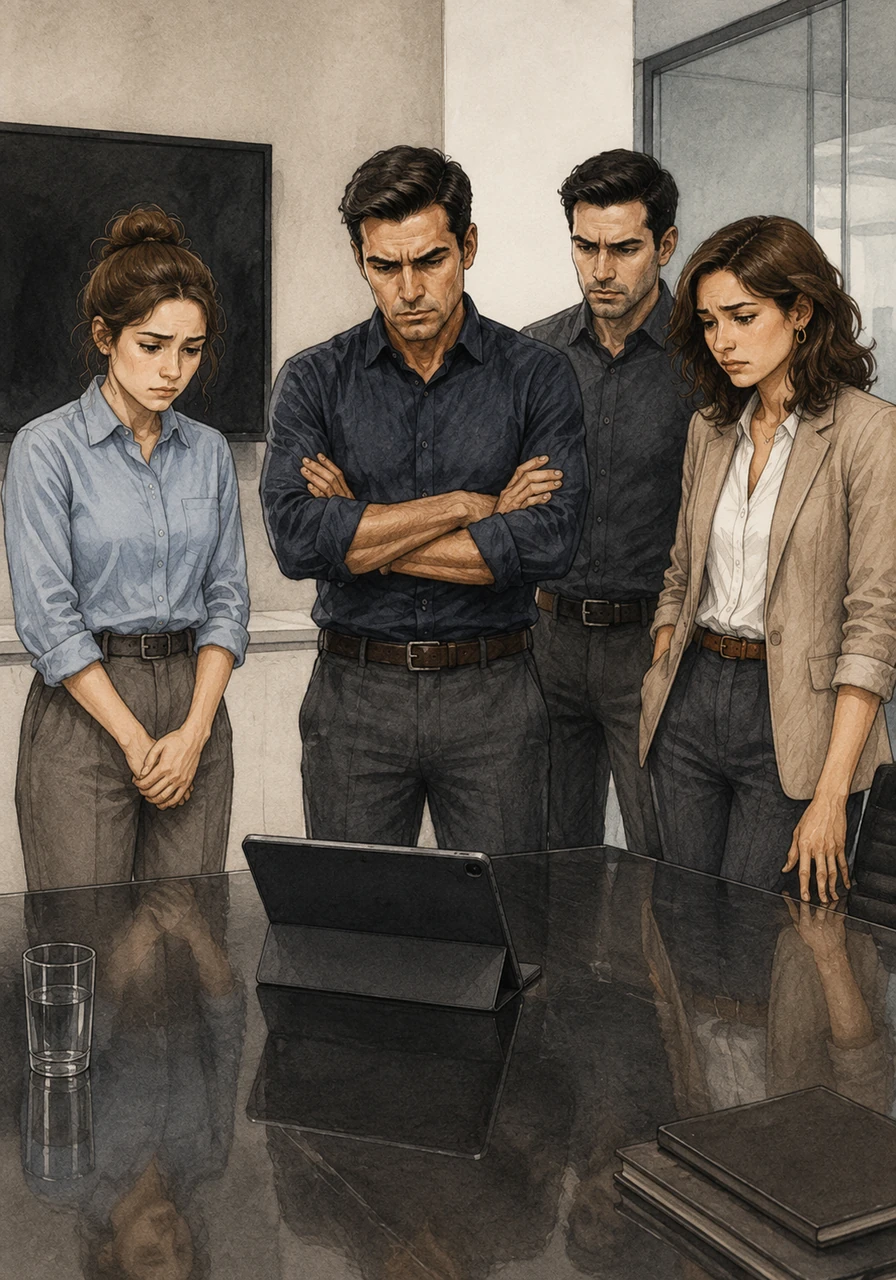
The entire team gathers nervously around a sleek conference table for the final presentation to Andrés. The client crosses his arms and frowns deeply at the demo tablet in front of him, expressing bitter disappointment with the final product. Sofía looks down in dismay while Laura shrinks back slightly, the heavy silence in the room confirming their collective failure to align.
After the chaotic meeting, the team retreats to a quiet lounge, looking exhausted but deeply reflective. Carlos sits with his head lowered, open to listening rather than blaming, while Sofía takes notes on a tablet. Laura looks at her colleagues with a sense of relief, realizing that everyone finally understands that programming was the easy part compared to truly listening.
Determined to fix their mistakes, Laura sets up a brand-new shared digital workspace on a large interactive screen. She stands confidently with a stylus, mapping out clear user stories, system boundaries, and wireframes. Carlos and Sofía stand beside her, nodding in agreement as they actively collaborate to build a transparent blueprint for the project.
Laura hosts a lively, interactive workshop with Andrés, using colorful sticky notes to map out the exact features he needs. Instead of guessing, she asks direct questions and listens patiently to his answers, bridging the gap between client imagination and technical reality. Andrés smiles, feeling genuinely heard and understood for the very first time.
With a crystal-clear roadmap in place, the development room transforms into an energetic hub of synchronized collaboration. Laura and her fellow programmers easily merge their code, sharing instant feedback over their headsets and celebrating quick wins. The previous tension melts away, replaced by the smooth rhythm of an aligned and communicative team.
On the final launch day, Andrés triumphantly taps the screen of the newly completed platform, his face lighting up with genuine satisfaction. Laura, Carlos, and Sofía stand together proudly, watching their successful creation compile flawlessly. They celebrate not just a beautiful piece of software, but the powerful communication that brought it to life.
Prompt di generazione(Accedi per vedere il prompt completo)
GUION STORYBOOK 🎬 “Cuando el código no es el único problema” 🟣 PERSONAJES Laura: desarrolladora de software junior (protagonista) Carlos: líder técnico del equipo Sofía: project manager Andrés: cliente del proyecto (empresa externa) Equipo de desarrollo: compañeros de Laura 🟢 ESCENA 1: INICIO DEL PROYECTO (REUNIÓN CON EL CLIENTE) 📍 Sala virtual de reunión Sofía abre la videollamada con el cliente. Sofía: —Vamos a iniciar el proyecto de la plataforma. Andrés, ¿podría explicarnos qué necesita exactamente? Andrés (cliente): —Queremos una plataforma moderna, rápida, intuitiva… algo como Netflix, pero para nuestra empresa. Laura toma notas, pero frunce el ceño. 💭 Pensamiento de Laura: “Eso es demasiado general… no hay requisitos claros.” Carlos (líder técnico): —¿Podría ser más específico en funcionalidades? Andrés: —No sé… ustedes son los expertos, sorpréndannos. 📌 Problema de comunicación: Ambigüedad en requisitos Expectativas no claras El cliente delega decisiones críticas sin información 🟡 ESCENA 2: PLANIFICACIÓN DEL PROYECTO (EQUIPO INTERNO) 📍 Reunión del equipo de desarrollo Carlos: —Laura, encárgate del módulo principal de usuarios. Es sencillo. Laura: —¿Sencillo en qué sentido? No tengo detalles de roles ni permisos. Carlos (rápido): —Eso lo definimos después, empieza ya. 💭 Pensamiento de Laura: “Estoy construyendo sin saber qué debo construir…” 📌 Problema de comunicación: Falta de claridad en instrucciones Comunicación vertical sin espacio para dudas Suposiciones en lugar de especificaciones 🔵 ESCENA 3: DESARROLLO (TRABAJO EN EQUIPO) 📍 Equipo programando Laura pregunta en el chat interno: Laura: —¿El login debe incluir autenticación de dos factores? Nadie responde por horas. Más tarde, otro compañero sube código incompatible. Compañero: —Yo asumí que no era necesario el 2FA. 💥 Conflicto en el equipo. 📌 Problema de comunicación: Falta de respuesta oportuna Suposiciones individuales Ausencia de acuerdos técnicos claros 🟠 ESCENA 4: REVISIÓN CON EL LÍDER TÉCNICO 📍 Revisión de avance Carlos: —Esto no es lo que esperaba. El diseño no sigue la arquitectura. Laura: —Pero nunca se definió una arquitectura clara. Carlos (molesto): —Eso era obvio. 💭 Pensamiento de Laura: “Obvio para quién…” 📌 Problema de comunicación: Expectativas implícitas Falta de documentación Retroalimentación poco asertiva 🔴 ESCENA 5: ENTREGA AL CLIENTE (CRISIS) 📍 Presentación final Sofía: —Aquí está la primera versión de la plataforma. El cliente la prueba. Andrés: —No era lo que esperaba… esto no sirve así. Silencio incómodo. Laura (en voz baja): —Pero esto fue lo que entendimos… 📌 Problema de comunicación: Falta de validación continua con el cliente Requisitos mal interpretados Ausencia de comunicación iterativa 🟣 ESCENA 6: REFLEXIÓN FINAL 📍 Equipo reunido después del fracaso parcial Carlos (más calmado): —No fue solo un problema técnico… fue un problema de comunicación. Sofía: —Nunca validamos lo suficiente con el cliente ni entre nosotros. Laura: —Programar fue lo más fácil… entender lo que querían fue lo difícil. 🟢 MENSAJE FINAL (CIERRE STORYBOOK) 📌 Narrador: En el desarrollo de software, el código puede compilar… pero una mala comunicación siempre falla. Escuchar, preguntar, confirmar y documentar no son opcionales: son parte del sistema.