Discover a heartwarming journey of a young boy who learns that the loudest voice isn't always the strongest. This beautifully illustrated story explores the hidden needs behind difficult behavior and the transformative power of inclusion, empathy, and finding one's true place in the group.
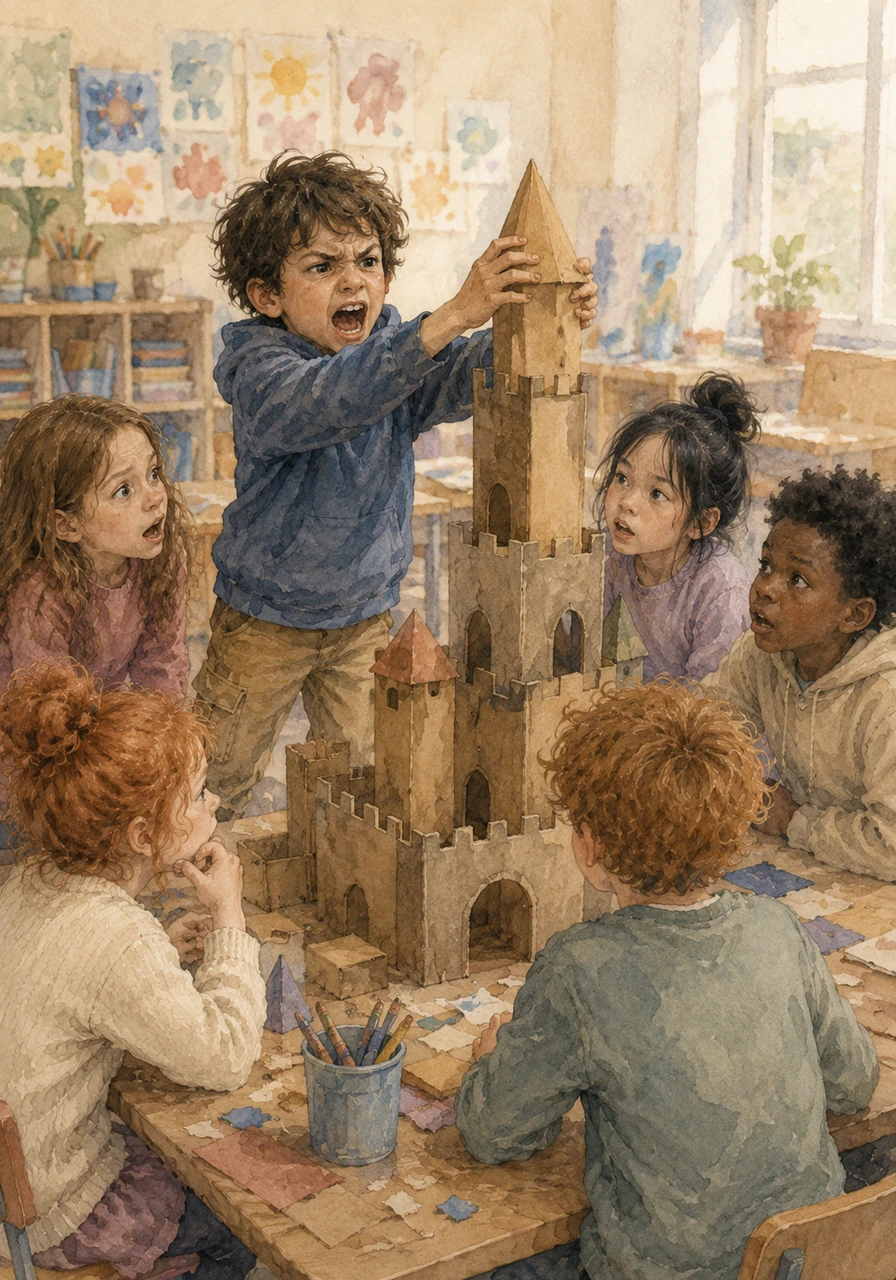
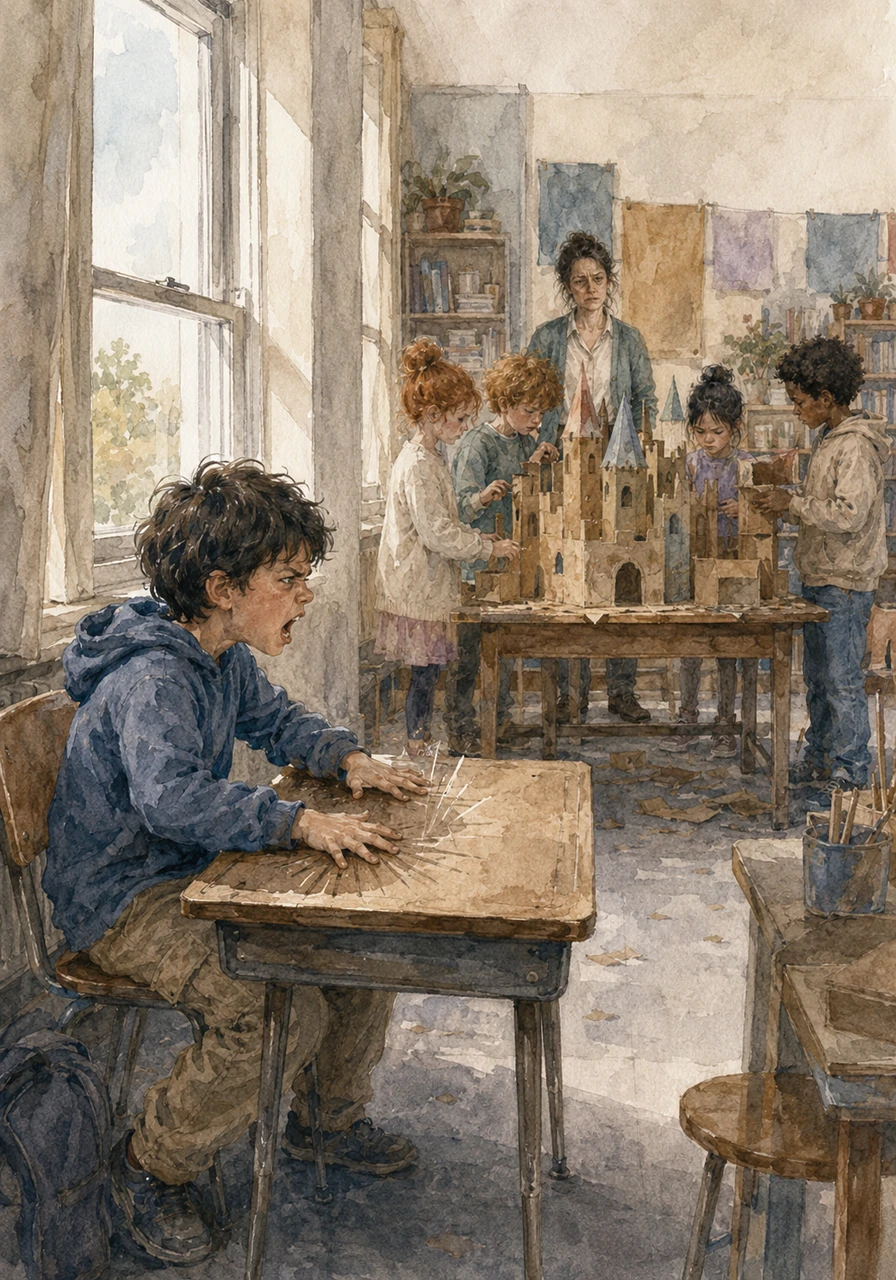
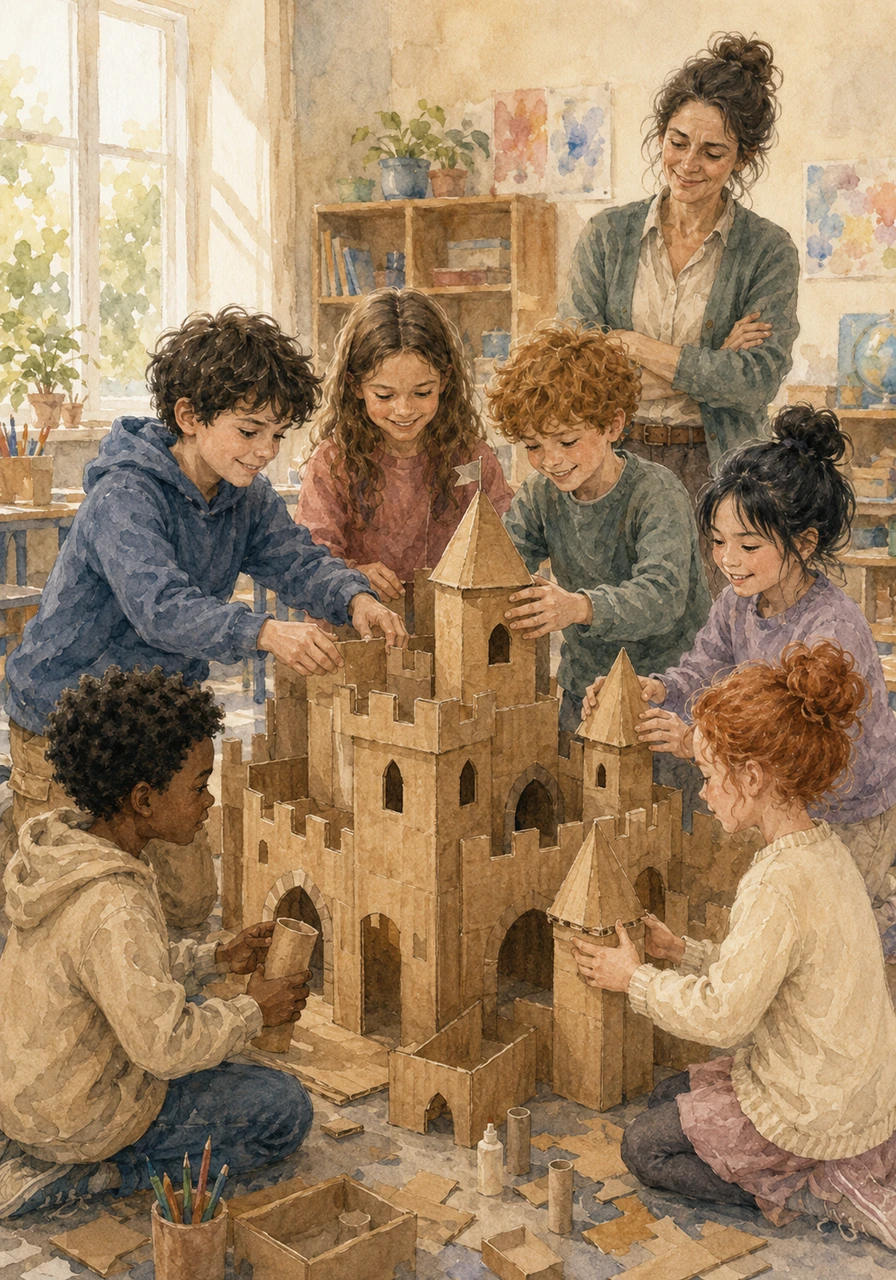
In a bright classroom filled with the scent of crayons, Federico sits with his group as they begin to build a grand cardboard castle. While the others whisper and plan, Federico feels a nervous energy buzzing in his chest, making it hard to sit still. He suddenly reaches out and grabs the tallest tower, shouting that he is the king of the construction.
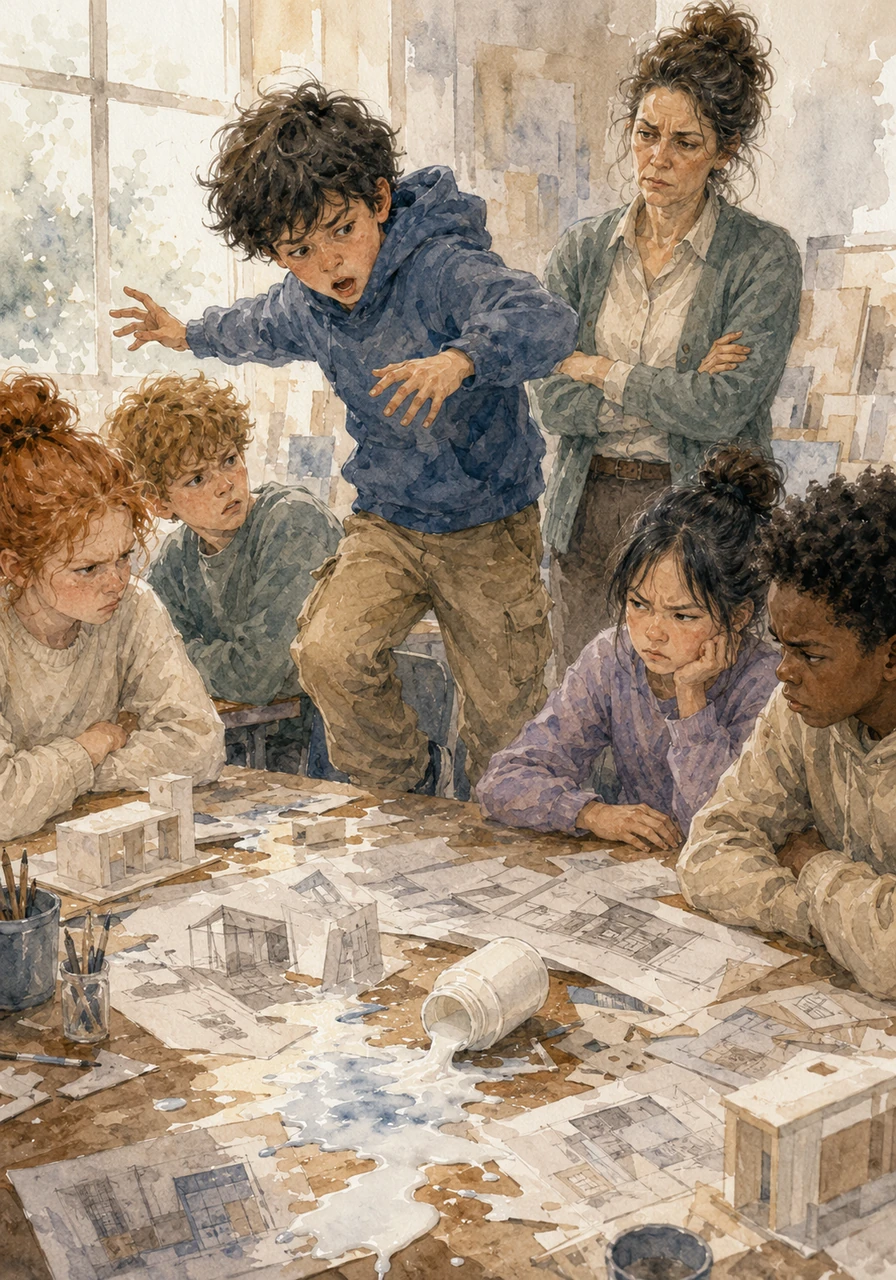
As his classmates discuss where the drawbridge should go, Federico jumps up and interrupts, his voice drowning out their ideas. He moves around the table constantly, accidentally knocking over a pot of glue that spills across their careful sketches. The other children look at each other with furrowed brows, their excitement turning into quiet frustration.
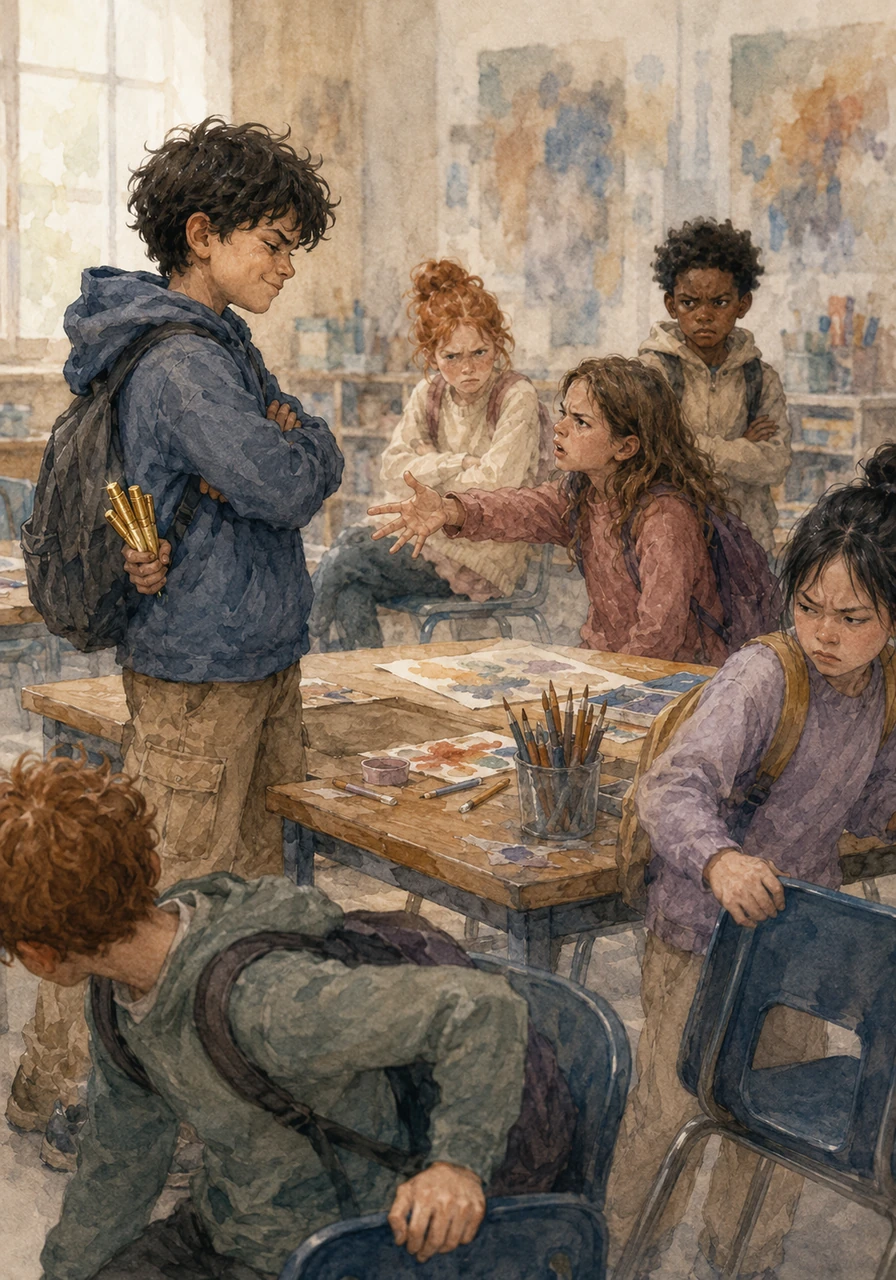
Federico snatches the golden markers from the center of the table without asking, hiding them behind his back with a defiant smirk. When a teammate asks for them back, he crosses his arms and says it doesn't matter because the project is boring anyway. Inside, however, he feels a sharp pang of worry as he sees his friends moving their chairs further away from him.
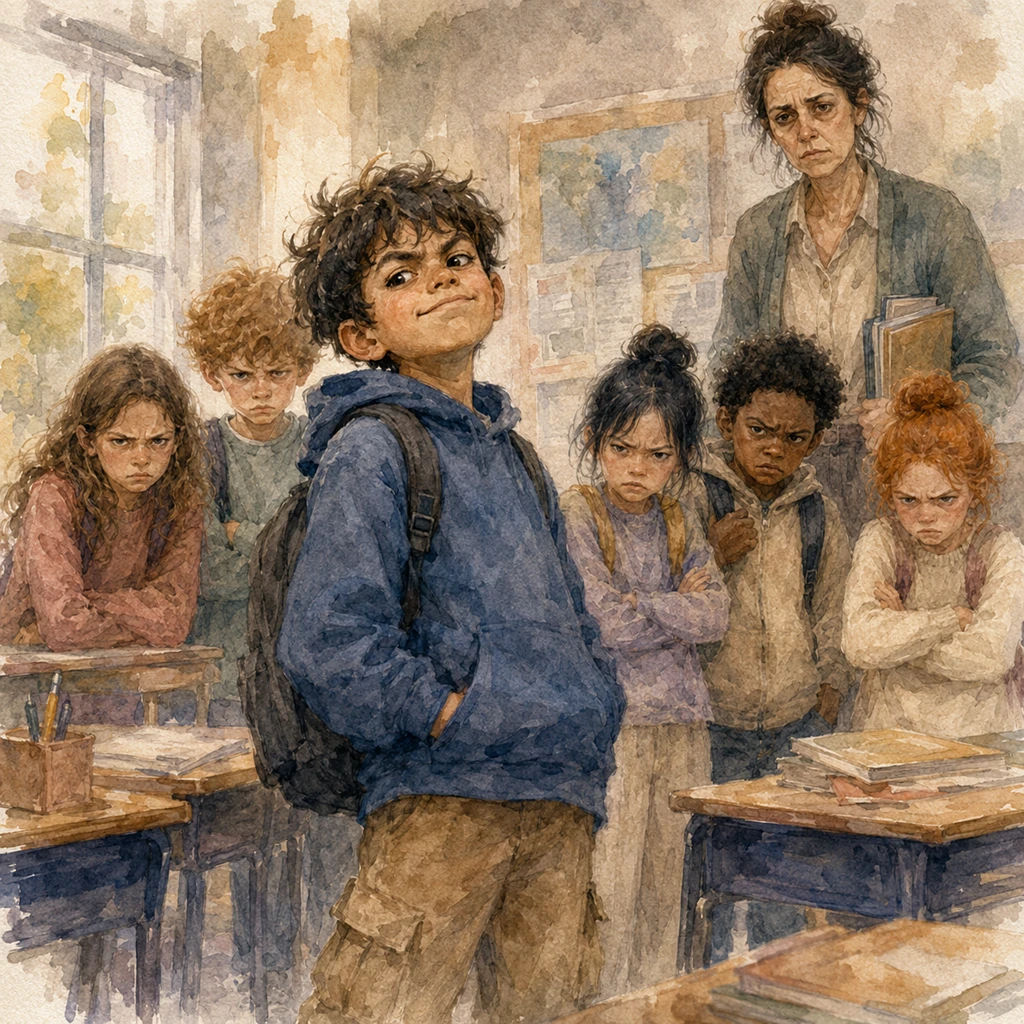
The teacher gently asks Federico to take a break from the group since the tension has become too high for them to work. He sits at a small desk by the window, watching the others continue their castle from a distance. Instead of opening a book, he starts making loud tapping noises and humming, trying desperately to make his classmates look back at him.
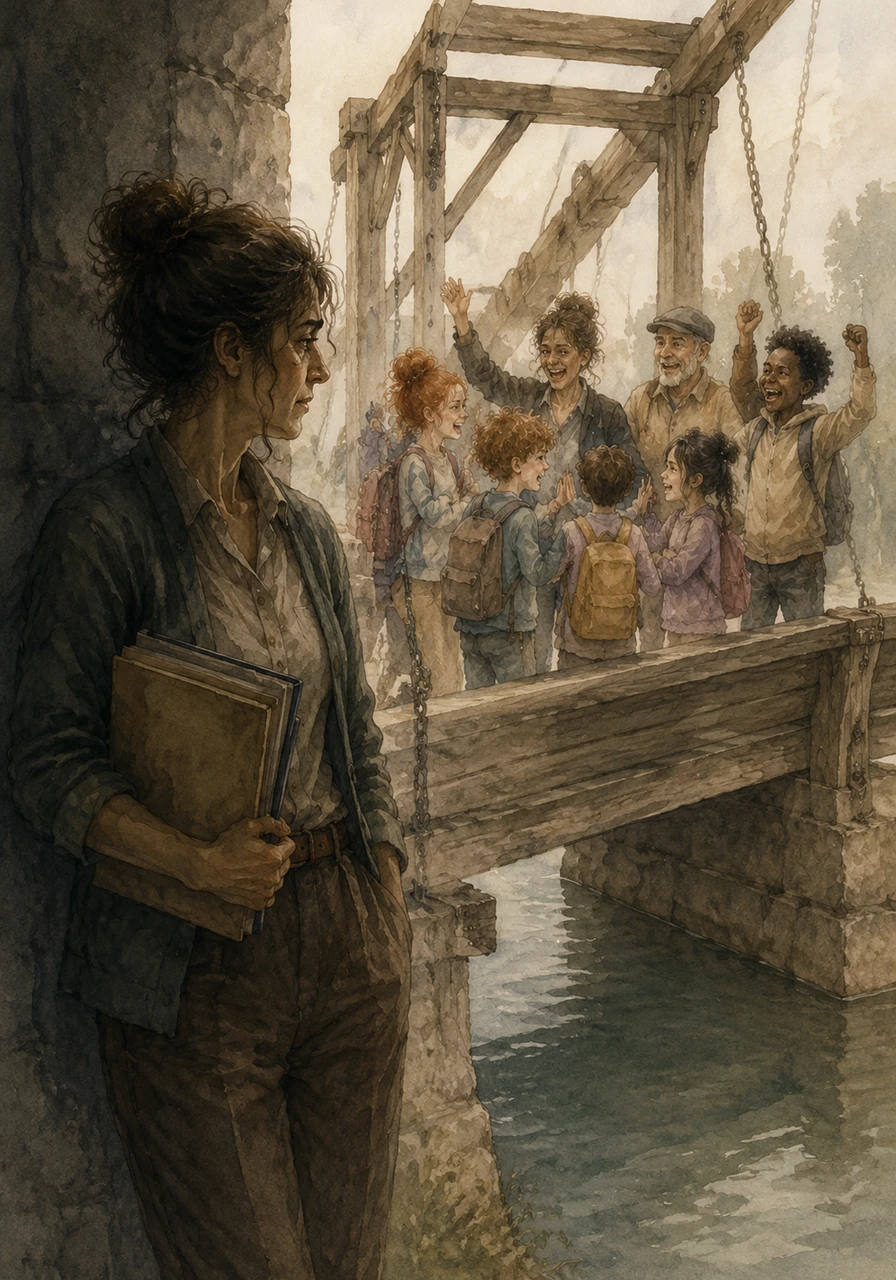
From his lonely spot, Federico watches the group laughing as they finally get the drawbridge to work. He feels a heavy lump in his throat, realizing that his 'commanding' hasn't made him a leader, but has left him on the outside looking in. He realizes that his bossy words were just a shield to hide how much he wanted to be noticed and valued.
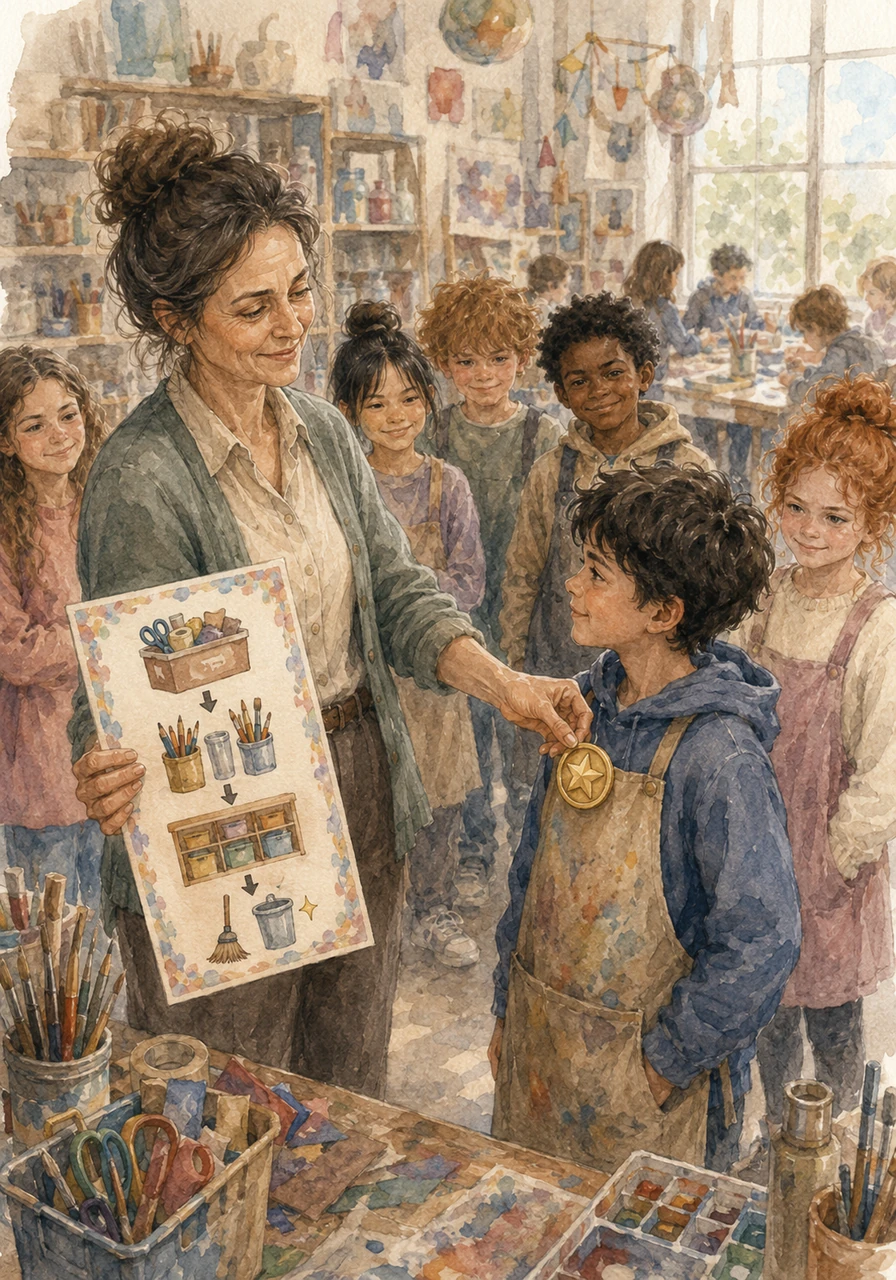
The teacher approaches Federico with a kind smile and a special golden badge that says 'Master of Materials.' She explains that every great project needs someone to manage the supplies and ensure everyone has what they need at the right time. She offers him a clear set of steps on a colorful card to help him know exactly what to do.
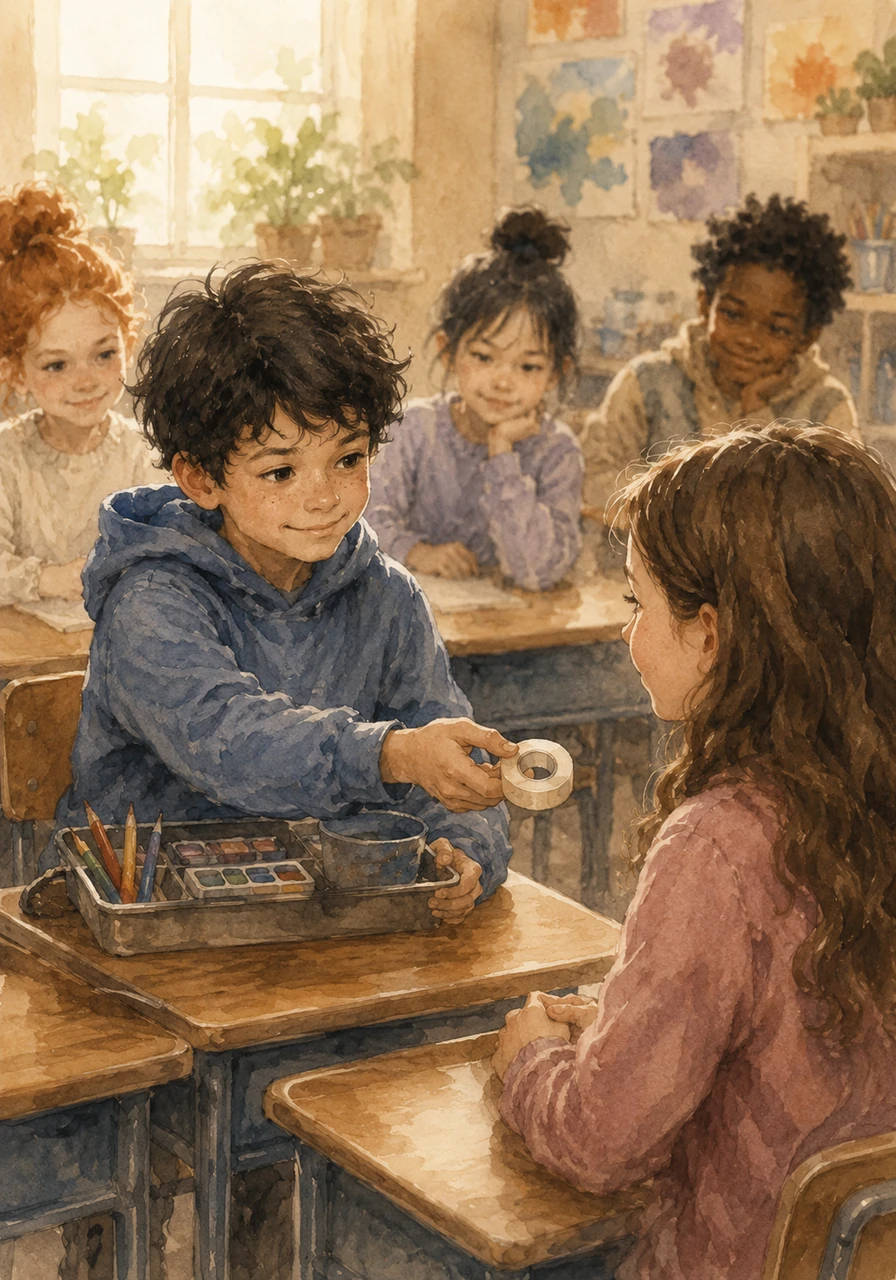
Federico returns to the group, but this time he stays in his designated spot with the supply tray neatly organized. When a classmate needs a piece of tape, he waits for them to finish speaking before handing it over with a shy smile. He discovers that being helpful feels much better than being the loudest person in the room.
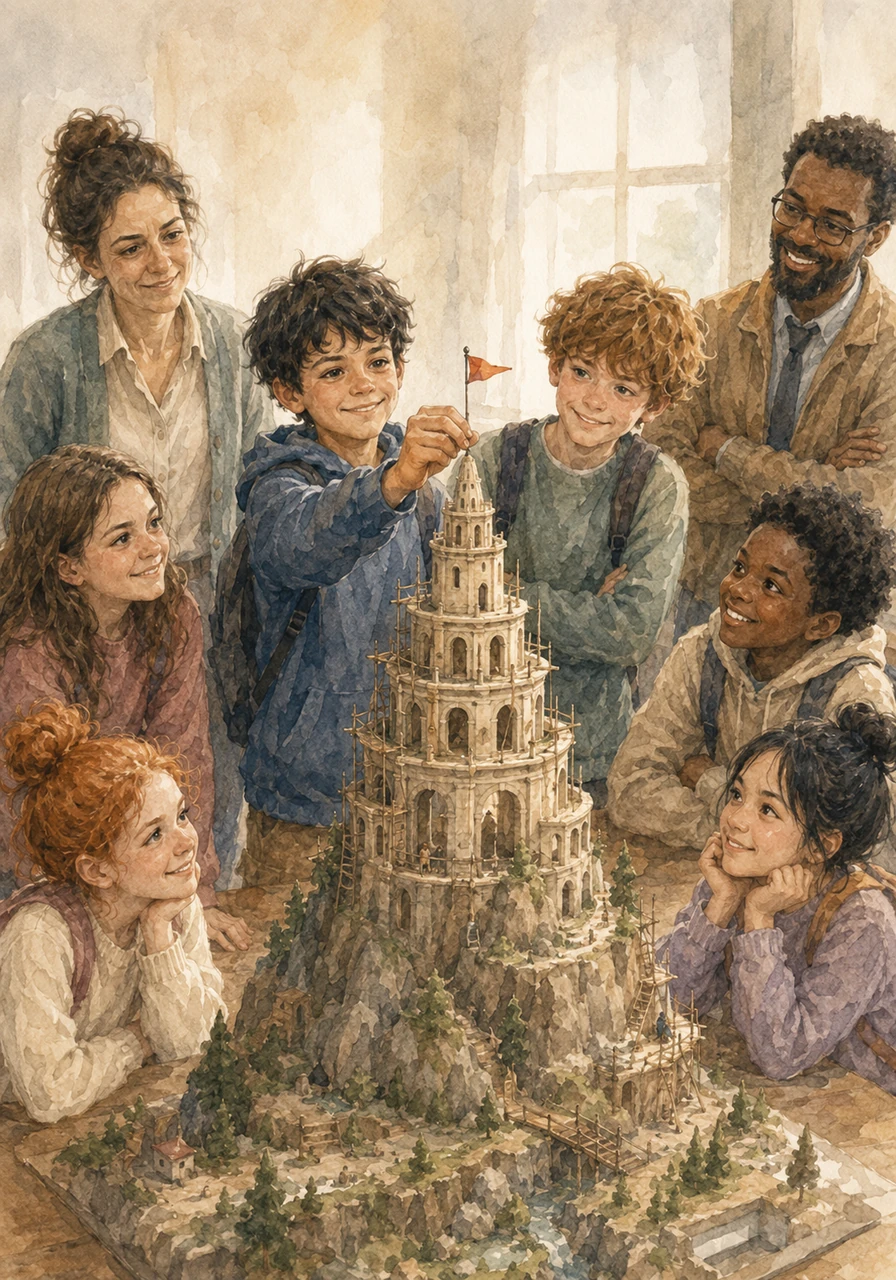
The group starts to notice the change, and the tension in the air begins to melt away like morning mist. When Federico suggests adding a small flag to the highest tower, the others listen and agree that it's a wonderful idea. For the first time, Federico feels like a vital piece of a puzzle rather than a storm cloud over the table.
By working together, the cardboard castle becomes more magnificent than any of them could have built alone. Federico experiences the quiet joy of shared success, realizing that following the rules and taking turns actually makes the game more fun. He no longer feels the need to shout to be seen; his hands and his help speak for him.
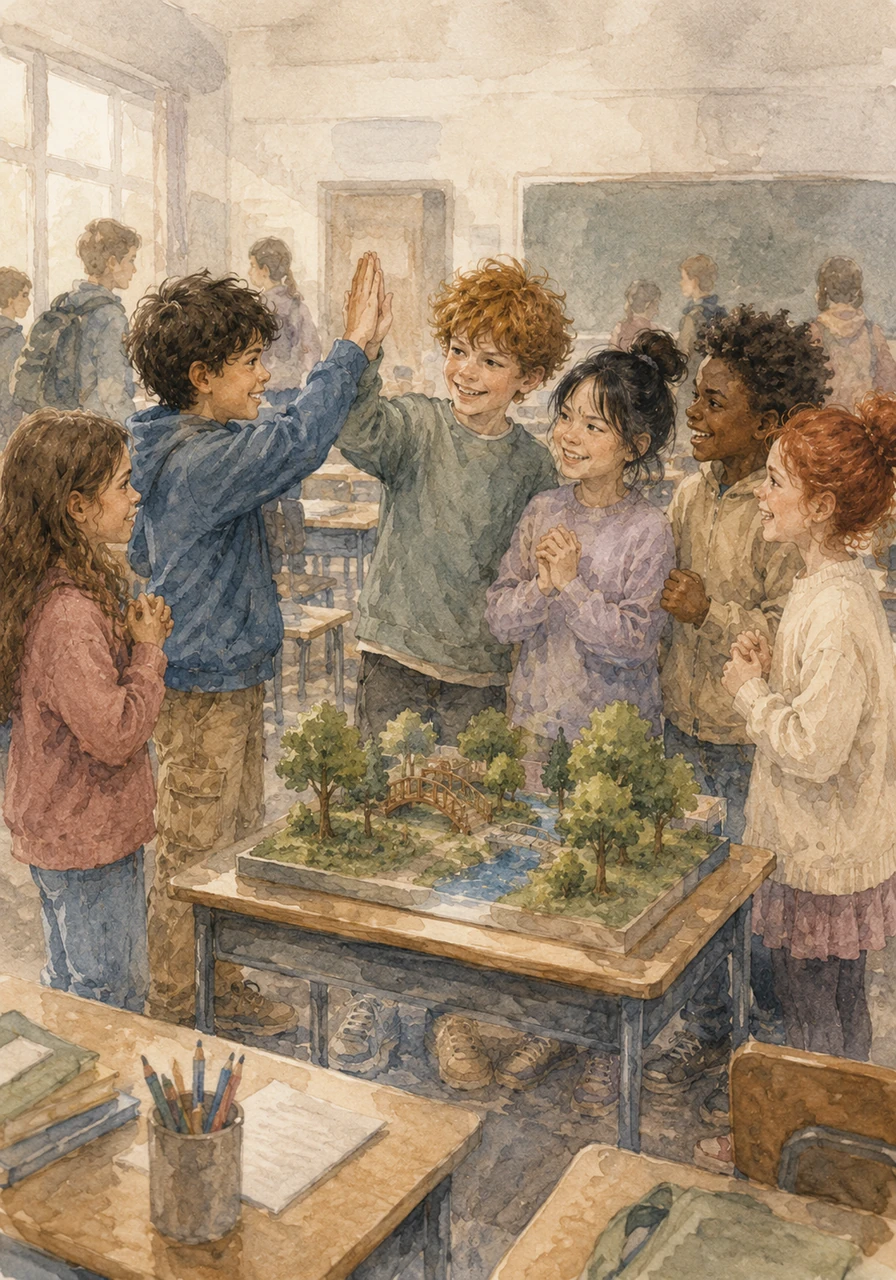
As the school bell rings, the group stands proudly around their masterpiece, and Federico high-fives his teammates. He has learned that friendship isn't about who is in charge, but about how well you hold the pieces together for one another. He leaves the classroom with a light heart, knowing he truly belongs.
생성 프롬프트(전체 프롬프트를 보려면 로그인하세요)
F di gederico sta partecipando a un lavororuppo ma fatica a rispettare regole, turni e collaborazione, mettendo in difficoltà il lavoro dei compagni. ................................................................................ Interrompe gli altri, si sposta continuamente, prende materiali senza permesso, risponde in modo provocatorio (“Comando io”, “Tanto non mi interessa”), danneggia accidentalmente il lavoro e cerca attenzione disturbando. ................................................................................ Il fatto che, anche dopo essere escluso dal gruppo, continui a cercare attivamente l’attenzione dei compagni attraverso comportamenti disturbanti, invece di allontanarsi dall’attività. ................................................................................ Nel gruppo emergono frustrazione, irritazione e tensione; nei compagni anche senso di ingiustizia e esclusione. ................................................................................ Federico potrebbe provare bisogno di attenzione, frustrazione, rabbia e difficoltà a sentirsi parte del gruppo. Il comportamento provocatorio può mascherare insicurezza e ricerca di riconoscimento. ................................................................................ Probabilmente frustrazione, preoccupazione e senso di fatica nel gestire la classe, ma anche responsabilità nel cercare una strategia per coinvolgere il bambino in modo più positivo. ................................................................................ Dietro il comportamento di Federico potrebbero esserci diversi bisogni non soddisfatti: bisogno di attenzione e riconoscimento da parte del gruppo, bisogno di sentirsi competente nelle attività, bisogno di controllo in situazioni percepite come strutturate o competitive, e difficoltà nella regolazione emotiva e nell’attesa. ................................................................................ La situazione risulta difficile perché il comportamento oppositivo interrompe la collaborazione del gruppo, crea tensioni tra pari e riduce l’efficacia del lavoro didattico. Inoltre, la dinamica tende a rinforzarsi: più il bambino viene escluso, più aumenta la ricerca di attenzione attraverso modalità disfunzionali ................................................................................ Come insegnanti si possono incontrare difficoltà nel mantenere il gruppo coeso, nel gestire i comportamenti provocatori senza alimentarli, nel trovare strategie condivise tra docente curricolare e di sostegno e nel bilanciare il bisogno del singolo con quello della classe. Inoltre può essere complesso evitare che l’esclusione sociale del bambino si consolidi ulteriormente. ................................................................................ Il comportamento non è “opposizione volontaria”, ma una modalità disfunzionale di ricerca di attenzione e controllo. L’obiettivo è mantenere la relazione e ridurre l’escalation, non “vincere il confronto”. Serve coerenza educativa tra docenti e regole chiare, prevedibili e poche. Rinforzare i comportamenti adeguati più che punire quelli inadeguati. ................................................................................ Federico usa provocazione, intrusività e sfida per ottenere visibilità nel gruppo. La perdita di ruolo nel gruppo aumenta la sua attivazione comportamentale. Il “disturbo” è anche una forma di comunicazione: difficoltà nella gestione dell’autoregolazione e nel riconoscimento sociale. ................................................................................ Ridurre i conflitti diretti durante l’attività (comandi brevi, neutri, non negoziati sul momento). Assegnare un ruolo strutturato e definito nel gruppo per favorire partecipazione positiva. Rinforzare immediatamente anche piccoli comportamenti cooperativi. Prevedere una pausa o spazio di decompressione se aumenta l’attivazione. Dopo l’episodio, rielaborazione calma con il bambino (non punitiva) per costruire alternative comportamentali. ................................................................................ Sì, la situazione può cambiare prospettiva: il comportamento di Federico non è solo oppositivo, ma può essere letto anche come un tentativo disfunzionale di ottenere attenzione e ruolo nel gruppo. Questo aiuta a spostare lo sguardo dal “disturbo” alla funzione del comportamento nel contesto sociale. ................................................................................ Strutturare meglio il lavoro di gruppo con ruoli chiari e definiti . Assegnargli un ruolo attivo ma guidato per canalizzare la sua energia Rinforzare positivamente i comportamenti collaborativi, anche piccoli Usare regole visive e brevi, condivise prima dell’attività Intervenire subito ma in modo calmo e non punitivo, per evitare escalation ................................................................................ Si comprende l’importanza di mantenere una lettura funziona