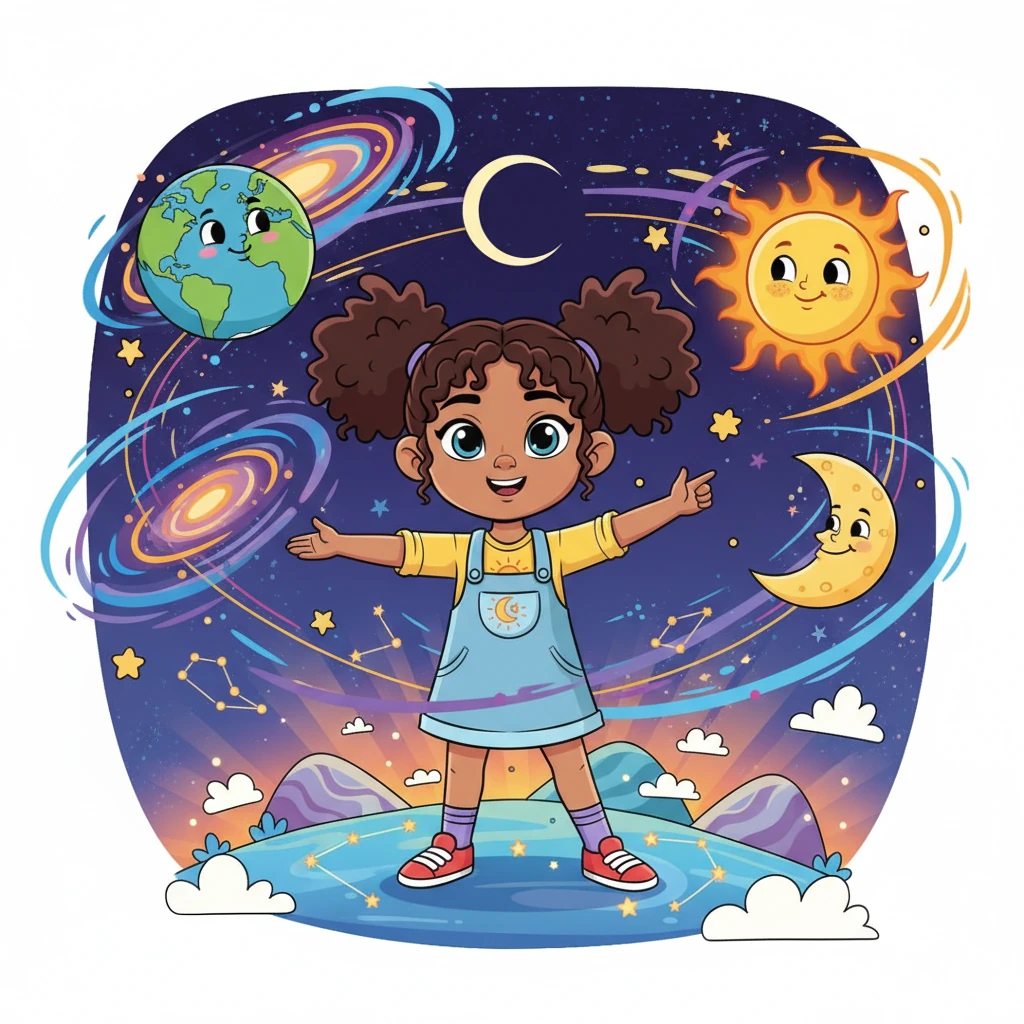
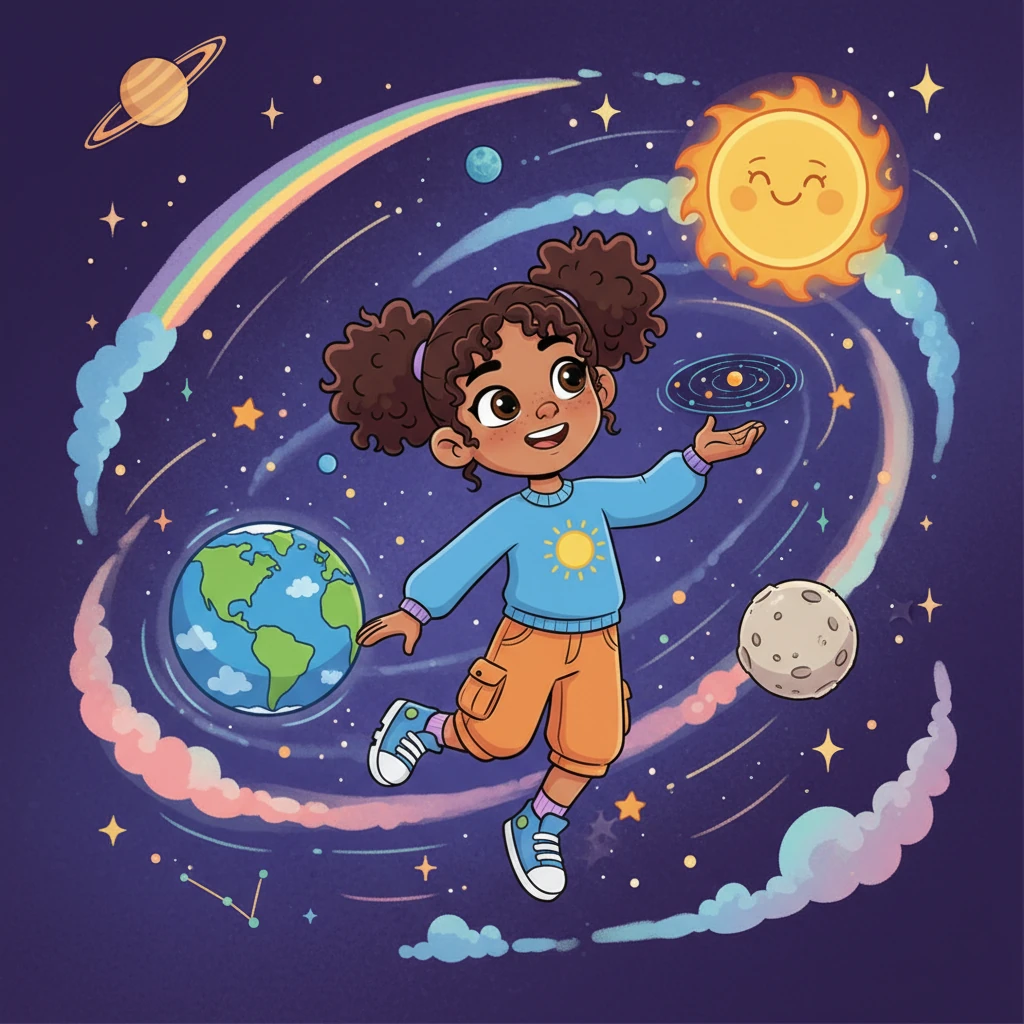
Join Rashmika, a curious 12-year-old, on an enchanting journey through the wonders of our solar system. From puzzling shadows to the secrets of seasons and spectacular eclipses, this story beautifully explains how the Earth, Moon, and Sun perform a mesmerizing, perfectly timed cosmic dance. Ignite your child's curiosity with vibrant illustrations and captivating science!
Rashmika, a bright-eyed girl with a cheerful smile, pedals her bicycle down a sunny road lined with tall, swaying coconut trees in Kanniyakumari. Her pigtails bounce as she looks at the long, thin shadows stretching far ahead of her. A thought bubble above her head shows a question mark, highlighting her puzzled expression.
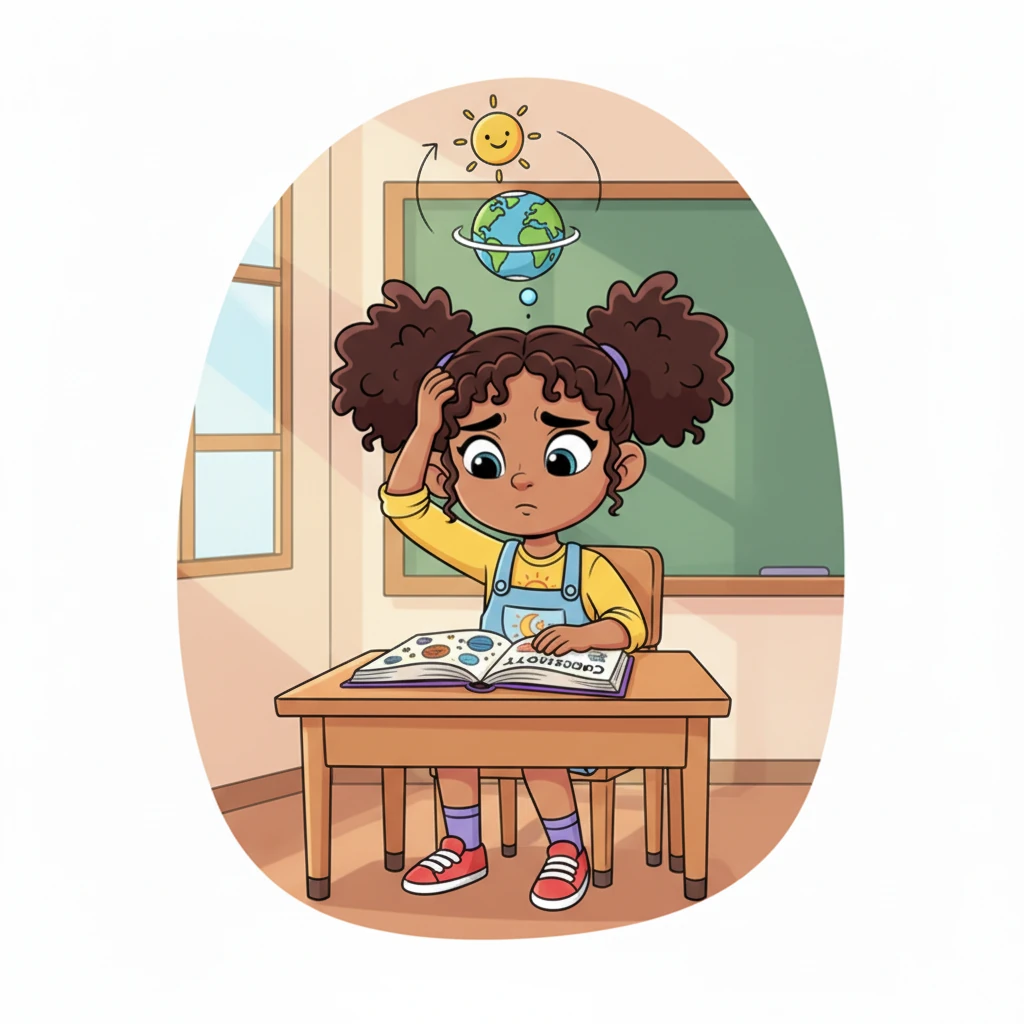
Rashmika sits at her school desk, a colorful science book titled Curiosity open before her. She has a thoughtful, slightly confused expression, scratching her head as a tiny sun seems to move across the sky in her mind's eye, while a little Earth spins below it.
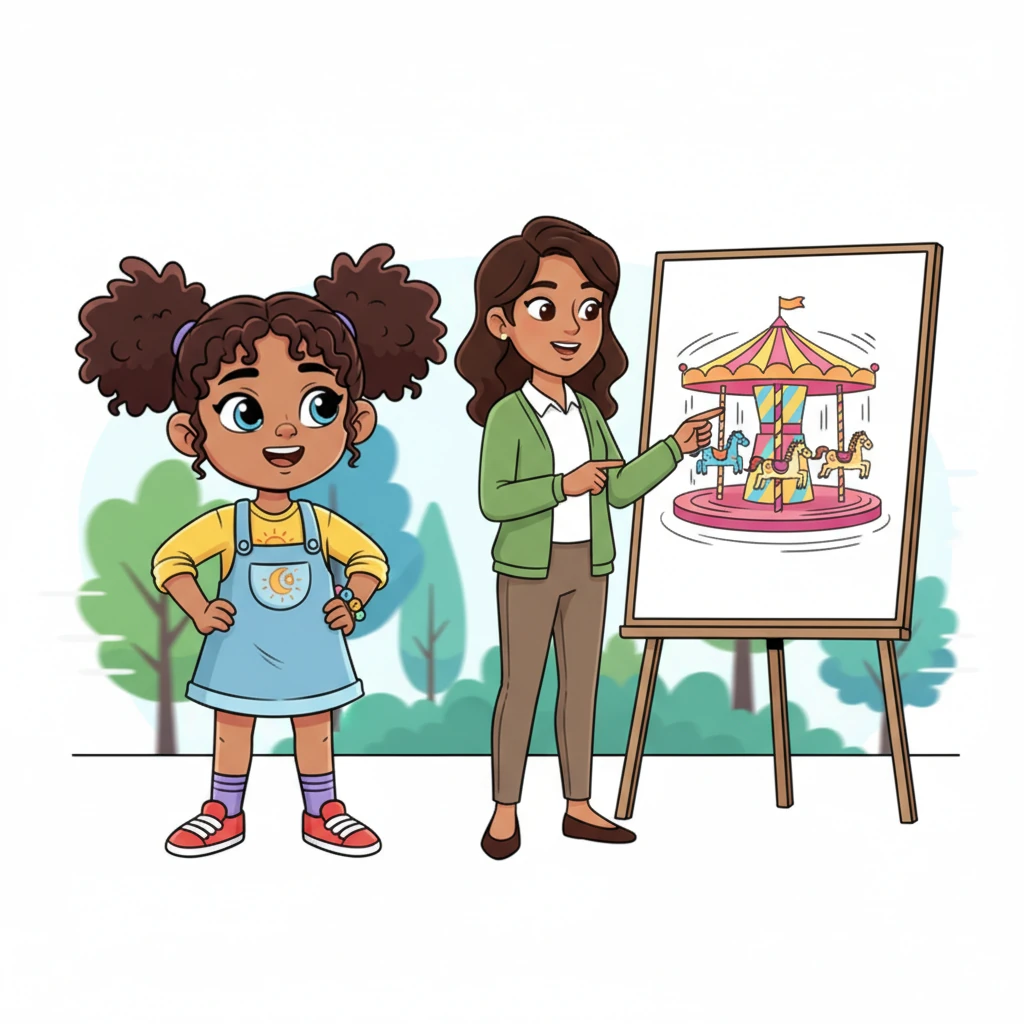
Her kind teacher, with an encouraging smile, stands beside a vibrant, spinning merry-go-round illustration on the whiteboard. Rashmika, with wide, understanding eyes, nods vigorously, imagining herself on the ride as the background trees blur past.
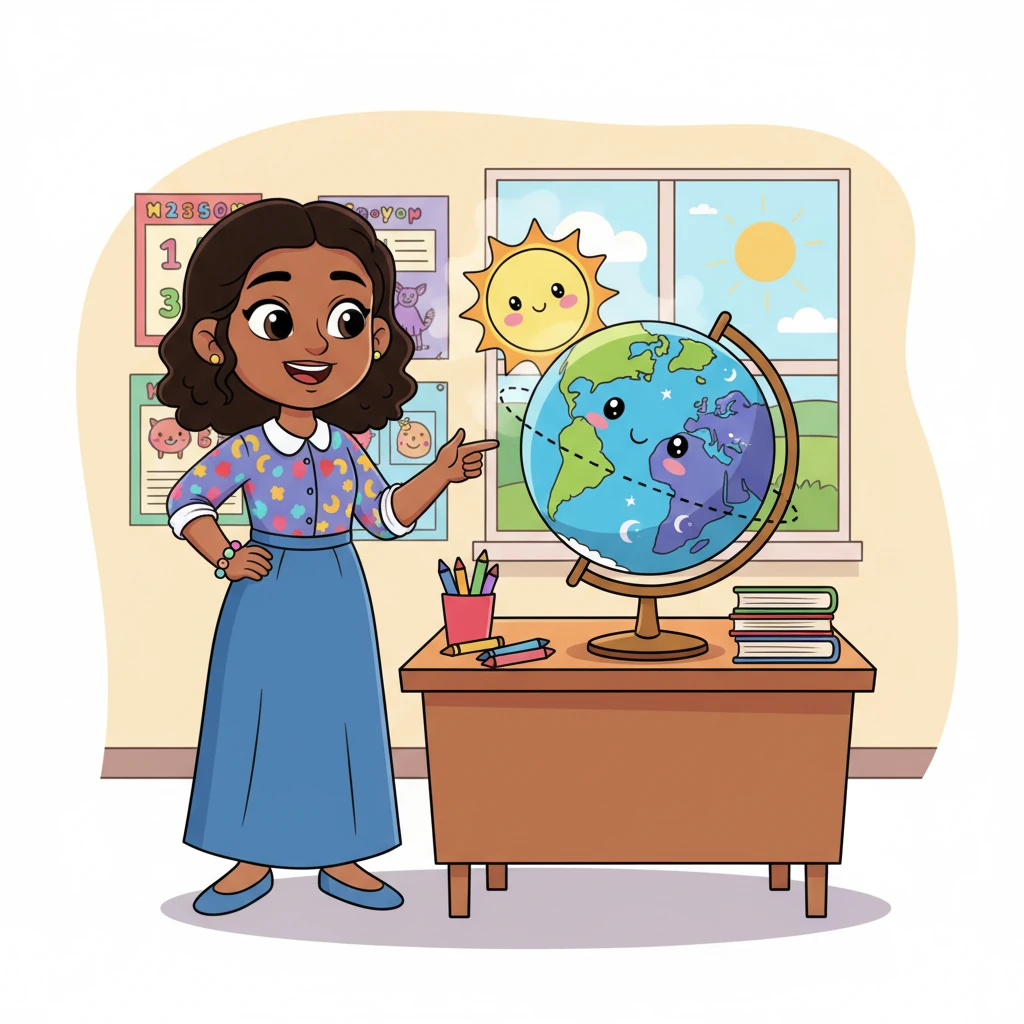
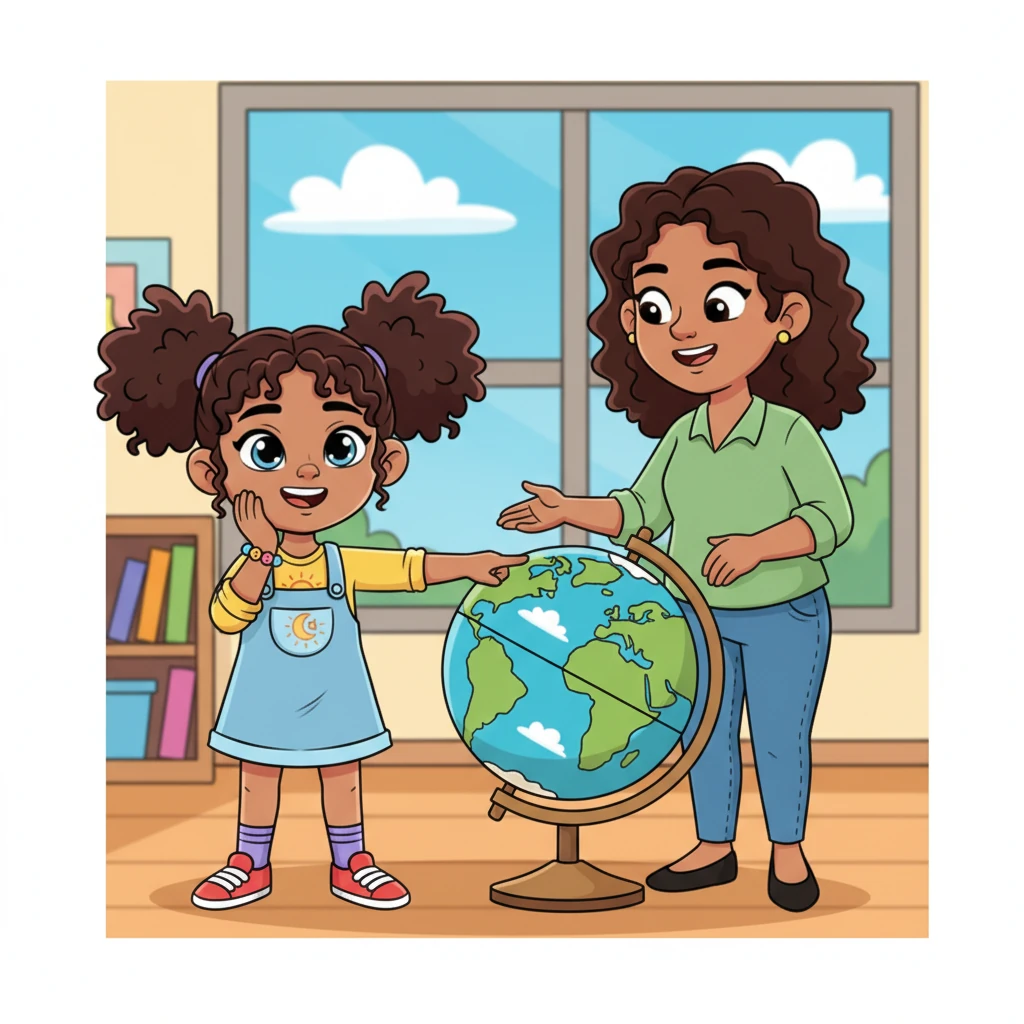
The teacher points to a large, friendly-looking globe on her desk, which is playfully spinning from west to east. A dotted line representing the axis runs through it, and half of the globe is brightly lit by a beaming sun, illustrating the cycle of day and night.
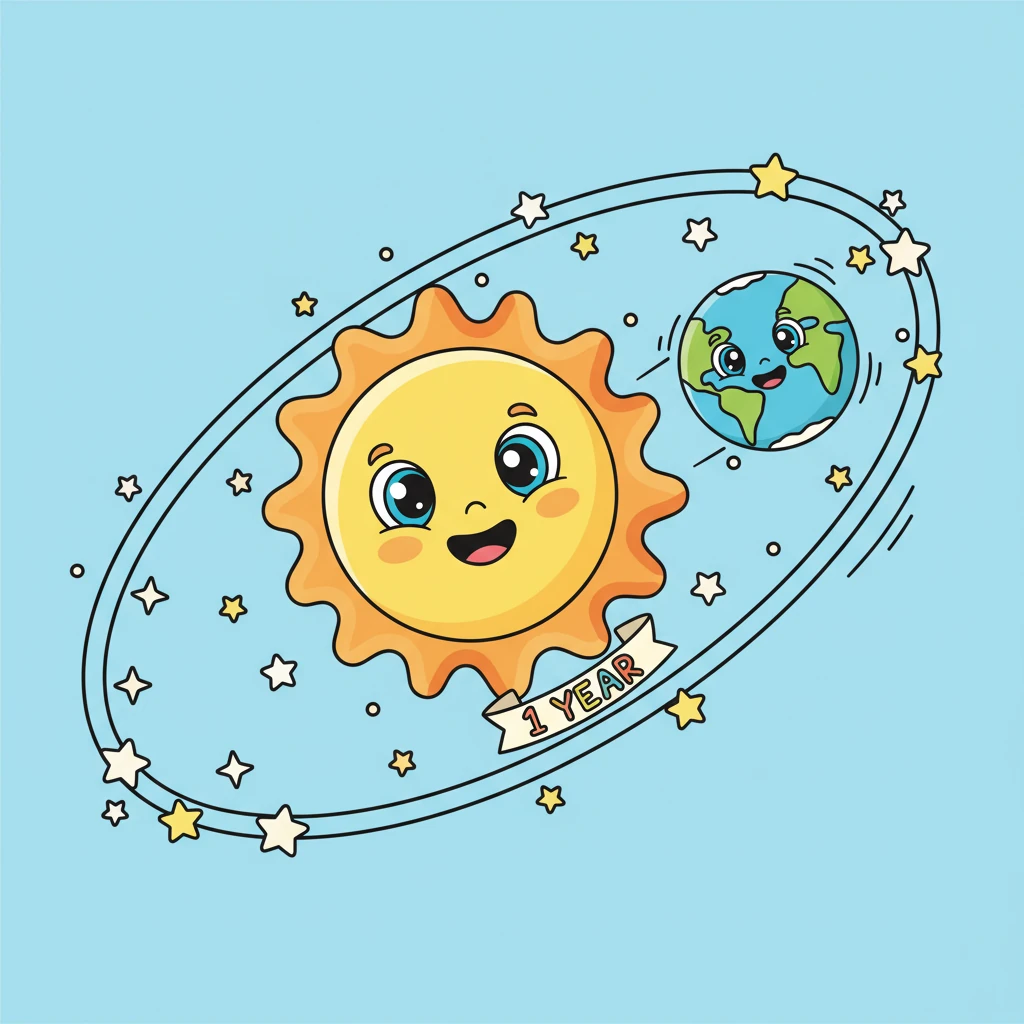
A whimsical diagram on the classroom wall shows a happy Earth character gracefully revolving in a wide, nearly-circular path around a smiling Sun. The path is marked with a "1 Year" label, and tiny stars twinkle around the orbit, emphasizing the Earth's long journey.
The teacher uses a simplified model of the Earth, clearly showing its axis tilted at a jaunty angle, like a slightly leaning top. Rashmika points to the tilt with a curious, excited expression, realizing this is a key discovery for understanding our world.
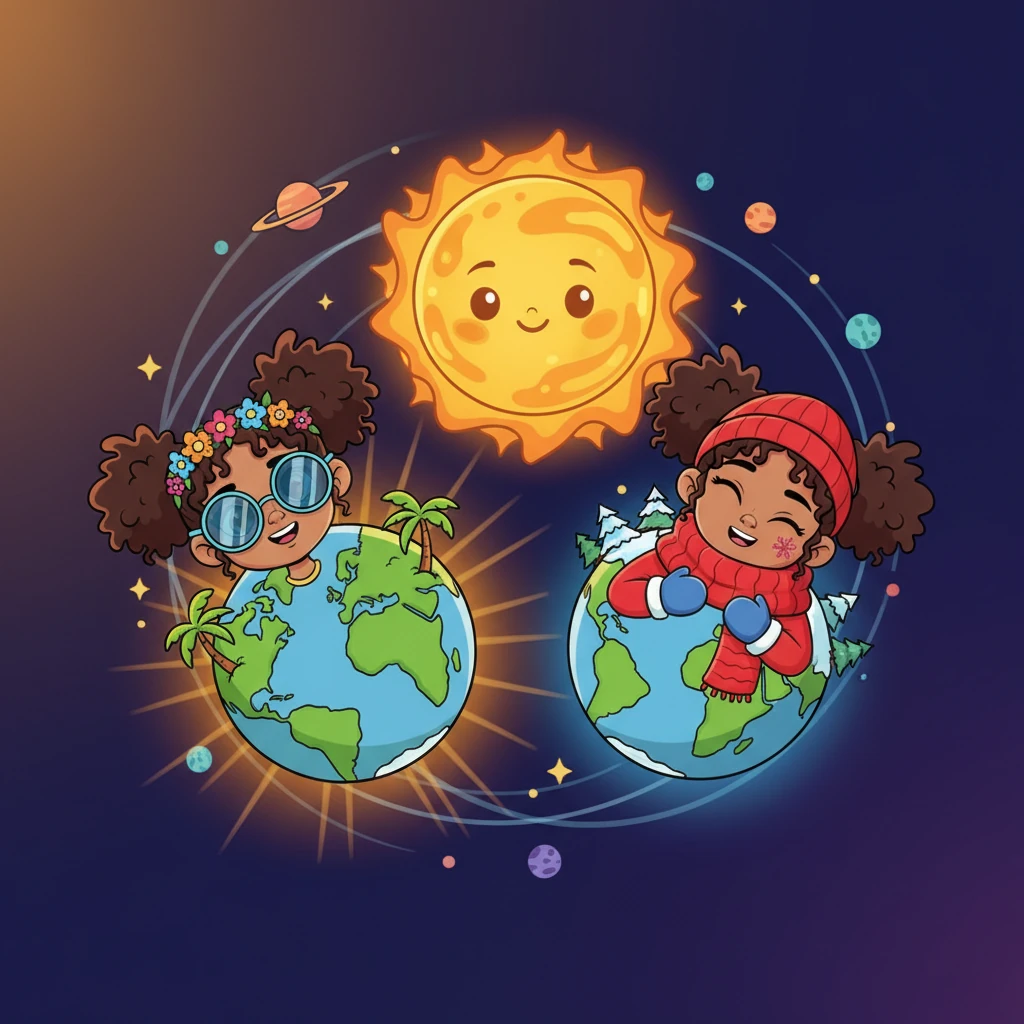
Two cheerful Earth characters are depicted: one tilted towards a warm sun for summer, wearing sunglasses, and another tilted away for winter, bundled in a scarf, both orbiting the same sun. Bright rays hit one, while softer light reaches the other, illustrating the cause of seasons.
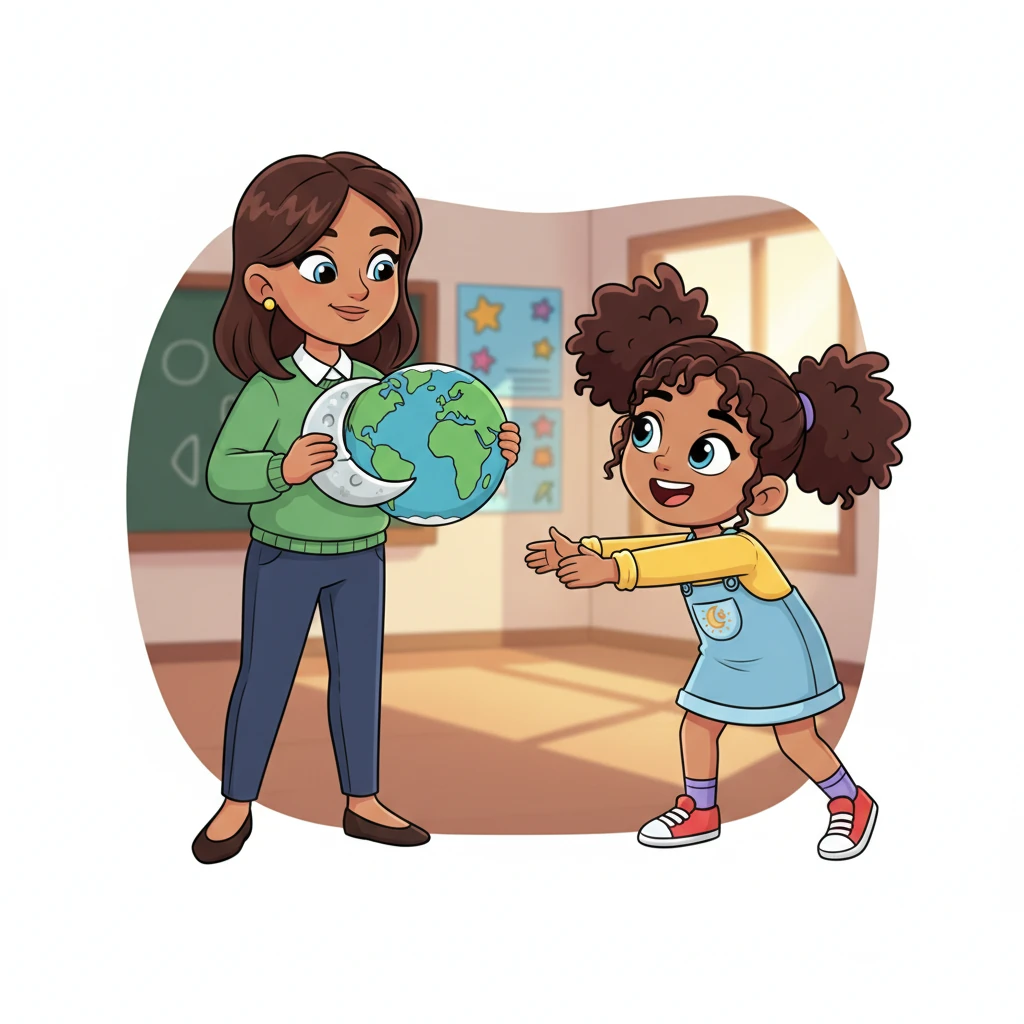
The teacher, with an air of playful mystery, holds up two cutouts – a tiny moon and a larger earth – as if starting a celestial game of "hide-and-seek." Rashmika leans forward, captivated by the idea of cosmic events unfolding in the sky.
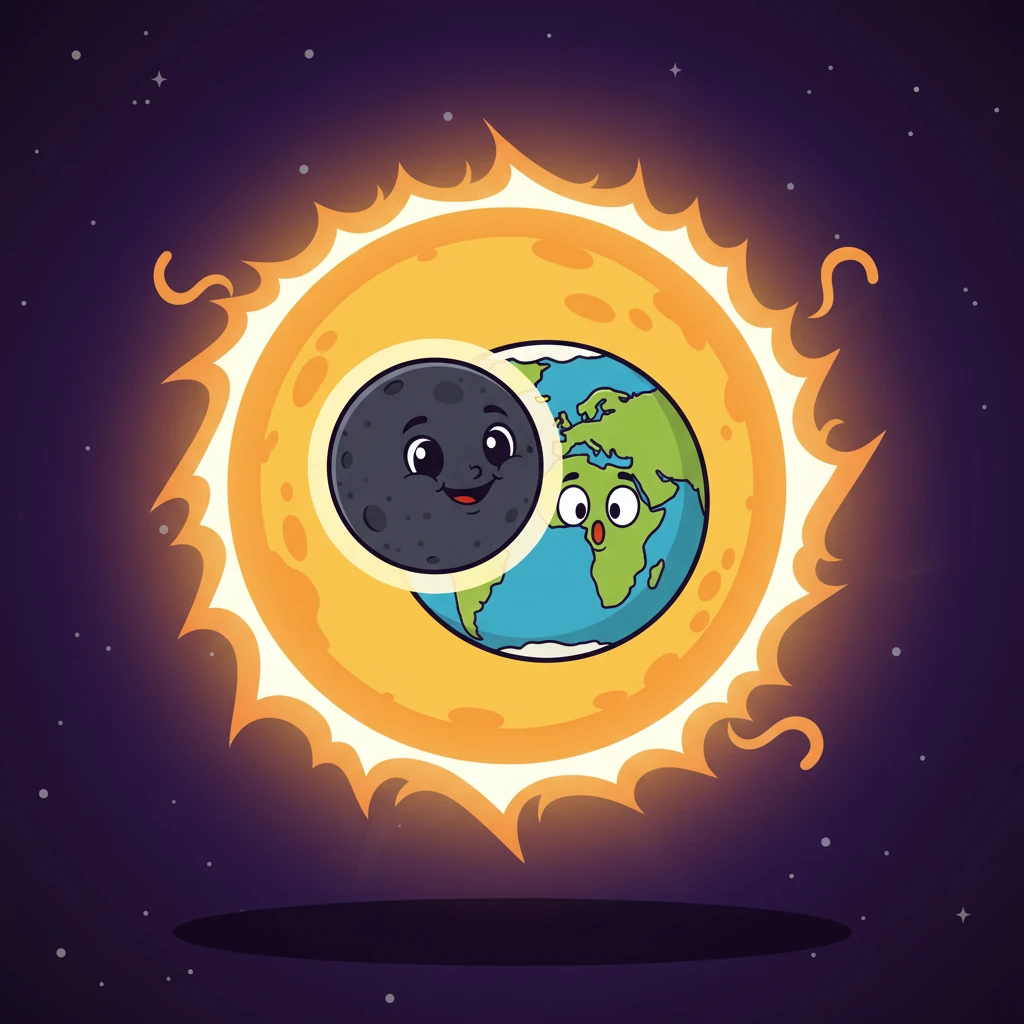
A dramatic scene unfolds: a small, dark Moon playfully slides directly in front of a huge, bright Sun, casting a circular shadow over a surprised Earth peeking from behind. The Sun's corona glows intensely around the edges, creating a breathtaking solar eclipse.
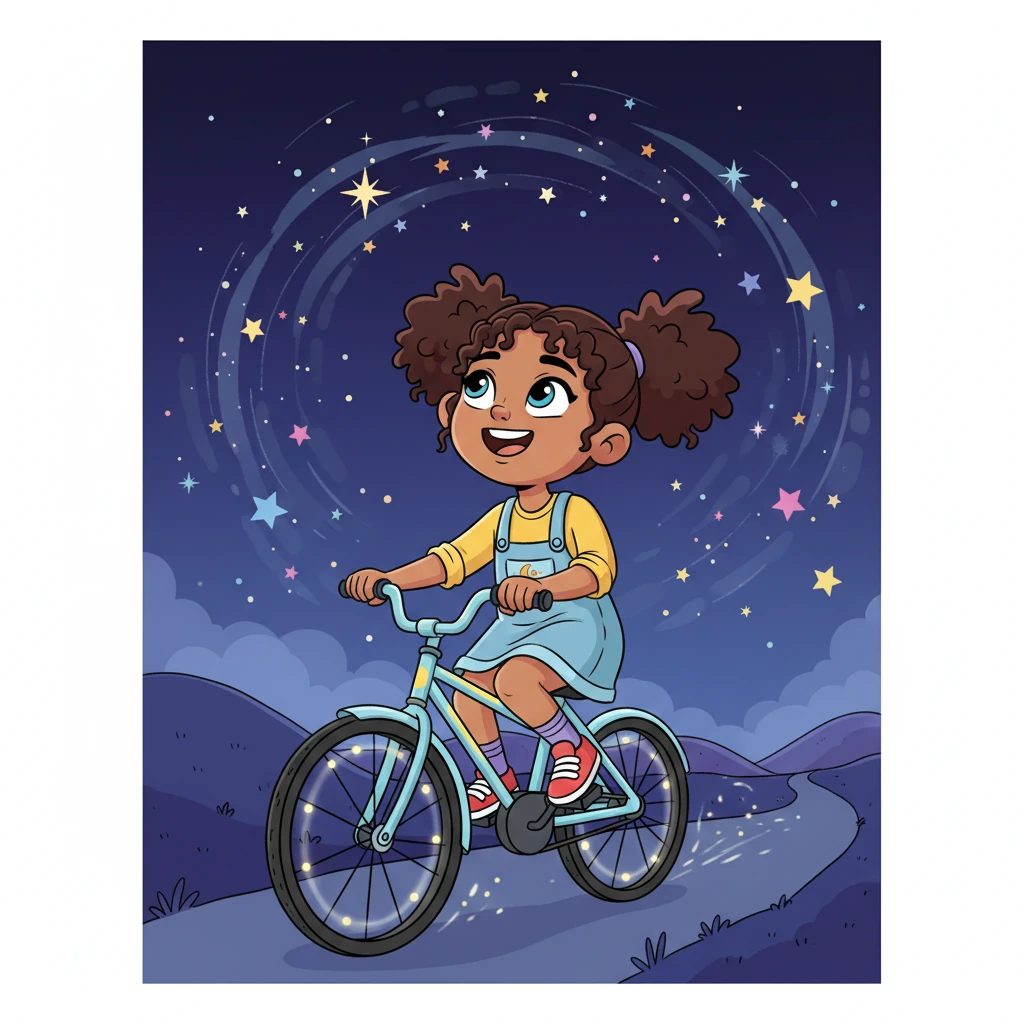
Rashmika cycles home under a sky full of sparkling stars, her face beaming with newfound understanding and wonder. She looks up, knowing the Earth is constantly spinning, making the stars appear to dance across the night sky, a beautiful reminder of her day of discovery.
생성 프롬프트(전체 프롬프트를 보려면 로그인하세요)
Based on the lesson "Earth, Moon, and the Sun," here is a story that weaves together its key scientific concepts: ### Rashmika’s Day of Discovery One bright morning in Kanniyakumari, 12-year-old Rashmika pedaled her bicycle toward school with a puzzled expression. She had been watching the coconut trees on her route and noticed a strange thing: their shadows were long and thin in the morning, grew quite short by noon, and then stretched out again as she headed home. "The Sun must be moving across the sky," she thought. But then she remembered a lesson from her Grade 6 science book, *Curiosity*, which said the Earth was the one doing the moving. "If the Earth moves around the Sun, why does it look like the Sun is the one traveling?" she wondered. When she arrived at school, her teacher was ready for these exact questions. "Think about the last time you were on a merry-go-round," the teacher said. "When you spin anti-clockwise, the trees and buildings outside the ride look like they are moving clockwise, right?". Rashmika nodded. The teacher explained that the Sun appears to rise in the East and set in the West because the Earth is spinning—or **rotating**—from West to East on its own axis. This 24-hour rotation is what creates our cycle of day and night as different parts of the Earth turn to face the Sun’s light. That afternoon, the class learned that the Earth isn't just spinning like a top; it is also **revolving** in a giant nearly-circular orbit around the Sun. This journey takes a full year. The teacher showed them that the Earth’s axis is slightly tilted, not perfectly upright. "This tilt is the secret to our seasons," the teacher explained. "In June, the Northern Hemisphere is tilted toward the Sun, getting more intense sunlight for longer hours—that’s summer!. Meanwhile, in the Southern Hemisphere, they are tilted away, experiencing winter". As the day ended, the teacher told them about the most spectacular celestial "hide-and-seek" games: **eclipses**. * **Solar Eclipse:** Occurs when the Moon passes between the Sun and Earth, blocking the Sun’s light. Even though the Moon is small, it can cover the massive Sun because it is much closer to us. * **Lunar Eclipse:** Occurs when the Earth moves between the Sun and the Moon, casting its shadow over the Moon’s surface. Rashmika cycled home that evening, no longer puzzled by the shadows. She looked up at the stars, knowing that they too would appear to move across the night sky because the Earth beneath her feet never stopped spinning. She realized that her world was part of a much larger, beautifully timed dance between the Earth, Moon, and Sun.