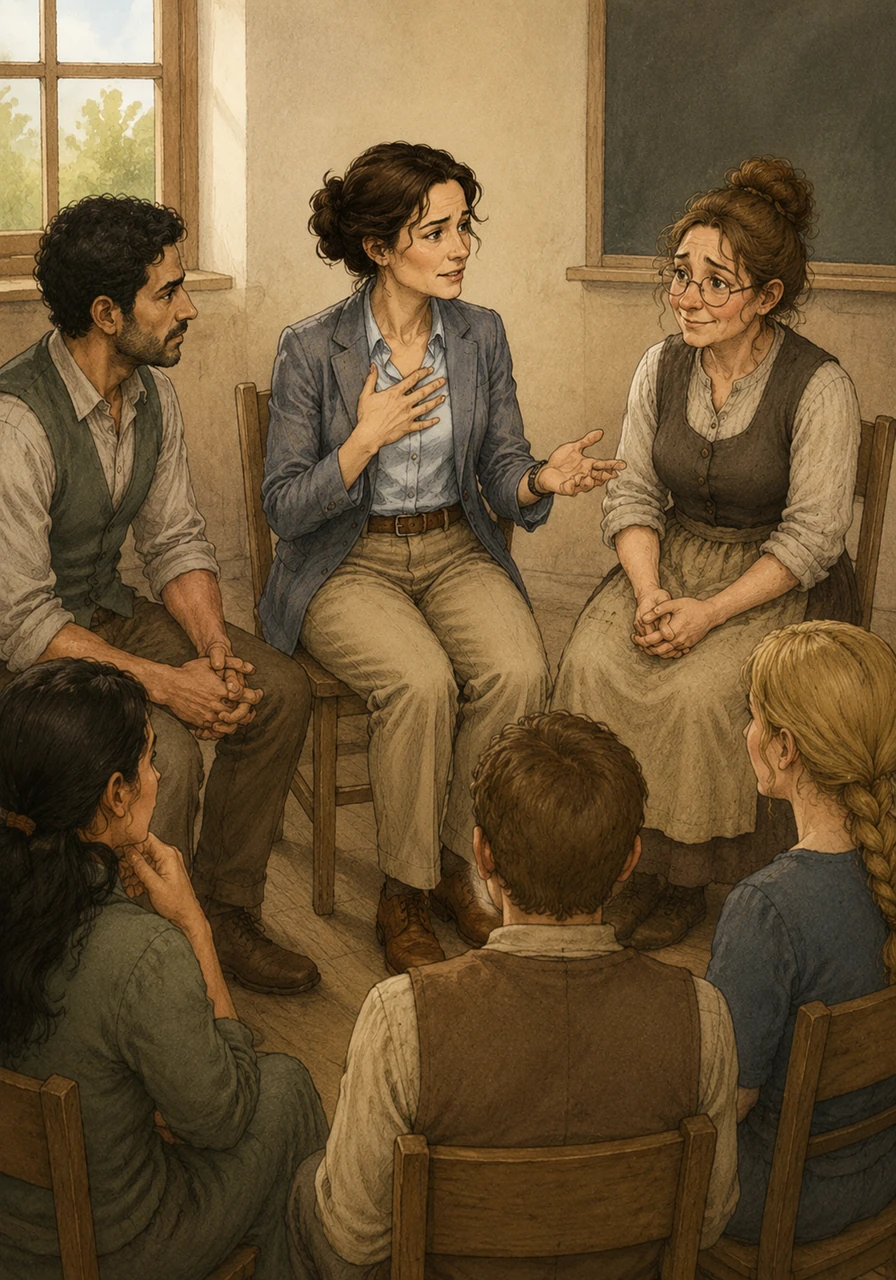
Step inside a diverse adult education classroom where different lives, motivations, and hidden struggles collide. This touching story explores the invisible barriers of literacy, integration pressure, and trauma, highlighting a teacher's heartfelt quest to guide her students toward a brighter future. A deeply moving glimpse into the human side of learning and empathy.
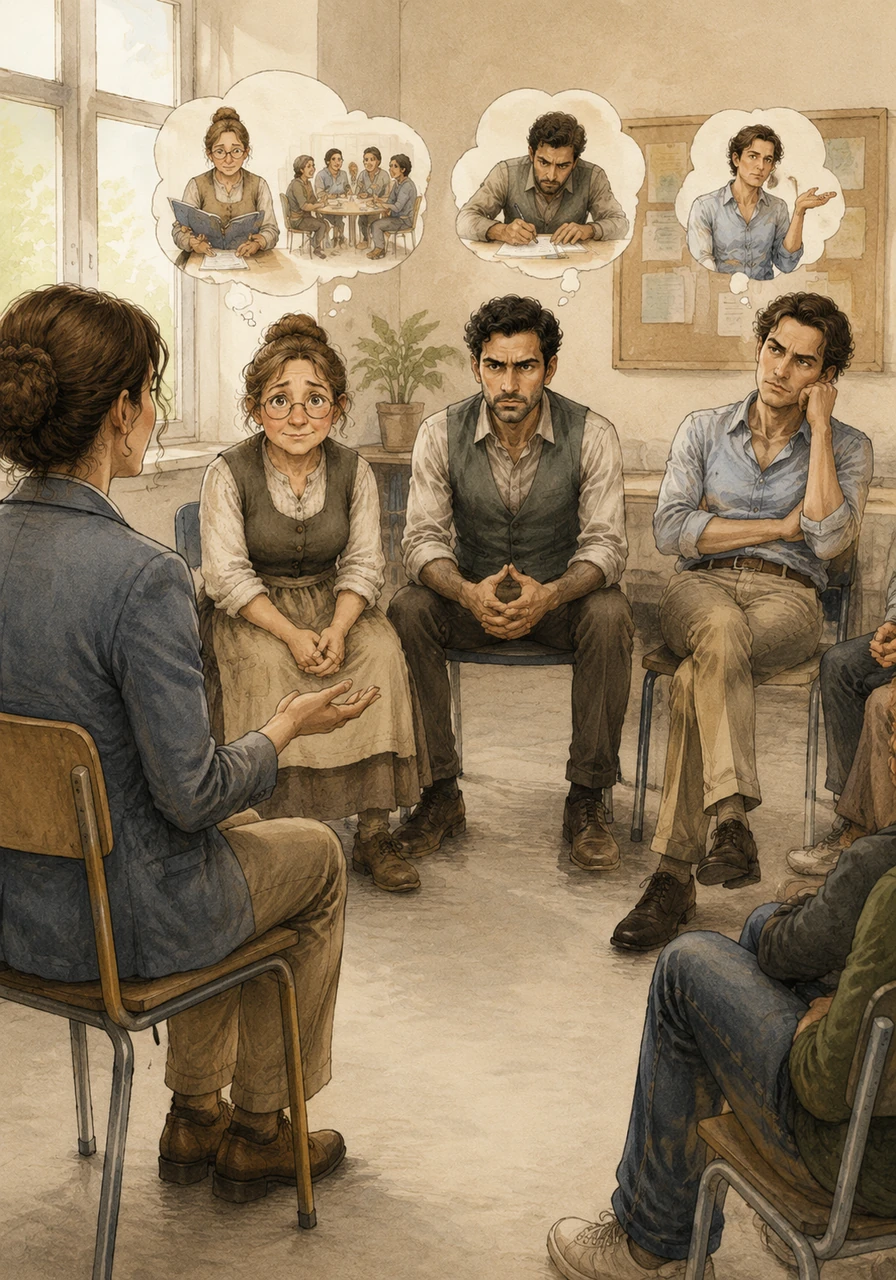
In a bright adult education classroom, the students sit in a wide semicircle as their instructor asks about their goals for the course. Gerda looks thoughtful yet hopeful, quietly wishing to master reading and writing while connecting with others, though her goals feel vague. Next to her, Mahmoud sits with intense focus, driven by the clear pressure to pass his upcoming language exam, while impatient Pino wonders why they focus so much on basic grammar when he can already speak fluent German.
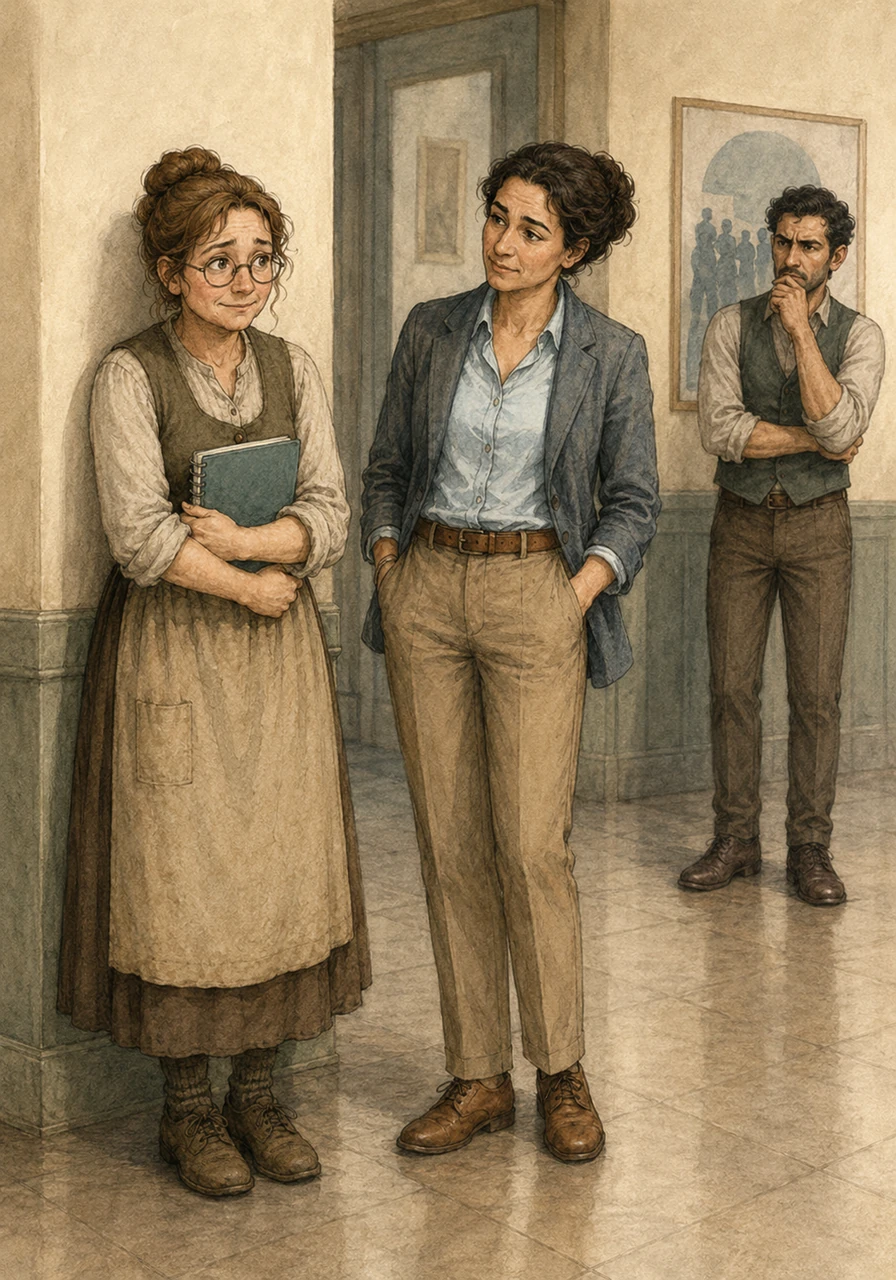
During a brief break in the hallway, the contrast between the students' backgrounds creates a quiet, invisible barrier. Gerda stands by the wall holding her notebook, looking a bit self-conscious but offering a friendly smile. Nearby, Salima watches her with gentle curiosity, wondering why a native speaker like Gerda needs to be in this class, while Mahmoud stands anxiously in the background near a poster advertising the upcoming integration exam.
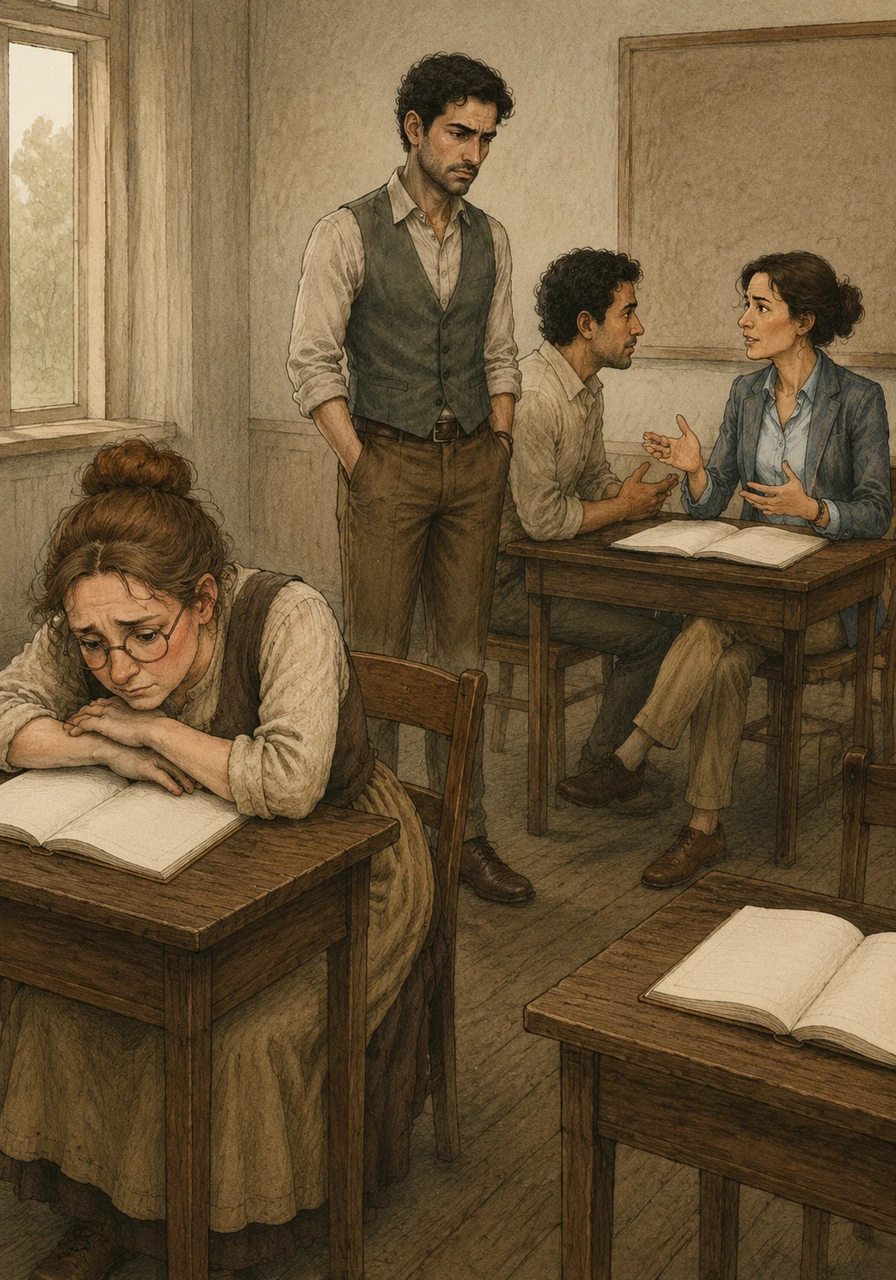
Back in the classroom, the challenge of teaching such a diverse group becomes heavy and overwhelming for the instructor. Gerda sits slightly apart, leaning deeply over her notebook with a sense of shame, seeking a safe space away from the fluent speakers. Meanwhile, Mahmoud and Salima practice speaking exercises together in the background, leaving the instructor feeling utterly torn between teaching basic literacy and advanced grammar.
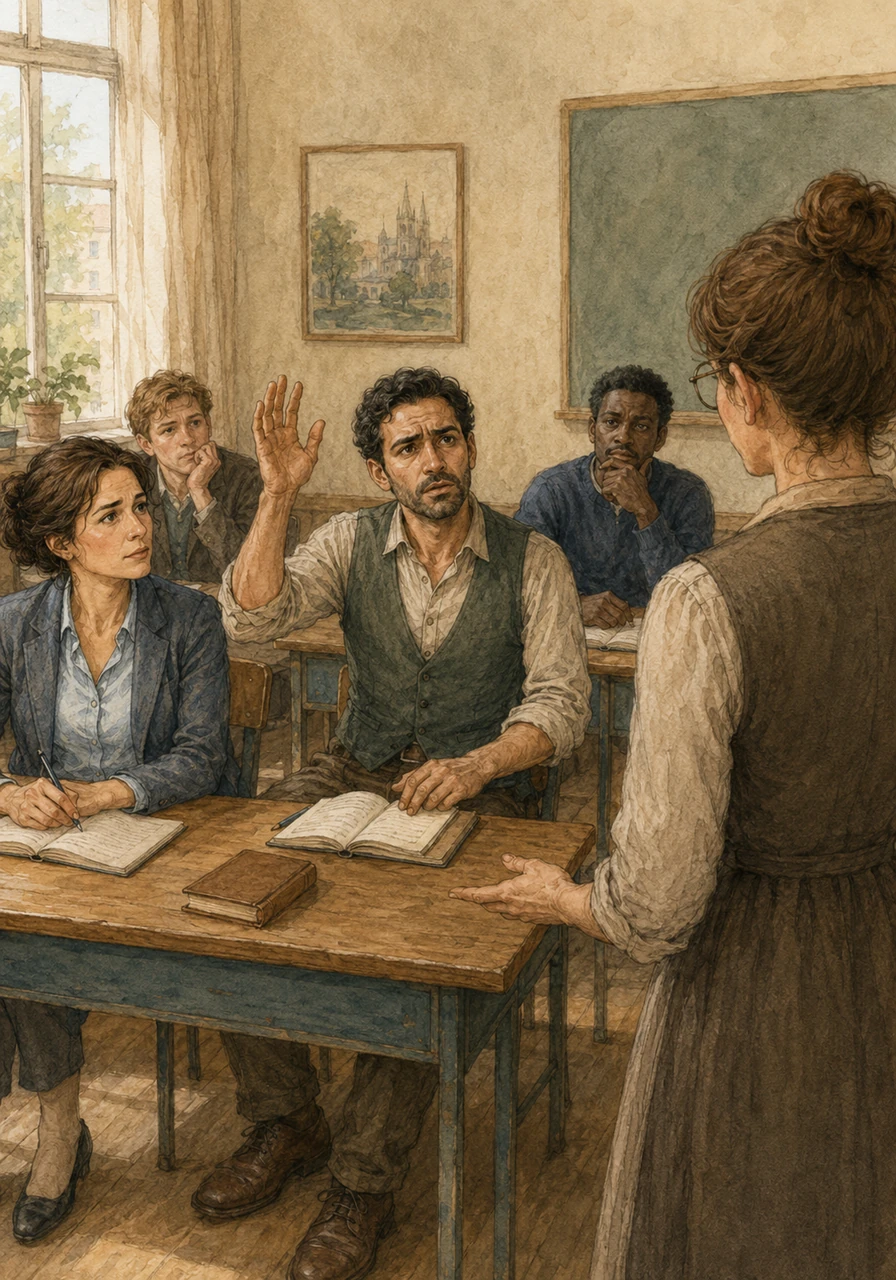
The difficulty of the mismatched curriculum peaks during a vocabulary lesson, exposing the gaps in the students' fundamental knowledge. Mahmoud raises his hand with a puzzled and hesitant expression, unsure of a word that seems basic to native speakers. He looks directly at the teacher and asks what the word ivy means, highlighting how even advanced speakers trip over everyday vocabulary.
Seeking a solution, the instructor sits at her desk in the administration office, surrounded by stacks of student files and registration forms for different course levels. She looks at labels like Alphabetization Plus and Second Language Kurs, feeling overwhelmed by the lack of clear diagnostic tools. She stares at the paperwork, deeply pondering how to accurately assess whether a new student belongs in a basic literacy class or an advanced language program.
During a quiet self-study phase back in the classroom, the heavy emotional burden of the students' past lives becomes visible. Mahmoud sits frozen at his desk, his notebook open but untouched, his shoulders slumped and his gaze completely empty and exhausted. The other students work diligently around him, while the instructor watches from a distance with deep worry, wondering if bad news from his homeland has stolen his focus.
Recognizing the unspoken weight in the room, the instructor gathers her courage and approaches Mahmoud's desk with a gentle, supportive smile. She sits down beside him and speaks softly, offering an open ear and a safe space rather than pushing him to complete his classroom assignments. Mahmoud looks up, his expression softening as he realizes his silent pain is seen and validated without judgment.
The next day, the instructor restructures the classroom into small, specialized learning stations to better serve everyone's unique needs. Gerda sits happily at a table tailored for basic reading and writing, her confidence visibly blooming in an environment free of judgment. At another table, Mahmoud and Salima engage in lively conversation drills, finally receiving the targeted preparation they need.
During a group reflection at the end of the week, the students begin to open up and share their personal journeys with one another. Salima expresses her newfound understanding of Gerda's courage, bridging the gap that once divided them. The classroom atmosphere transforms into one of mutual respect, where different backgrounds are no longer barriers, but shared strengths.
As the evening sun streams through the classroom windows, the students pack up their bags, smiling and chatting warmly with one another. The instructor watches them leave, feeling a deep sense of fulfillment and clarity despite the systemic challenges. She knows the path ahead requires patience, but seeing her students stand together gives her the strength to guide them through every obstacle.
Prompt de geração(Faça login para ver o prompt completo)
Szene 1 – Unterschiedliche Motivation und Zielklarheit Ort: Kursraum, alle sitzen im Halbkreis, die Kursleitung fragt nach den Zielen der Teilnehmenden. Zeige mehrere Figuren mit unterschiedlichen Gesichtsausdrücken (unsicher, klar, nachdenklich). Gerda wirkt nachdenklich, aber hoffnungsvoll, mit Gedankenblase: „Ich möchte Lesen und Schreiben lernen und auch Austausch mit anderen.“ (Motivation, eher vage formuliertes Ziel) Mahmoud wirkt fokussiert, mit Gedankenblase: „Ich muss mich auf die Prüfung vorbereiten und will sprechen üben.“ (klare, prüfungsbezogene Motivation) Im Hintergrund kann ein Aushang „Prüfung B1 / Einbürgerung“ zu sehen sein, um den Druck leicht anzudeuten, aber ohne Dramatik. Pino (ungeduldig) mit Gedankenblase: „Warum machen wir immer so viele Grammatikübungen – ich kann doch schon Deutsch.“ Szene 2 – Stigmatisierung und Druck Ort: kurze Pause im Kursraum oder Flur vor dem Kurs. Gerda steht oder sitzt mit einem Heft in der Hand, wirkt etwas verlegen, aber freundlich. Salima und Mahmoud stehen etwas entfernt, Salima blickt nachdenklich Richtung Gerda. Salima mit Gedankenblase: „Warum ist eigentlich Gerda hier, sie kann doch schon Deutsch.“ (Stigmatisierung, leiser Zweifel, keine aggressive Darstellung) Mahmoud steht daneben, wirkt angespannt, im Hintergrund ein Plakat „Einbürgerung“, „Prüfung“. Szene 3 – Alles unter einen Hut bringen Ort: derselbe Kursraum, später im Unterricht. Gerda sitzt etwas abseits, beugt sich über ihr Heft, wirkt unsicher und ein wenig beschämt (Schutzraum, Schamgefühl). Mahmoud und Salima arbeiten im Hintergrund in einer kleinen Gesprächsübung (mündliche Sprache). Die Kursleitung steht zwischen den Gruppen, schaut gleichzeitig zu Gerda und zur mündlichen Übung der anderen, sichtbar innerlich zerrissen. Kursleitung mit zwei Gedankenblasen (oder einer geteilten): „Ich merke, dass Gerda sich nicht so wohl fühlt und auf der Strecke bleibt.“ „Ich müsste dringend mit Mahmoud und Salima Wörter lernen und Verbkonjugationen üben.” Die Szene soll zeigen, wie schwierig es ist, Schreibkurs/Alphabetisierung und mündliche Sprachförderung für beide Zielgruppen in ein gutes Gleichgewicht zu bringen. Szene 4: Material Ort: Kursraum, Vokabelarbeit oder Lesen. Mahmoud hebt die Hand, wirkt fragend und leicht verunsichert. Mahmoud mit Sprechblase: „Was ist Efeu?“ Szene 5 – Keine passende Diagnostik: Wer gehört wohin? Ort: Büro der Volkshochschule. Die Kursleitung sitzt vor einem Schreibtisch mit mehreren Aktenmappen/Anmeldebögen, auf denen z.B. steht: „Alphabetisierung plus“, „Lese-/Schreibkurs“, „VHS-Kurs DaZ“. Die Kursleitung wirkt nachdenklich und leicht überfordert. Kursleitung mit Gedankenblase: „Woran erkenne ich, ob die neue Teilnehmerin in einen Lese-/Schreibkurs oder in einen VHS-Kurs DaZ gehört?“ Die Szene soll zeigen: Es gibt keine klare Diagnostik, die Kursleitung versucht Ursachen (DaZ, Lernschwächen, Alphabetisierung) zu sortieren und die nächsten Schritte für eine passende Kurszuordnung sichtbar zu machen. Szene 6 – Traumatische Erfahrungen durch Flucht/Gewalterfahrung Ort: Kursraum während einer leisen Arbeitsphase. Mahmoud sitzt am Tisch, sein Heft liegt offen vor ihm. Er wirkt sehr müde, die Schultern hängen, der Blick ist leer oder nach unten gerichtet. Andere Teilnehmende arbeiten konzentriert, aber Mahmoud ist deutlich weniger aktiv. Die Kursleitung steht etwas entfernt, schaut besorgt zu Mahmoud. Kursleitung mit Gedankenblase: „Mahmoud ist wieder total müde … hat er schlechte Nachrichten aus der Heimat bekommen?“