Join Inventor Izzy, a brilliant and bubbly scientist, and her amazing robot pal, Eco-Bot 5000, on a grand adventure to make our world greener! Discover how their incredible Eco-Engine helps smart devices become planet-friendly, one joyful assessment at a time. This vibrant tale sparks curiosity about technology and sustainability, inspiring young minds to build a brighter, cleaner future!
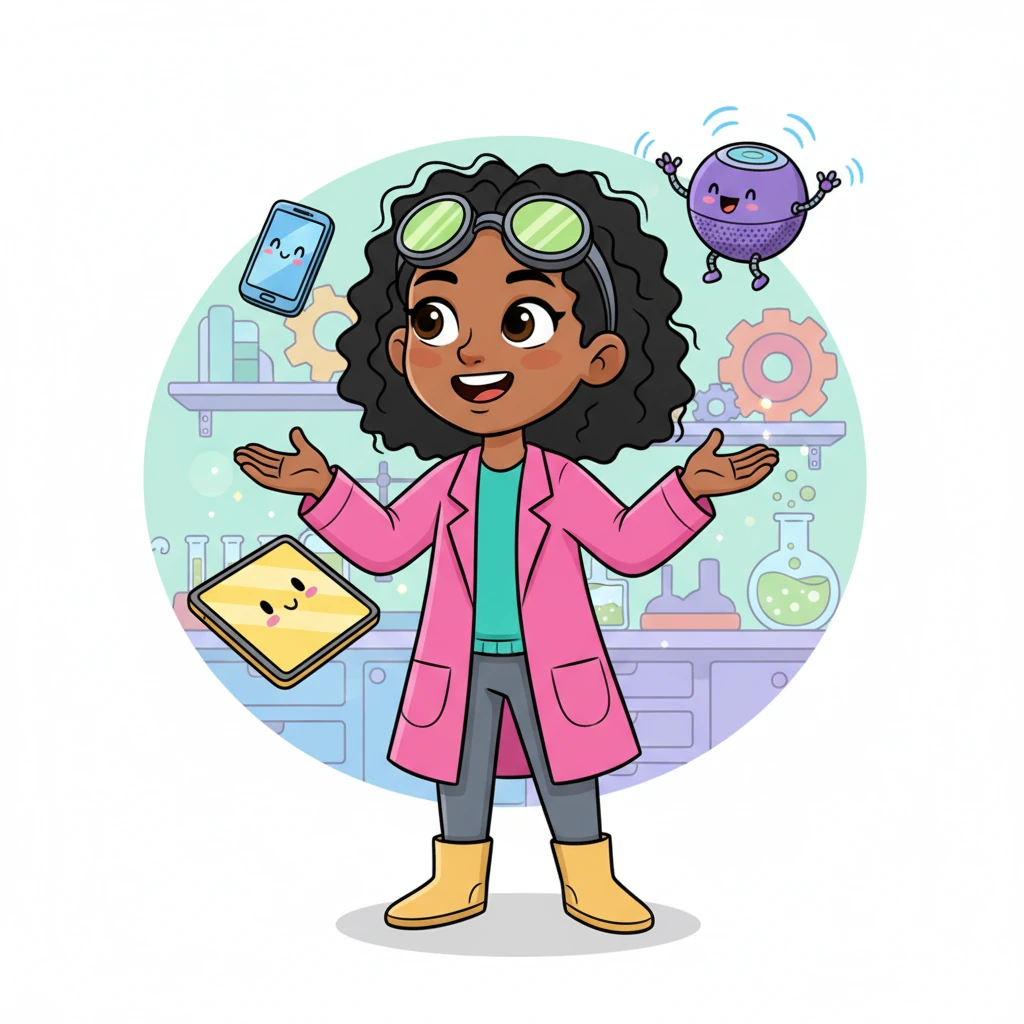
Inventor Izzy, a cheerful scientist with a bright pink lab coat and goggles perched on her head, beams in her whimsical workshop. Around her, a playful jumble of smart devices – tiny phones, happy tablets, and smiling smart speakers – buzz with hidden energy. Izzy ponders the exciting world of gadgets, dreaming of how to make them even better for everyone.
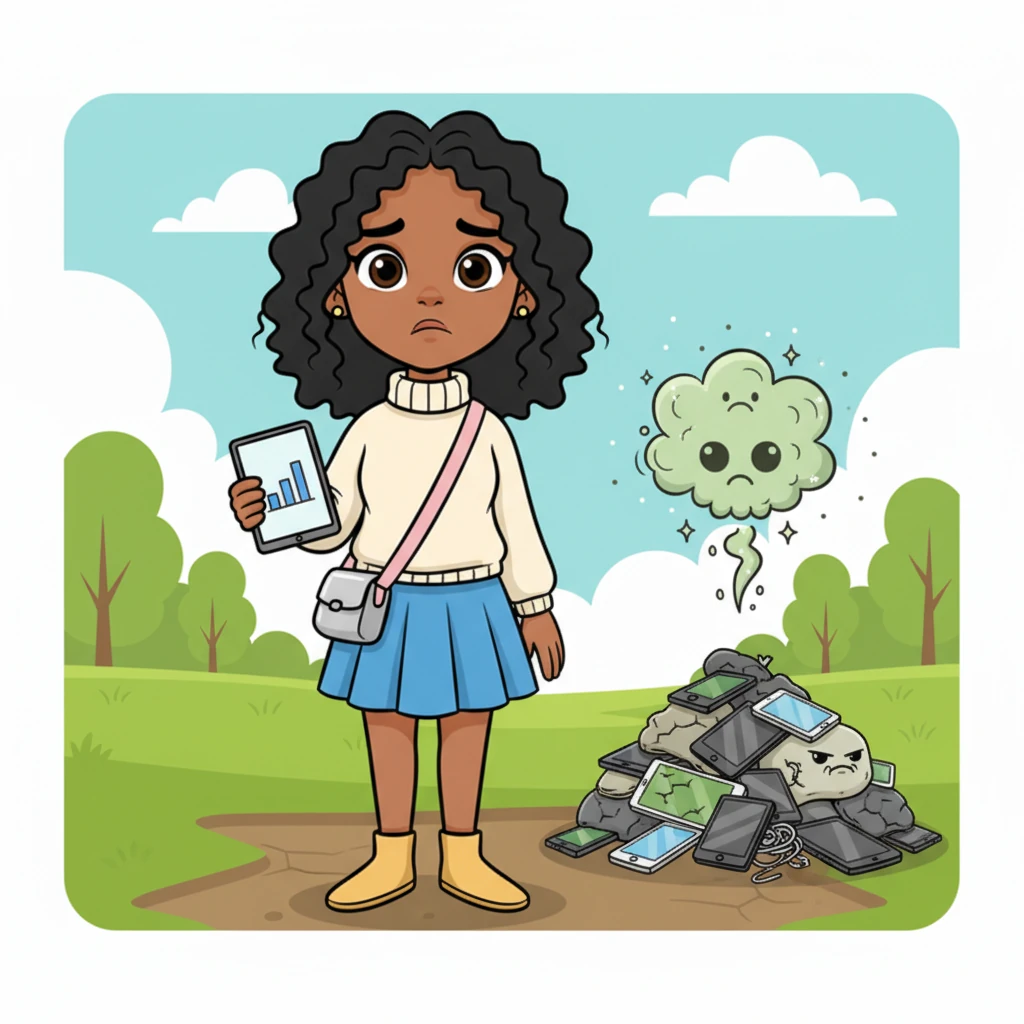
Suddenly, Izzy’s smile fades a little as she notices a grumpy-looking pile of old, forgotten smart devices. A little cartoon cloud of 'uh-oh' pollution playfully wafts from them, showing the environmental impact. She realizes that even the coolest gadgets can leave a big footprint if we're not careful.
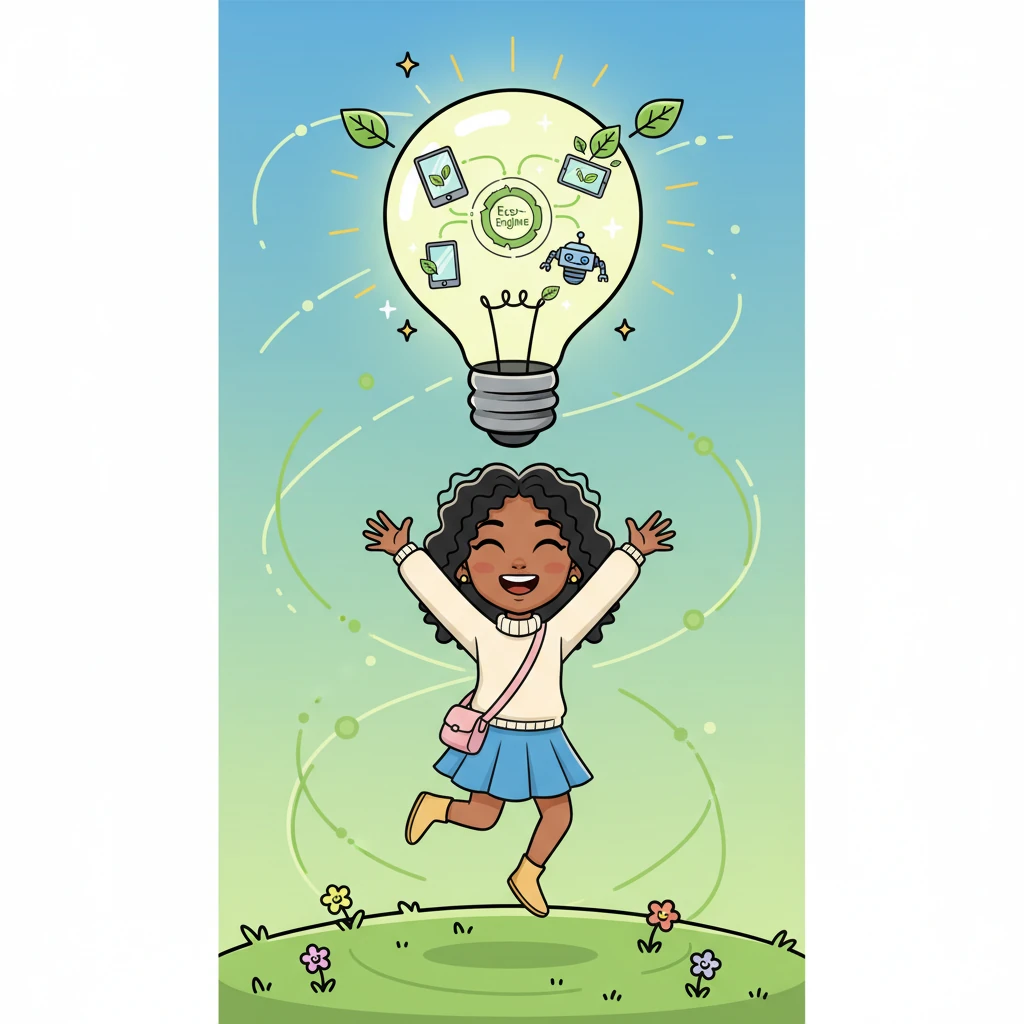
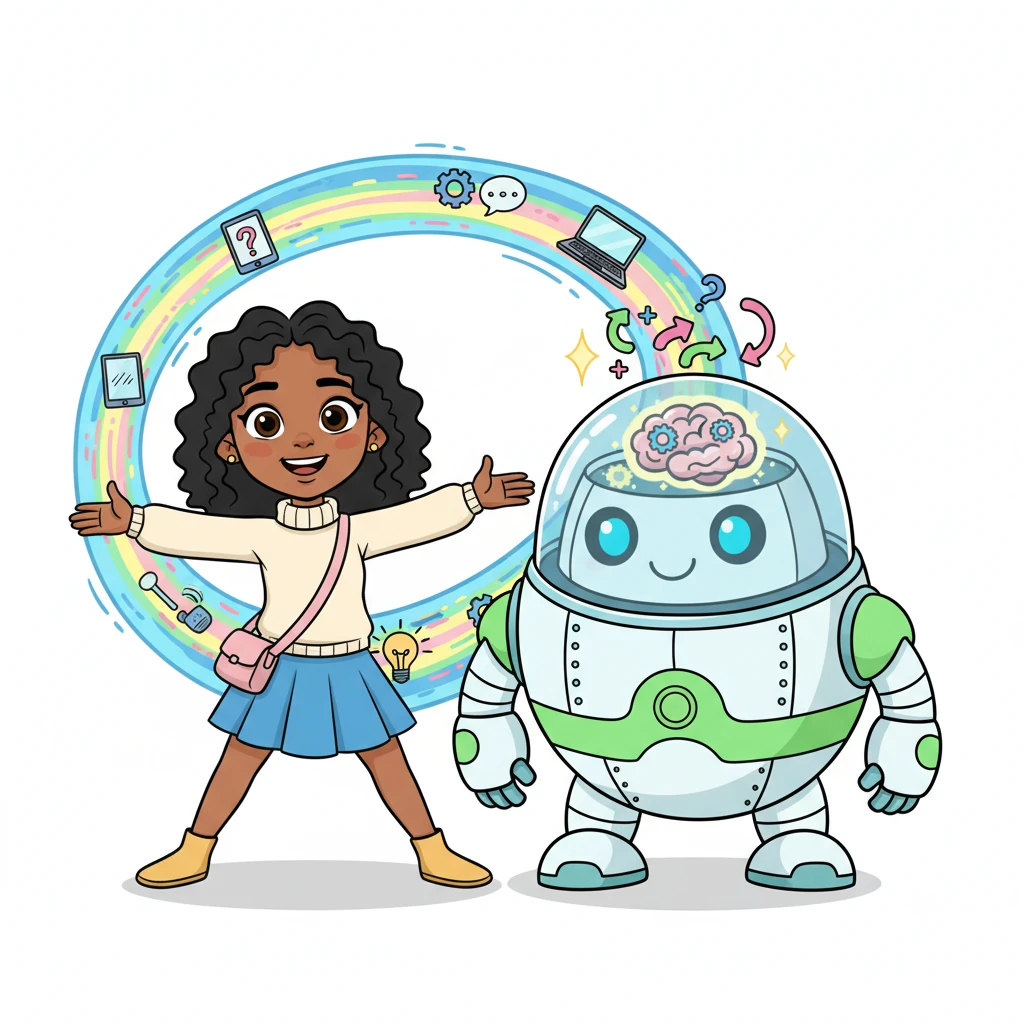
A giant, sparkly lightbulb pops above Izzy's head! She leaps with excitement, her arms outstretched as if hugging the whole planet. She envisions a brilliant solution: a super-smart 'Eco-Engine' that can help all smart devices be kind to our Earth. Her goal is to make a big, green difference!
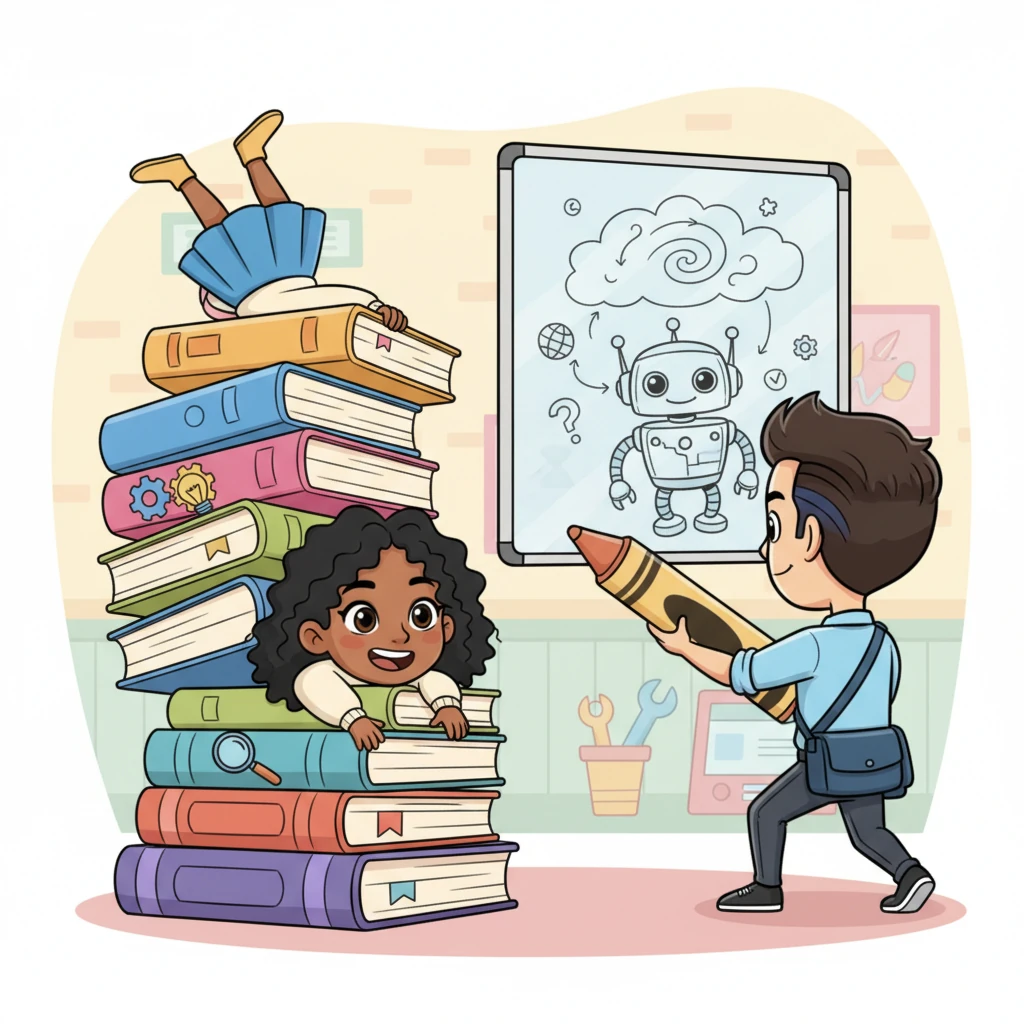
Izzy dives into her towering stack of wobbly, colorful 'knowledge books,' learning all about how things are made and used. Then, with a giant crayon, she sketches out her fantastic idea: a friendly robot helper connected to a swirling 'web cloud,' ready to gather information and solve problems.
With a flourish, Izzy introduces her new best friend, Eco-Bot 5000! This round, friendly robot has blinking eyes and a happy smile. Izzy shows how users' questions about devices flow like a colorful river into Eco-Bot's brain, where clever computations happen.
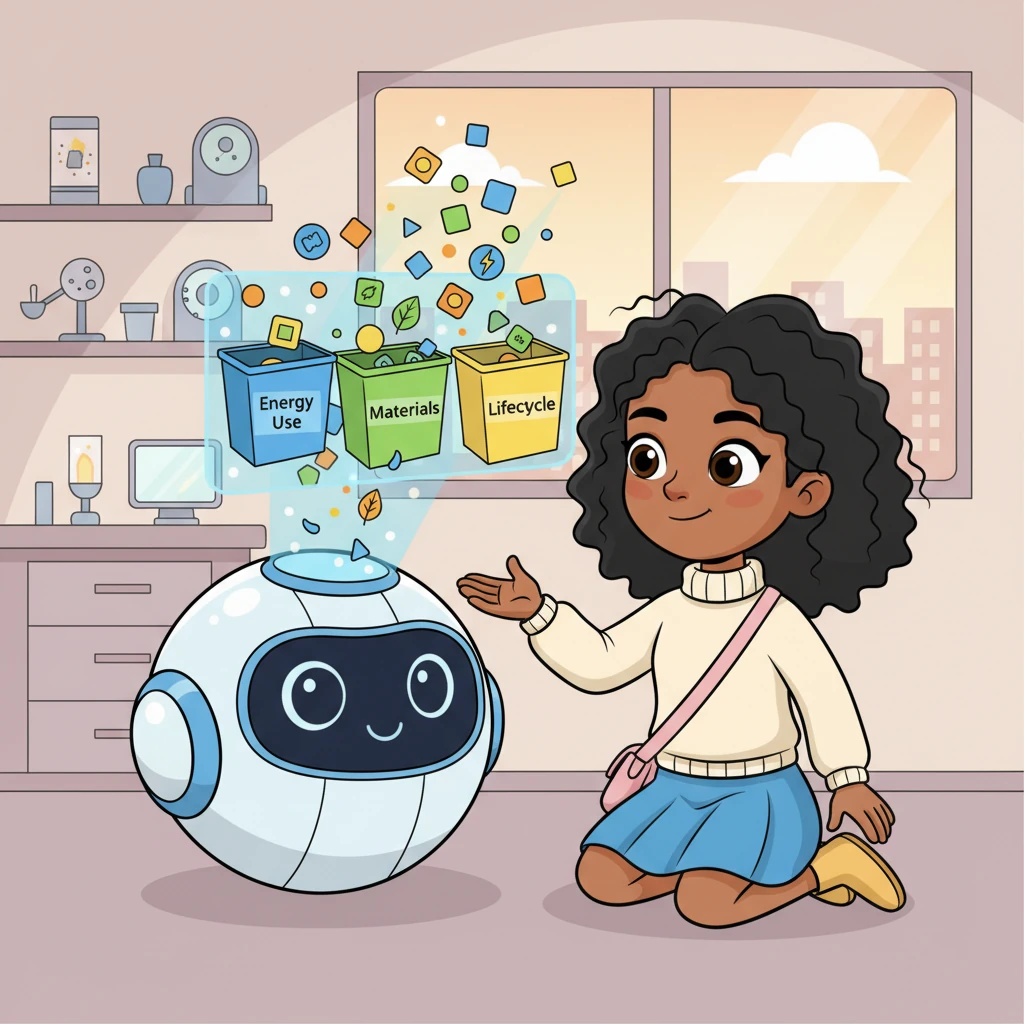
Eco-Bot 5000 gets to work, happily 'gobbling' up colorful data bits – like how much energy a device uses or what it's made from. Izzy patiently teaches Eco-Bot to sort and understand these playful shapes, making sure he learns everything about a device's journey.
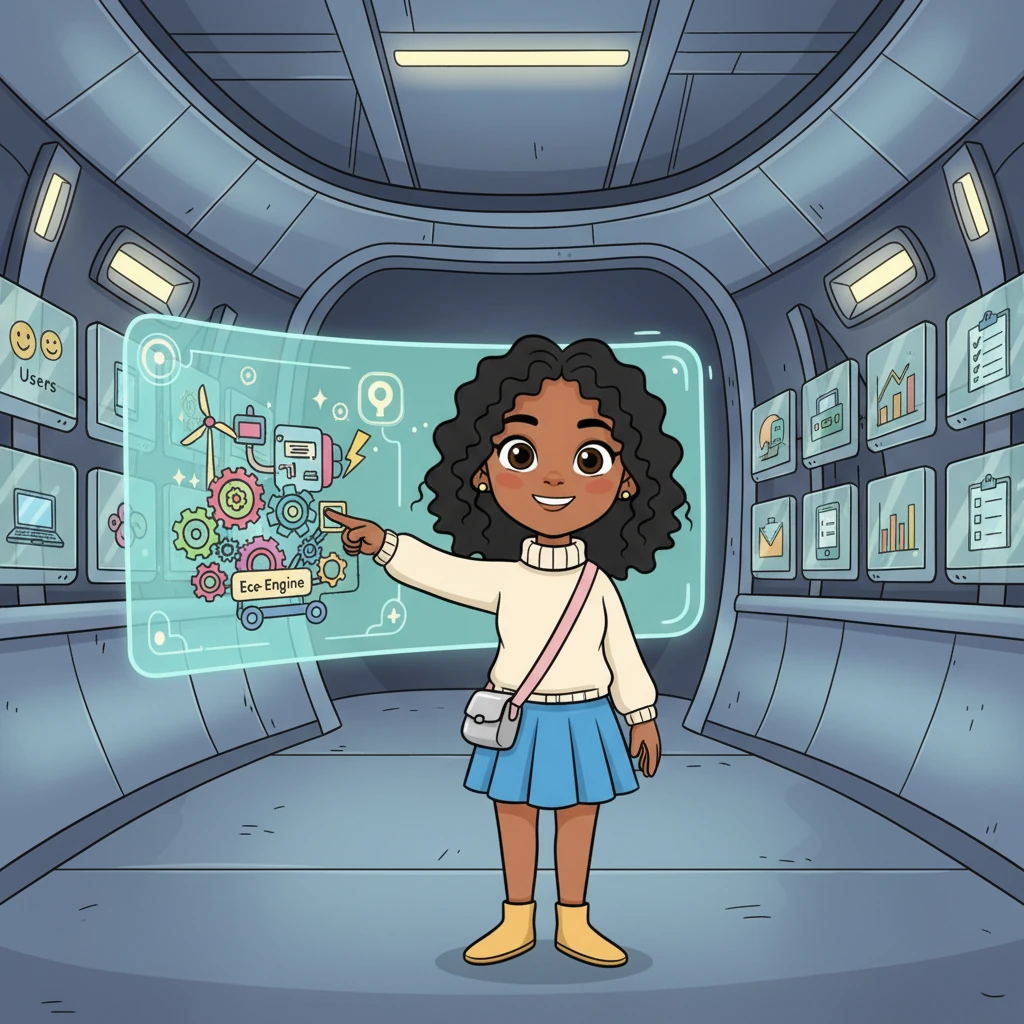
Inside Eco-Bot's shiny metallic body, glowing 'memory banks' are neatly organized, showing little icons for 'Users,' 'Devices,' and 'Assessments.' Izzy proudly points to a big, interactive screen, showcasing her Eco-Engine now fully built and ready to help.
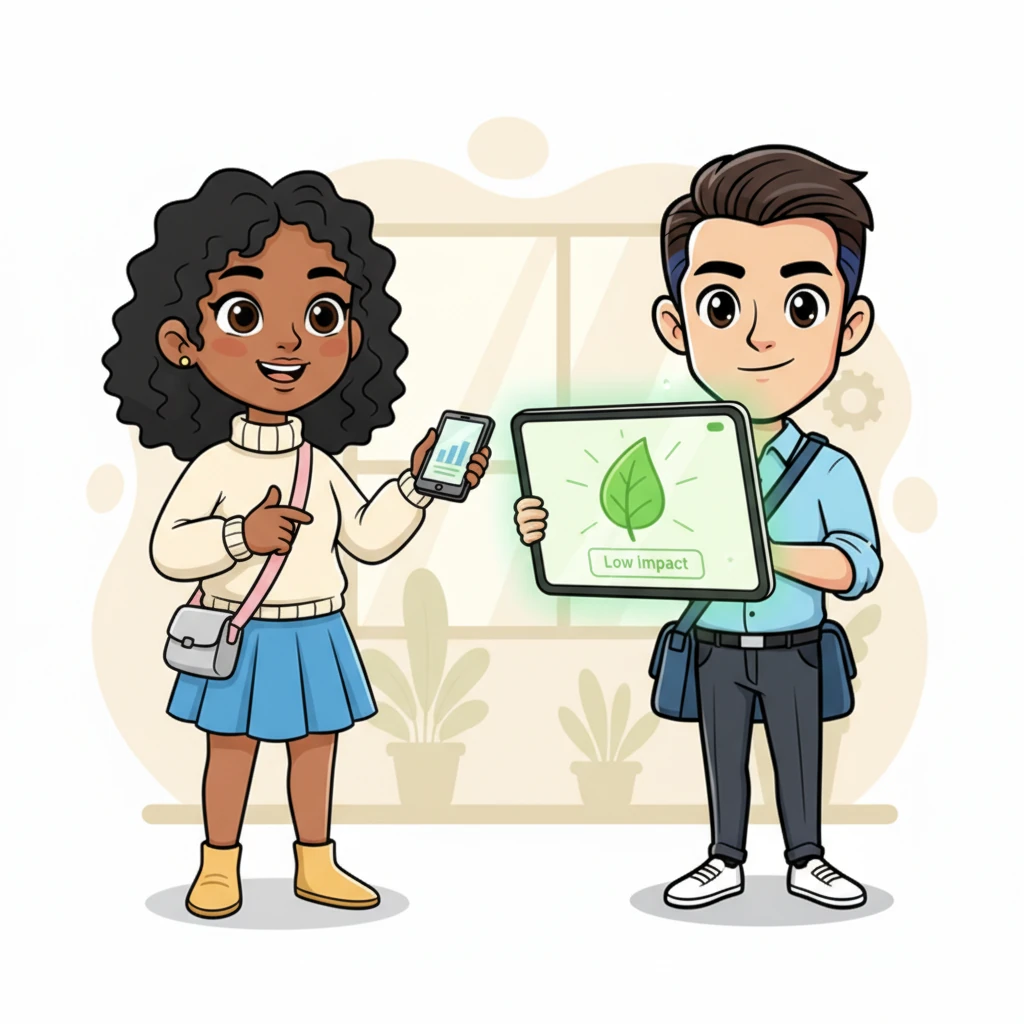
A happy child, with bright, curious eyes, holds up their smart device to a tablet, asking Eco-Bot for an assessment. Eco-Bot 5000's screen lights up with a clear, simple result: a glowing green leaf icon for 'Low Impact,' guiding the child towards planet-friendly choices.
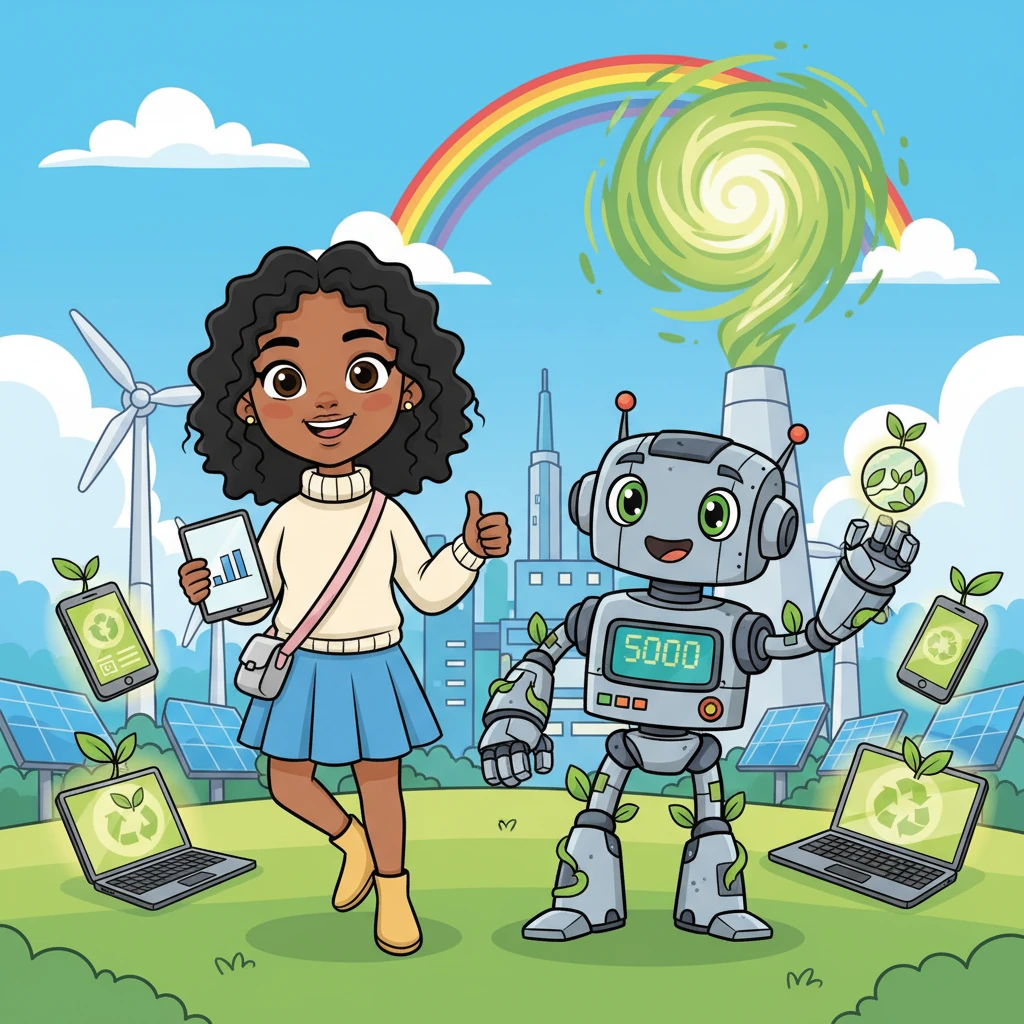
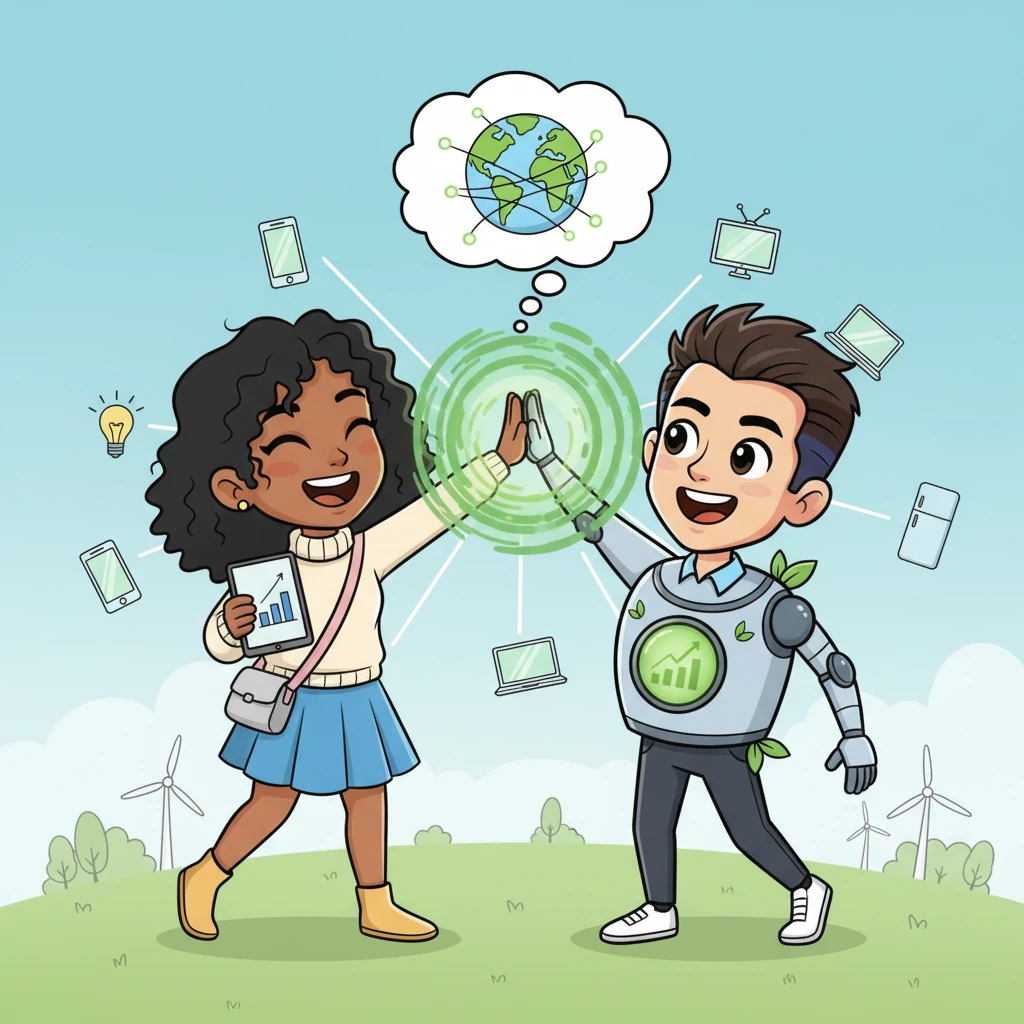
Izzy and Eco-Bot 5000 celebrate with a joyful high-five! They show how their amazing engine helps people choose devices that are good for the Earth, making the world a greener place. They dream of connecting to every device, everywhere, making an even bigger impact!
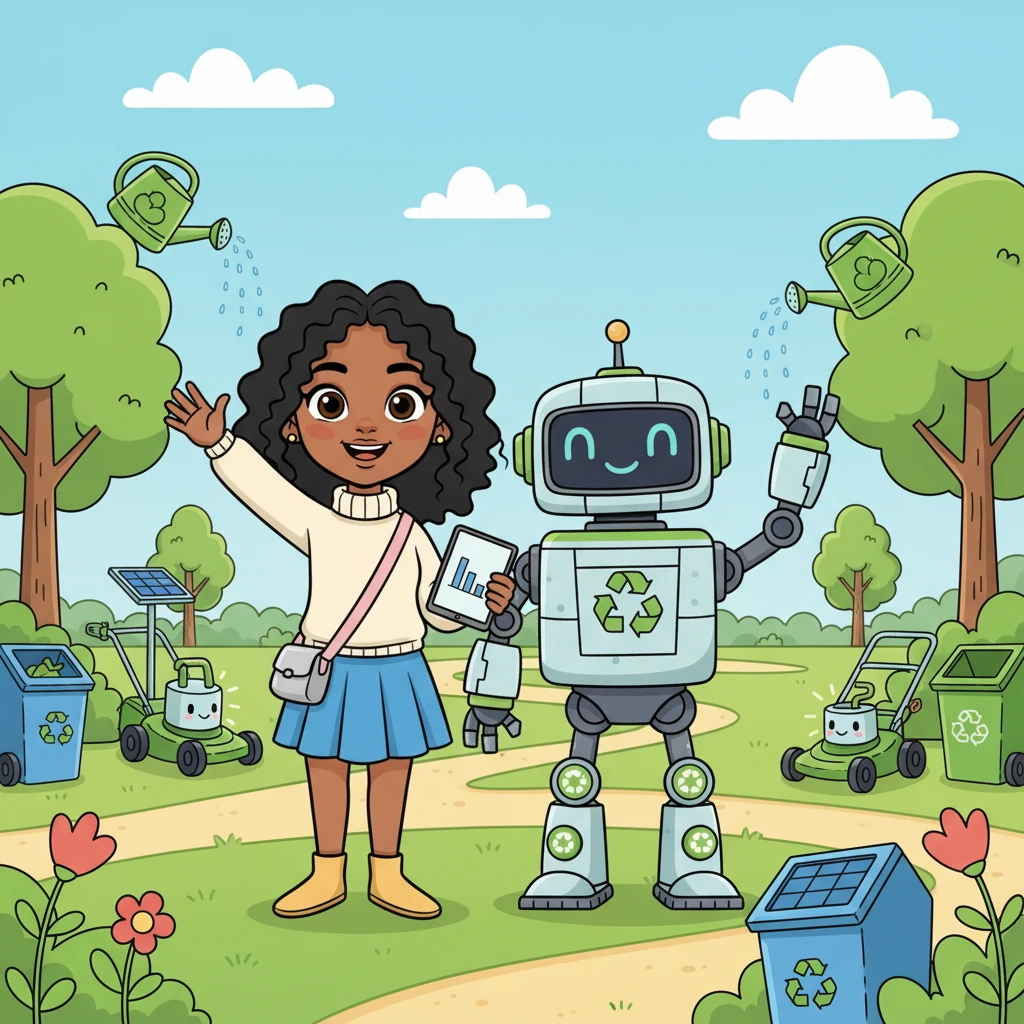
In a bright, clean park filled with happy, eco-friendly smart devices, Inventor Izzy and Eco-Bot 5000 stand proudly, waving to everyone. They remind us that with a little smart thinking and teamwork, we can all help build a wonderfully sustainable future for our planet. What a brilliant adventure!
Промпт генерации(Войдите, чтобы увидеть полный промпт)
Create a professional, modern, and visually engaging PowerPoint presentation for a mini project titled: “AI-Based Lifecycle Assessment Engine for Smart Devices” Presentation requirements: • Academic and technical tone • Clean layout with blue/green sustainability theme • Use icons related to AI, environment, carbon footprint, and smart devices • Include simple diagrams where necessary • Keep content concise but professional • Around 12–15 slides Slides should include the following sections: Title Slide Project Title Student Name Department Institution Name Academic Year Introduction Background on smart devices and environmental impact Importance of Lifecycle Assessment (LCA) Problem Statement Environmental impact of smart devices Need for intelligent assessment system Objectives AI-based emission prediction Impact classification Sustainable technology evaluation Literature Review (Brief) Traditional LCA methods Limitations Role of AI in sustainability System Architecture User → Web Interface → Flask Backend → ML Model → Prediction Output Include simple flow diagram Methodology Data collection Model training (Linear Regression) Web integration Database Design Users table Devices table Assessments table ER relationship overview Implementation Technologies used (Python, Flask, Scikit-learn, HTML) Working screenshots placeholder Results & Output Predicted CO₂ emission Impact classification (Low / Medium / High) Advantages AI-driven Automated prediction Promotes sustainability Future Enhancements Real-world dataset integration Graph dashboard Cloud deployment Conclusion AI supports sustainable technology decisions Thank You Slide Design style: Professional, minimal, eco-tech theme with subtle animations.