Join Elara, a brilliant young coder, as she challenges her friend's AI algorithm, sparking a powerful debate about ethics and responsibility. This thought-provoking story explores the crucial balance between technological advancement and the greater good, reminding us of the human values that should guide our creations. Prepare to be inspired by the power of empathy and the importance of making the right choices.
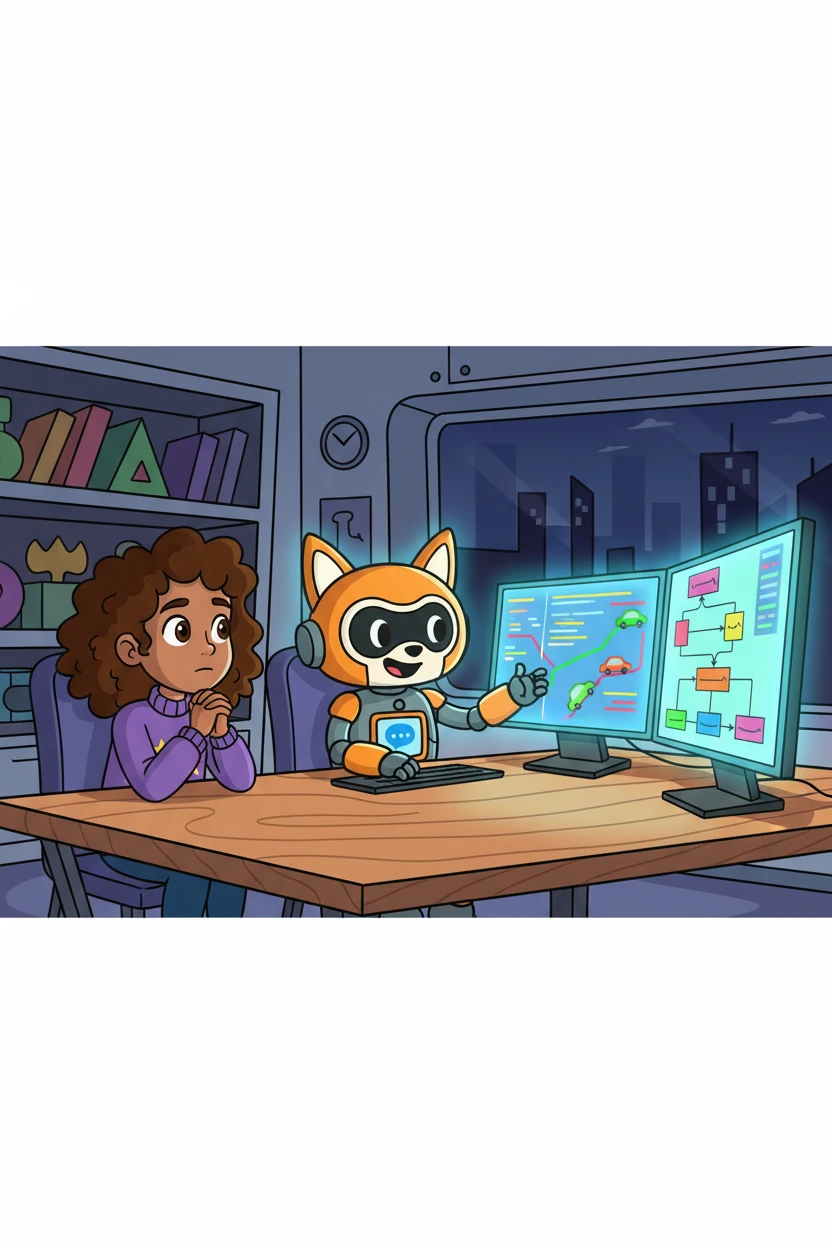
Elara sat across from Dana, the glow of the computer screens illuminating their faces. Dana, engrossed in lines of code, explained her new AI project for self-driving cars. Elara listened intently, a thoughtful expression on her face as Dana described the algorithm's decision-making process in the event of an accident.
Dana proudly declared that her AI prioritized the car owner's safety above all else. Elara frowned, recognizing a potential ethical problem. She knew that this 'owner-first' approach could lead to devastating consequences for others. Dana's logic seemed cold and detached, prioritizing a contract over human lives.
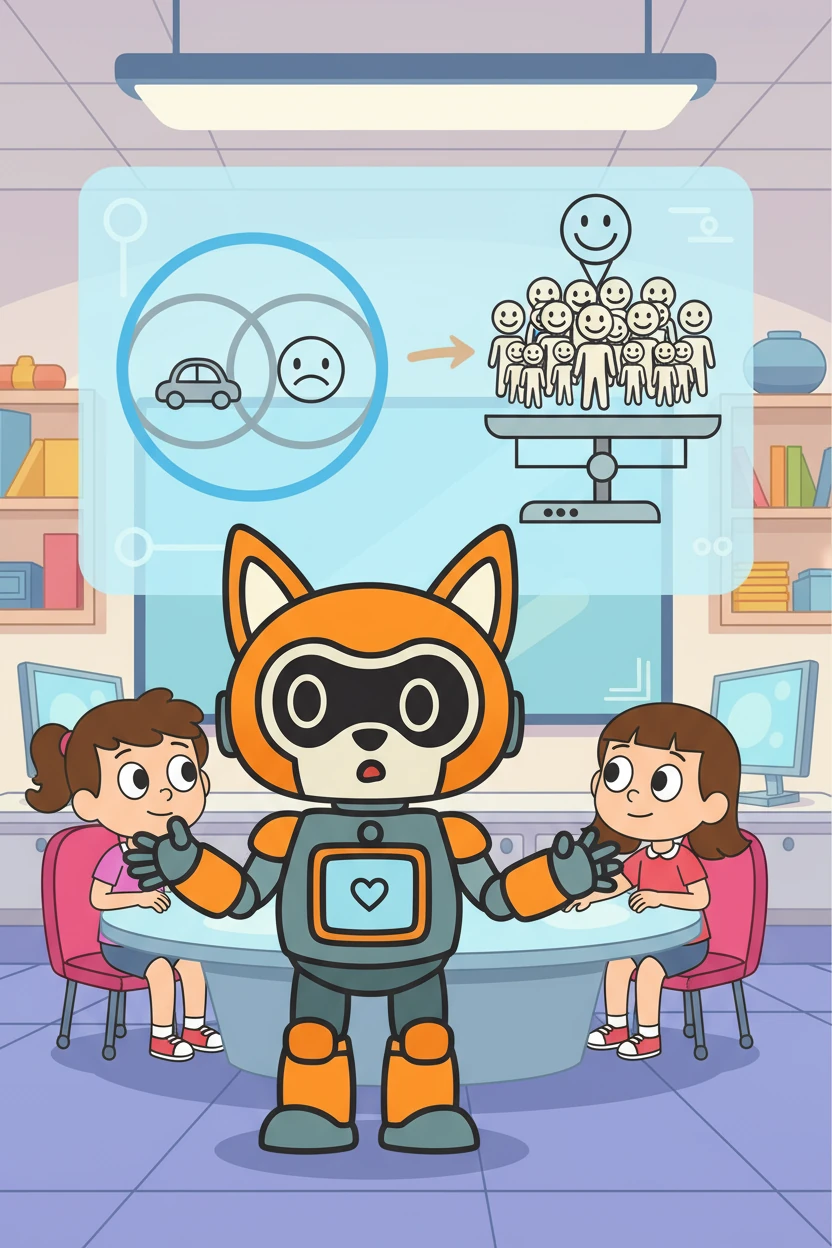
Elara began her argument, citing the principle of Utilitarianism. She explained how the AI should be programmed to minimize overall harm, even if it meant sacrificing the car owner's safety for the greater good. She emphasized that AI systems should reflect societal values, not just individual preferences.
Dana countered, defending her stance by saying, 'The owner paid for the car, so their safety is the priority. My code is logical.' Elara, however, explained that prioritizing the owner above all else could lead to AI bias and a lack of public trust in autonomous vehicles. The debate grew heated, but remained respectful.
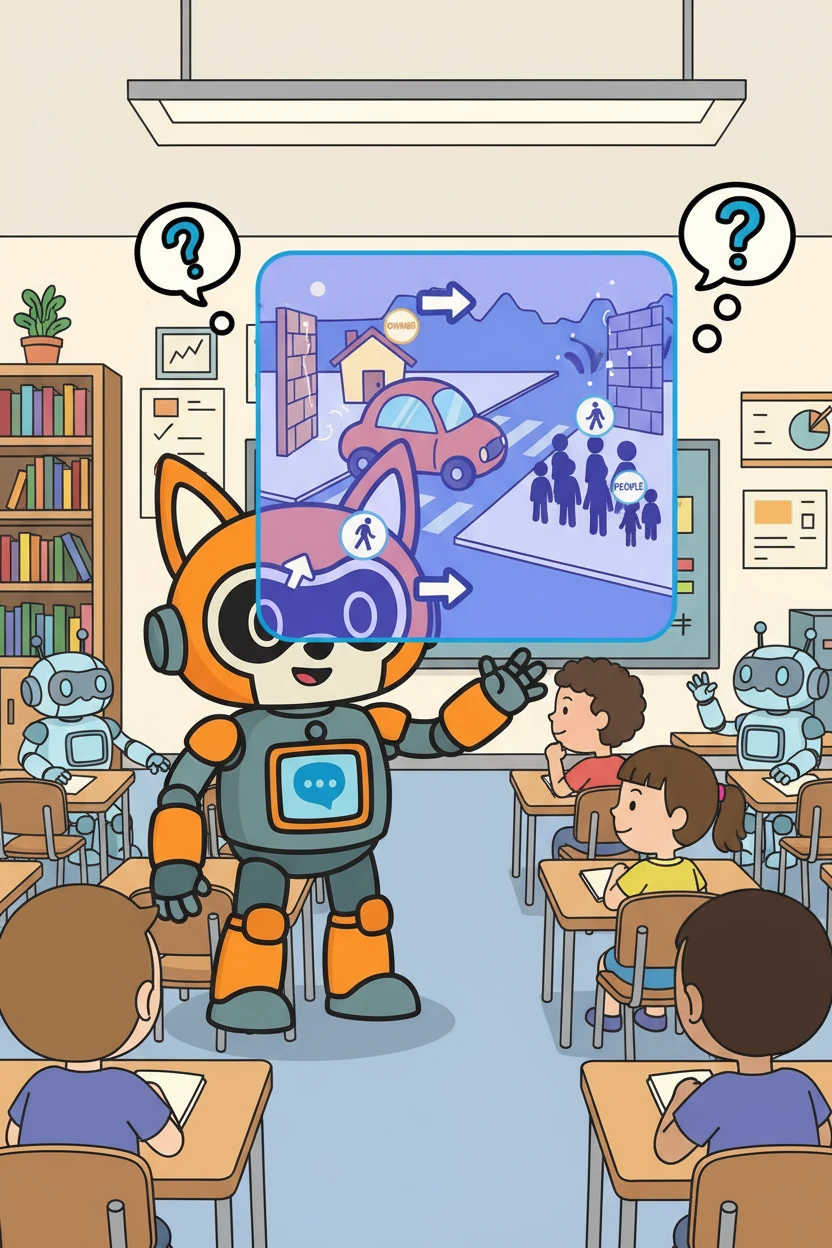
Elara presented a hypothetical scenario: a self-driving car faced with an unavoidable accident, forcing it to choose between the owner's life and the lives of several pedestrians. She argued that the AI must choose the option that saved the most lives, regardless of ownership. The image of the potential collision hung in the air.
Dana paused, considering Elara's points. She looked at her code again, a new understanding dawning on her face. Recognizing the importance of ethical considerations, she began to rewrite her algorithm, aiming for a more balanced approach that prioritized the 'greatest good' and the preservation of human life. The future of AI, and the world, seemed a little brighter.
Промпт генерации(Войдите, чтобы увидеть полный промпт)
The Scenario: The Algorithm's ChoiceYour friend, Dana, is programming an AI system for a new self-driving car company. The AI's job is simple: to make instantaneous decisions in case of an unavoidable accident.Dana’s current algorithm prioritizes the safety of the car's owner (the driver) over everyone else, even if it means risking more lives outside the car. Dana argues, "The owner paid for the car, so their safety is the priority. My code is logical."However, your Computer Science class emphasizes that AI must follow a strict ethical framework that considers the greater good.Your mission is to convince Dana to rewrite her algorithm to adhere to a more ethical standard, focusing on minimizing overall harm (e.g., saving the maximum number of people, regardless of who is inside the car).You need to construct a robust argumentative response (using a Claim, Evidence, and Reasoning) to prove that ethical programming is more important than simple contractual logic in life-or-death situations involving AI.📝 Your Task: Write an Argumentative ResponseYour argument must challenge Dana's "owner-first" logic and advocate for the "greatest good" principle in AI ethics.ElementDescriptionClaim (Thesis)A clear, ethical statement arguing that AI algorithms must prioritize the minimization of total casualties (the greater good) over the single user's (owner's) preference.EvidenceA specific, real-world principle or ethical theory that supports your claim (e.g., citing the concept of Utilitarianism, or mentioning established AI ethics guidelines).ReasoningAn explanation of why the evidence supports the claim, focusing on concepts like Social Responsibility, Public Trust, or the Potential for AI Bias if only one group is prioritized.