Join cheerful six-year-old twins Bilal and Husna on a heartwarming journey as their father, Abdullah, teaches them the true beauty of Islamic values in daily life. Through helping a thirsty bird, sharing with neighbors, saying sorry, and forgiving one another, young readers will discover how simple everyday acts of kindness bring immense joy and blessings.
On a bright, sunny morning, six-year-old Bilal and his twin sister Husna were playing in their lush green garden with their father, Abdullah. Suddenly, Husna pointed softly toward a quiet corner where a tiny, tired little bird sat near a dry fountain, resting under the hot sun. "Look, Baba!" whispered Bilal. "The little bird looks so thirsty and weak." Abdullah smiled gently at his observant children, reminding them that kindness begins the moment we notice when someone needs help.
Mini-Lesson: Kindness starts by opening our eyes and noticing when others need help.
Qur'an Reference: "And Allah is Ever Kind to His servants." (Surah Al-Baqarah, 2:207)
Husna quickly fetched a small clay bowl and poured cool, fresh water into it, while Bilal gently placed a few soft breadcrumbs nearby. The little bird fluttered its colorful wings, drank happily from the bowl, and sang a sweet chirp of gratitude. Abdullah patted their heads lovingly and said, "When we share what Allah has given us, our hearts fill with joy." Bilal and Husna beamed with pride, realizing how wonderful it feels to share.
Mini-Lesson: Sharing what Allah has blessed us with is a beautiful act of kindness and gratitude.
Qur'an Reference: "And whatever good you do—indeed, Allah is Knowing of it." (Surah Al-Baqarah, 2:215)
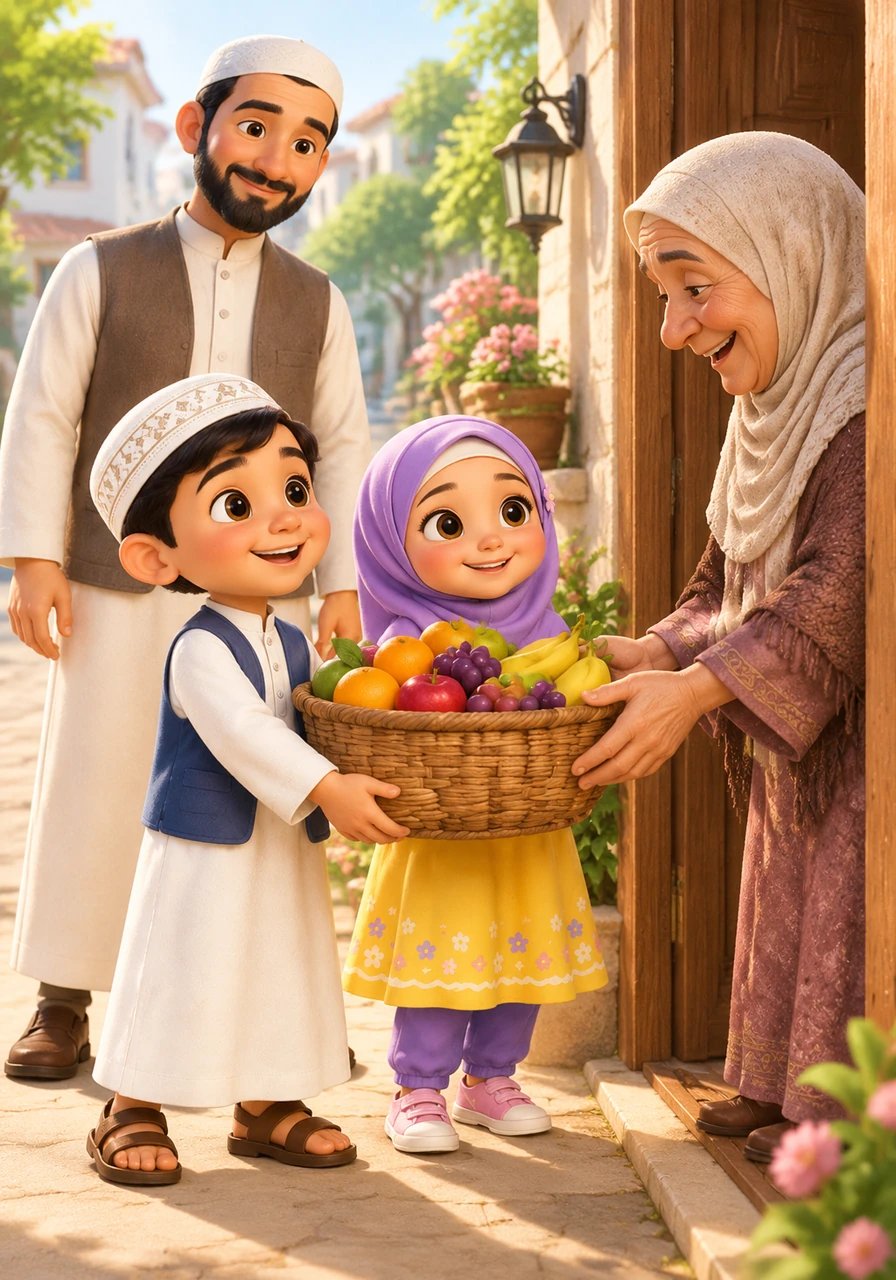
While taking a peaceful afternoon walk down their neighborhood street, the family noticed an elderly neighbor carrying a heavy basket of fresh fruit. With a gentle nod of encouragement from Abdullah, Bilal and Husna ran over with big smiles and helped carry the heavy basket together all the way to the neighbor's door. The kind elder smiled warmly and prayed for Allah to bless the sweet young helpers.
Mini-Lesson: Helping others with a joyful heart makes our community strong and happy.
Qur'an Reference: "Help one another in goodness and righteousness." (Surah Al-Ma'idah, 5:2)
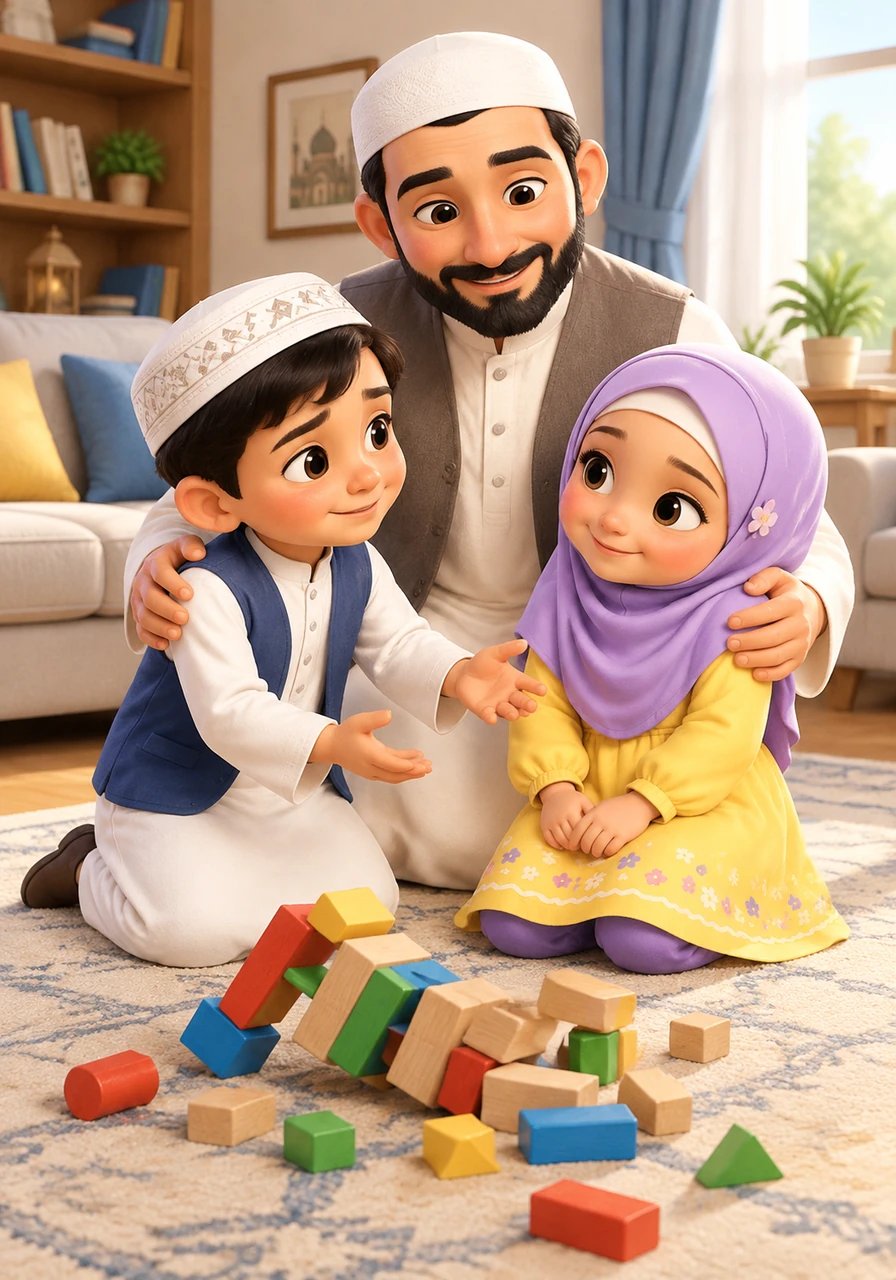
Back home in the cozy living room, Bilal accidentally tripped over the carpet and knocked down Husna's tall wooden toy tower. "I am so sorry, Husna, it was an accident!" Bilal said right away with gentle, sincere eyes. Husna swallowed her sadness, smiled, and said softly, "That is okay, Bilal. I forgive you! Let's build an even bigger tower together." Abdullah hugged them both, proud of their polite words and forgiving hearts.
Mini-Lesson: Gentle words, saying sorry, and forgiving others bring peace and love into our home.
Qur'an Reference: "And speak to people good words." (Surah Al-Baqarah, 2:83)
As the golden evening sun set behind the trees, Abdullah gathered Bilal and Husna close on the porch under the warm sky. He reminded them that practicing kindness should not just be for today, but a peaceful habit for every single day of their lives. Hand in hand, Bilal and Husna happily promised to always help, share, forgive, and speak kind words wherever they go.
Mini-Lesson: Make kindness a daily habit, and spread warmth and light everywhere you go.
Qur'an Reference: "Is the reward for goodness anything but goodness?" (Surah Ar-Rahman, 55:60)
Generation Prompt(Sign in to view the full prompt)
Act as an expert Islamic children’s book author and animation story director. Create a warm, engaging Islamic children’s story titled “Bilal & Husna Learn About Kindness”, with the subtitle “A Little Story About Helping Others.” Main Characters - Bilal: A cheerful, curious 6-year-old Muslim boy who is kind, helpful, and eager to learn. - Husna: A sweet, caring 6-year-old Muslim girl who is gentle, thoughtful, and loves helping others. - Abdullah: Bilal and Husna’s loving father. He is patient, wise, calm, and teaches his children Islamic values through simple everyday experiences. Story Theme The central theme is kindness. Show children that kindness can be demonstrated through helping others, sharing, using gentle words, apologizing, forgiving, and caring for Allah’s creation. Story Structure Create 5 pages/scenes. Each page should contain: 1. A short story section of 2–3 simple sentences suitable for a 6-year-old. 2. A colorful illustration description showing the characters, environment, actions, emotions, lighting, and important objects. 3. A simple mini-lesson that children can easily understand. 4. A relevant Qur’an verse reference connected naturally to the lesson. Story Progression Page 1 — A Beautiful Morning: Bilal, Husna, and Abdullah are outside when they notice a tired and thirsty little bird. The children learn that kindness begins by noticing when someone needs help. Page 2 — Sharing Is Kind: Bilal and Husna share food with the bird and learn that sharing what Allah has given us is an act of kindness and gratitude. Page 3 — Helping Someone: The children meet an elderly person carrying a heavy basket. With Abdullah’s encouragement, they help carry it safely. Page 4 — Kind Words: Bilal accidentally knocks over Husna’s toys. He apologizes, and Husna forgives him. Teach the importance of gentle speech, saying sorry, and forgiveness. Page 5 — Kindness Every Day: Abdullah reminds the children that kindness should be part of everyday life. Bilal and Husna promise to help, share, forgive, and speak kindly. Islamic Guidelines Keep the story respectful and age-appropriate. Use authentic Qur’an references and avoid inventing Islamic teachings or attributing unsupported statements to Allah or the Prophet ﷺ. Keep the lessons simple enough for a 6-year-old to understand. Visual Consistency Maintain the same appearance of Bilal, Husna, and Abdullah throughout every scene. Use a beautiful, colorful, wholesome 3D children’s animation-book style, warm lighting, expressive faces, modest Islamic clothing, and peaceful family-friendly environments. Do not introduce additional main characters unless necessary. Keep the story positive, gentle, educational, and emotionally engaging. End with a simple message encouraging children to practice one act of kindness every day.