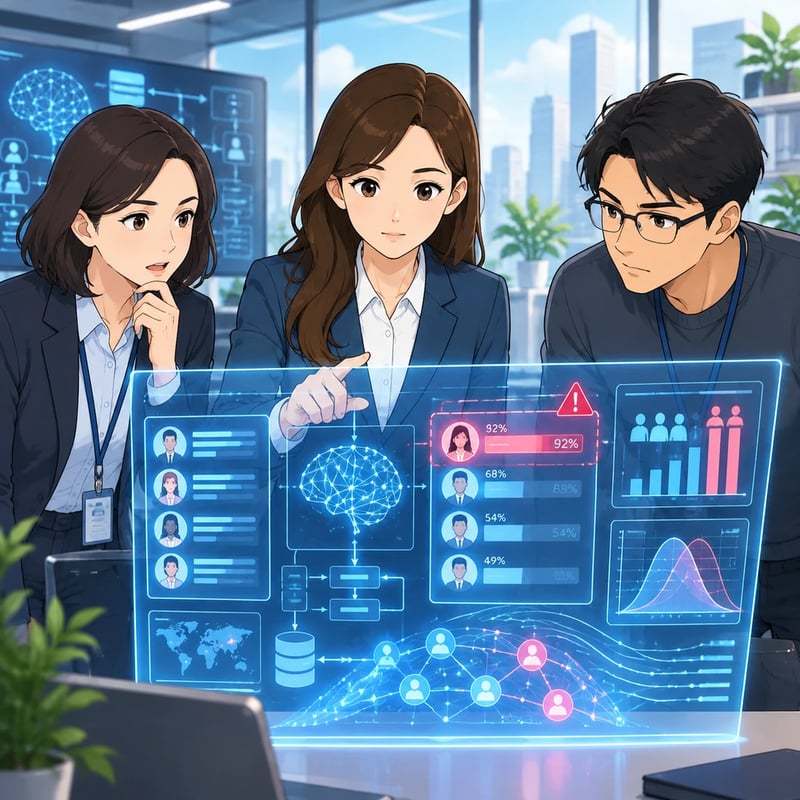
Discover how a modern tech company uncovers hidden algorithmic bias in its recruitment system, exploring the intersection of artificial intelligence, ethics, and human fairness. This captivating educational story guides university students and professionals through the critical challenges of responsible AI development.
Generation Prompt(Sign in to view the full prompt)
# Prompt: Create an AI Ethics Storybook — The Hidden Bias in AI Hiring Act as an expert storyteller, AI ethics researcher, educational content designer, and visual storybook creator. Create a complete, engaging, and easy-to-understand storybook based on the theme **“The Hidden Bias in AI Hiring: When Technology Makes Unfair Decisions.”** The storybook is for university students studying AI, future technologies, and responsible AI. It must follow the four-step framework provided in my reference images. ## Step 1: Choose Your AI The selected AI system is an **AI Hiring Assistant** used by a company to screen job applications and shortlist candidates. Explain: - What problem the AI was designed to solve. - Why the company adopted it. - How it was expected to save time, reduce costs, and improve recruitment. - Who uses the system and who is affected by its decisions. ## Step 2: Build the Six-Panel Story Create six connected story scenes with clear titles, illustrations, dialogue, and short narrative text. **Panel 1 — The Great Idea:** A company introduces an AI hiring assistant to process thousands of job applications quickly and efficiently. **Panel 2 — The AI Learns:** The AI is trained using historical recruitment data that reflects past hiring patterns and may contain gender or other demographic biases. **Panel 3 — Everything Seems Fine:** Initially, the system appears successful because it processes applications quickly and produces shortlists that managers trust. **Panel 4 — Something Goes Wrong:** Qualified candidates, particularly women applying for certain technical positions, receive lower rankings because the system has learned unfair patterns from historical data. **Panel 5 — Someone Discovers It:** A recruitment team member investigates the results, compares shortlisted and rejected applications, and identifies a pattern of unfair outcomes. Show how affected candidates experience frustration, lost opportunities, and reduced trust. **Panel 6 — What Should Happen Now?:** The company pauses or limits the affected system, audits its data and outcomes, involves human reviewers, improves the model, and establishes ongoing fairness monitoring and an appeal process. ## Step 3: Include Everyone's Perspectives Show how five perspectives contribute to understanding the problem: 1. **Technology:** Explain where bias enters the system — training data, model design, evaluation, or deployment. Distinguish the source of bias from the point where it causes harm. 2. **Psychology:** Show the emotional effects on rejected candidates, including frustration, self-doubt, and loss of trust. Avoid assuming every person reacts identically. 3. **Design:** Explain how interface design, ranking displays, confidence scores, and automation bias can encourage recruiters to trust AI recommendations without sufficient scrutiny. 4. **Business:** Explain why the company adopted the system, including cost, speed, scale, and competition. Show how short-term efficiency can conflict with fairness and long-term trust. 5. **Communication:** Show how the problem is reported and explained to candidates, employees, managers, and the public. Recommend transparent, respectful, and evidence-based communication. ## Step 4: Answer the Four Essential Questions Clearly answer all four questions in the final part of the storybook: 1. **Who is affected?** Job applicants, particularly groups disadvantaged by the system, recruiters, hiring managers, the company, and society. 2. **Where did the problem enter?** Historical training data and potentially model design or evaluation; deployment and overreliance on automated rankings may allow the problem to affect real hiring decisions. 3. **What harm or unfair outcome occurred?** Qualified candidates were unfairly downgraded or excluded, equal opportunities were reduced, and trust in recruitment was damaged. 4. **What should the organisation do differently?** Audit representative datasets, test outcomes across relevant groups, validate job-related criteria, introduce meaningful human oversight, provide explanations and appeals, monitor the system continuously, and hold the organisation accountable. ## Storytelling and Visual Design - Use a compelling beginning, a developing conflict, an investigation, and a realistic resolution. - Create relatable fictional characters, including a job applicant, a recruiter, an AI engineer, a manager, and an ethics specialist. - Use realistic workplace situations, natural dialogue, and emotionally engaging scenes. - Keep the technical explanations accurate but accessible to university students. - Use a professional educational presentation style inspired by my reference images: white backgrounds, deep blue headings, soft green and pale blue panels, rounded rectangles, and clean typography. - Use consistent characters and illustration styles throughout the storybook. - Include visual elements such as application forms, training data, AI ranking screens