Embark on a journey of discovery with Shaykh Omar, a wise scholar, as he unveils the historical and spiritual depths of Islamic thought. This book offers a thoughtful exploration of faith, history, and the pursuit of true understanding, presented with respect and clarity. Delve into the rich tapestry of Islamic teachings and gain valuable insights into the core principles of the faith.
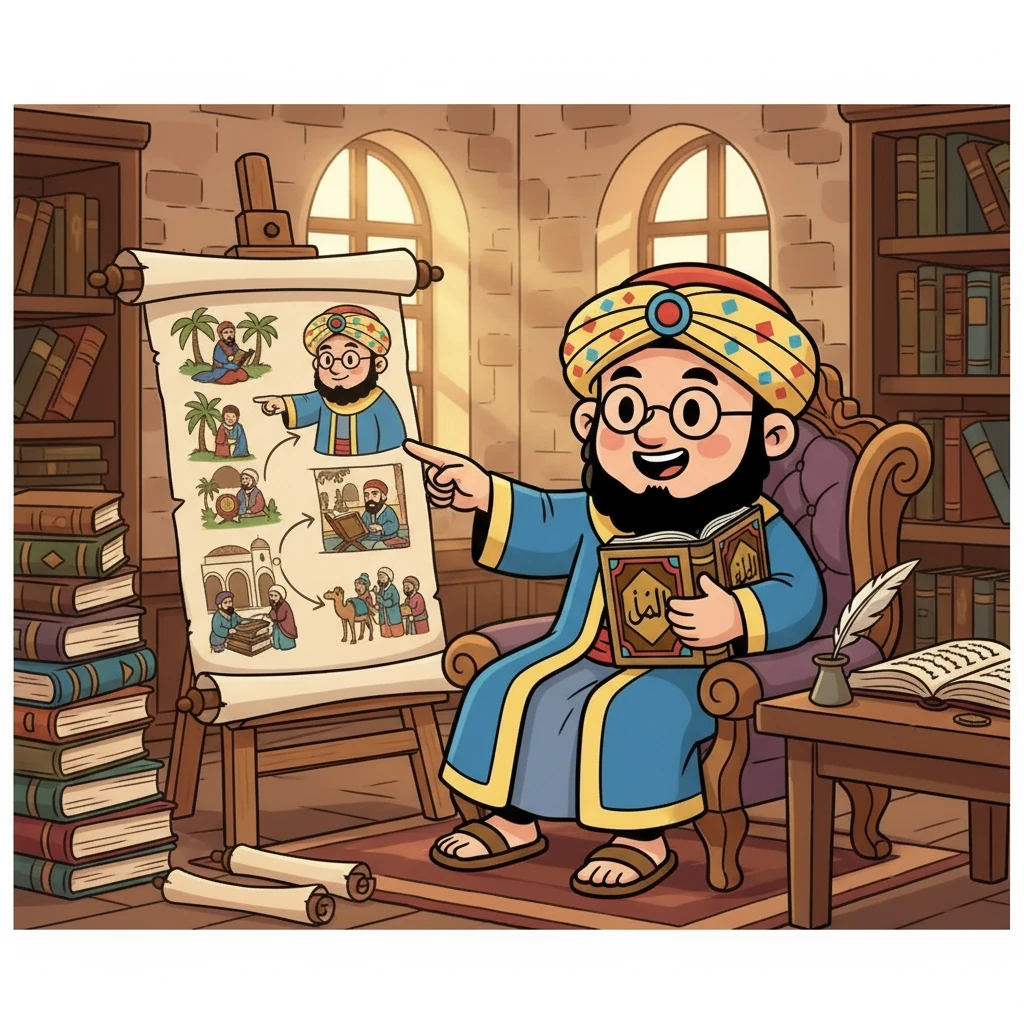
Shaykh Omar, a man of profound knowledge and gentle demeanor, sat surrounded by ancient texts in a study filled with the warm glow of desert sunlight. He began his discourse with a welcoming smile, inviting his listeners to explore the historical and spiritual intricacies of Islamic thought. The room was adorned with subtle geometric patterns and the air hummed with anticipation, setting the stage for an enlightening journey.
The journey began in the arid lands of Najd during the 18th century. Shaykh Omar explained the rise of the Wahhabi movement, a reform movement led by Muhammad ibn Abd al-Wahhab. He described the harsh desert landscape and the simple, yet profound, teachings that aimed to purify Islamic practices, emphasizing the importance of returning to the original sources of the faith.
Shaykh Omar then focused on the life of Muhammad ibn Abd al-Wahhab, a scholar whose teachings sparked a significant transformation. He highlighted his early life, his studies, and his strong stance against practices he believed contradicted the core tenets of Islam. The scholar emphasized the importance of seeking knowledge and understanding in the context of historical events.
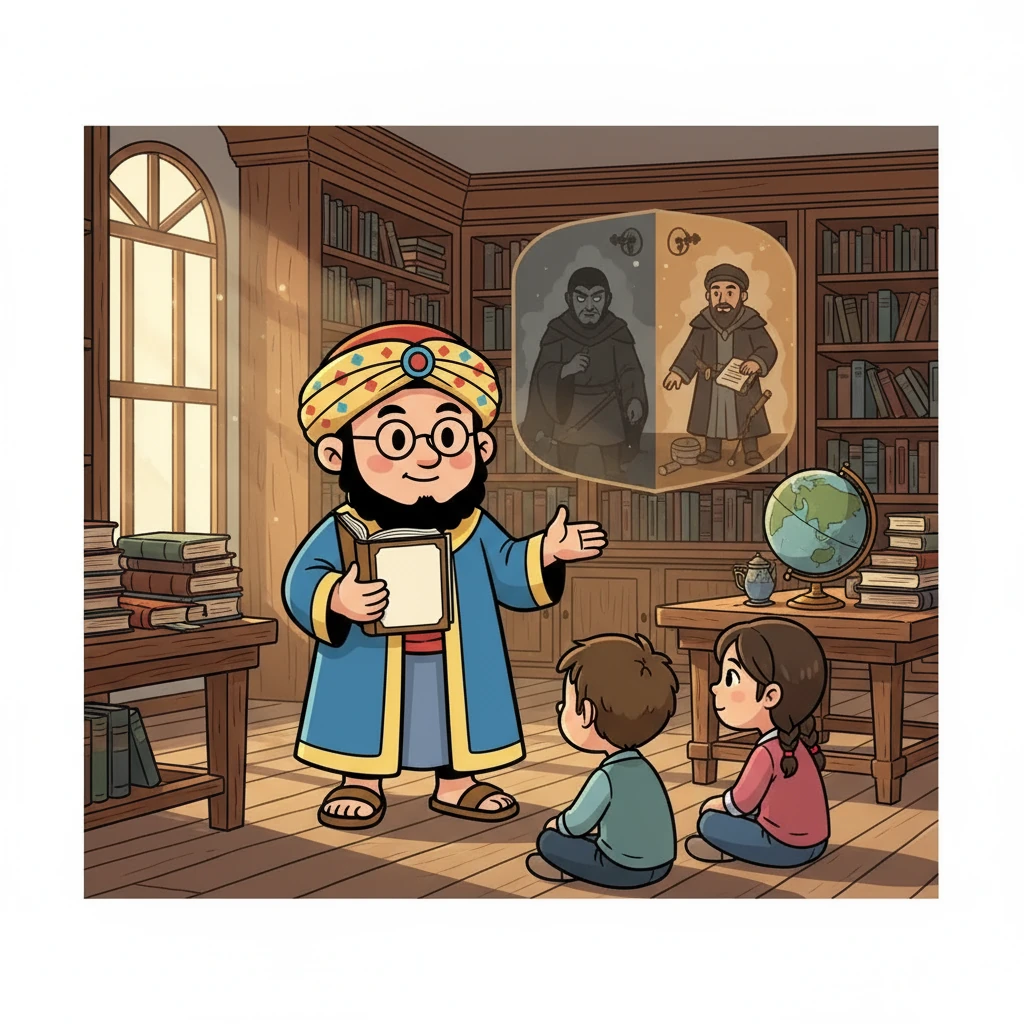
The scholar then delved into the complexities of myths and realities surrounding historical figures. With a wise expression, he addressed the Hempher myth, comparing it to the actual historical narrative. Shaykh Omar clarified the perspectives of scholars, encouraging critical thinking and the importance of relying on authentic sources.
Shaykh Omar then moved to the modern implications of the movement, discussing its influence and the misconceptions that surround it. He emphasized the importance of understanding the ideology, its diverse interpretations, and the need for respectful dialogue. The illustration subtly depicted a modern map with ideological icons.
Shaykh Omar concluded with a discussion on Madad (help) and Waseela (means) in Islam. He explained the concept of seeking help from Allah, the use of Waseela, and provided examples from the Qur'an and Sunnah. He emphasized that the ultimate source of help is always Allah, and the importance of faith and devotion in seeking His assistance.
Generation Prompt(Sign in to view the full prompt)
Create a 10-page illustrated PDF storybook with the following specifications: **Book Title:** Wahhabi Movement & Madad ka Asli Taqaza **Subtitle:** History and Islamic Perspective **Author:** Afzal Ansari **Style:** Professional, educational, clean fonts, culturally respectful Islamic theme **Output:** Illustrated PDF with images on each page, static pages, no animation required --- ### **Character / Theme Suggestions** - Narrator / guide character: A friendly Islamic scholar figure (adult male) in traditional dress, to explain historical facts - Illustrations: Subtle geometric patterns, desert/Arabian Najd backgrounds, mosques, historical figures (Muhammad ibn Abd al-Wahhab), old manuscripts - Color palette: Soft beige, cream, gold accents, green highlights for Islamic text emphasis --- ### **Page-wise Content & Image Suggestions** **Page 1 – Cover** - Content: Title, Subtitle, Author - Image: Abstract Islamic geometric background, subtle desert illustration - Layout: Center-aligned, elegant font **Page 2 – Introduction** - Content: Maksad aur Scope of the book - Image: Scholar figure reading a manuscript, background with soft patterns **Page 3 – Wahhabi Movement – Background & Origin** - Content: 18th century Najd, Founder Muhammad ibn Abd al-Wahhab, Key Teachings - Image: Arabian desert landscape, small mosque illustration **Page 4 – Muhammad ibn Abd al-Wahhab – Life & Teachings** - Content: Early life, studies, opposition to grave worship, alliance with Muhammad bin Saud - Image: Scholar figure studying books, historical Najd village in background **Page 5 – Hempher Myth vs Reality** - Content: Myth of Hempher, historical reality, scholars’ view - Image: Open manuscript illustration, question marks subtly integrated **Page 6 – Modern Implications of Wahhabism** - Content: Ideology, influence, misconceptions - Image: Modern map of Saudi Arabia, abstract ideological icons **Page 7 – Madad & Waseela in Islam** - Content: Qur’an 40:60, Du’a via Waseela, key examples - Image: Person praying respectfully, subtle mosque or book in background **Page 8 – Barelvi vs Wahhabi Views** - Content: Comparison table, key concepts - Image: Two scholars debating (friendly), split background with subtle colors **Page 9 – Islamic Conclusion – Sahi Aqeedah** - Content: Allah se madad, Waseela explanation, analogy - Image: Scholar pointing towards sky, students listening, calm setting **Page 10 – References & Closing** - Content: References list, Thank you note - Image: Stack of books, scrolls, subtle decorative pattern --- **Additional Instructions:** - Each page: Include header with title abbreviation or book title - Footer: Page numbers bottom right - Font: Modern Serif for headings, Sans-serif for body text - Ensure all illustrations are culturally appropriate and respectful - Each page should have **at least one illustration**, matching the content