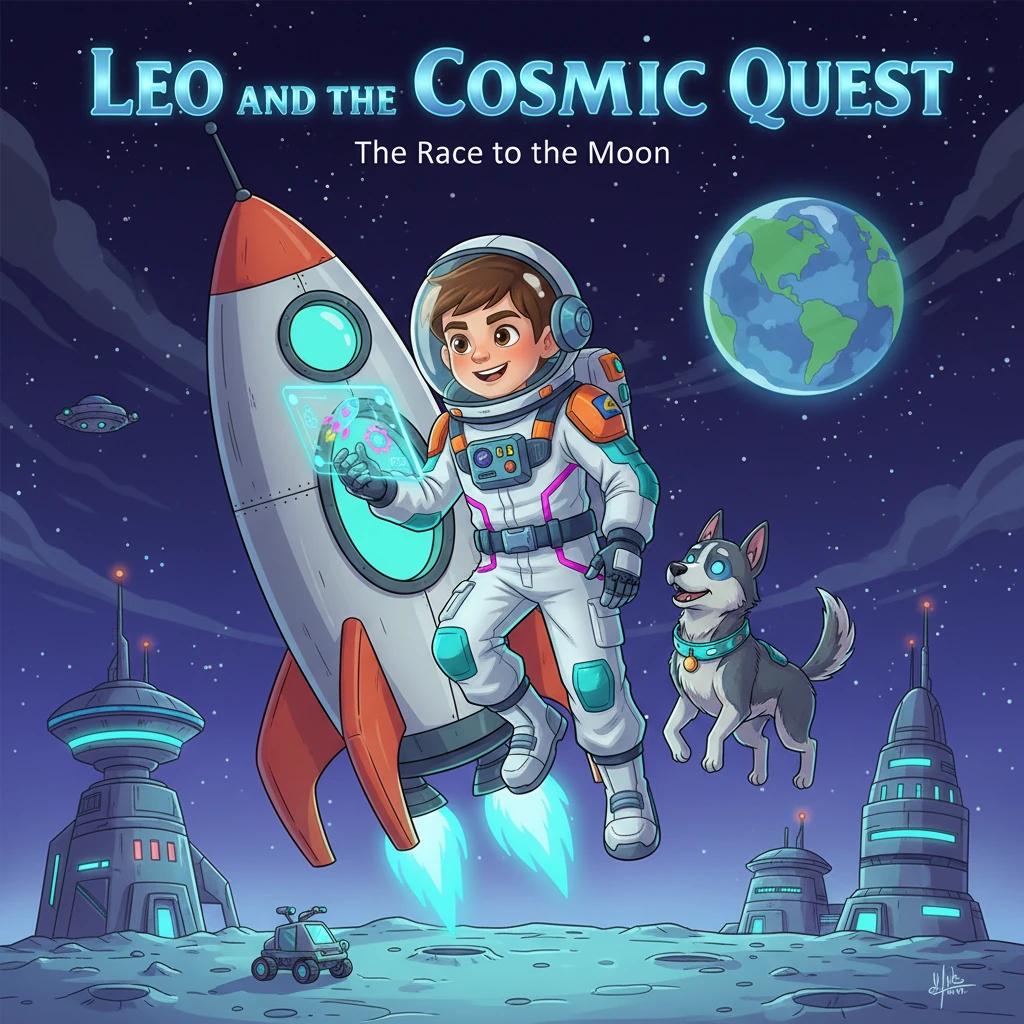
Join Leo on an out-of-this-world journey to become a Junior Space Engineer. This interactive adventure blends fascinating lunar facts with the thrill of rocket science, inspiring young minds to reach for the stars and explore the wonders of the universe.
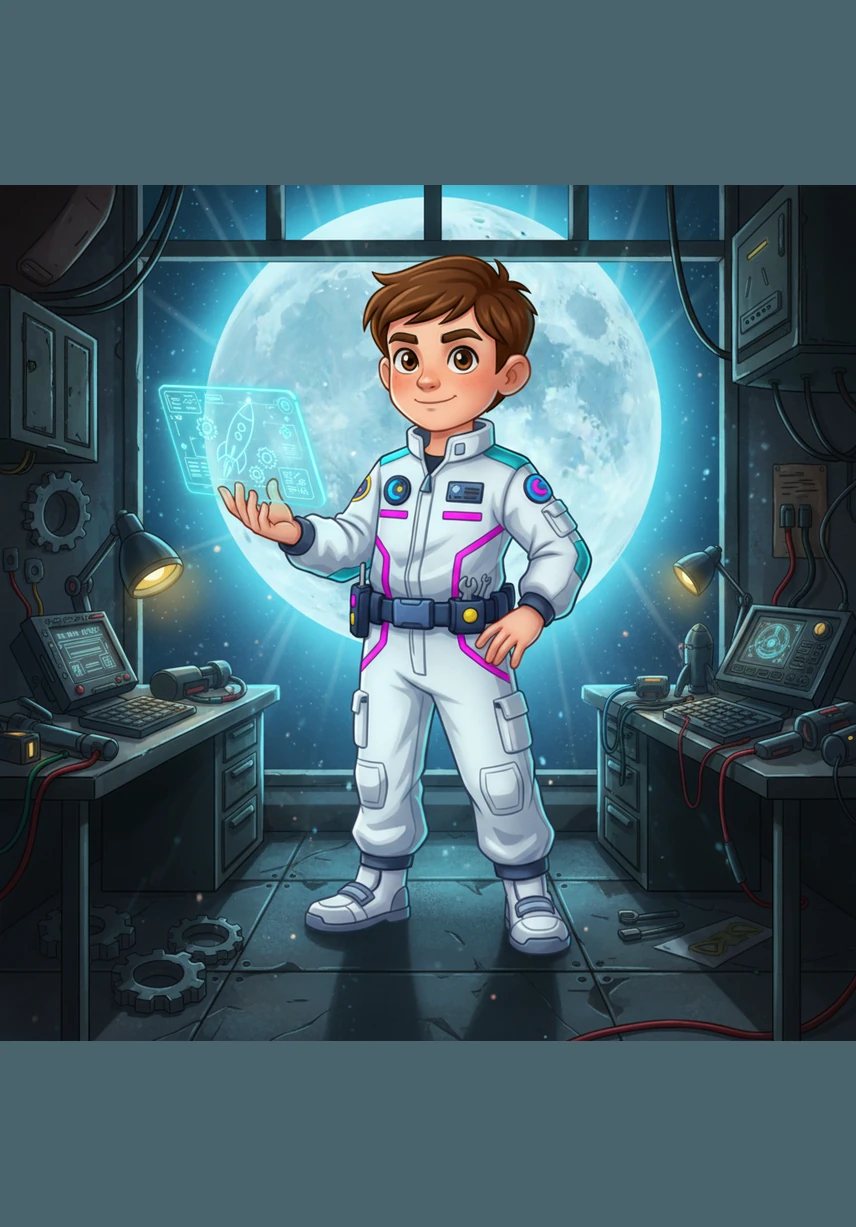
Leo the Junior Space Engineer stands proudly in his workshop, holding a blueprint of a rocket while a giant, glowing moon shines through the window. He is surrounded by tools and gears, ready to begin his most important mission yet.
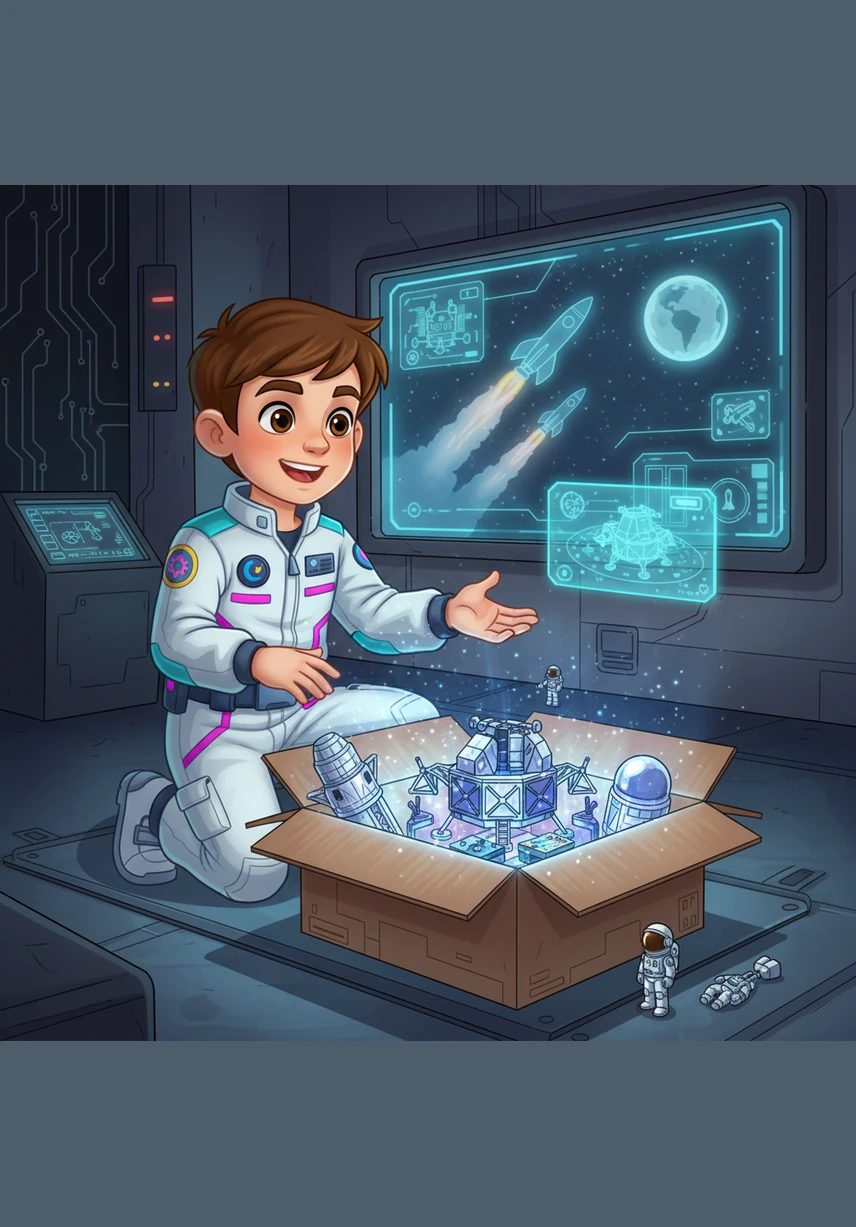
Leo opens a special Nexus STEM kit that sparkles with potential, revealing the components of a lunar landing model. He feels a rush of excitement as he prepares to build, learn, and explore the wonders of outer space.
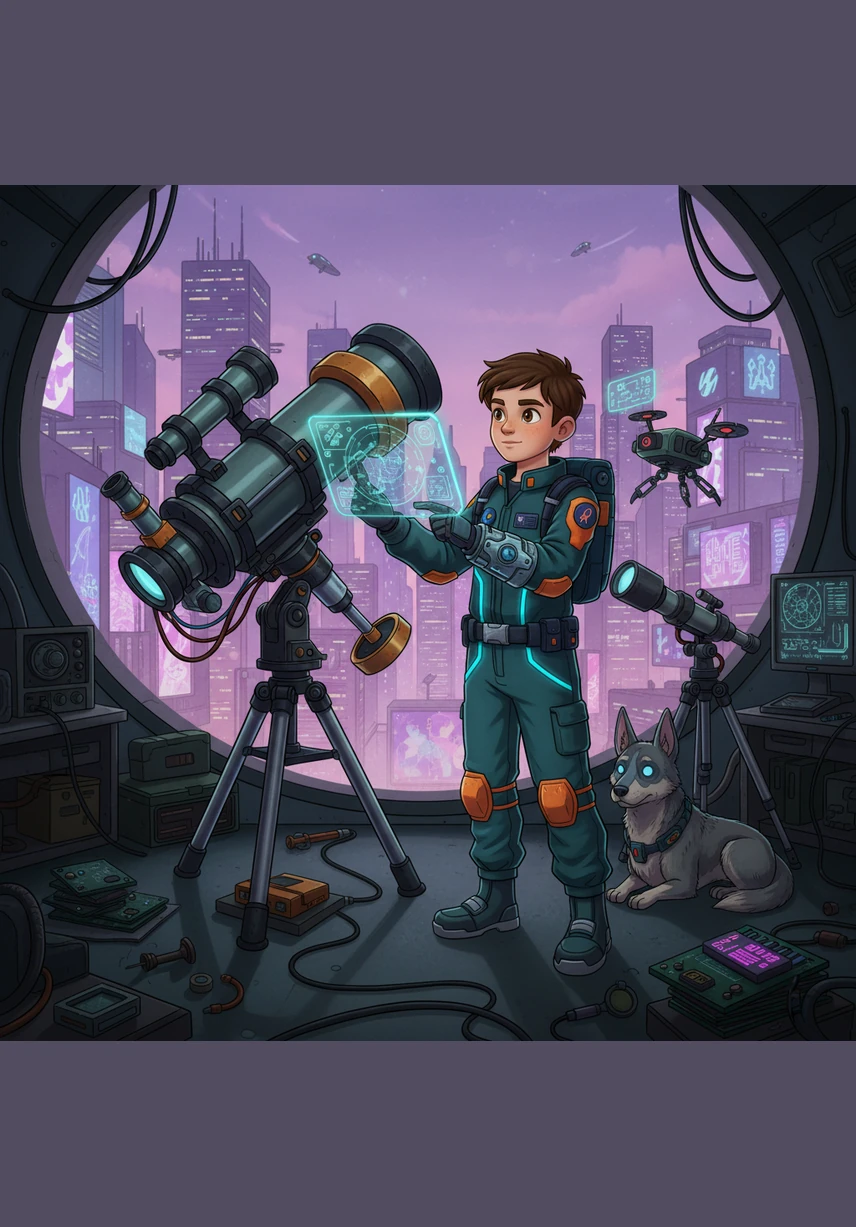
Through a powerful telescope, Leo gazes at the Moon's cratered surface and realizes how far away his celestial neighbor truly is. He imagines himself leaping across the dusty plains, feeling light as a feather in the Moon’s weak gravity.
In his laboratory, Leo studies the power of thrust by launching a small model rocket into the air. He watches as the downward force of the engine sends the craft soaring upward, teaching him the secret of space travel.
A shimmering hologram transports Leo back to 1969, where he witnesses Neil Armstrong taking the first historic step on the lunar surface. He listens to the famous words about a giant leap for mankind and feels inspired by the brave astronauts.
Leo explores a simulated moonscape where he notices that footprints never wash away because there is no wind or rain. He marvels at the idea that his own marks could last for millions of years in the silent, still environment.
Looking back at the beautiful blue Earth from the lunar horizon, Leo learns how the Moon’s gravity gently pulls on the oceans. He sees the tides rising and falling, understanding the deep connection between his home planet and its silent guardian.
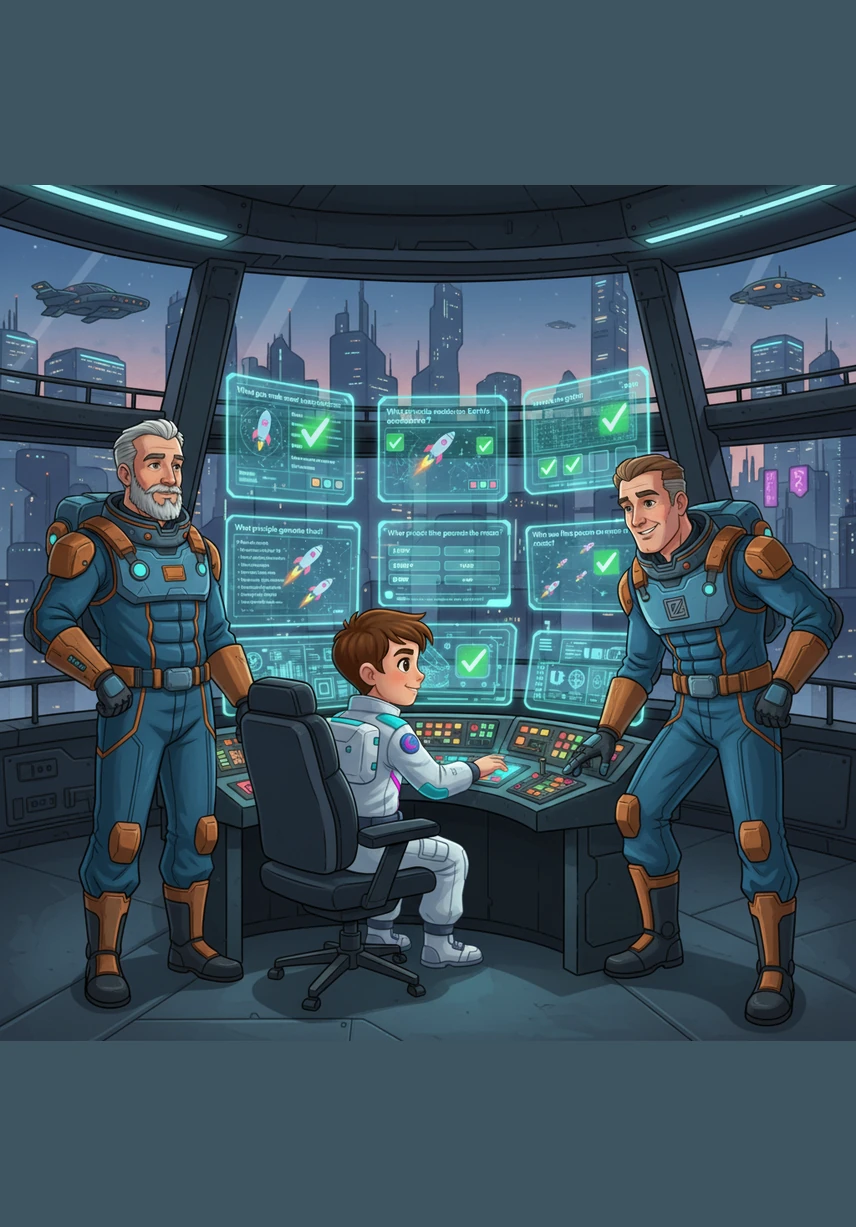
Leo sits at a high-tech mission control console to test his knowledge with a series of challenging space questions. His eyes light up with every correct answer as he masters the facts about air, thrust, and history.
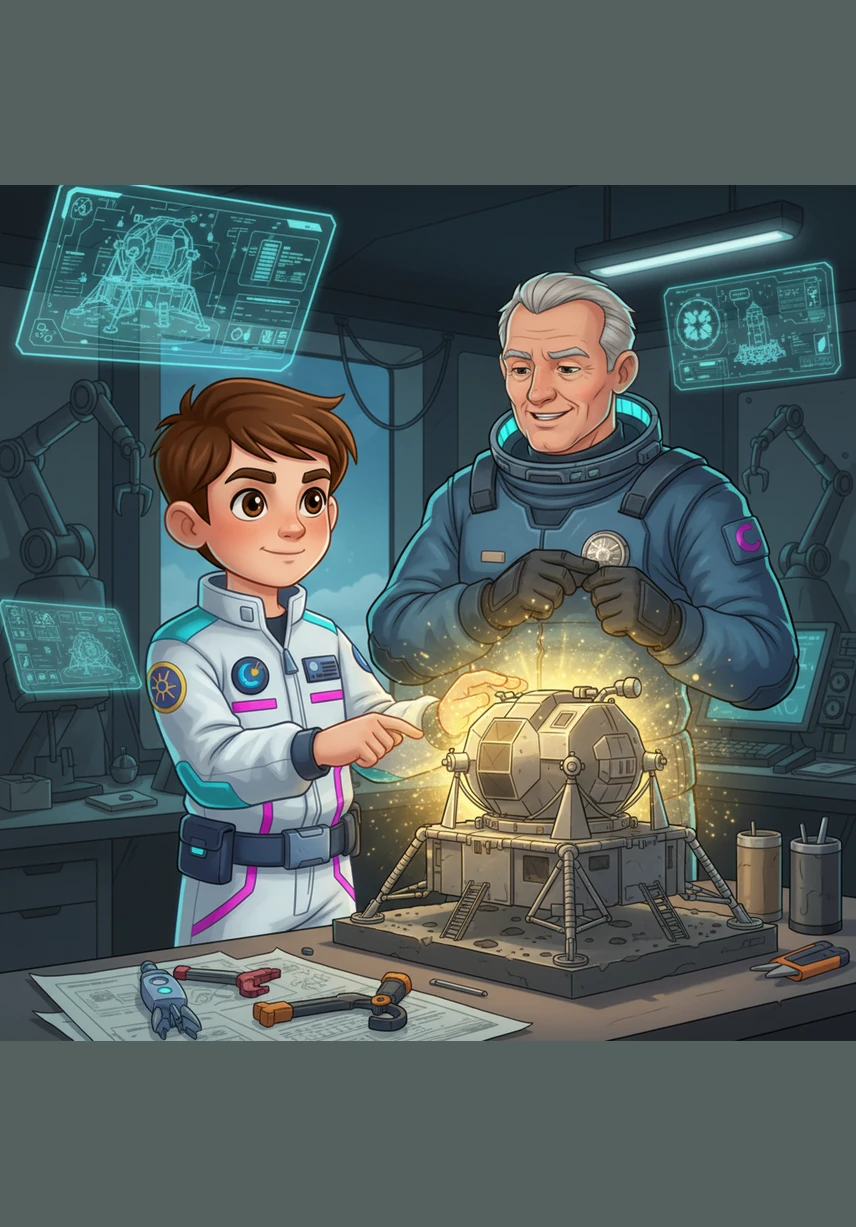
With a final click, Leo finishes building his intricate moon landing model, and it glows with a triumphant golden light. He receives his Junior Space Engineer badge, marking the successful completion of his lunar mission.
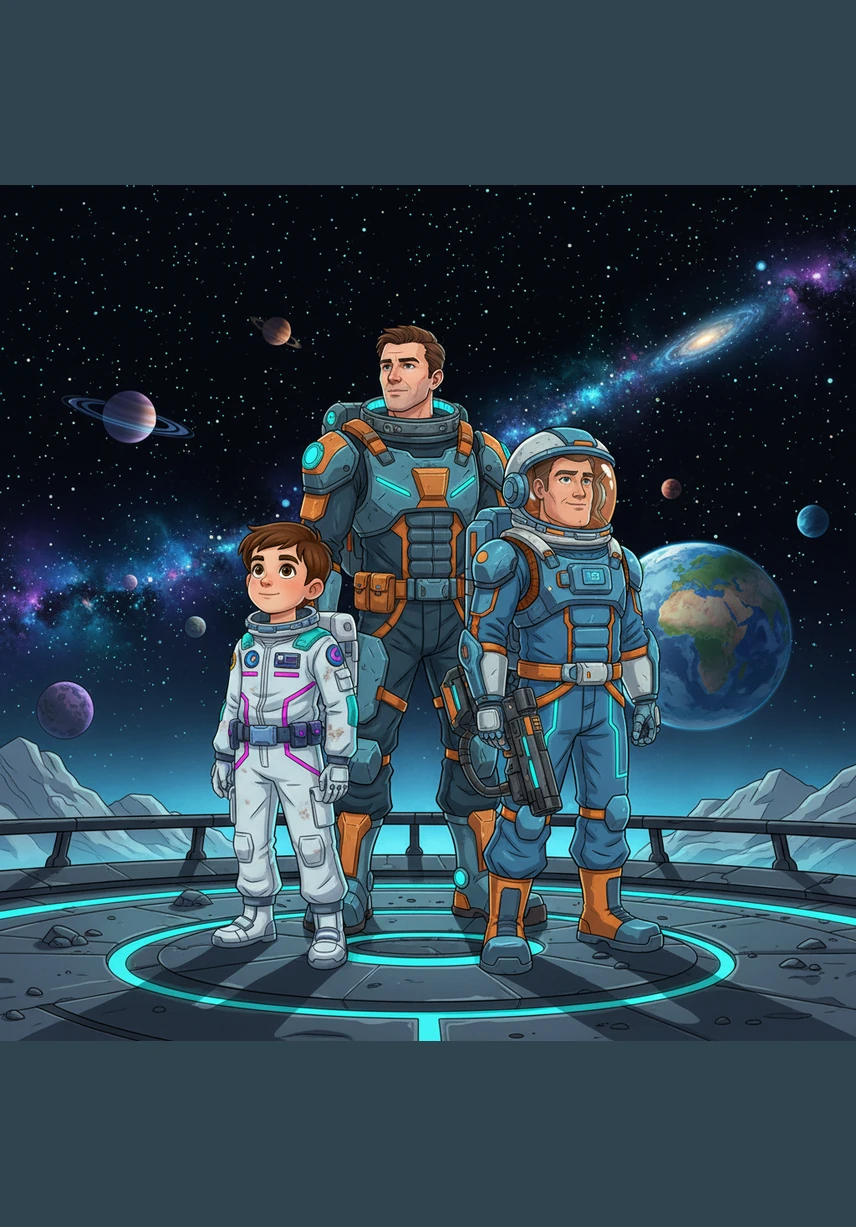
Standing under a vast canopy of twinkling stars, Leo looks beyond the Moon toward the distant planets and galaxies. He knows that this is just the beginning of his journey, as the entire universe is waiting to be discovered.
生成提示词(登录后查看具体 Prompt)
BOOKLET TITLE Nexus STEM 🚀 Mission to the Moon Junior Space Engineer Guide ⸻ 🧩 FORMAT (give this to supplier) • Size: A5 (small booklet) or 5.5” x 8.5” • Pages: 8 pages • Color: Yes (simple color) • Paper: standard glossy or matte ⸻ ✍️ FULL CONTENT (COPY-PASTE READY) ⸻ 🌕 PAGE 1 — COVER Nexus STEM 🚀 Mission to the Moon Become a Junior Space Engineer Build • Learn • Explore ⸻ 👋 PAGE 2 — WELCOME Welcome, Space Engineer! You are about to begin an exciting mission to the Moon 🌕 In this kit, you will: • Build your own moon landing model • Learn how astronauts travel to space • Discover amazing facts about the Moon Are you ready to launch? 👉 Let’s begin your mission! ⸻ 🌕 PAGE 3 — WHAT IS THE MOON? The Moon is Earth’s closest neighbor in space. Did you know? • The Moon is about 384,400 km away from Earth • It has no air to breathe • Gravity on the Moon is much weaker than Earth 👉 That means astronauts can jump higher! ⸻ 🚀 PAGE 4 — HOW DO ROCKETS WORK? Rockets are powerful machines that travel into space. They work using thrust: • Fuel burns and pushes gas downward • This force pushes the rocket upward 🚀 👉 The bigger the force, the higher the rocket goes! ⸻ 👨🚀 PAGE 5 — THE MOON LANDING In 1969, humans landed on the Moon for the first time. Mission name: Apollo 11 Astronauts: • Neil Armstrong • Buzz Aldrin Neil Armstrong said: “That’s one small step for man, one giant leap for mankind.” ⸻ 🧠 PAGE 6 — FUN FACTS • The Moon has no weather • Footprints can last for millions of years • The Moon helps control Earth’s tides 👉 Can you imagine living on the Moon? ⸻ ❓ PAGE 7 — QUIZ TIME Test your knowledge! 1. Does the Moon have air? ☐ Yes ☐ No 2. What pushes a rocket upward? ☐ Gravity ☐ Thrust 3. What was the name of the first Moon mission? ☐ Apollo 11 ☐ Space X ⸻ 🎖️ PAGE 8 — MISSION COMPLETE Congratulations, Space Engineer! 🚀 You have completed your Moon Mission. You learned: • How rockets work • Facts about the Moon • The history of space exploration 👉 Keep exploring. The universe is full of discoveries!