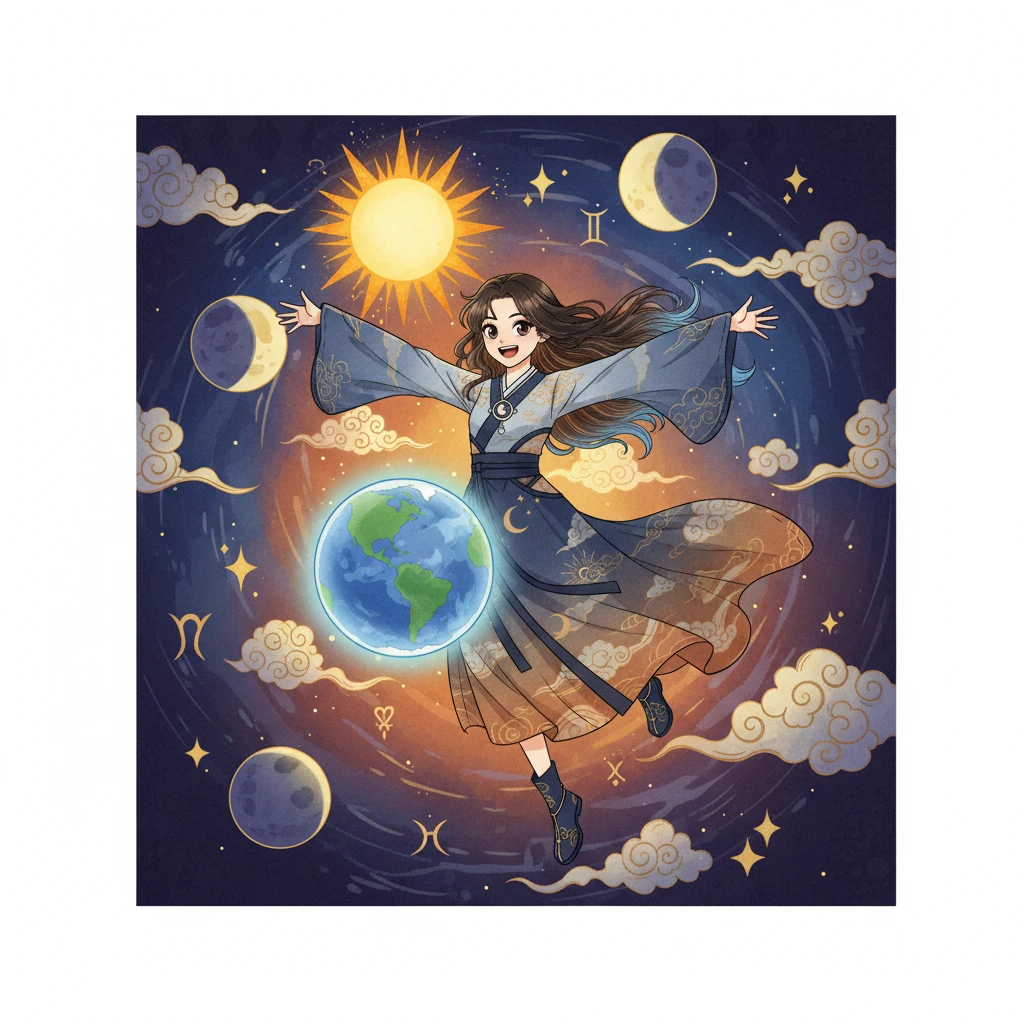
Join Rashmika, a curious 12-year-old from Kanniyakumari, on a captivating journey of discovery as she unravels the mysteries of Earth's movements, seasons, and spectacular eclipses. This beautifully illustrated tale blends scientific wonder with the charm of Chinese Manga, inviting readers to explore the cosmos from their own backyard.
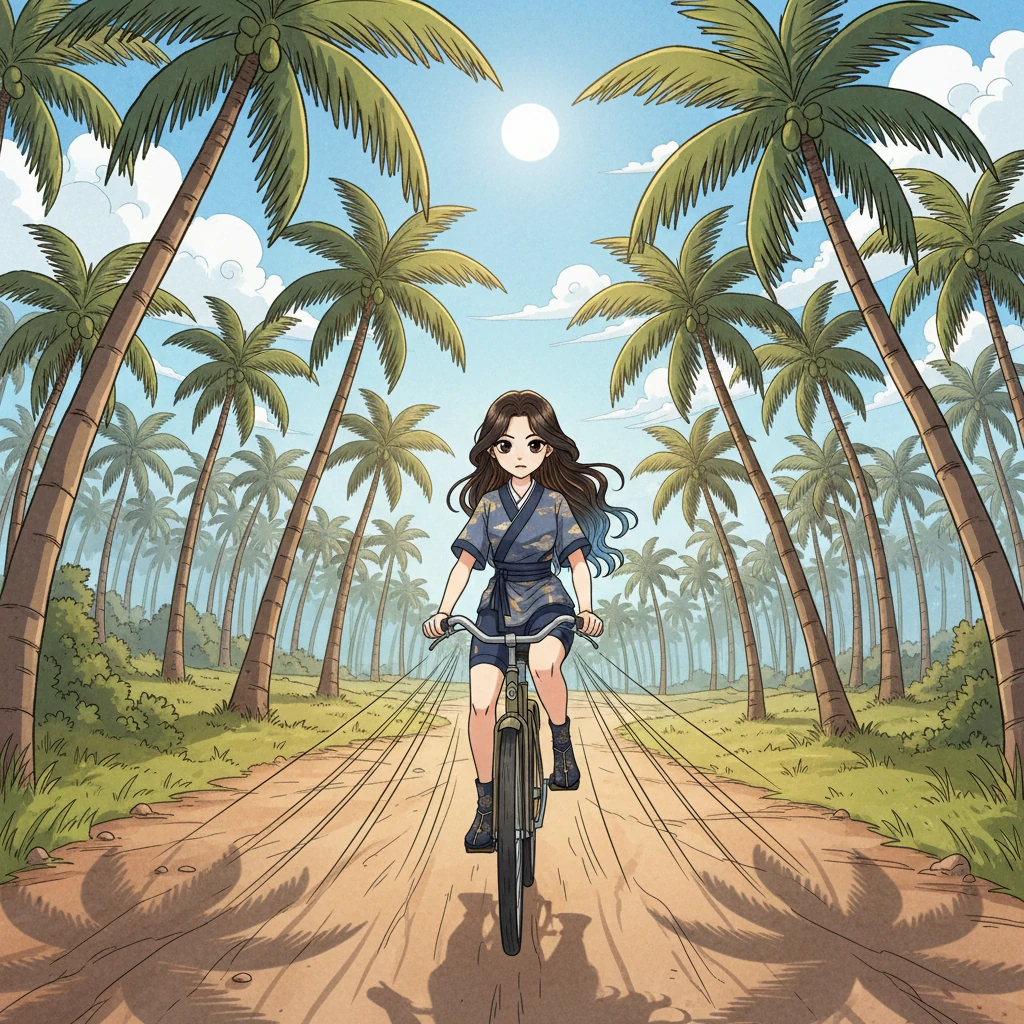
One bright morning, Rashmika pedals her bicycle past towering coconut trees in Kanniyakumari, her expression puzzled. The long, thin shadows stretch across her path, a curious mystery she ponders on her way to school. The scene is vibrant with fresh lines and bright colors, capturing the morning light.
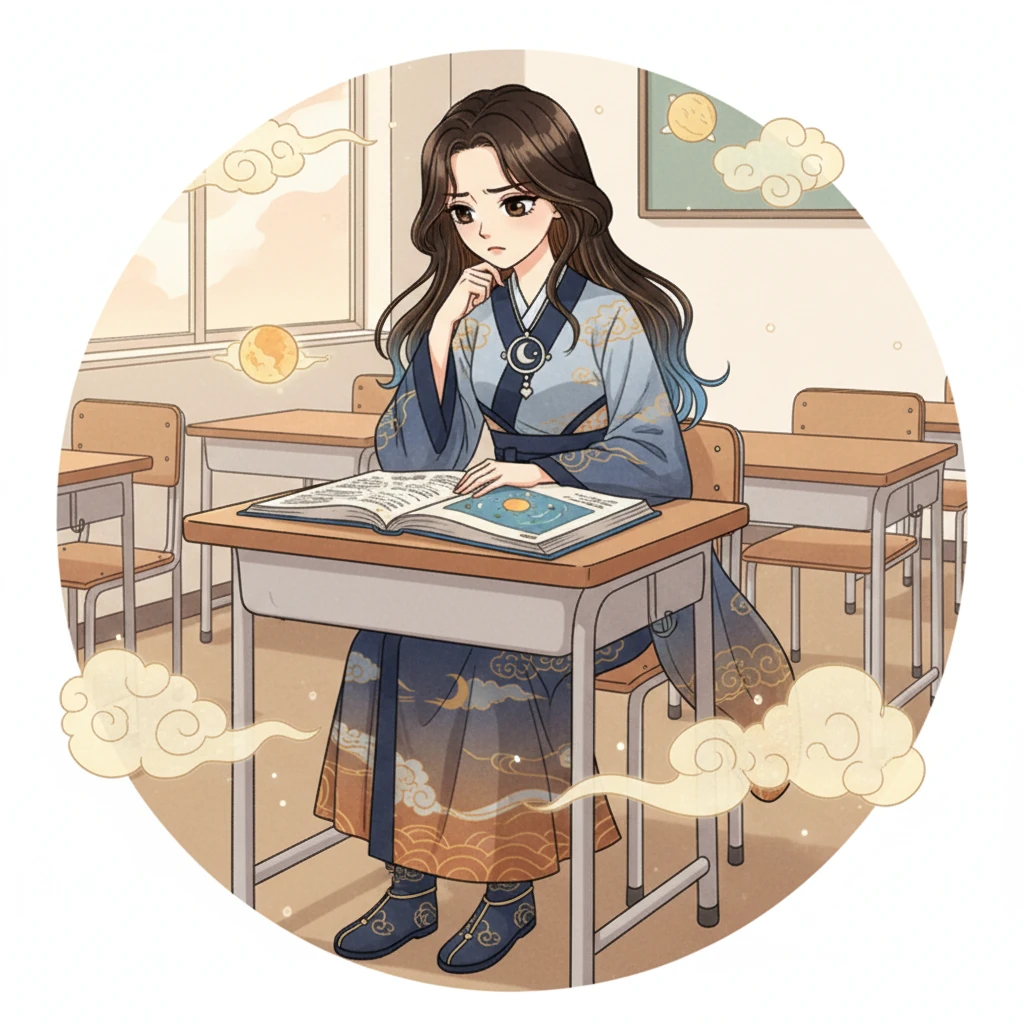
In her classroom, Rashmika sits with a thoughtful frown, recalling her science book. She wonders why the Sun appears to move when the book says it's the Earth that travels. The illustration captures her pensive moment, with soft lines and elegant colors hinting at the ancient wisdom of the skies.
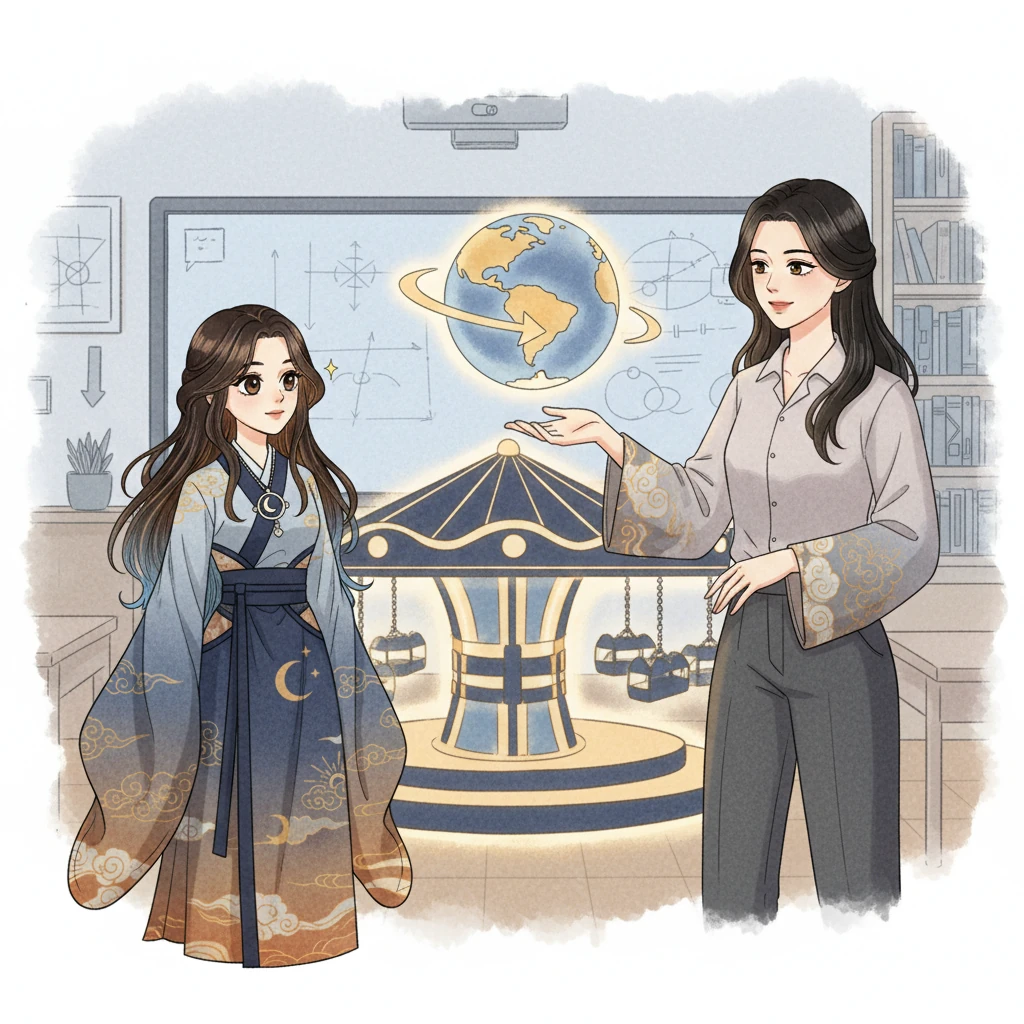
Her teacher, with a warm smile, uses a merry-go-round analogy to explain the Earth's rotation. Rashmika listens intently, a spark of understanding beginning to ignite in her eyes. The scene focuses on the teacher's engaging gesture and Rashmika's attentive face, blending modern classroom elements with subtle ink wash backgrounds.
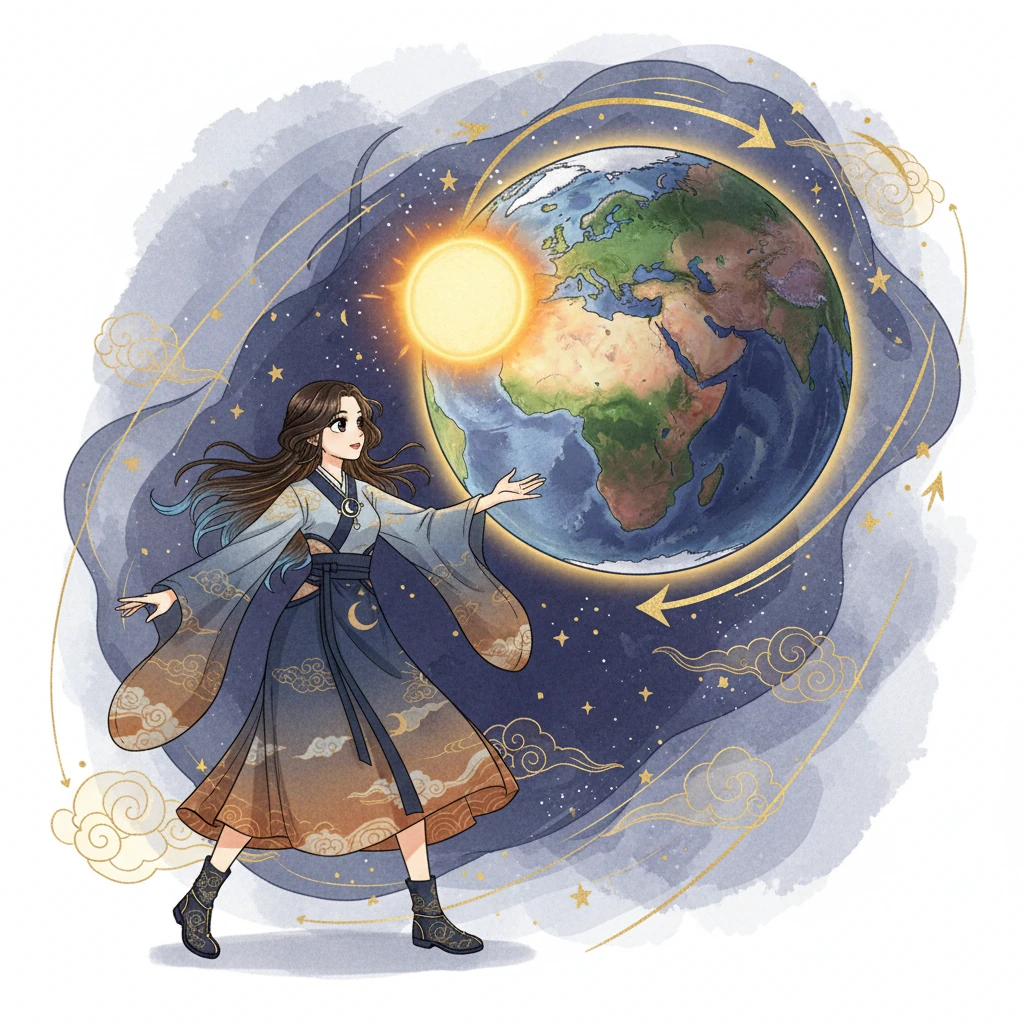
The lesson unfolds with a vivid visualization of the Earth spinning on its axis from West to East. This constant, 24-hour rotation is beautifully depicted, showing how different parts of the planet turn towards and away from the Sun, creating the cycle of day and night. Bold lines and traditional colors emphasize the cosmic dance.
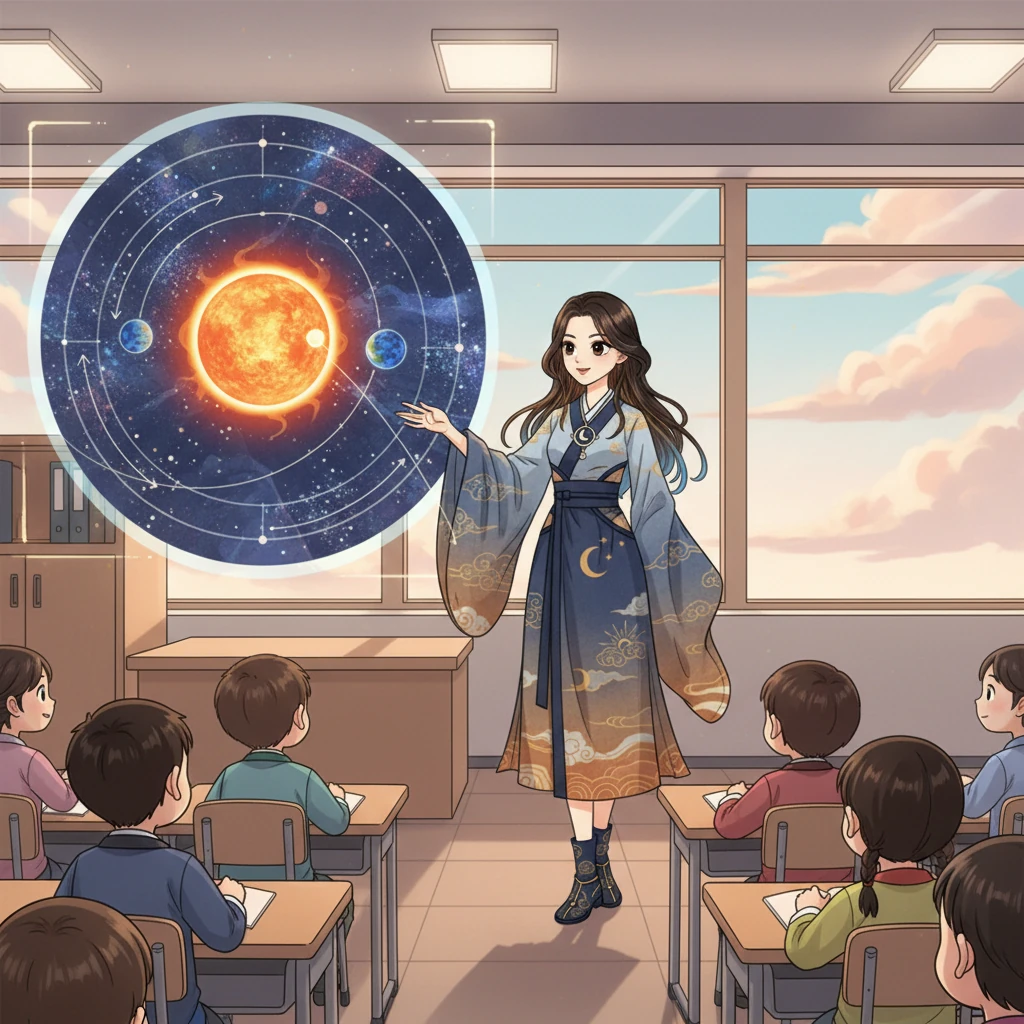
Later that afternoon, the class learns about the Earth's grand journey, its nearly-circular revolution around the Sun. The teacher points to a diagram, illustrating this year-long orbit. The artwork uses elegant lines and a mix of traditional and bright colors to represent the vastness of space.
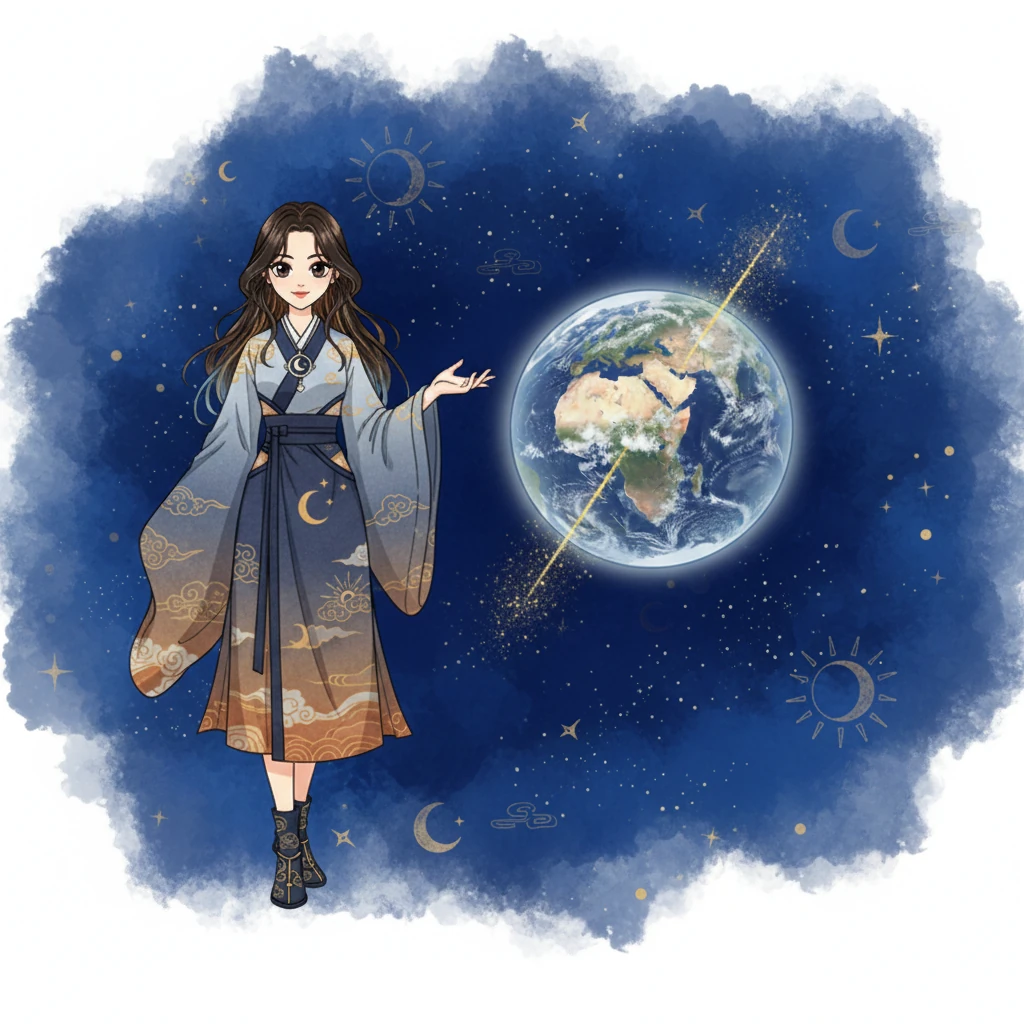
The teacher then reveals a crucial secret: the Earth's axis is not perfectly upright but slightly tilted. This tilt, she explains, is the key to our planet's changing seasons. The illustration features a gracefully rendered Earth with its tilted axis, set against an ink wash cosmic backdrop.
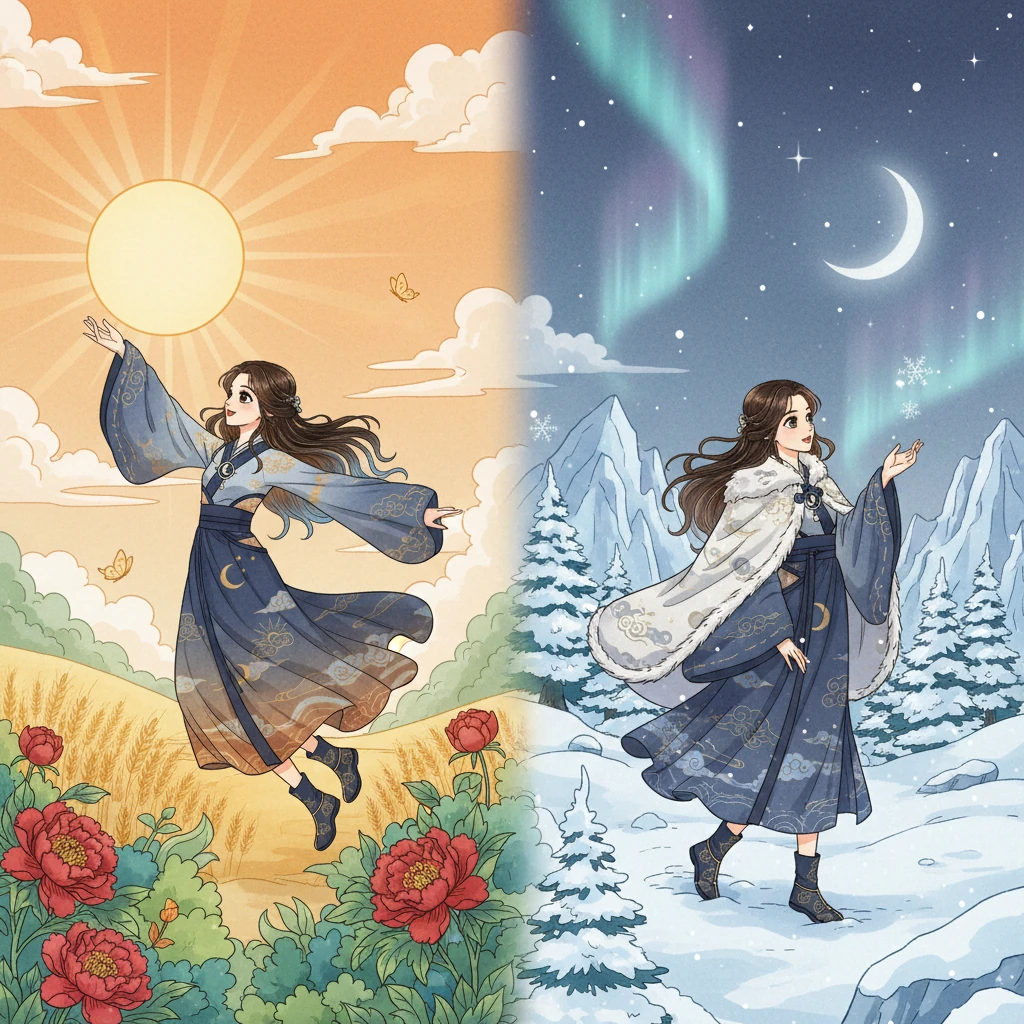
A split illustration vividly contrasts the seasons: one side shows the Northern Hemisphere tilted towards the Sun, bathed in summer's warmth, while the other depicts the Southern Hemisphere experiencing winter's chill. The coloring reflects the seasonal differences, using both warm and cool traditional hues.
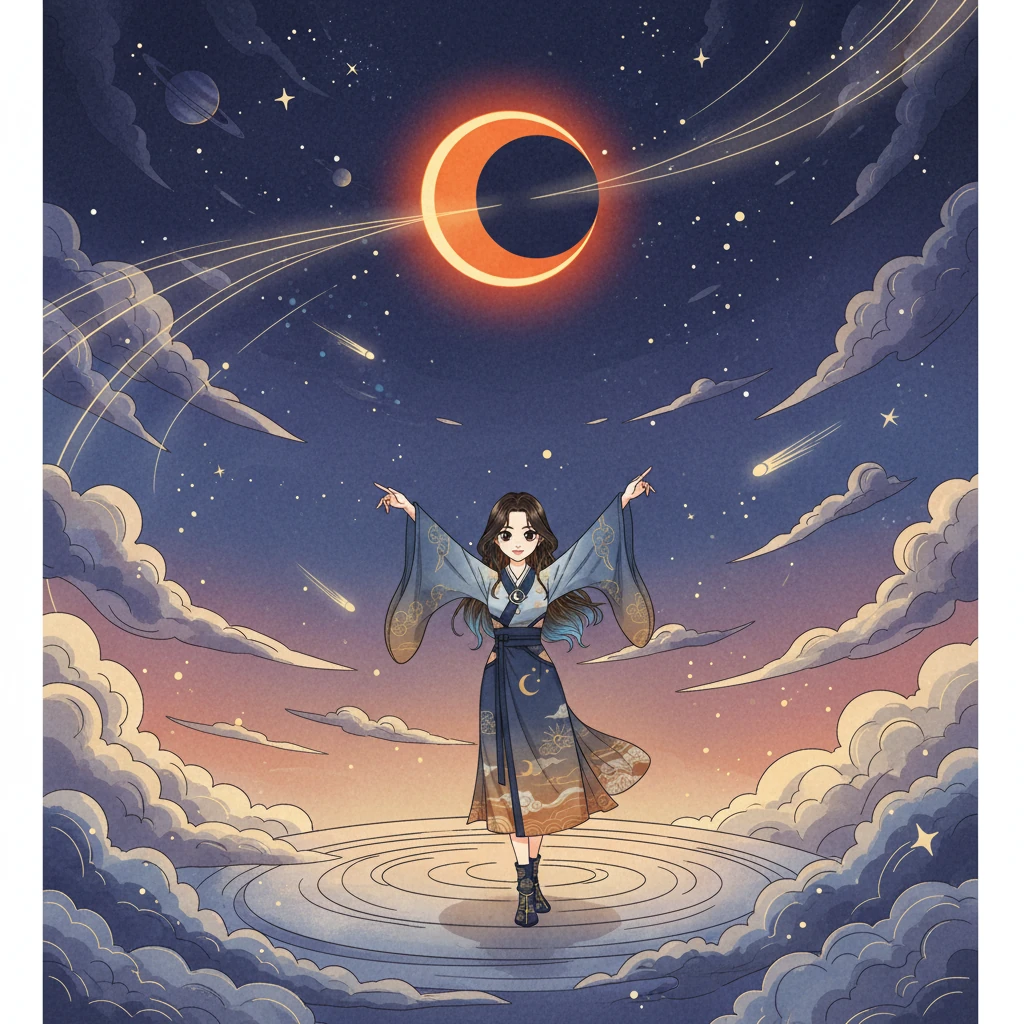
As the day draws to a close, the teacher introduces the most spectacular celestial 'hide-and-seek' games: eclipses. Her gesture is dramatic, drawing attention to the cosmic ballet. The background hints at distant stars and celestial bodies, with smooth, powerful lines creating a sense of wonder.
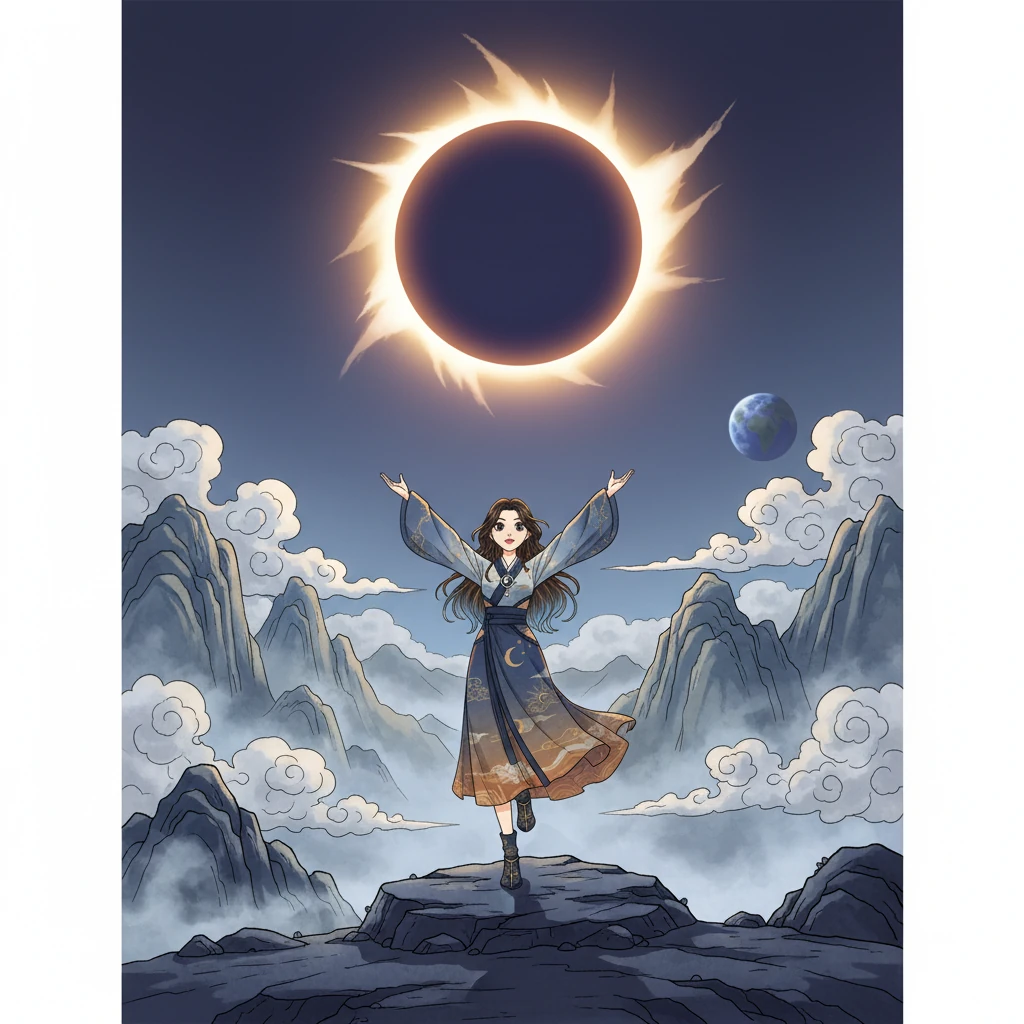
A solar eclipse is illustrated with breathtaking clarity, showing the smaller Moon perfectly positioned between the massive Sun and Earth, momentarily obscuring the Sun's radiant light. The artwork uses bold lines and a dramatic contrast of light and shadow, highlighting the Moon's unexpected power.
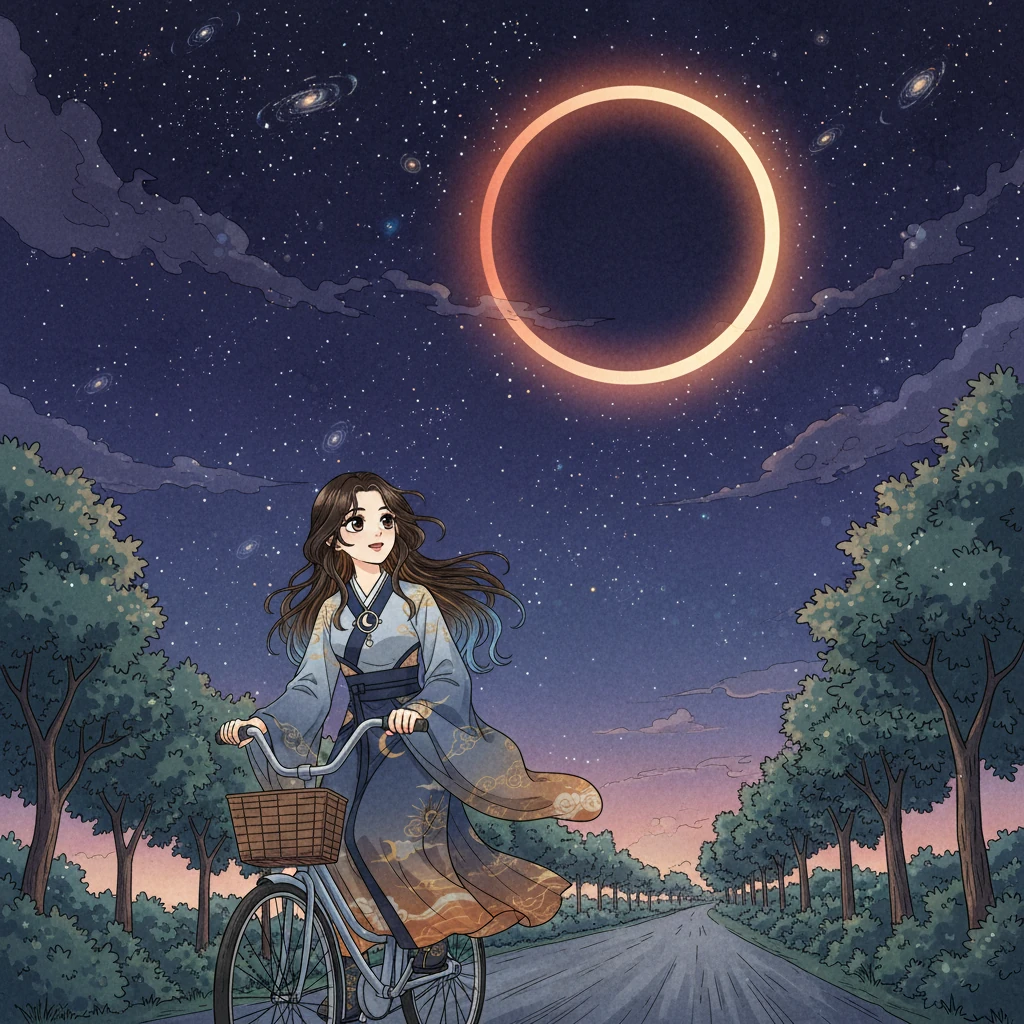
Finally, a lunar eclipse is depicted, with the Earth casting its shadow upon the Moon's surface. Rashmika cycles home that evening, no longer puzzled, her gaze fixed on the stars, understanding the silent, perfectly timed dance of the Earth, Moon, and Sun. The scene combines the celestial event with Rashmika's enlightened journey, using fresh lines and bright, reflective colors.
生成提示词(登录后查看具体 Prompt)
Based on the lesson "Earth, Moon, and the Sun," here is a story that weaves together its key scientific concepts: ### Rashmika’s Day of Discovery One bright morning in Kanniyakumari, 12-year-old Rashmika pedaled her bicycle toward school with a puzzled expression. She had been watching the coconut trees on her route and noticed a strange thing: their shadows were long and thin in the morning, grew quite short by noon, and then stretched out again as she headed home. "The Sun must be moving across the sky," she thought. But then she remembered a lesson from her Grade 6 science book, *Curiosity*, which said the Earth was the one doing the moving. "If the Earth moves around the Sun, why does it look like the Sun is the one traveling?" she wondered. When she arrived at school, her teacher was ready for these exact questions. "Think about the last time you were on a merry-go-round," the teacher said. "When you spin anti-clockwise, the trees and buildings outside the ride look like they are moving clockwise, right?". Rashmika nodded. The teacher explained that the Sun appears to rise in the East and set in the West because the Earth is spinning—or **rotating**—from West to East on its own axis. This 24-hour rotation is what creates our cycle of day and night as different parts of the Earth turn to face the Sun’s light. That afternoon, the class learned that the Earth isn't just spinning like a top; it is also **revolving** in a giant nearly-circular orbit around the Sun. This journey takes a full year. The teacher showed them that the Earth’s axis is slightly tilted, not perfectly upright. "This tilt is the secret to our seasons," the teacher explained. "In June, the Northern Hemisphere is tilted toward the Sun, getting more intense sunlight for longer hours—that’s summer!. Meanwhile, in the Southern Hemisphere, they are tilted away, experiencing winter". As the day ended, the teacher told them about the most spectacular celestial "hide-and-seek" games: **eclipses**. * **Solar Eclipse:** Occurs when the Moon passes between the Sun and Earth, blocking the Sun’s light. Even though the Moon is small, it can cover the massive Sun because it is much closer to us. * **Lunar Eclipse:** Occurs when the Earth moves between the Sun and the Moon, casting its shadow over the Moon’s surface. Rashmika cycled home that evening, no longer puzzled by the shadows. She looked up at the stars, knowing that they too would appear to move across the night sky because the Earth beneath her feet never stopped spinning. She realized that her world was part of a much larger, beautifully timed dance between the Earth, Moon, and Sun.