Join Sparky, a curious and cheerful explorer, on an exciting journey to uncover the secrets of Artificial Intelligence! This vibrant picture book makes complex ideas simple and fun, showing how AI is already a helpful friend in our daily lives, from recommending movies to guiding us home. Get ready to laugh, learn, and discover the amazing world of AI with Sparky!
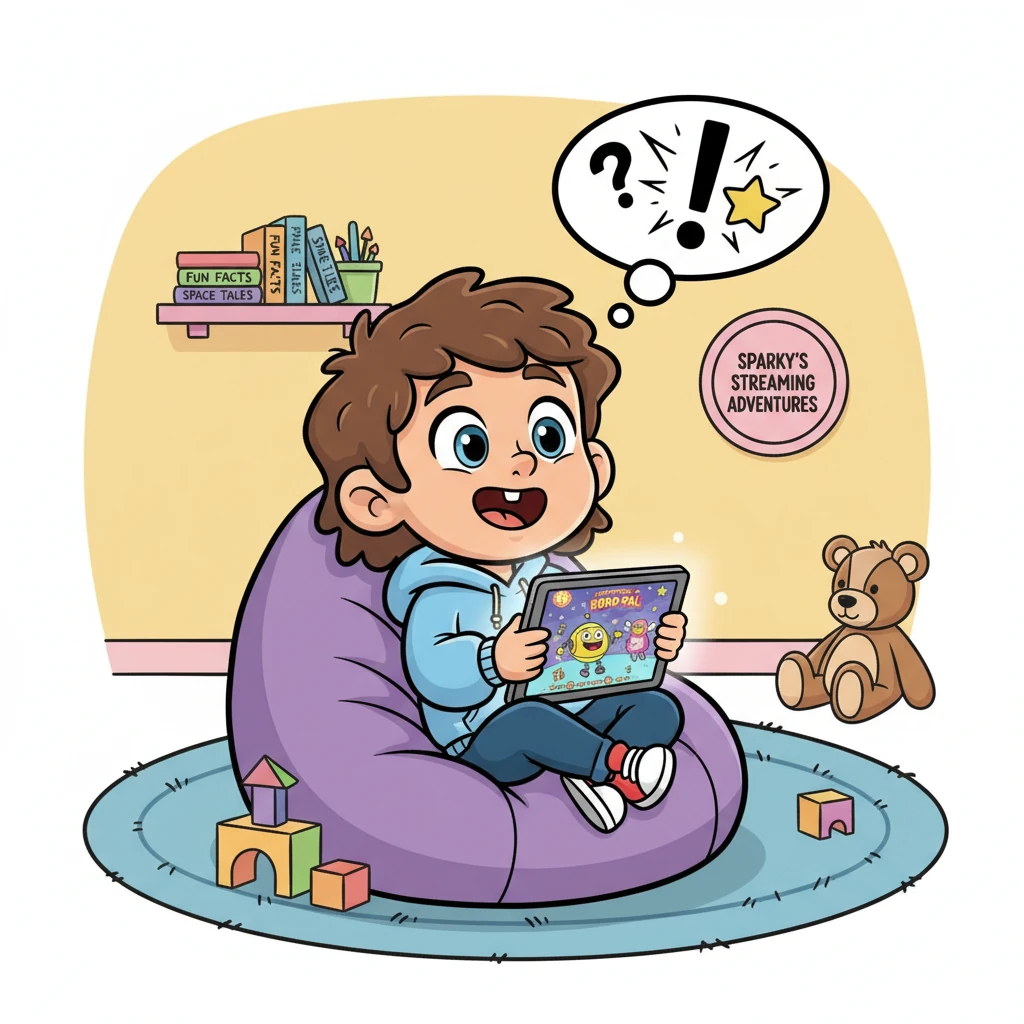
Sparky, a small, energetic character with big, curious eyes, is sitting on a comfy beanbag chair, giggling at a tablet. On the screen, a colorful animation plays, a movie that Sparky's streaming service suggested. A thought bubble above Sparky's head shows a question mark turning into a happy exclamation point.
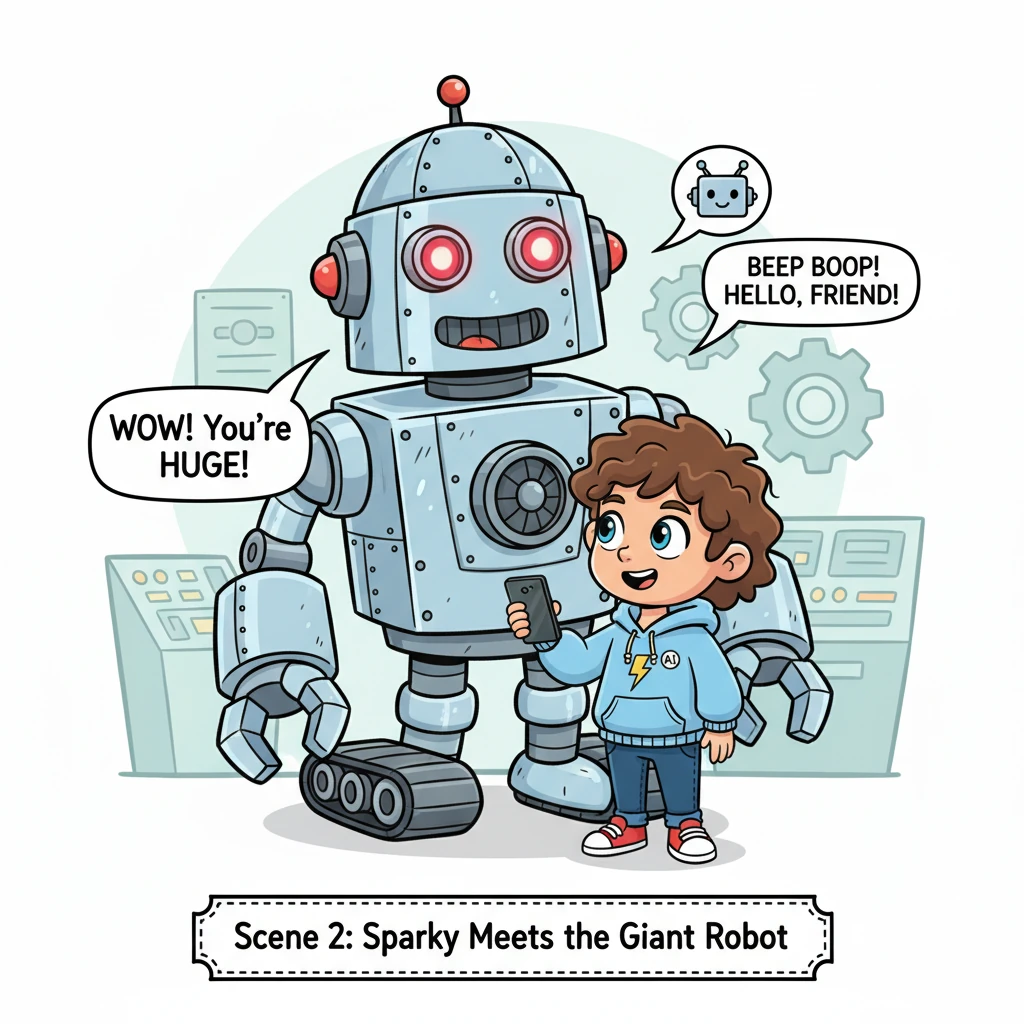
Sparky stands wide-eyed in front of a giant, clunky, silver robot with blinking red eyes, like something from an old sci-fi movie. The robot looks imposing but friendly. Next to it, Sparky holds up a tiny smartphone, a playful contrast showing that AI isn't just big, scary machines.
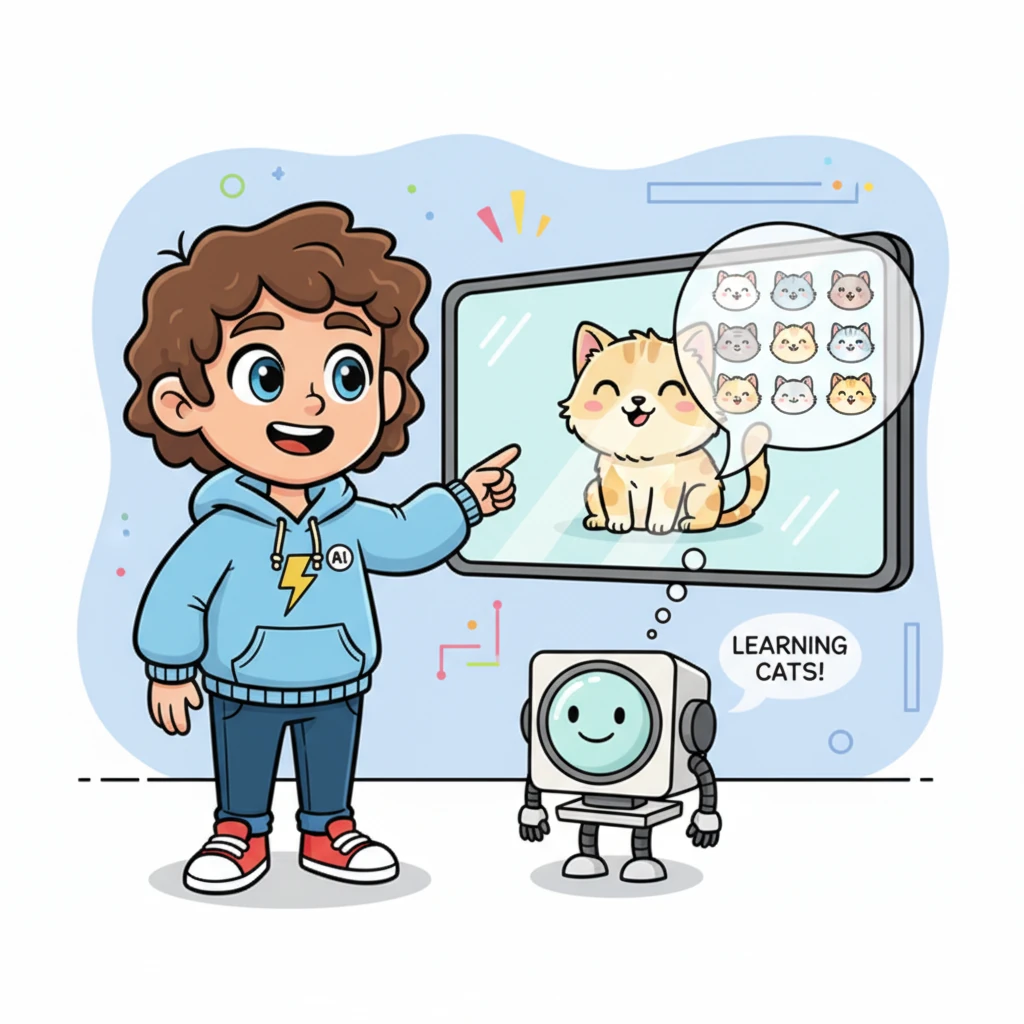
Sparky is happily pointing at a fluffy, cartoon cat on a big, colorful screen. A tiny, friendly computer character, with a smiling screen face, is "learning" by looking at many different cat pictures. The computer's screen shows a little thought bubble with a growing collection of cat icons.
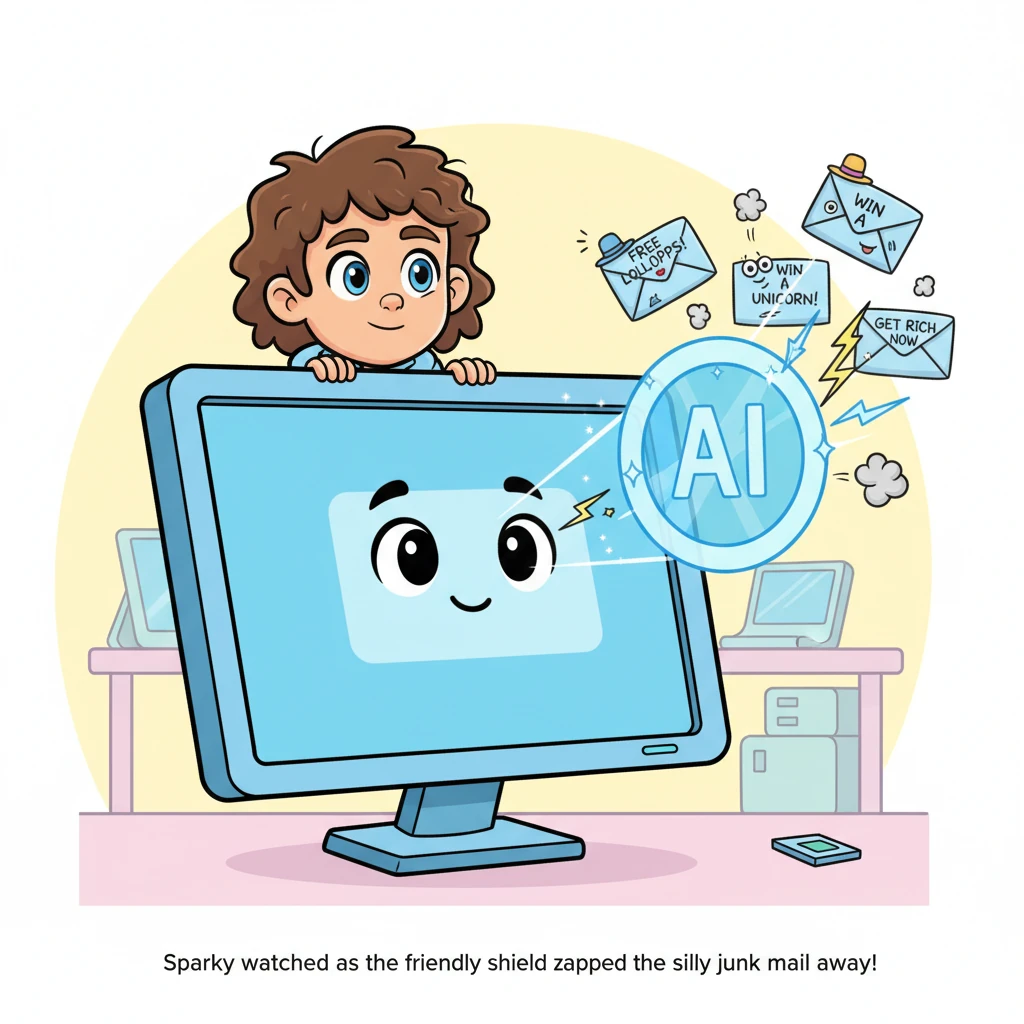
Sparky peeks over a computer monitor, watching as a flurry of cartoon "junk mail" (envelopes with silly, exaggerated spam words like "FREE LOLLIPOPS!") flies towards an inbox. Suddenly, a friendly, glowing shield appears, zapping the junk mail away before it reaches the clean inbox. The computer character winks.
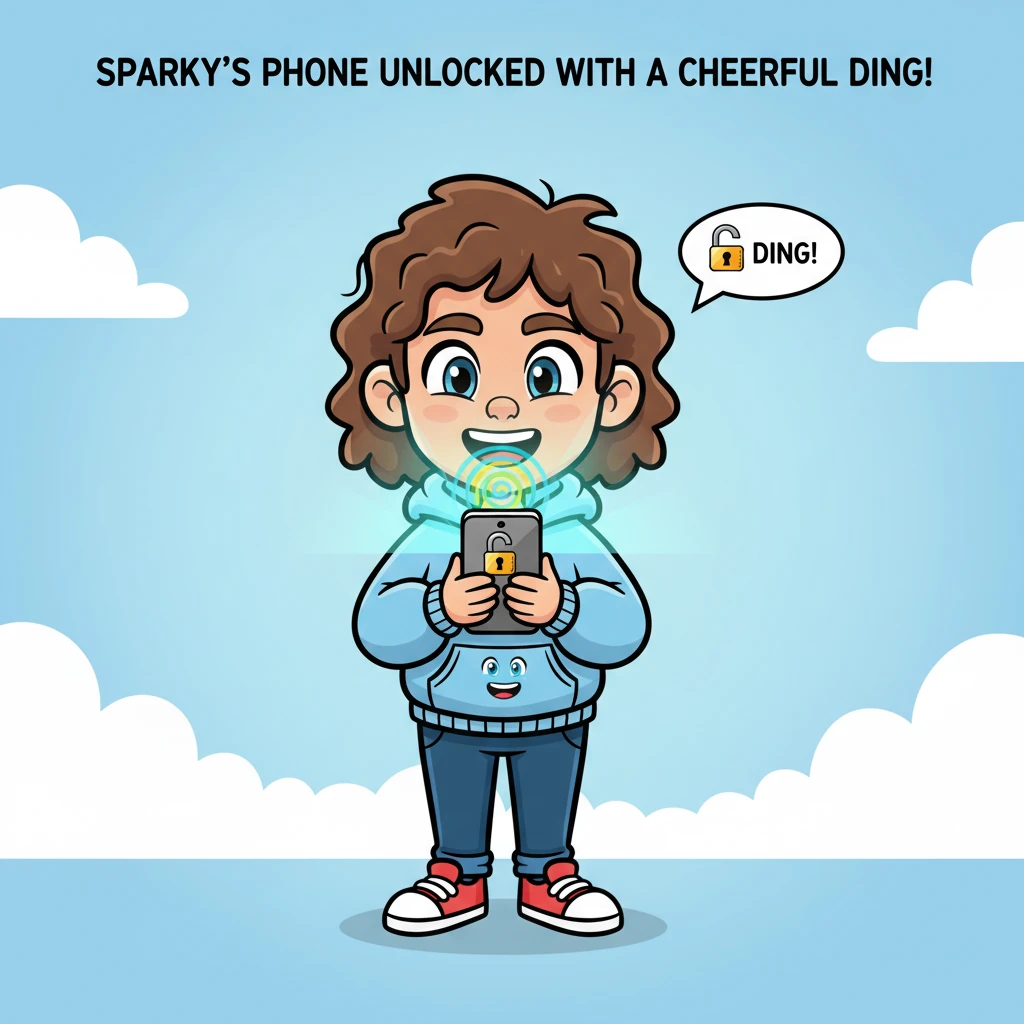
Sparky holds up a smartphone to their face, which has a big, delighted grin. The phone's screen glows with a swirling pattern, then snaps open with a cheerful "ding!" A tiny, happy lock icon on the phone's screen pops open, revealing a smiling digital face that matches Sparky's.
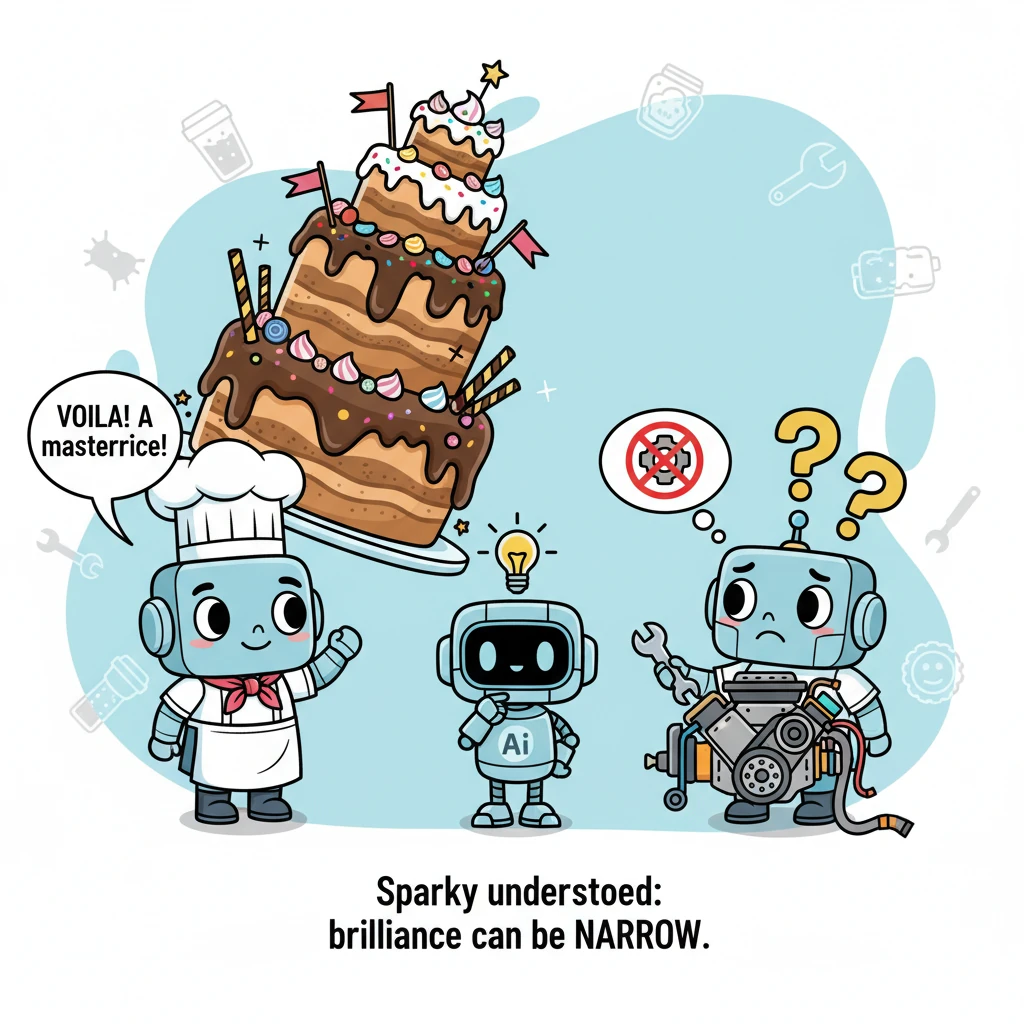
On one side, a chef-hat-wearing AI bakes an enormous, wobbly, multi-layered cake with intricate details, looking very proud. On the other side, a confused AI, holding a tiny wrench, stares blankly at a complex car engine, surrounded by question marks. Sparky stands between them, understanding the idea of "narrow" brilliance.
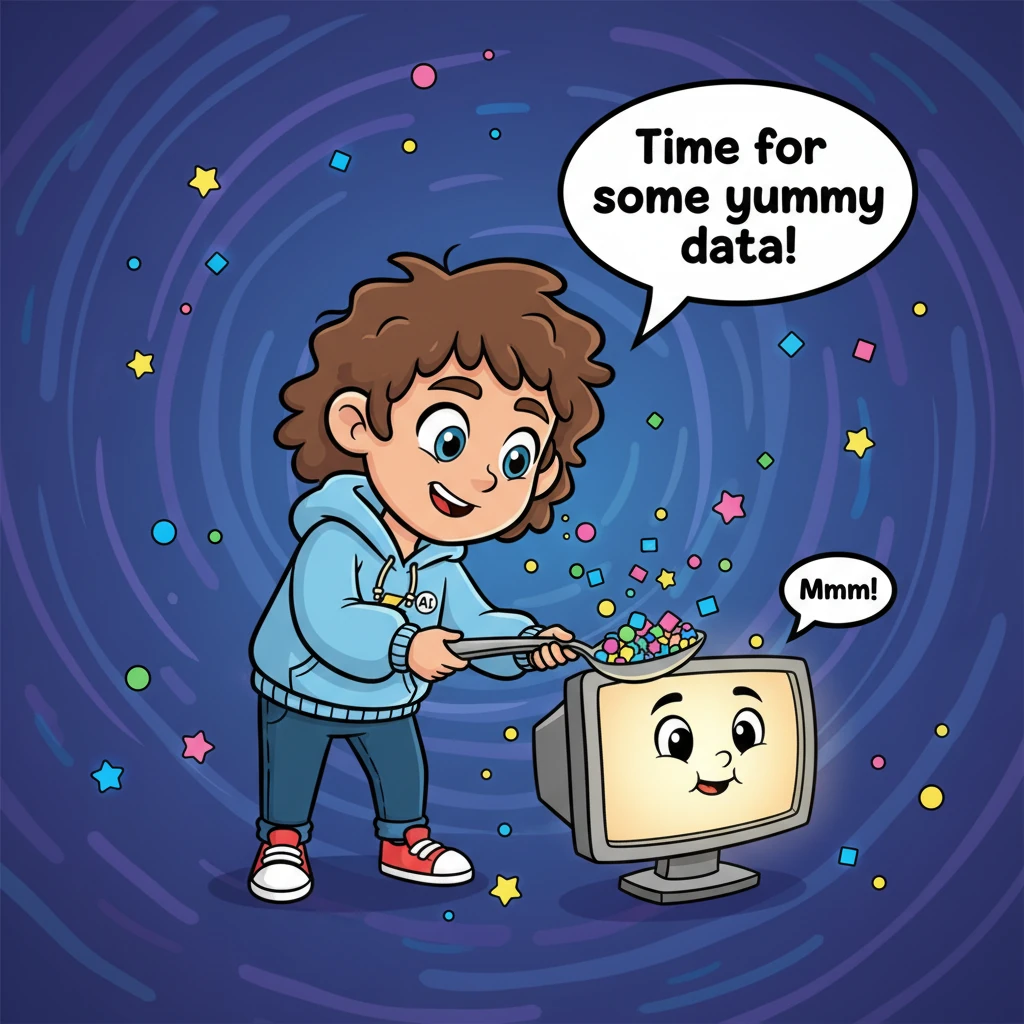
Sparky is surrounded by a vibrant, swirling galaxy of colorful data bits – tiny stars, squares, and circles, all buzzing with energy. Sparky holds a giant spoon, playfully "feeding" these data bits into a smiling, hungry-looking computer character, whose screen glows brighter with each 'bite'.
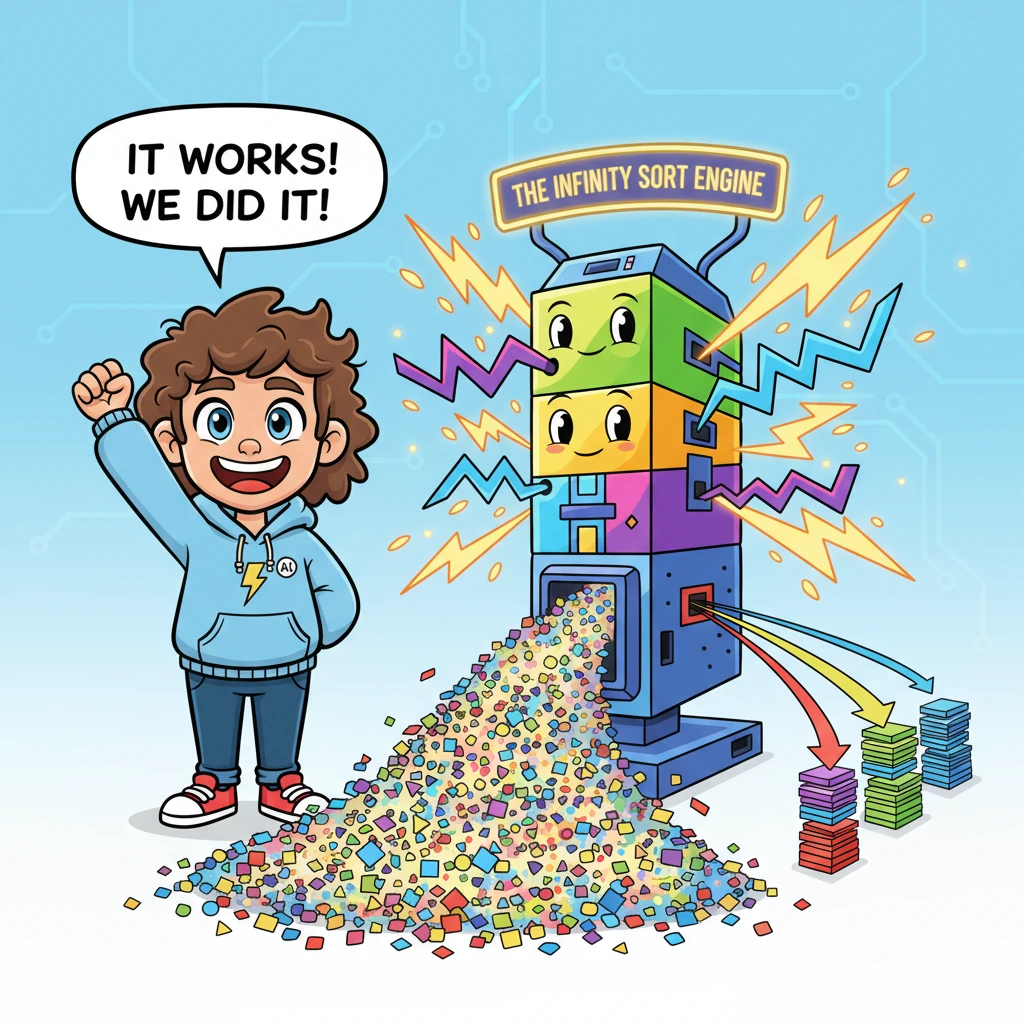
Sparky stands triumphantly next to a super-powered, friendly computer, depicted as a tower of brightly colored, glowing blocks. Sparks and energetic lines zoom around the computer, showing its immense processing power, as it effortlessly sorts through a mountain of colorful data.
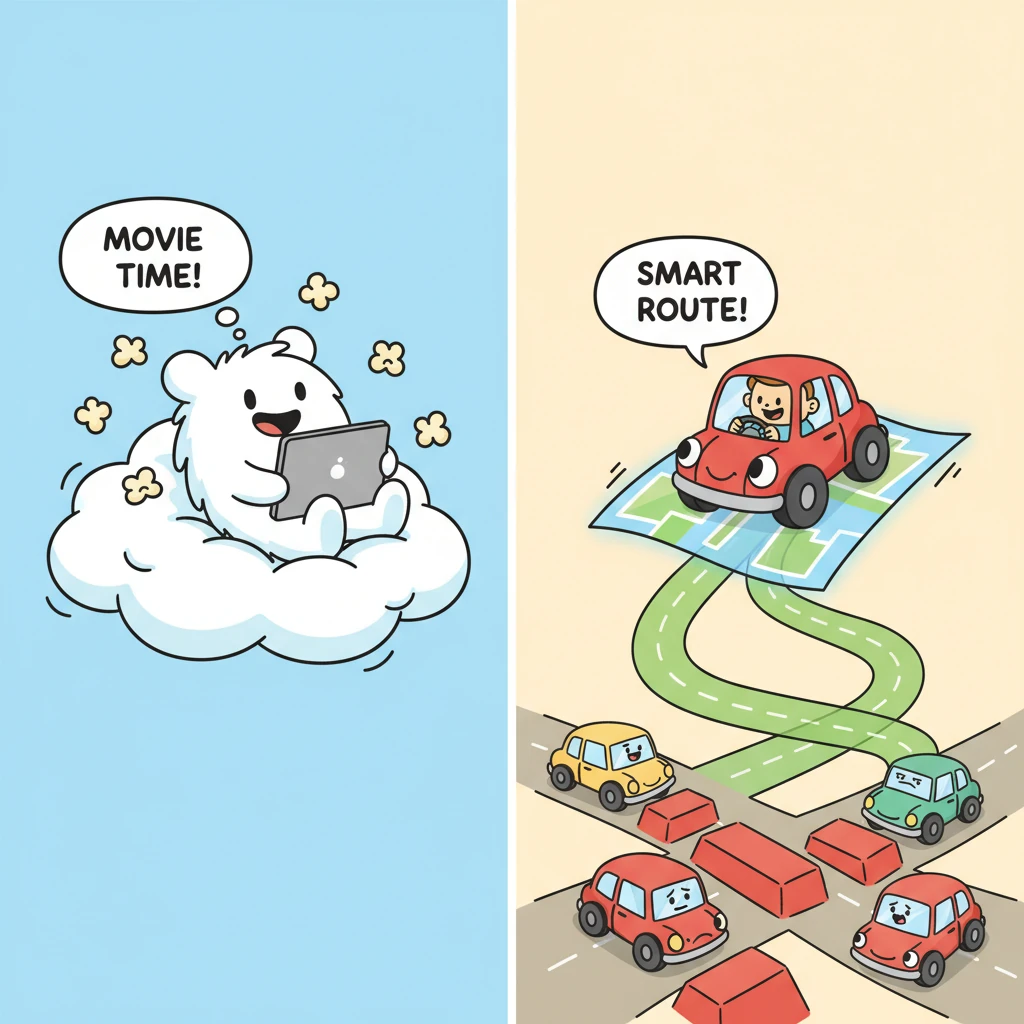
On one side, Sparky is lounging on a cloud, happily watching a movie on a tablet, surrounded by floating popcorn. On the other, a small, cheerful car follows a glowing, green road on a map projected in the air, avoiding cartoon traffic jams and smiling cars stuck in red.
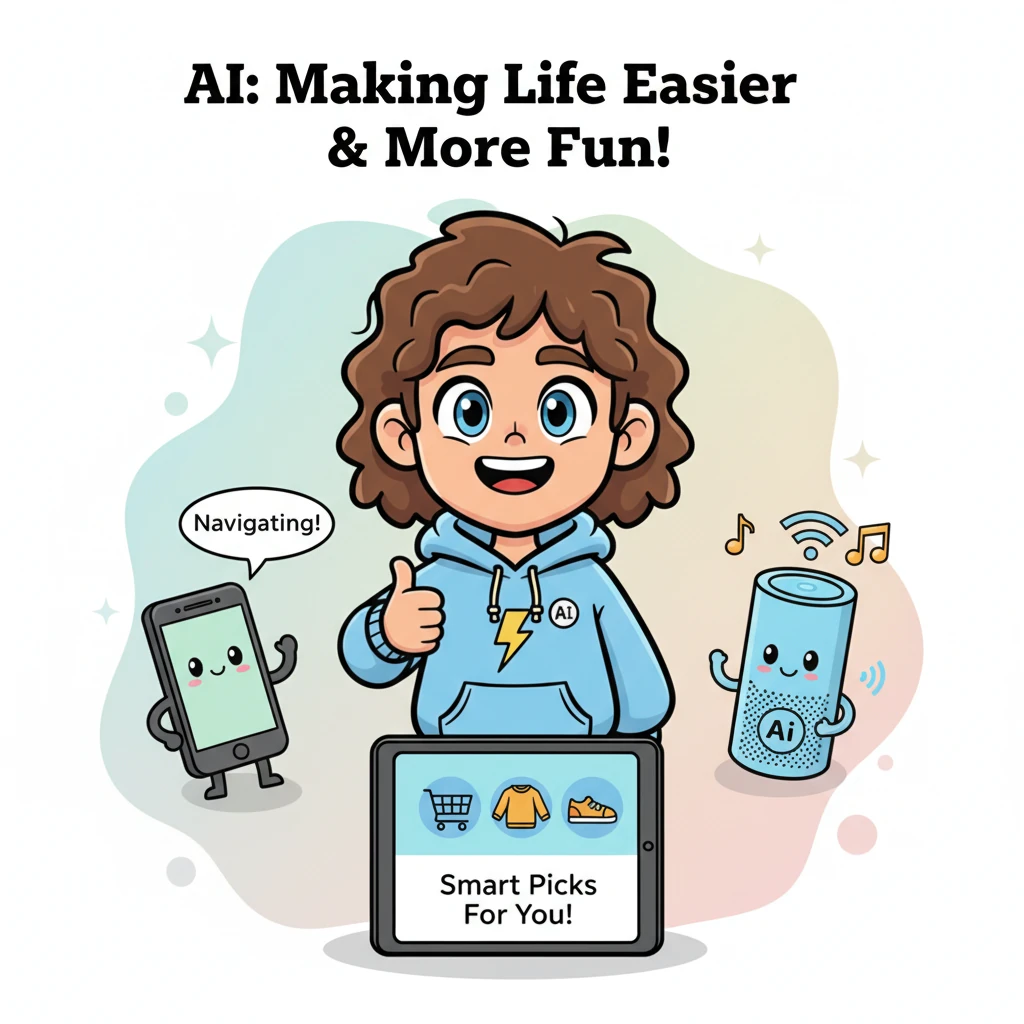
Sparky is surrounded by many friendly, helpful AI tools: a phone assistant with a speech bubble, a smart speaker with musical notes, and a tablet showing shopping recommendations. Sparky smiles, giving a thumbs-up, understanding that AI is a quiet, everyday helper, making life a little easier and more fun.
生成提示词(登录后查看具体 Prompt)
Chapter 1: Welcome to the World of AI Let's start with a simple question. Have you ever been told a new movie is on Netflix, and you knew you'd love it even before you watched it? Or have you ever been stuck in traffic, and your phone suddenly suggested a faster route home? If you answered yes, then you've already met Artificial Intelligence. Many people think AI is some distant, futuristic idea, like the robots in science fiction movies. But the truth is, it’s already here, and it's a part of your daily life. This chapter is your simple introduction to what AI really is, what it’s not, and why it matters to you. What Artificial Intelligence Really Is At its heart, Artificial Intelligence is a simple idea: we are teaching computers to learn and make decisions, kind of like a person does. Think about how a child learns. You show them a picture of a cat and say, "This is a cat." You show them another picture of a cat and say, "This is a cat." After seeing a few examples, the child learns to spot a cat on their own. AI works in a similar way. Instead of writing strict, step-by-step rules for every single problem, we "teach" the computer by showing it lots and lots of examples. The computer then looks for patterns in those examples to learn on its own. Your email’s spam filter is AI. It has looked at millions of junk emails and learned their patterns—the weird words, the strange links. Now, it can catch a new spam email it has never seen before. The app that recognizes your face to unlock your phone is AI. It learned the unique patterns of your face. So, Artificial Intelligence isn’t about building a human in a machine. It's about building smart tools that can learn from data to help us in our daily lives. What AI Is Not Let's clear up the biggest myth right away. The AI we use today is not a conscious, thinking being like the robots in the movies. It's not plotting to take over the world. Today’s AI is what experts call "Narrow AI." This means it is an expert at one single, specific task. Think of it this way: you might have a friend who is a brilliant baker. They can make an incredible wedding cake, but you wouldn't ask them to fix your car's engine. Their genius is "narrow"—it’s focused on baking. AI is the same. The AI that beats the world's best chess player cannot understand a single sentence you say to it. The AI that recommends songs on Spotify has no idea how to drive a car. While AI is amazing at what it does, it has no common sense, no feelings, and no consciousness. It's a powerful tool, not a living creature. We are a very long way from the human-like robots Hollywood likes to imagine. Why AI Matters Today So, why is everyone talking about AI right now? For two big reasons: We have more data than ever. Every time you use your phone, search the web, or watch a video, you create information. This information is called "data," and it’s the food that feeds AI. More data means AI can learn faster and get smarter. Our computers are more powerful. Today's computers are like super-powered engines. They are strong enough to process all that data and run the complex AI programs. Because of these two things, AI is suddenly exploding all around us. It's helping doctors find diseases earlier, creating new kinds of art, making our cities run better, and making our personal lives more convenient. AI isn't just a neat trick for tech companies anymore; it's a powerful force that is changing our world. Everyday Examples of AI Around You Don’t think of AI as something far away. It’s right here, right now. You probably used it a dozen times today without realizing it. Here are a few places you'll find AI: Streaming Services (Netflix, Spotify, YouTube): Ever wonder how Netflix knows you'll love a thriller? Its AI learns from what you watch and suggests your next favorite show. Spotify's AI does the same with music. Navigation Apps (Google Maps, Waze): These apps use AI to look at the current traffic, check for accidents, and predict how long your trip will take. That’s how it finds you the fastest way home. Social Media (Instagram, TikTok): The "For You" page or the posts you see first are chosen by an AI. It learns what kind of content you like and shows you more of it. Smartphones (Siri, Google Assistant): When you ask your phone a question, an AI called Natural Language Processing (we'll cover this in Chapter 7) listens to your words, understands what you mean, and finds the answer. Online Shopping (Amazon): The "Customers who bought this also bought..." section is powered by AI. It looks at what others like you have purchased and recommends what you might want next. As you can see, AI isn't some abstract concept. It's the quiet helper in your pocket and on your screen, making your life a little easier and a little more fun. Now that we've said hello, let's take a look back at how this all began in the next chapter.