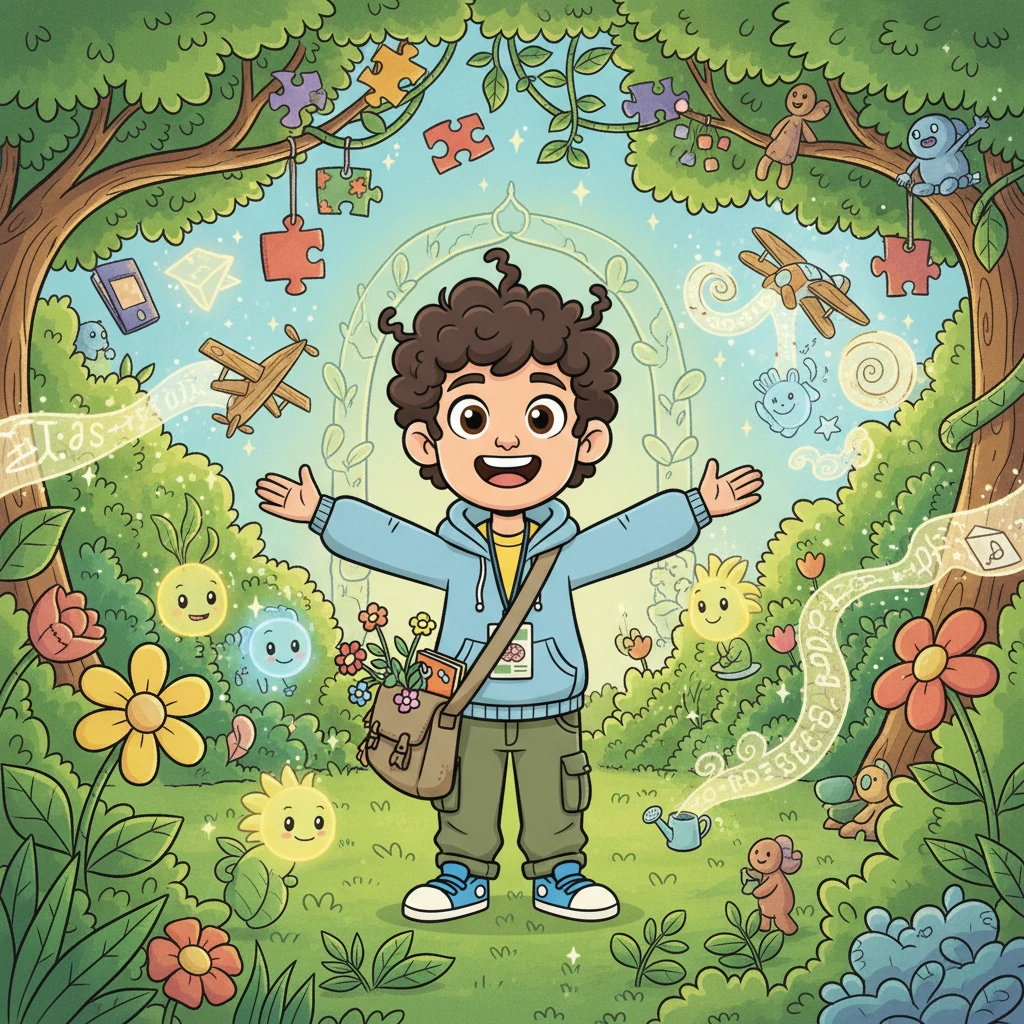
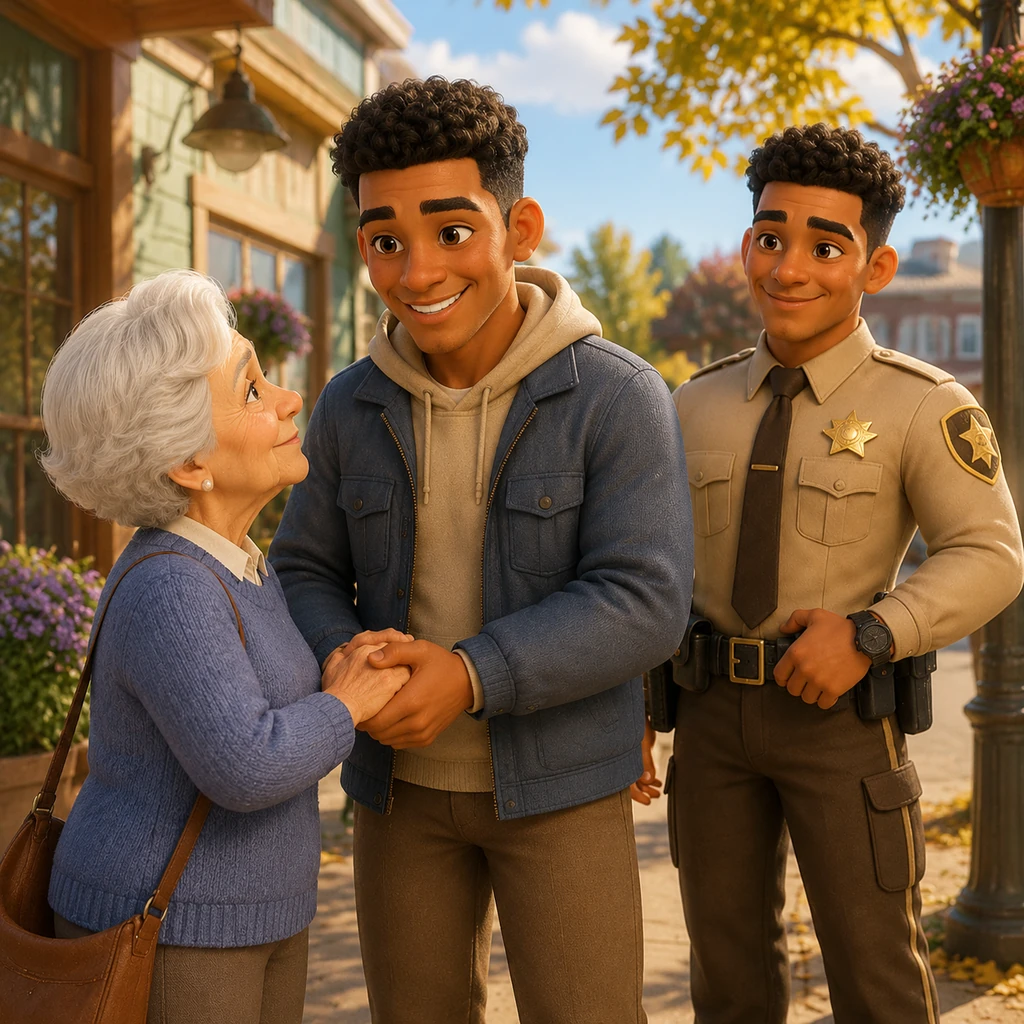
Dive into the whimsical world of 'The Garden of Unfinished Things,' a heartwarming tale about Evan, a diligent student learning to embrace imperfection. Follow his journey from self-doubt and the pressure to be perfect, to discovering a magical garden where growth is celebrated in all its messy, beautiful forms. This charming story illuminates the power of self-acceptance and the joy of a journey that's always becoming, never truly finished.
Evan, a grad student with a perfectly color-coded backpack, feels a whirlwind of stress spinning inside him. He's hunched over his desk late at night, rewriting notes, his expressive eyes wide with quiet worry, wondering if everyone else understands things faster. Even his meticulously polished papers, aided by AI, can't quiet the tiny, persistent fear of not being good enough.
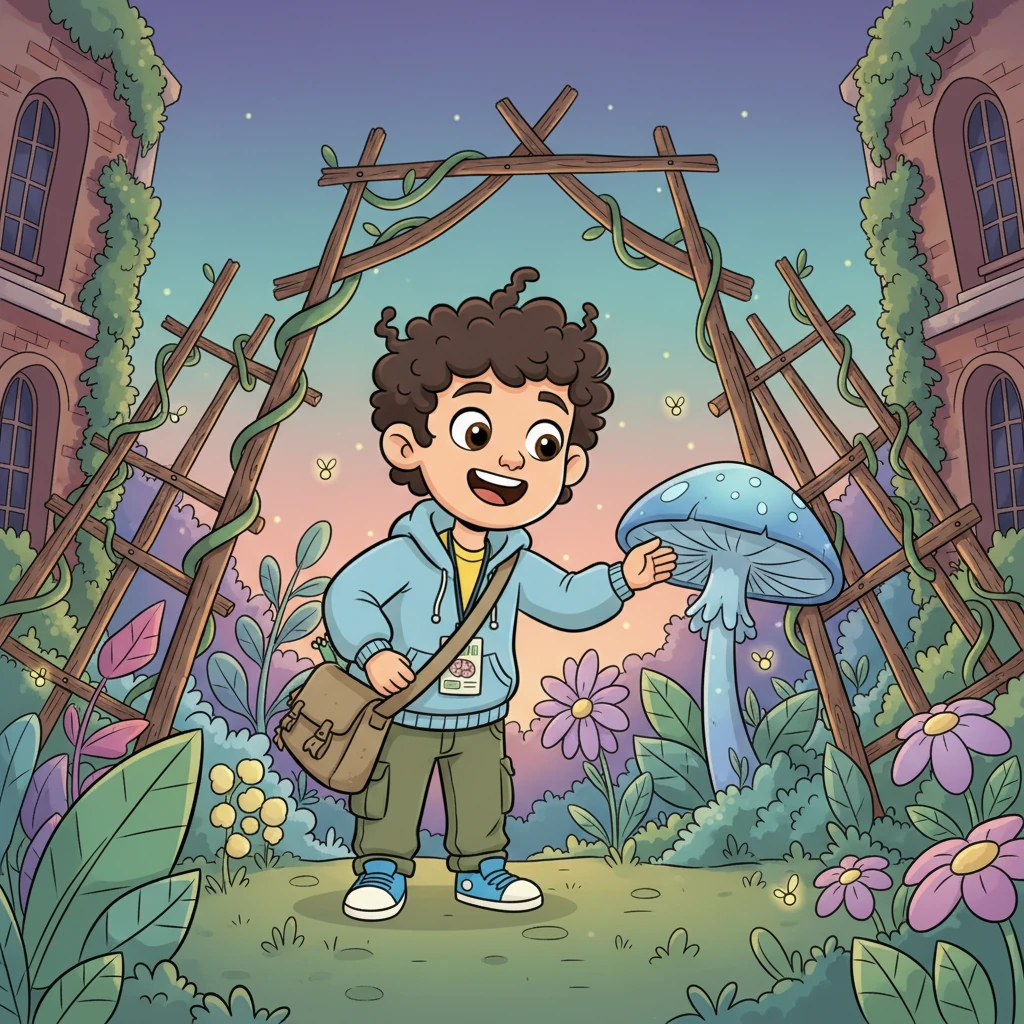
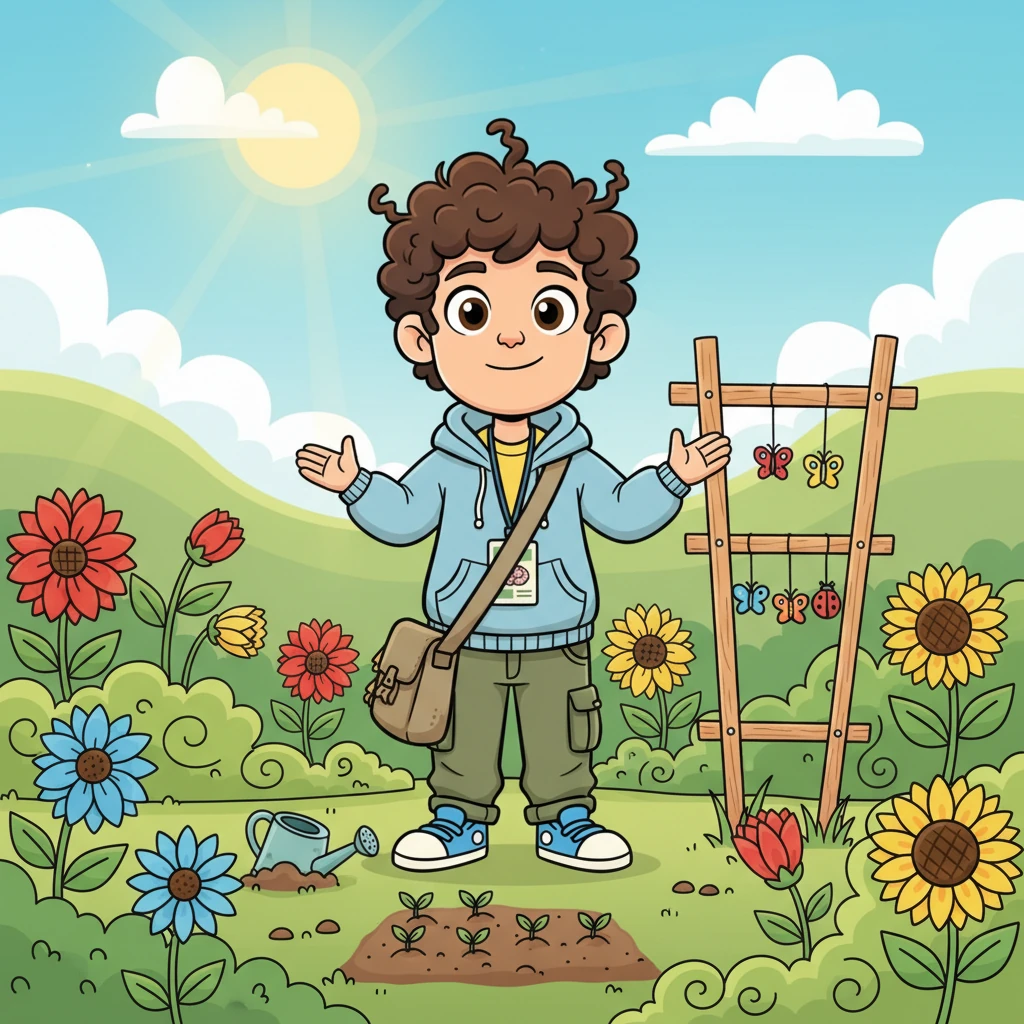
One evening, after a particularly long day of comparing himself to articulate classmates, Evan drifts into a vivid dream. He finds himself behind the university clinic building, discovering a secret, wild garden. It's unlike any garden he's ever seen, filled with a delightful jumble of half-grown plants and crooked wooden trellises.
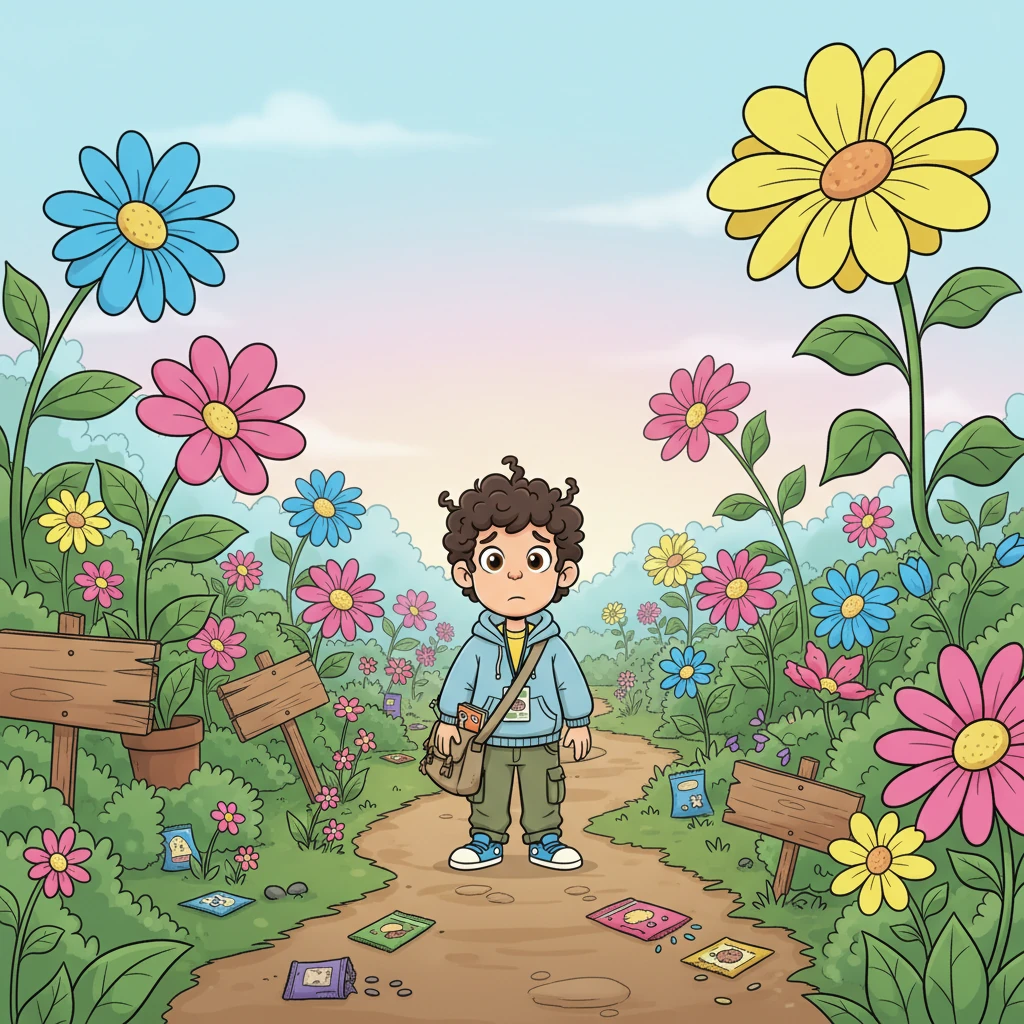
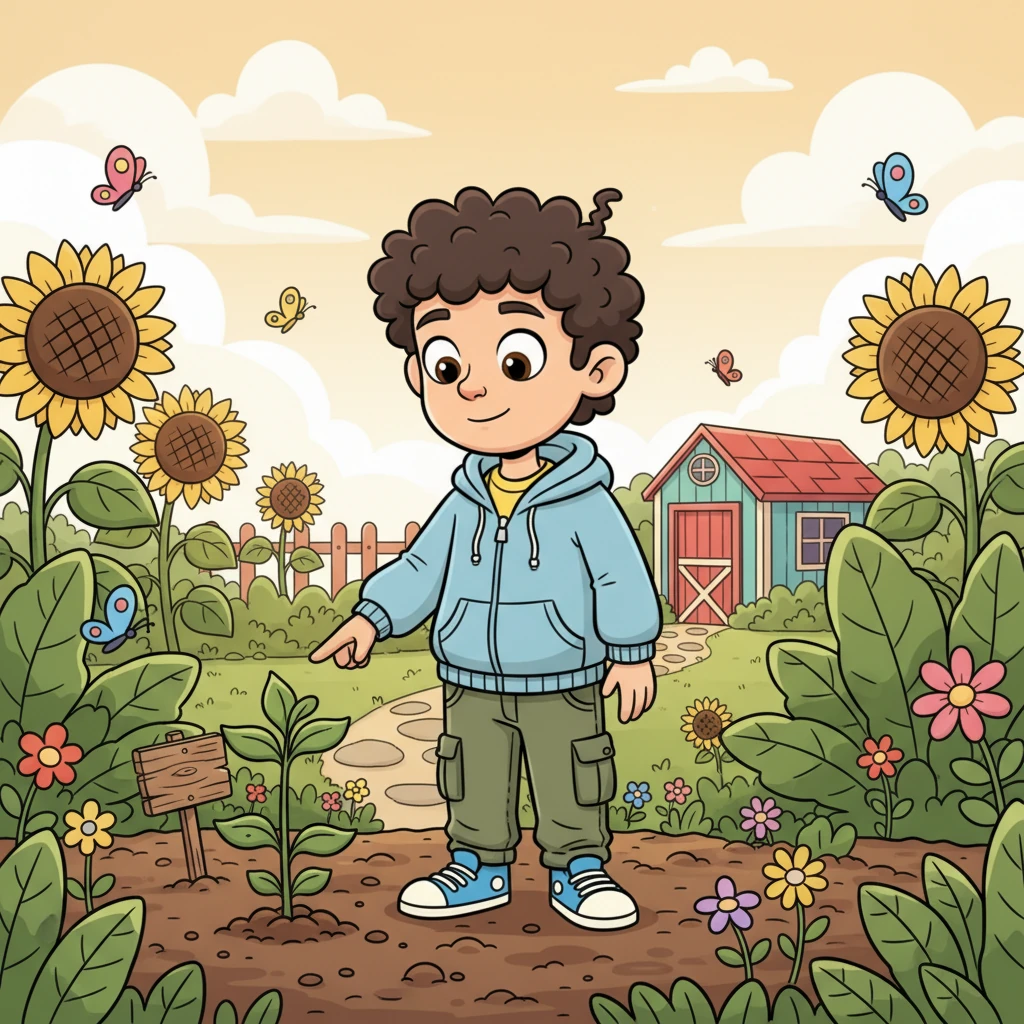
Evan steps into the dream garden, his cartoonishly wide eyes scanning the disarray. He sees open seed packets, unevenly blooming flowers, and labels like "Draft #3" and "Imperfect Lab Performance" stuck crookedly in the soil. A knot forms in his stomach; his first instinct is to immediately fix, prune, and organize every single thing to make it look perfect.
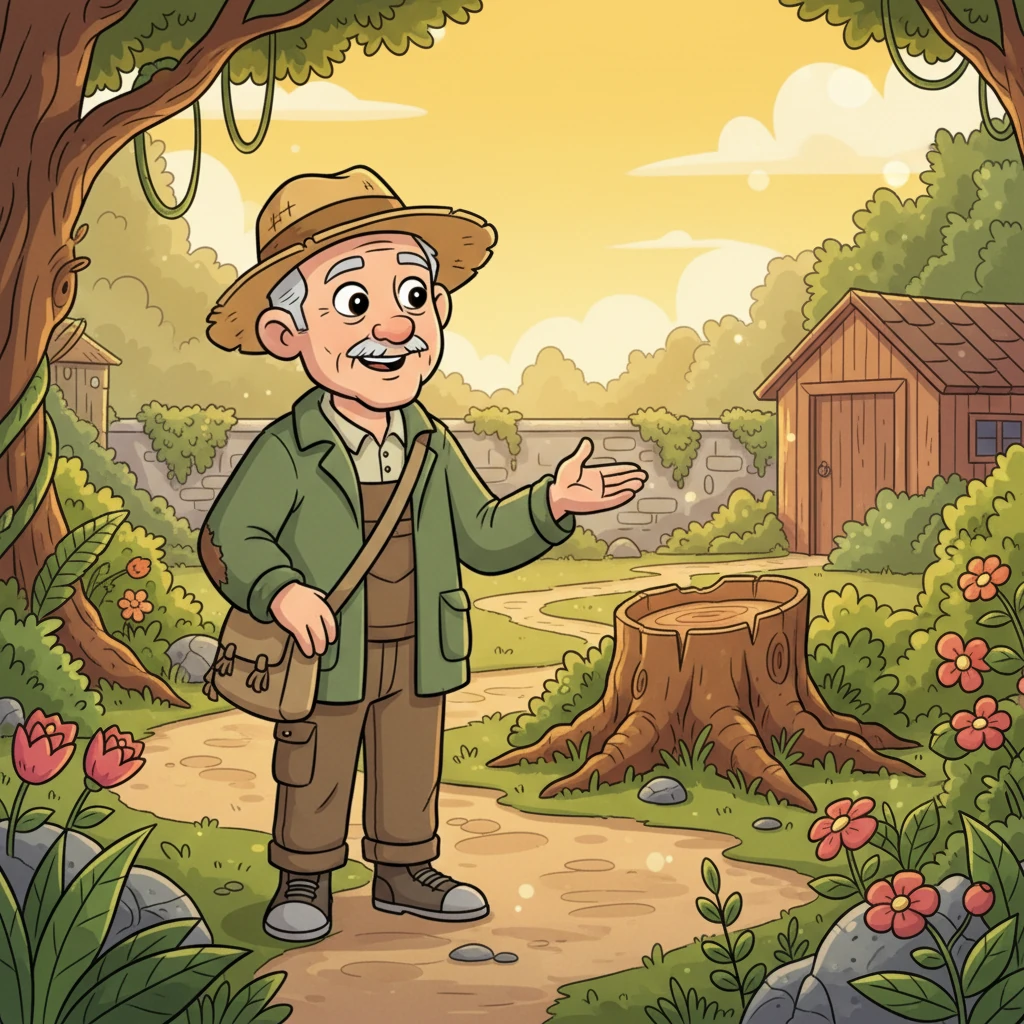
Suddenly, an older groundskeeper appears, a gentle smile on his weathered face, his presence calm and reassuring. He explains to Evan that this isn't a garden of finished products, but a special place where all 'becoming' happens. Growth here is slow, he says, often tangled and invisible before it finally blossoms into view.
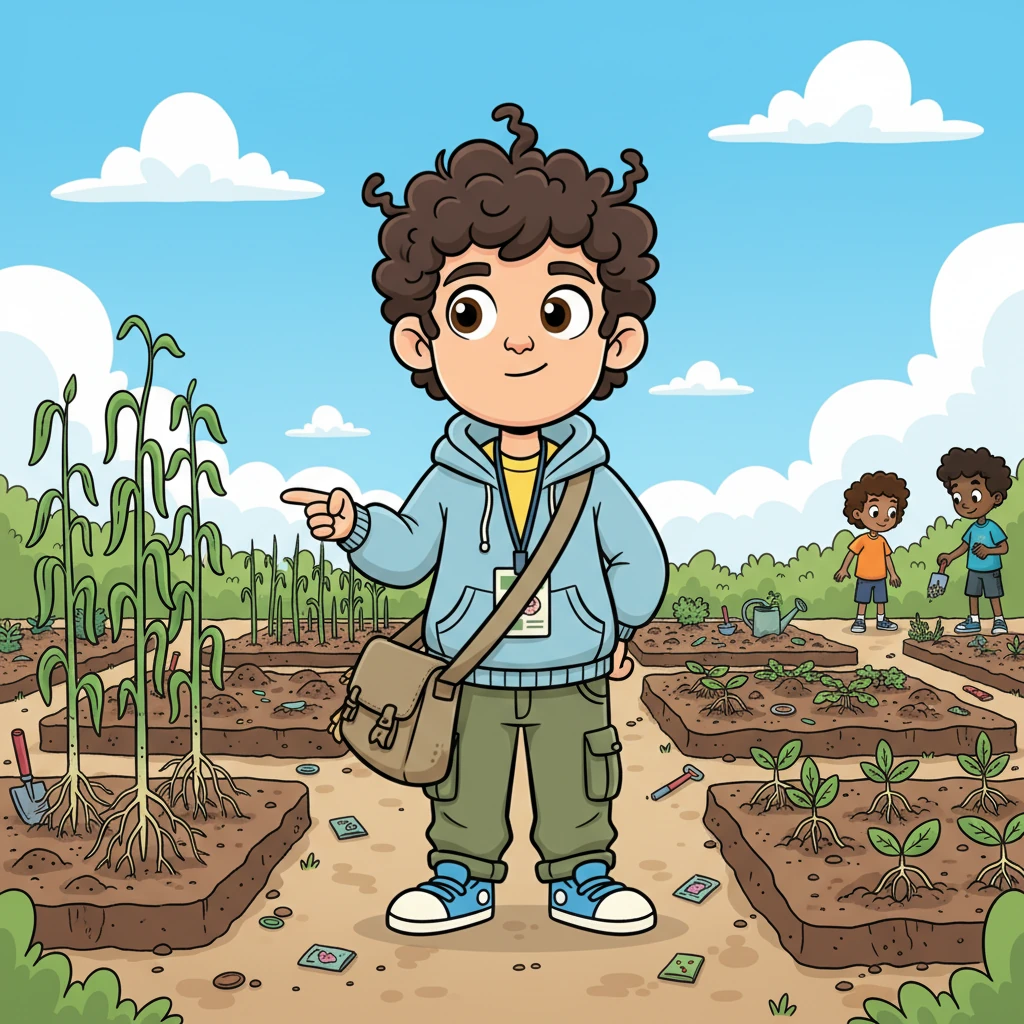
Evan starts to truly look around, his initial unease slowly fading as he notices distinct plots, each belonging to a different student. He sees that no one's garden is completely finished, and no one's is perfect. Some plants look strong on top but have delicate roots, while others appear small yet are deeply anchored and resilient.
A warm feeling spreads through Evan as he begins to understand. The garden is not a place of failure or inadequacy, but a vibrant testament to the ongoing process of learning and growing. He realizes that "unfinished" doesn't mean "bad," it simply means "still developing."
Though moments of overwhelm still creep in, Evan now carries the garden's wisdom with him. When self-doubt whispers, he pictures a small, sturdy sprout in his own garden plot, reminding himself that every tangle and imperfect leaf is part of his unique journey. He sees his own "unfinished" tasks not as problems, but as opportunities for continued growth.
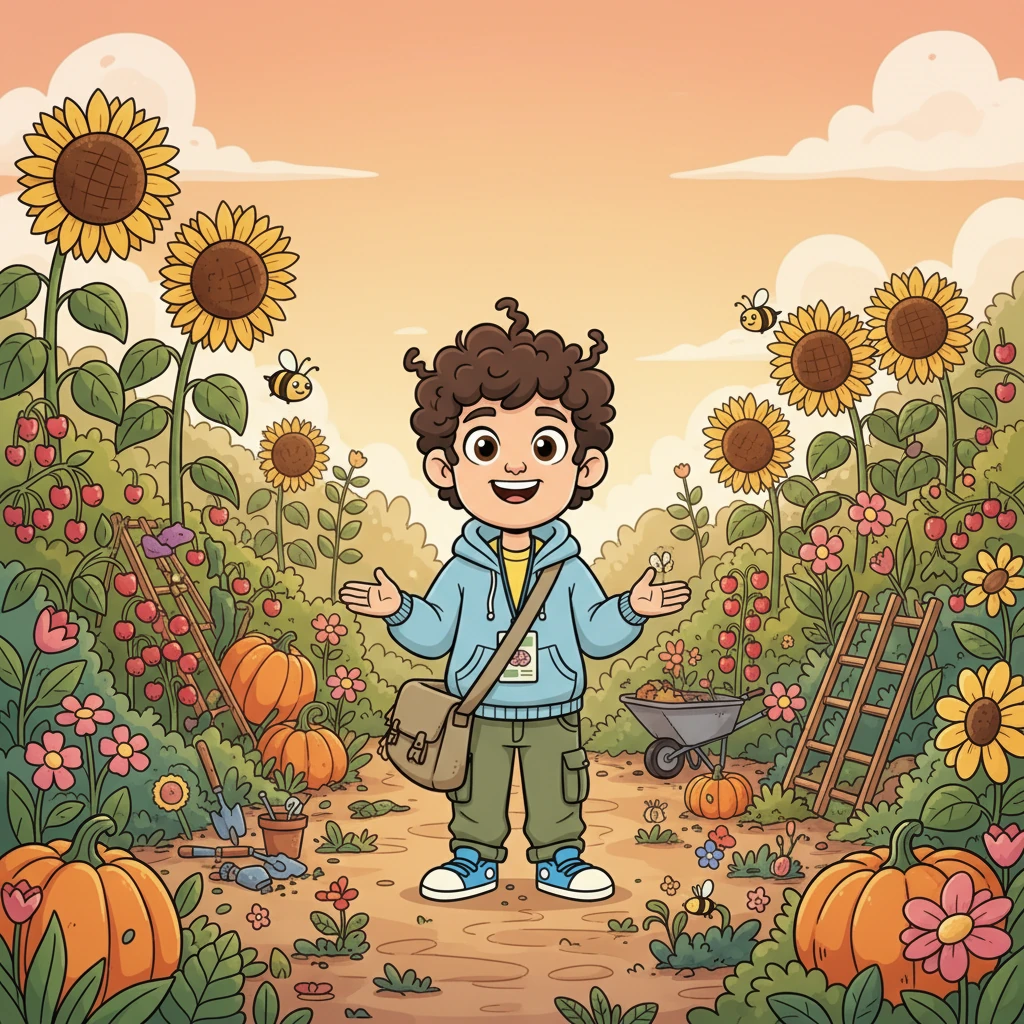
Finally, on the eve of graduation, Evan revisits his dream garden. It's still a beautiful, bustling mess, vibrant and alive with ongoing growth. He smiles, no longer mistaking its incompleteness for a flaw, understanding that the garden, like life, was never meant to be finished, but rather, meant to be tended with care and patience.
生成提示词(登录后查看具体 Prompt)
The Garden of Unfinished Things Plot Summary Evan is a typical occupational therapy graduate student — organized on the outside, unraveling on the inside. He color-codes his notes, rewrites assignments late into the night, and quietly wonders if everyone else understands things faster than he does. He uses AI to polish his papers “just in case,” tells himself he’ll feel confident next semester, and carries a low, constant fear of being found out. One evening after a long day of class, lab check-offs, and comparing himself to classmates who seem more articulate, Evan dreams of a garden hidden behind his university’s clinic building. It is not a neat garden. It is filled with half-grown plants, crooked trellises, seed packets left open, and labels that read: “Draft #3” “Still Learning” “Imperfect Lab Performance” “Questions I Didn’t Ask” “Fieldwork Anxiety” “Good Enough” Some plants are blooming unevenly. Some are tangled. Some haven’t sprouted yet at all. At first, Evan feels uneasy. He wants to fix it. Prune it. Organize it. Make it look like the gardens he imagines his classmates must have. But an older groundskeeper appears — not as a lecturer, but as a quiet presence — and explains that this is where all becoming happens. Growth here is slow. Nonlinear. Often invisible before it is visible. Evan begins to notice that every student has a plot in the garden. No one’s is finished. No one’s is perfect. Some plants look strong but have fragile roots. Some look small but are deeply anchored. Over time, Evan realizes the garden is not a place of failure — it is a place of process. The story follows him through moments of overwhelm, perfectionism, comparison, and self-doubt, as he learns that unfinished does not mean inadequate. It means growing. The book closes with Evan returning to the garden before graduation. It still isn’t complete. It never will be. But he no longer mistakes that for a problem. Because the garden was never meant to be finished. It was meant to be tended.