Step into a vibrant Maya forest where the clouds touch the trees and ancient secrets take flight. This enchanting tale follows young Itzel as she discovers a creature made of pure light and learns the profound importance of freedom and respect for nature. A beautifully moving story that explores the connection between our hearts and the wild world around us.
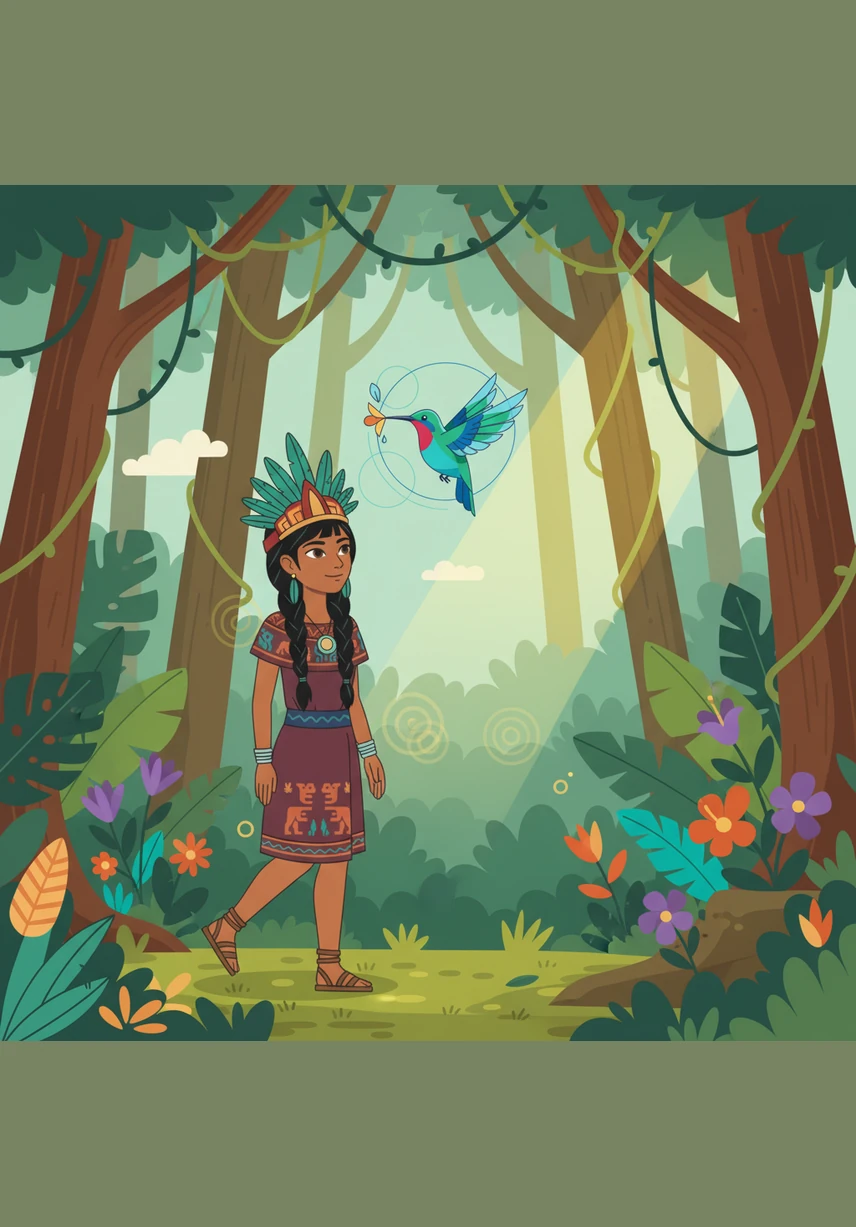
In a hidden Maya village where the clouds brushed against the emerald treetops, people lived in deep harmony with the earth. A young girl named Itzel, with eyes as curious as the new moon, spent her days wandering through the lush forest, listening to the whispers of the wind and the songs of the streams.
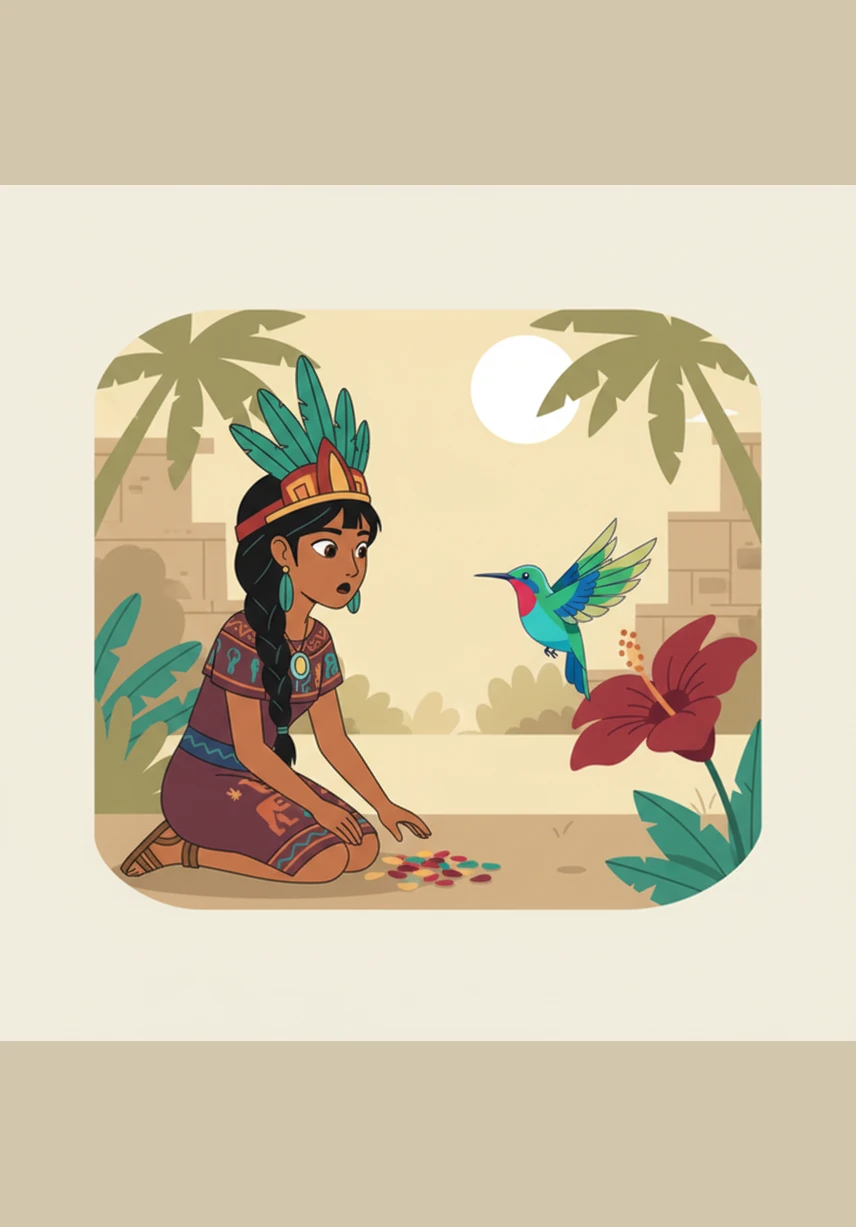
One sunny afternoon, while Itzel was gathering fallen petals for a necklace, she heard a sound like a tiny, rapid drumbeat. She turned to find a miniature creature hovering before a crimson flower, its feathers shimmering with iridescent shades of green, gold, and violet like a living rainbow.
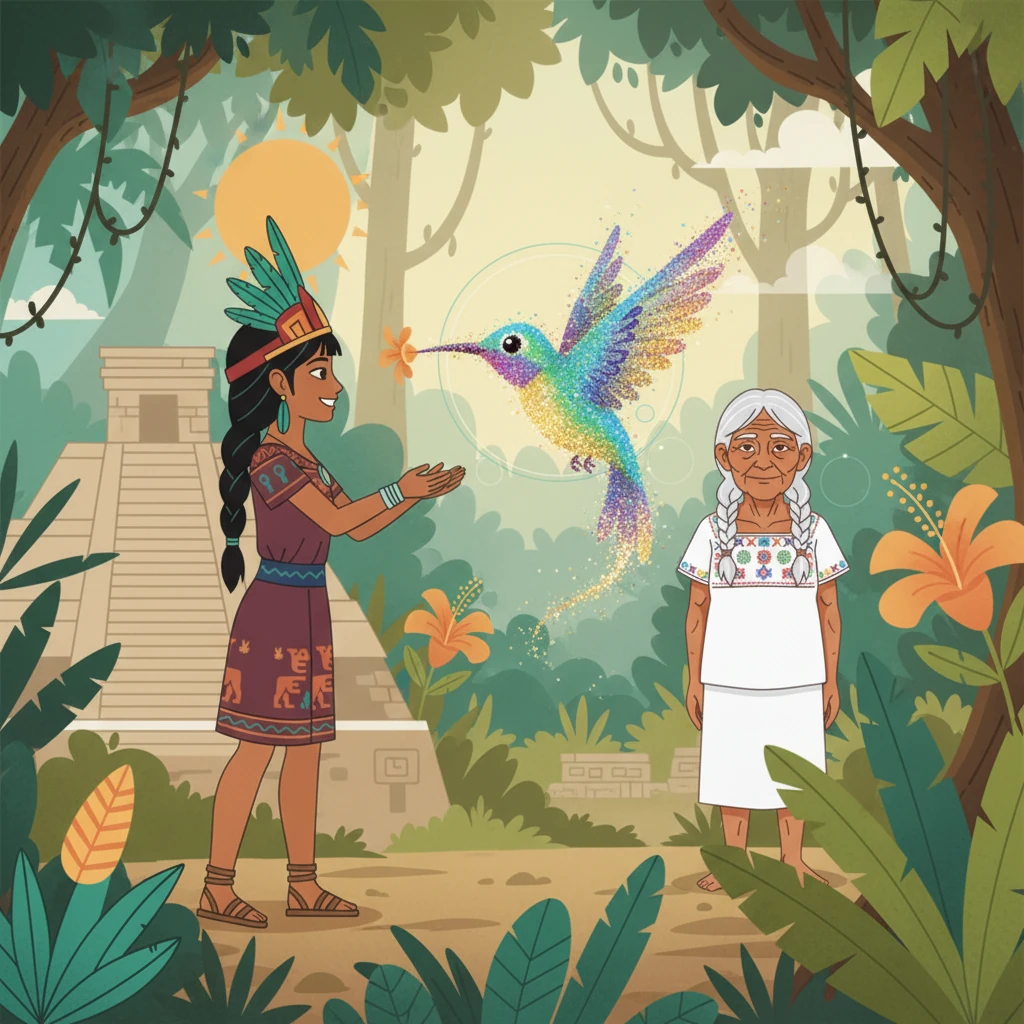
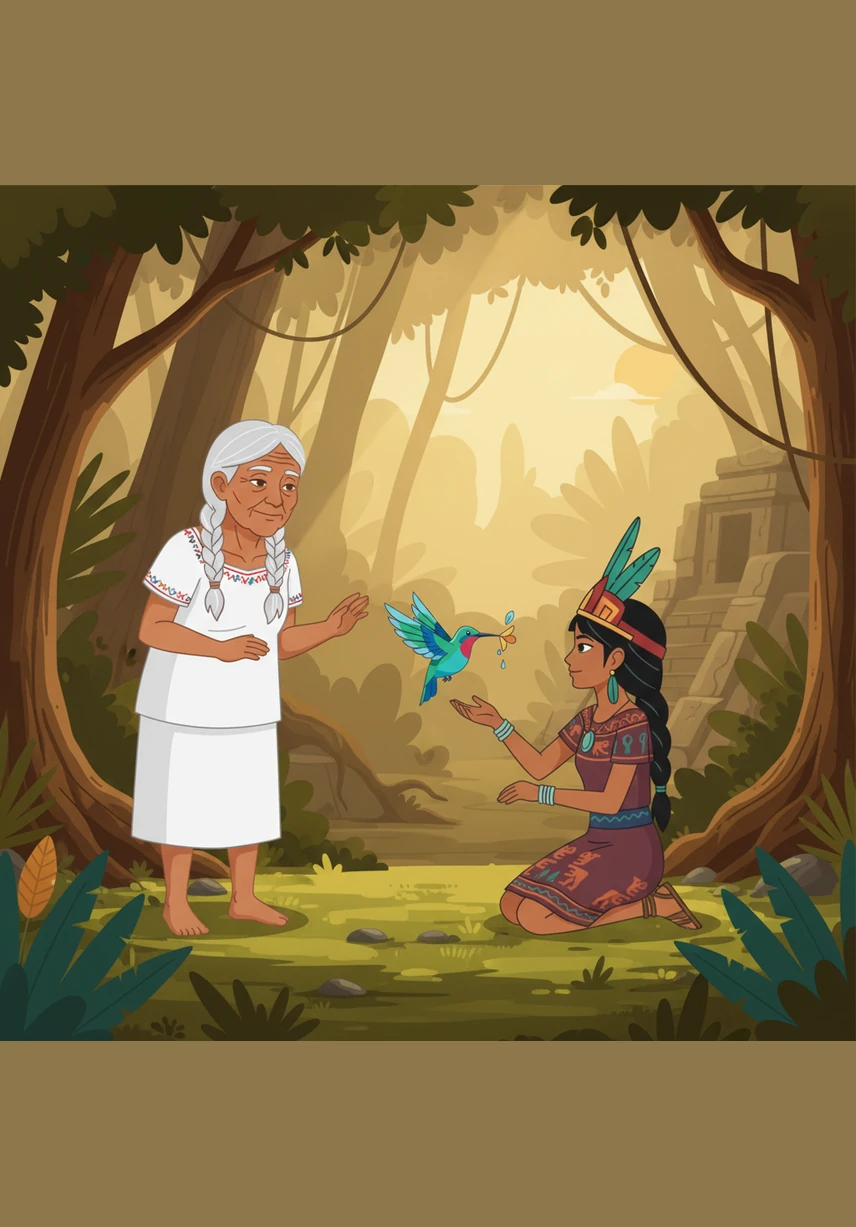
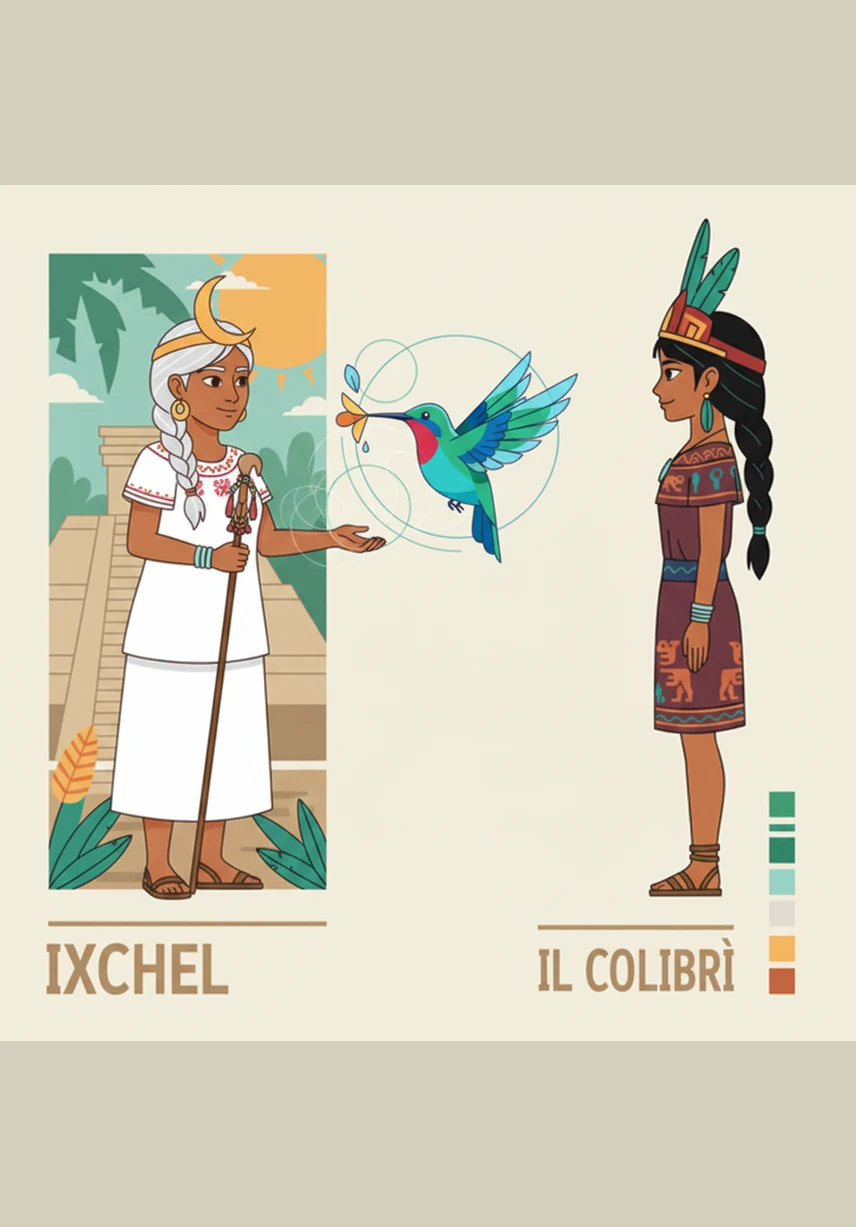
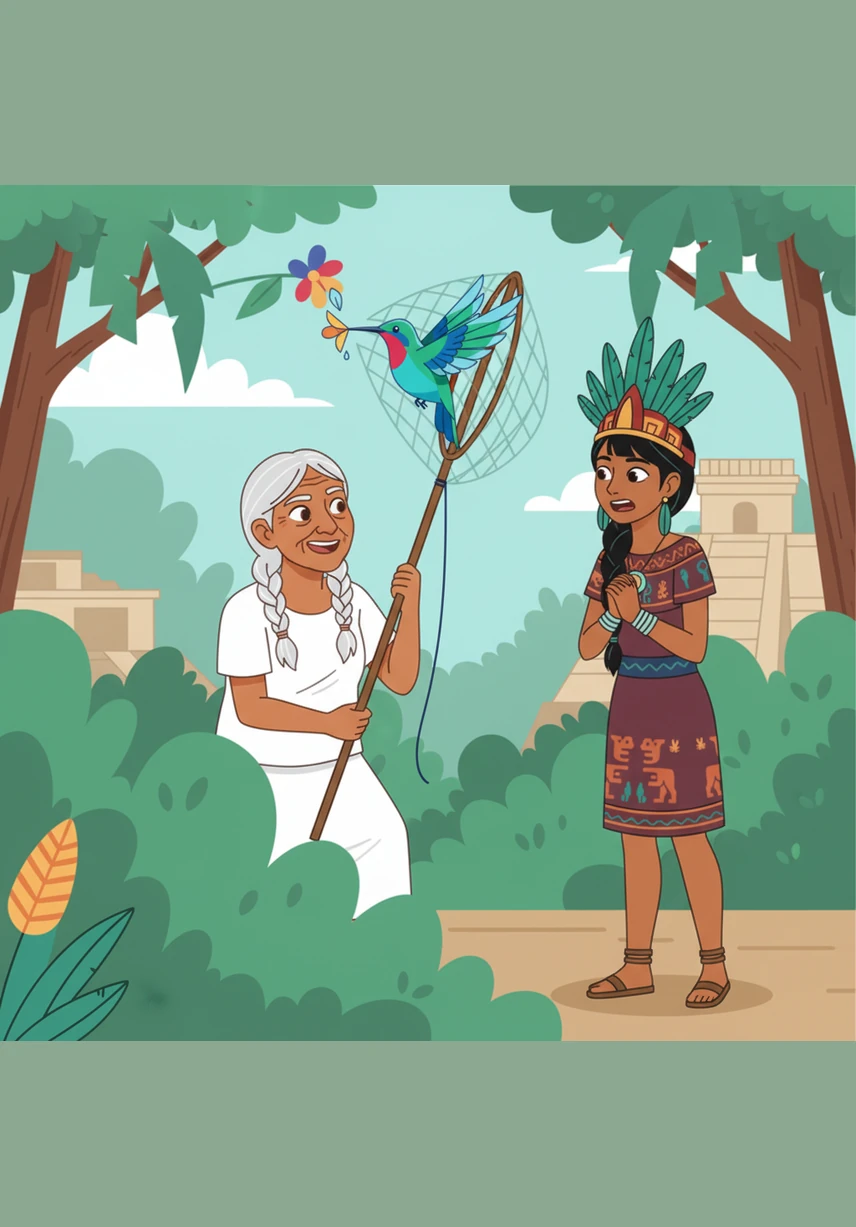
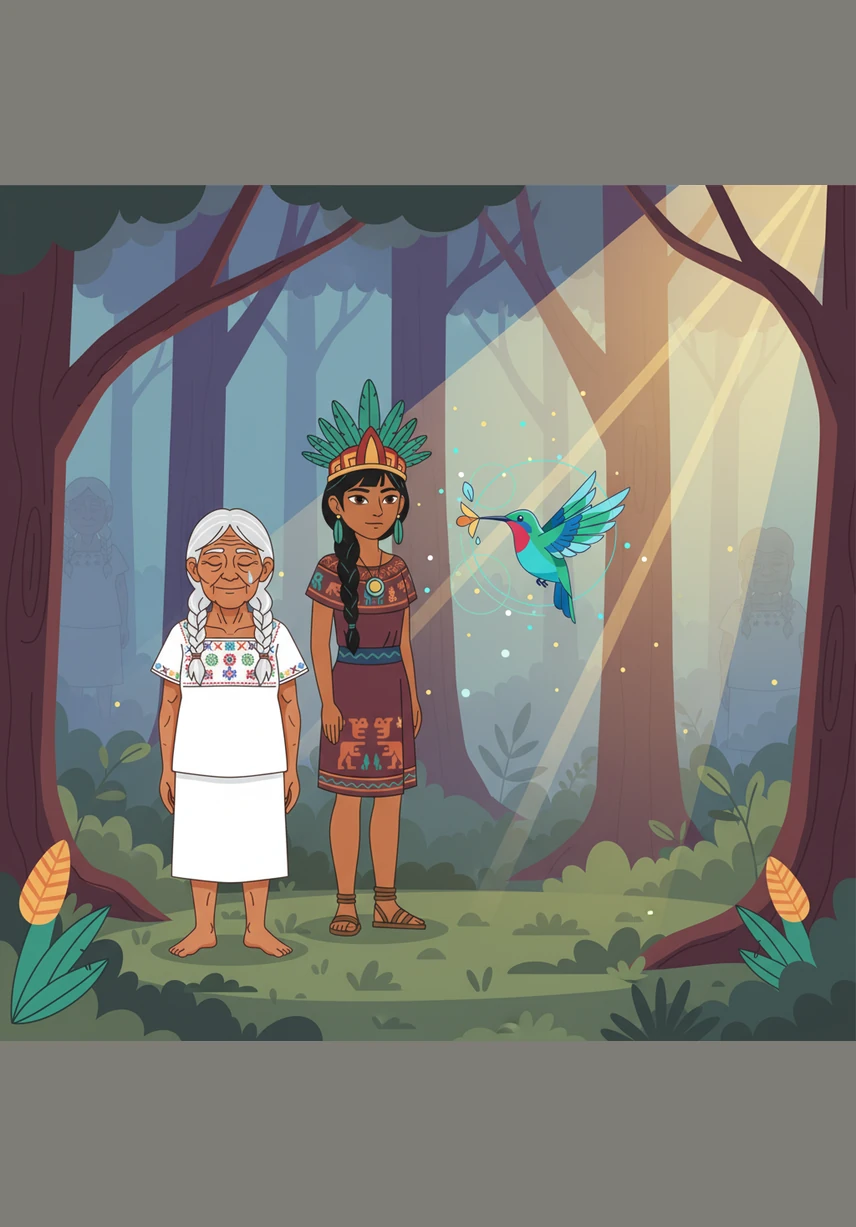
As Itzel reached out a hand to touch the tiny bird, her grandmother Ixchel appeared from the shadows of the trees. Ixchel was the wisest elder of the village, and she gently warned the girl that the hummingbird was a sacred being that must never be held or caged by human hands.
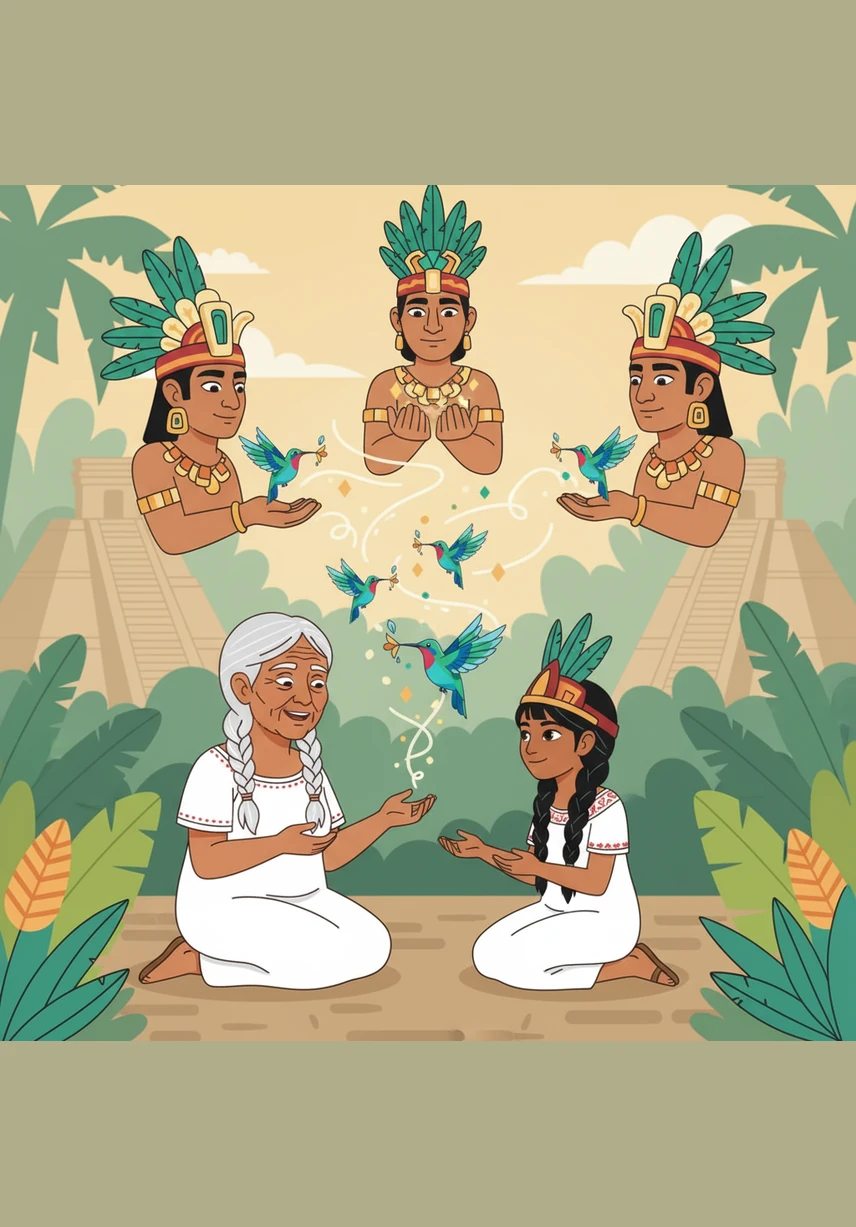
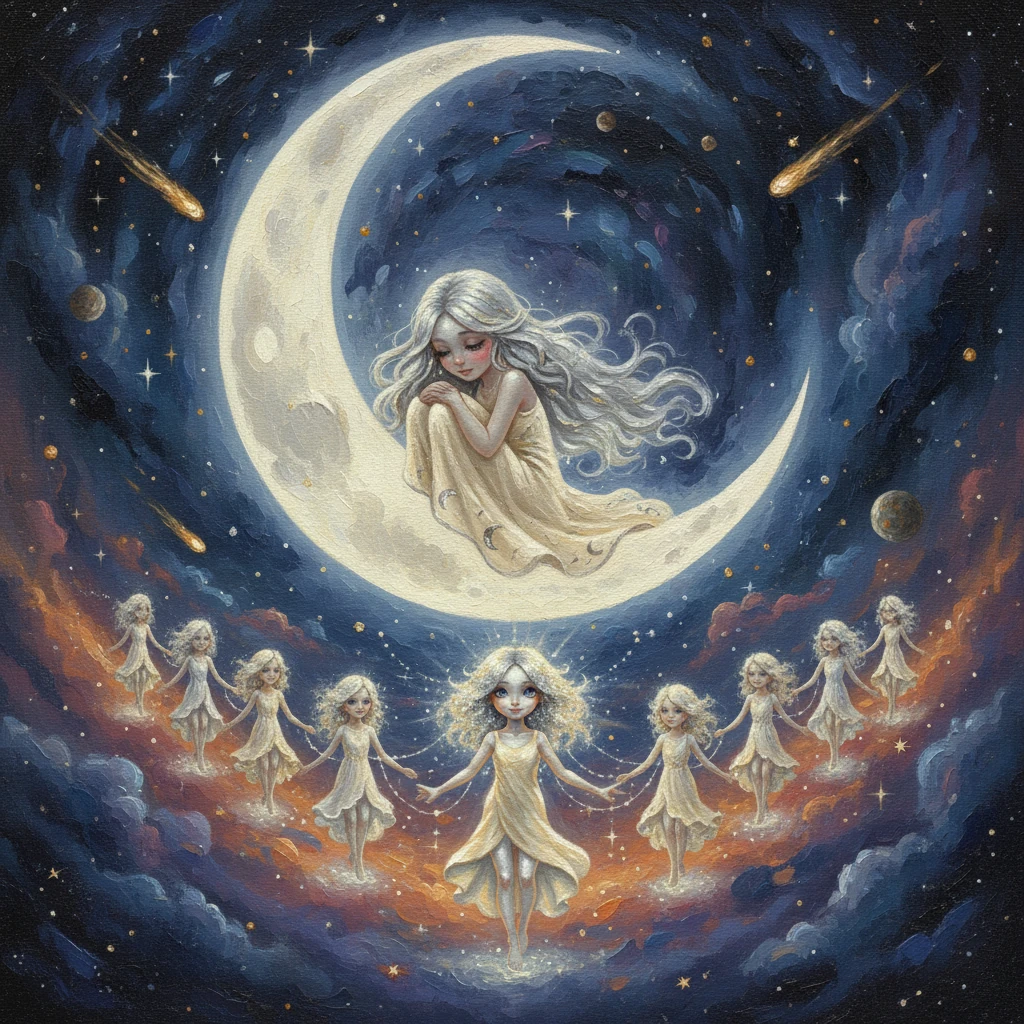
The grandmother explained that when the Maya gods finished painting the universe, they found a few tiny grains of light left in their palms. These fragments were too small for a jaguar or an eagle, so the gods breathed life into the colors, creating the hummingbird from the very essence of light.
The gods gave the hummingbird a vital mission to carry messages of joy and love between the heavens and the earth. Because it was made of divine light, Ixchel warned that anyone who dared to harm or imprison the bird would lose the warmth and beauty within their own heart.
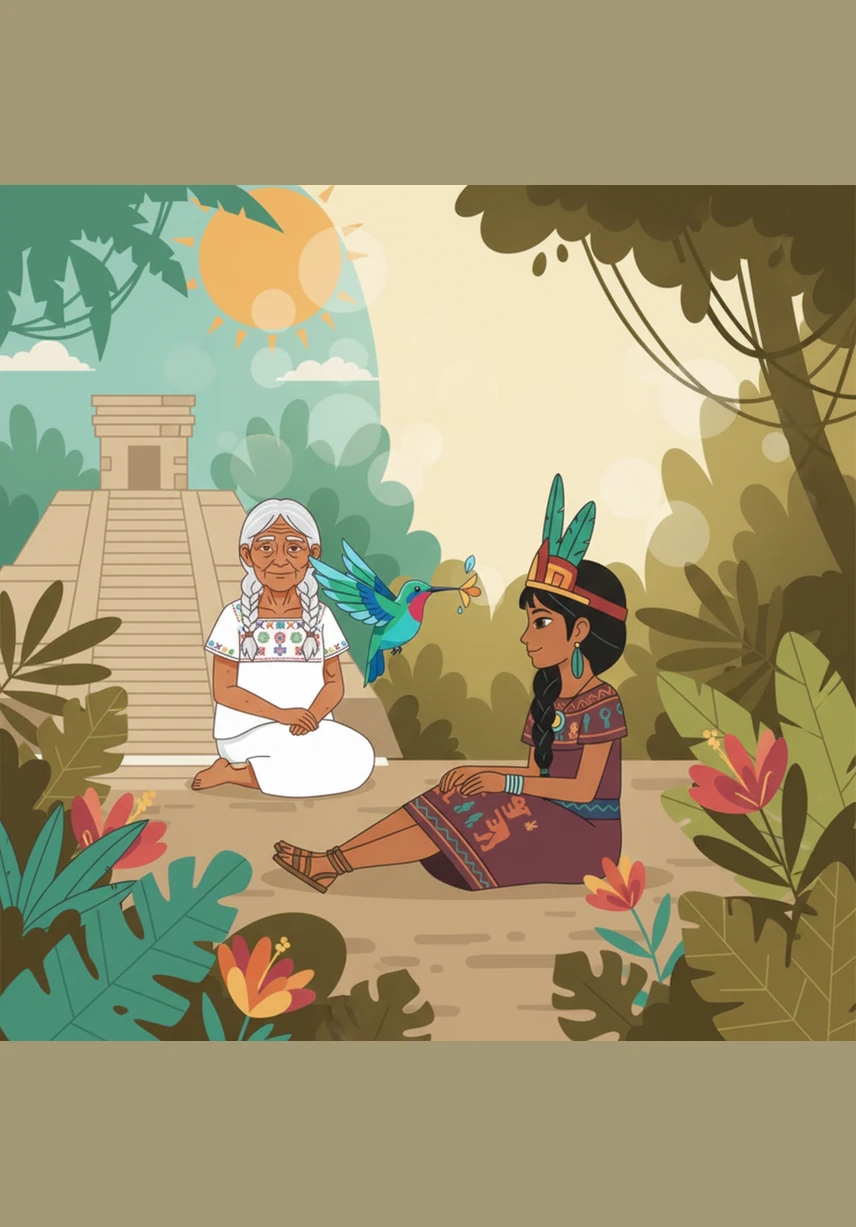
Itzel took her grandmother's words to heart and spent many peaceful days sitting quietly in the garden, watching the bird dance through the air. She would often whisper messages of gratitude to the tiny messenger, watching it zip and dive through the sunlight before vanishing into the deep jungle.
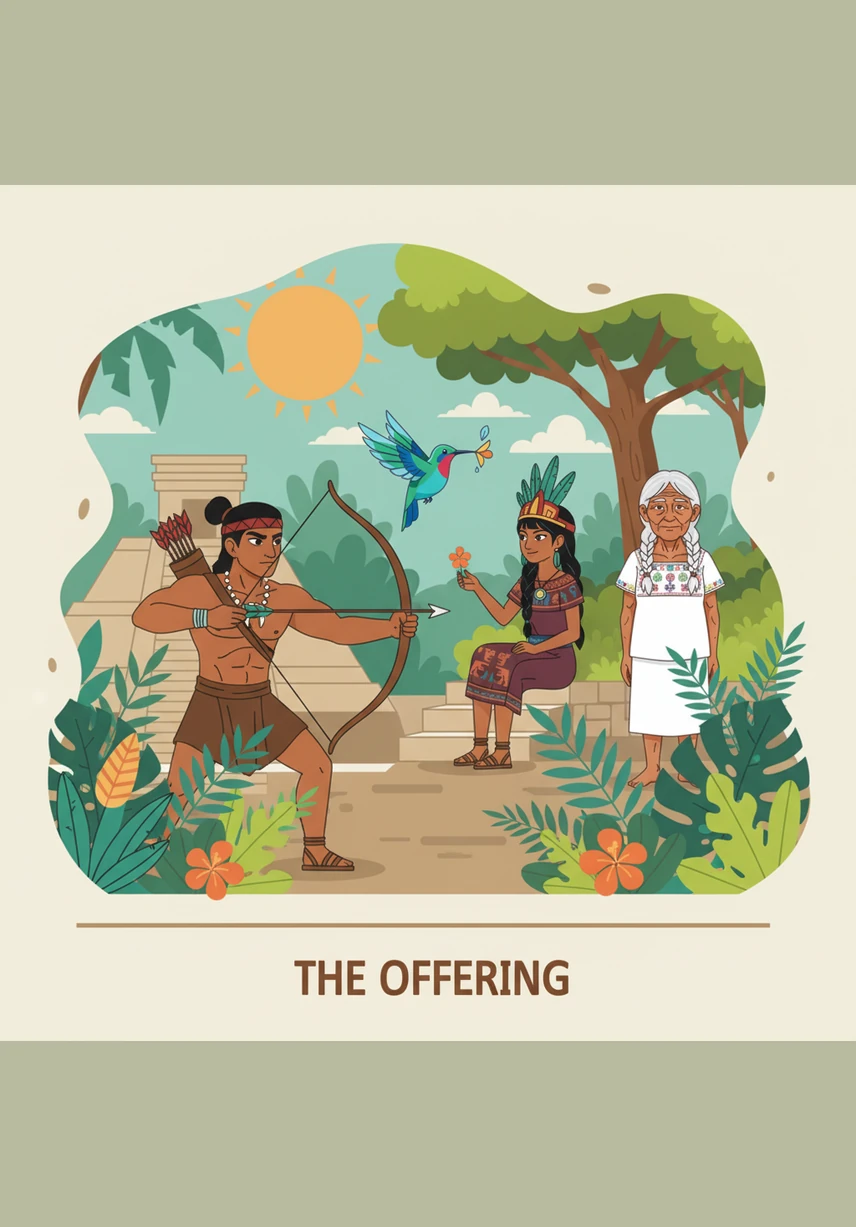
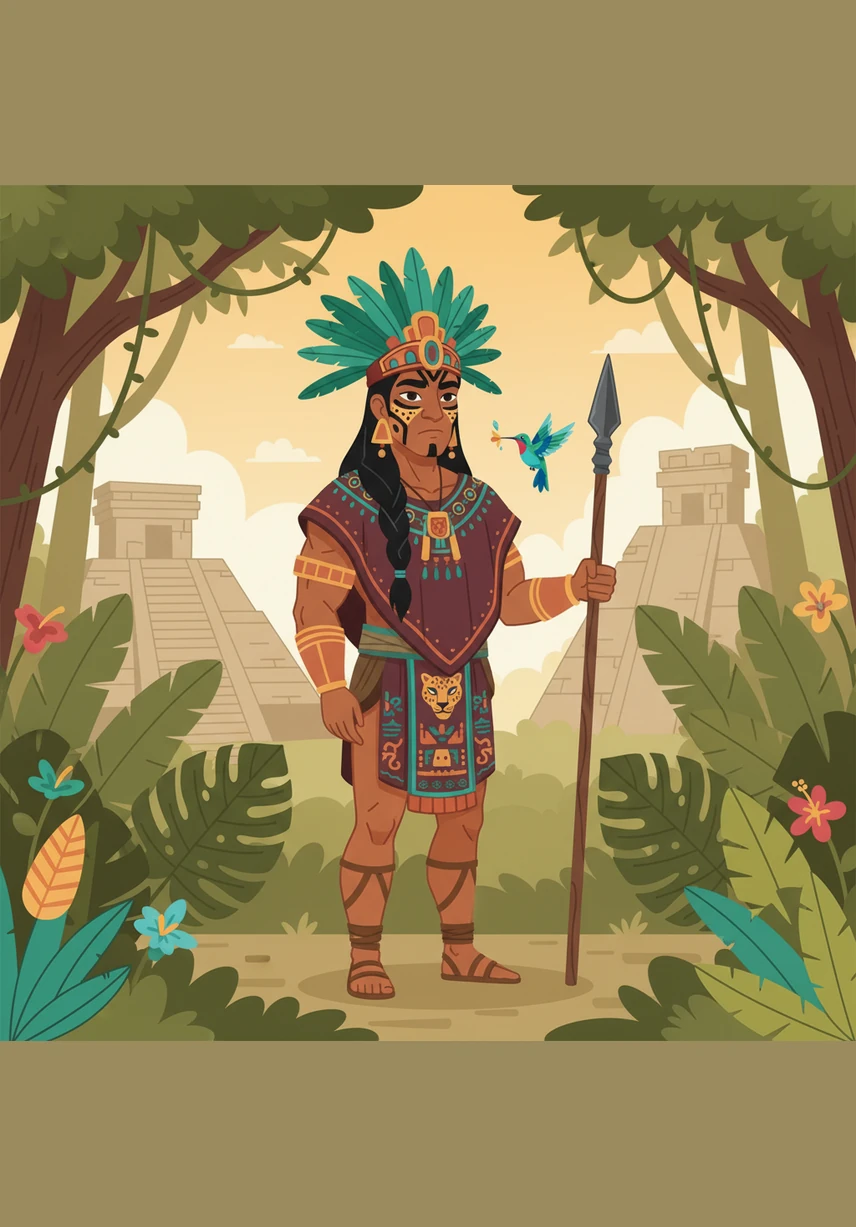
However, a hunter named Balam watched the bird with greedy eyes, imagining how much fame he would gain by owning such a treasure. He ignored the sacred traditions and prepared a thin, invisible net, determined to trap the bird and keep its brilliance inside a golden cage.
Itzel saw Balam hiding in the bushes and begged him to stop, reminding him that the hummingbird belonged to no one but the sky. Balam only laughed at her warnings, and as the bird hovered over a blossom, he pulled the cord and trapped the tiny creature in his net.
The moment the bird was caught, the wind died down and the forest fell into an eerie, breathless silence. Itzel rushed forward with trembling hands and quickly tore the net apart, allowing the frightened bird to rest on her shoulder for a brief moment before it soared back toward the sun.
A powerful voice echoed through the trees, declaring that those who steal freedom from others will find their own hearts turned to stone. Balam felt a heavy coldness settle in his chest, and from that day on, he could no longer feel the warmth of the sun or see the vibrant colors of the world.
生成提示词(登录后查看具体 Prompt)
La fiaba del colibrì sacro Tanto tempo fa, quando il cielo era ancora così vicino alla terra che le nuvole sfioravano le cime degli alberi, esisteva un villaggio nascosto nel cuore della foresta Maya. Gli uomini e le donne che vi abitavano vivevano in armonia con la natura. Ascoltavano il vento prima di seminare, osservavano le stelle prima di partire e ringraziavano il sole ogni mattina per la luce donata al mondo. In quel villaggio viveva una bambina di nome Itzel. Aveva occhi curiosi come la luna nuova e un cuore gentile come l’acqua dei ruscelli. Amava passare le giornate tra i fiori colorati, dove farfalle, api e piccoli uccelli danzavano nell’aria. Un giorno, mentre raccoglieva petali caduti per farne una collana, Itzel sentì un suono leggerissimo. Era come il battito di un tamburo lontano, ma più dolce. Come il sussurro del vento, ma più veloce. Si voltò e vide una minuscola creatura sospesa davanti a un fiore rosso. Era un colibrì. Le sue piume brillavano di verde, oro, blu e viola. Sembrava che un frammento di arcobaleno avesse preso vita. Il suo piccolo corpo si muoveva rapido, ma i suoi occhi scuri erano calmi e profondi, come se custodissero un segreto antico. Itzel rimase immobile. «Che meraviglia…» sussurrò. Il colibrì volò intorno a lei tre volte, poi si posò per un istante su un ramo sottile. La bambina allungò una mano, desiderosa di accarezzarlo, ma una voce alle sue spalle la fermò. «Non toccarlo, piccola Itzel.» Era sua nonna, Ixchel, la donna più anziana del villaggio. Conosceva il linguaggio delle piante, il canto della pioggia e le storie che gli dèi avevano lasciato agli uomini. «Perché, nonna?» chiese Itzel. «È così piccolo. Vorrei solo sentirlo vicino.» La nonna sorrise con dolcezza. «Proprio perché è piccolo, va rispettato. Il colibrì non appartiene a nessuna mano, a nessuna gabbia, a nessun uomo. È una creatura sacra. Gli dèi Maya lo crearono con gli ultimi frammenti di luce rimasti dopo aver dipinto l’universo.» Itzel spalancò gli occhi. «Con la luce?» «Sì» rispose la nonna. «Quando gli dèi ebbero creato il sole, la luna, le stelle, i fiumi, le montagne e gli animali, si accorsero che nel loro palmo restavano piccolissimi granelli di colore. Erano troppo pochi per creare un grande animale, ma troppo belli per essere dimenticati. Così li unirono con un soffio e nacque il colibrì.» Il piccolo uccello, come se avesse capito, batté le ali più forte e fece brillare le sue piume al sole. «Gli dèi gli diedero un compito importante» continuò Ixchel. «Doveva portare messaggi tra il cielo e la terra. Doveva ricordare agli uomini la gioia, la leggerezza e l’amore per la vita. Per questo nessuno deve catturarlo, rinchiuderlo o fargli del male.» Itzel ascoltava in silenzio. «E cosa accade a chi lo ferisce?» domandò piano. La nonna abbassò lo sguardo. «Chi fa del male a un colibrì spezza un filo sacro. Gli dèi, addolorati, lasciano che il cuore di quella persona diventi pesante. Così pesante da dimenticare la gioia. Così freddo da non riconoscere più la bellezza del mondo.» La bambina rabbrividì. Da quel giorno Itzel tornò spesso nel giardino dei fiori, ma non cercò mai di toccare il colibrì. Si sedeva sull’erba e lo osservava danzare nell’aria. A volte gli parlava. «Piccolo messaggero, dove vai oggi? Porti forse una parola al sole? O un pensiero alla luna?» Il colibrì rispondeva con un rapido battito d’ali, poi scompariva tra gli alberi. Nel villaggio, però, non tutti avevano il cuore gentile di Itzel. Un giovane cacciatore di nome Balam vide un giorno il colibrì brillare tra i fiori e pensò: «Se lo catturassi, tutti verrebbero ad ammirarlo. Potrei tenerlo in una gabbia d’oro davanti alla mia casa. Sarebbe il mio tesoro.» Così preparò una piccola rete sottile e la nascose tra i rami. Itzel lo vide e corse da lui. «Balam, fermati! Non puoi catturarlo. Il colibrì è sacro. Deve essere libero.» Il giovane rise. «Sono solo storie per bambini. È un uccellino come gli altri.» «No» rispose Itzel. «È un messaggero degli dèi. Non appartiene a noi.» Ma Balam non volle ascoltare. Quando il colibrì si avvicinò al fiore rosso, la rete scattò. Per un attimo il piccolo uccello rimase intrappolato, battendo le ali con paura. Il suo splendore sembrò spegnersi. Allora il cielo cambiò colore. Il vento si fermò. Gli alberi smisero di frusciare. Persino il fiume sembrò trattenere il respiro. Itzel, con le mani tremanti, liberò subito il colibrì dalla rete. Il piccolo messaggero volò debole fino a posarsi sulla sua spalla, poi riprese quota e salì verso il cielo. In quel momento una voce profonda attraversò la foresta. «Chi imprigiona ciò che è nato libero chiude una gabbia anche intorno al proprio cuore.» Balam impallidì. Sentì nel petto un peso improvviso, come una pietra fredda. Da quel giorno non riuscì più a sorridere davanti ai fiori, né a gioire al canto degli uccelli. Il sole gli sembrava pallido, l’acqua senza freschezza, il mondo senza colore. Capì allora il suo errore.