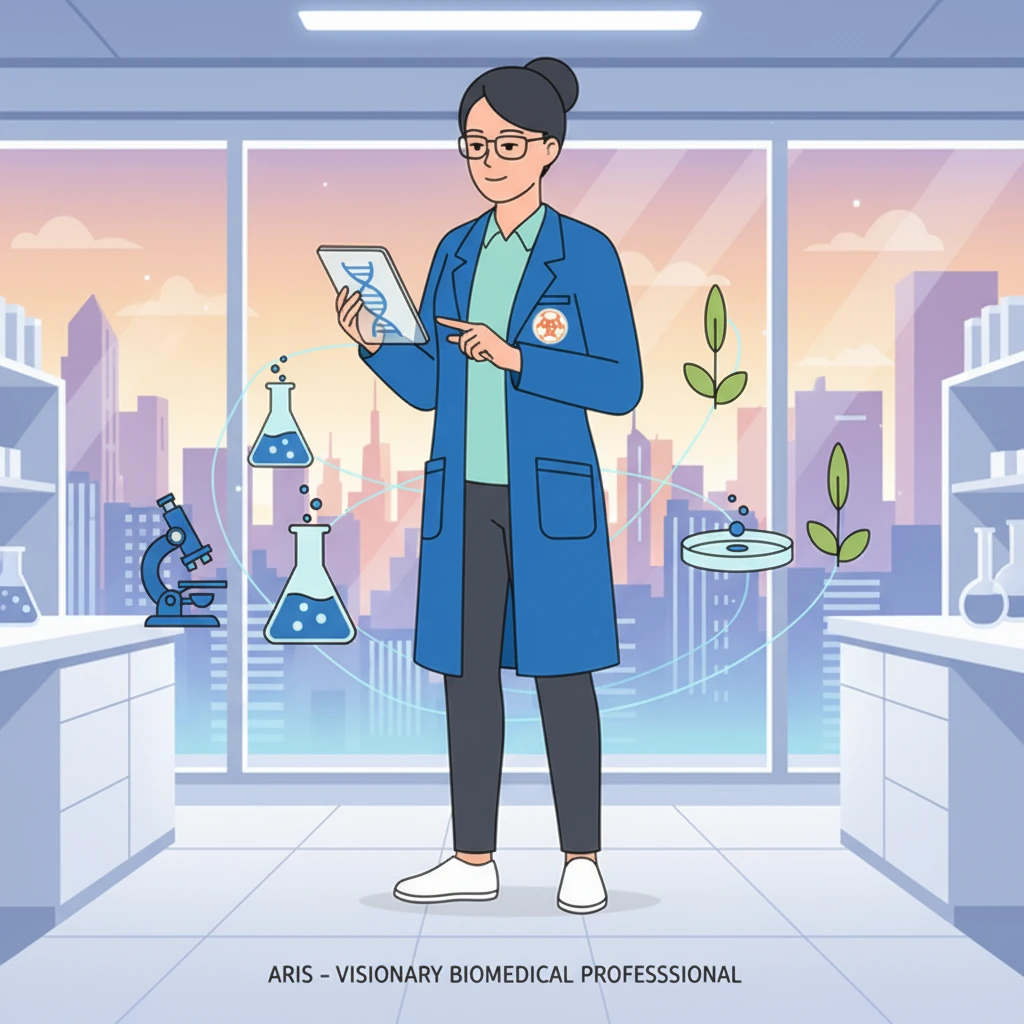
Embark on a breathtaking journey through the microscopic digital universe where data becomes discovery. Follow Aris, a visionary data navigator, as she transforms a chaotic storm of biological information into a glowing network of healing. This visually stunning tale explores how Knowledge Graphs are unlocking the secrets of medicine, one connection at a time.
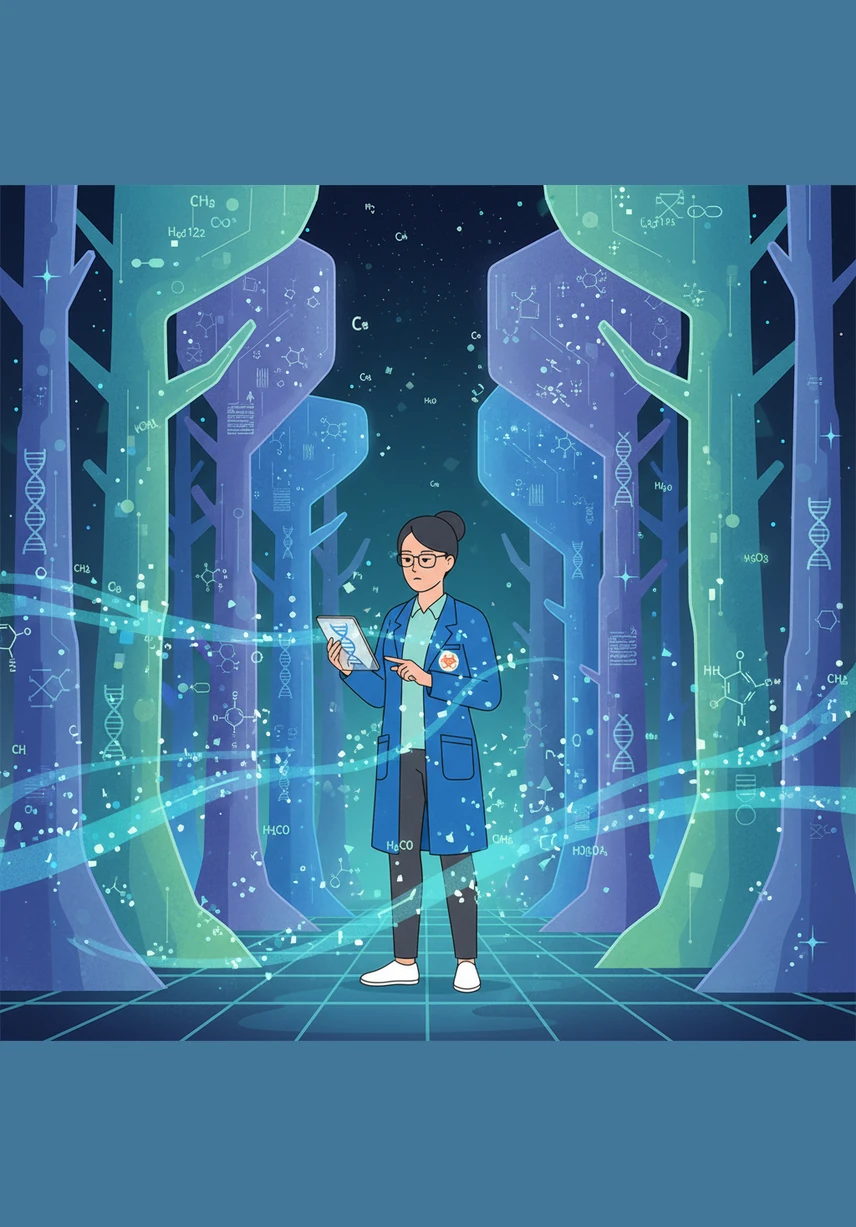
Aris stands in a vast, glowing digital forest where every tree represents a different biological database. The air is thick with floating fragments of code and chemical formulas, illustrating the fragmented and diverse nature of modern biomedical data.
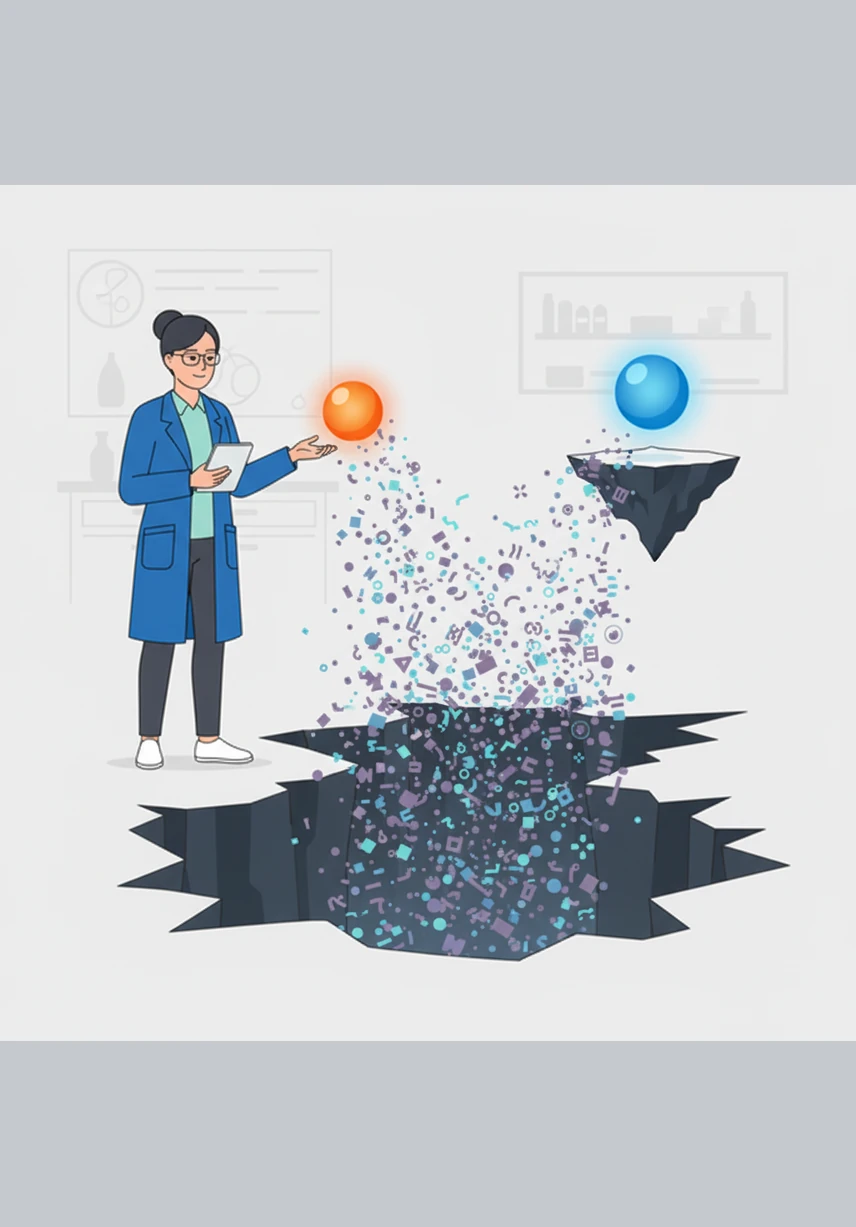
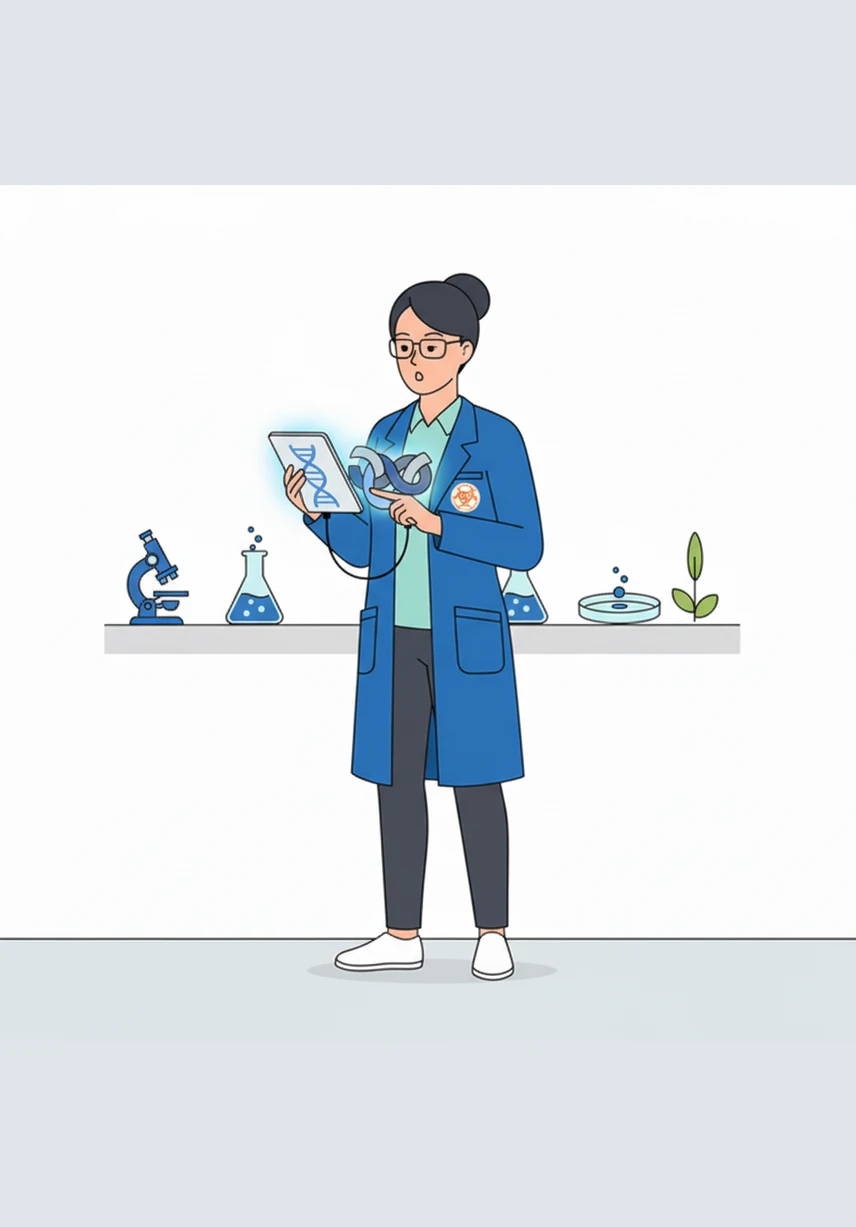
Aris tries to connect two distant glowing orbs representing a gene and a protein, but they are separated by a chaotic chasm of noise. The sheer volume of disconnected information makes it nearly impossible to see the path forward in this data-centric world.
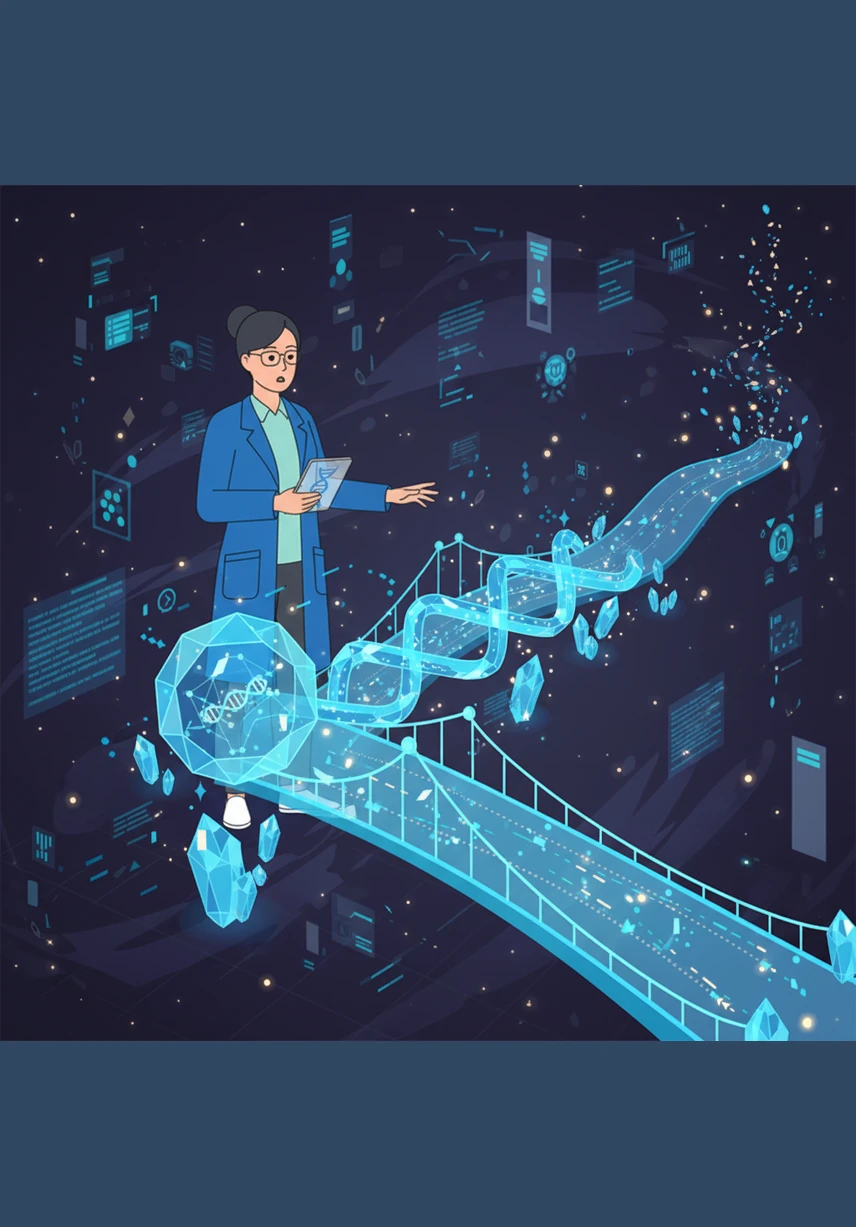
In the center of the chaos, Aris discovers a glowing crystal bridge composed of three distinct parts: a head, a relationship, and a tail. This triplet structure begins to organize the floating fragments into a clear and sturdy path through the digital void.
Aris uses these triplets to weave a massive, glowing web that connects thousands of floating data points together. The digital forest transforms from a chaotic mess into a structured, luminous network of knowledge that represents the power of a Knowledge Graph.
As the network grows, it becomes a multi-layered city of light where genes, proteins, and drugs are all interconnected neighbors. The scale of the city is immense, illustrating how the graph handles the exponential growth of biomedical information in a scalable manner.
Aris stands at one end of the graph and sends a pulse of light that travels through several connections, from a drug to a gene and finally to a disease. This pulse demonstrates the power of navigating complex, multi-hop paths to find hidden answers within the data.
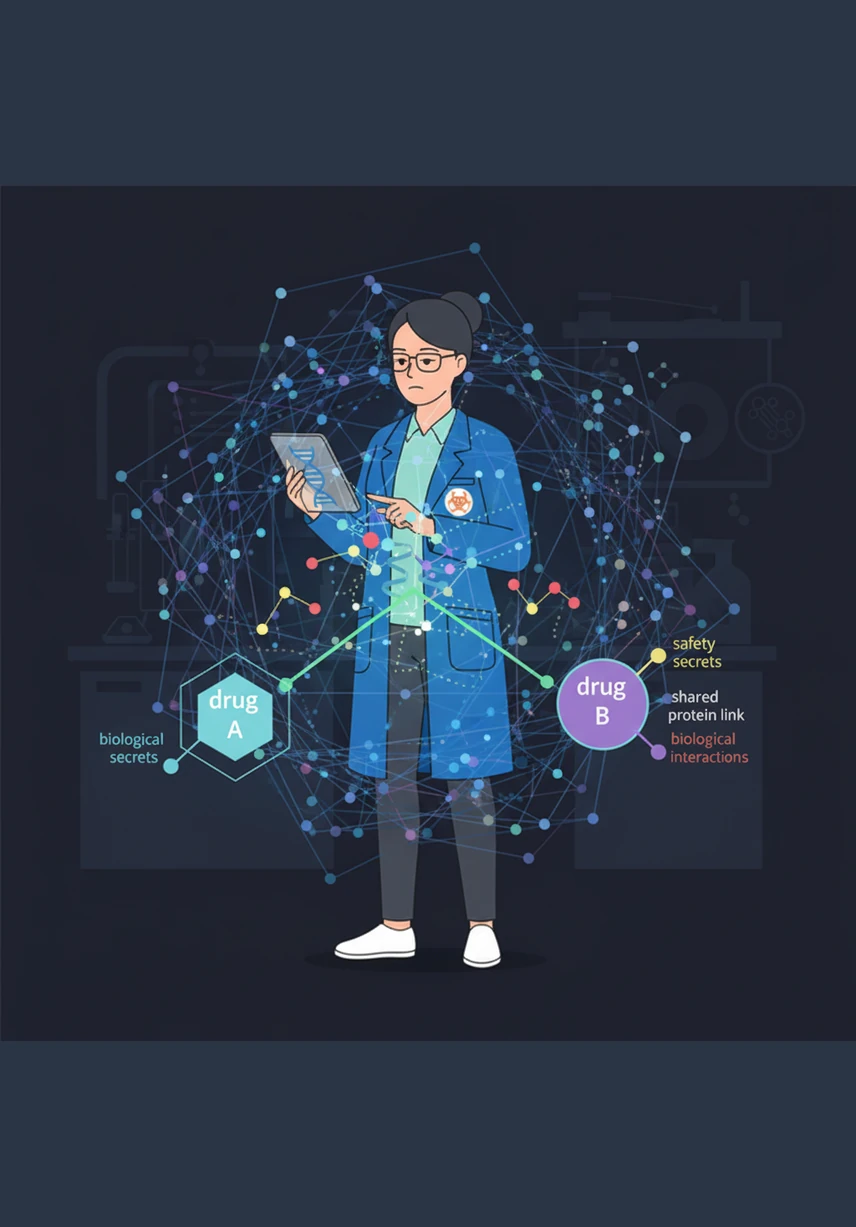
Within the glowing web, Aris observes two different drug entities interacting through a shared protein link. The graph highlights how one drug might affect another, revealing safety secrets and biological interactions that were hidden when the data was fragmented.
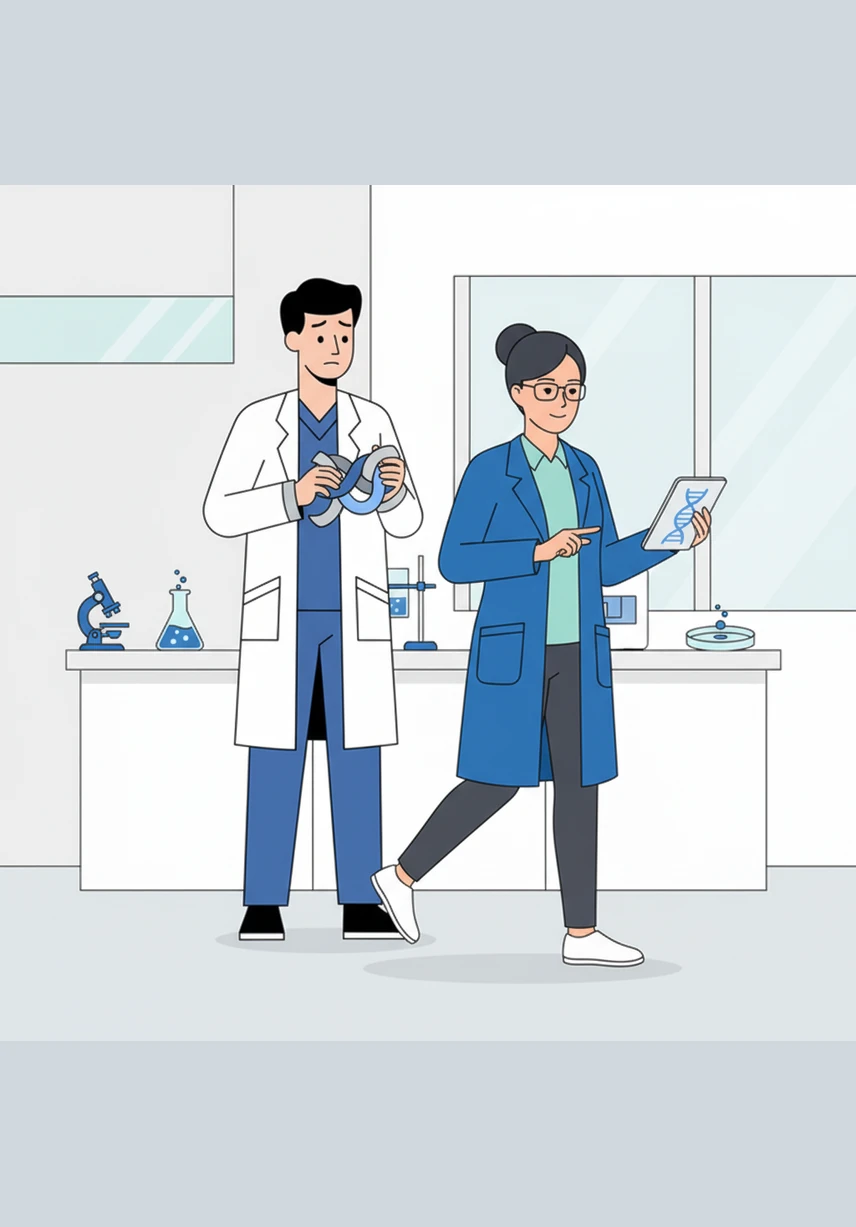
Scientists from different fields gather at the edges of the graph, finally able to understand and interpret the integrated data before them. Aris guides them through the shimmering pathways, showing how the knowledge graph serves as a universal map for biomedical professionals.
By following a specific, winding path in the graph, Aris discovers a brand new treatment pathway for a rare disease. A bright, golden light erupts from the center of the network, signifying a major breakthrough in biomedical discovery made possible by structured relationships.
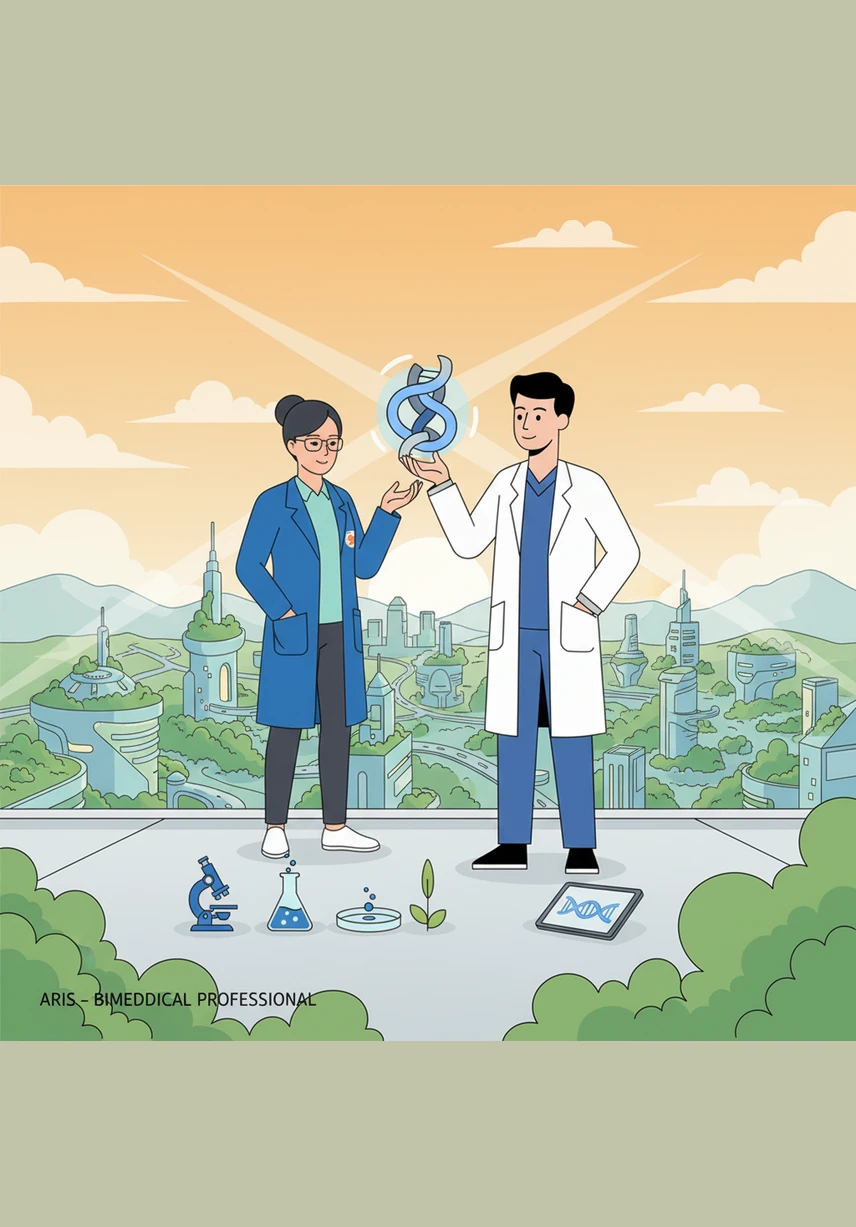
Aris stands atop a high vantage point, looking out over an endless, organized horizon of interconnected knowledge. The once-fragmented data is now a powerful tool for healing the world, paving the way for the future of research and the Google Research Fellowship.
生成提示词(登录后查看具体 Prompt)
Biology is all about relationships- how genes interact with protein, how drugs treat disease, what is the role of a gene in a pathway, how a drug affects another drug and so on. Biomedical research is data-centric, generating huge amounts of data which are diverse and fragmented. Data are available in different public data stores, but their interpretation and integration still poses a challenge for the biomedical professionals. This data generates information and this information forms the basis of knowledge. In the biomedical domain, the amount of knowledge generated increases exponentially. In recent times, graph databases form a practical solution to handle and integrate diverse knowledge. Biomedical Knowledge graph provides a way to represent, integrate and reason over these huge data in a scalable manner. They are typically stored in the form of triplets or triple which represent the relationships between entities in a structured manner. A triplet(h,r,t) consists of three components namely h indicates a Head entity(or Subject), r is Relationship(or Predicate) and t is the Tail entity(or Object). They are well-suited for handling complex, multi-hop reasoning tasks by directly navigating the relationships between entities. In a biomedical KG a relationship can be represented as a triplet am writing a research proposal to apply for google research fellowship. Is this good para to start