A powerful and evocative journey of a woman reclaiming her life from the shadows of emotional and financial exploitation. This gripping story explores the thin line between devotion and disappearance, ultimately celebrating the strength found in truth and the pursuit of justice.
Ambika stands beside a shiny new car, handing the keys to Nishumbha while her own bank records show a depleted balance. She wears a quiet, forced smile, convincing herself that supporting her husband’s career is her primary duty as a wife.
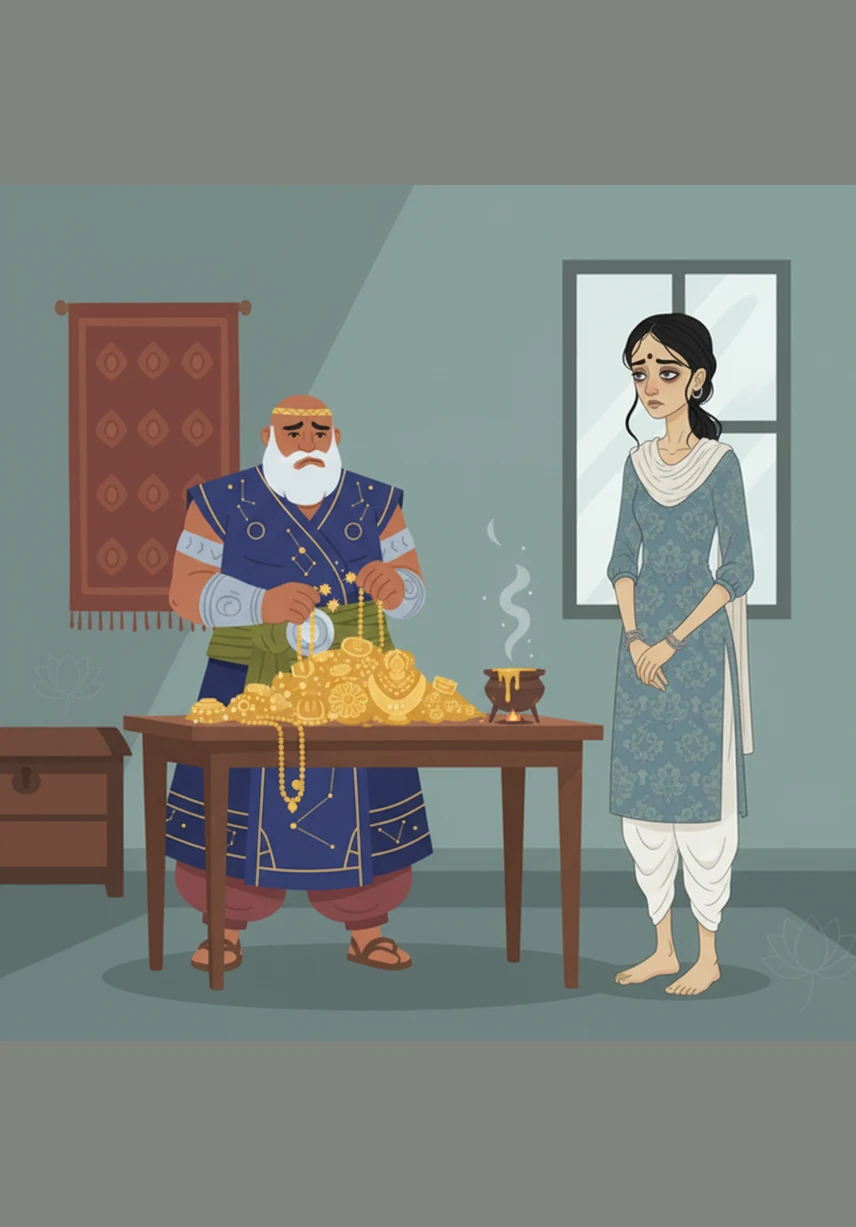
Gold jewelry and family heirlooms are piled on a table as Nishumbha takes them with a practiced expression of sorrow and struggle. He speaks of a mysterious business venture while Ambika watches her heritage being melted down to fund his invisible dreams.
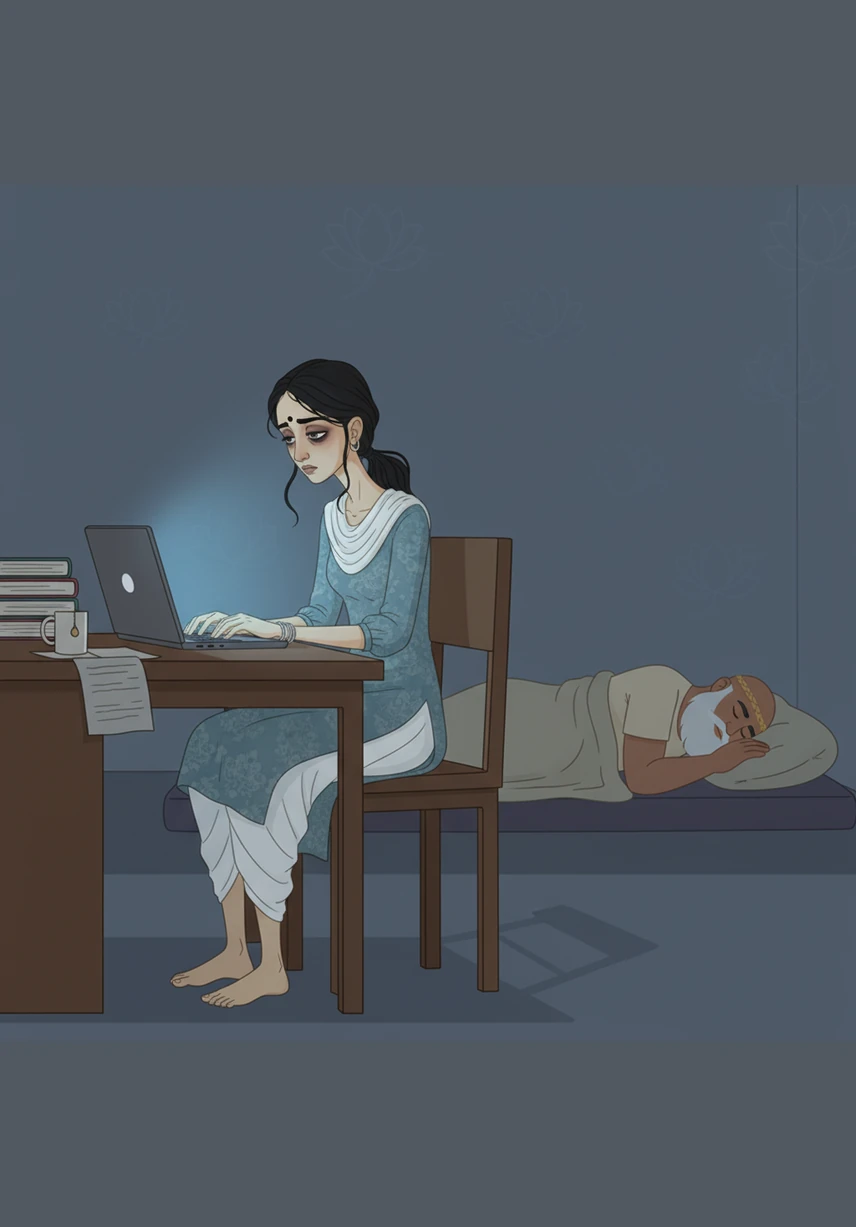
In the dim light of a late night, Ambika continues to work at her computer while Nishumbha sleeps comfortably in the background. Her face is drawn and tired, showing the physical toll of working twelve-hour shifts to finance a lifestyle she barely enjoys.
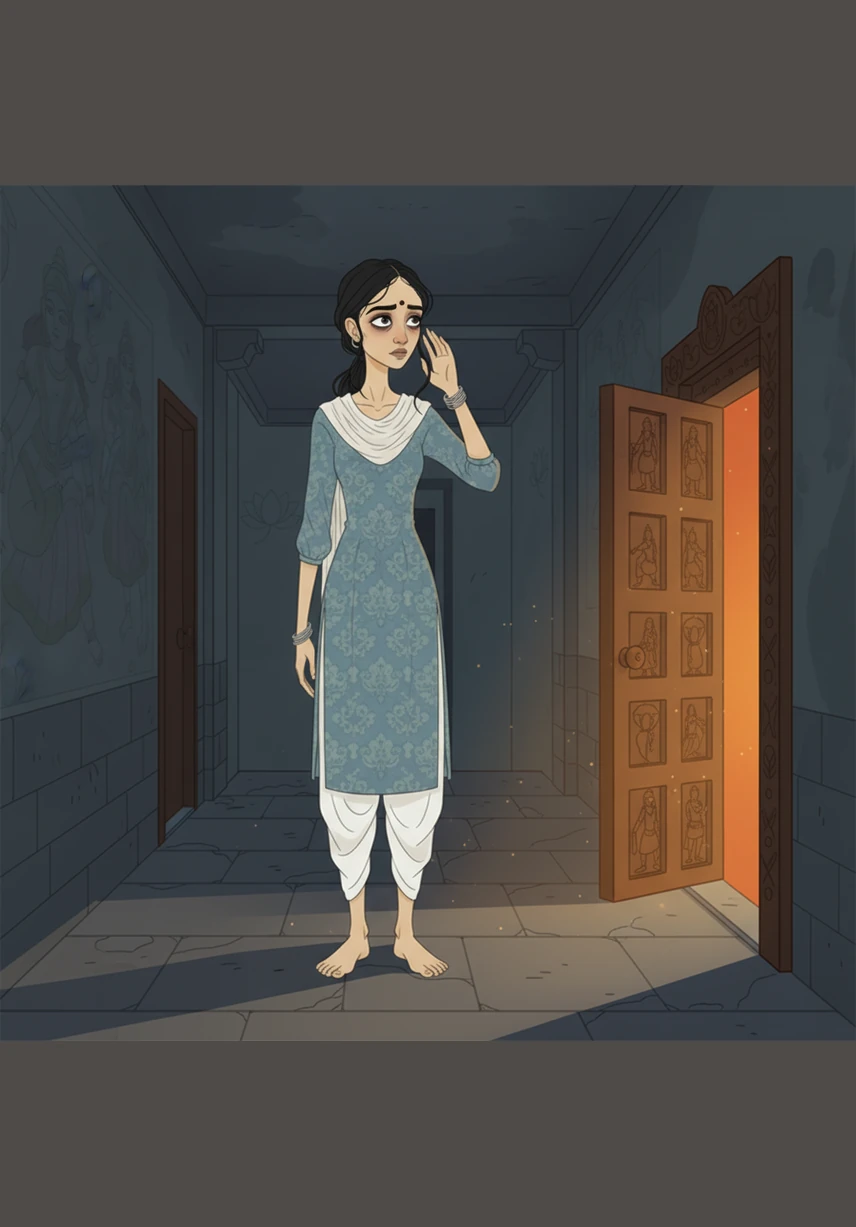
Ambika stands perfectly still in a darkened hallway, her head tilted as she listens to the sound of footsteps outside the door. She has learned to read the rhythm of the floorboards, knowing that a heavy step means she must make herself even smaller to avoid conflict.
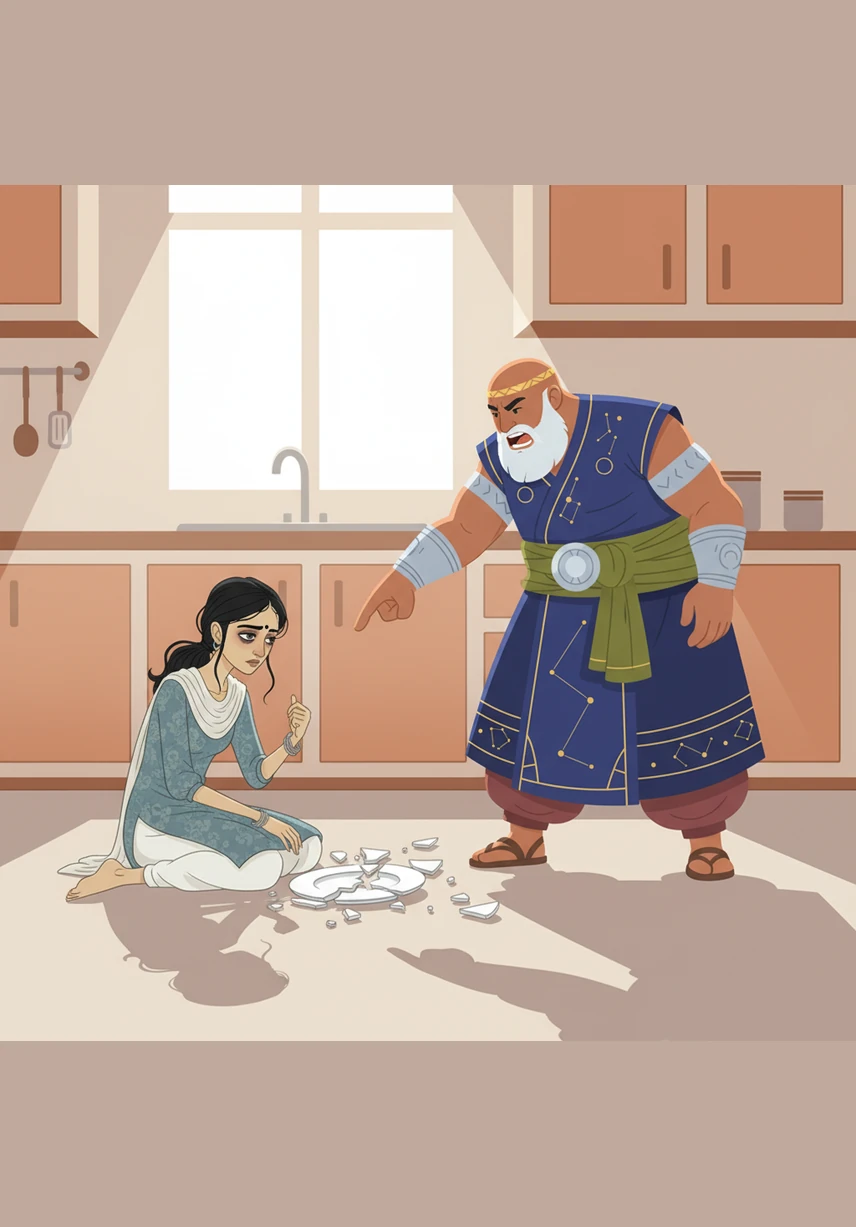
A ceramic plate lies shattered on the kitchen floor, its pieces reflecting the harsh overhead light. Nishumbha stands over her, his shadow looming large, as he hurls words that cut deeper and last much longer than the broken porcelain.
During a rare moment of stillness, Ambika looks directly at Nishumbha and asks why his survival always requires her total destruction. He merely laughs, unaware that the spark of realization in her eyes is the beginning of the end of his control.
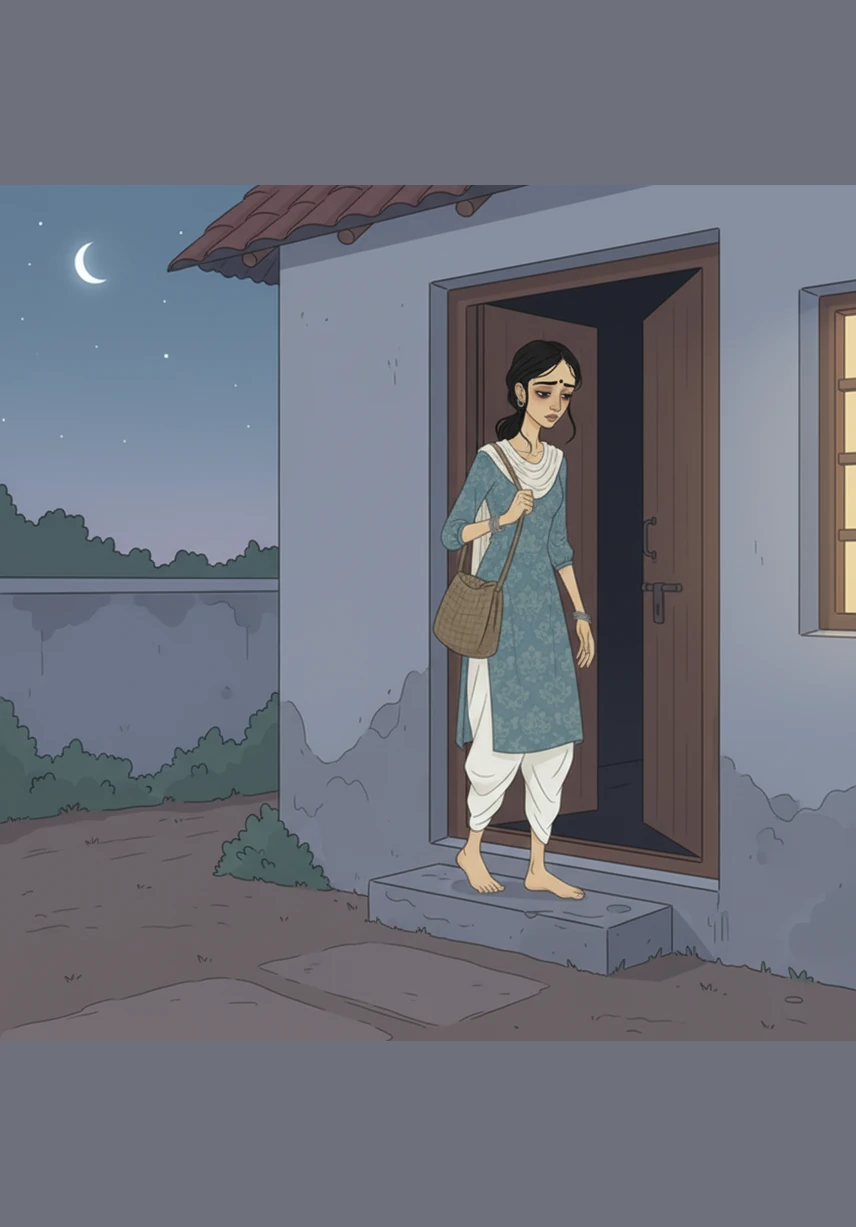
Ambika walks out of the front door into the cool evening air, carrying only a small bag and her dignity. She is not filled with anger, but with a profound exhaustion that tells her there is absolutely nothing left for her to give him.
Nishumbha sits in a circle of concerned relatives, performing a scene of heartbreak and abandonment for his captive audience. He weeps about his devotion while conveniently omitting the years of stolen savings and the silence he forced upon his wife.
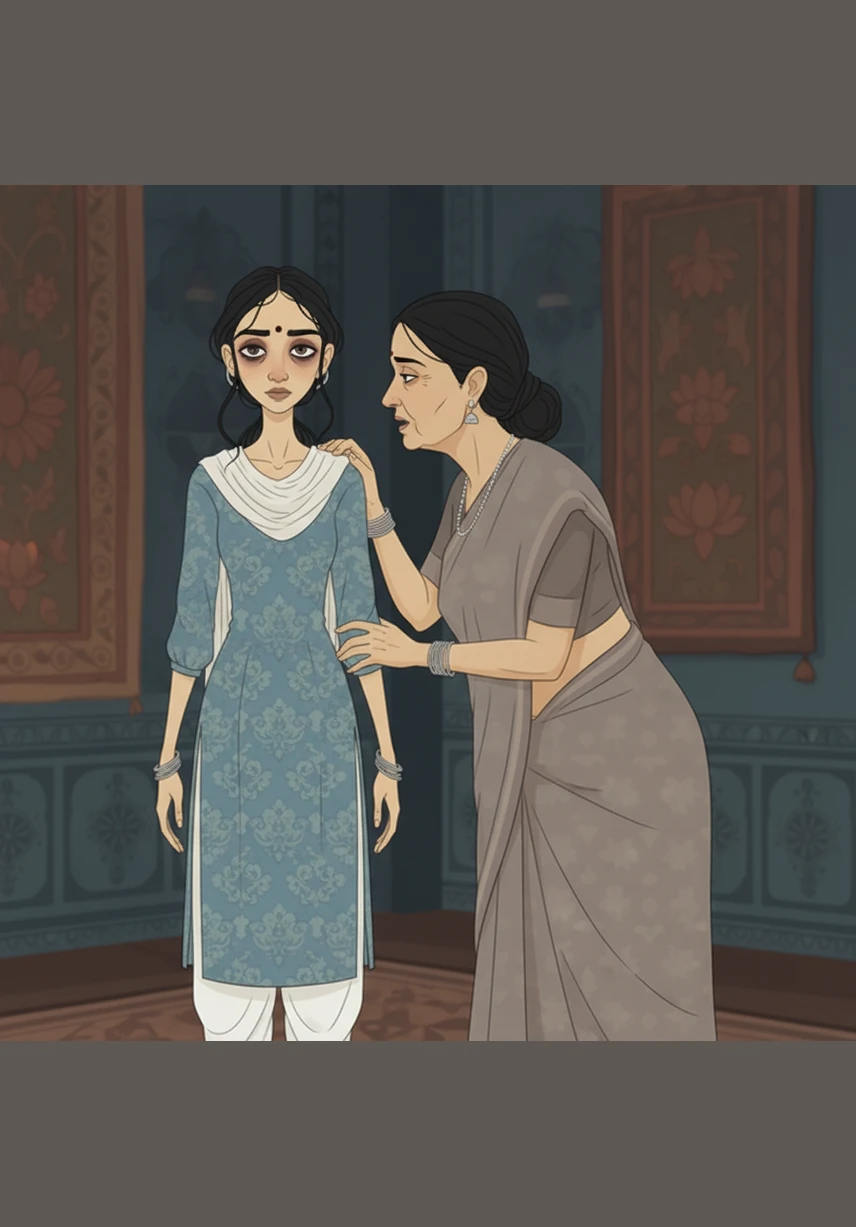
An elder relative pulls Ambika aside in a quiet corner, advising her that a woman’s greatest virtue is her silence and endurance. Ambika looks back with a steady gaze, finally understanding that waiting for a justice that never arrives is no longer an option.
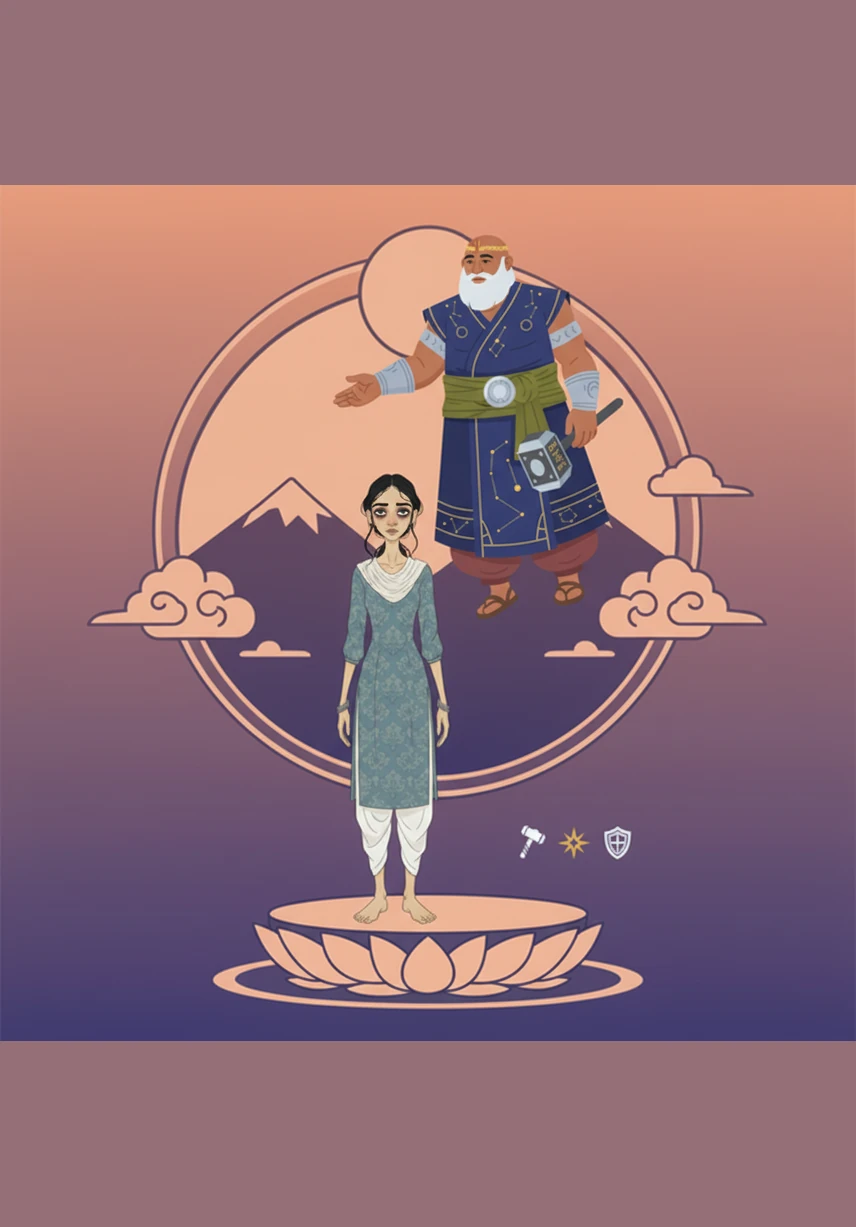
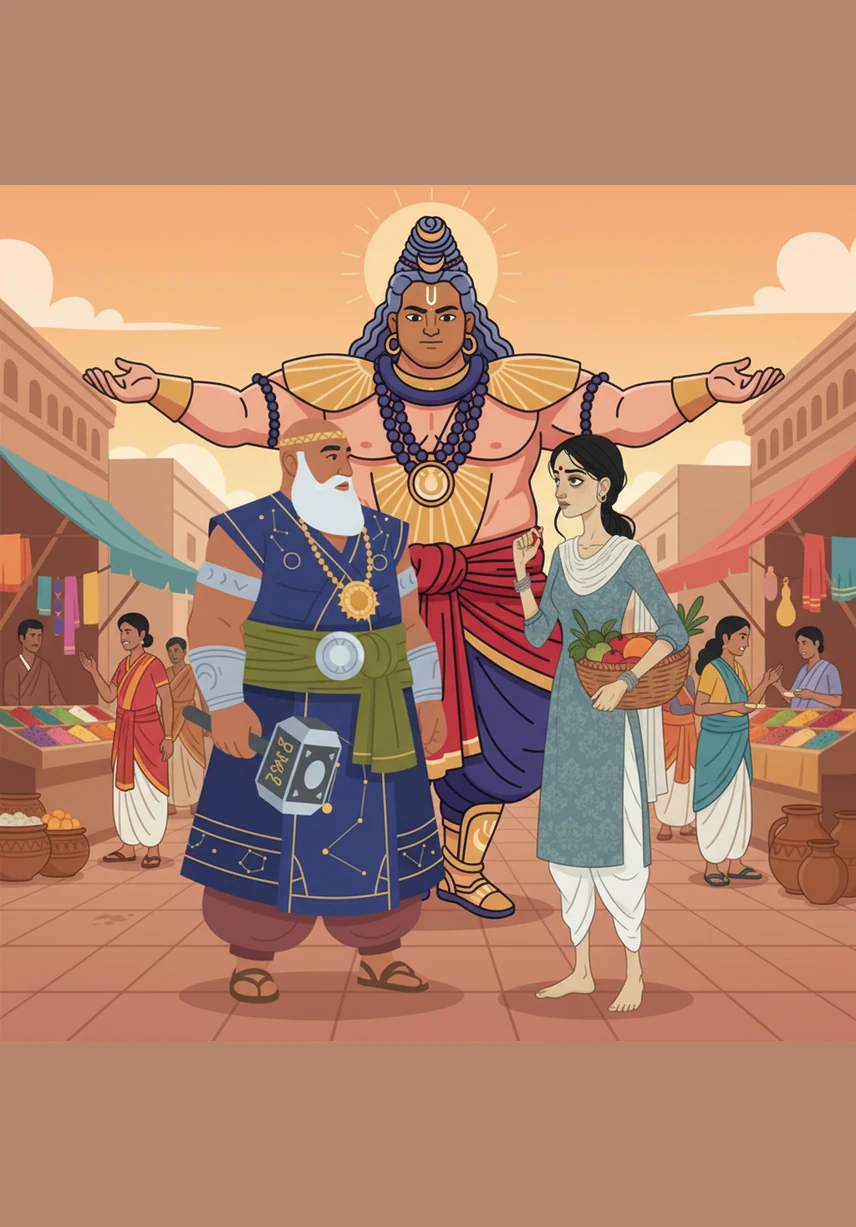
Ambika stands tall in a courtroom of light, her voice clear and unwavering as she finally tells her own story. Behind her, a powerful and divine shadow suggests she is no longer alone, marking the moment her struggle transforms into a legacy of justice.
生成提示词(登录后查看具体 Prompt)
The Victim The car came first. Nishumbha said it was for work. Ambika sold her mutual funds. She didn’t complain. Good wives don’t. Then cash. Then gold. Then a “business” no one ever saw. An iPhone followed — for communication, he said, for a business that never existed. Each time, Nishumbha wore the same look. That wounded, sagging expression he had tailored into a uniform. No one respects me. I am struggling. No one sees my pain. He said it so often he started believing it. Pleasure was never a struggle — only work was. Each time Ambika worked twelve hours, he slept for fourteen. Trips were financed. Appearances were maintained. The performance never stopped. She stopped eating properly around year two. Stopped calling her mother around year three. By year four, she had learned to read his footsteps — heavy meant danger, light meant maybe an hour of quiet. She became very good at being small. One night she miscalculated. He threw the plate first. Then the words. Words are worse — plates break once and stop. Words find you at 3 a.m., years later, in a room where you are finally safe, and they still cut. Both sounds haunt. Neither fully stops. For eight years, Ambika paid. Every last penny. He sold her father’s heirloom gold. Her wedding jewellery. Melted down the weight of generations to feed a hunger that was never about need. It was never about need. It was about control. Nishumbha complained louder each time. One evening, Ambika looked at him quietly. “If you are the victim,” she said, “why do your needs always cost someone else’s everything?” He laughed it off. She didn’t. She left. Not angry. That’s what no one understood. She left tired. She left because there was nothing left to give — not a penny, not a moment, not a version of herself she still recognised. Nishumbha told people she had abandoned him. What he never mentioned—what he perhaps never noticed—was the necklace her mother never got back, the lifetime of savings that vanished, a decade quietly taken. Each of his demands arrived wrapped in grievance, offered like wounds he believed the world owed him healing for. Within hours, Nishumbha was on the phone. Relatives. Neighbours. College friends he had complained about to Ambika for years — the same people he now wept to. “She’s destroying me. I gave her everything. This is what men face. No one talks about it.” People listened. Some nodded — unaware he had called them worthless in a different room, to a different audience. He had already spoken against each of them. They just didn’t know it yet. A relative pulled Ambika aside. “You shouldn’t fight. Women don’t. If your deeds are good, justice will find its way to your door.” Ambika looked at her for a long moment. Said nothing. She had spent eight years being good. Being quiet. Being small. Waiting for a knock that never came. So she stopped waiting. Nishumbha never called it dowry. He called it a wife’s duty. Ambika decided to fight. Not just for the gold — gold can be replaced. Not just for the money — money can be rebuilt. She fought for the thing that has no price: the truth of what happened inside a house where she was the only witness, and no one believed her. She fought for every woman who is shrinking right now and calling it marriage. For every woman who has learned to read footsteps. For every woman told that her silence is her virtue and her suffering is her duty. For every Nishumbha who believes he is owed— there is an Ambika who stops paying. And when she does, the story does not end in silence. It begins in justice. For every Nishumbha, there is an Ambika. And where Ambika stands, Tryambaka stands beside her.