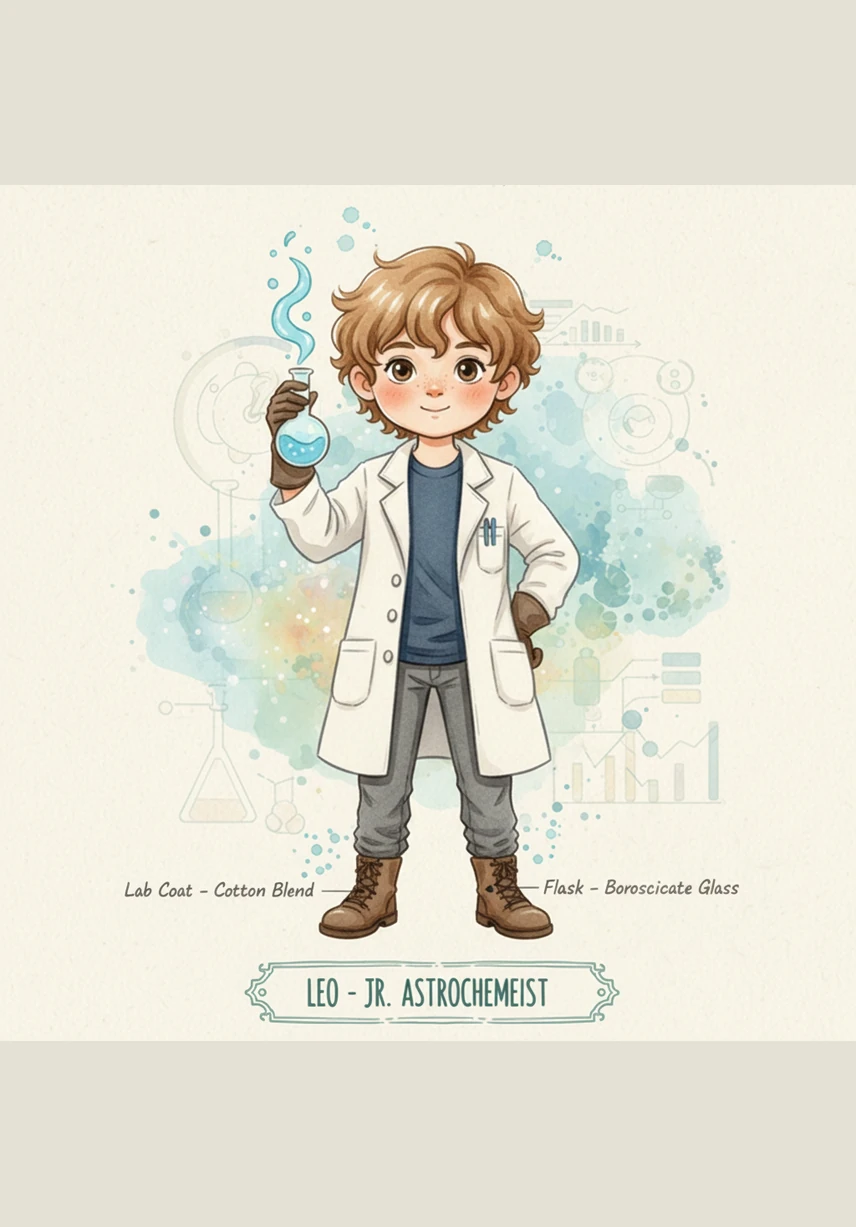
Join young explorer Leo as he shrinks down to discover the microscopic wonders hidden inside every living thing. This captivating educational adventure unravels the mysteries of DNA, showing how a tiny 'instruction manual' makes every person on Earth unique and special. It's a colorful dive into the science of what makes us who we are.
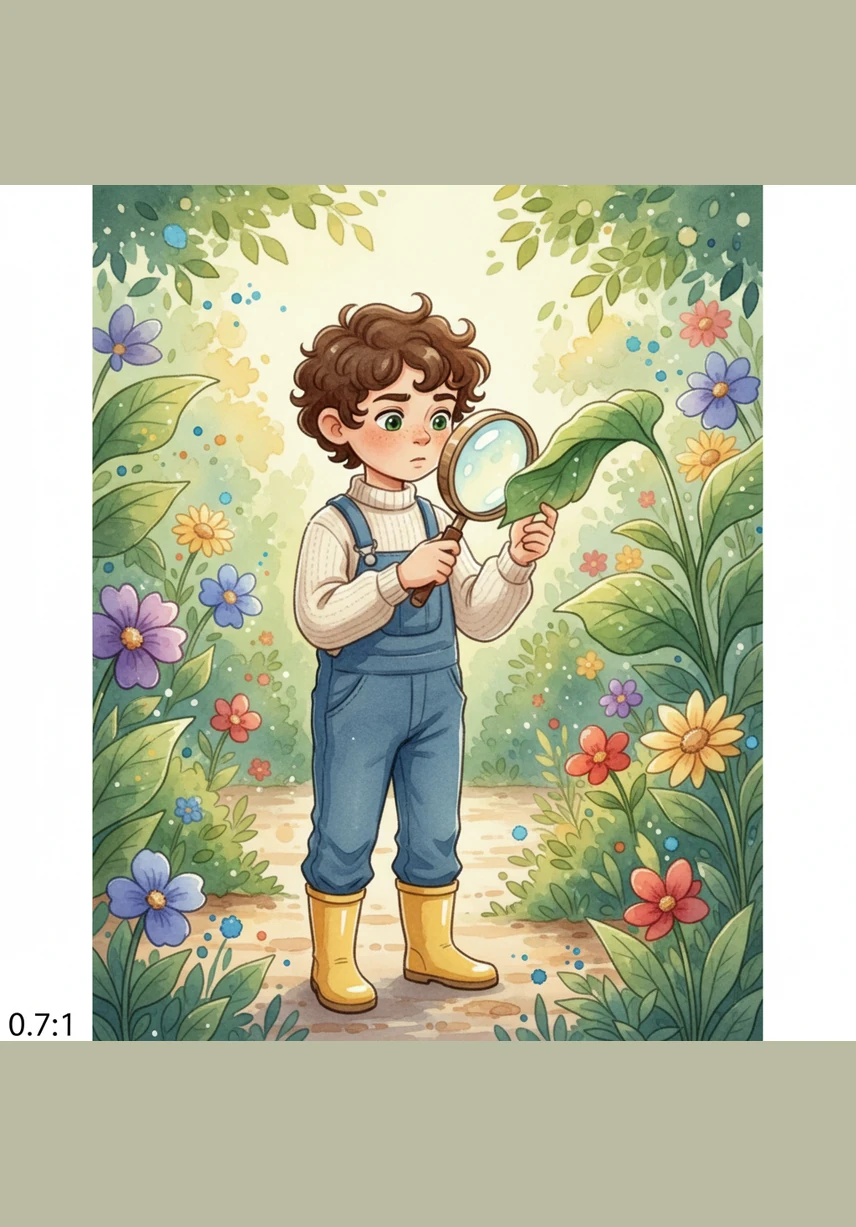
Leo stands in his vibrant garden, curious why he has his father's curly hair and his mother's bright green eyes. He holds a magnifying glass up to a leaf, wondering about the invisible instructions that make every living thing unique.
Using a magical glowing microscope, Leo dives deep into a single cell to find a bustling world inside the nucleus. He discovers long, thread-like structures called chromosomes, which act like organized filing cabinets for life's most important secrets.
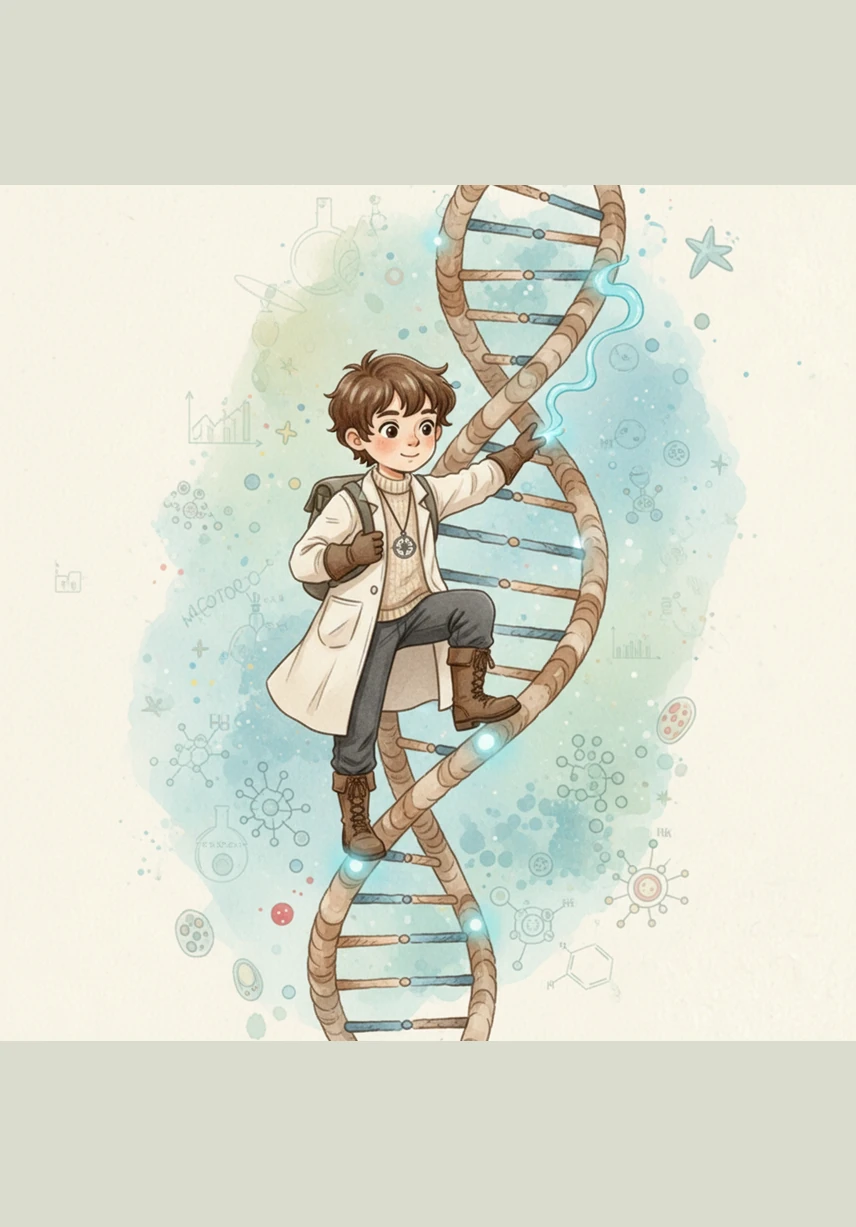
Leo zooms in even further to see a beautiful, shimmering twisted ladder called DNA glowing with a soft light. This double helix structure is the amazing molecule that stores every bit of genetic information for every creature on Earth.
On the rungs of the DNA ladder, Leo notices four colorful shapes labeled A, T, C, and G that snap together in perfect pairs. These nitrogen bases form a secret code that tells the body exactly how to build proteins and function every day.
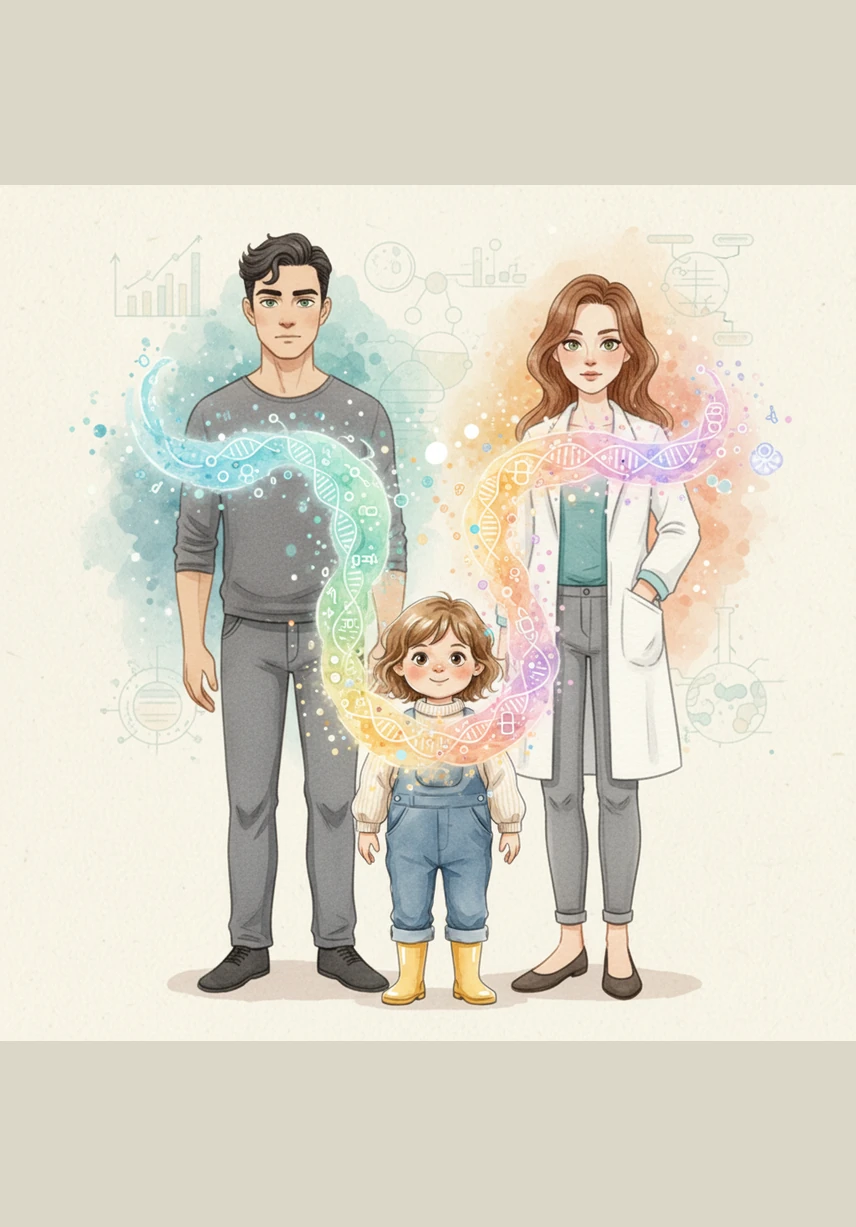
Leo watches a glowing stream of genetic information flowing from two parents to their child, creating a brand-new map of life. He realizes that he is a perfect masterpiece made from exactly half of his mother’s and half of his father’s instructions.
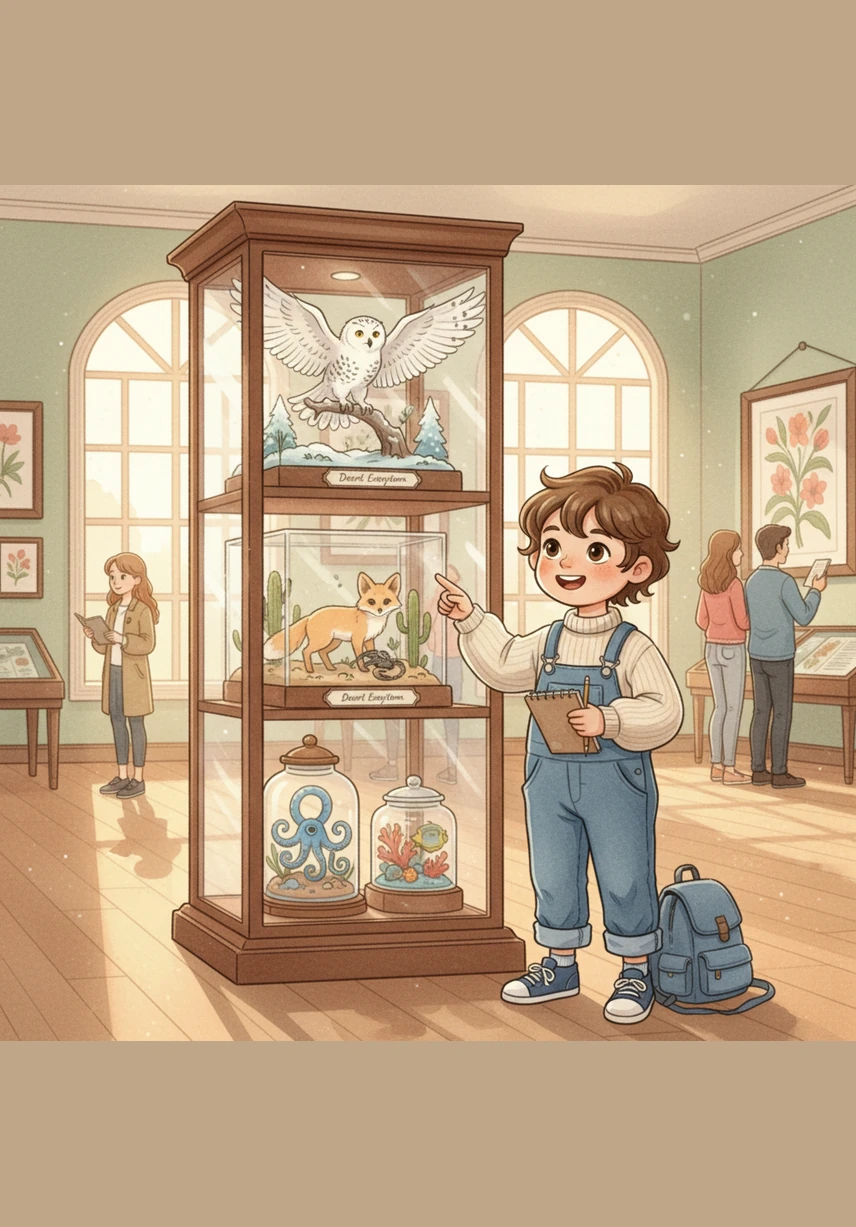
In a vibrant gallery of nature, Leo compares the traits of different animals, from a tall giraffe to a tiny fruit fly with only eight chromosomes. He learns that while every creature has a different number of chromosomes, the language of DNA is the universal code for all life.
Leo experiments with glowing 'dominant' and 'recessive' blocks, seeing how a strong brown-eye gene can mask a quiet blue-eye gene. He understands that some instructions are louder than others, which explains why family members look both similar and different.
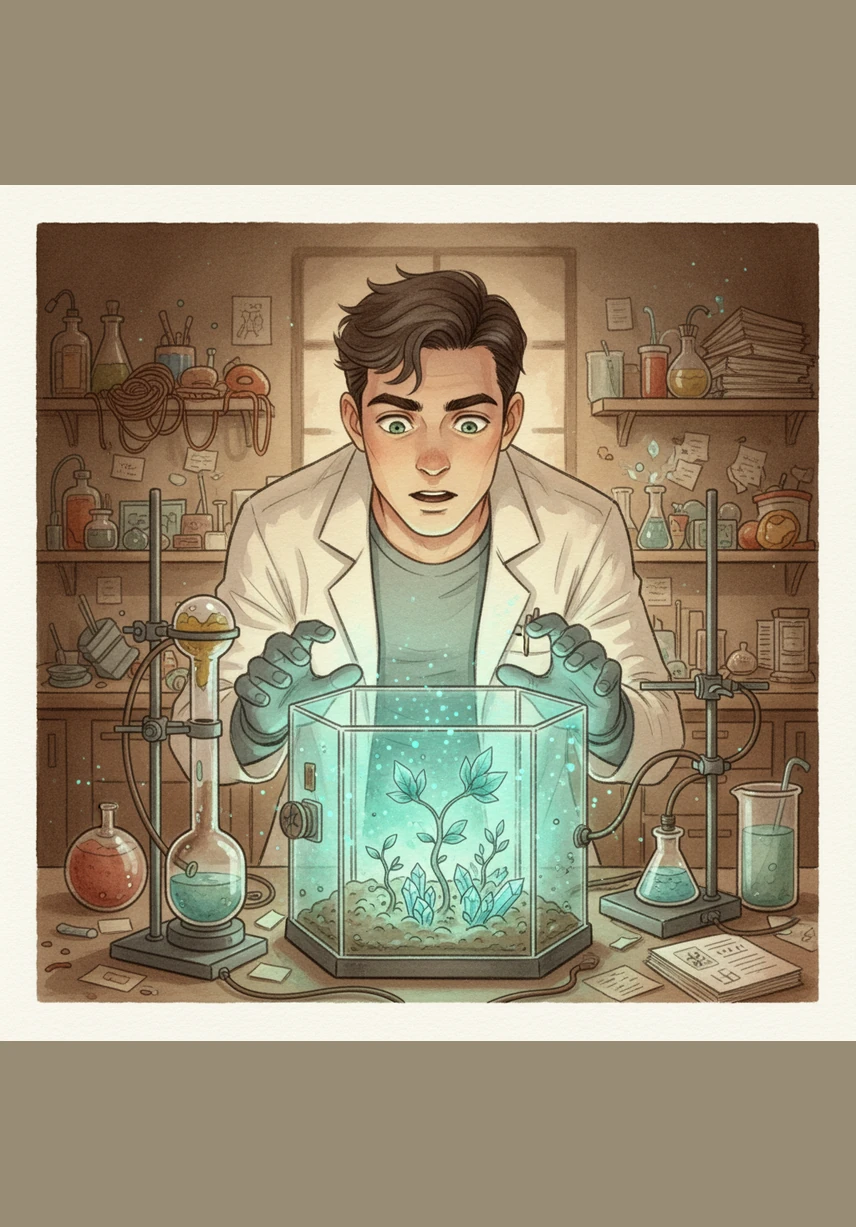
Suddenly, Leo spots a small, sparkling change in a genetic sequence, a tiny variation called a mutation that creates a brand-new trait. He learns that these small changes are the reason why nature is so diverse and how living things adapt to their environments.
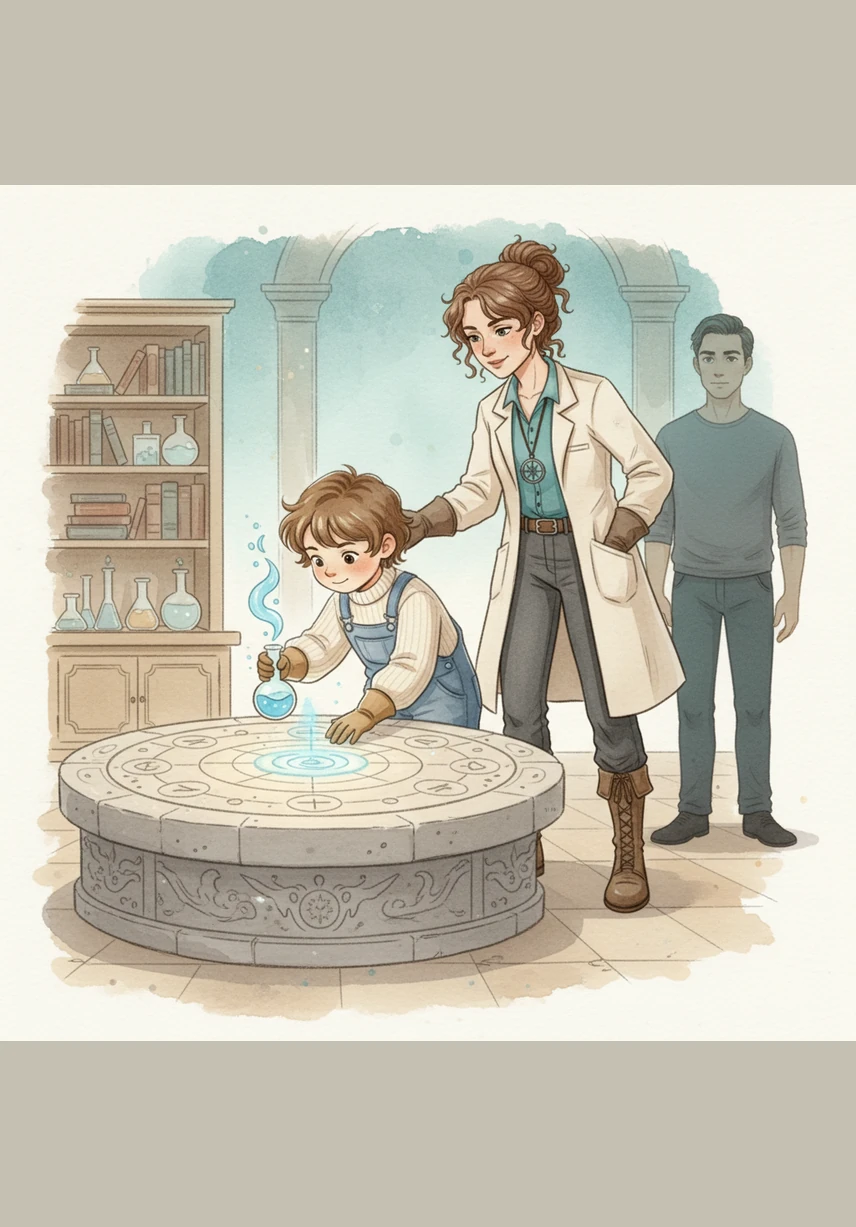
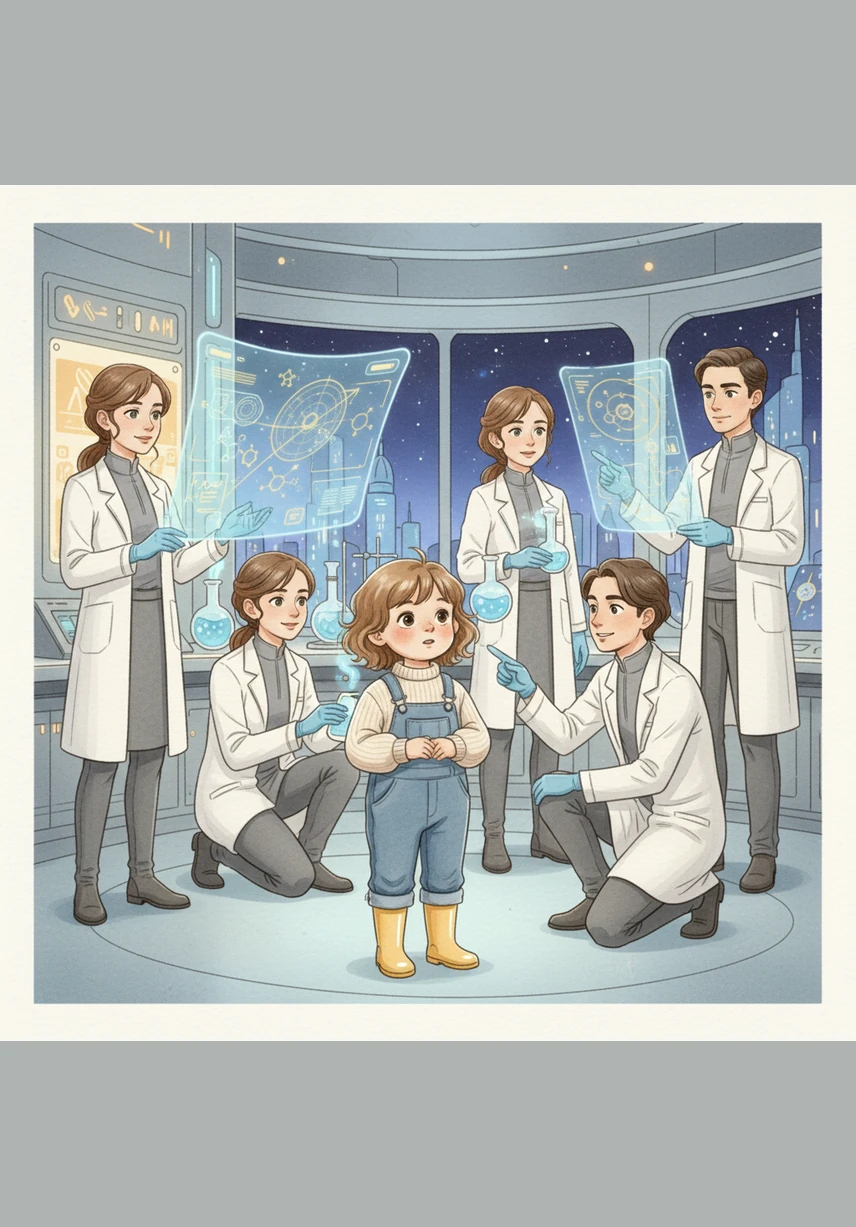
Leo visits a high-tech futuristic lab where scientists use genetic maps to solve mysteries and heal diseases. He sees how understanding our blueprint helps doctors create special medicines and learn how humans have evolved over millions of years.
Back in his garden, Leo looks at the trees, the birds, and his own hands with a sense of wonder and connection. He feels proud to be part of the great story of life, written in the tiny, powerful, and beautiful language of genes.
生成提示词(登录后查看具体 Prompt)
The Blueprint of Life: Understanding Genes Introduction Genes are one of the most important parts of all living organisms. They contain the instructions that control how living things grow, develop, and function. From the color of our eyes to the shape of our nose, many characteristics are determined by genes. Genes are made of DNA and are passed from parents to their children, which is why family members often share similar traits. Understanding genes helps scientists learn about heredity, diseases, and how living things evolve over time. What Are Genes? Genes are small sections of DNA that contain instructions for building proteins. These proteins control many functions in the body and help determine traits such as eye color, hair color, and height. Genes act like a biological instruction manual that tells cells what to do. Genes are located on structures called chromosomes inside the nucleus of cells. Humans have 23 pairs of chromosomes, meaning a total of 46 chromosomes in each cell. Each chromosome carries hundreds or even thousands of genes. Every person inherits genes from their parents. Half of a person’s genes come from their mother and the other half come from their father. This combination of genes creates unique characteristics in each individual. DNA: The Molecule That Carries Genes DNA, which stands for Deoxyribonucleic Acid, is the molecule that stores genetic information in living organisms. DNA has a unique structure called a double helix, which looks like a twisted ladder. The sides of the ladder are made of sugar and phosphate molecules, while the rungs are made of pairs of nitrogen bases. These bases are: Adenine (A) Thymine (T) Cytosine (C) Guanine (G) These bases pair in a specific way: A pairs with T, and C pairs with G. The order of these bases forms the genetic code that determines how proteins are made in the body. Chromosomes and Genes Chromosomes are long strands of DNA that contain many genes. They are located in the nucleus of a cell. Humans normally have 23 pairs of chromosomes, with one chromosome in each pair coming from each parent. The chromosomes carry the genetic information that determines inherited traits. For example, certain genes control physical traits such as hair color, skin tone, and height. Different organisms have different numbers of chromosomes. For example: Humans have 46 chromosomes Dogs have 78 chromosomes Fruit flies have 8 chromosomes How Genes Are Inherited Genes are passed from parents to their offspring through reproduction. During reproduction, each parent contributes half of the genetic information to the child. This process is known as heredity, which explains why children often resemble their parents. However, because genes combine in different ways, every individual is genetically unique. For example, a child may inherit their mother’s eye color and their father’s hair type. This mixture of genes creates variation among individuals. Dominant and Recessive Genes Some genes are stronger than others. These are known as dominant and recessive genes. A dominant gene is a gene that shows its effect even if only one copy is present. A recessive gene only shows its effect when two copies are present. For example: Brown eyes are usually dominant. Blue eyes are recessive. If a person inherits one brown-eye gene and one blue-eye gene, the dominant brown-eye gene will determine the eye color. Scientists often use Punnett squares to predict how traits may be inherited from parents. Mutations and Genetic Variation Sometimes changes occur in genes. These changes are called mutations. A mutation is a change in the DNA sequence that can affect how a gene functions. Mutations can occur naturally or be caused by environmental factors such as radiation or chemicals. Some mutations have no effect, while others can lead to genetic disorders or new traits. Mutations also play an important role in genetic variation, which is the reason why individuals within a species are not exactly the same. Genetic variation helps populations adapt and survive in changing environments. Importance of Genes in Science and Medicine Genes play a major role in modern science and medicine. Scientists study genes to better understand how the body works and how diseases develop. Genetic research has helped scientists: Identify causes of inherited diseases Develop new medical treatments Understand how organisms evolve Genetic testing can also help doctors determine whether a person may be at risk for certain inherited conditions. Conclusion In conclusion, genes are the basic units of heredity that control the characteristics of living organisms. They are made of DNA and are found on chromosomes inside cells. Genes are passed from parents to their children and determine many physical and biological traits. By studying genes, scientists gain a deeper understanding of life, heredity, and the development of diseases. The study of genetics continues to