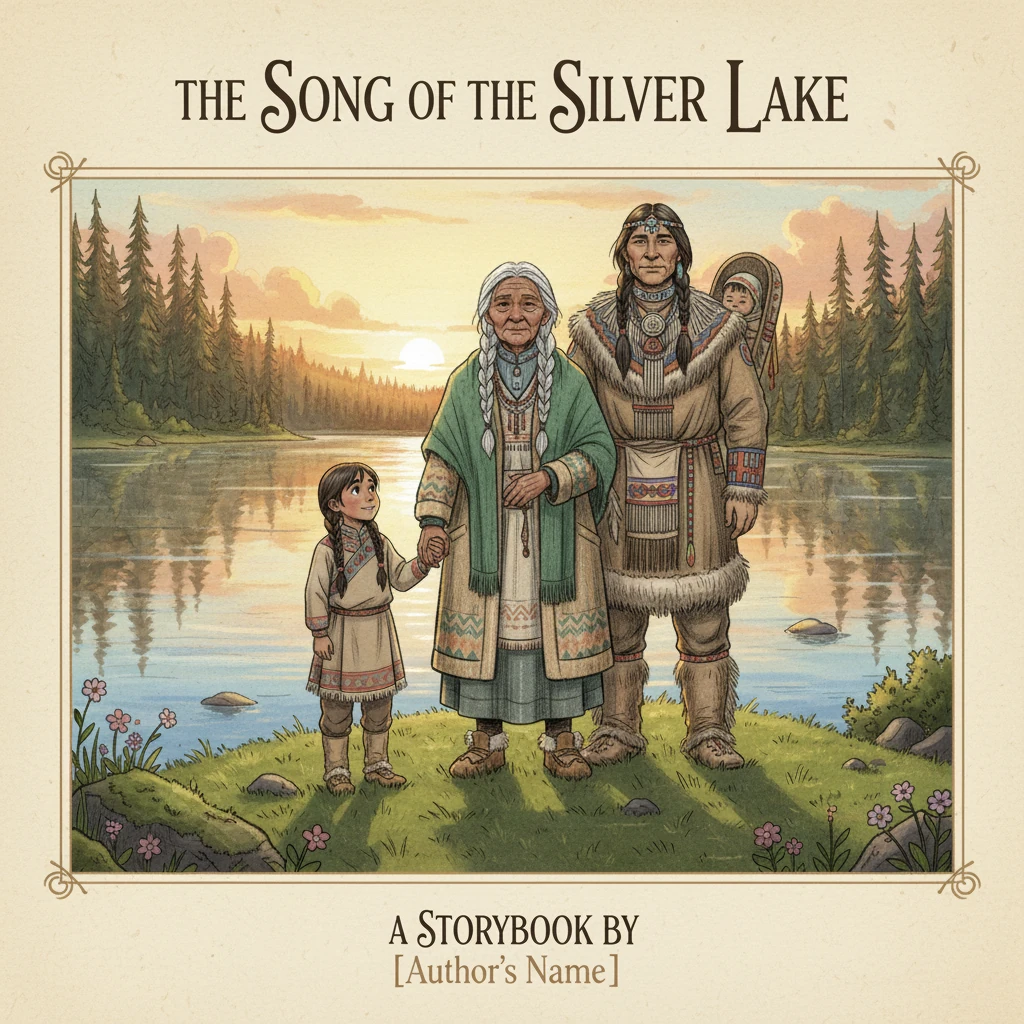
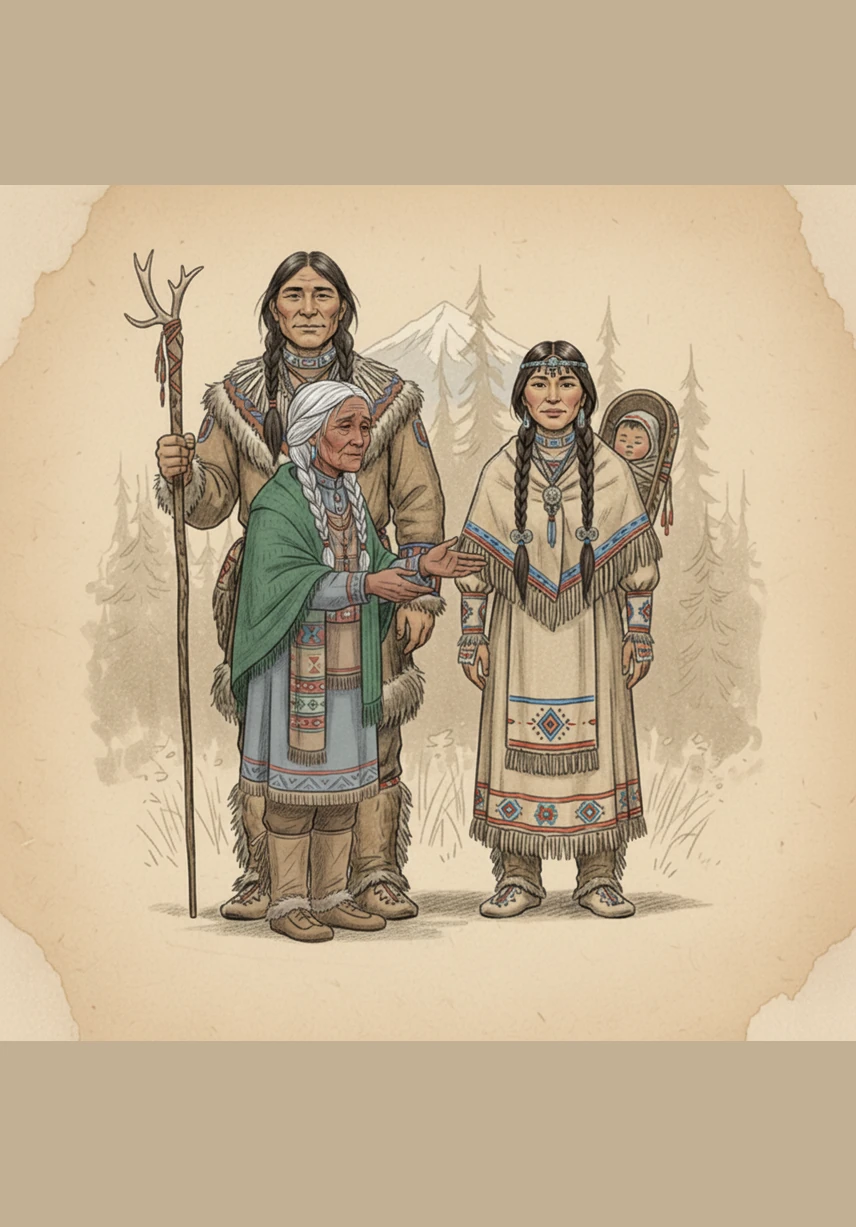
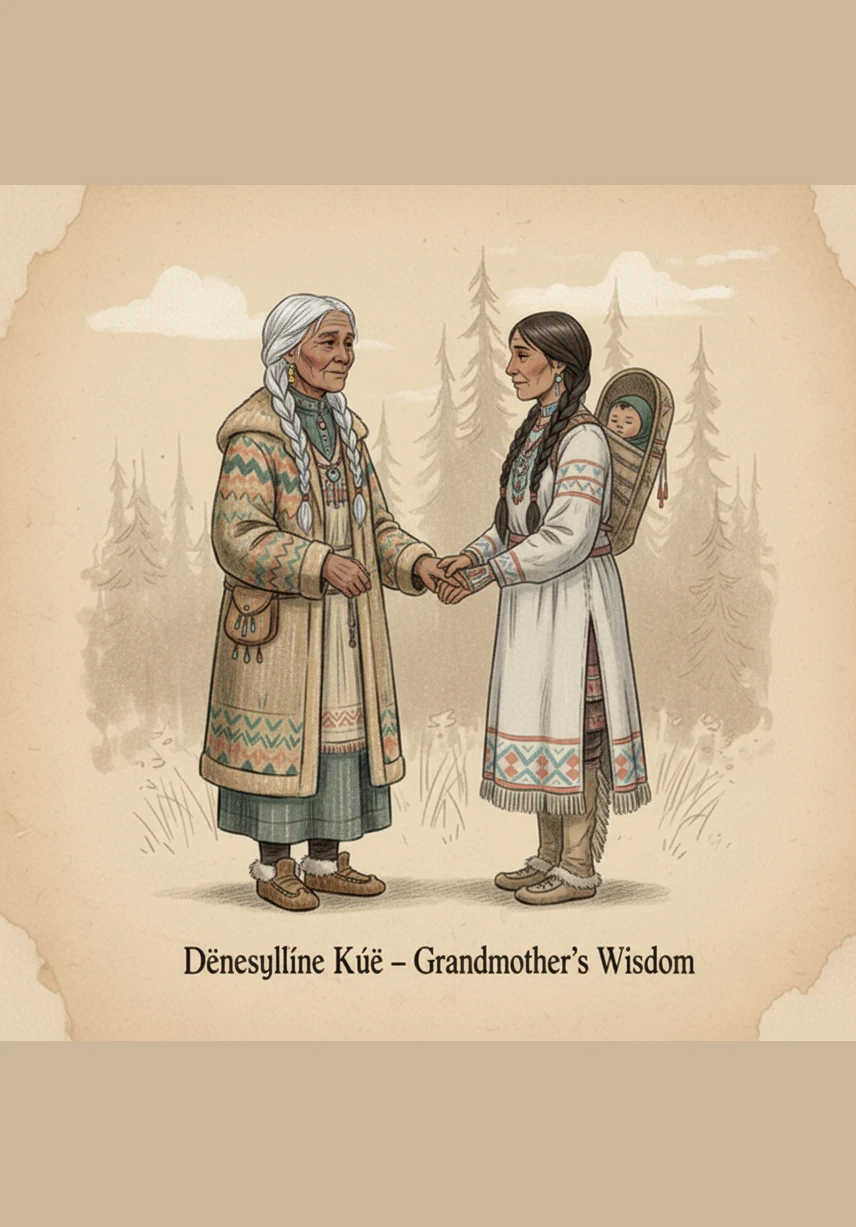
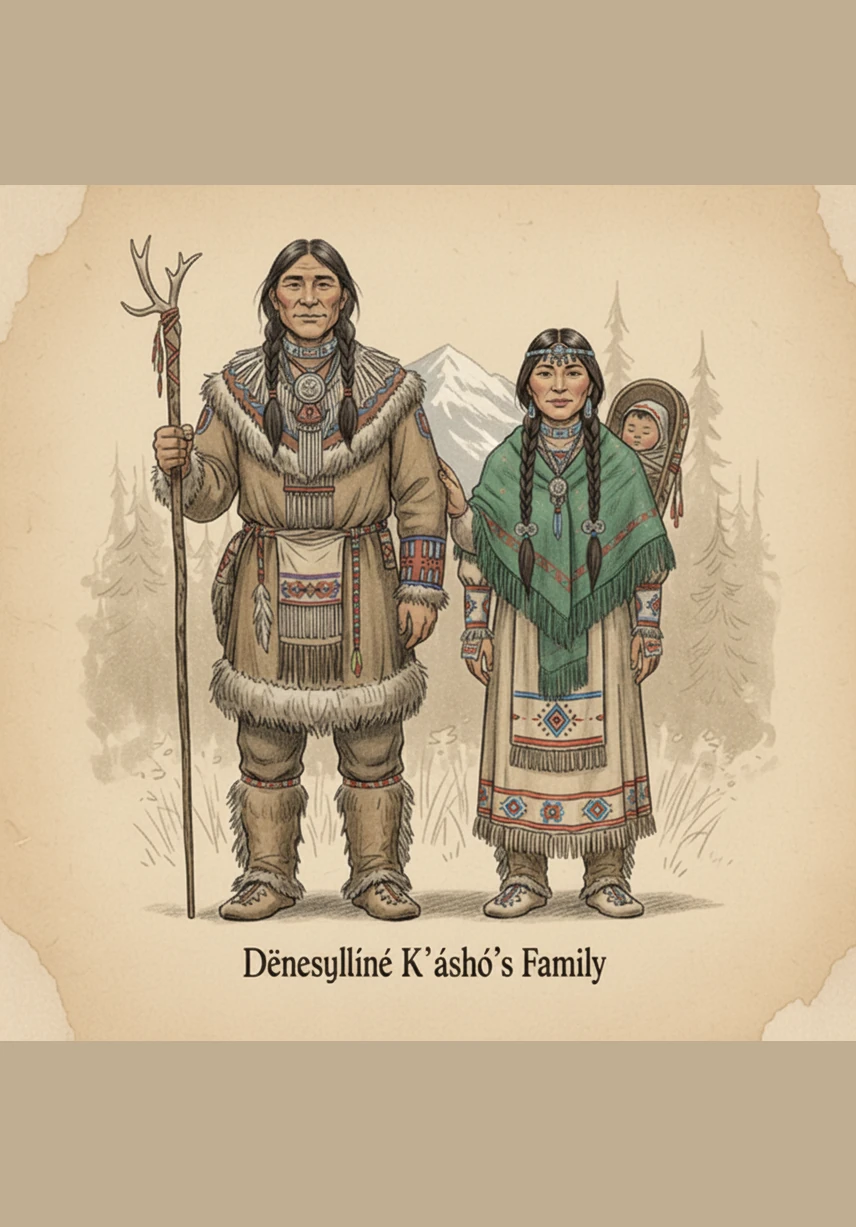
Step into a world of gentle wisdom and cultural beauty where the land is the greatest teacher. This heart-centered story follows young T’änis through a typical school day rooted in Dënesųłiné values, celebrating a life of belonging, ancestral language, and the unbreakable bond between family and the earth.
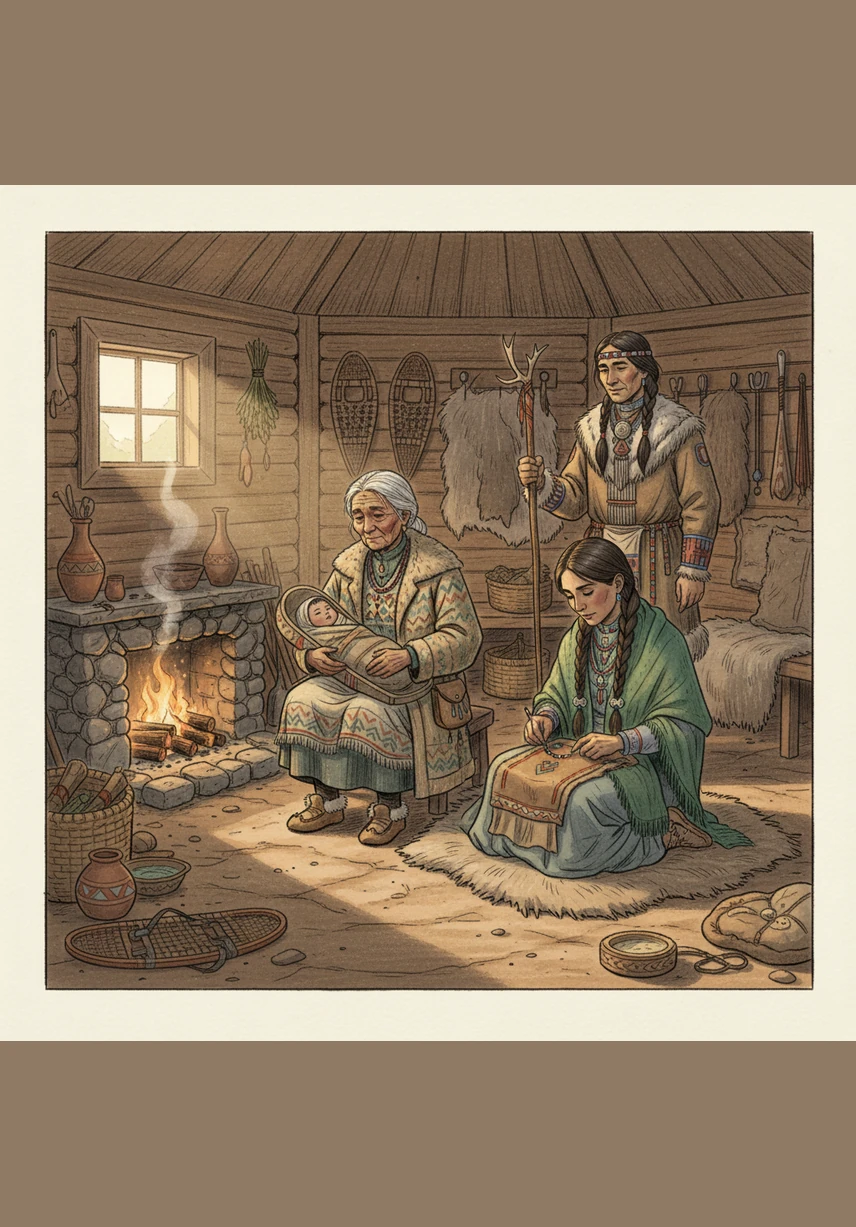
T’änis wakes as the first light touches the surface of Cold Lake, turning the water to a shimmering silver. Grandmother is already by the hearth, the soft scent of spruce needles and morning tea filling the small, warm house with a sense of peace.
They eat together in a comfortable silence that says more than words ever could. T’änis watches Grandmother’s steady hands as she packs a small pouch of dried meat, learning the rhythm of care and the quiet importance of preparation for the day ahead.
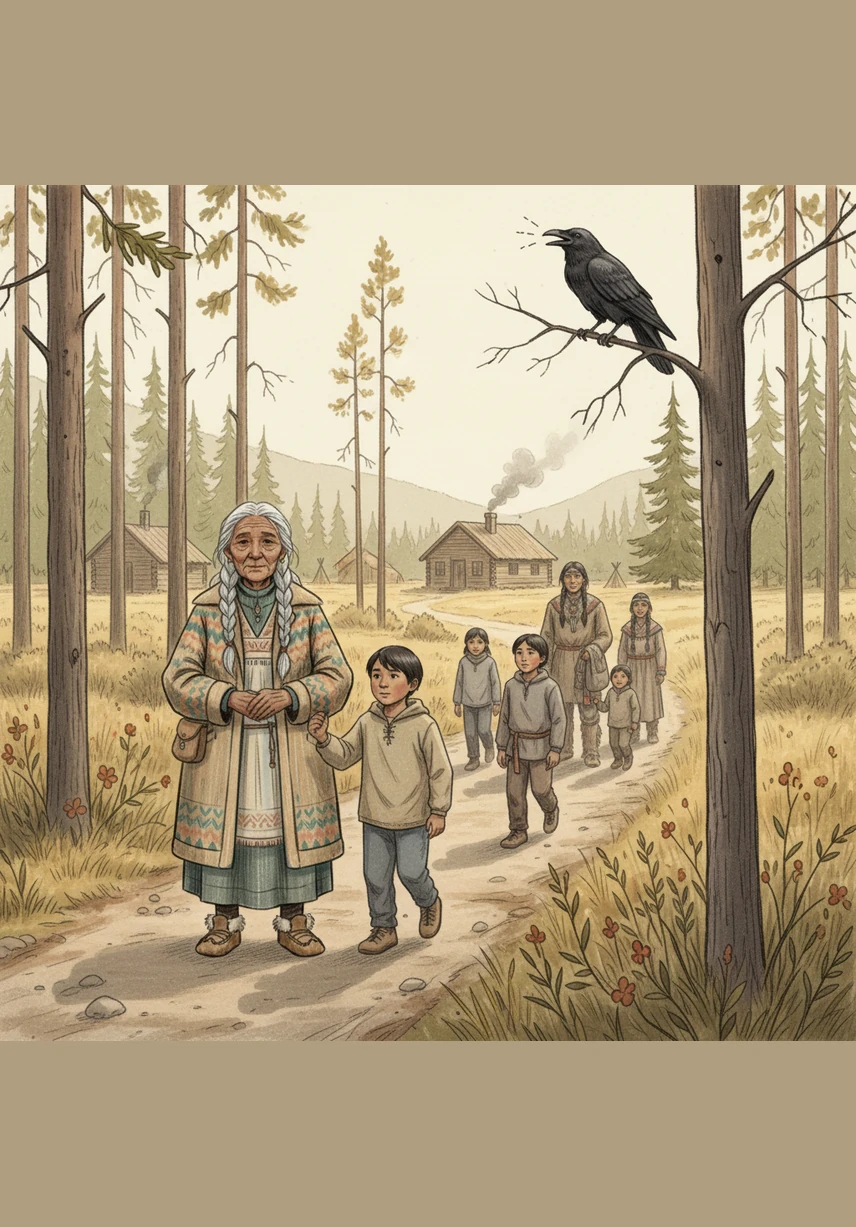
The walk to the village school is a lesson in itself, with the crisp morning air carrying the ancient messages of the wind. Every rustle in the willow bushes and every distant call of the raven is a greeting from the land that knows her name and her family's history.
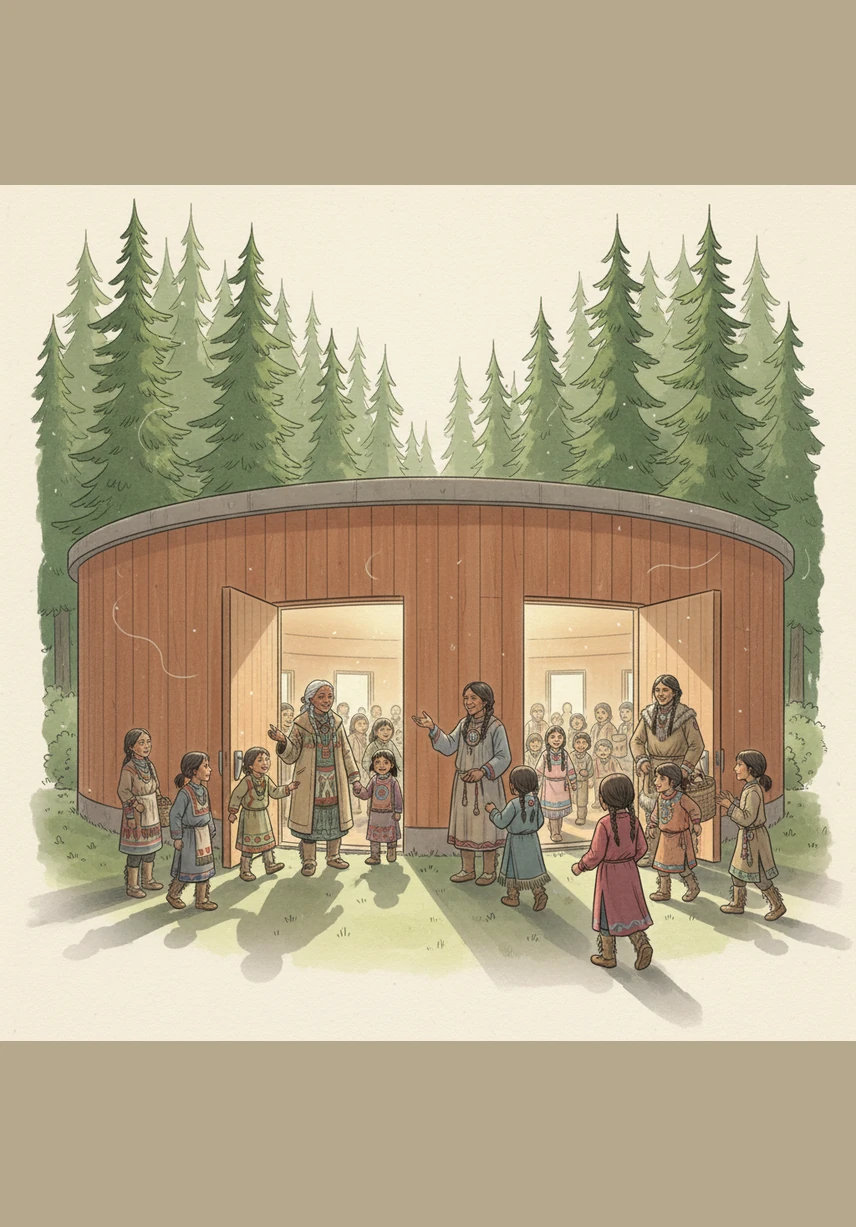
The school house is a beautiful circle of cedar and light, where the doors stay open to the scent of the surrounding pines. There is no rush here, only the gentle hum of children gathering like birds returning to a familiar and safe branch.
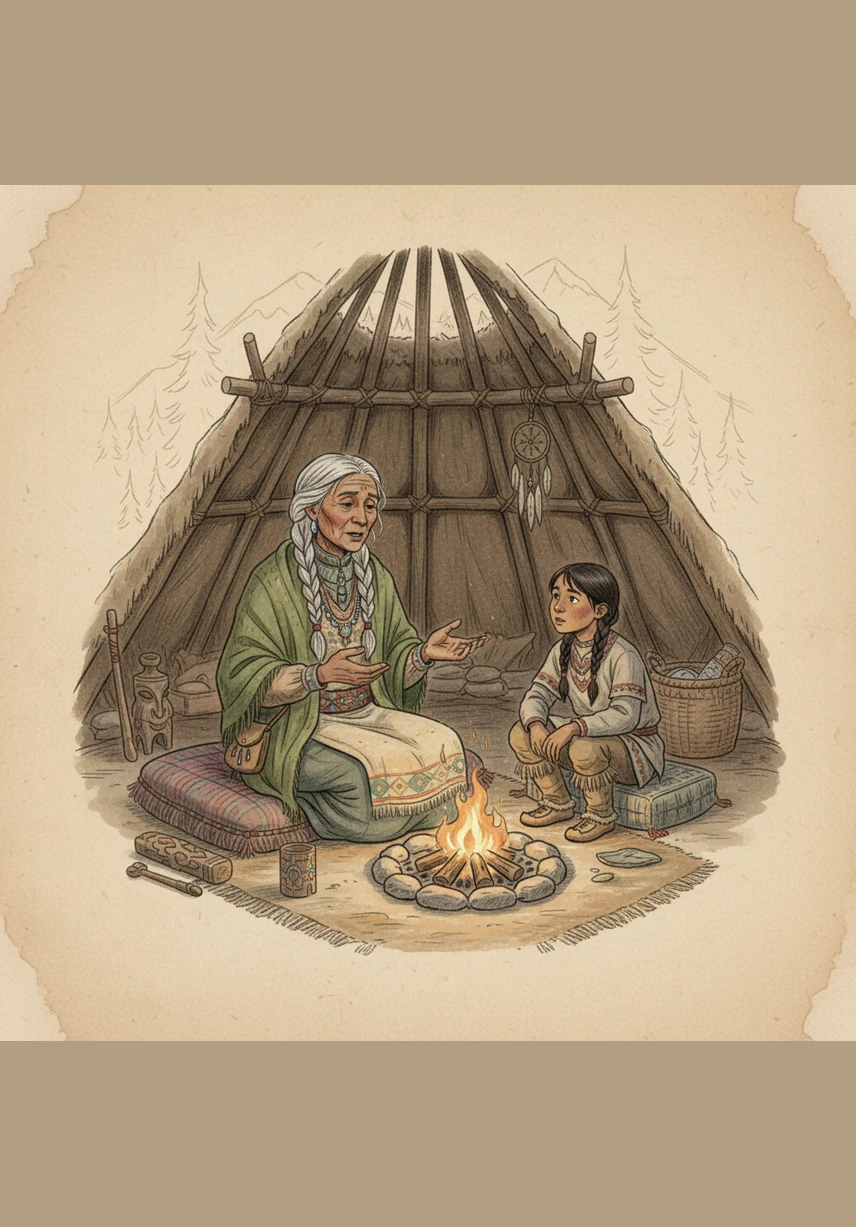
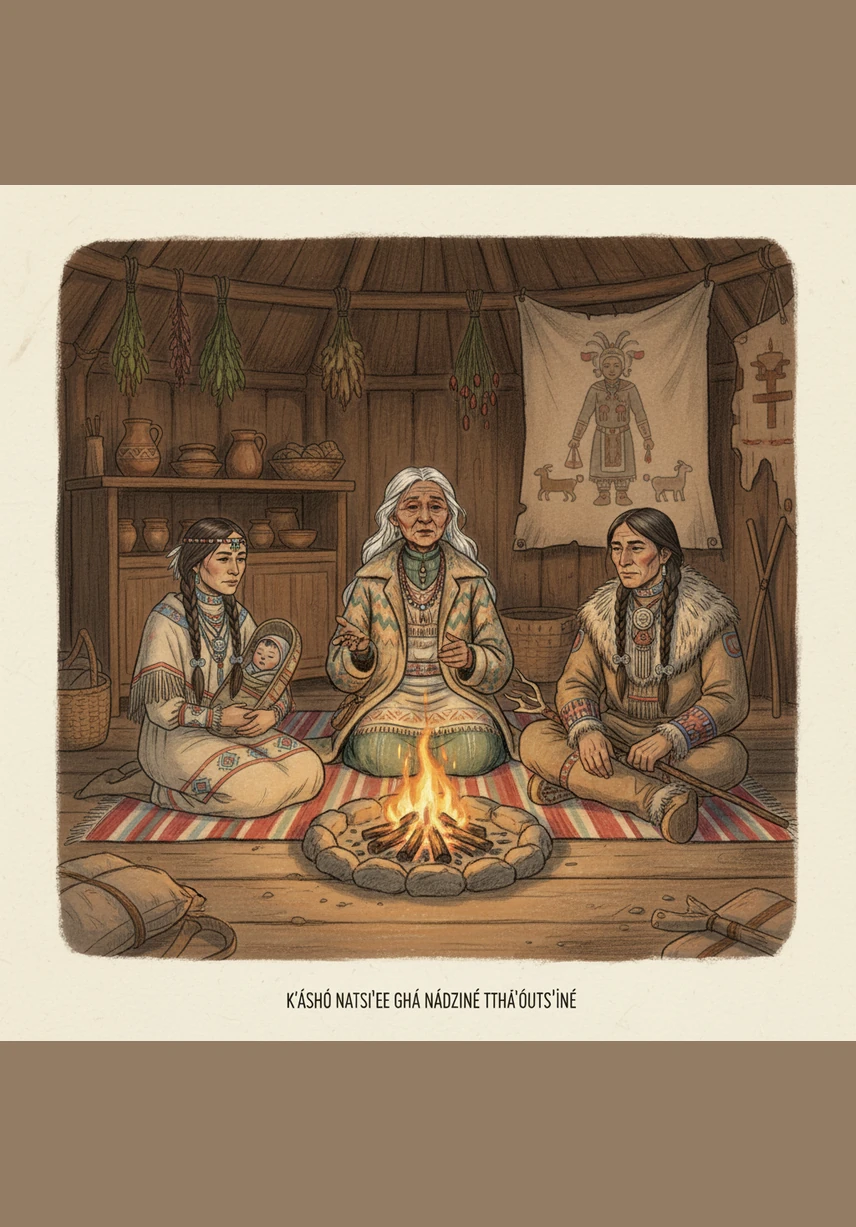
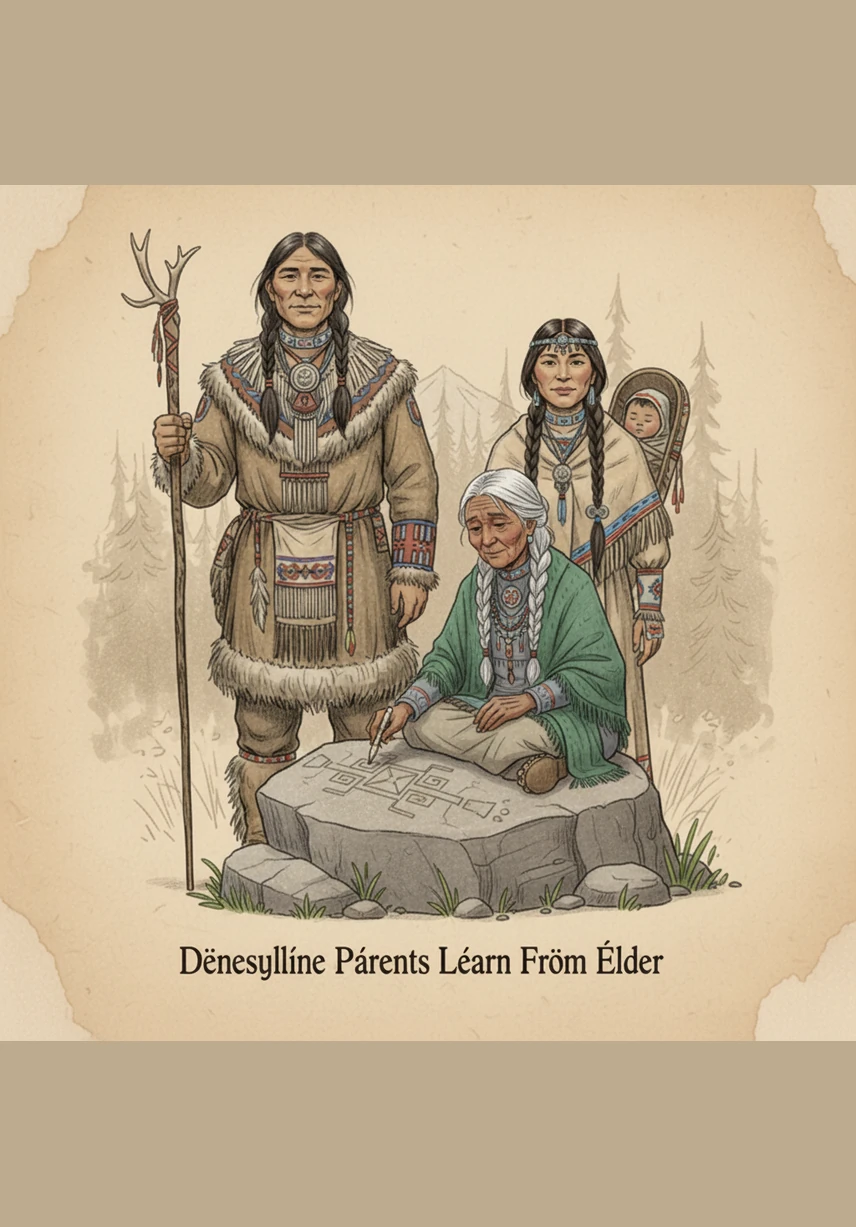
An Elder sits in the center of the room, her voice a low, steady river flowing through the history of the stars and the seasons. T’änis listens with her whole heart, understanding that these stories are the living maps of who she is and where her people come from.
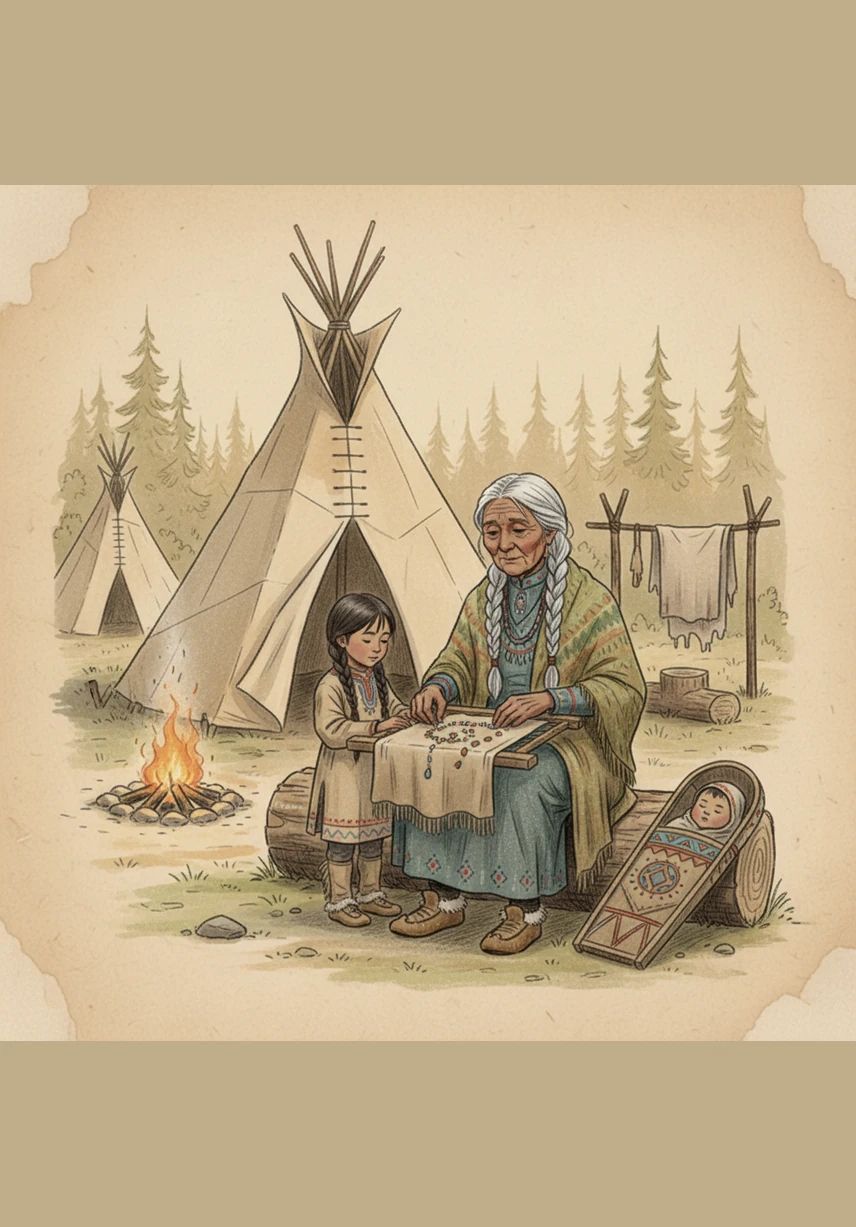
During the midday break, the children gather around a long cedar table to practice the art of patient hands. T’änis focuses on the delicate work of sorting beads by color, feeling the connection between her small fingers and the patterns her ancestors once dreamed into being.
In the afternoon, the air is filled with the musical rise and fall of the Dënesųłiné language spoken by young and old alike. T’änis laughs with her friends as they practice the names of the plants that heal, their voices weaving a tapestry of living breath and ancient sound.
The classroom moves to the shore, where the water laps against the stones in a steady, comforting heartbeat. They learn to watch the ripples and the shifting clouds, understanding that the lake is a powerful teacher that requires humility and a quiet spirit.
As the sun begins to dip towards the trees, T’änis walks home with a heart full of the day’s quiet wisdom. She sees her father returning from the woods and they share a nod of recognition, two parts of a whole family rooted deeply in the same earth.
Under the soft glow of the moon, Grandmother tucks the blankets close and whispers a prayer of gratitude to the spirits of the land. T’änis drifts to sleep in the safety of her home, knowing that tomorrow is another day to grow, to listen, and to truly belong.
生成提示词(登录后查看具体 Prompt)
Write a children’s story in a gentle, spiritual, and heart-centered storytelling tone inspired by a Dënesųłiné (Cold Lake First Nations) grandmother perspective. The story should describe a typical school day from childhood at age 7 or 8 in a world where Indigenous identity, language, and family life were never disrupted by residential schools or colonial prejudice. This is an imagined continuity scenario rooted in cultural respect, not historical trauma. **Critical constraints:** * Do NOT claim to be a real elder or present the narrator as an authentic cultural authority. This is a fictional, respectful storytelling voice inspired by Indigenous worldview. * Do NOT include residential schools, oppression, or trauma themes. The focus is on cultural continuity, belonging, and strength. * Avoid generic or pan-Indigenous language. Ground the story specifically in Dënesųłiné values where possible without fabricating sacred or ceremonial details. **Cultural grounding to include:** * Strong emphasis on land as a living teacher (Cold Lake environment, seasons, wind, water, animals) * Family structure and intergenerational learning (parents, grandparents, older siblings, community) * Learning through observation, silence, responsibility, and doing rather than formal instruction * Elders as quiet, respected knowledge holders whose presence carries meaning * Connection between school, home, and land as one continuous learning environment * Values such as humility, respect, sharing, honesty, and relational belonging **Tone and style:** * Written like a children’s picture book narrative * Soft, reflective, and emotionally resonant * Use simple but poetic language * Include sensory details (sound, temperature, light, movement) * Allow space and pauses in the storytelling, reflecting oral tradition pacing * Avoid overly polished or “storybook cliché” phrasing **Output goal:** Create a story that feels grounded, sincere, and spiritually aware, centered on belonging, identity, and connection, without romanticizing or flattening the culture.