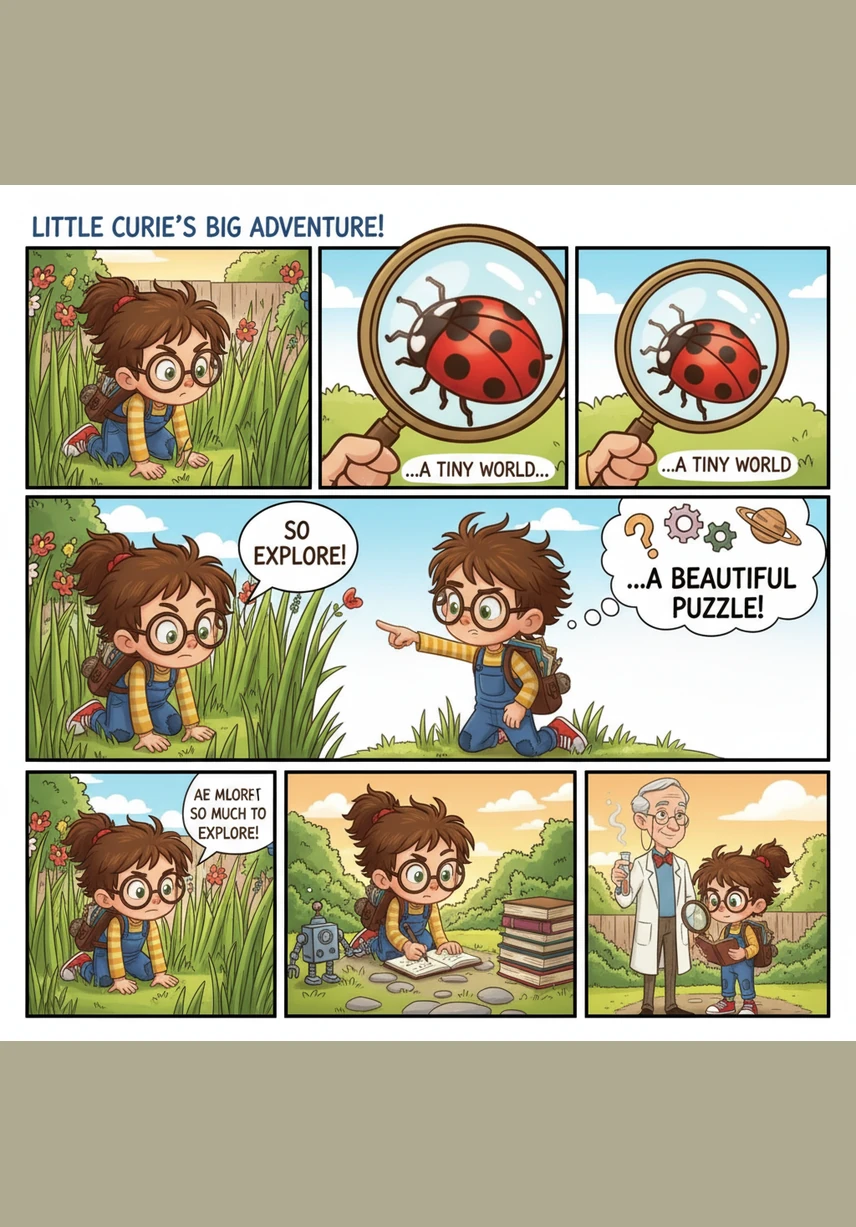
Embark on an inspiring journey with Curie as she discovers how the simple question 'why' can change the world. This beautifully illustrated educational story traces the history of human progress from Newton's apple to the frontiers of space, teaching children the vital balance between exploration and responsibility.
Little Curie crawls through the tall green grass of a backyard, magnifying glass in hand, examining the intricate patterns on a ladybug's wings. Everything in the world feels like a beautiful puzzle waiting to be solved by her observant eyes.
Under a vast, shimmering night sky, Curie points toward the glowing moon and asks her father why it changes shape every night. Her eyes sparkle with a natural desire to understand the mysteries of the universe and how the world works.
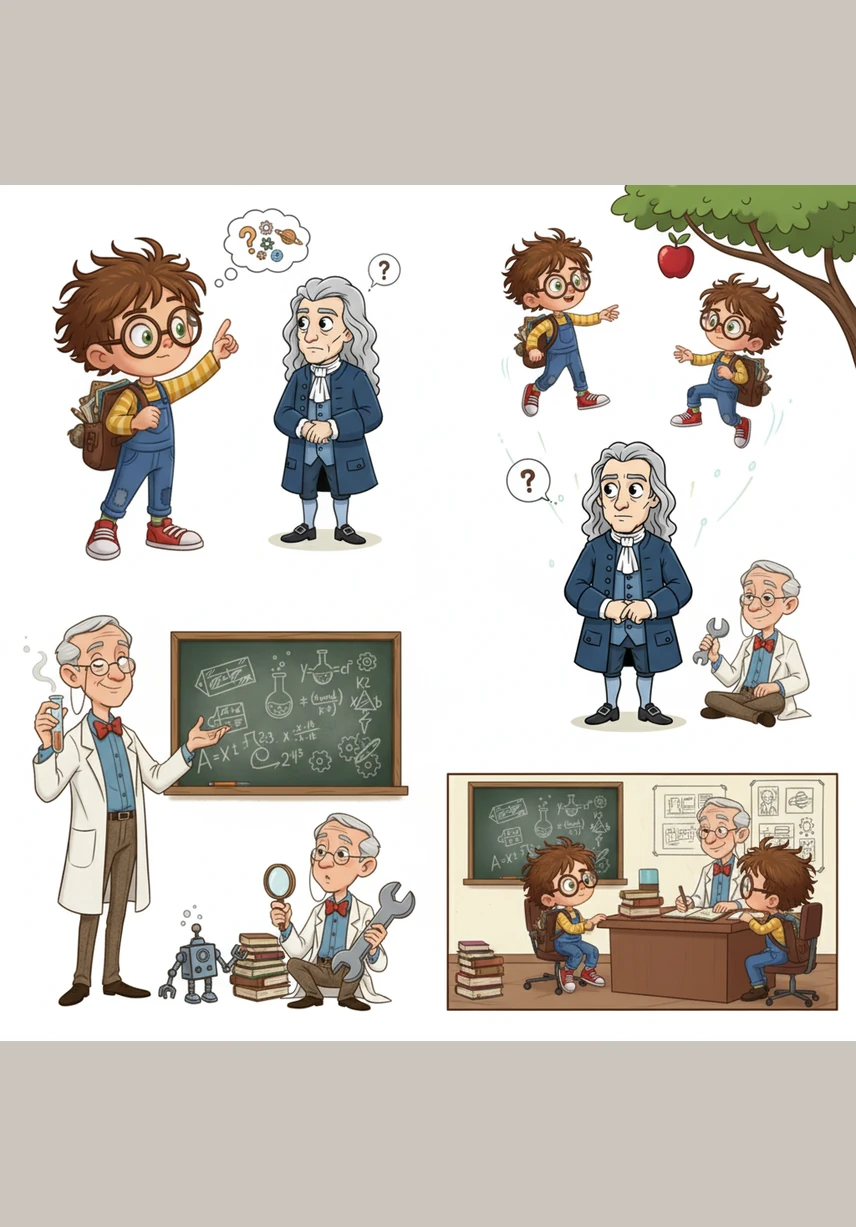
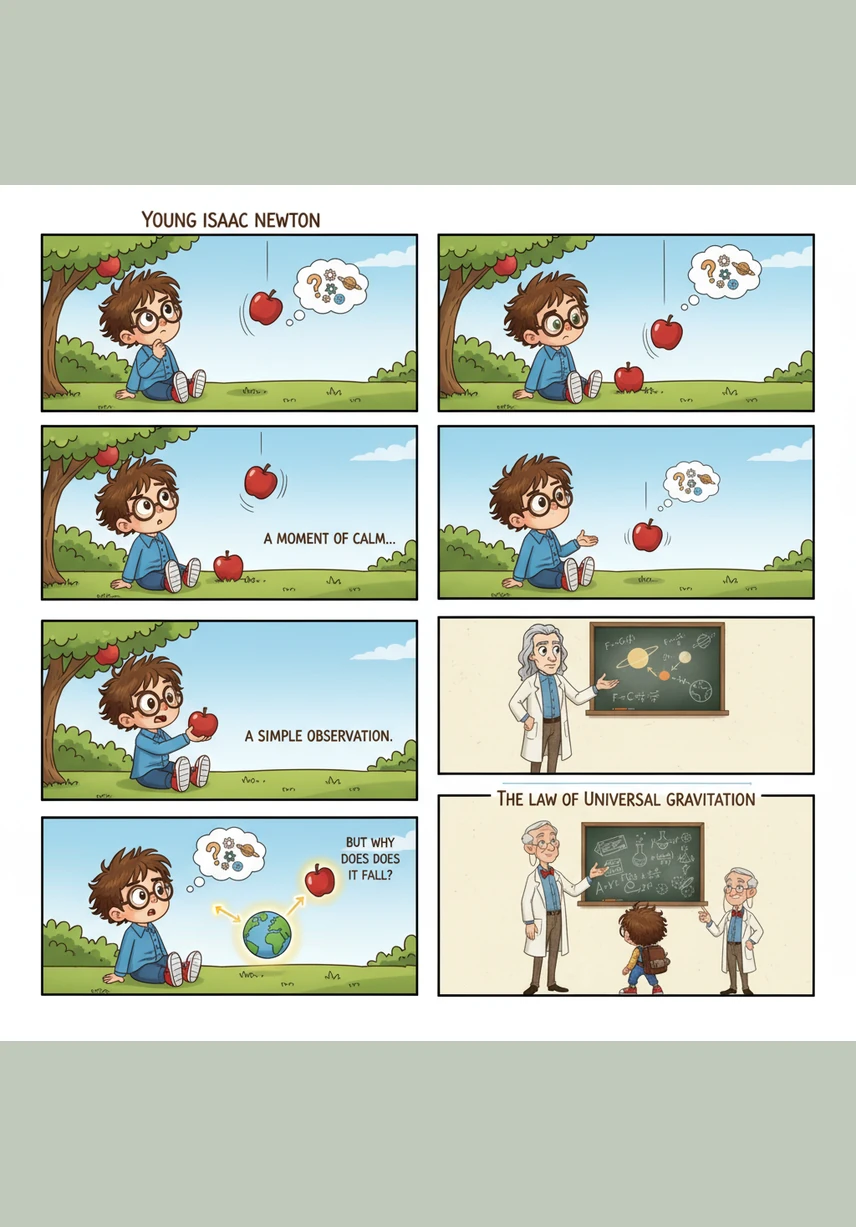
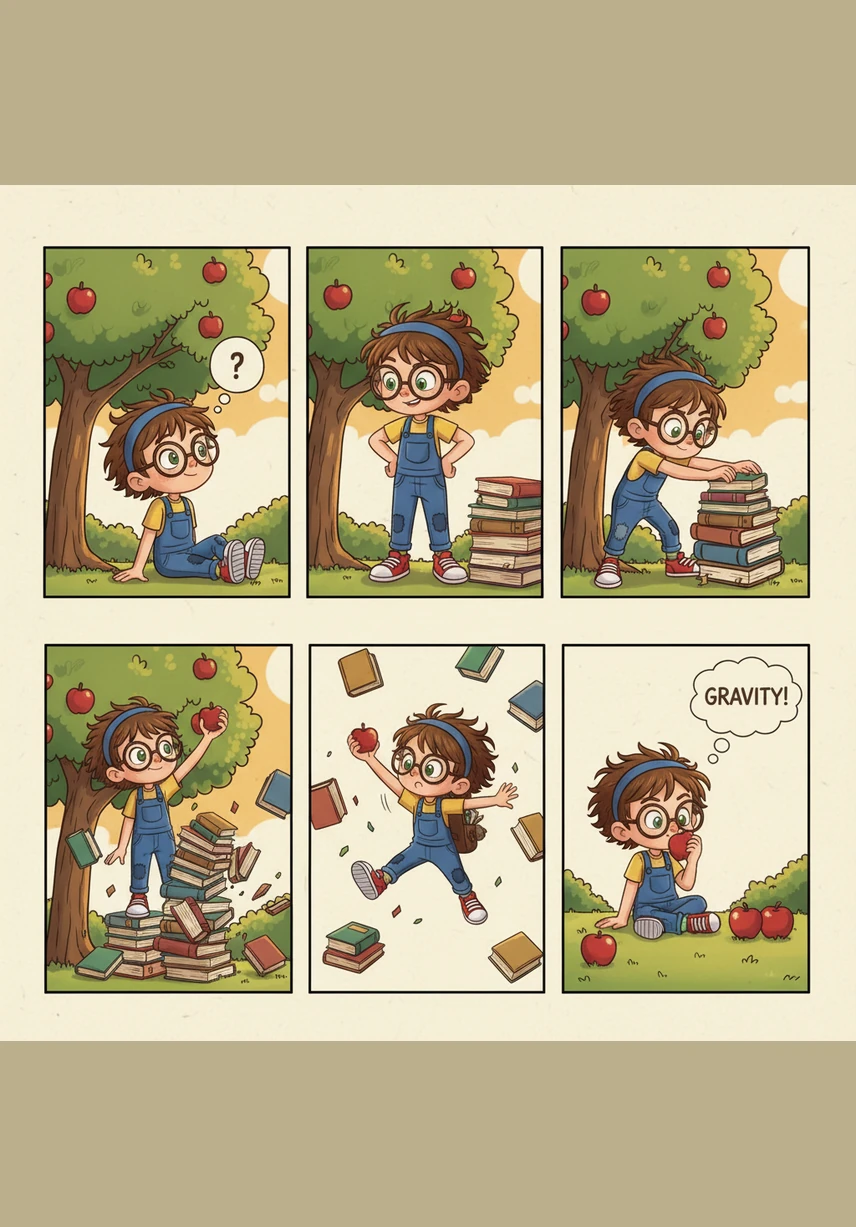
Long ago, a man named Isaac Newton sits quietly beneath the shade of a sturdy apple tree, lost in deep thought about the mechanics of nature. He wonders about the invisible forces that hold the stars and the earth in their places.
Suddenly, a bright red apple drops from a high branch and hits the ground with a soft thud, prompting Newton to ask exactly why it fell straight down. This simple question sparks a scientific breakthrough that changes the course of human history forever.
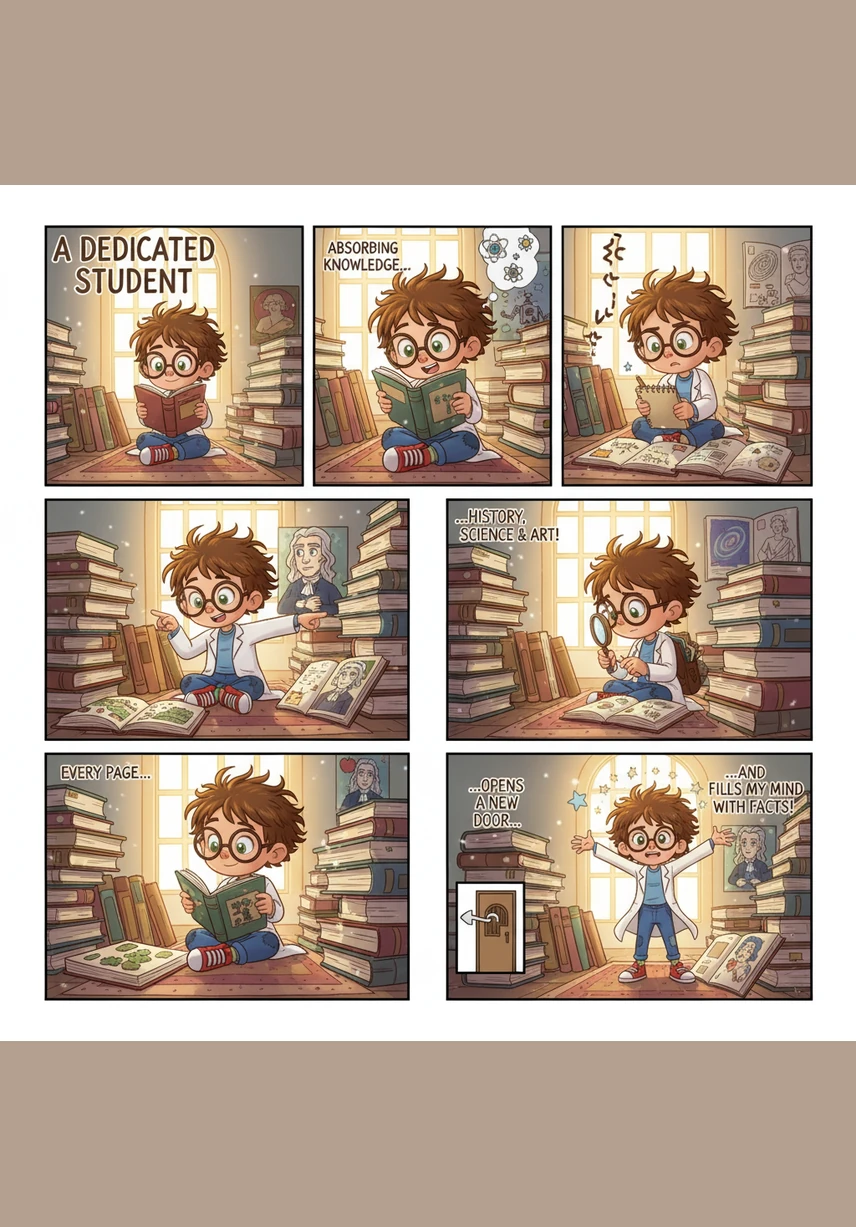
Now a dedicated student, Curie sits in a sunny library surrounded by tall stacks of books, eagerly absorbing knowledge about history, science, and art. Every page she turns opens a new door to a different perspective and fills her mind with valuable facts.
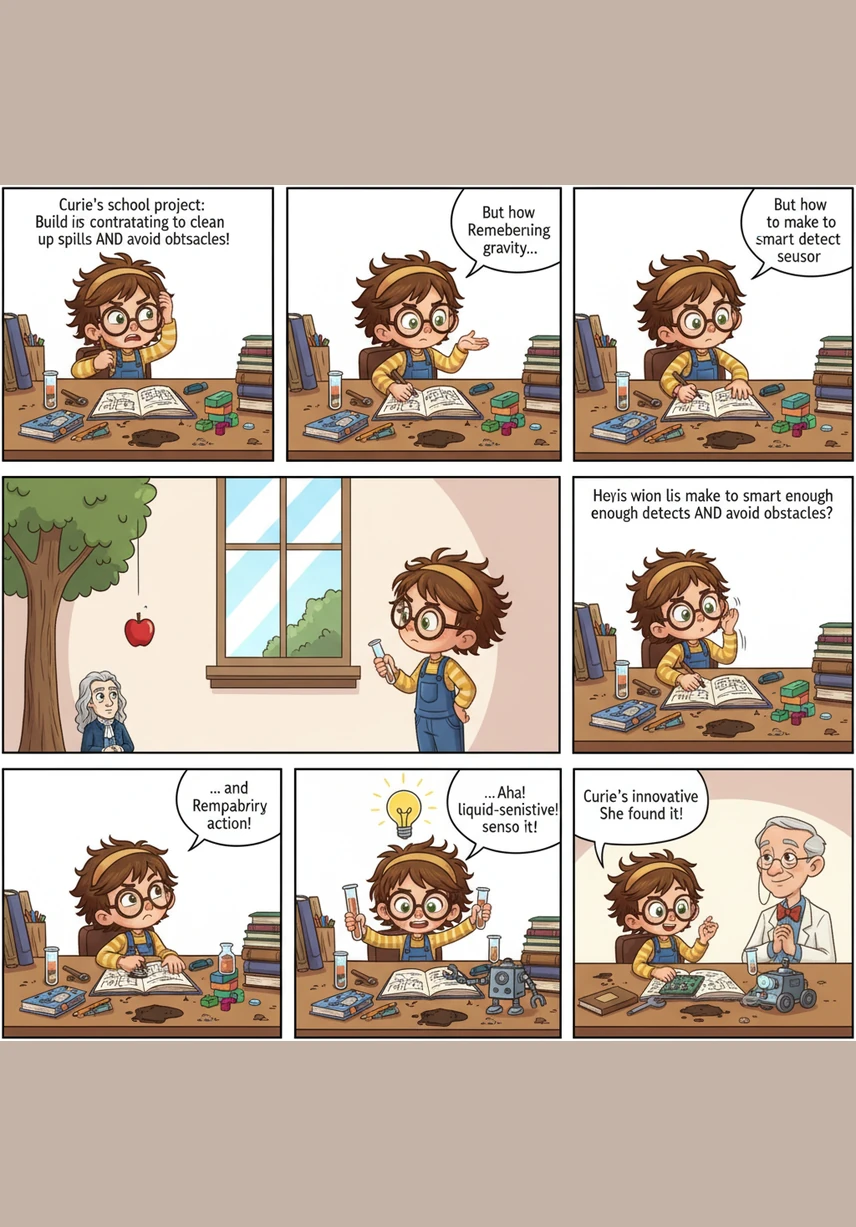
While working on a complex school project, a glowing lightbulb appears above Curie's head as she connects two separate ideas to solve a difficult problem. Her curiosity helps her think critically and experiment with bold, innovative solutions that others might miss.
Curie stands before a heavy, mysterious door in a dark hallway with a sign that reads 'Curiosity killed the cat,' feeling a strong temptation to peek inside. She begins to realize that not every secret is safe to uncover and that some paths can lead to unnecessary danger.
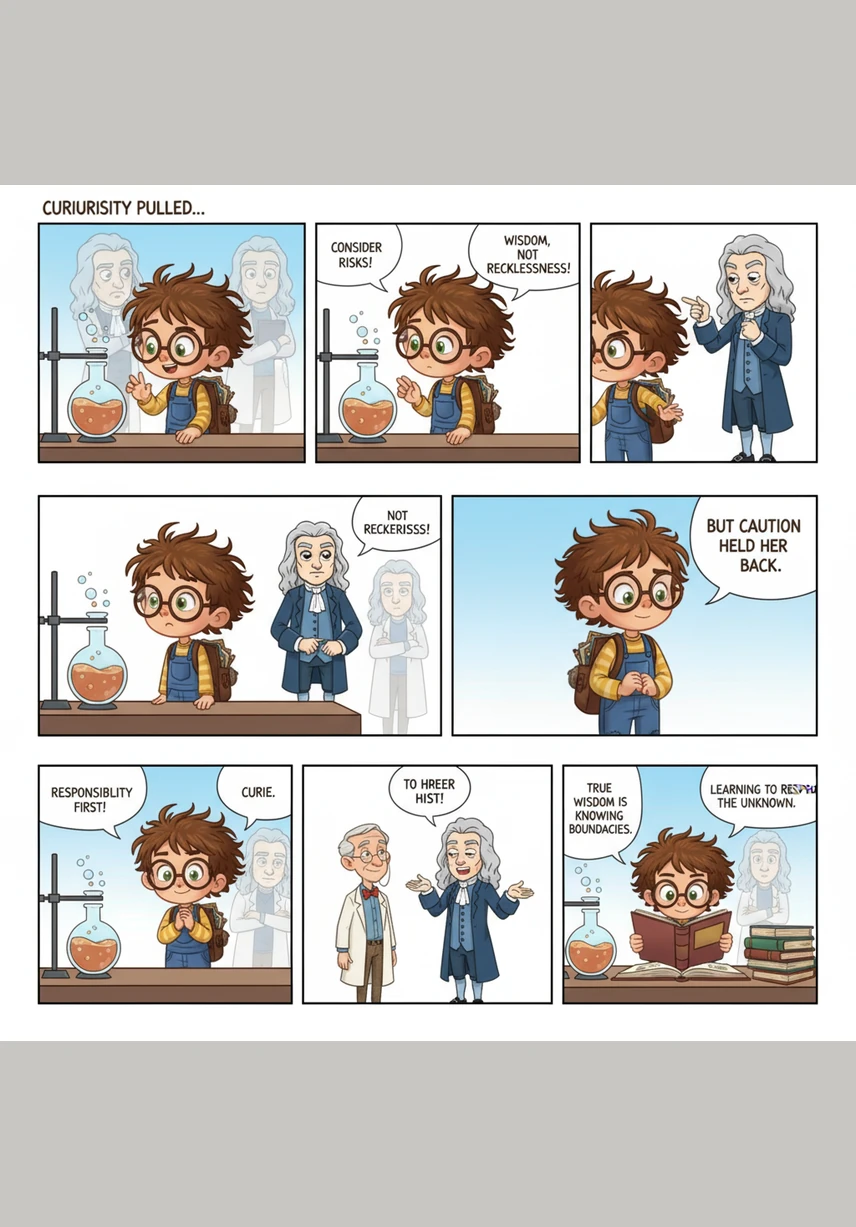
Pausing to reflect on the risks, Curie decides to use her good judgment and step back from the risky situation, choosing responsibility over reckless impulse. She understands that true wisdom involves knowing when to explore and when to respect personal boundaries.
Years later, Curie wears a sleek silver spacesuit as she stands on the bridge of a high-tech laboratory orbiting a distant, colorful planet. Her lifelong habit of asking questions and challenging existing ideas has led her to the very edge of human discovery and technological progress.
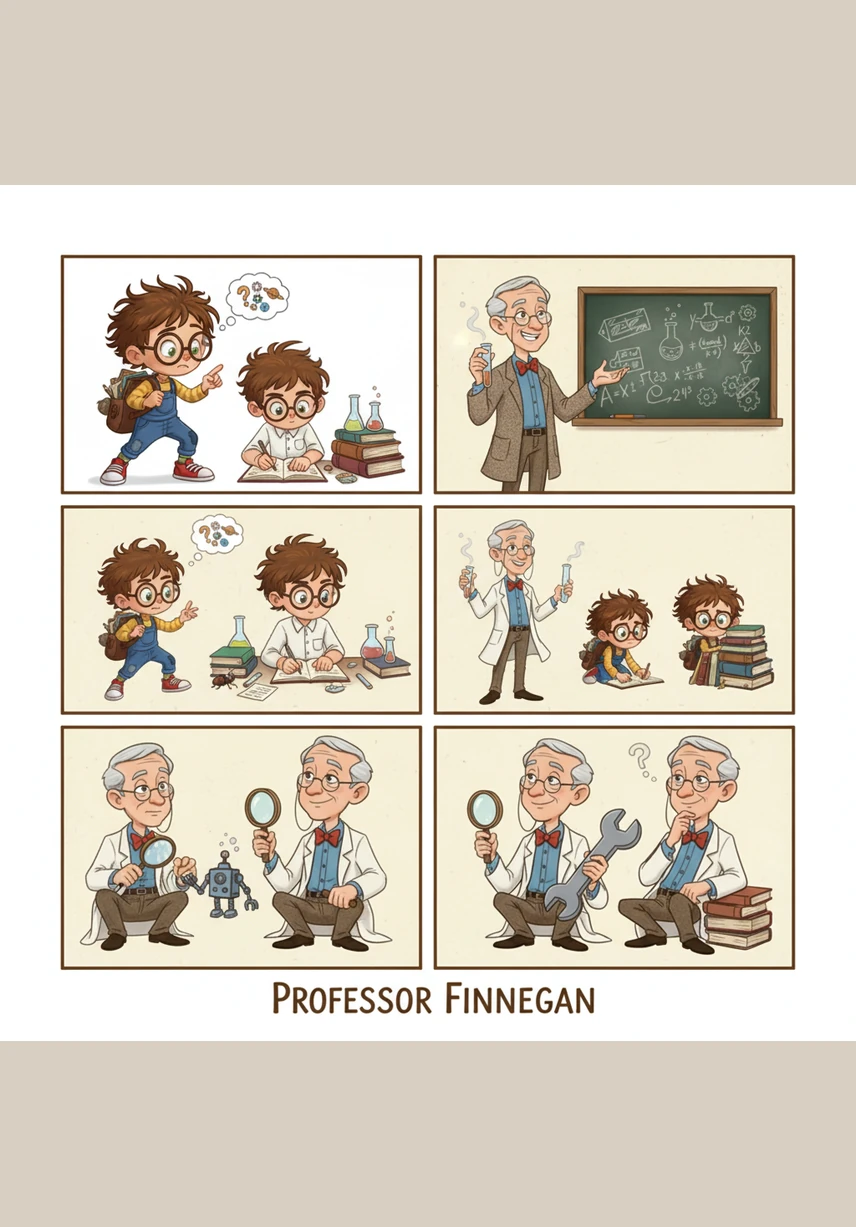
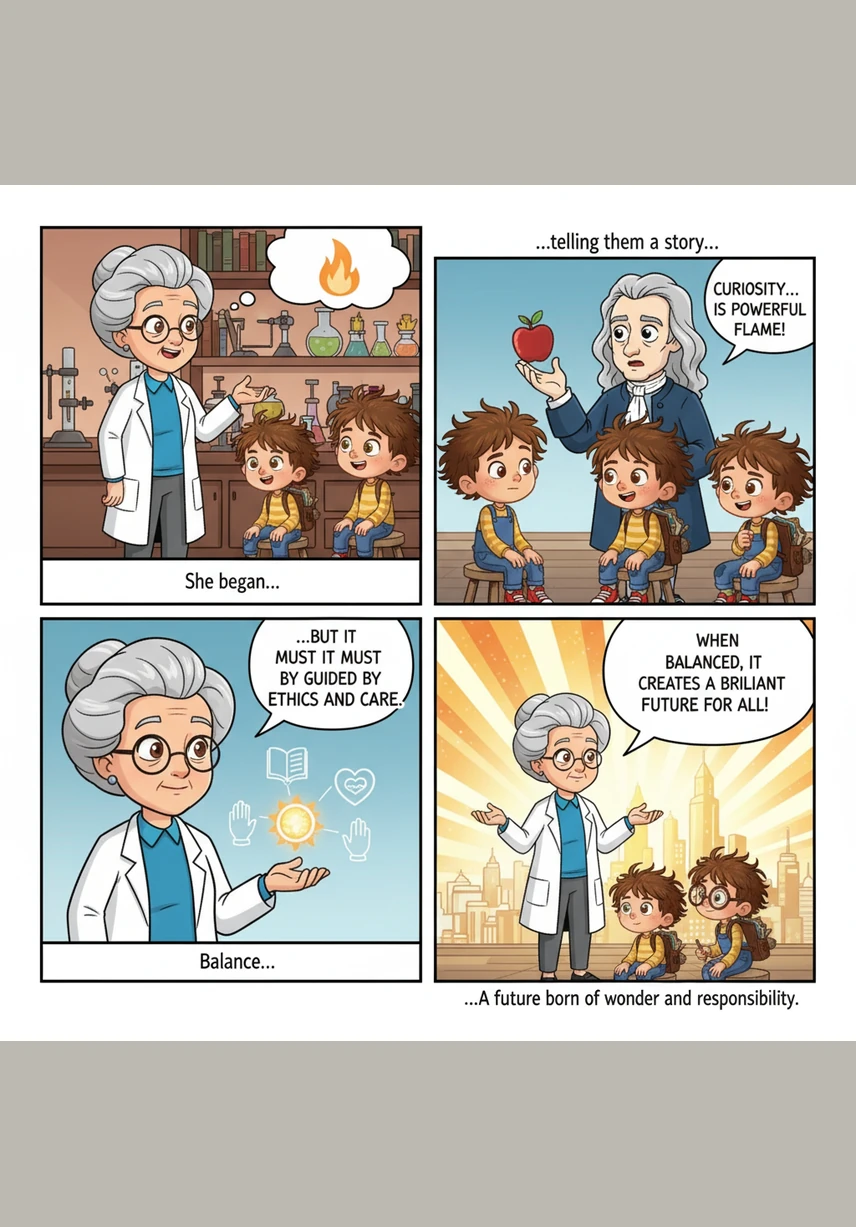
As a wise and respected mentor, Curie explains to a group of young explorers that curiosity is a powerful flame that must be guided by ethics and care. She tells them that when wonder is balanced with responsibility, it creates a brilliant and better future for all of humanity.
生成提示词(登录后查看具体 Prompt)
Create an illustrated educational story based on the following essay. The goal is to transform the essay into **6 clear visual scenes** that help a student memorize the ideas for an English exam. Each scene should represent one main paragraph of the essay and include a simple visual description that is easy to remember. Use the essay below as the source and convert it into a story structure with images. Essay text: Title: The Power of Curiosity Curiosity is a fundamental part of human nature. From an early age, people feel a strong desire to understand how the world works. Children constantly ask questions such as “why?” and “how?” as they try to make sense of the world around them. This natural desire to explore and learn is one of the main forces behind human development. Without curiosity, many of the discoveries and inventions that shape our modern society would never have been made. Curiosity plays a significant role in both our personal lives and in society as a whole. It motivates individuals to seek knowledge, explore new ideas and search for answers to complex questions. Throughout history, curiosity has driven scientists, explorers and inventors to make important breakthroughs. A well-known example is Isaac Newton, who began reflecting on the concept of gravity after observing an apple fall from a tree. As Bernard Baruch famously said, “Millions saw the apple fall, but Newton was the one who asked why.” This example clearly illustrates how curiosity can lead to deeper understanding and scientific progress. One of the greatest benefits of curiosity is that it encourages learning. Curious individuals are often eager to read, study and explore new subjects, which allows them to gain valuable knowledge. Furthermore, curiosity stimulates creativity and innovation because it encourages people to think critically and experiment with new ideas. In education, curiosity can make learning more engaging and meaningful for students. Similarly, in the workplace, curious employees may develop innovative solutions, improve existing systems and contribute to progress within their organizations. Curiosity can also strengthen social relationships, as it encourages people to learn more about different cultures, perspectives and experiences. However, curiosity can also have negative consequences if it is not guided by responsibility and good judgment. People sometimes become curious about things that are dangerous, unethical or harmful. The well-known expression “curiosity killed the cat” reminds us that excessive curiosity can lead individuals into risky situations. For instance, being overly curious about other people’s private lives may lead to conflicts or a violation of personal boundaries. In addition, curiosity may tempt people to experiment with activities that could be unsafe. Therefore, it is important that curiosity is balanced with careful thinking and responsibility. Despite these potential risks, curiosity remains one of the most powerful driving forces behind human progress. It inspires exploration, scientific discovery and technological innovation. As the saying goes, “The future belongs to the curious.” People who are willing to ask questions, challenge existing ideas and explore new possibilities will continue to shape the development of our world. In conclusion, curiosity is both a powerful and complex human trait. It encourages learning, creativity and progress in society. At the same time, it must be used wisely and responsibly. When curiosity is combined with critical thinking and ethical awareness, it can lead to remarkable achievements and contribute to a better future for humanity. Instructions for the story: Divide the essay into 6 visual scenes: Scene 1 – Curious child exploring the world and asking “why?” Scene 2 – Isaac Newton sitting under a tree as an apple falls and he wonders why Scene 3 – A student learning, reading books and having creative ideas (lightbulb moment) Scene 4 – A person opening a dangerous door labeled “curiosity killed the cat” to show risks Scene 5 – A scientist exploring space and new technology representing the future of curiosity Scene 6 – A wise scientist explaining that curiosity must be balanced with responsibility Style: simple educational storytelling, clear visuals, memorable scenes for studying.