A sweeping tale of a noblewoman who loses her freedom but never her soul. Witness a forbidden romance between a captive leader and a prince that challenges the very foundations of their world. This is a story of resistance, identity, and the power of a love that refuses to be silenced.
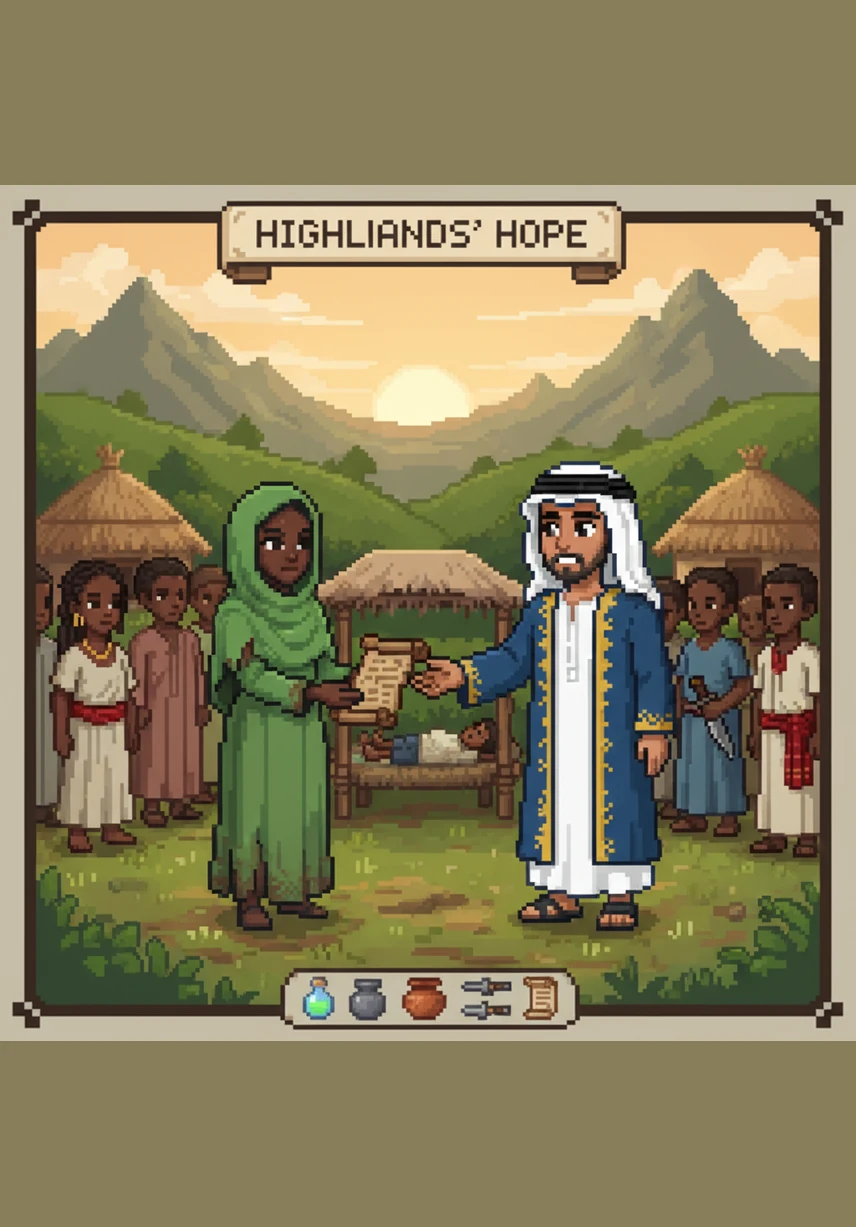
In the lush highlands of Ethiopia, Amara lived as a noble daughter, surrounded by the golden light of her heritage and the weight of quiet authority. She moved through the stone halls of her home with a grace born of responsibility, a future of leadership clearly laid out before her.
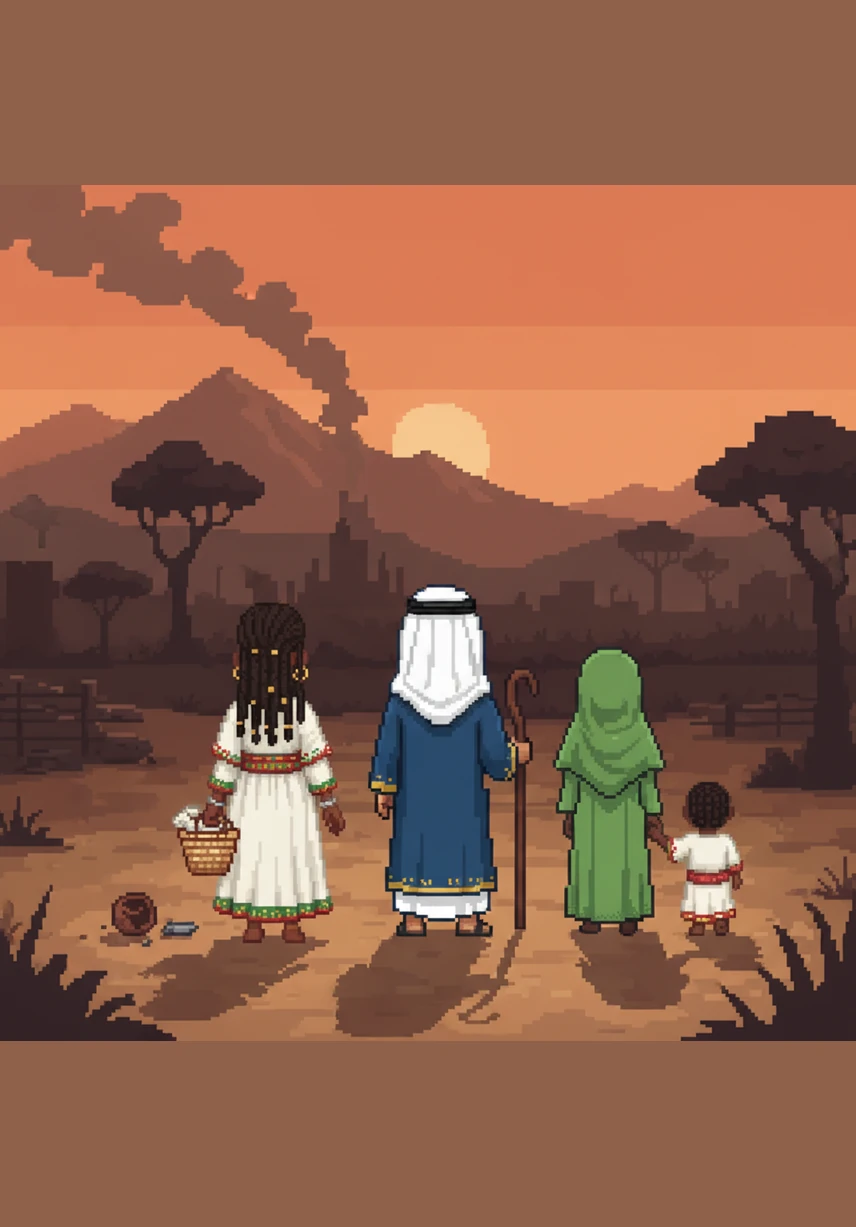
The sky turned dark as the fires of war swept through her homeland, dismantling the life she once knew in an instant. Amara was taken far from the mountains, stripped of her titles and her home, and carried across the sea into the vast, unforgiving sands of Arabia.
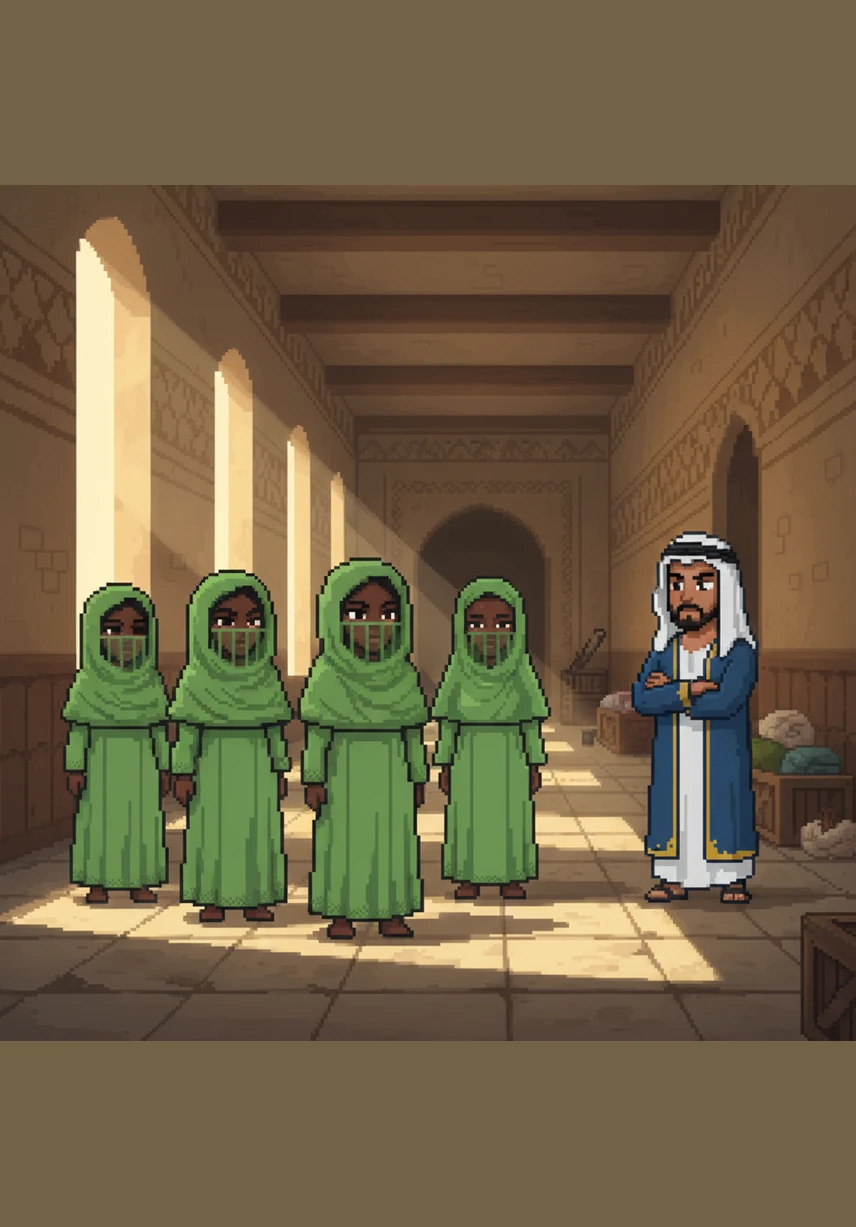
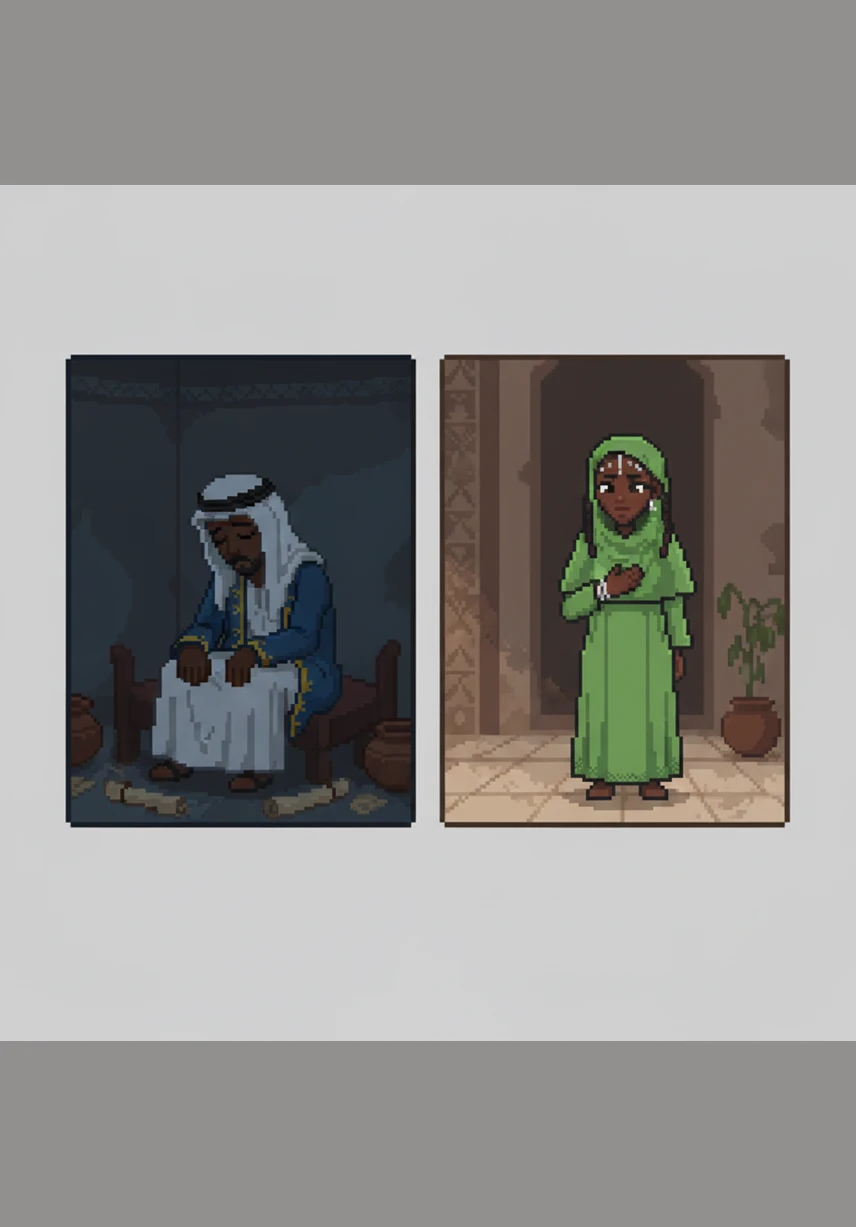
In the desert palace, Amara and her countrywomen were forced into uniform green robes, their hair cut and their faces veiled to erase their individuality. They became shadows in a world that saw them only as labor, yet Amara’s eyes remained sharp and observant behind the thin fabric of her veil.
While others succumbed to despair, Amara became a silent pillar of strength for her people, leading them with a dignity that no chain could break. She moved with an internal fire, her presence commanding respect even in the quietest corners of the servant quarters.
Prince Abdul watched from the high balconies of the palace gardens, drawn to the woman who refused to be invisible even in her emerald robes. He had seen many people of status, but none possessed the fierce clarity and unyielding spirit that radiated from the Ethiopian captive.
Their encounters were filled with tension, as Amara met the Prince's curiosity with cold resistance and sharp, mocking wit. She did not soften her spirit for his status, and her refusal to be charmed only deepened the Prince’s fascination and his burgeoning, unexpected love.
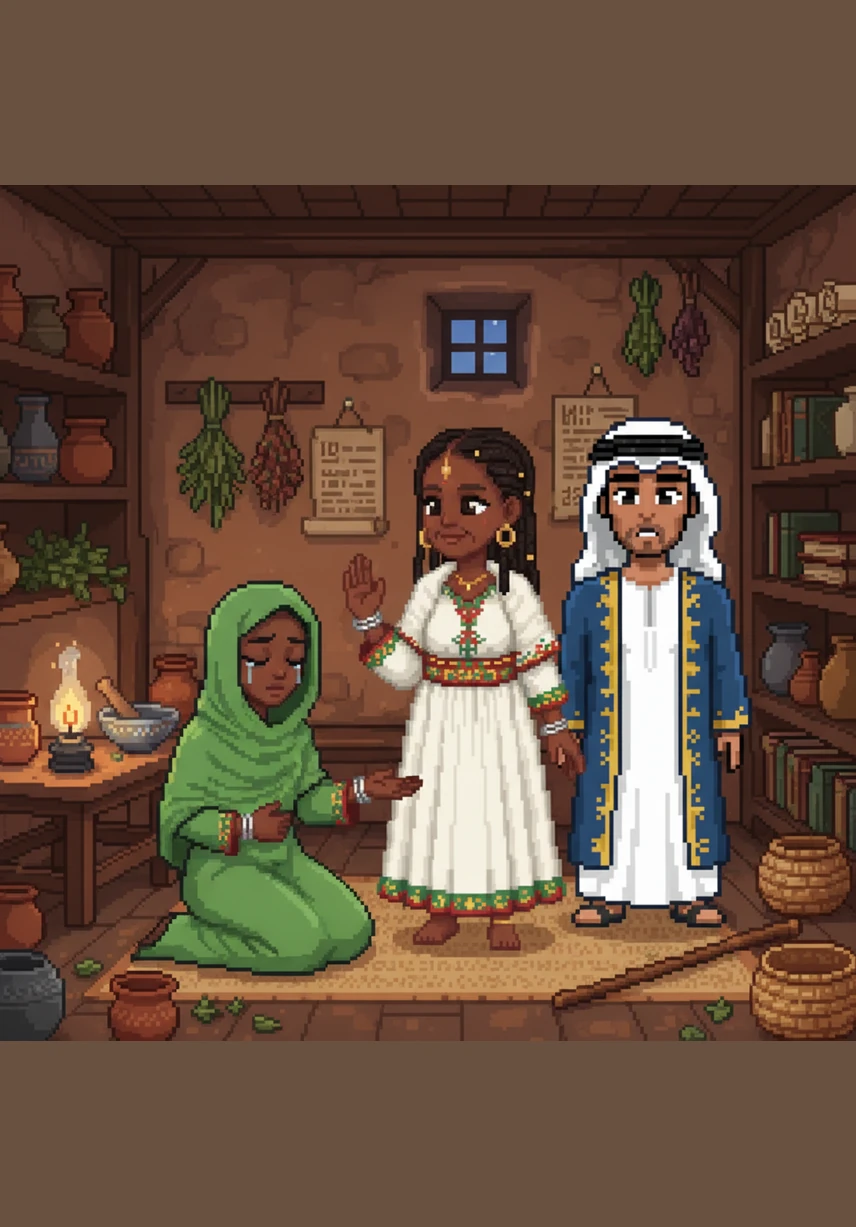
In a hidden room away from prying eyes and the strict laws of the palace, Abdul finally broke his royal composure and confessed his heart to her. He spoke not as a ruler but as a man undone, pleading for a connection that was strictly forbidden by the laws of their land.
Though her heart stirred with a matching fire, Amara looked at him with the weight of her suffering people in her eyes and firmly refused him. She could not align herself with the power that had destroyed her home, choosing the duty she felt toward her fellow captives over her own desires.
Following her rejection, Abdul withdrew into a dark silence, abandoning his duties and wasting away in the agony of a love he could not have. Meanwhile, Amara felt the cracks in her own emotional armor as she realized the depth of the void his absence left in her soul.
Under the cover of night, Amara risked everything to find Abdul in his chambers, finally admitting the truth she had tried so hard to bury for her people's sake. In that quiet moment, two souls from warring worlds found a love that defined them far more than their titles or their chains ever could.
生成提示词(登录后查看具体 Prompt)
Amara’s story is one of power forged through loss, resistance shaped by identity, and love that exists where it should not. She was not born into weakness. In Ethiopia, Amara belonged to a noble family—raised in dignity, surrounded by structure, expectation, and quiet authority. She understood leadership early, not as control, but as responsibility. Her world, though imperfect, had order. She had a future. Then war came. The conflict between Arabia and Ethiopia did not just conquer land—it dismantled lives. Her home was destroyed, her people scattered, and Amara was taken. Not as a guest. Not even as a prisoner of honor. As a slave. In Arabia, everything that once defined her was stripped away—her name, her status, her visibility. The Ethiopian women were controlled, first through appearance, then through identity. Their hair was cut. Their beauty hidden beneath uniform green robes and veils. Their individuality erased. They were no longer women with stories—they were labor. But Amara did not disappear. Even under restriction, she remained sharp, observant, and emotionally disciplined. Where others broke, she adapted. She became a quiet center among her people—a leader without a title. She carried not just her own survival, but the weight of those around her. That is what made her dangerous. And that is what drew Abdul to her. Abdul, the prince of Arabia, was not like the others. He had never truly loved before—he viewed women with respect, almost distance, as if they belonged to a world he would not touch. But Amara disrupted that balance. Her boldness, her refusal to submit internally, her clarity of mind—these unsettled him. What began as curiosity became something deeper. Something he did not understand at first. Love. Their dynamic was not gentle. Amara challenged him, dismissed him, even mocked him at times. She did not soften herself for him, and that only intensified his feelings. While others admired him, she resisted him—and in that resistance, he found truth. But their connection existed within a system designed to destroy it. Ethiopians were forbidden from forming bonds with Arabians. Love between them was not just unacceptable—it was punishable by death. Still, Abdul could not let go. He searched for her even after the Ethiopian women were veiled and made indistinguishable. He learned her movements, her presence, the way she occupied space. And when he finally confronted her—pulling her into a hidden room, emotionally undone—he confessed everything. Not as a prince. But as a man breaking. Amara saw his sincerity. She understood his heart. And she refused him. Not because she felt nothing—but because she felt too much responsibility. She carried her people, their suffering, their future. To love him would mean betraying that. Aligning herself with the very force that destroyed her home. So she walked away. And that decision shattered Abdul. He withdrew completely—locking himself away, abandoning food, care, and connection. He unraveled in silence, consumed by something he had never experienced before. Loss. Powerlessness. Love without return. Meanwhile, Amara remained outwardly strong—but internally, something shifted. She began to feel his absence. To remember him. To dream of him. The emotional discipline she once held so tightly began to fracture. Lalit, her closest companion, saw it before she admitted it. Amara was no longer untouched. Eventually, she gave in—not to weakness, but to truth. She went to him. Through risk, through guarded halls, through fear of consequence—she reached Abdul’s room. And there, in the quiet of night, she confessed what she had denied: She loved him too. Amara’s story is not just about survival. It is about a woman who loses everything external—status, home, freedom—but refuses to lose herself. A woman who leads without permission, resists without rebellion, and loves without surrendering her identity. She is not defined by captivity. She is defined by what captivity could not take from her.