Discover the heartwarming story of Alex, a quiet student, and his insightful teacher, Ms. Bloom. This vibrant picture book explores the power of kind communication in the classroom, showing how simple words can transform anxiety into confidence and foster a love for learning. Join Alex as he finds his voice and learns that a supportive environment can truly heal and inspire.
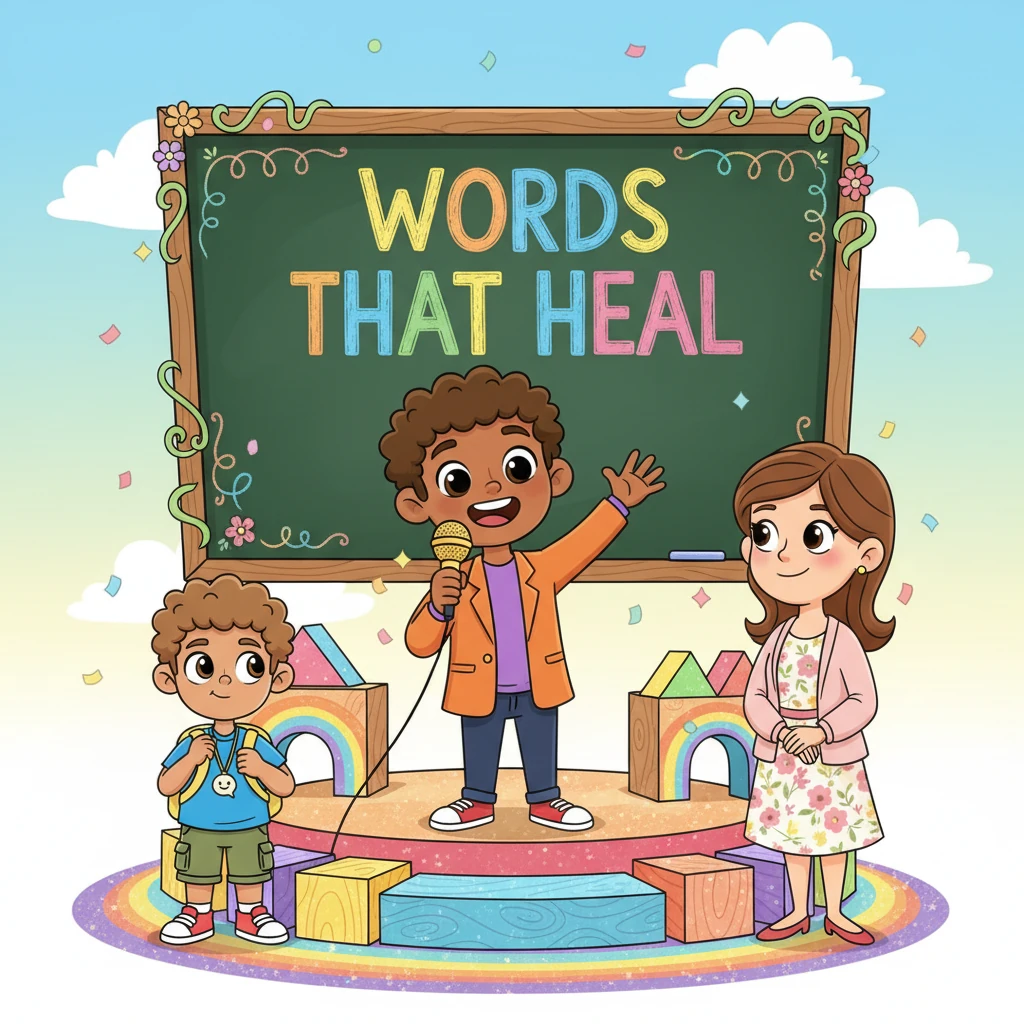
A friendly, cartoon host character with a microphone stands on a whimsical stage, smiling brightly. Behind them, a colorful chalkboard displays the words 'Words That Heal,' while Alex, a small, shy boy, and Ms. Bloom, a kind-faced teacher, stand a little apart, looking thoughtful. The scene is bright and inviting, setting a welcoming tone.
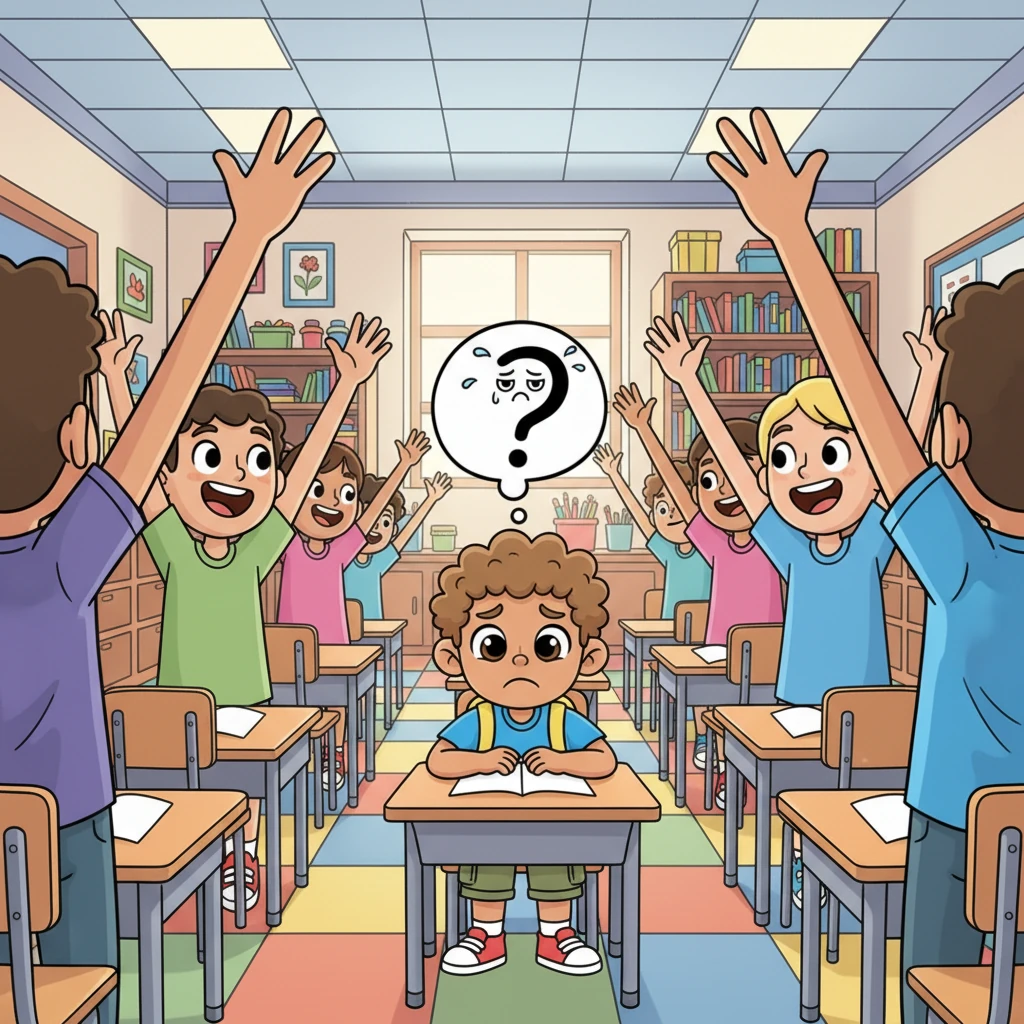
Young Alex sits hunched in his classroom chair, looking tiny and worried amidst a sea of towering, enthusiastic classmates eagerly raising their hands. A thought bubble above Alex's head shows a question mark morphing into a nervous, sweating face. His vibrant classroom feels overwhelming, highlighting his internal struggle.
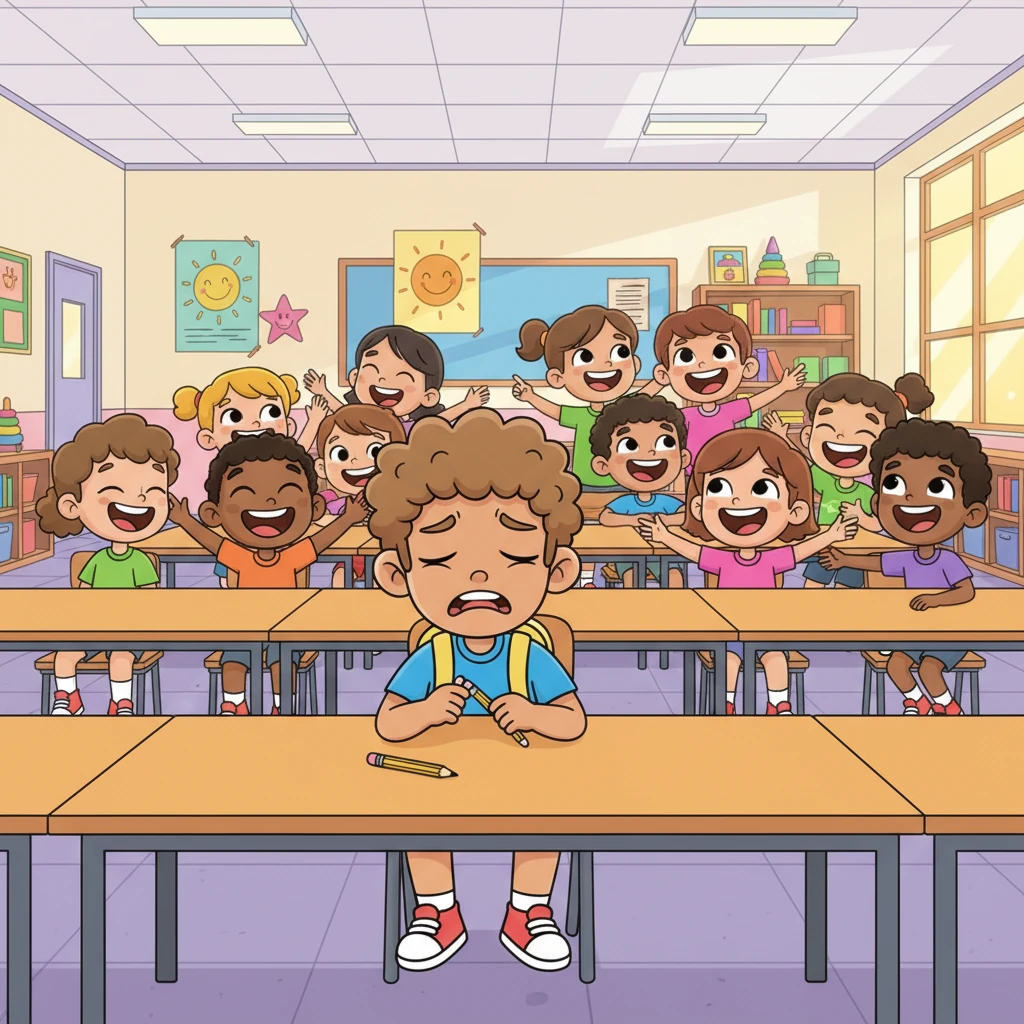
Alex is visibly distressed, sitting alone at a large table, nervously fiddling with a pencil while other students in exaggeratedly happy groups chat and laugh. He looks isolated and overwhelmed by the idea of joining in. The bright colors of the room contrast with Alex's muted, anxious posture.
Ms. Bloom, the teacher, stands thoughtfully at the front of a bustling classroom, observing her students with a kind, reflective expression. She sees some students engaged and others, like a small, distant Alex, looking withdrawn. Her face shows a deep understanding and empathy for the varied emotions in her classroom.
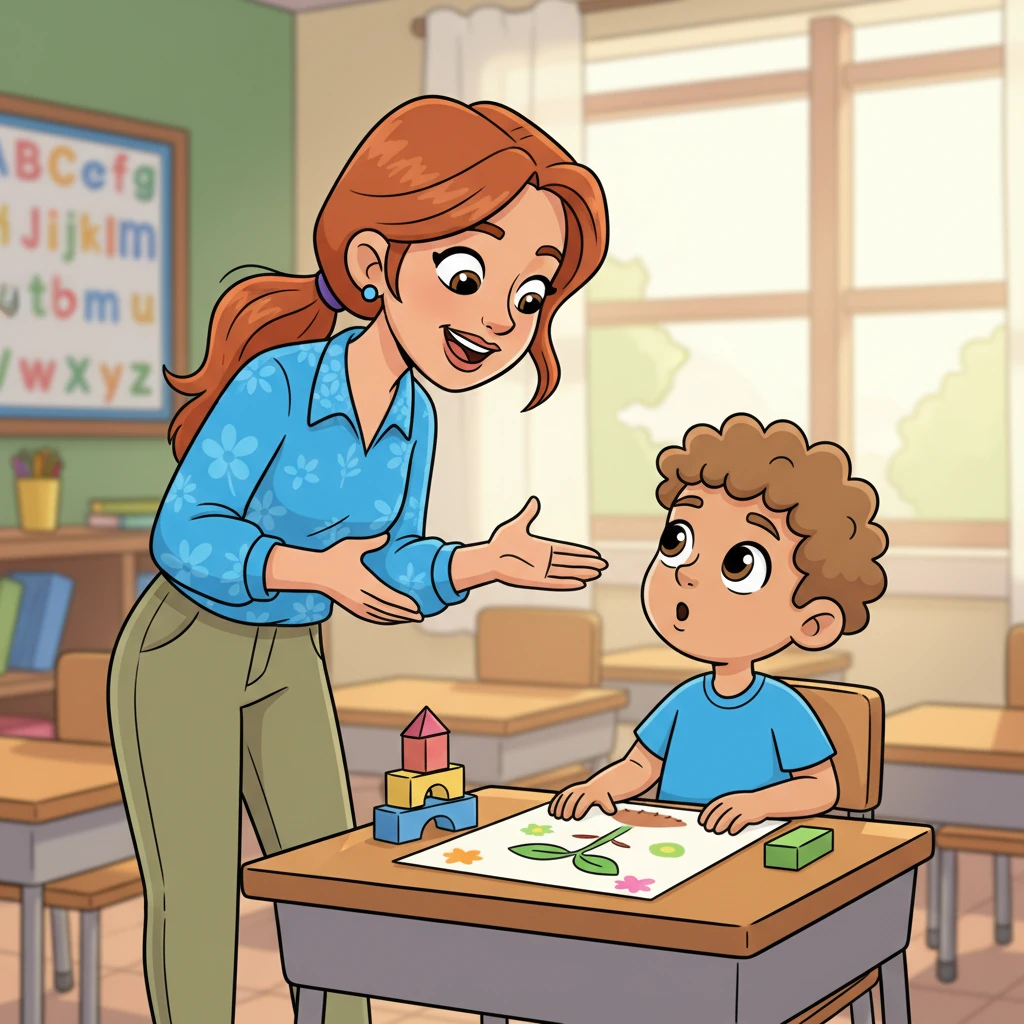
Ms. Bloom now stands beside Alex's desk, bending slightly to his level with a warm, encouraging smile. She is explaining a concept clearly, using expressive hand gestures, and Alex, though still a little hesitant, is looking up, a tiny spark of curiosity replacing his usual fear. The air around them feels lighter and more supportive.
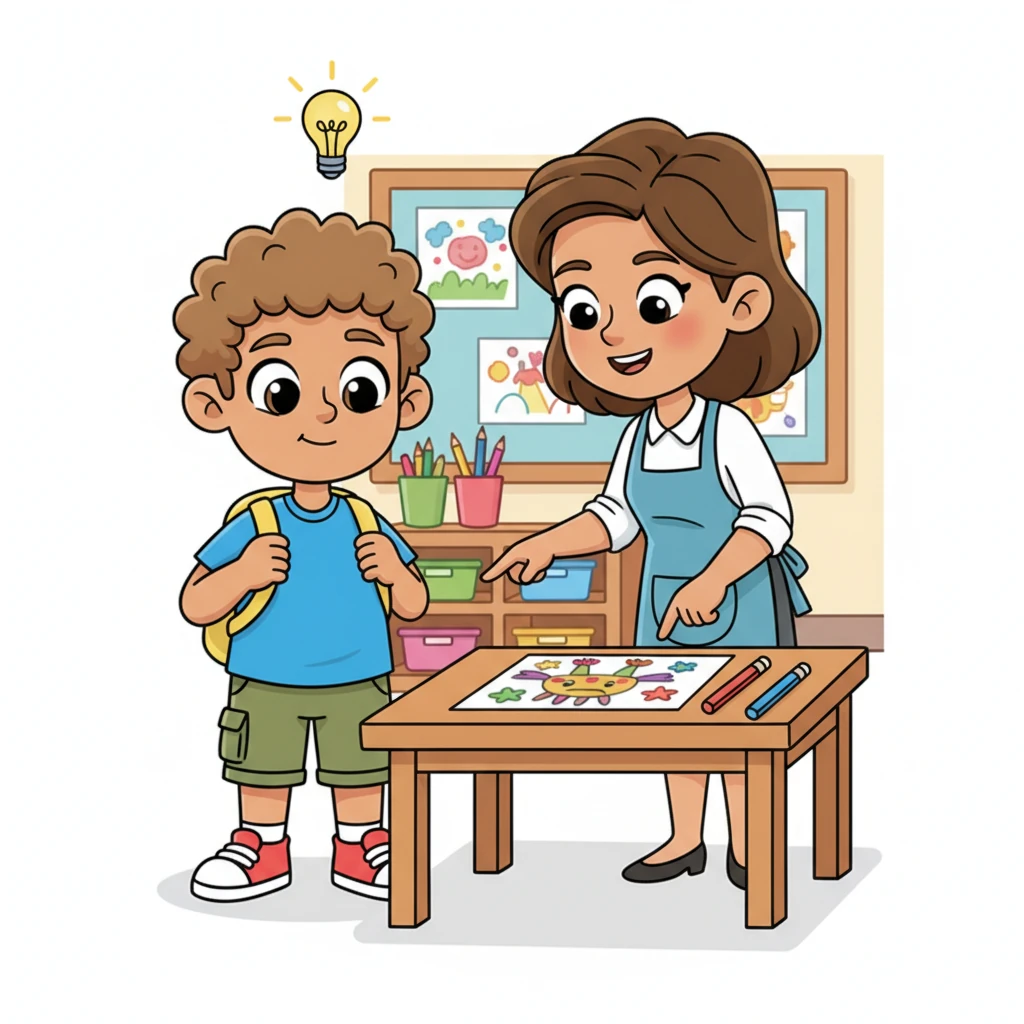
Ms. Bloom gently points to a drawing on Alex's paper, her expression helpful and guiding, not critical. Alex looks at his work, not with shame, but with a dawning look of understanding, a small cartoon lightbulb appearing over his head. The feedback is constructive, turning a mistake into a moment of learning.
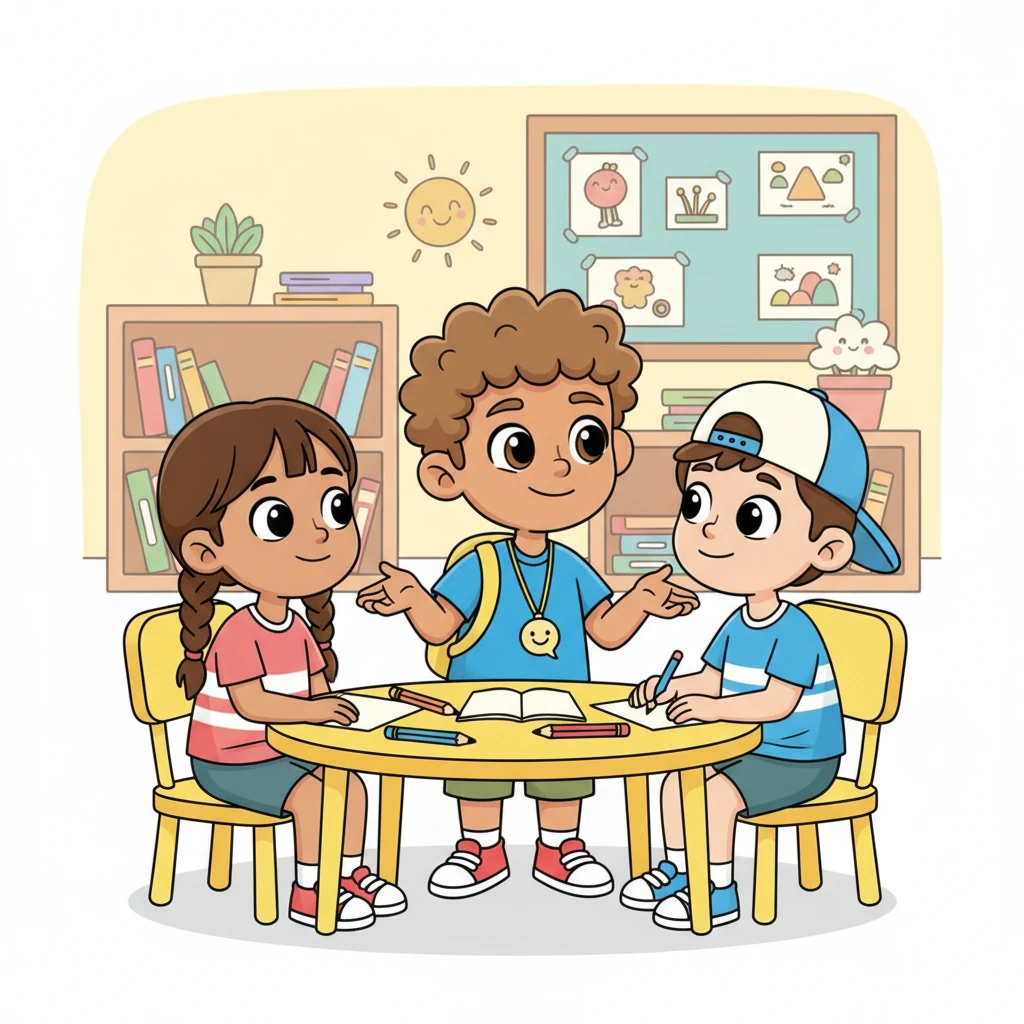
Alex is now actively engaged in a group discussion, leaning forward with a small, proud smile as he shares an idea. His groupmates, with friendly and open expressions, are listening attentively. The scene is dynamic and collaborative, showing Alex's newfound comfort and participation.
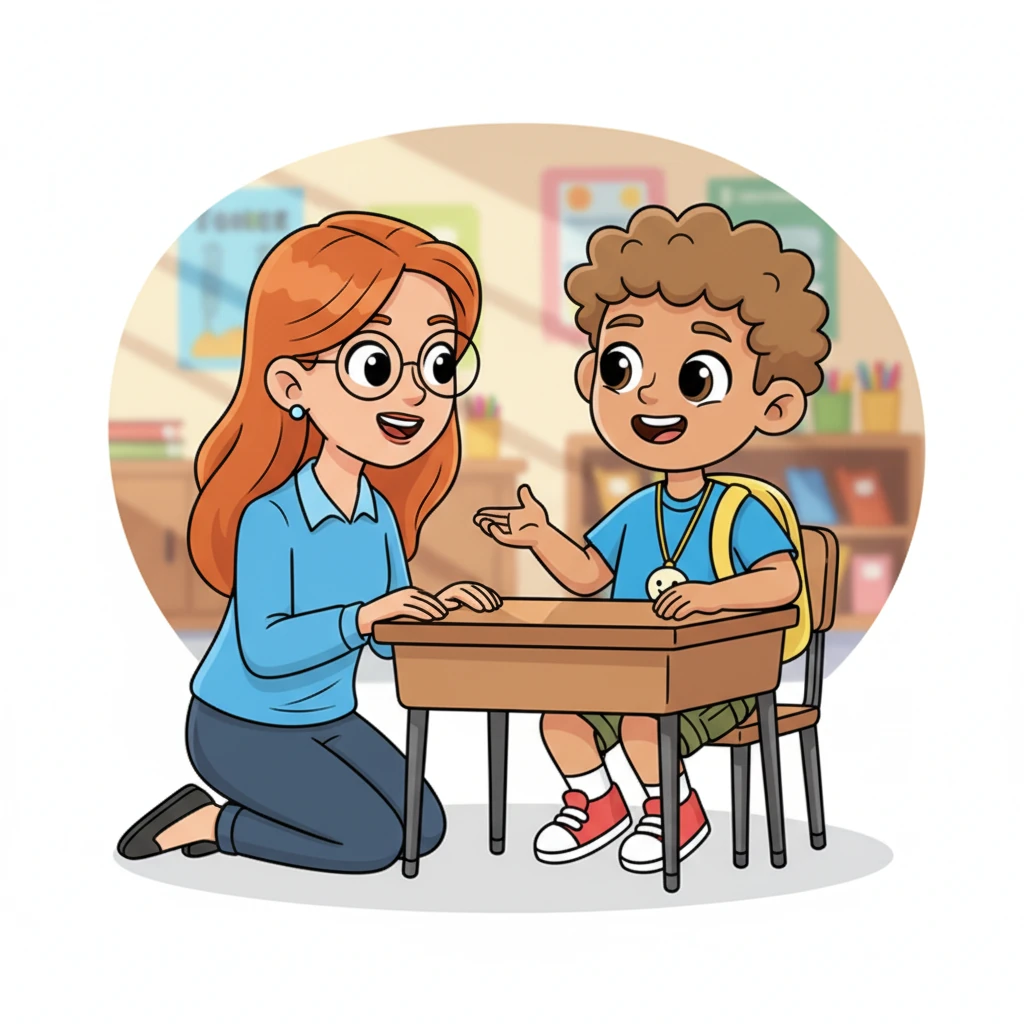
Ms. Bloom kneels beside Alex's desk, her face warm and attentive, fully focused on listening to Alex as he speaks comfortably and confidently. This close-up emphasizes the power of active listening and the safe space she has created. Alex's body language is open and relaxed.
Alex stands tall and confident, enthusiastically raising his hand with a big, bright smile, ready to answer a question. The entire classroom is vibrant and filled with other happy, engaged students, all participating freely. The atmosphere is buzzing with positive energy and shared learning.
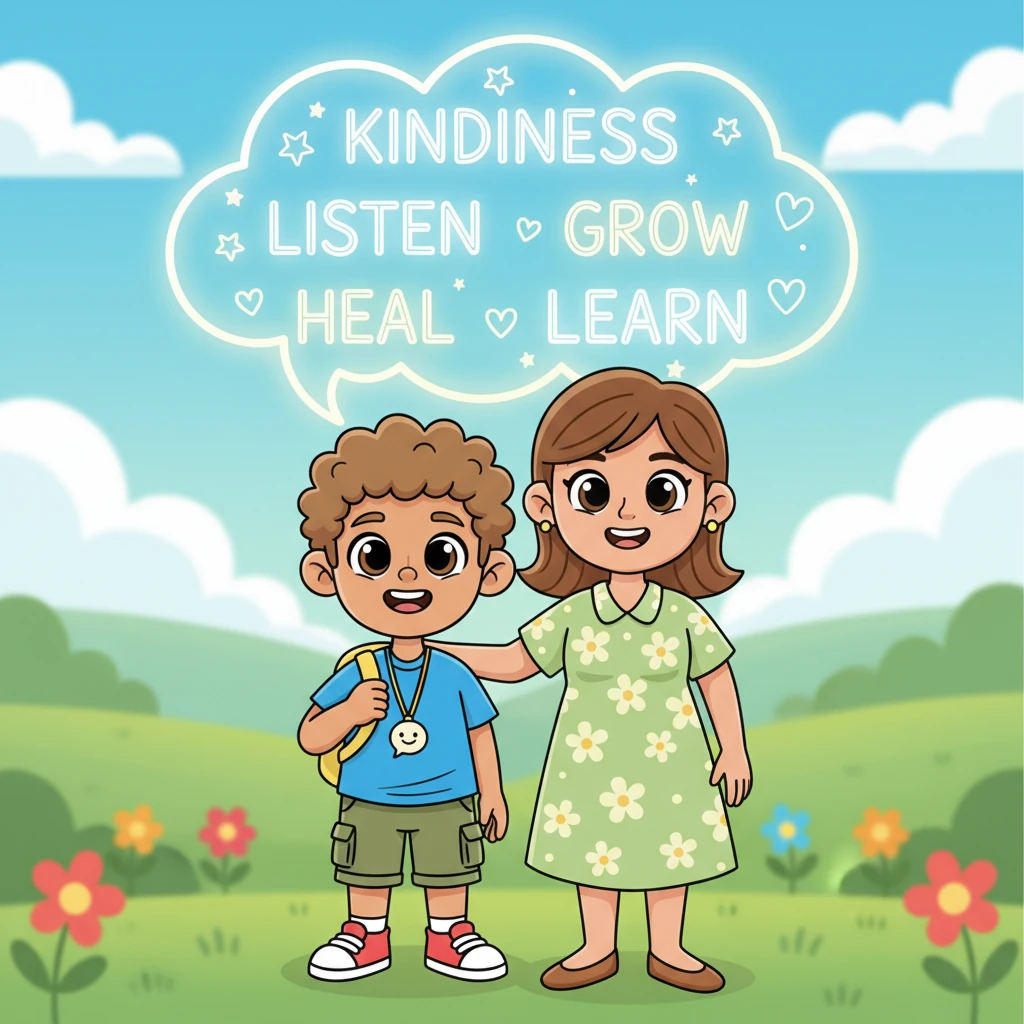
The friendly host character, Alex, and Ms. Bloom stand together, all smiling brightly and looking joyful. A large, whimsical speech bubble floats above them, filled with positive, glowing words like 'Kindness,' 'Listen,' 'Grow,' 'Heal,' and 'Learn,' symbolizing the powerful message of communication. The scene is full of vibrant, cheerful colors.
生成提示词(登录后查看具体 Prompt)
Words That Heal: Communication in the Classroom INTRO Host: Welcome to Words That Heal, a space where we talk about education, communication, and mental health. In each episode, we explore how small changes can make a big difference in the classroom. Today’s topic is simple, but powerful: how the way teachers communicate can change how students learn — and how they feel. Words can motivate, but they can also silence. They can build confidence, or slowly take it away. With us today, we have Alex, a student, and his teacher. Together, they’ll share how communication in the classroom affected learning, confidence, and emotional well-being — and how change became possible. PART 1 Host: Alex, let’s start with you. Before things changed, how did communication at school affect you? Alex: Honestly, I used to feel very anxious in class, almost every day. I was used to staying quiet because I was afraid of making mistakes or saying something “wrong.” When teachers asked questions, my first thought wasn’t the answer — it was what if everyone laughs? Compared to other students, I felt less confident and constantly stressed. Group discussions were especially overwhelming. I preferred working alone because it felt safer and more controlled. Over time, I stopped participating completely. My grades slowly dropped, but more than that, school became exhausting instead of motivating. It really affected my mental health and how I saw myself as a student. Host: So silence became a kind of protection? Alex: Exactly. I thought that if I didn’t speak, I wouldn’t be judged — and that felt safer than trying. PART 2 [Visual: close no professor, tom calmo e reflexivo] Host: From a teacher’s perspective, how do you see this situation? Teacher: Many students feel this way, even if they never say it out loud. For a long time, education focused too much on results, grades, and performance — and not enough on emotions. As teachers, we sometimes forget how vulnerable it feels to speak in front of others. I’ve learned that when instructions are clear, expectations are explained, and mistakes are treated as part of the learning process, students feel safer. With Alex, I noticed that once communication became more supportive, his engagement changed. He started participating, asking questions, and trusting himself more. When communication is respectful and encouraging, students are more willing to take risks — and that’s where real learning happens. PART 3 Host: Alex, what changed for you when your teacher’s communication changed? Alex: The biggest difference was feeling listened to. If expectations had been clearer before, I wouldn’t have felt so lost or insecure. When feedback became more constructive, I stopped seeing mistakes as failures. Even when I was wrong, I didn’t feel embarrassed anymore — I felt like I was learning. Now, I’m more comfortable working in groups. There’s more trust, and I don’t feel like I have to hide anymore. Teacher: And from my side, I’ve learned that listening is just as important as explaining. Students don’t need perfect answers — they need a safe space to try, fail, and improve. Good communication doesn’t lower standards. It helps students reach them. PART 4 Host: Quick question for both of you: Is communication more important than content? Alex: Content matters, of course. But without good communication, learning doesn’t really happen. Teacher: I agree. Knowledge only works when students feel confident enough to engage with it. CONCLUSION Host: Today’s conversation shows us that communication doesn’t just improve grades. It improves confidence, motivation, and mental health. In education, words are powerful. And when they are used with care, they don’t just teach — they heal.