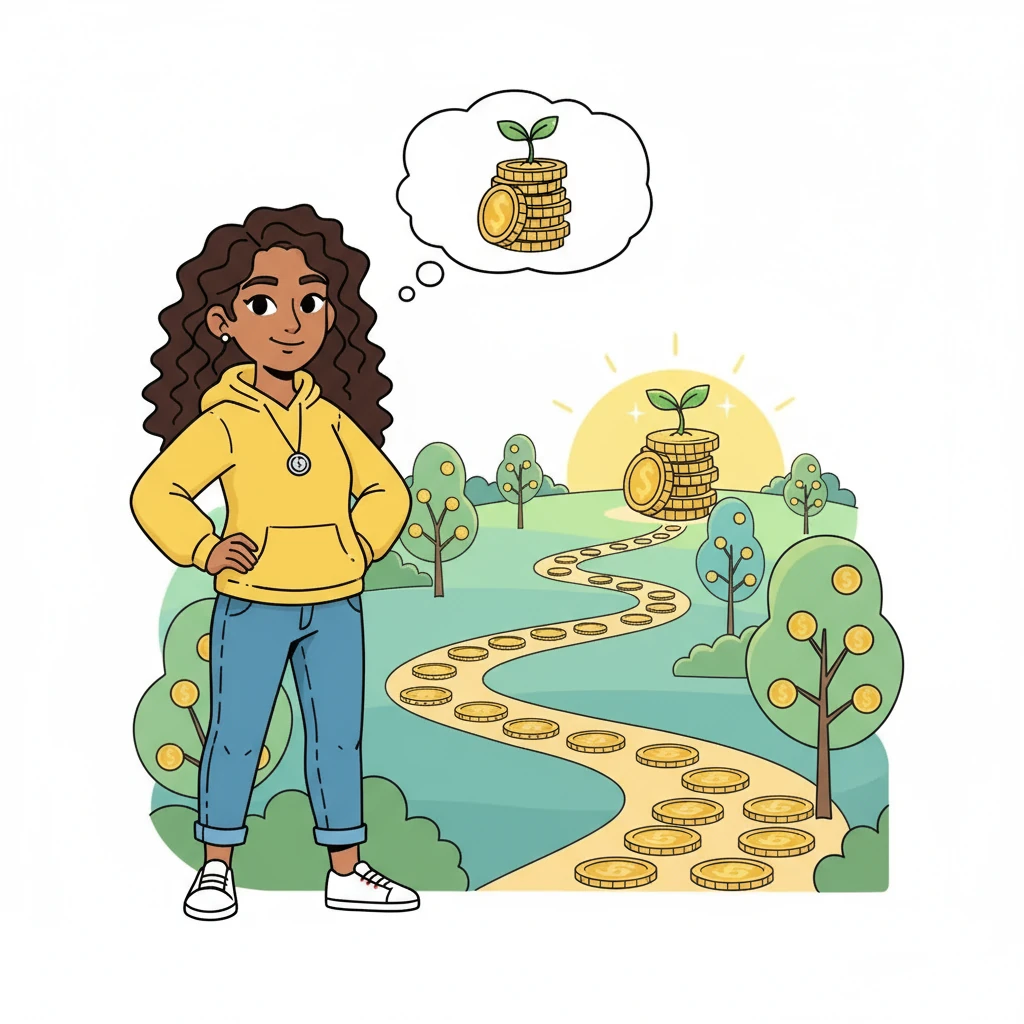
Embark on an exciting journey with Maya as she navigates the world of personal finance! This charming story makes learning about budgeting, credit, and loans fun and accessible. Discover how Maya builds her own financial roadmap to achieve her dreams of independence and a brighter future.
Maya sat at her kitchen table, a frown creasing her brow as she stared at a pile of bills. Her parents had explained the basics, but the real world of money felt like a confusing maze. She wished there was a clear path to understanding how to manage her own finances.
Maya's wise Aunt Sarah, a successful entrepreneur, noticed her niece's worry. She sat down with Maya and explained the importance of budgeting and planning. Aunt Sarah showed her how to create a simple budget to track her income and expenses.
Together, they created a sample budget, listing essential expenses like rent, food, and transportation. They discussed the 50/30/20 rule, showing Maya how to allocate her income wisely. Maya began to see how every dollar could have a purpose.
Next, Aunt Sarah introduced Maya to the world of credit. They discussed the importance of building good credit and the pitfalls of debt. Maya learned how credit cards could be tools, but also traps, if not used carefully.
They tackled the topic of loans and interest rates. Aunt Sarah explained how loans could help achieve goals, but also how high-interest rates could increase the overall cost. Maya started thinking about her future, and what she needed to achieve it.
Finally, Maya felt confident in her ability to plan for her future. She made a commitment to manage her money wisely and set a goal to become financially independent. Maya knew that this was the first step on her own financial journey, and she was ready to take it.
Generation Prompt(Sign in to view the full prompt)
Can you generTE A SHORT BOOK TO HELP TEENS READ How Much Do I Need to Live Independently? Financial Housekeeping / Adulting 101 Introduction: The Reality Check Living independently starts with understanding your finances. Could you estimate how much it costs to cover rent, food, and transportation if you moved out tomorrow? Many young adults underestimate the true cost of living. This chapter will equip you with budgeting skills, introduce financial literacy concepts, and help you create a realistic plan to live on your own successfully. Living the life you envision is a process, and the first step is gaining independence by living on your own. The goal of this chapter is to help you identify the financial requirements for living independently in early adulthood (ages 18-25). I often hear students say, "I can't wait to move out! My parents are always telling me what to do." Trust me, as parents, we want you to be self-sufficient, responsible, and living independently as soon as possible. However, the reality is that achieving independence today is more challenging than it used to be. Why This Matters: According to the Pew Research Center, 54% of 21-year-olds in the U.S. live with their parents. With the rising cost of living, achieving independence requires planning and awareness. One former student shared how budgeting helped her minimize debt and secure stable housing after becoming a Licensed Practical Nurse (LPN). Financial literacy gave her confidence and a head start toward independence. Now, let's set you up for success. Building a Budget – Start with the End in Mind What is a Budget? A budget is a plan that directs your money toward essential expenses, saving, and personal enjoyment. The 50/30/20 Rule is a simple way to organize your budget: 50% - Needs: Rent, food, utilities, and transportation. 30% - Wants: Entertainment, shopping, and non-essentials. 20% - Savings/Debt: Building an emergency fund, saving for goals, and paying off debts. Sample Budget: Living Independently Category Monthly Amount Salary (Before Taxes): $3,375 Taxes: $675 Net Income: $2,700 Expenses: Rent $1,200 Electricity $150 Mobile Phone $75 Internet $60 Car Insurance $200 Fuel $150 Food $300 Health Insurance $250 Entertainment $125 Savings/Investing $540 Total Expenses: $2,650 Remaining Cash Flow: $50 Reflection: Is $50 left at the end of the month enough to cover unexpected expenses? How could you adjust this budget to build a financial safety net? Objective: Plan for Independence What’s the minimum amount I will need to earn to live independently? Answer: _______________________________________________ How much can I earn without a degree, certification, or license? Answer: _______________________________________________ Create a sample budget for living independently: Rent: ______________ Utilities: ______________ Food: ______________ Transportation: ______________ Entertainment: ______________ Total: ______________ Credit Cards and Debt Management Why Credit Matters: A credit card can be a powerful tool or a dangerous trap. Building good credit helps with renting an apartment, buying a car, or securing loans. Credit Basics: Pay on Time: Late payments hurt your credit score. Keep Balances Low: Use less than 30% of your credit limit. Start Small: Consider a secured credit card if you’re new to credit. Credit Score Range Meaning Impact 750+ Excellent Easier to get loans, low rates 650-749 Good Approved for most loans 600-649 Fair Higher rates, limited options Below 600 Poor Difficulty securing loans Reflection: Do you currently have a credit card? If not, how can you start building credit? How can poor credit affect your plans to live independently? Loans and Interest – Know Before You Borrow Borrowing money can help pay for education or emergencies, but it can also lead to long-term debt. Key Loan Concepts: Interest Rate: The cost of borrowing money. Lower rates are better. Minimum Payments: Paying the minimum only extends debt and increases interest. Student Loans: Research repayment options and choose manageable amounts. Activity: Calculate the interest on a $1,000 loan with 5% interest over one year. How much more would you pay if the interest was 10%? Daily Affirmations: I build wealth by managing my money wisely. I control my financial future by learning and growing daily. I make informed decisions that prepare me for independence. Additional Resources Dave Ramsey: Easily Forgotten Monthly Expenses Book: Rich Dad Poor Dad