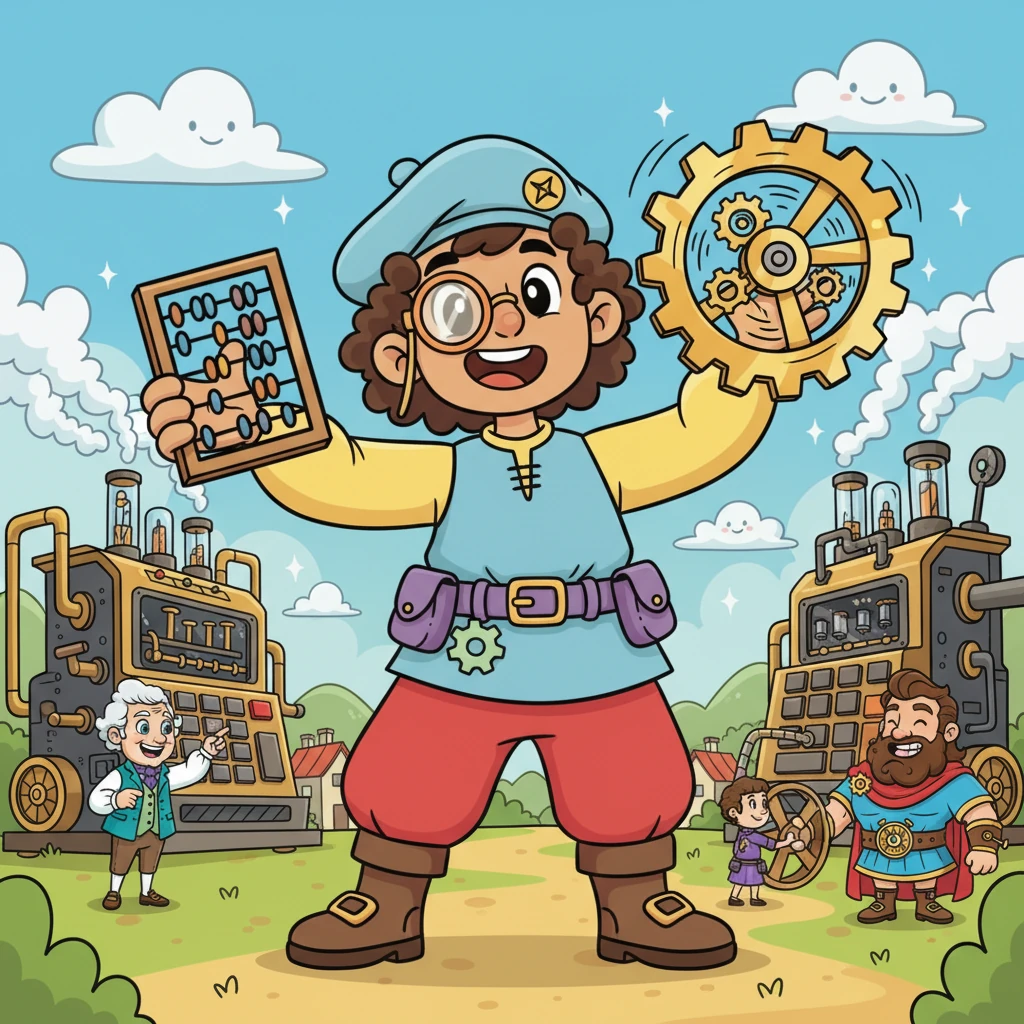
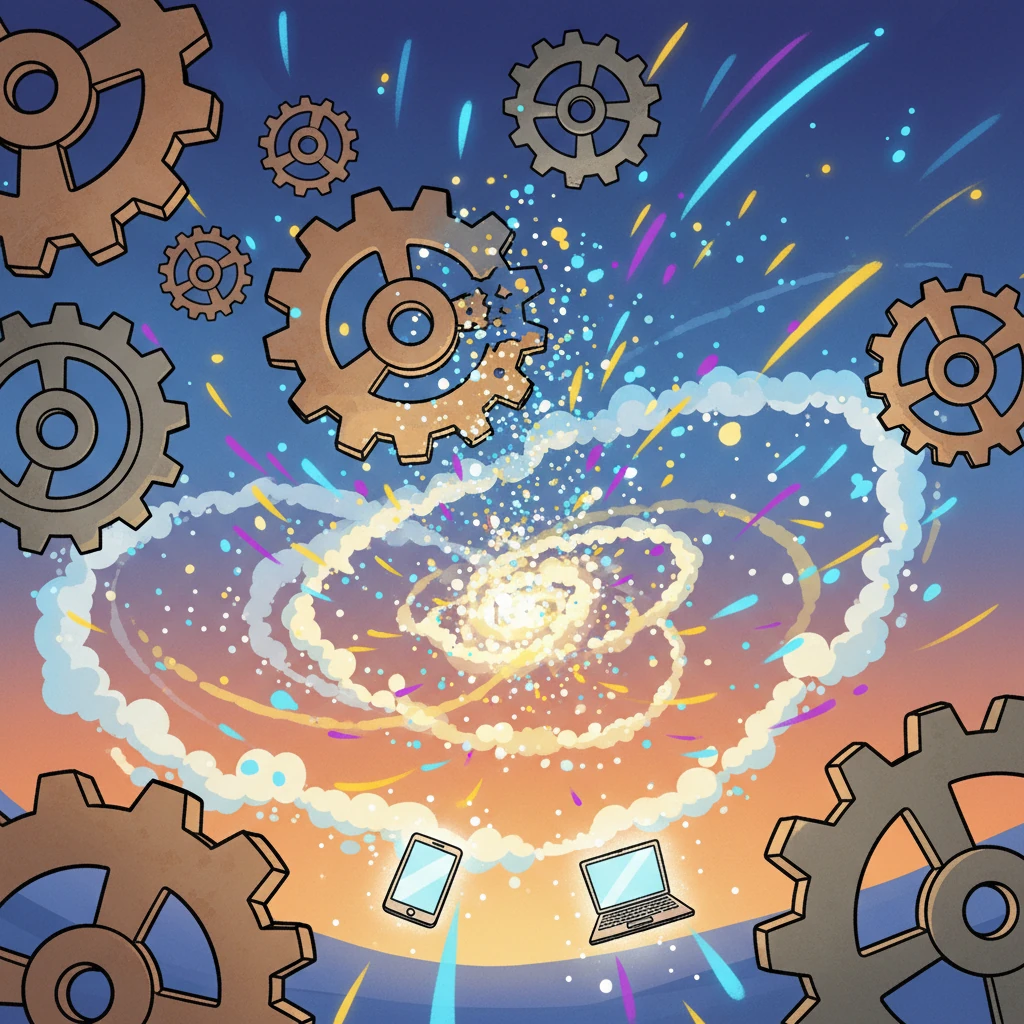
Join Pip, a curious young inventor, on a delightful journey back in time to discover the whimsical beginnings of computers! Watch as gears spin, levers click, and steam hisses, transforming daunting tasks into playful mechanical orchestrations. This enchanting tale celebrates the power of curiosity, family love, and the brilliant minds that dreamed up the very first calculating machines.
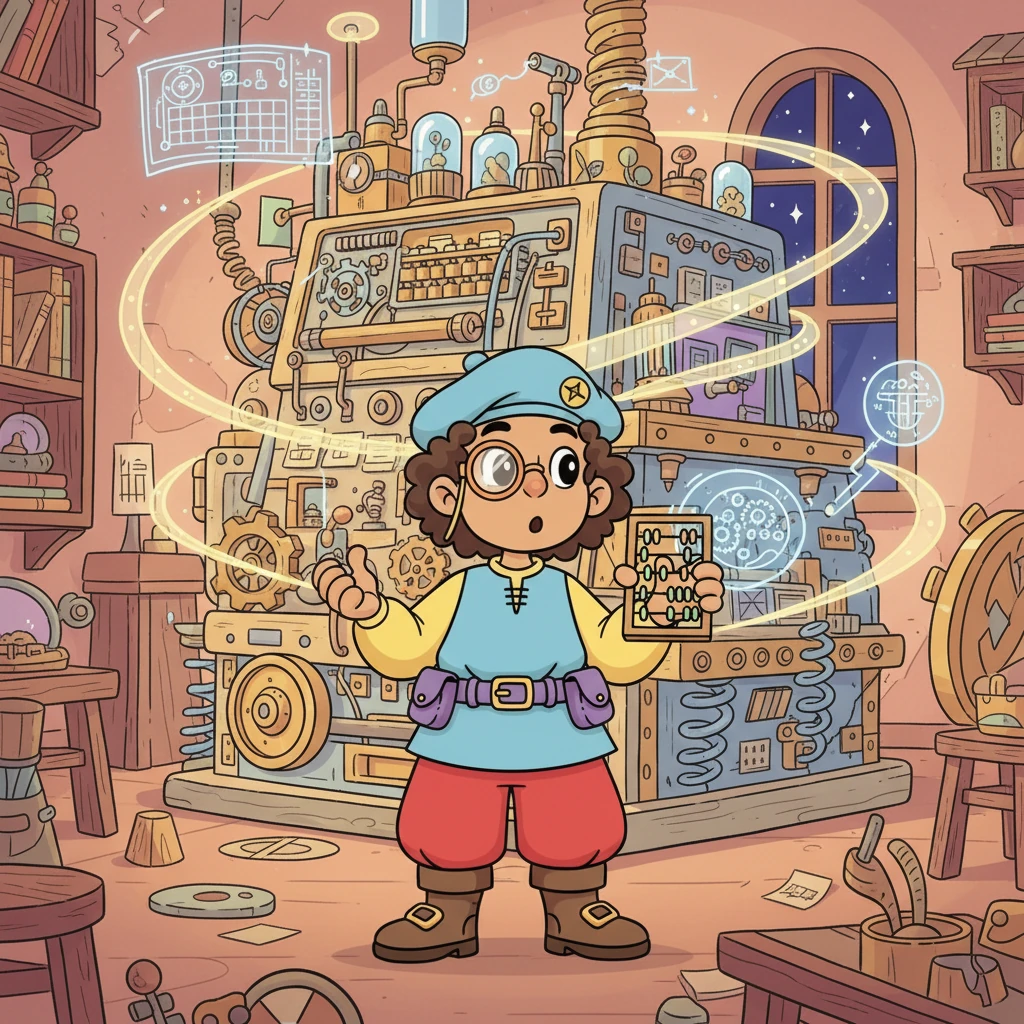
Meet Pip, a bright-eyed, cheerful child with a mop of messy hair, who loves nothing more than tinkering with gears and springs in his cozy attic workshop. Tools are scattered happily around him, and his imagination whirs as fast as his tiny contraptions.
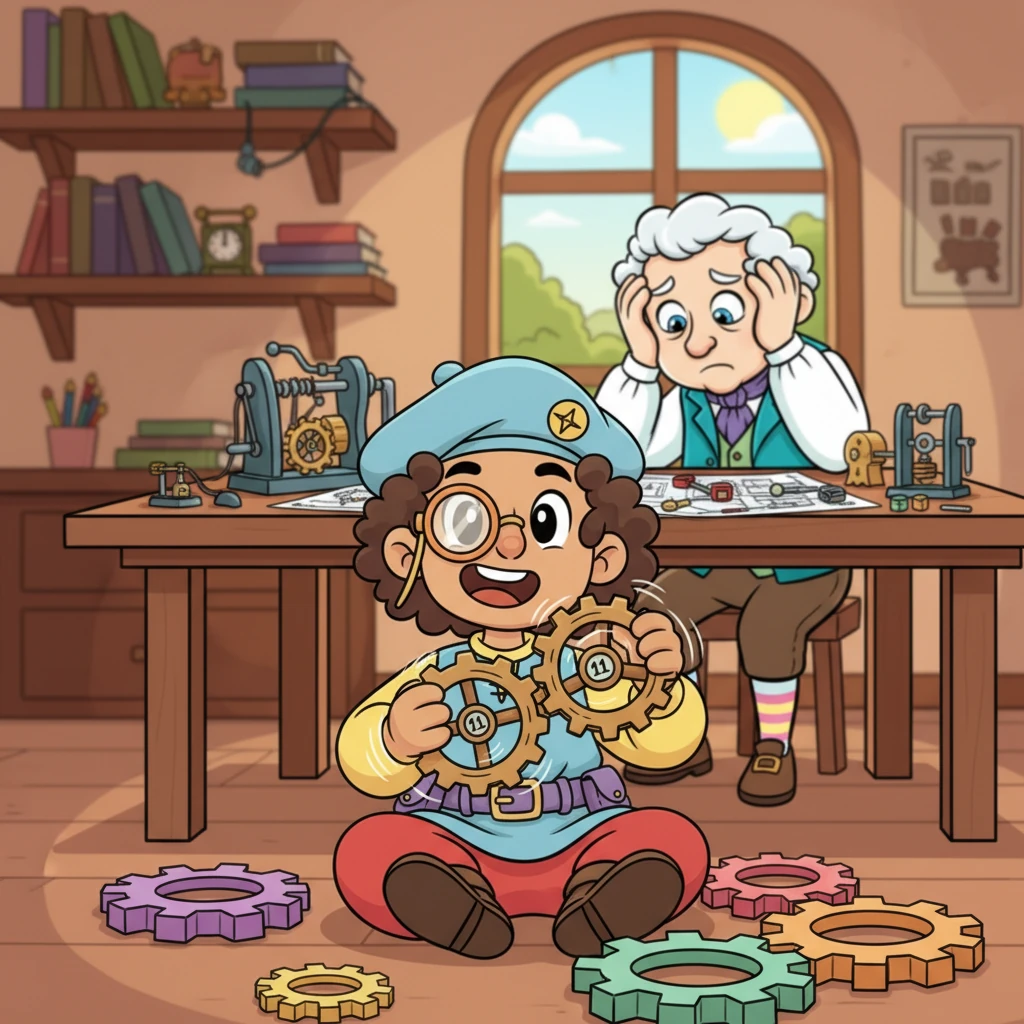
Pip's kind father, a busy tax collector, sits at a gigantic desk piled high with mountains of ledger books, groaning under the weight of endless numbers. His brow is furrowed with frustration, and he sighs heavily, wishing for a magic helper.
Watching his father struggle, Pip has a brilliant 'aha!' moment while playing with two spinning gears connected by a central shaft. He realizes that if he turns one gear five times and another six, the central shaft shows eleven – pure mechanical magic!
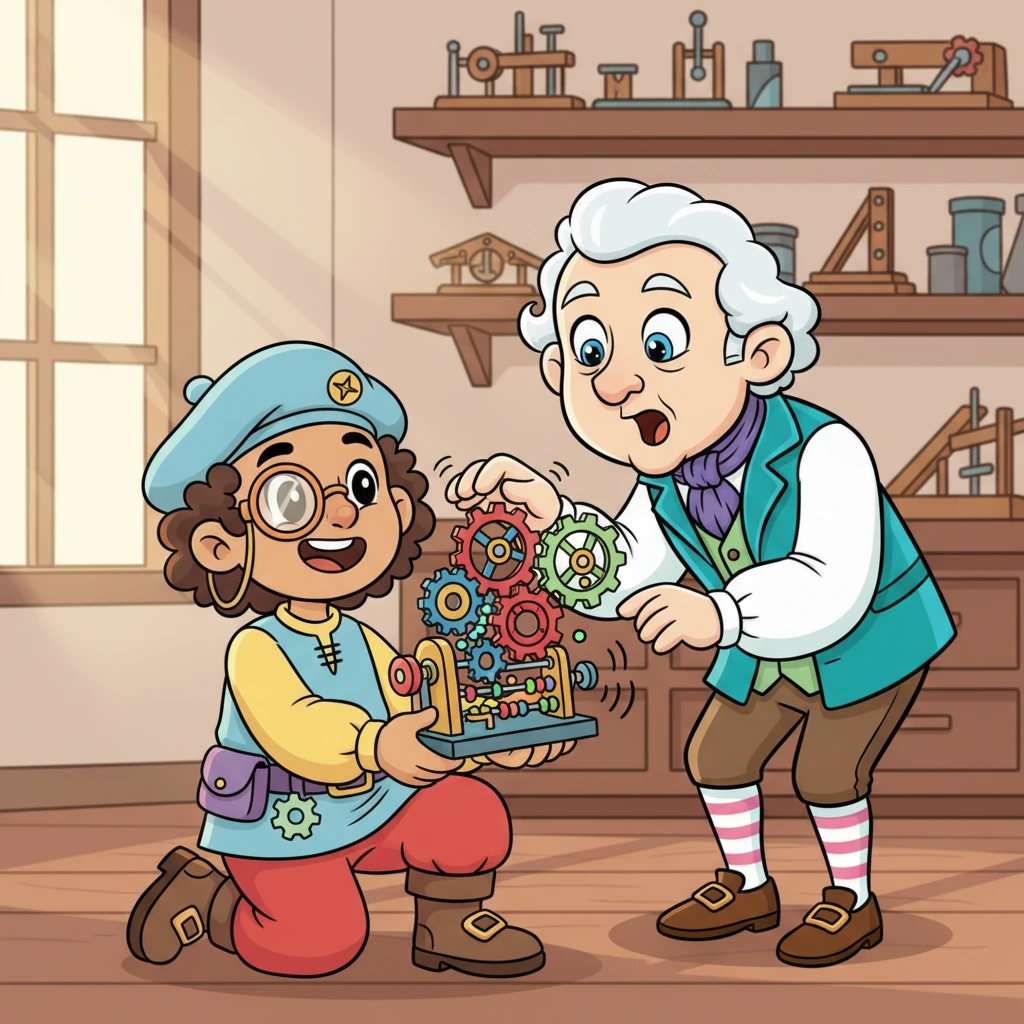
With a burst of energy, Pip builds his very first 'Adder' machine, a colorful contraption of interlocking gears and cranks. He proudly shows his father how it can add numbers with satisfying clicks and whirs, making his father's face light up with a surprised smile.
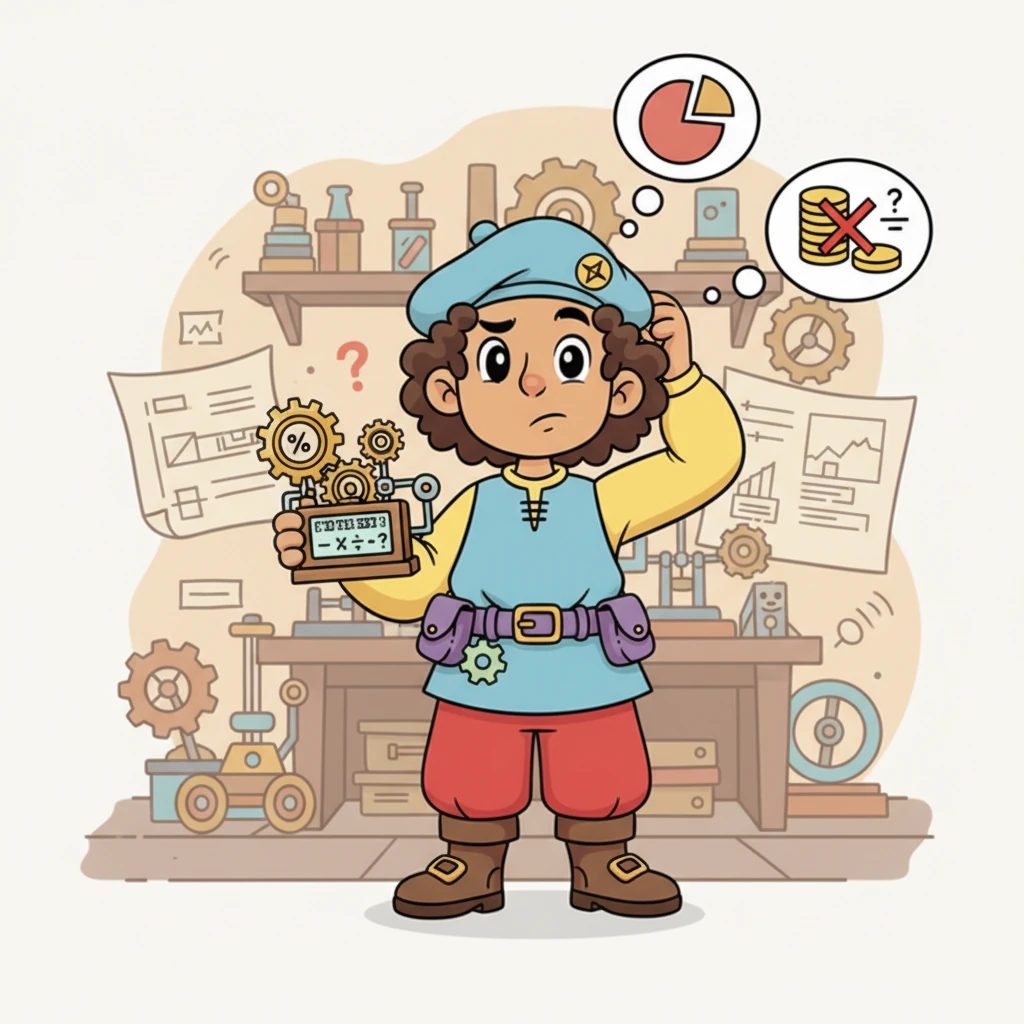
Pip soon discovers his wonderful 'Adder' can only do one thing: add. When faced with complex problems like percentages or deductions, he realizes his machine needs a lot more than just adding, leaving him scratching his head playfully.
Pip gazes at his specialized adder and wonders with wide, imaginative eyes, 'What if a machine could do ANY calculation, step by step, like following a secret recipe?' His mind races with possibilities, envisioning something much grander.
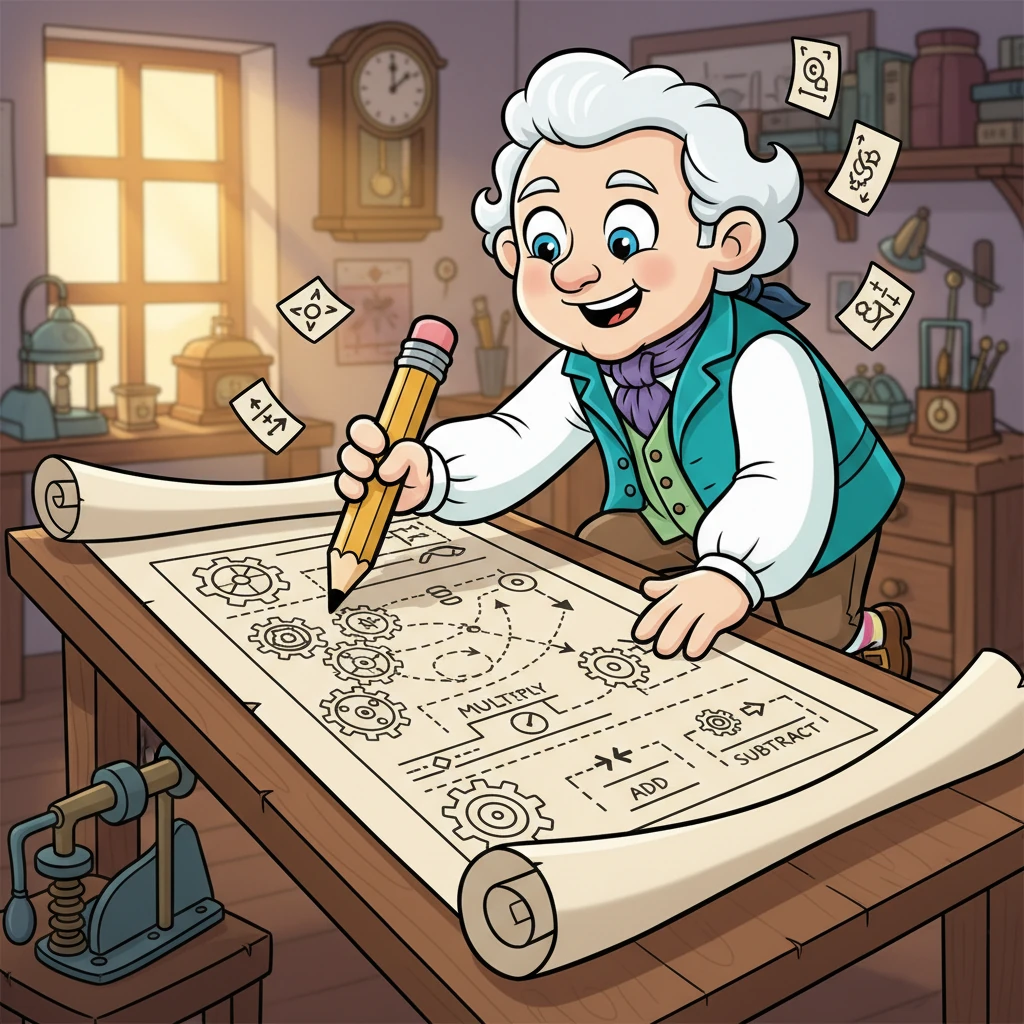
He sketches out a fantastic design for a 'General Purpose Machine,' a magnificent blueprint filled with different sections for multiplying, dividing, adding, and subtracting, all controlled by a sequence of instructions, like a playful dance.
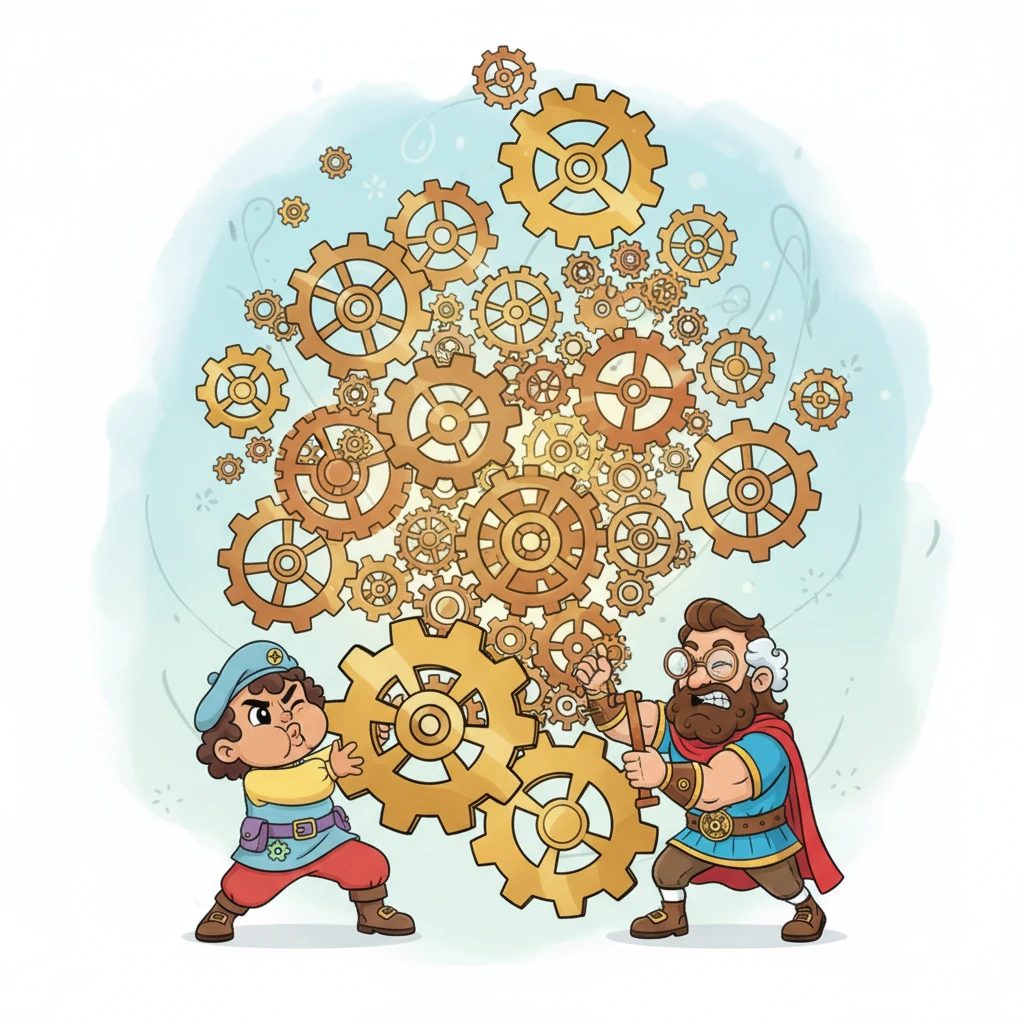
As Pip imagines his grand machine, it grows enormous, with thousands of gears! He tries to turn them by hand, but it's impossible; even a super strong hero would get tired in minutes, making him puff and pout with effort.
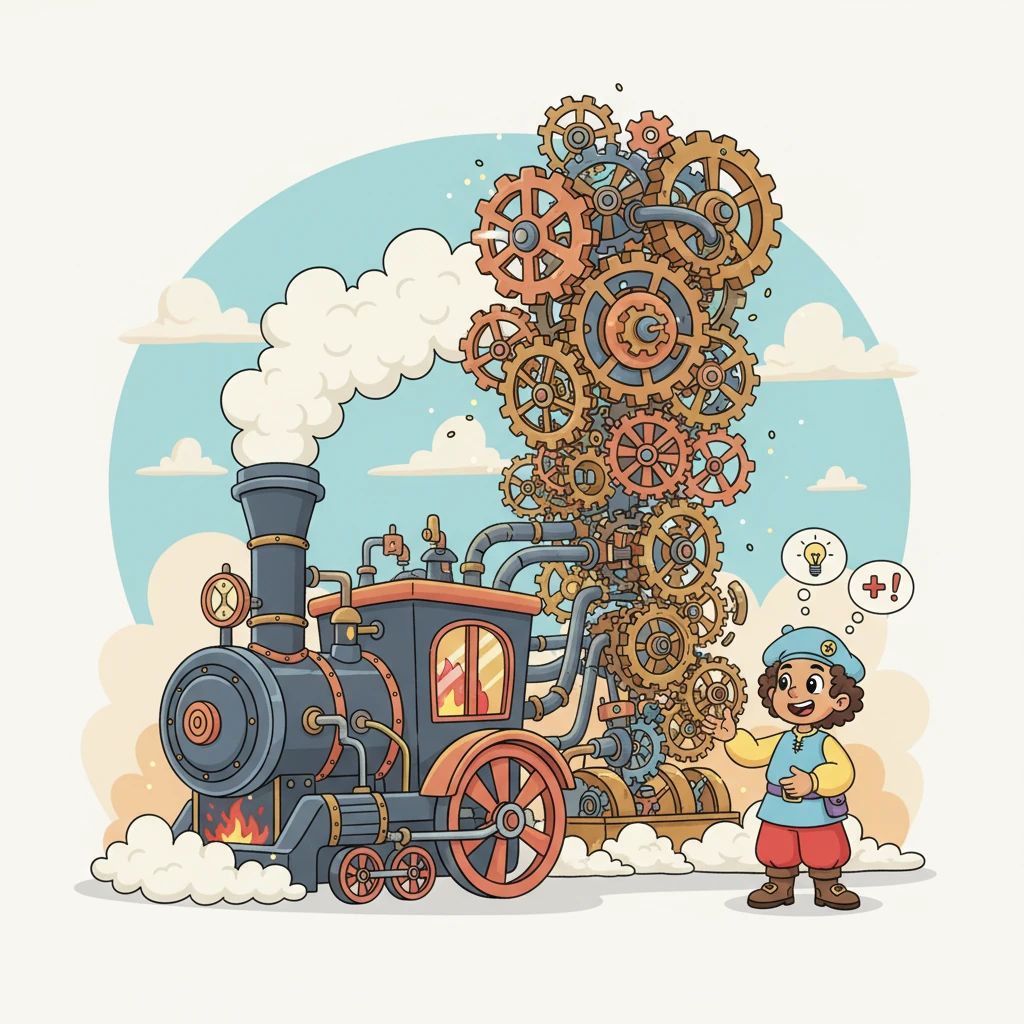
Suddenly, Pip pictures a powerful, puffing steam engine, chugging away beside his massive gear-filled computer. The steam engine provides endless energy, making the gears spin tirelessly, solving problems faster than any human ever could.
Finally, the scene shifts playfully, showing the clunky, steamy gears shrinking down into tiny, silent, glowing bits. The future of computing is here, transforming from noisy metal to speedy light, ready to zoom into your pockets and homes!
Generation Prompt(Sign in to view the full prompt)
# Genesis of Computers: Part 1 - Mechanical Engines The story of computing doesn't start with screens and keyboards. It starts with physical, mechanical machines and a young engineer's desire to help his father. ## Meet Pascal: The Young Inventor In the 1640s, a young Frenchman named **Pascal** was a brilliant mechanical and mathematical engineer. He spent his days tinkering with machines, but he was most passionate about logic and numbers. ### The Conflict: The Tax Collector's Ledger Pascal's father was a high-ranking tax collector. His life was consumed by endless piles of ledgers and books—a literal mountain of "Excel sheets" before Excel existed. Every day, he faced a grueling routine of calculating taxes for thousands of citizens. Pascal saw his father's frustration and had an "aha moment." ## The Aha Moment: Mechanical Orchestration Pascal realized that if you could orchestrate **gears and levers** in the right way, they could handle the burden of these calculations for you. ### The Gear Logic Imagine two levers connected to a common shaft: - **Input**: You turn Lever 1 by `5` units and Lever 2 by `6` units. - **The Orchestration**: As both levers rotate, they spin the central shaft together. - **Result**: The shaft reflects the total movement—`11` units. To Pascal, this was magic made real: machines could provide computational output. ## The Problem with "Adders" Pascal's machine, the **Pascaline**, was essentially a very sophisticated "Adder." It was like having a specialized tool for only one task. But what if you needed to do more? What if you wanted to calculate percentages, deduct taxes, and find the net payable amount all in one go? If a human had to manually turn the gears for every single addition, they’d soon need a lot of "Chai and Samosas" just to stay awake. This labor-intensive process led to the next big leap. ## The Babbage Evolution: The General Purpose Machine Fast forward to the 1800s. **Charles Babbage** looked at these "specialized adders" and asked: *"What if we had a machine that could do ANY calculation by following a sequence of steps?"* He envisioned the **Analytical Engine**—the grand-ancestor of your laptop. ### The Orchestration of Sub-Tasks Babbage realized that a complex calculation is just a string of simpler ones: 1. **Multiply** (Sub-component A) 2. **Divide** (Sub-component B) 3. **Add** (Sub-component C) 4. **Subtract** (Sub-component D) He introduced the concept of a **Program**—a set of instructions that would specify which sub-component should talk to which, and in what order. ## The Power Struggle: Steam over Muscle As the Analytical Engine grew in complexity, it required thousands of gears. Turning them by hand was impossible. Even if you hired a literal **Hercules** (or a very enthusiastic Gym-bro), they would get exhausted in minutes. ### The Steam Engine Solution To keep the computation running endlessly, Babbage turned to the state-of-the-art power source of his time: **The Steam Engine**. - **The Engine**: Constant, relentless power. - **The Computer**: A massive orchestrator of gears, driven by steam, performing calculations that no human could match. --- ### Reality Check: The Design vs. Reality While Babbage's designs were mind-blowing, the Analytical Engine was never fully completed in his lifetime. The sheer precision required for those thousands of gears was ahead of the manufacturing technology of the 1800s. However, the logic—using a "Program" to orchestrate sub-components—remains the foundation of every computer today. ## The Final Leap: From Gears to Bits Eventually, the "scaling tax" of physical gears became too heavy. - **The Transition**: Humans eventually unlocked **semiconductors**, allowing us to compute using **digital bits** (on/off states) instead of physical motion. This shifted computation from the noisy world of steam and iron to the silent world of light and speed. --- ### Dependencies - None (This is the Genesis Block)