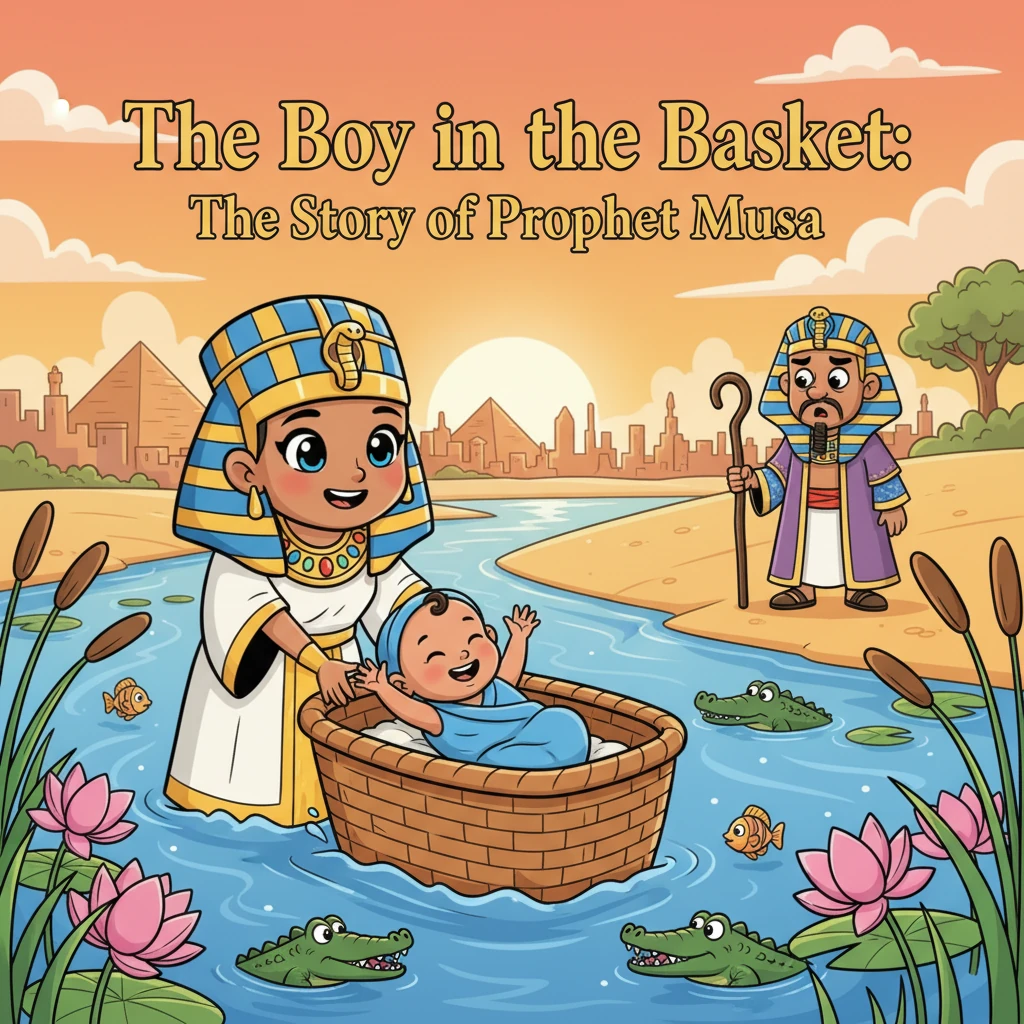
Dive into the heartwarming and wondrous tale of Prophet Musa, a special baby whose journey began in a humble basket on the mighty Nile. Discover how courage, faith, and a queen's love defied a mighty Pharaoh, setting the stage for an incredible destiny. This vibrant story is a joyful adventure of hope and divine miracles!
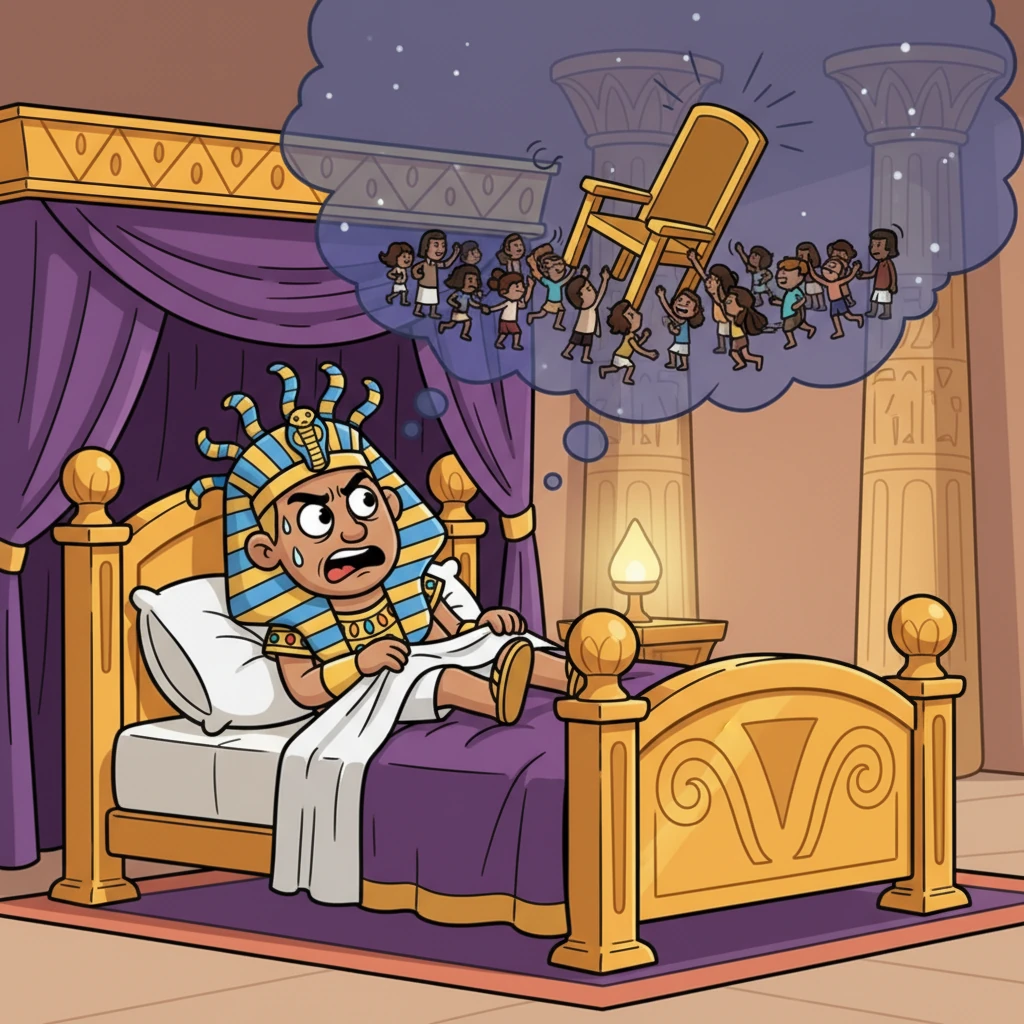
The mighty Pharaoh tossed and turned in his grand bed, a swirling nightmare making his crown wobble. He dreamed of a tiny, powerless people growing strong enough to shake his golden throne, his face twisted in a comically exaggerated scowl of fear.
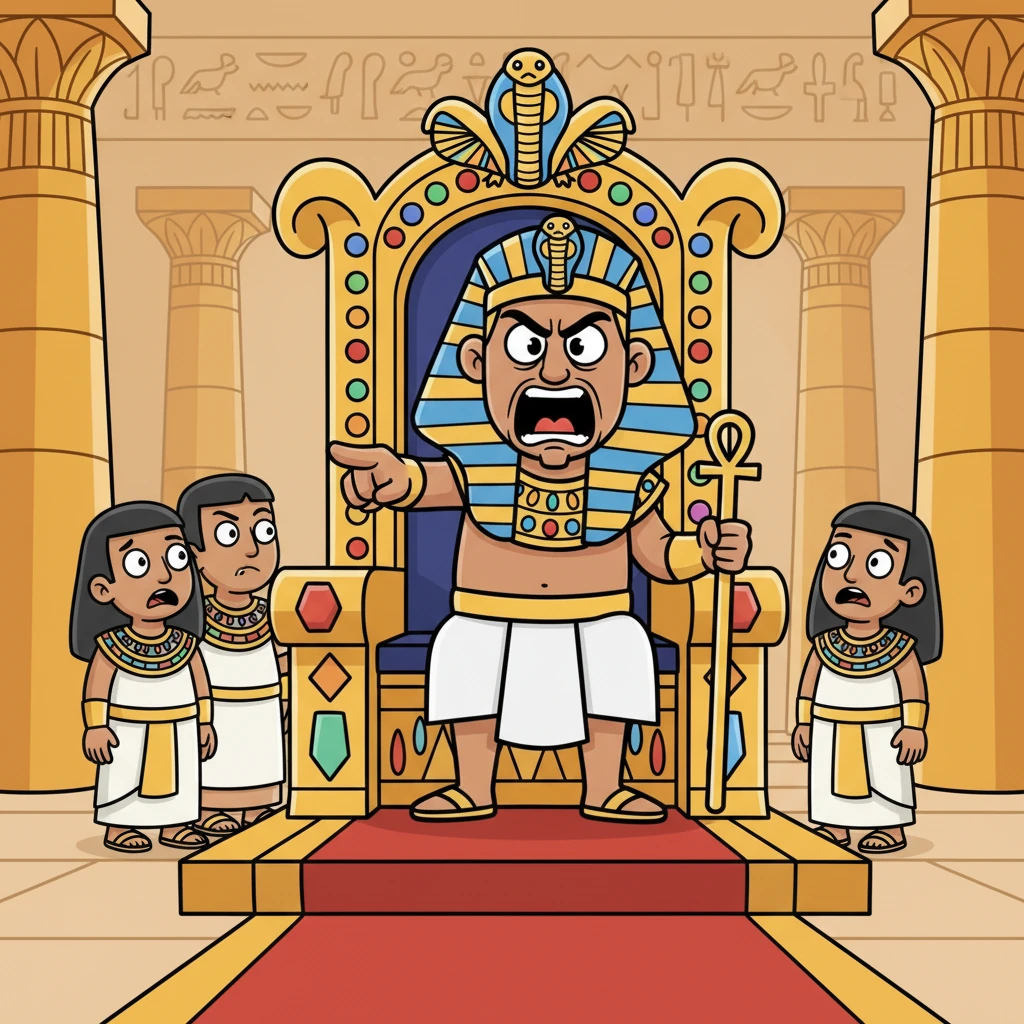
With a thunderous roar, Pharaoh sat on his opulent throne, surrounded by nervous advisors. He pointed a long, bony finger, decreeing that all new baby boys of the Israelite people must be taken away, his eyes glinting with cruel determination.
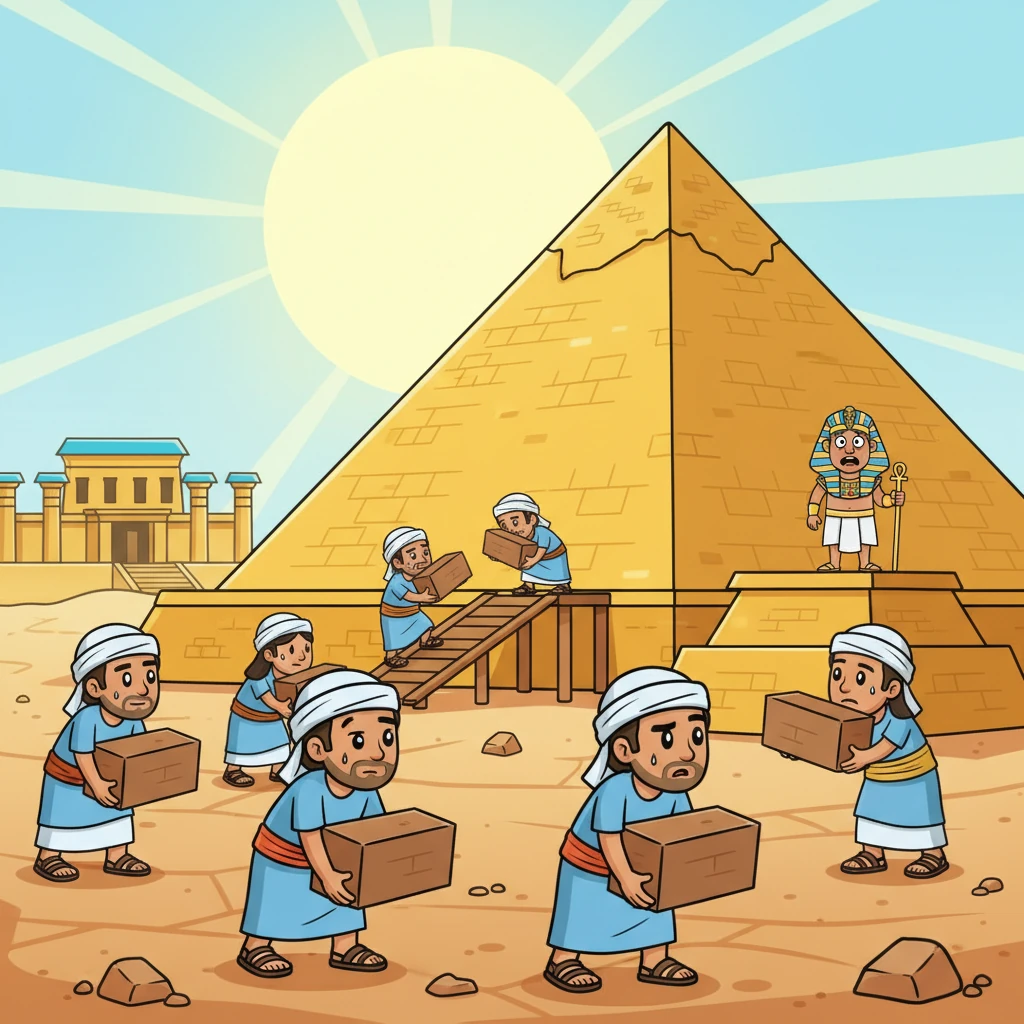
Under the scorching sun, the Israelite people toiled, their strong backs bent building massive pyramids for the Pharaoh. They carried heavy bricks with tired but determined expressions, their simple clothes a stark contrast to the gleaming palace in the distance.
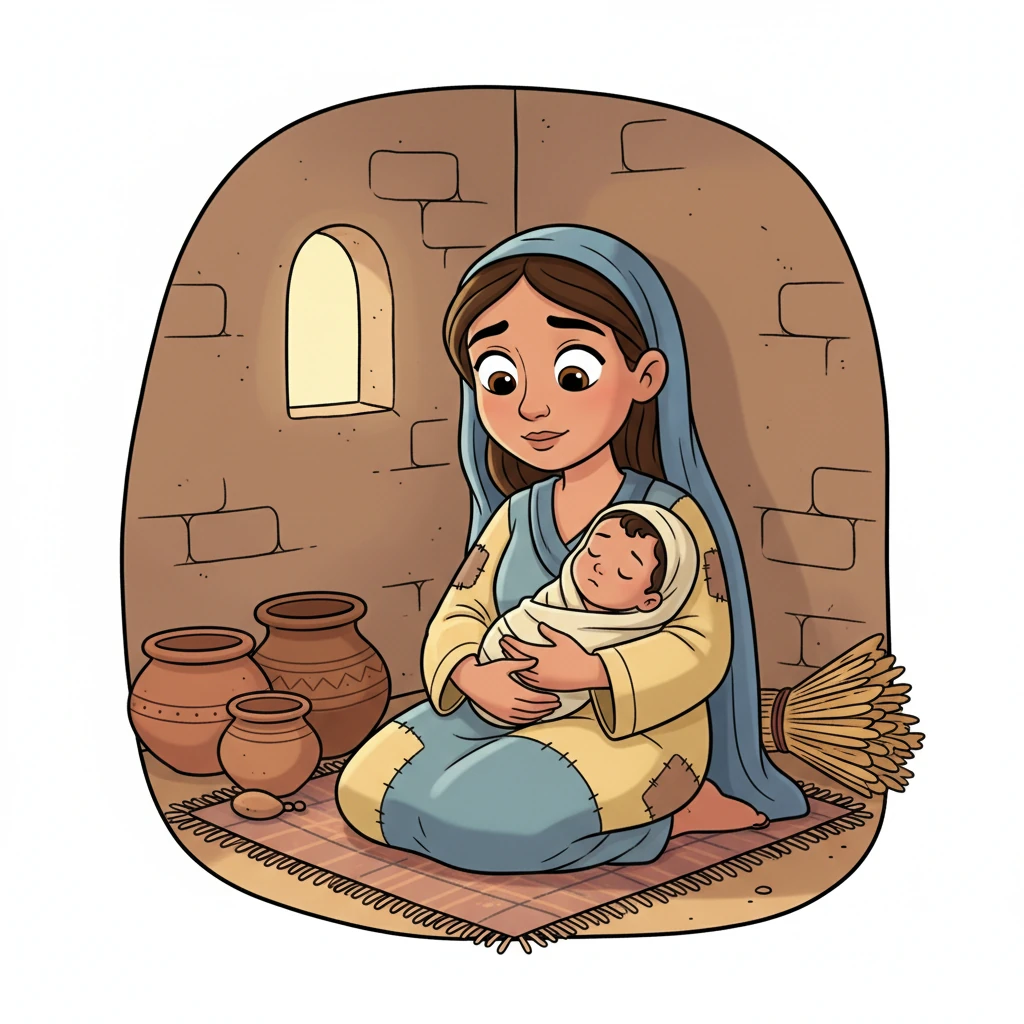
In a hidden corner of a humble home, a loving mother softly cradled her newborn son, Musa, her heart filled with both immense joy and a quiet, profound worry. She gazed at his sweet, innocent face, a tiny spark of hope in a dark world.
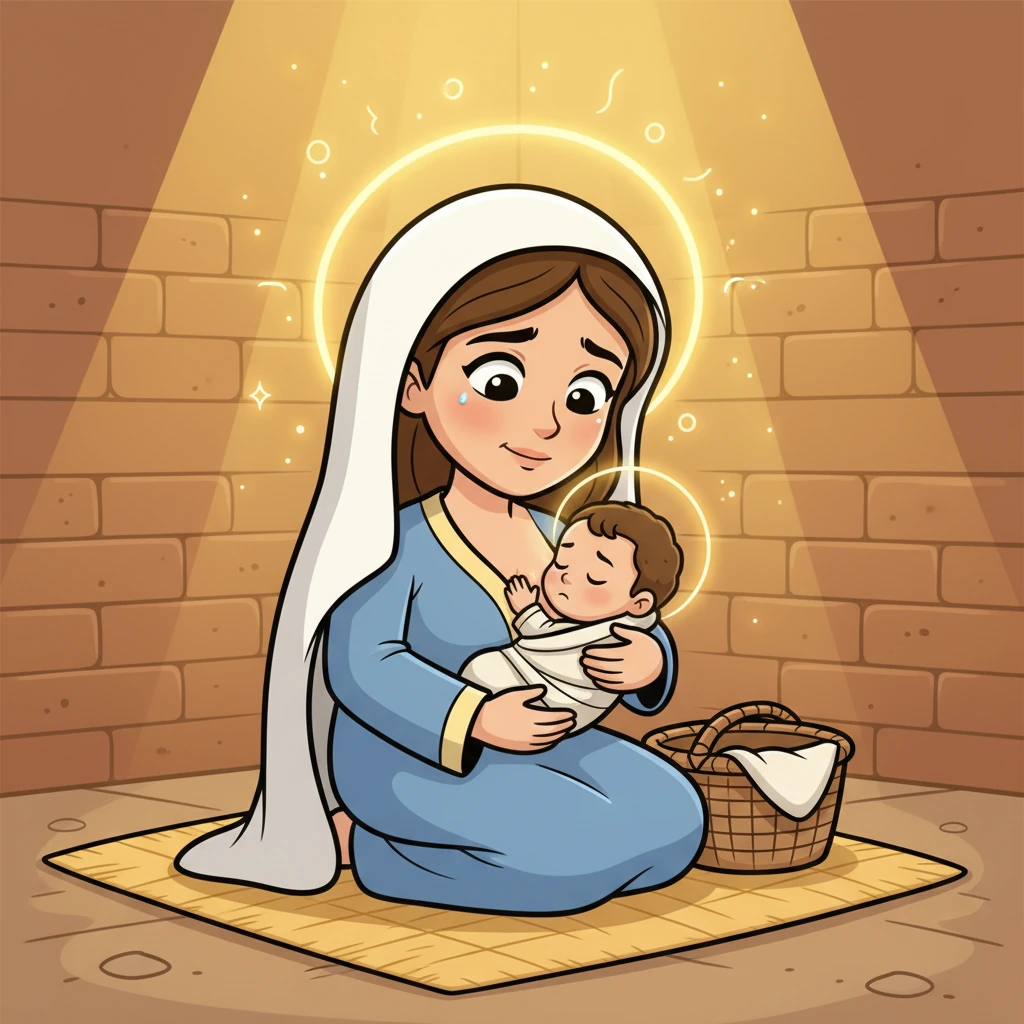
Suddenly, a gentle, warm glow filled the small room, and the mother felt a comforting whisper in her heart. A divine message assured her to nurse her baby, then trust him to the river, promising his safe return and a great future.
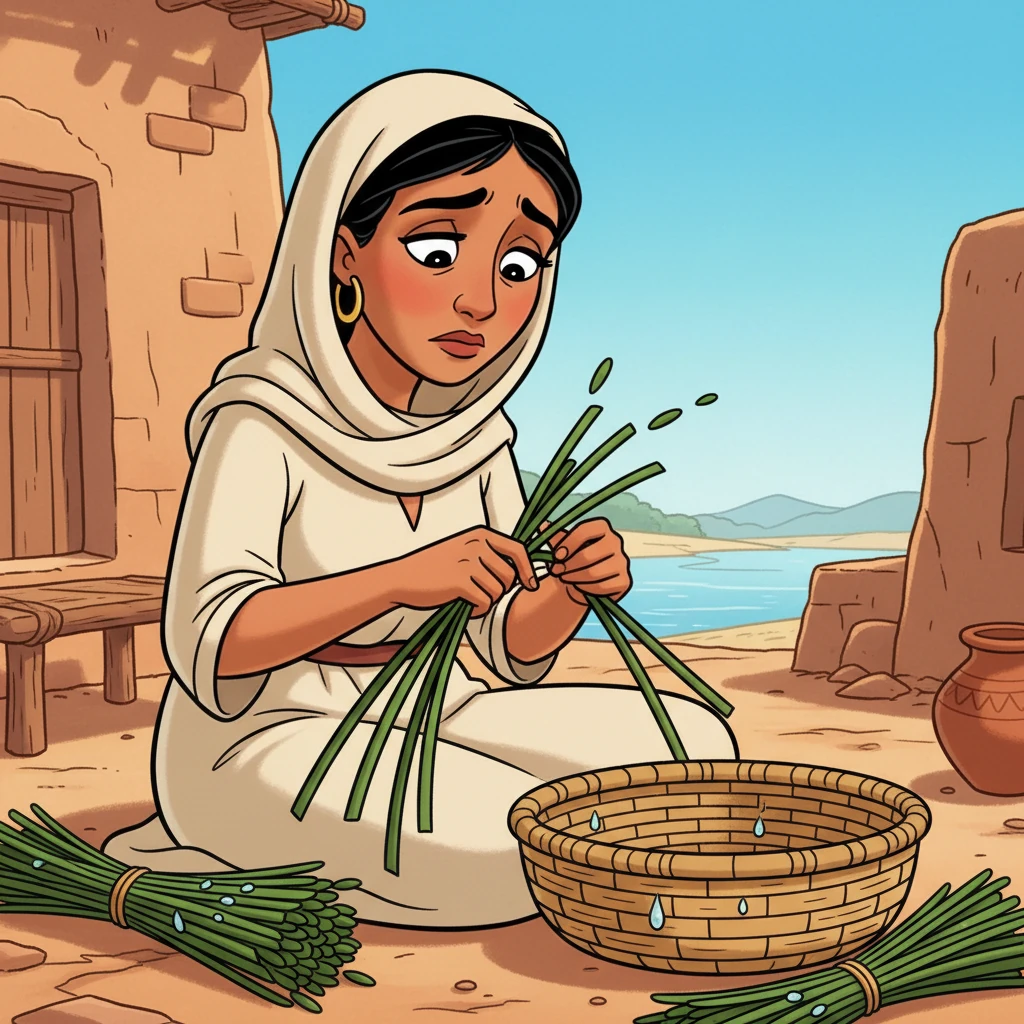
With trembling hands but a resolute spirit, Musa's mother carefully wove reeds together, crafting a sturdy, waterproof basket. She worked with a quiet determination, her heart aching yet fortified by the promise of Allah.
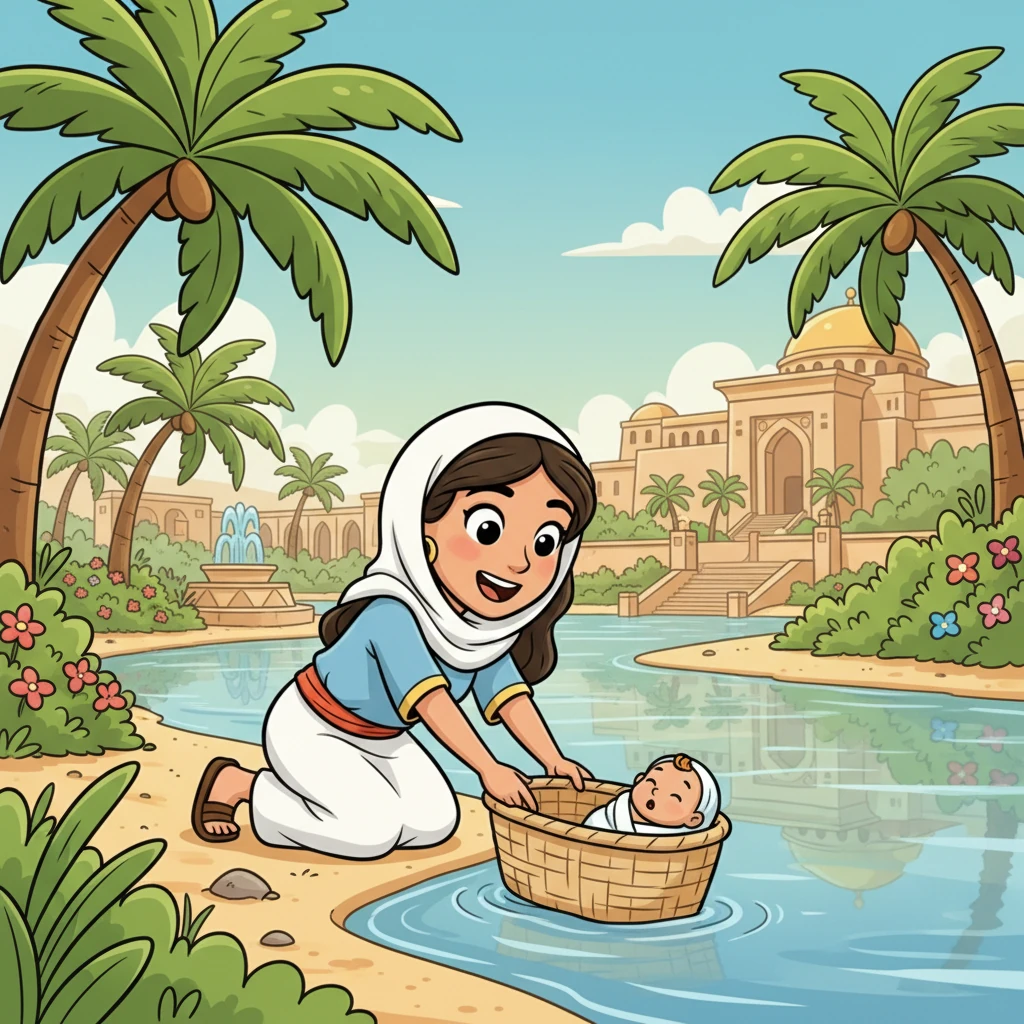
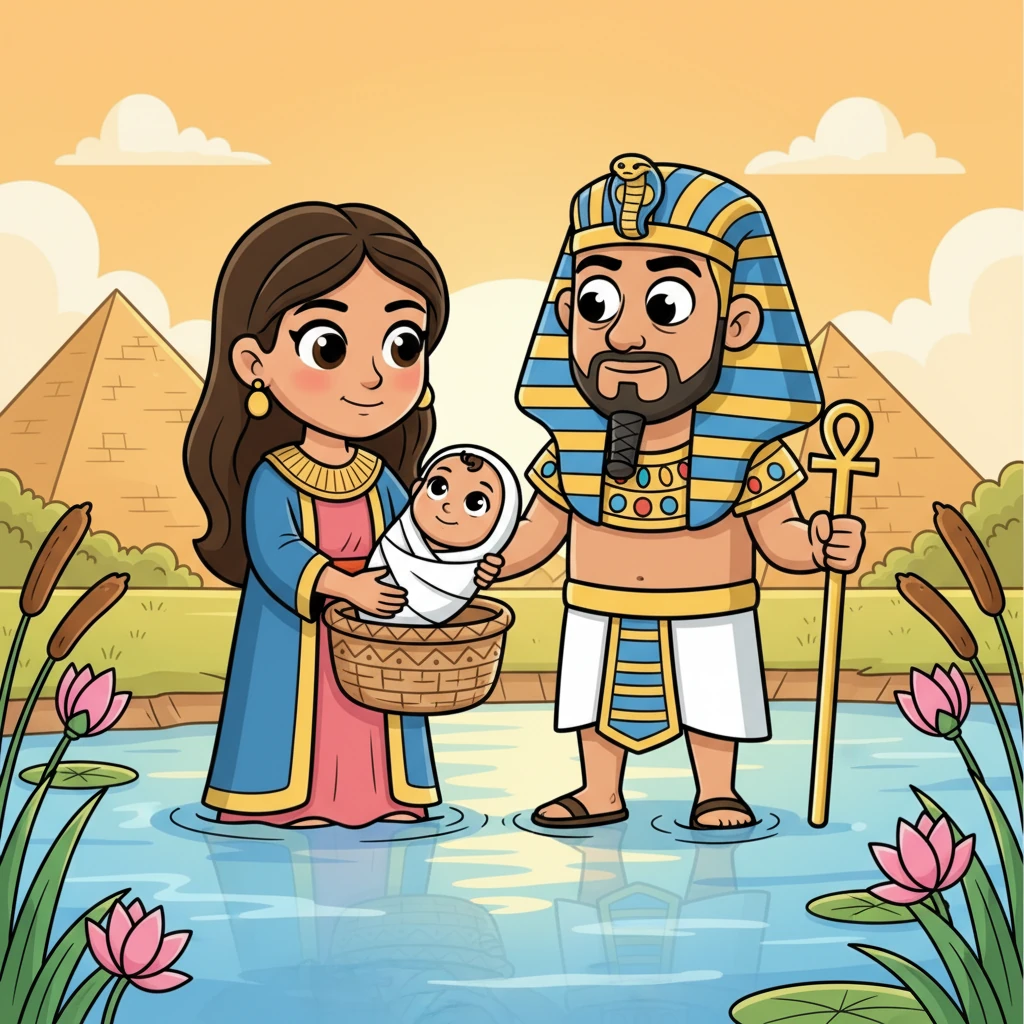
At the edge of the wide, calm Nile, the mother gently placed baby Musa in his little basket, giving him a last, loving kiss. The water rippled softly around him as the basket drifted away, watched by his watchful sister from the riverbank.
Downstream, near the grand palace gardens, a curious palace servant spotted the peculiar basket bobbing by the shore. With wide, surprised eyes, she peeked inside and gasped with delight at the sight of a beautiful, cooing baby.
Queen Asiya, with a warm, tender smile, lifted baby Musa from the basket, her heart instantly overflowing with love for the sweet child. Even Pharaoh, though initially stern, looked on, softened by his wife's joy and the baby's innocent charm.
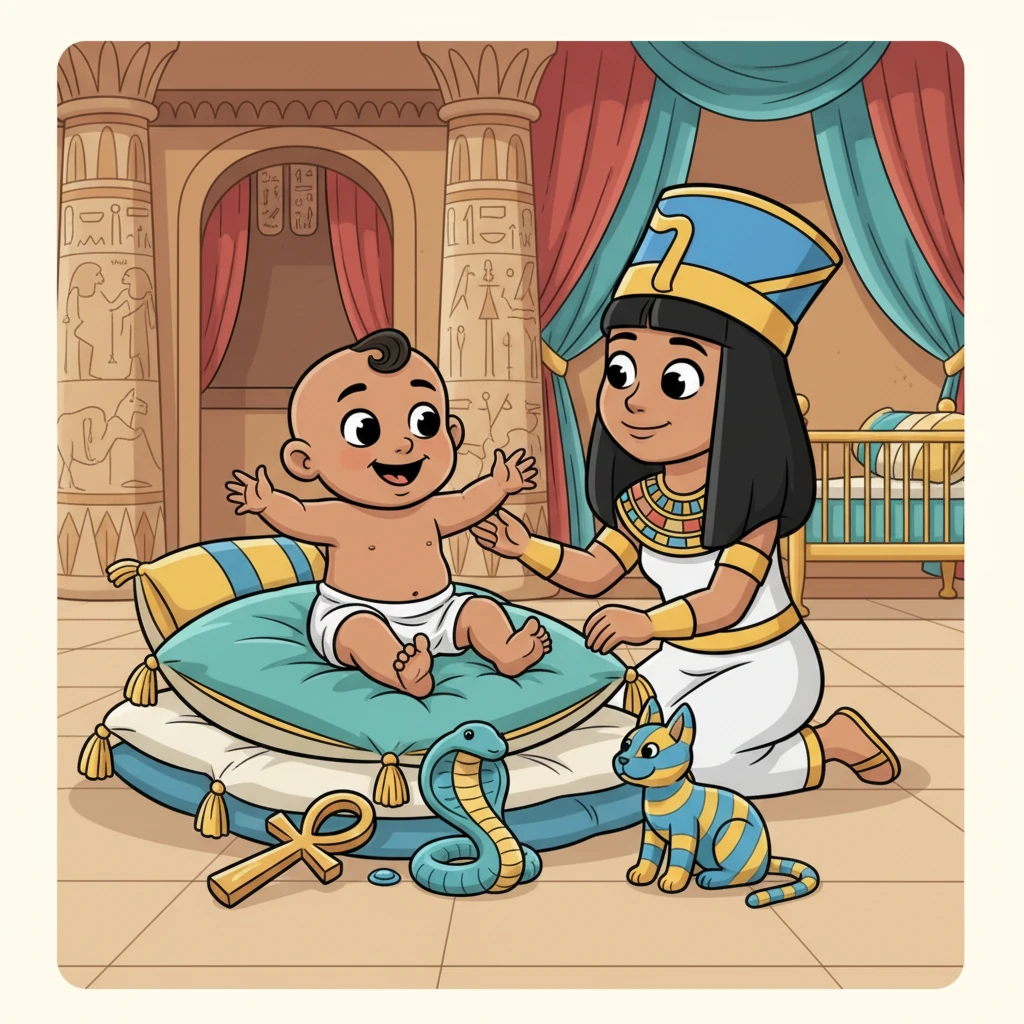
Within the lavish palace walls, baby Musa giggled happily, now safe and cherished, surrounded by soft silks and royal toys. His journey had just begun, a tiny prince unknowingly destined for greatness, protected by a queen's love and divine will.
Generation Prompt(Sign in to view the full prompt)
The Story of Prophet Musa (عَلَيْهِ ٱلسَّلَامُ) The Pharaoh's Dream The Pharaoh of Egypt trembled with fear. He had a vision of being overthrown by the Bani Israel (children of Israel) who he viewed as being worthless. Read the text of image above in document. After carefully considering the symbolism of the vision, the party inferred that an extraordinary boy would be born among the Israelites, and ultimately, his rise would bring about the end of their oppression. Thus, a command was given to slay all male children born to the Israelites. From surah al-Qasas, ayah 4, English Translation: "Indeed Pharaoh transgressed in the land and divided its people into sections. One group of them he humiliated, and slew their sons and spared their daughters. Truly he was among the mischief-makers." There was no moral dilemma that the Pharaoh underwent in issuing this verdict, as he had always oppressed the people of Israel — the descendants of Prophet Yaqub (عَلَيْهِ ٱلسَّلَامُ). The Israelites only served as slaves to the Pharaoh and Egyptians, and they were forced into labor for little or no pay. They were treated as lowly citizens who had no rights. The Egyptians worshiped the Pharaoh and carried out all his demands without question. They worshiped the gods that he endorsed. Challenging him on any issue would be as good as signing your own death warrant. The people feared the Pharaoh, and although they may not have believed in polytheism, they followed the path of their King without protest. With all male babies born to the Israelis being killed, the Pharaoh was left with a new problem. “ His sages warned: “The elders of the Israelis die and the young are slaughtered. This will lead to their annihilation. As a result, you will lose the manpower of those who work for you.” The sages then suggested to the Pharaoh a cyclical policy for regulating the slaughter: in the first year, all male children would be slaughtered, while in the following year, they would be spared, continuing so on and so forth. The Pharaoh, finding this solution more economical, readily enacted the plan. The Birth of a Prophet Read the text of image above in document. “ Allah (سُبْحَٰنَهُۥ وَتَعَٰلَىٰ) inspired her: “Nurse him, and then, when you fear for his safety, put him in the river: do not be afraid, and do not grieve, for We shall return him to you and make him a messenger.” — (Surah Al-Qasas, ayah 7) Reassuring herself with the Lord’s promise, the mother nursed her son in secret. She named him Musa (عَلَيْهِ ٱلسَّلَامُ). When the cries of baby Musa (عَلَيْهِ ٱلسَّلَامُ) were sure to draw suspicion of Pharaoh's army, the mother decided it was time to do as Allah (سُبْحَٰنَهُۥ وَتَعَٰلَىٰ) said and part with her baby. With a heavy heart, she fashioned a basket. Read the text of image above in document. When the basket touched the water of the River Nile, Allah (سُبْحَٰنَهُۥ وَتَعَٰلَىٰ) commanded the waves to be gentle. As instructed, the water became calm and rocked the basket forward, soothing baby Musa (عَلَيْهِ ٱلسَّلَامُ). Musa's (عَلَيْهِ ٱلسَّلَامُ) mother, like all mothers, worried for his safety. She instructed her daughter to follow the riverbank for as long as possible and then report her findings back to her. This is similar to the teaching of the Prophet (ﷺ), who, when asked by a man whether he should tie his camel and trust in Allah or leave it untied and rely upon Allah. “ He (ﷺ) responded, "Tie it and rely upon Allah." (Jami at-Tirmidhi 2517) In the Qur'an, this part of the story is recounted, English Translation: "On the other hand, the heart of Moses’ mother was sorely distressed. Had We not strengthened her heart that she might have full faith (in Our promise), she would have disclosed the secret. She told the sister of Moses: “Follow him." So she kept watch over him unperceived (by the enemies)." — (Surah Al-Qasas, ayat 10-11) The Discovery At The Riverbank Musa’s (عَلَيْهِ ٱلسَّلَامُ) sister followed the course of the basket. To her great horror, the basket came to rest at the riverbank outside the Pharaoh's palace. One of the servants at the palace noticed the strange basket lying on the shore. They peeked in out of curiosity, only to find a baby within. They rushed to the palace with the basket to report to the Pharaoh and the queen about the mysterious baby in the basket. Asiya, the Pharaoh's wife, felt an inexplicable love for the little soul who appeared outside her palace. She was aware of her inability to bear a child of her own, though she had longed for a baby boy — perhaps this was Allah's (سُبْحَٰنَهُۥ وَتَعَٰلَىٰ) gift to her. The moment she lifted the baby from the basket, she kissed him. The news of the baby quickly circulated throughout the palace. When the news got to the Pharaoh, he had a different reaction. He figured it was likely a last-ditch attempt by an Israeli woman to save her child from his decree. Unmoved and w