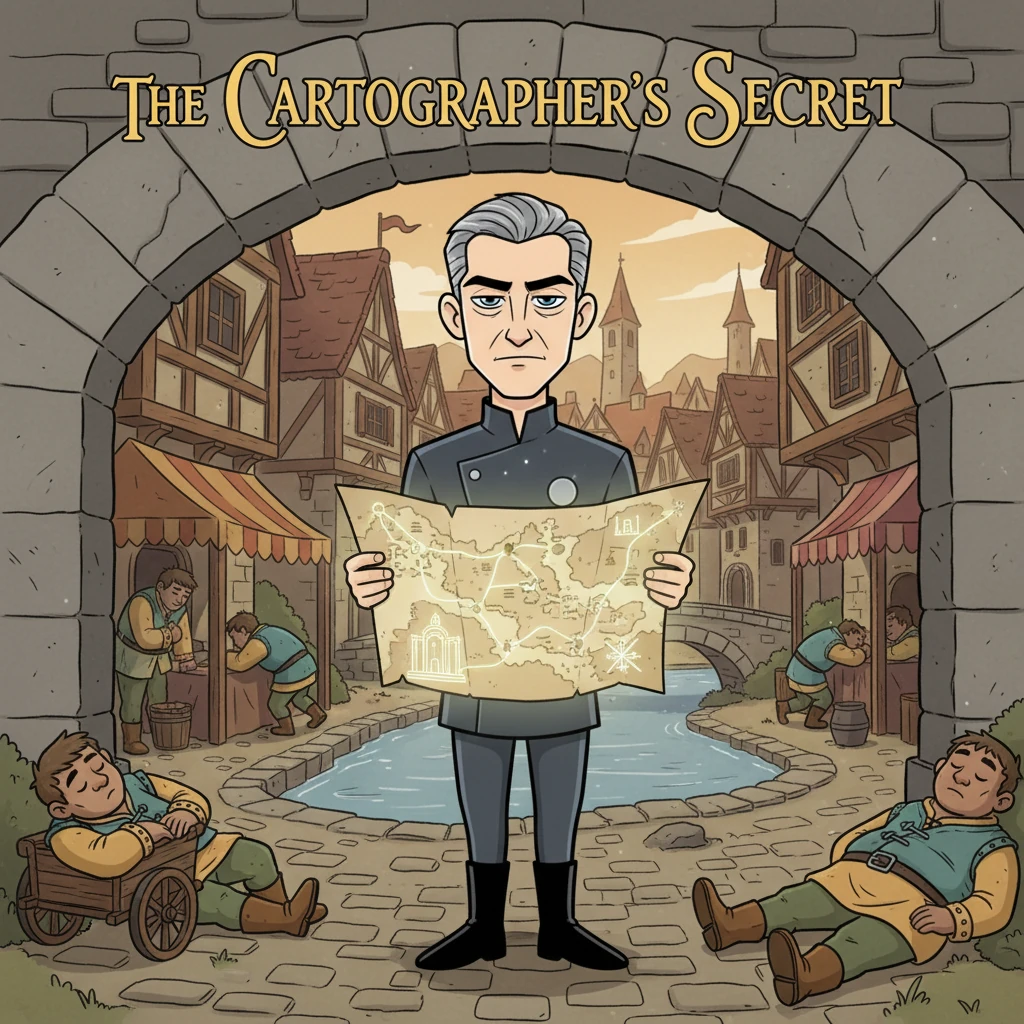
Embark on a silent, atmospheric journey through a medieval riverside town frozen in a midday siesta. Follow the clues hidden within a masterfully painted map to uncover a legacy of mystery and discovery. A beautifully illustrated tale that celebrates the art of exploration and the stories told by the places we leave behind.
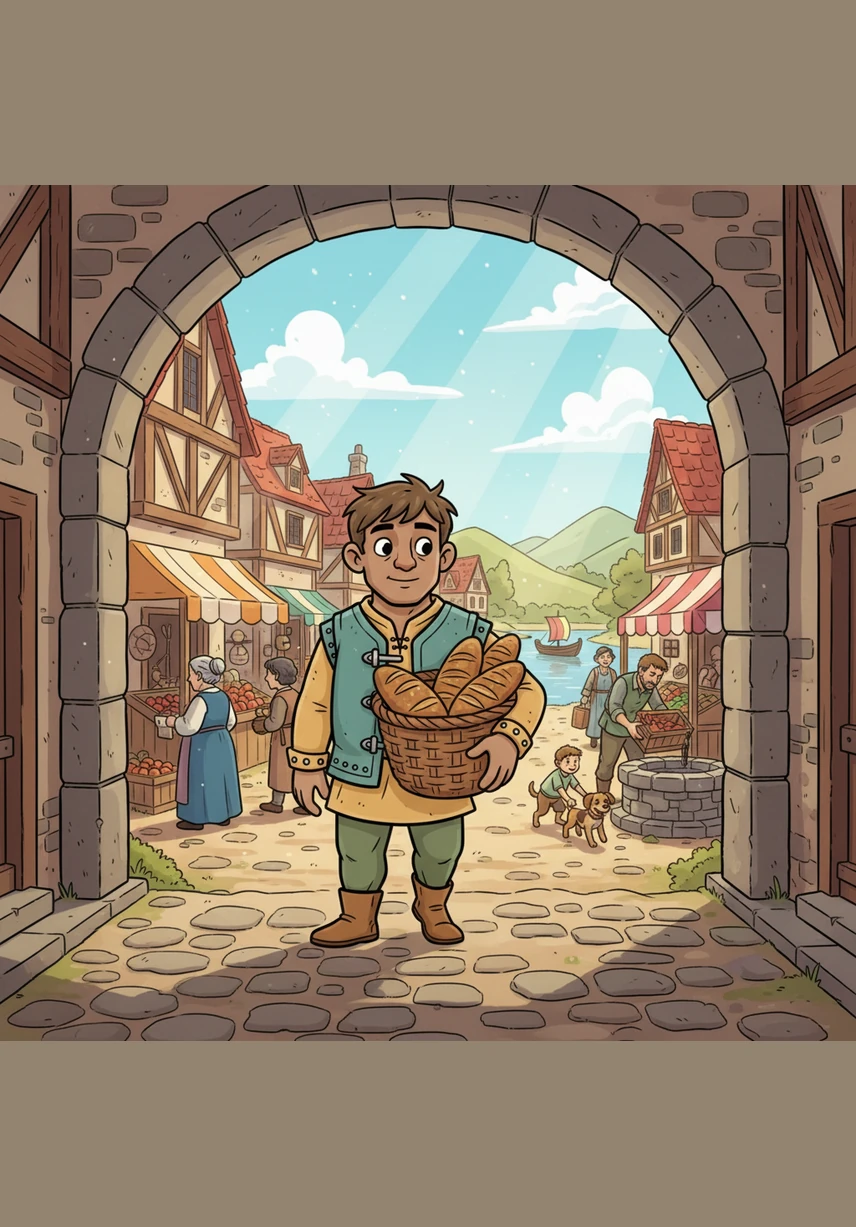
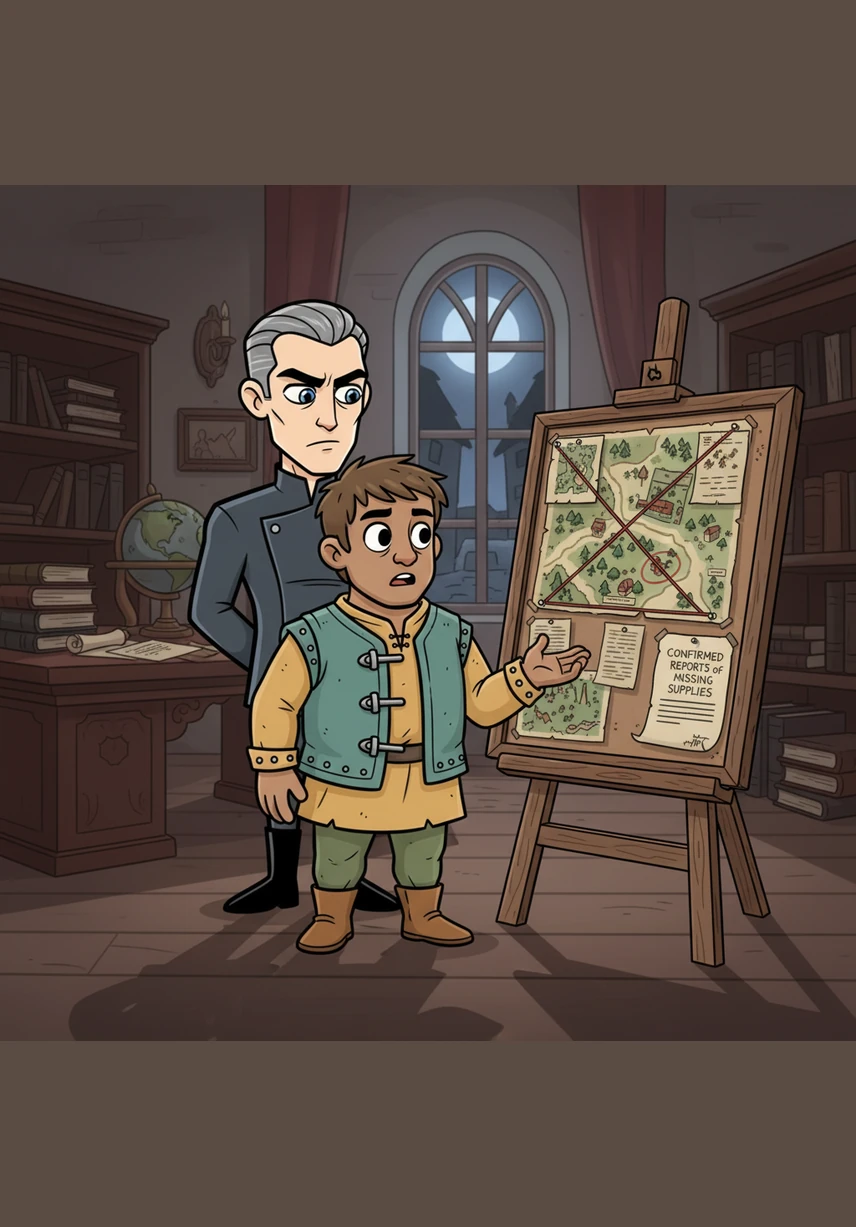
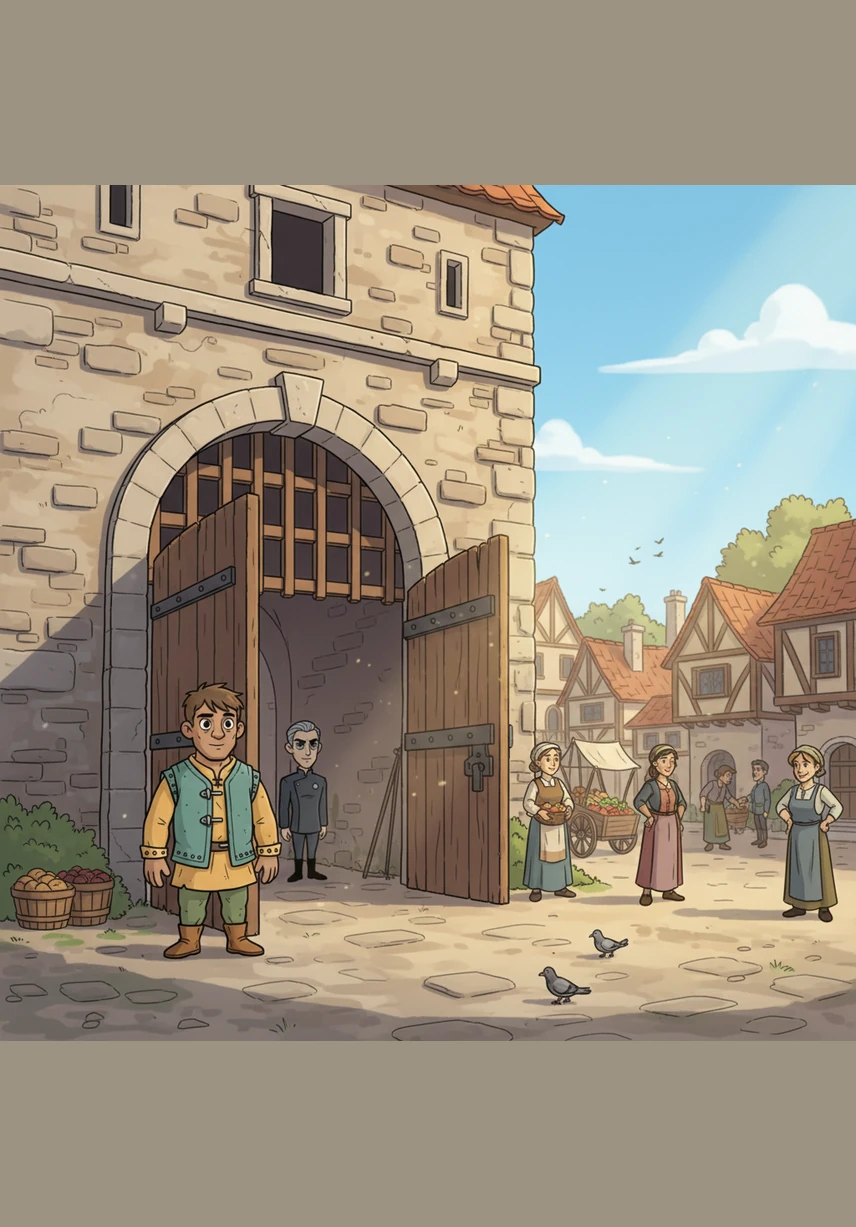
Elias steps through the sun-drenched gatehouse of the riverside town, his boots echoing softly on the warm cobblestones. The air is still and silent during the midday siesta, with the only sound being the distant, rhythmic rush of the river outside the walls. He stops before a massive wooden notice board mounted firmly onto the weathered gray stone of the interior wall.
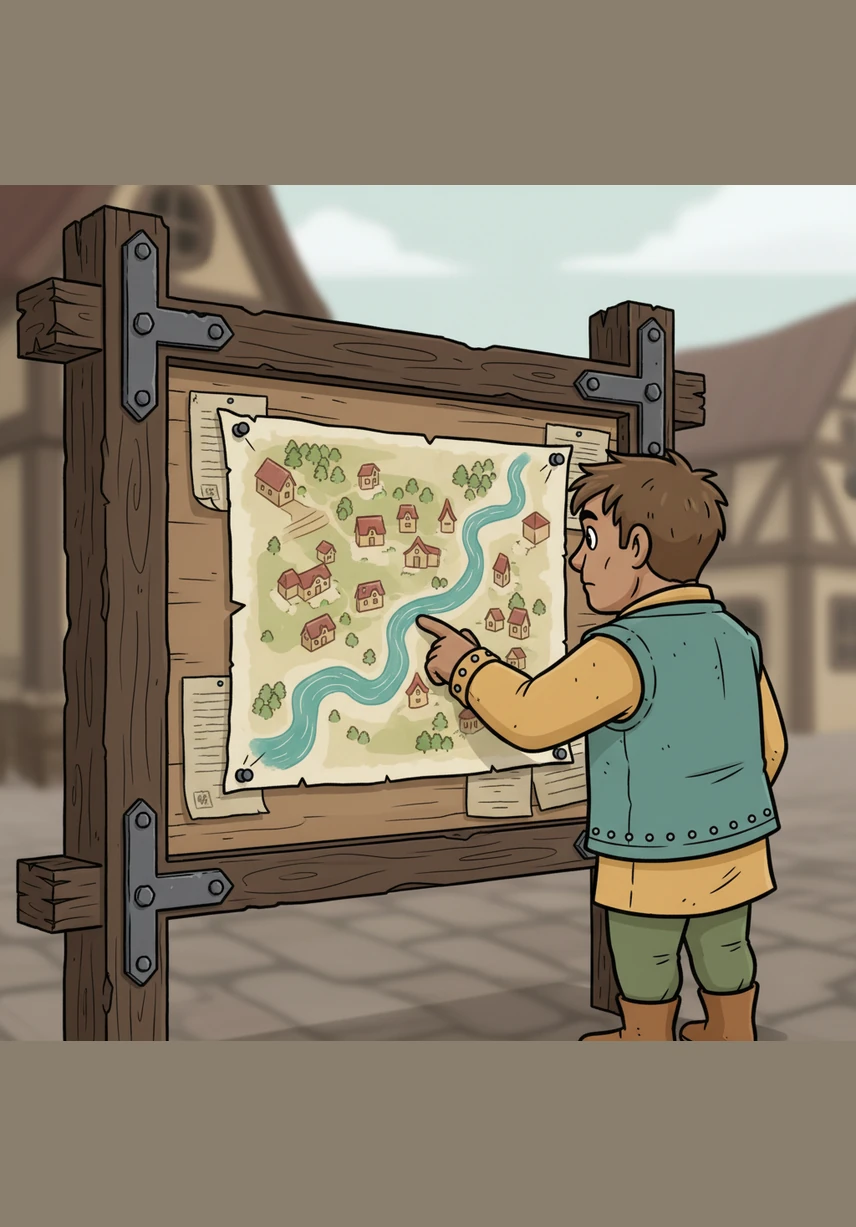
The notice board is a masterpiece of craftsmanship, framed in dark oak beams and reinforced with hand-forged iron brackets. At its center, a hand-painted map of the town stretches across a piece of worn, cream-colored canvas. Elias traces the teal-blue ribbon of the river with his finger, noticing how the brushstrokes capture the flow of the water.
A golden shaft of light from a narrow arrow-slit window high above illuminates a specific section of the map. Elias notices a small, frayed cord dangling from the corner of the board with a tiny iron token attached to it. He realizes the map isn't just for directions; it contains subtle markings that hint at a hidden path through the quarters.
Turning his gaze from the board, Elias looks toward the open archway where the warm light of the afternoon pours in. The town beyond the gate is a labyrinth of shadows and golden light, exactly as the cartographer had depicted in muted ochres and earthy greens. He feels the weight of the iron token in his hand, wondering what door it might unlock.
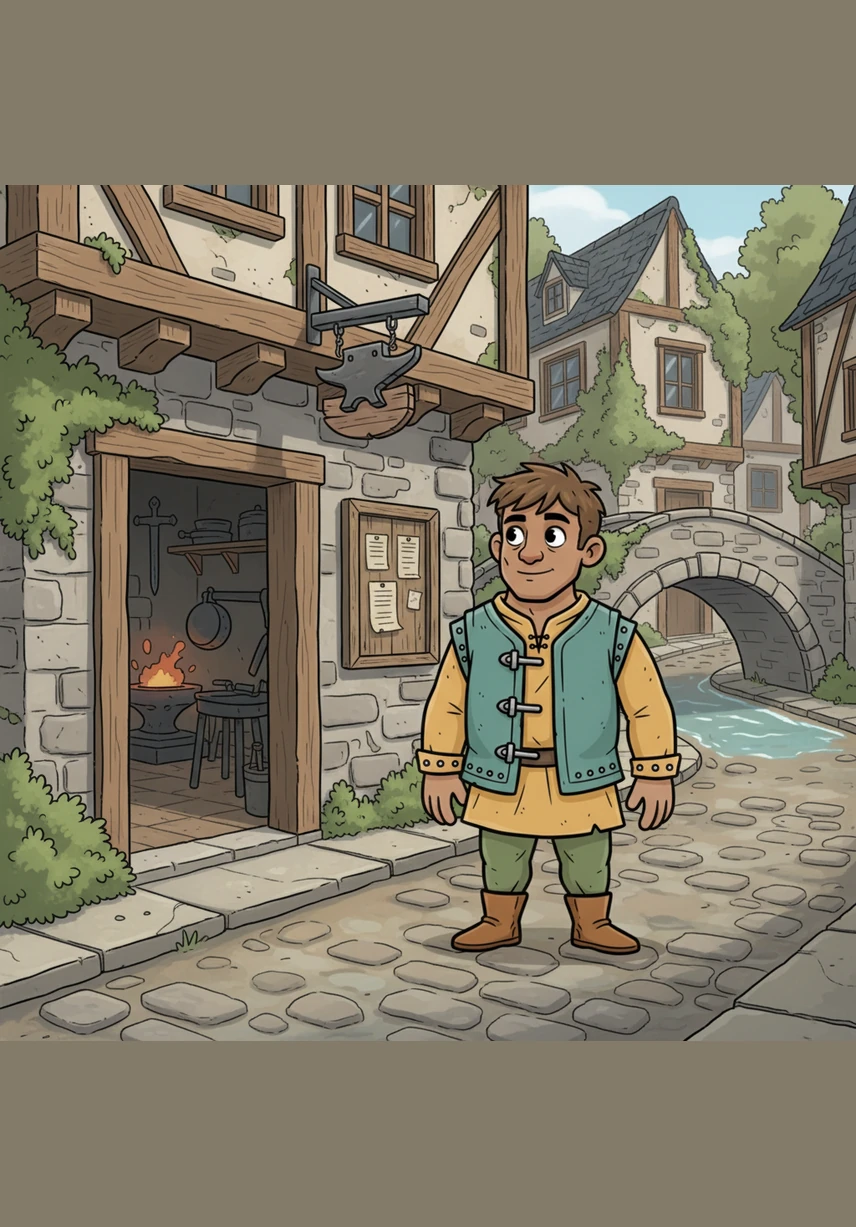
He begins his walk through the quiet streets, passing the stone bridge shown on the map where the water flows gently beneath the arches. The town feels like a living painting, with every ivy-covered wall and wooden beam matching the details on the notice board. He finds himself standing before the old blacksmith's shop, marked by a tiny anvil icon on the canvas.
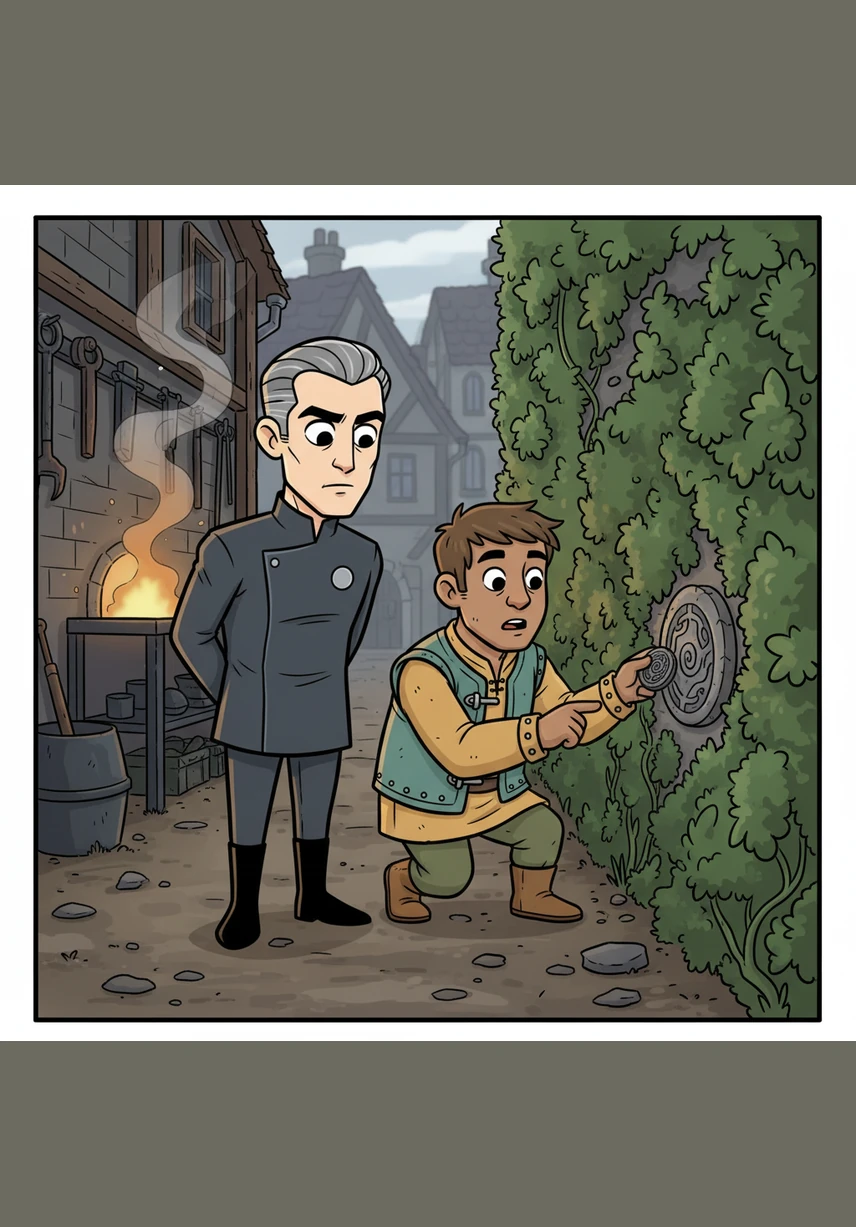
Beside the blacksmith’s forge, a vine-covered wall hides a narrow alleyway that was only a faint line on the town map. Elias notices a small stone carving near the ground that matches the pattern on his iron token. He realizes the town was designed with secrets meant only for those who truly know how to read a map.
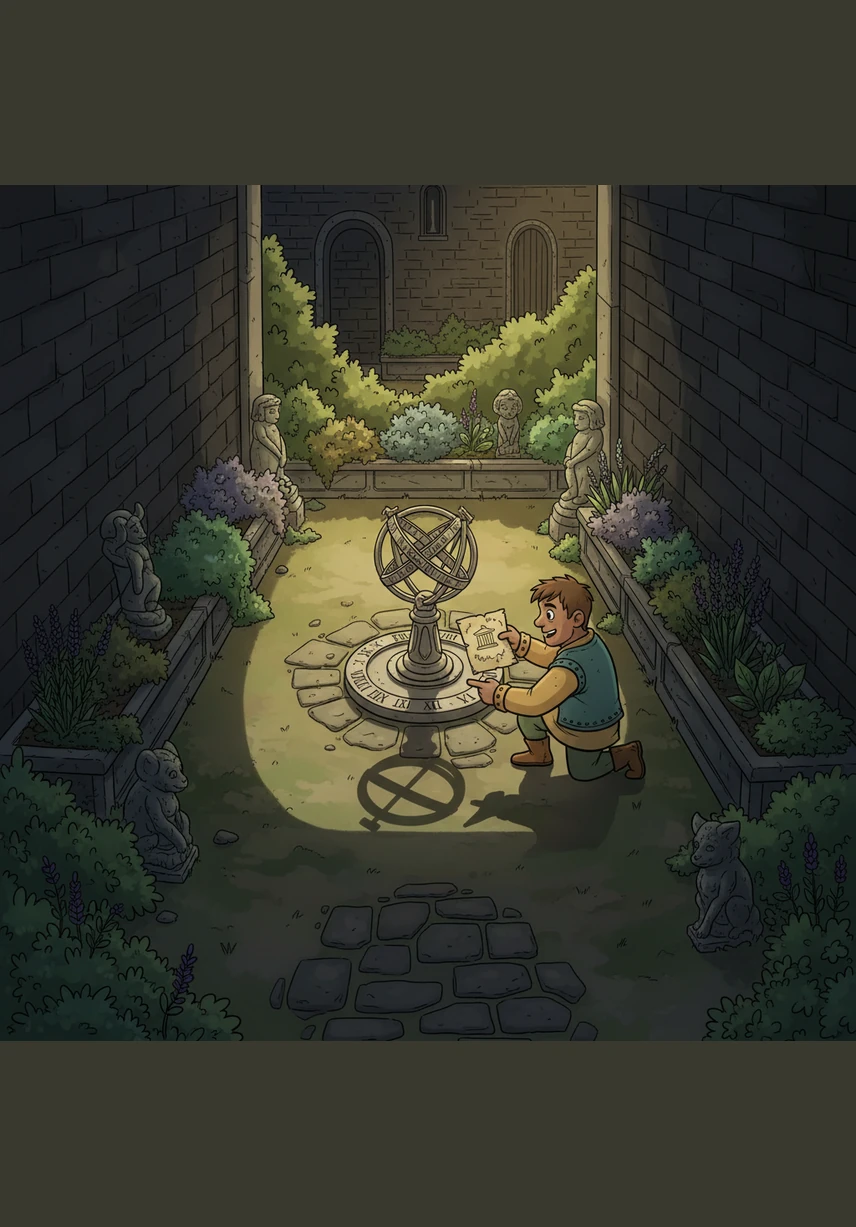
The alley leads him to a hidden garden filled with fragrant herbs and small stone statues resting in the shade. In the center stands a sundial that catches the afternoon sun, casting a long shadow toward a specific paving stone. This location corresponds to the tiny flame-niche icon he saw near the temple quarter on the board.
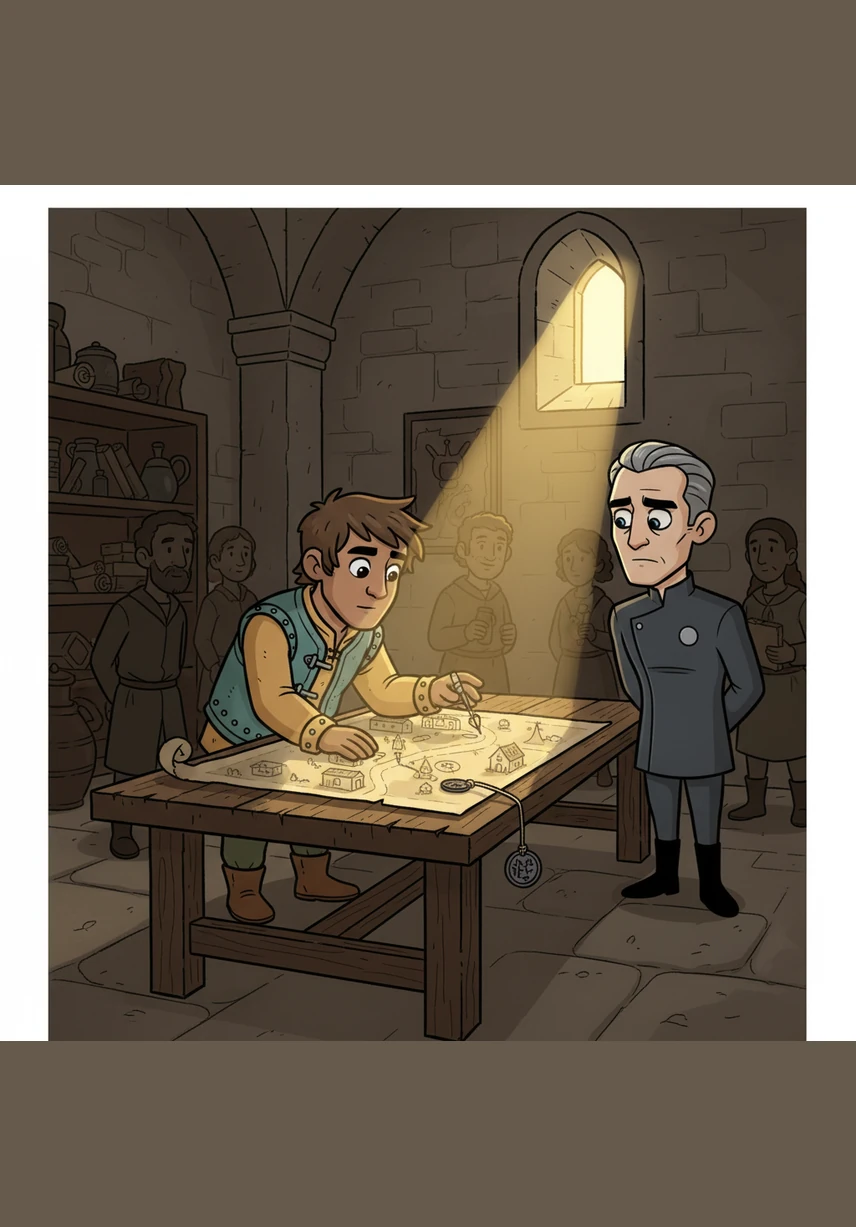
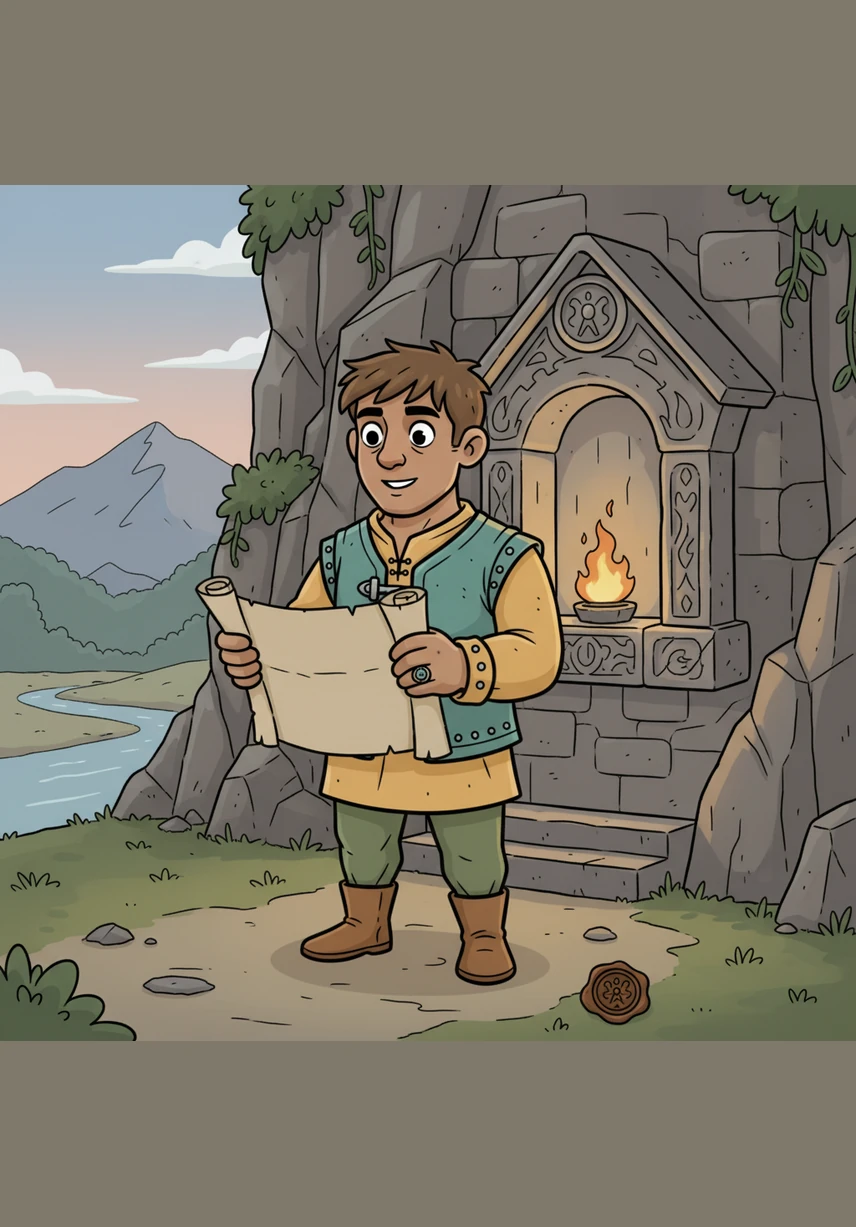
Elias reaches the temple, a serene building with a small flame flickering in a stone alcove just as the map promised. He realizes the map at the gate was a guide left by his grandfather, a legendary scout who once protected this riverside realm. The wax seal at the bottom of the parchment matches the signet ring Elias wears on his own hand.
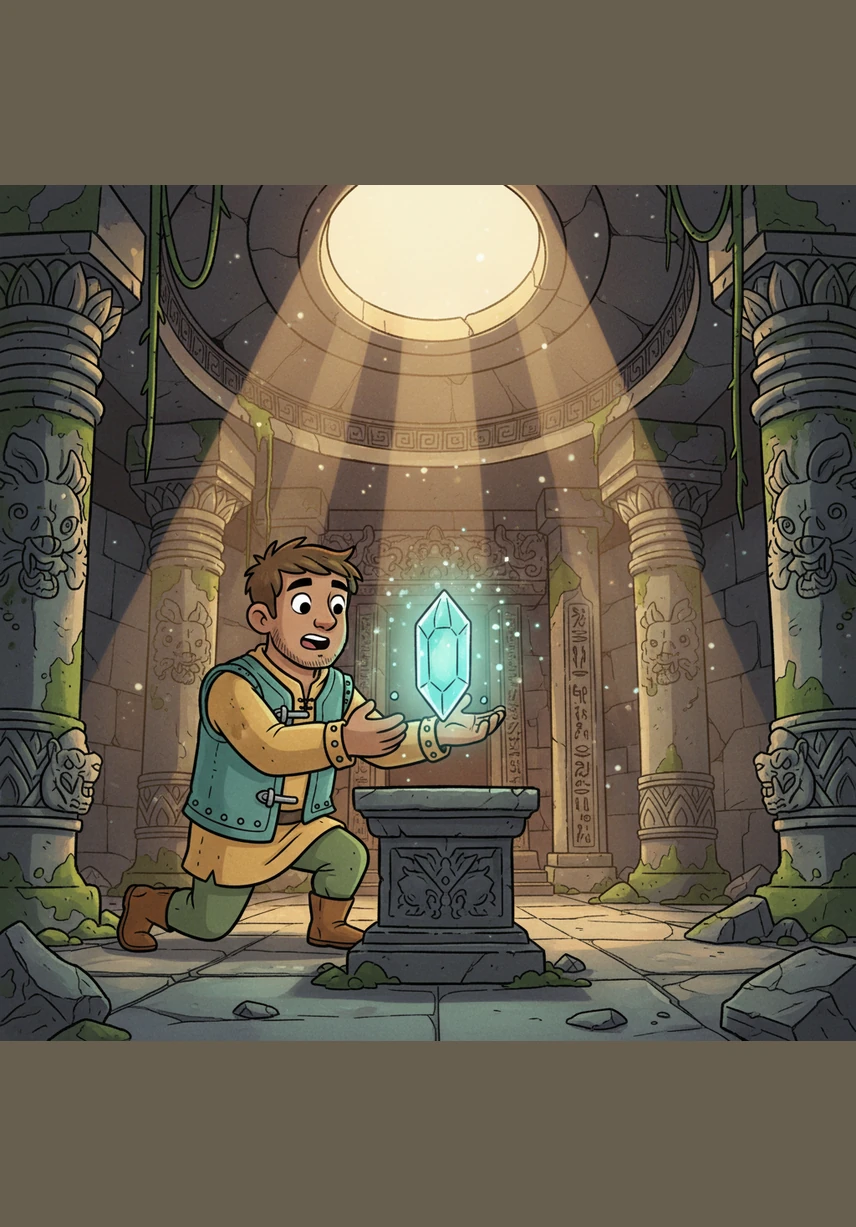
Beneath the temple's flame-niche, he discovers a small hidden compartment containing a leather-bound journal. The journal contains the lost histories of the town and a final message of welcome for the next generation of explorers. The map at the gatehouse was his first test, a gateway into a legacy of discovery.
As the town begins to wake from its siesta and the first merchants return to their stalls, Elias returns to the gatehouse. The shadows have shifted across the notice board, revealing new details in the painted map that he hadn't seen before. He tucks the journal into his pack, ready to explore every icon and alleyway of his new home.
Generation Prompt(Sign in to view the full prompt)
``` In the style of high-fantasy illustration: semi-realistic with soft shading, brush rendering, visible mini-brushstrokes, and cleaner bold linework. Vertical composition on a completely pure white background with no canvas texture visible. Illustration of a large wooden notice board mounted on the interior stone wall of a medieval riverside town gate during daylight siesta, shown from the party's point-of-view just after stepping through the gate. No people, animals, or any organic beings appear—this is a game asset—yet the scene breathes through the traces its townsfolk leave behind. **COMPOSITION RULE: The wooden notice board with its painted map fills approximately 66% of the image, centered and dominant, treated as the clear focal subject. The remaining 34% of the frame—arranged as a generous border around the board and clear glimpses above, beside, and below it—reveals the interior side of the town gate the party has just walked through.** **THE NOTICE BOARD (foreground, ~66% of frame):** A sturdy rectangular frame of dark oak beams, dovetailed at the corners with hand-forged iron brackets and rose-headed studs, hammered firmly into the stone wall with thick iron spikes. Across the frame is stretched a large rectangle of weathered cream parchment-like painted canvas, fixed in place by four heavy iron nails at the corners, its edges slightly curled and frayed. The canvas bears a hand-painted TOP-DOWN CARTOGRAPHIC MAP of the town, rendered in the same high-fantasy illustration style as the board itself—muted ochres, soft teals, earthy greens, and warm umbers with visible brushstrokes. The map depicts: a wide river drawn as a curving teal-blue ribbon flowing horizontally across the lower third, with the fixed stone bridge and drawbridge clearly marked crossing it at the south entrance; the circular town wall encircling the settlement with small crenellation marks; the main gate at the south (where the party just entered) drawn with a tiny gatehouse pictogram; a web of cobblestone streets branching into quarters; small iconographic building silhouettes in top-down perspective representing a marketplace square with stall-shapes, a tavern with a mug icon, a temple with a tiny flame-niche, a blacksmith with an anvil shape, a stable with a horseshoe shape, a guard barracks with a crossed-spears shape, the waterwheel mill beside the river, a harbor with tiny boat shapes, and clusters of residential rooftops; small tree-cluster symbols for a town garden; a painted compass rose in the upper-left corner as the north-marker; and in the upper-right corner of the map, a round painted cartouche. A plain small cracked wax seal in random color and minimotif is pressed at the bottom edge of the parchment. a frayed cord with a tiny iron token dangles from one corner. **THE GATE INTERIOR (background/border, ~34% of frame):** Visible around the notice board, the party sees the inside face of the town gate. Directly behind and above the board rises the interior masonry of the gatehouse—the same large weathered gray stones with algae patches and trailing ivy as the exterior. **ABOVE THE BOARD (top of frame):** Instead of any portcullis or iron teeth, the top portion of the frame shows a believable interior gatehouse upper wall: the masonry continues upward and is capped by a heavy horizontal timber lintel-beam of dark oak running across the full width, reinforced at intervals with hand-forged iron straps and rose-headed bolts. Above this lintel, two or three exposed wooden ceiling rafters of squared oak jut forward from the wall, their ends carved into simple chamfered corbels, supporting a glimpse of dark timber ceiling planks in shadow. A small iron sconce with a half-burnt candle is mounted to the wall just above the board, and a single narrow arrow-slit window pierces the upper masonry to the right, letting in a thin shaft of golden siesta light. A strand of trailing ivy spills down from a crack between two stones. Absolutely NO portcullis, NO iron teeth, NO hanging metal spikes, and NO grate of any kind appears anywhere above the board. Beyond the board's left edge, a slice of the open archway tunnel is visible leading back outward toward the drawbridge, the warm golden siesta light pouring through from the river beyond. To the right of the board, an interior stone stair curls up toward the ramparts, with an iron lantern hook and a coiled length of rope on the wall. Below the board at the bottom of the frame, warm cobblestones of the town's inner plaza fill the lower edge, slightly worn, with a scatter of straw and a discarded wooden crate against the wall. A hexagonal brass lantern with colored glass panels hangs from an iron hook on the upper right or left edge of the board. ```