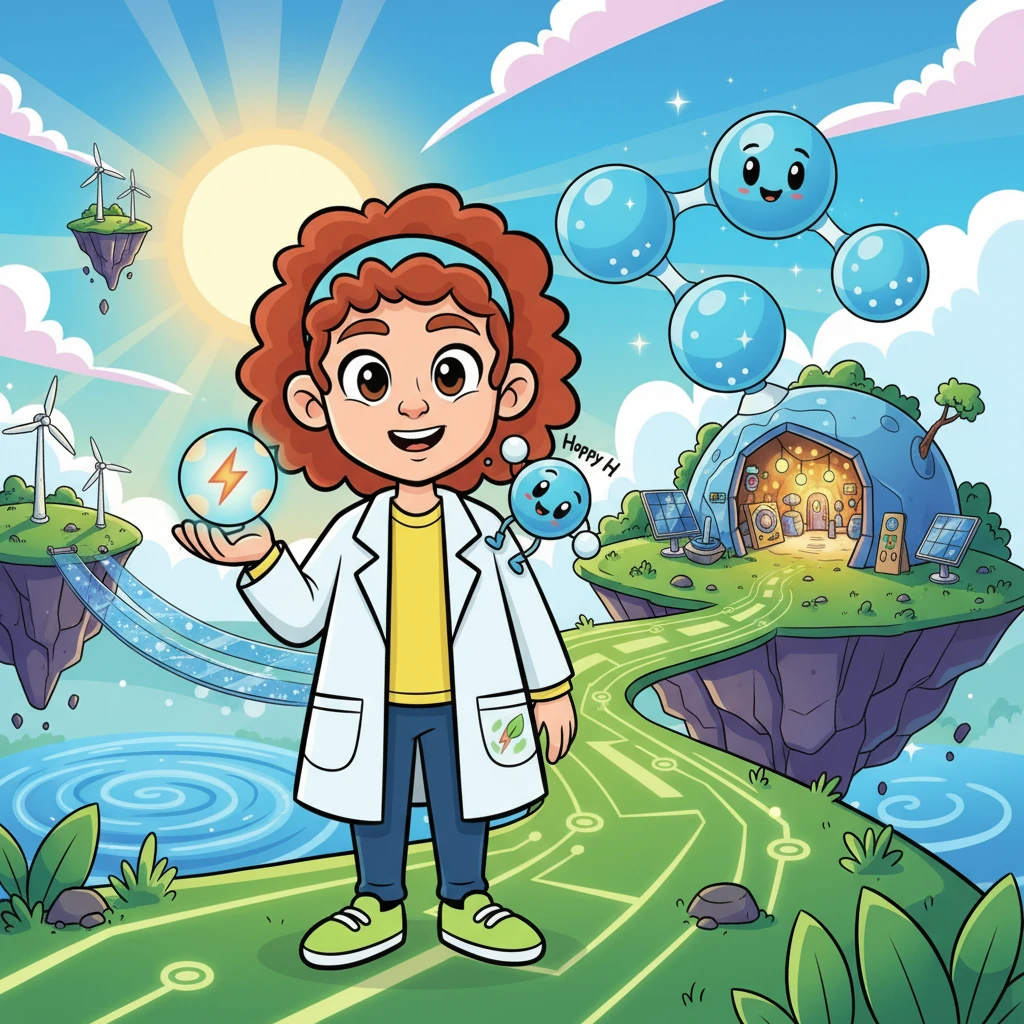
Join Dr. Sparkle and her tiny, energetic friend, Hoppy H, on an exciting adventure to find the perfect secret hideaway for clean energy! This vibrant story bursts with discovery and fun, showing how clever ideas can keep our world bright and healthy. A heartwarming tale of innovation and friendship that inspires young minds about a cleaner future!
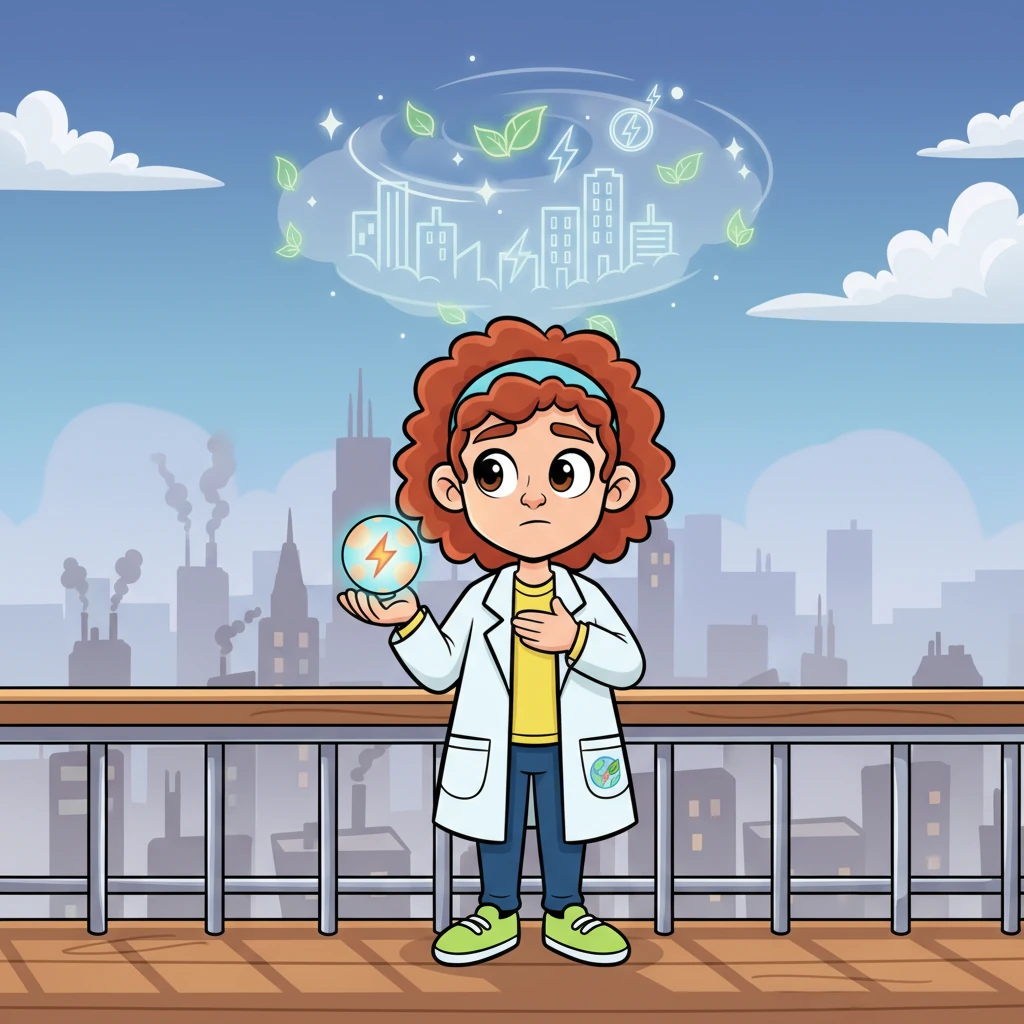
Dr. Sparkle looks out at a slightly hazy city, a thoughtful expression on her face. She dreams of a brighter, cleaner world for everyone, free from yucky smoke.
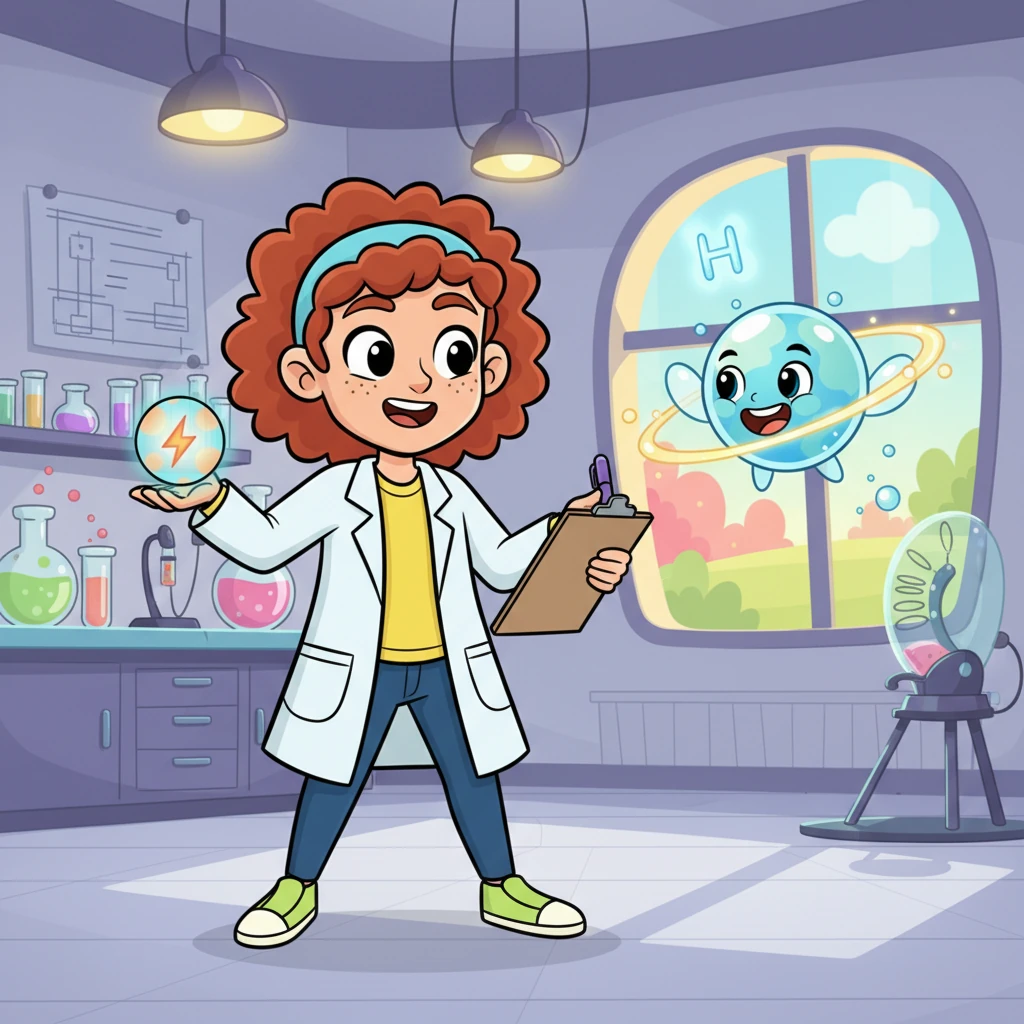
Hoppy explains how he can power lights, cars, and homes without any yucky smoke, making the world sparkle. He zooms around excitedly, demonstrating his clean power.
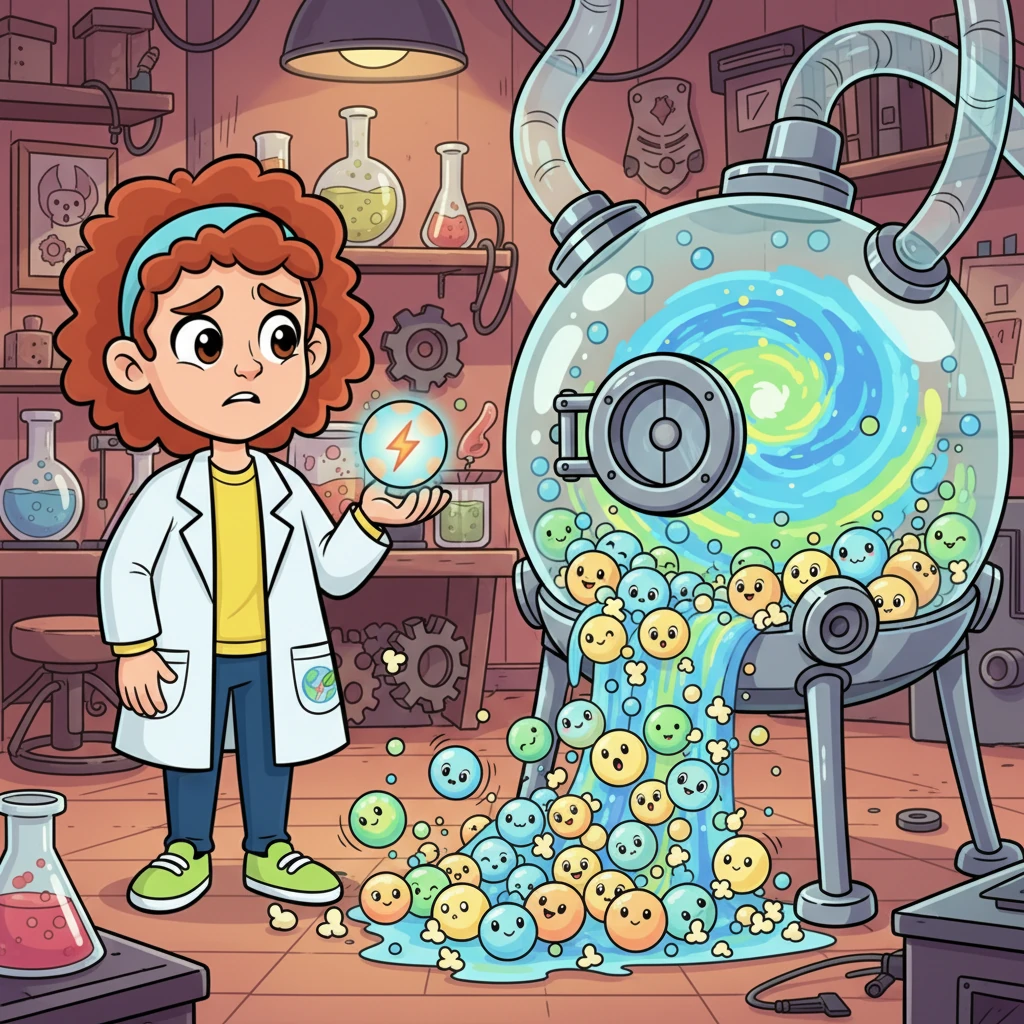
But there's a big problem! Where can all of Hoppy's energetic friends be stored safely until they're needed? A giant, shiny tank looks far too small for so much energy.
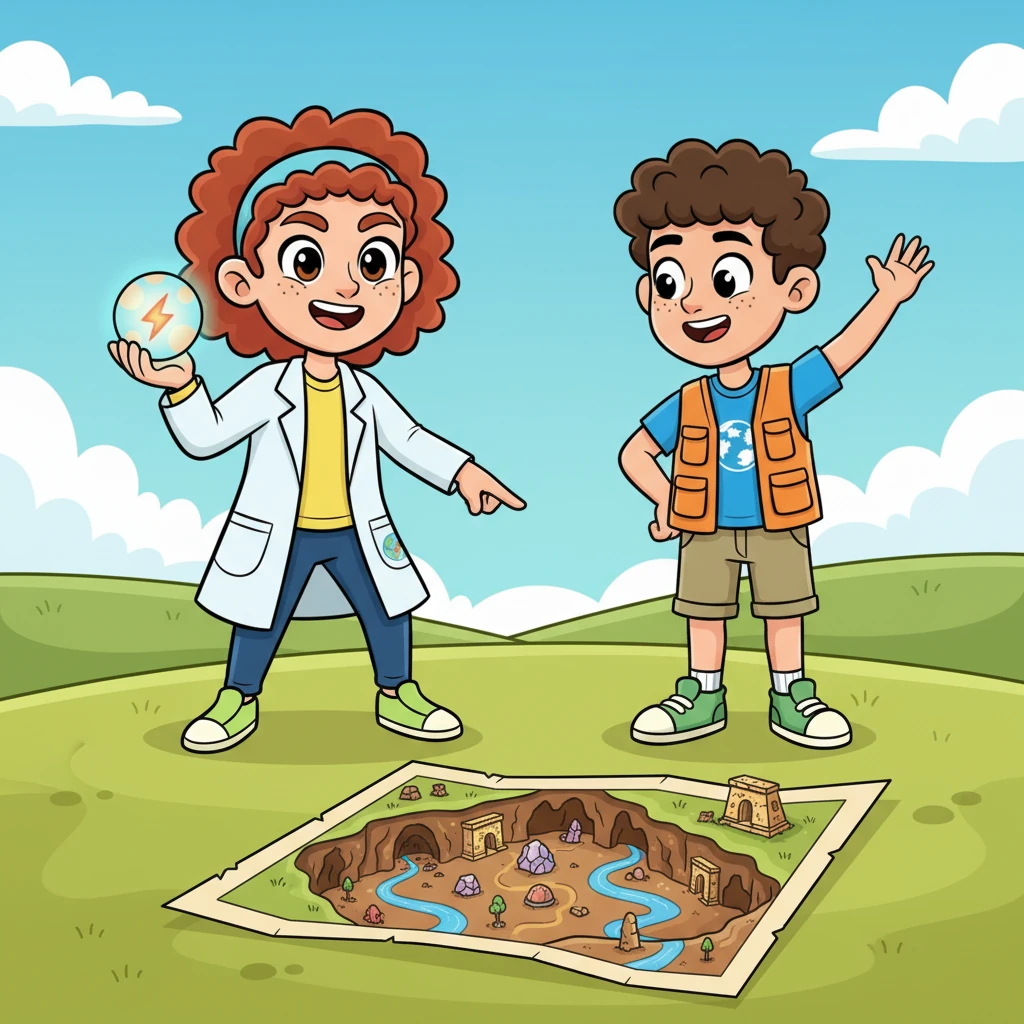
Dr. Sparkle, with a twinkle in her eye, points to a map showing the ground beneath their feet. 'What about deep down below, in the secret places of the earth?' she exclaims with a grin.
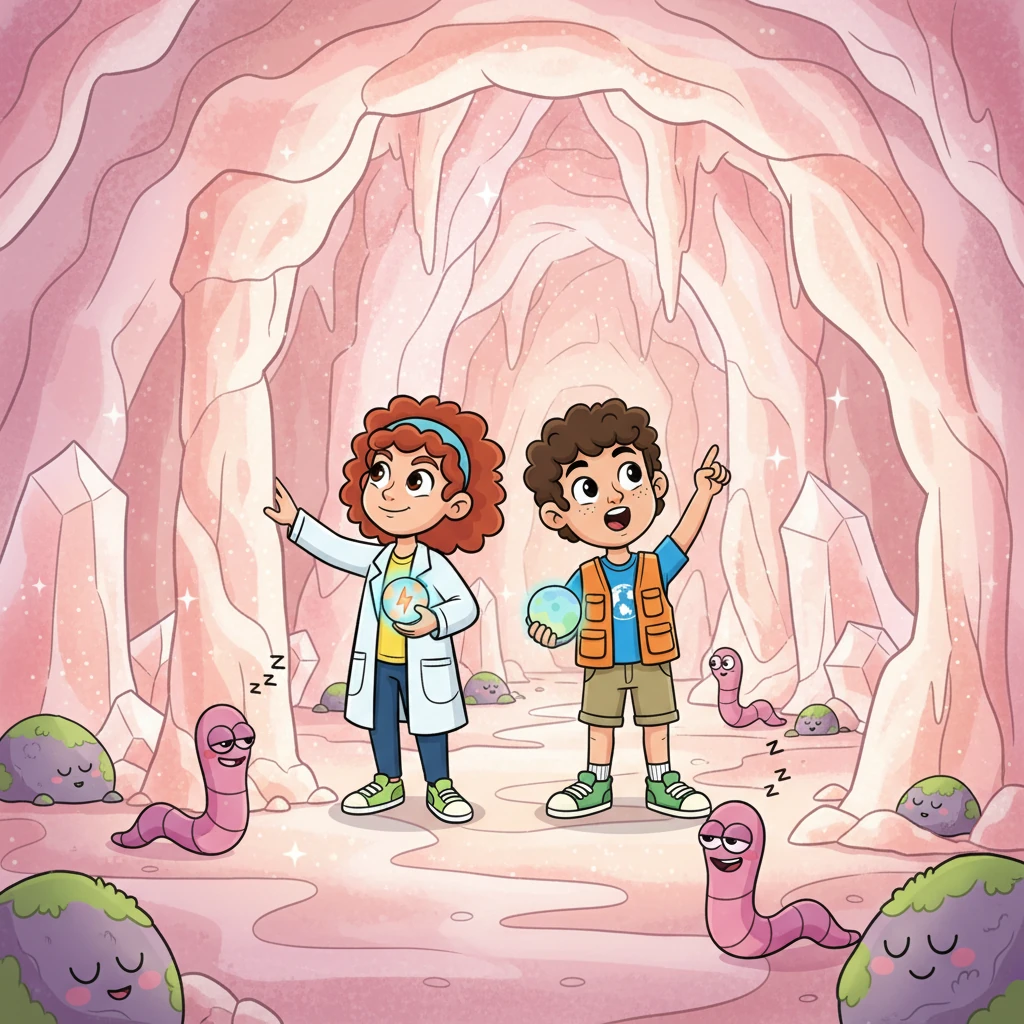
They journey deep underground, past wiggling worms and sleepy rocks, until they discover a magnificent, cavernous space made of sparkling salt. It looks like a giant, natural bubble!
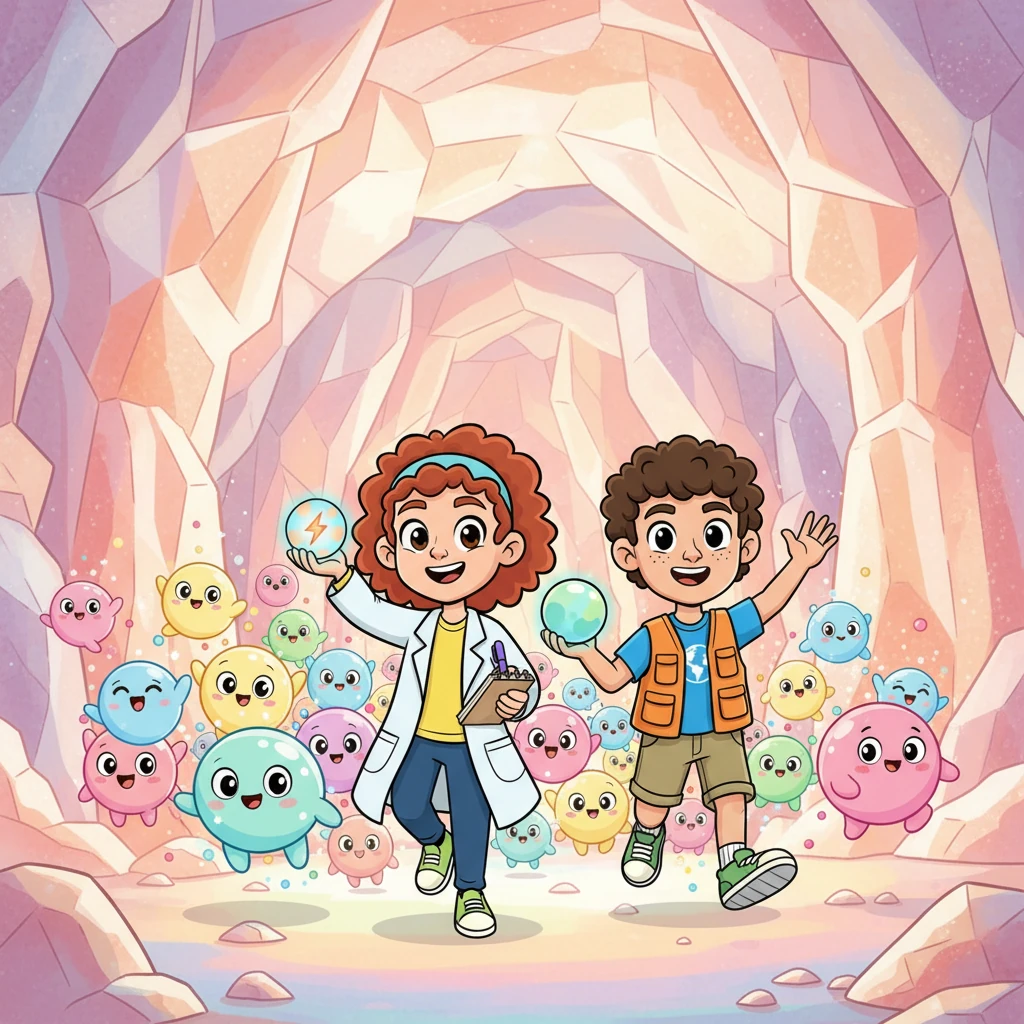
Hoppy and his bubbly friends rush in, filling the enormous salt cavern with their cheerful, shimmering energy. They are safe and sound, ready for their big moment.
Dr. Sparkle shows Hoppy more potential underground homes on her map, like vast, empty spaces where ancient water used to be, or old, quiet pockets deep in the earth.
Now, Hoppy and his countless friends rest happily in their secret underground hideaways, patiently waiting for the signal to zoom out and power the world.
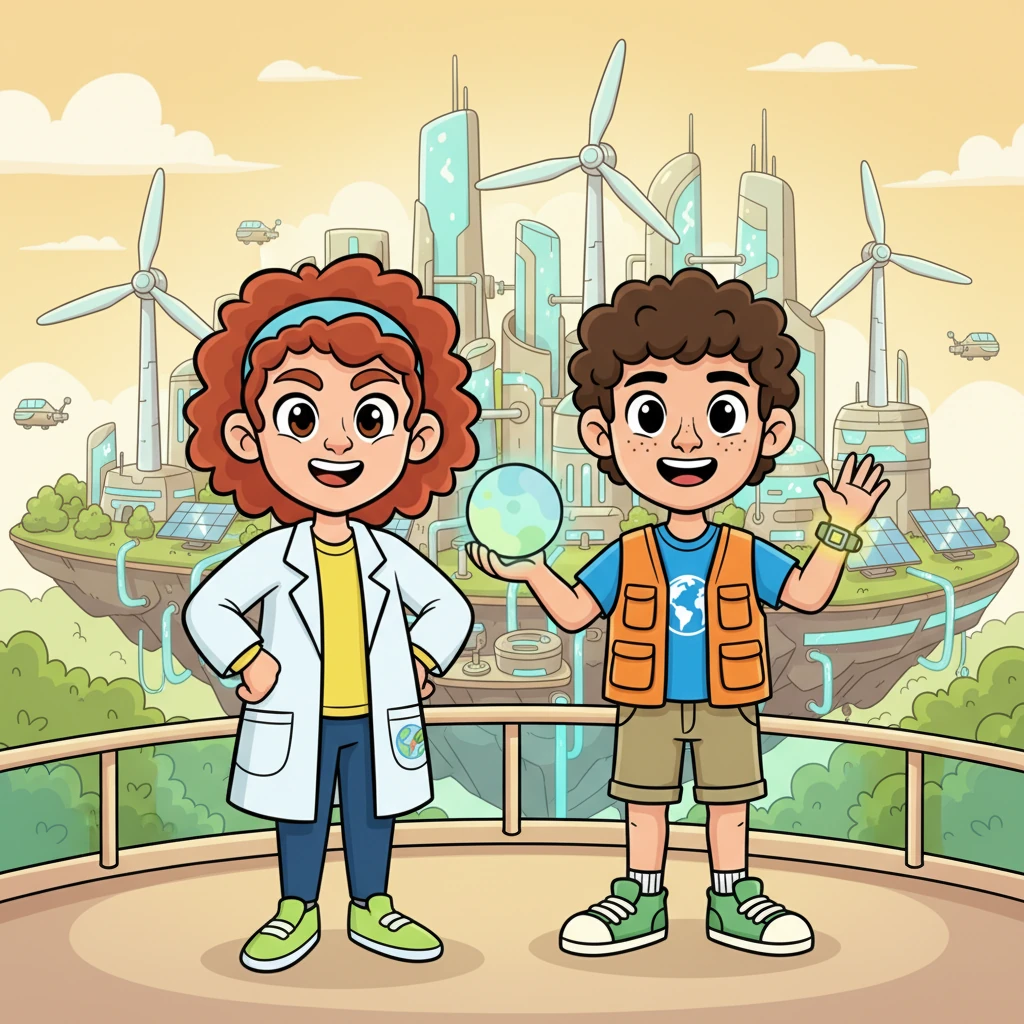
The city above shines brilliantly, powered by clean, happy hydrogen energy. Dr. Sparkle and Hoppy H smile, knowing they've helped make the world a healthier, brighter place for everyone.
Generation Prompt(Sign in to view the full prompt)
The growing global demand for energy, coupled with the urgent need to reduce greenhouse gas emissions, has accelerated the transition toward low-carbon energy systems (Ahmed et al., 2023; Lin et al., 2023). Hydrogen (H2) has emerged as a key energy carrier in this transition due to its high energy density, clean end-use, and compatibility with renewable production pathways such as water electrolysis, biomass conversion, and thermochemical processes (Bartoli et al., 2025; Cormos, 2023; Tang et al., 2023). Despite its advantages, the widespread deployment of H2 is constrained by the challenge of safe, economical, and large-scale storage, as conventional surface storage methods, including compressed tanks and liquefaction, are limited in capacity, efficiency, and long-term feasibility (Fang et al., 2025; Glenn et al., 2023; Krebsz et al., 2025). Underground hydrogen storage (UHS) has therefore gained increasing attention as a practical solution for large-scale and seasonal hydrogen storage, leveraging the substantial capacity of geological formations (Abreu et al., 2023; Hemme et al., 2018). Potential storage media include salt caverns, depleted oil and gas reservoirs, and deep saline aquifers, with salt caverns currently representing the only commercially deployed option for pure hydrogen storage due to their low permeability and operational maturity (Alms et al., 2023; Heinemann et al., 2021; Okoroafor et al., 2024; Qian et al., 2025; Shi et al., 2025). However, saline aquifers and depleted reservoirs are increasingly being investigated because of their vast availability, despite the additional complexity associated with fluid-fluid and fluid-rock interactions under subsurface conditions (Abdelaal et al., 2025; Huang et al., 2025; Lou et al., 2024). Figure 1 depicts geological formations mostly favorable for UHS. Figure 1: Schematic illustration of UHS options in geological formations.