Follow Leo on a vibrant journey through a supermarket labyrinth, where bright colors and clever traps test his resolve to eat healthy. This beautifully illustrated tale empowers children to make mindful choices and discover the true power of real food in a world of ultra-processed distractions.
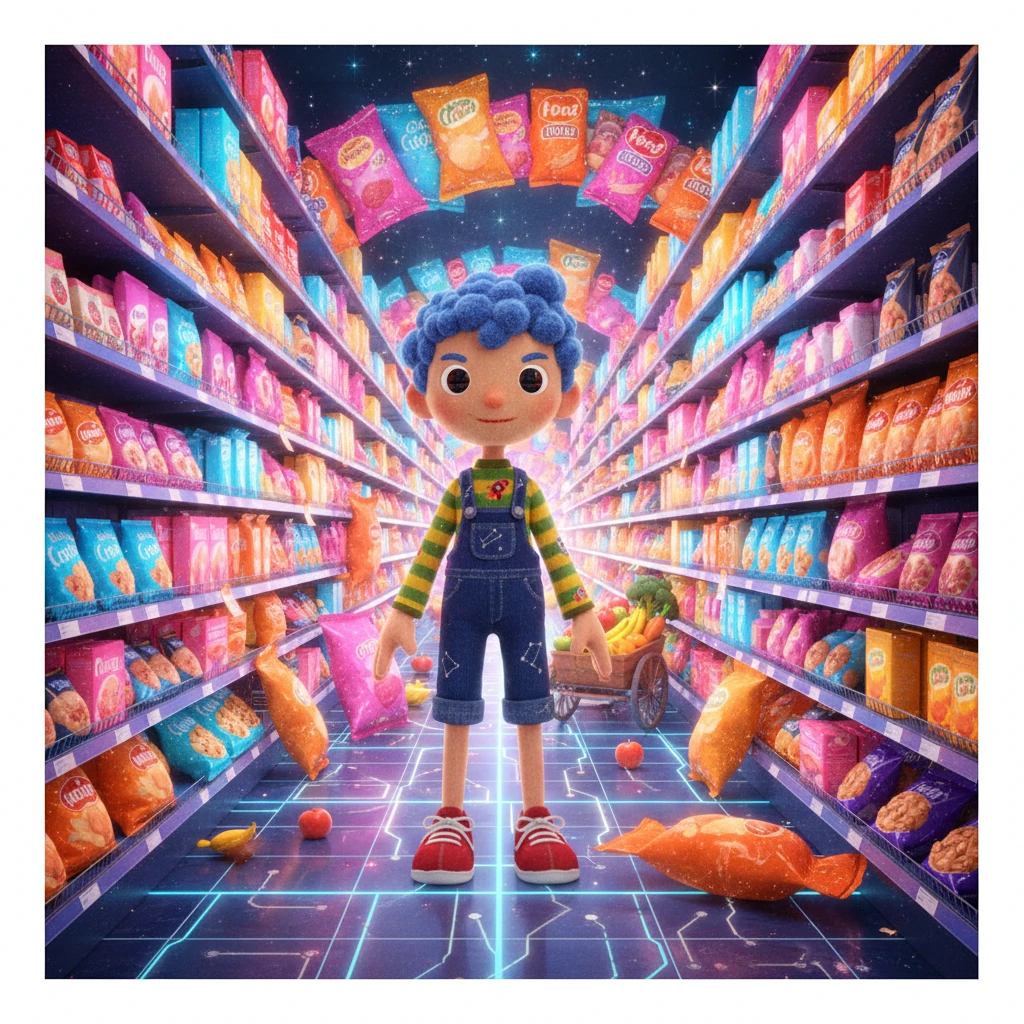
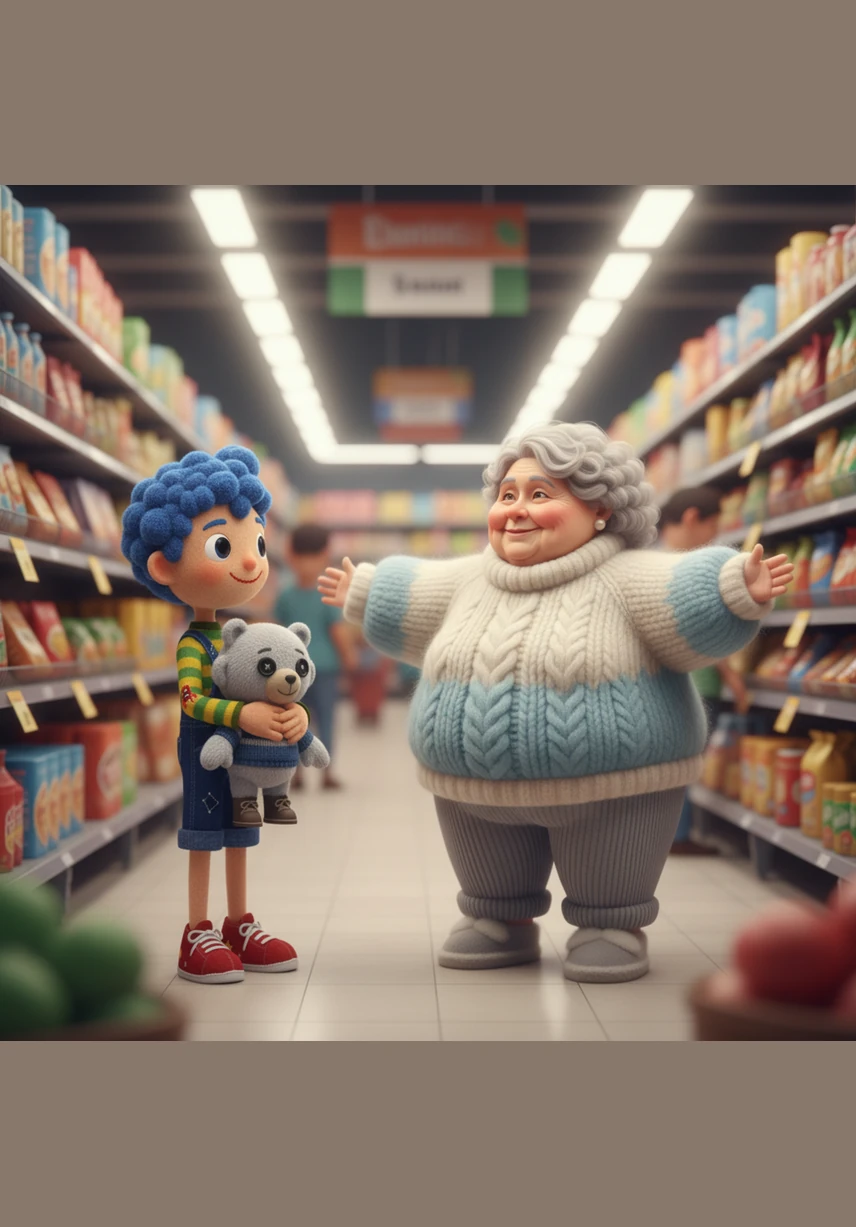
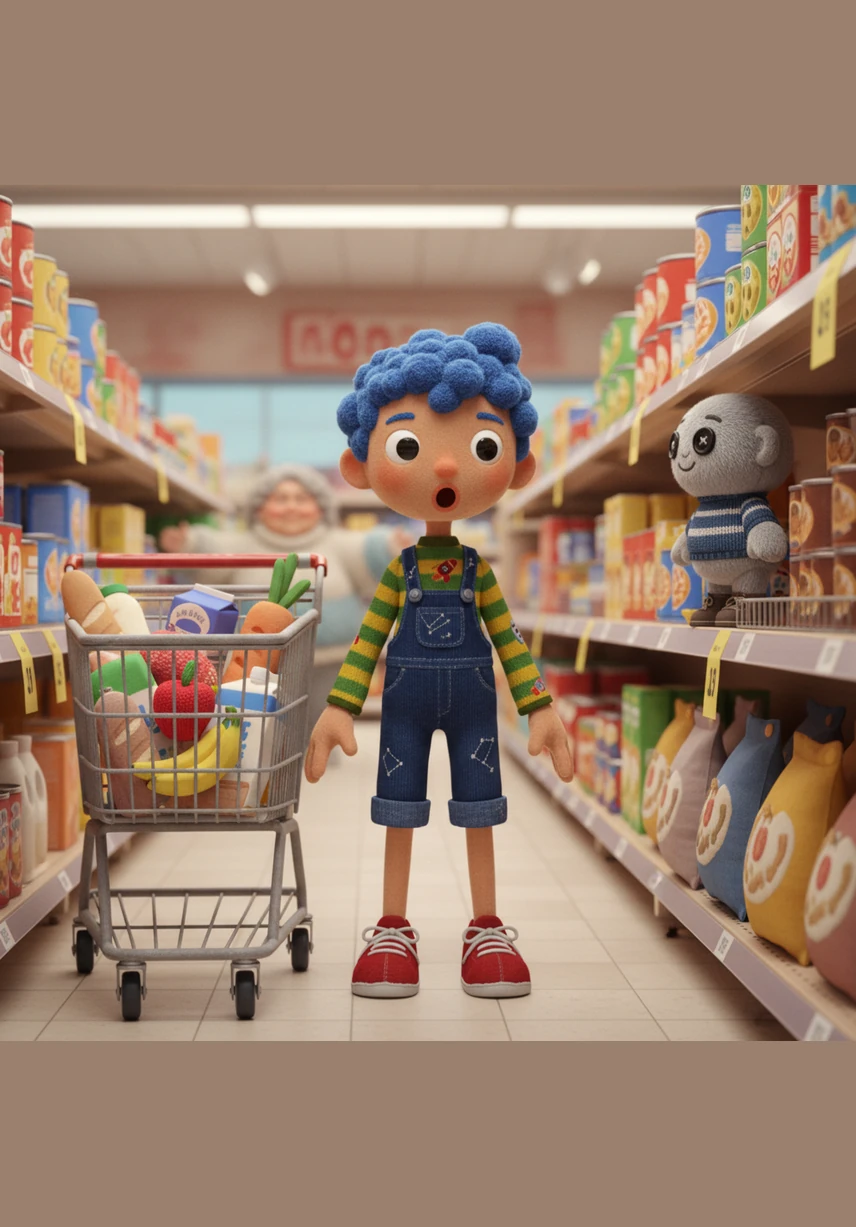
Leo walks through the supermarket corridors with a crumpled list in hand, surrounded by bright lights and endless shelves. The air is filled with a hum of activity and artificial scents, turning a simple errand into the start of a grand adventure.
The first aisle explodes with color, featuring towering stacks of cereal boxes with smiling cartoon characters. Leo stares at the electric blues and vibrant reds that seem to call his name, designed specifically to look more exciting than a simple piece of fruit.
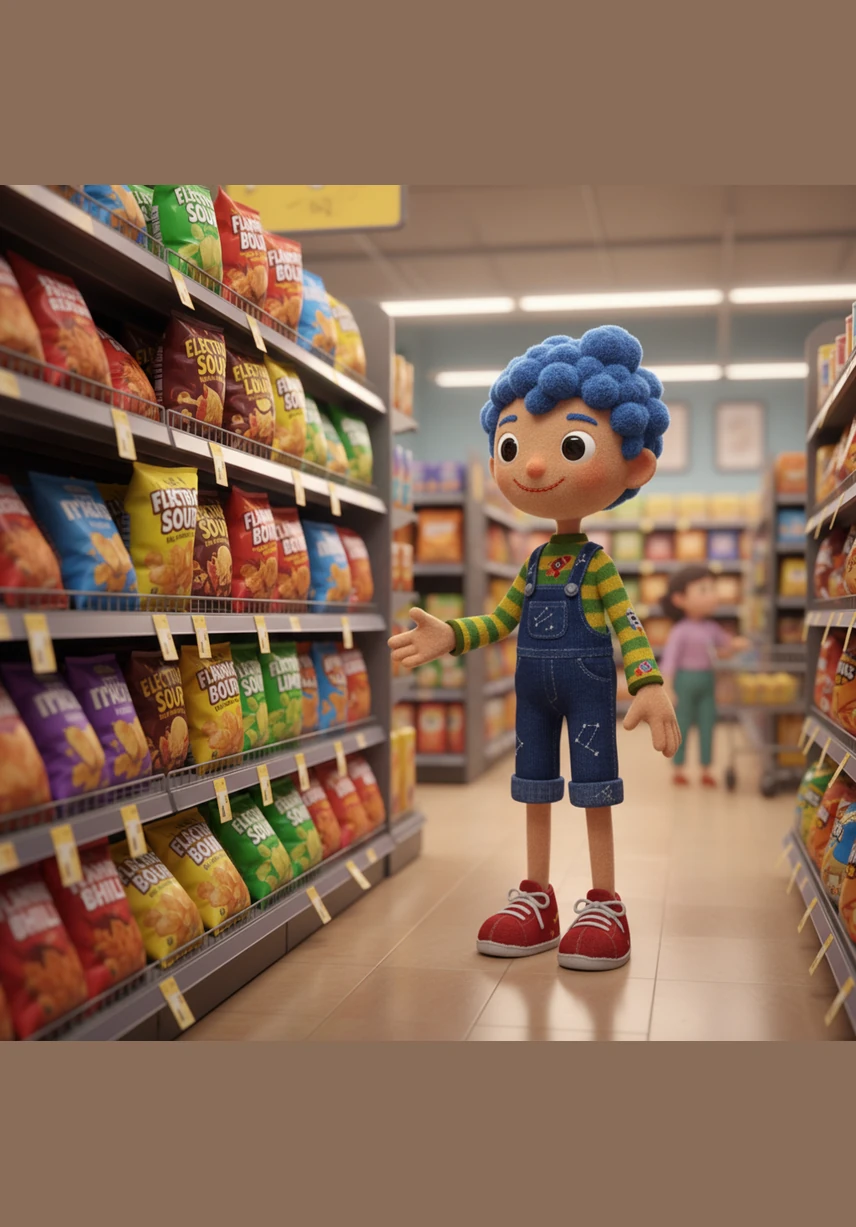
Standing before a display of extreme flavor chips, Leo compares the flashy packaging to the thought of the simple lentils on his list. He realizes this food wasn't grown in a field but was engineered in a lab to be so crunchy that it is impossible to stop eating.
In the ready-meals section, Leo watches a man hurriedly grab boxes of magic nuggets that heat up in just two minutes. The promise of instant convenience tempts Leo, making the time needed to wash and cook fresh vegetables feel like a difficult challenge.
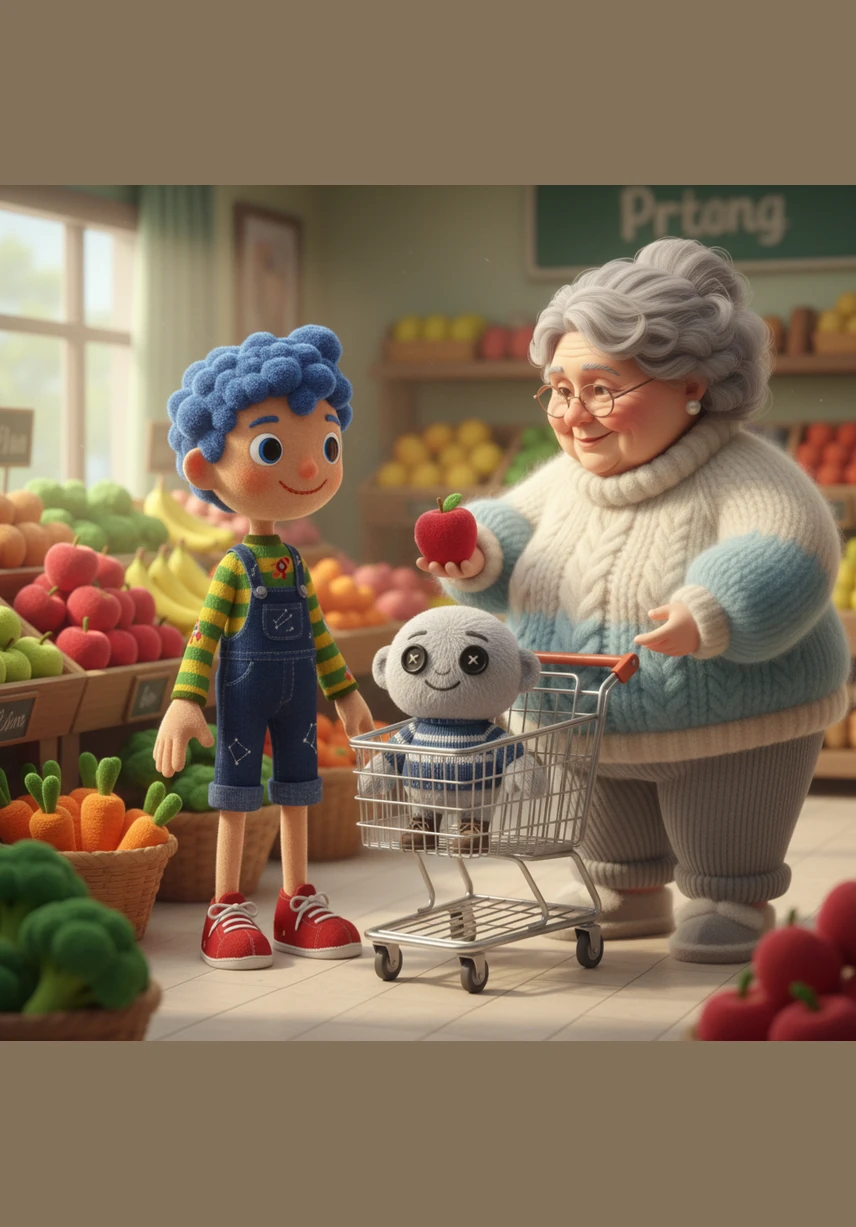
Leo finally finds the produce section, a quiet corner where apples rest naturally without any flashing lights or catchy slogans. Here, a peaceful silence reigns, offering a stark contrast to the deafening noise of the colorful packages in the other aisles.
Right at his eye level, Leo notices chocolate bars and snacks strategically placed to be easily grabbed by small hands. He realizes that every shelf is a map designed by psychologists to lead his gaze toward treats wrapped in shiny plastic.
Stopping to reflect, Leo looks at his nearly empty cart and understands the difference between true hunger and an impulsive craving. He sees the supermarket as a maze designed to make him forget what his body actually needs to stay healthy.
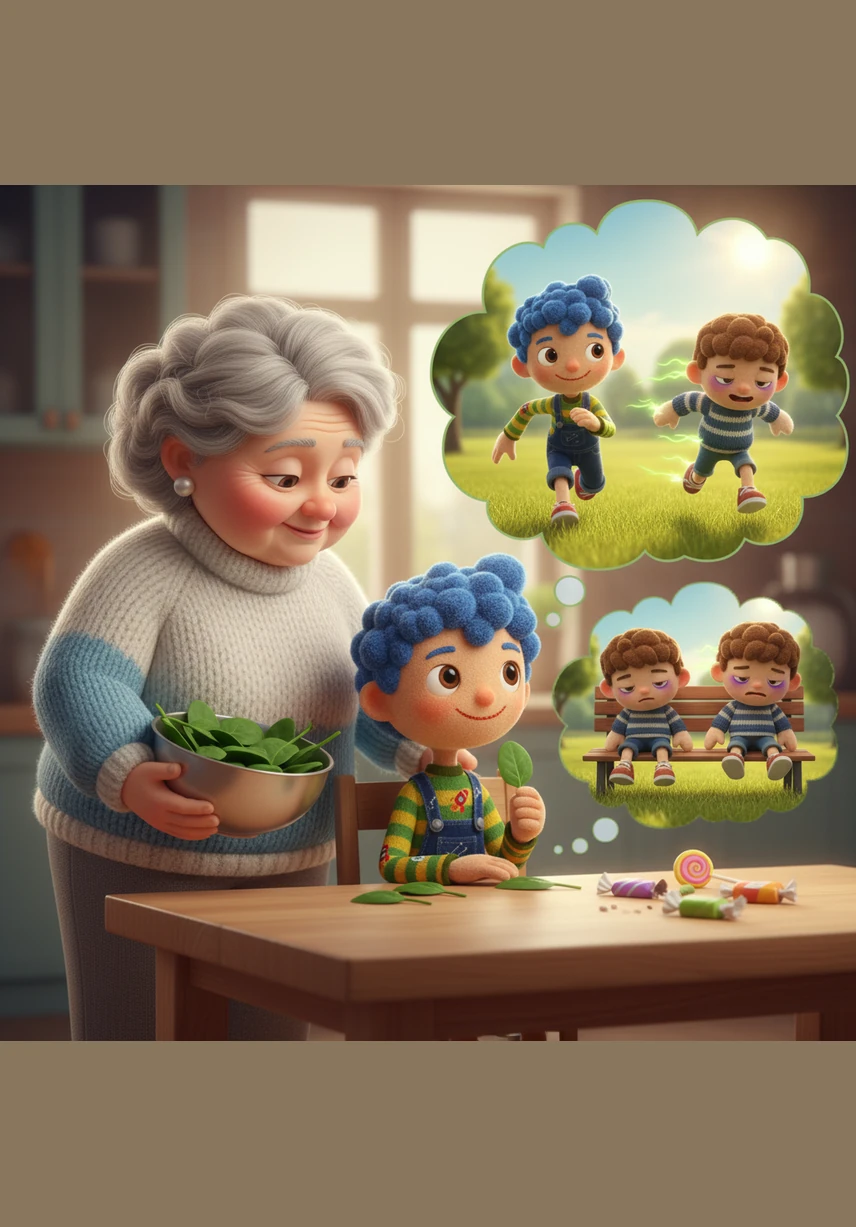
Leo imagines the lasting energy the fresh spinach will give him to run and play at the park later that afternoon. He contrasts this with the heavy fatigue that always follows the temporary rush of eating sugary, processed snacks.
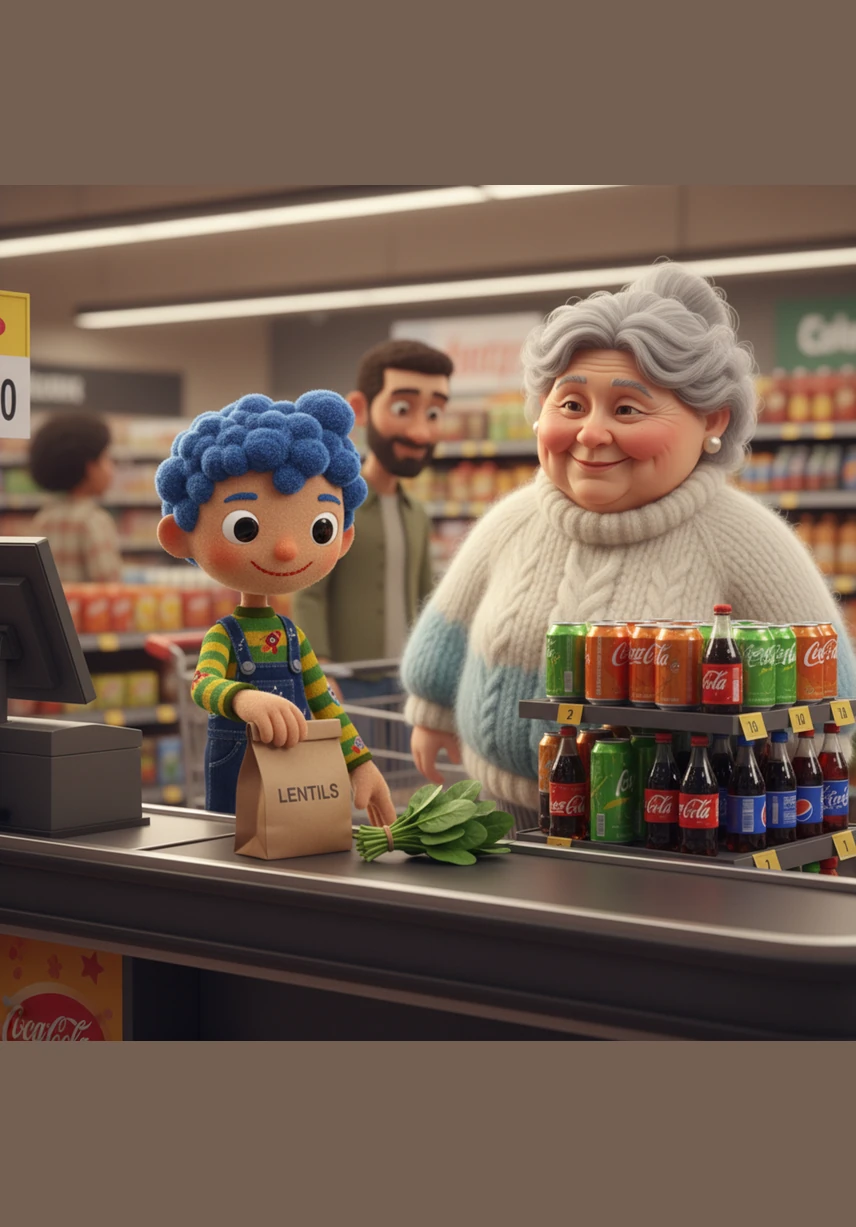
At the checkout line, Leo stands firm and ignores the towers of sugary sodas placed there for one last impulsive purchase. With a sense of purpose, he places his bag of lentils and a bunch of fresh spinach onto the conveyor belt.
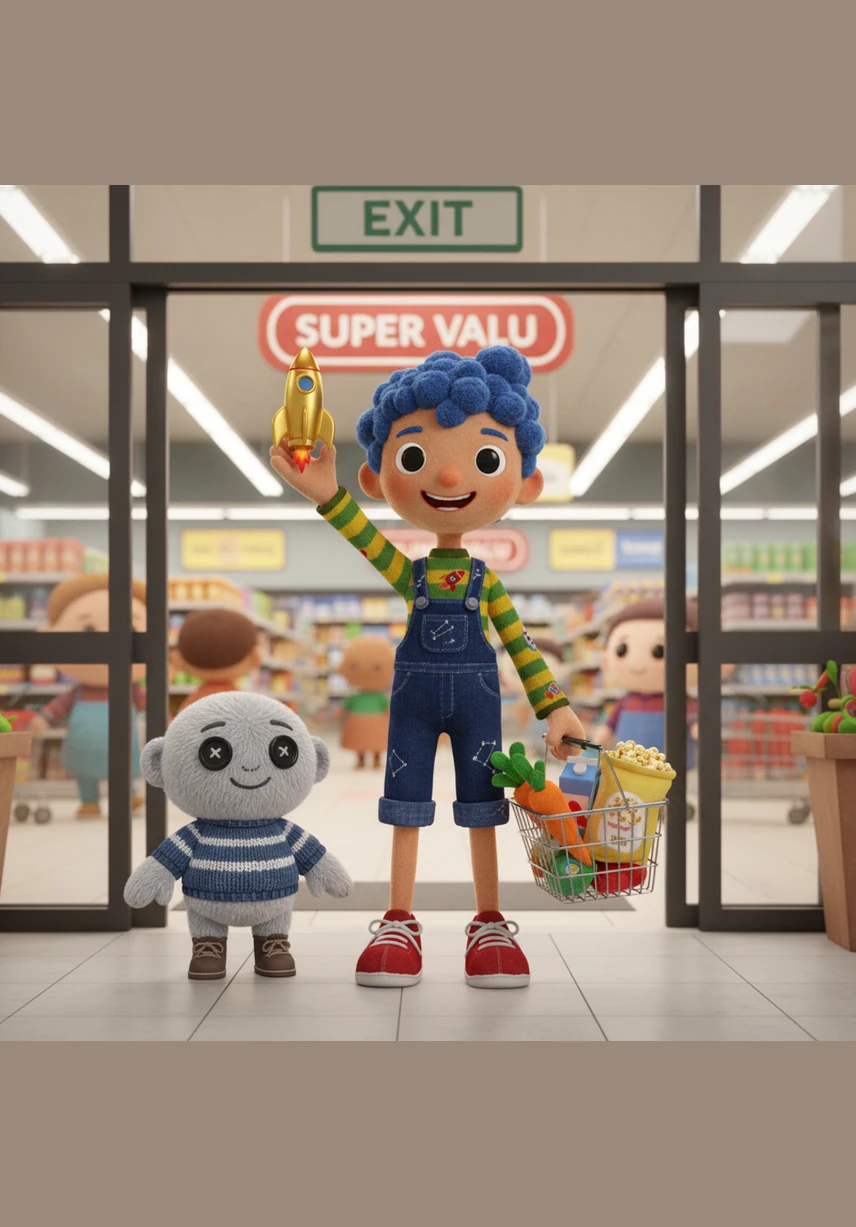
Leo leaves the supermarket with his grocery bag and a victorious smile on his face. He feels stronger for having won a silent battle, knowing he chose to nourish himself with real food instead of letting the bright labels decide for him.
Generation Prompt(Sign in to view the full prompt)
Il Labirinto Scintillante Leo camminava lungo i corridoi del supermercato con una missione precisa: comprare gli ingredienti per la cena. Nella tasca aveva una lista stropicciata scritta da sua madre: mele, lenticchie, spinaci, pane integrale. Tuttavia, appena varcata la soglia, Leo si sentì come un esploratore in una terra straniera e rumorosa. L’Assalto dei Colori Il primo corridoio non esponeva frutta, ma pile altissime di scatole colorate. C'erano personaggi dei cartoni animati che gli sorridevano dai pacchi di cereali, promettendo "energia esplosiva" e "premi all'interno". Le confezioni erano di un rosso vibrante e di un blu elettrico, colori fatti apposta per dire al cervello di Leo: “Guardami! Sono più divertente di una mela!” Leo scosse la testa e cercò le lenticchie, ma i suoi occhi continuavano a cadere su un espositore di patatine. Il pacchetto vantava un "nuovo gusto estremo". Non era cibo che cresceva nella terra; era cibo nato in un laboratorio, progettato per essere così croccante e saporito da rendere difficile smettere di mangiarlo. La Trappola del Tempo Mentre cercava il banco della verdura, Leo passò davanti al reparto dei cibi pronti. Vide delle confezioni di "Nuggets Magici" che si scaldavano in soli due minuti. Accanto a lui, un uomo guardava l'orologio con ansia e ne afferrava tre confezioni. Leo pensò alle lenticchie della lista: avrebbero richiesto tempo per essere sciacquate e cucinate. In quel momento, la comodità sembrava una tentazione più forte della salute. Il cibo ultra-processato non vendeva solo sapore, vendeva tempo. Il Sussurro degli Scaffali Arrivato finalmente alle mele, Leo notò una cosa strana. Le mele erano in un angolo tranquillo, senza luci lampeggianti o slogan accattivanti. Non urlavano. Erano solo... mele. Invece, all'altezza dei suoi occhi, proprio dove era più facile allungare la mano, c'erano barrette di cioccolato e merendine confezionate singolarmente nel polistirolo e nella plastica. Erano posizionate lì strategicamente: gli psicologi del marketing sapevano esattamente dove cadeva lo sguardo di un bambino (e di un adulto stanco). La Scelta di Leo Leo guardò la sua lista e poi il carrello quasi vuoto. Si rese conto che il supermercato era come un labirinto progettato per fargli dimenticare la fame vera, sostituendola con una fame "di impulsi". Il cibo vero nutriva il suo corpo per correre al parco. Il cibo ultra-processato nutriva solo il desiderio di un altro morso, lasciandolo stanco mezz'ora dopo. Con un respiro profondo, Leo superò l'ultima torre di bibite gassate — messe lì proprio vicino alle casse per l'ultimo acquisto impulsivo — e mise nel carrello un sacchetto di lenticchie e un mazzetto di spinaci freschi. Uscendo, si sentì un po' più forte. Non aveva solo comprato da mangiare; aveva vinto una battaglia silenziosa contro chi voleva decidere al posto suo cosa fosse buono. Nota Etica per lo Storybook Spesso pensiamo che mangiare male sia solo una questione di "pigrizia". In realtà, siamo immersi in un sistema che rende il cibo processato più visibile, più economico e più veloce da consumare. Scegliere cibo fresco è un atto di libertà e di cura verso noi stessi e l'ambiente.