Join Maya on a journey through the vibrant festival of Diwali! This heartwarming story explores the triumph of good over evil, the importance of family, and the beauty of light in the darkest of times. Discover the ancient tales and universal values that make Diwali a celebration for all.
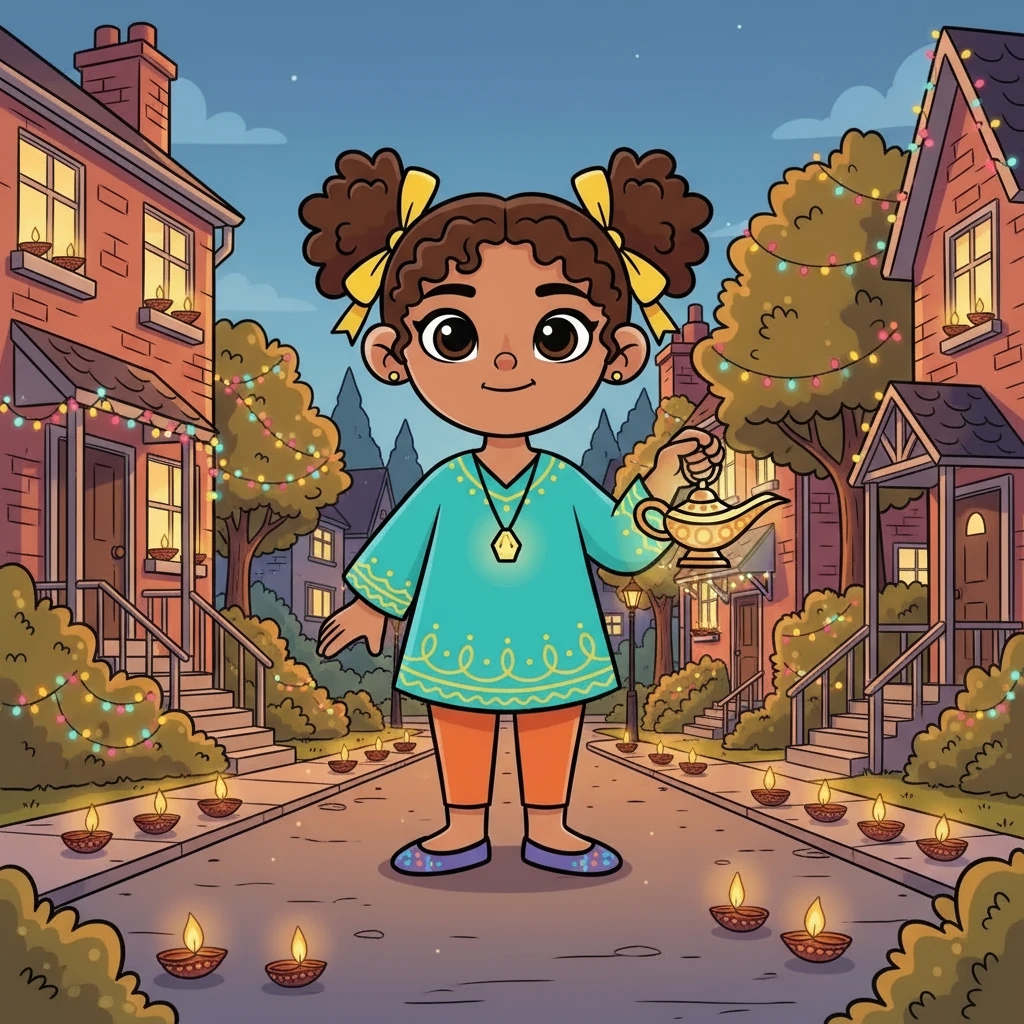
Maya, a curious girl with twinkling eyes, stood before a dazzling display of lights. Homes were adorned with glowing diyas, and the streets twinkled with fairy lights. Diwali, her grandmother explained, meant 'row of lights,' a time to celebrate the victory of light over darkness and good over evil.
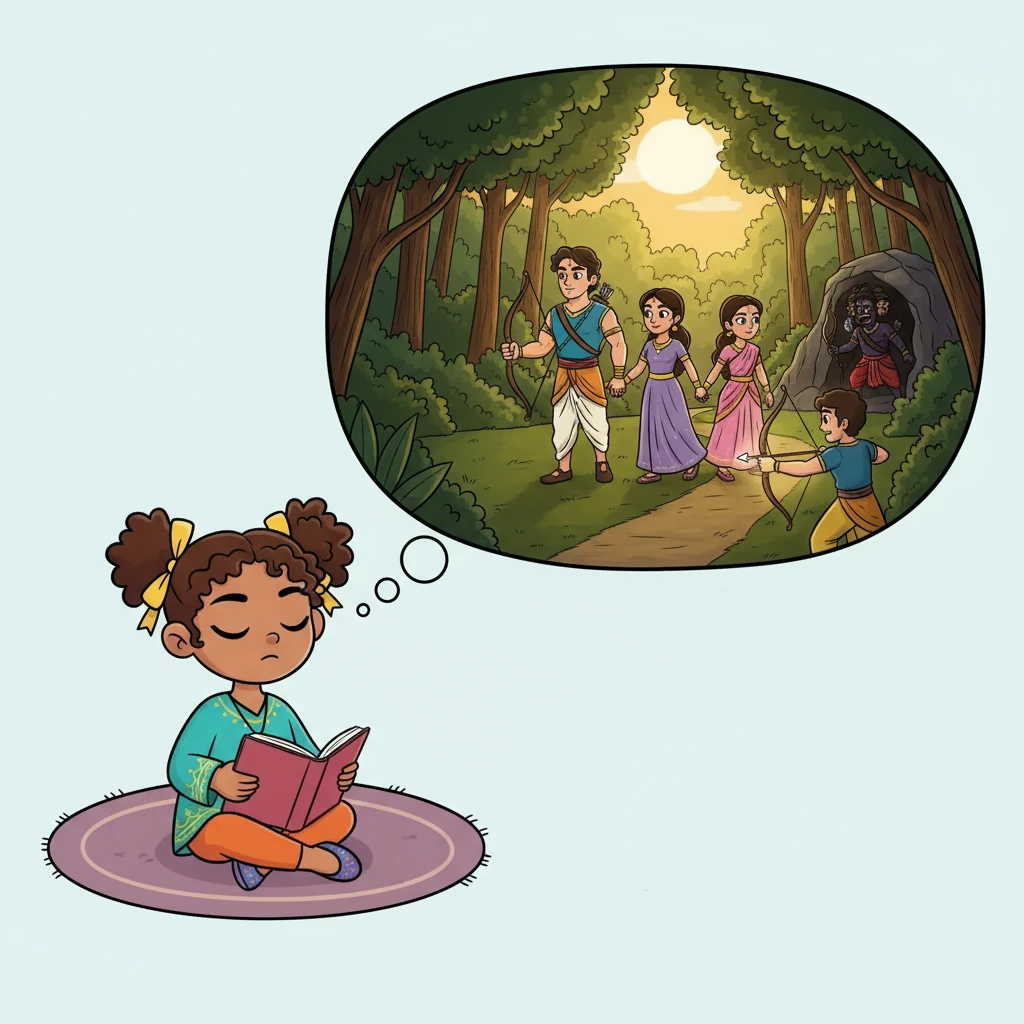
Her grandmother began the story of Prince Rama. Maya imagined Rama, his wife Sita, and his brother Lakshmana walking through a lush forest, their faces determined. She learned of the evil Ravana and how Rama, with courage and determination, rescued Sita, bringing light back to their home.
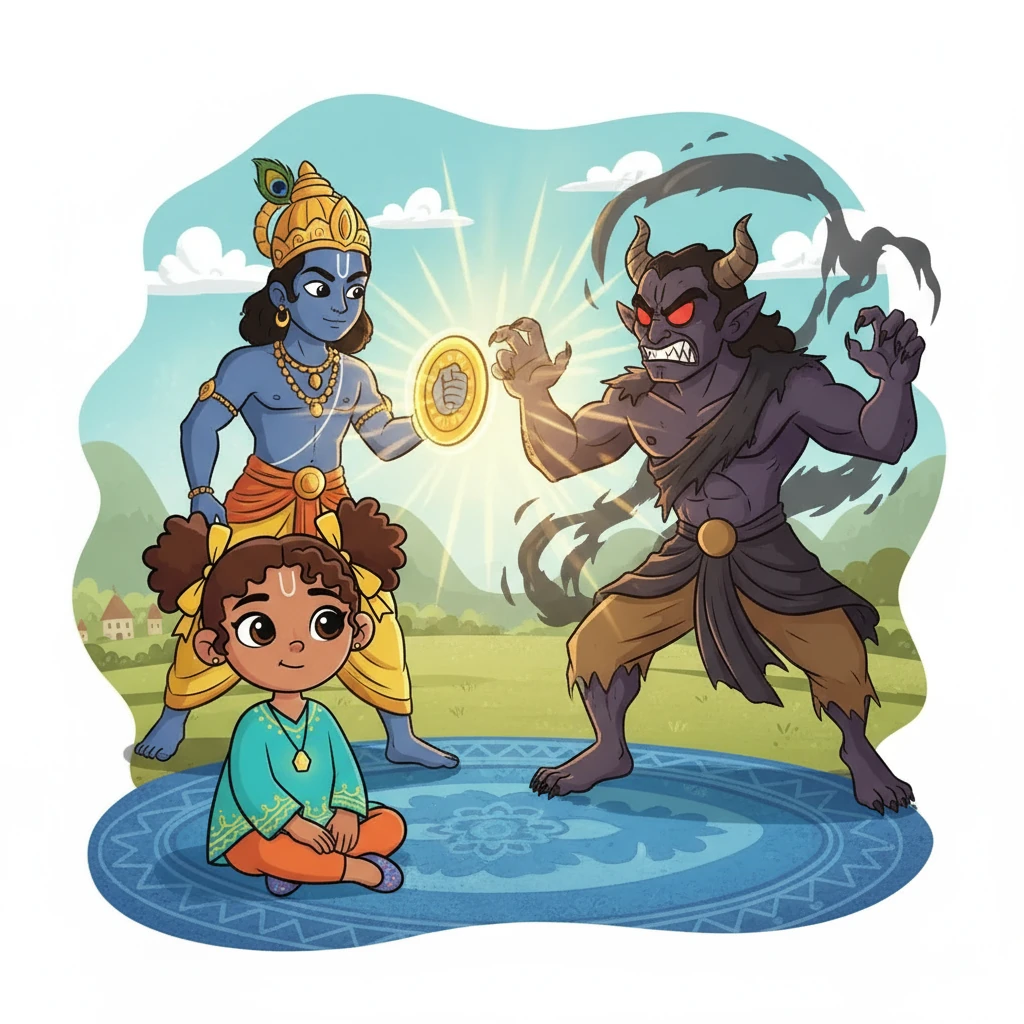
Next, Maya heard the tale of Lord Krishna. She pictured Krishna, strong and brave, facing a fearsome evil figure. The story taught her that courage and fairness always triumph over injustice, and that standing up for what is right is always worth it.
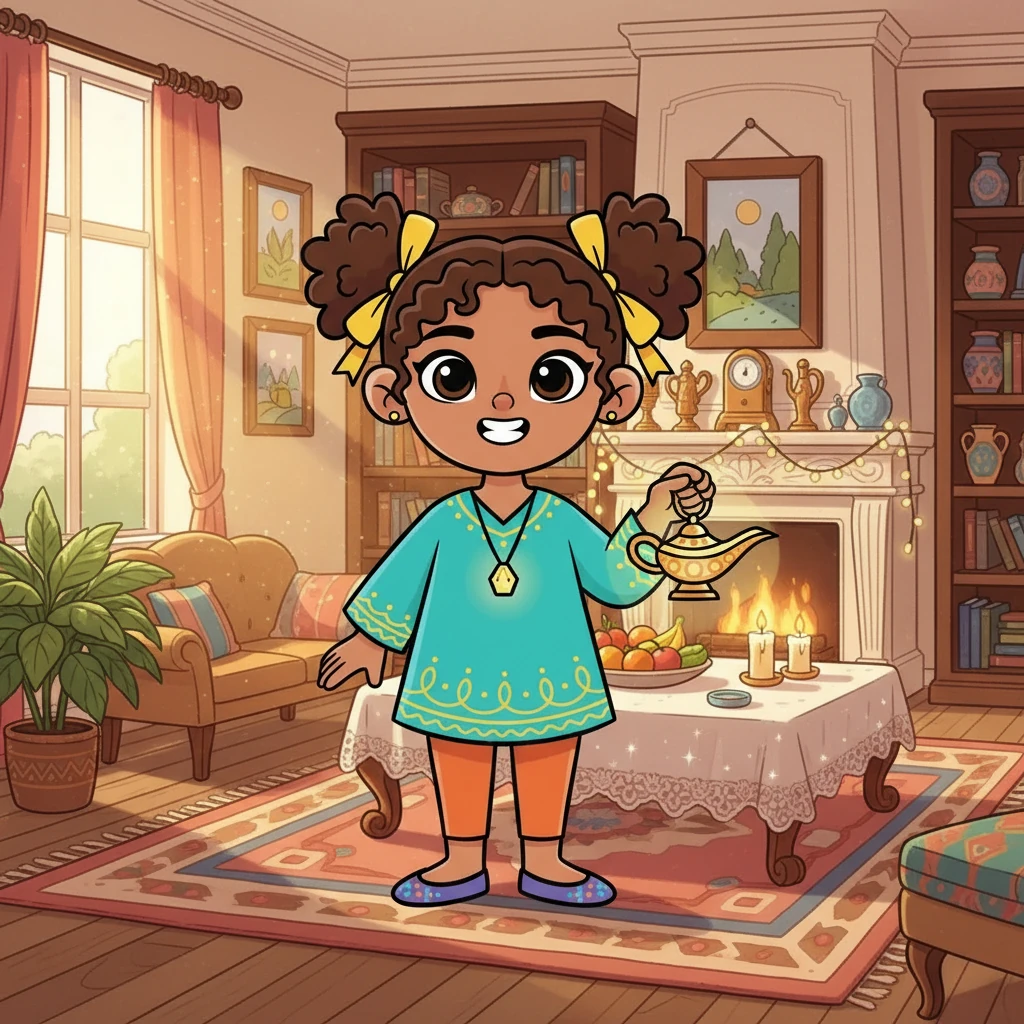
Maya's grandmother then spoke of Goddess Lakshmi, the goddess of wealth and prosperity. Maya envisioned a beautifully decorated home, sparkling with cleanliness and light. She understood that true prosperity came from honesty, hard work, and a pure heart.
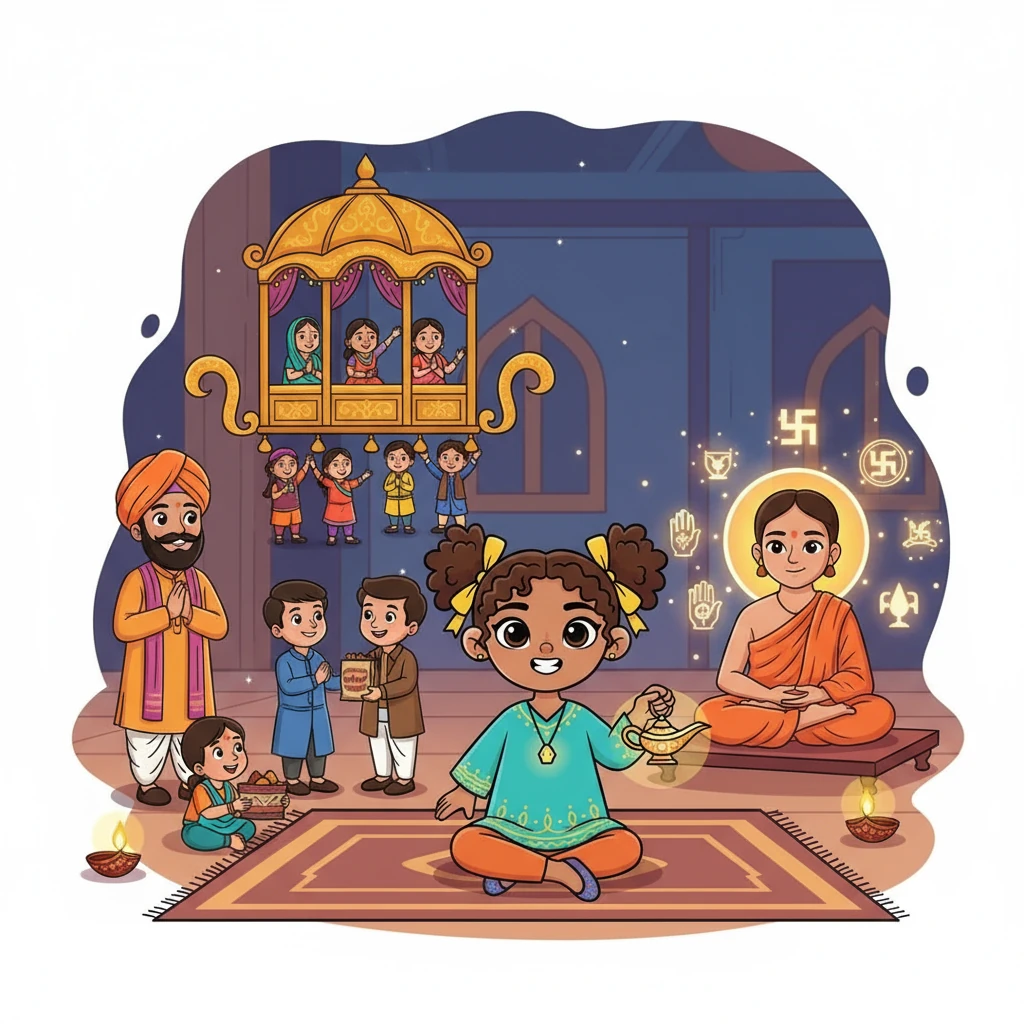
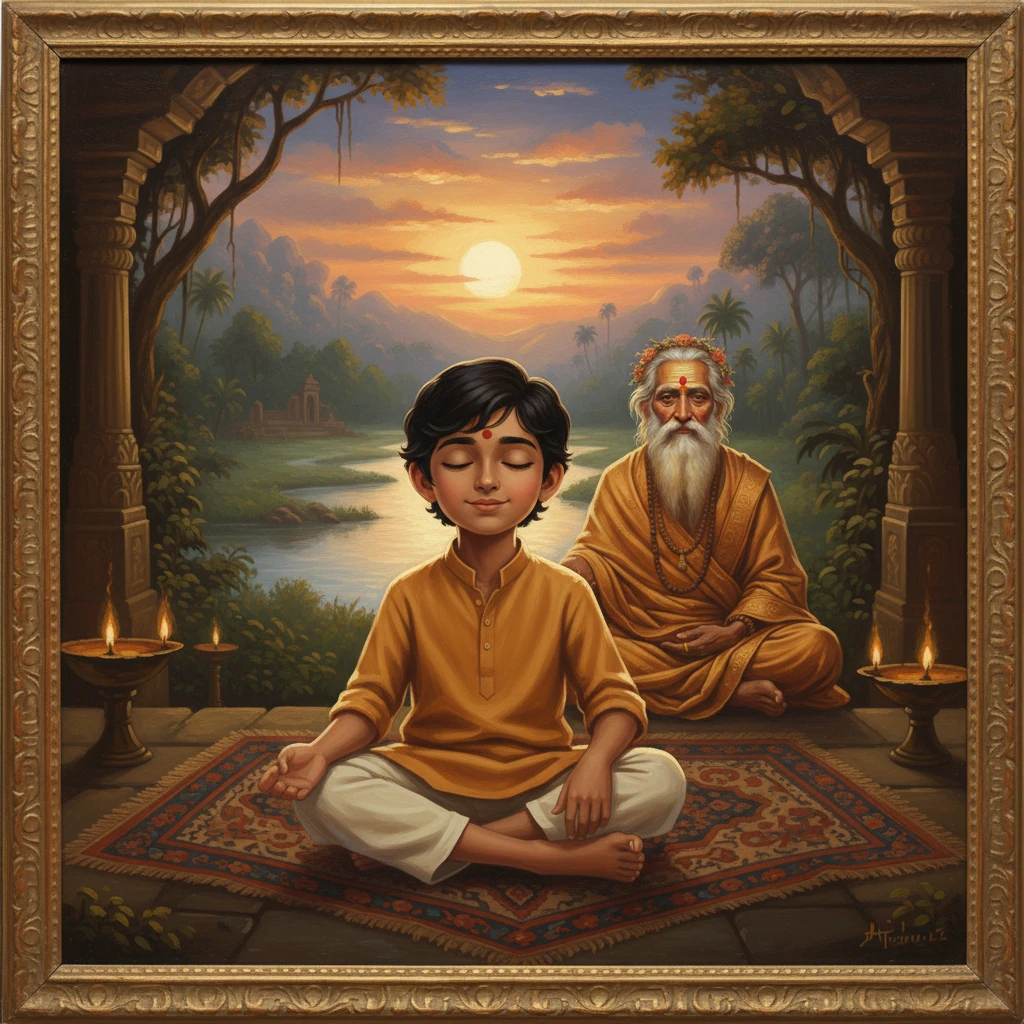
The stories continued, explaining how Diwali is celebrated across different faiths. Maya learned about Bandi Chhor Diwas in Sikhism, celebrating freedom and helping others. She also heard about Jainism and the importance of spiritual purity and truth.
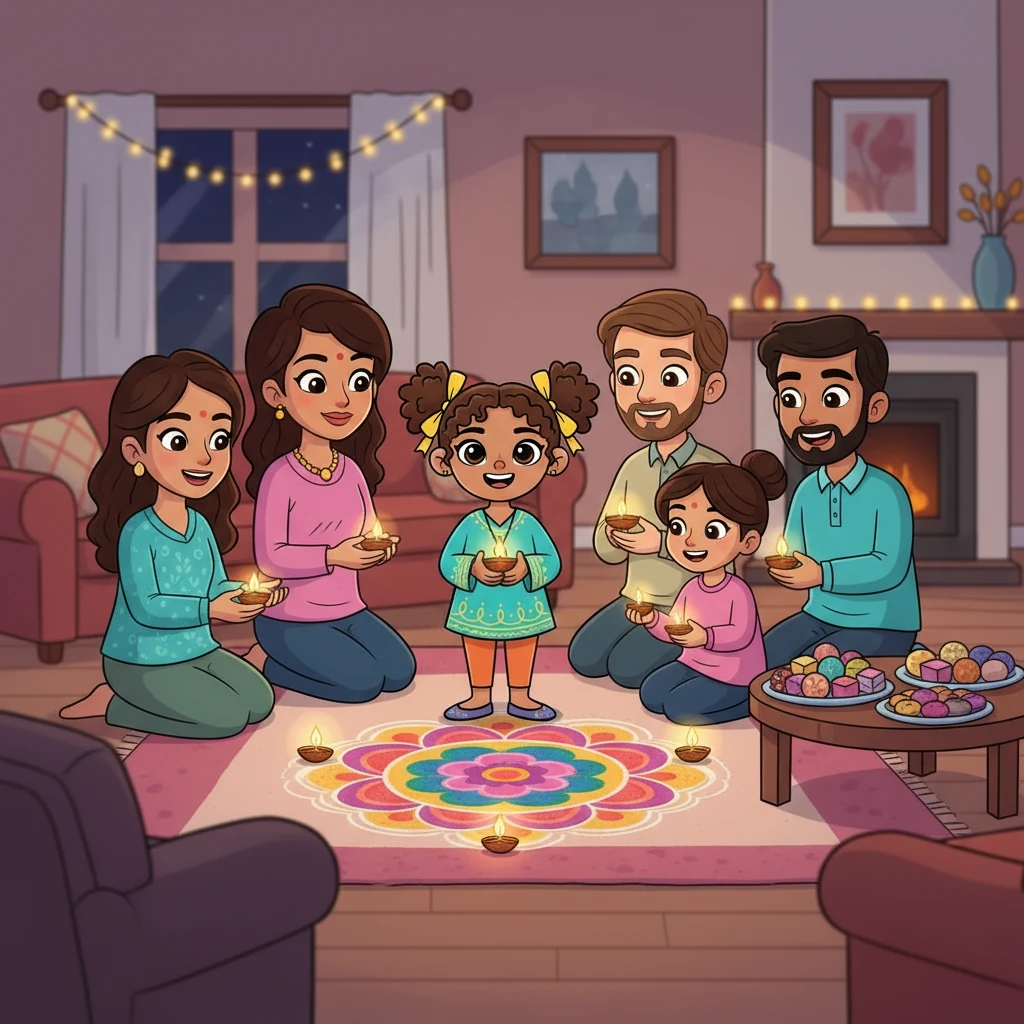
Finally, Maya helped her family prepare for the evening. Together, they lit diyas, created colorful rangoli, and shared delicious sweets. As they gathered, Maya realized that Diwali was more than just lights; it was about the values of bravery, honesty, kindness, and unity, shining brightly in everyone's hearts.
Generation Prompt(Sign in to view the full prompt)
Please use the following video overview to create a storybook that tells the story of Diwali to children between the ages of 10 and 12. Do not use terms like 'demon', rather use good vs evil. Section Script/Narration (Approximate Time) Visual/Presentation Plan (Images/Text) Introduction: What is Diwali? (0:00 – 0:35) Hello everyone! Today, we are exploring Diwali, also known as Deepavali. It's one of the most magical times of the year. Diwali literally means “row of lights”. It is a celebration observed across India and the world, lasting for five days. The main message of Diwali is the triumph of good over evil and light over darkness. Image 1: Title Slide: "Diwali: The Festival of Lights and Values." Image 2: Streets twinkling with fairy lights and homes decorated. Text Overlay: Diwali means "row of lights". Part 1: The Epic Story of Prince Rama (0:35 – 1:30) One of the most famous stories behind Diwali comes from the epic Ramayana. Long ago, Prince Rama, his wife Sita, and his brother Lakshmana were living in exile. During this time, Sita was kidnapped by Ravana, a powerful evil king who ruled Lanka. Rama, along with Hanuman and an army, fought a mighty war to rescue Sita. After defeating Ravana and restoring peace, they returned to their home, Ayodhya. To welcome them back, the people lit rows of lamps, called deepavali diyas. This wonderful illumination symbolises the victory of light over darkness and good over evil. The lesson here is that courage, honesty, and goodness always triumph over evil, no matter how strong it seems. Image 3: Rama, Sita, and Lakshmana walking through a forest/returning home. Image 4: Close-up of rows of lit deepavali diyas. Text Overlay: Good triumphs over evil. Part 2: The Triumph of Lord Krishna (1:30 – 2:05) Another important story is about Lord Krishna. Narakasura, a powerful evil figure, terrorised the people, stealing treasures and kidnapping princesses. Lord Krishna, known for his bravery, defeated Narakasura and freed the captives. This victory, marking the triumph of justice over tyranny, is celebrated the day before Diwali. This story teaches us the value of courage: standing up against injustice and fighting for what is right is always worth it. Image 5: A depiction of Lord Krishna’s victory or celebration of justice. Text Overlay: Courage and fairness overcome evil. Part 3: Goddess Lakshmi and True Prosperity (2:05 – 2:45) Diwali is also the time when we honour Goddess Lakshmi, the goddess of wealth and prosperity. Families clean and decorate their homes, believing that a bright, clean house invites the goddess’s blessings. This celebration reminds us that true prosperity isn't just about money. It comes from honesty, hard work, and purity of heart. Doing good deeds brings true happiness. Image 6: A clean, brightly decorated home entrance or altar. Image 7: Goddess Lakshmi being worshipped (if available, otherwise a symbol of prosperity/cleanliness). Text Overlay: Honesty and hard work matter. Part 4: Lessons from Other Traditions (2:45 – 3:30) Diwali teaches us universal values, which is why it’s celebrated by different faiths. In Sikhism, Diwali is known as Bandi Chhor Diwas. It celebrates the release of Guru Hargobind Ji, who insisted that 52 other imprisoned kings be freed alongside him. The moral is generosity: true freedom means helping others and standing up for what is right. In Jainism, Diwali marks the spiritual victory of Lord Mahavira, who attained liberation (moksha). This represents the triumph of spiritual purity and truth over attachments. The moral is patience and self-discipline. Image 8: Illuminated gurdwaras celebrating Bandi Chhor Diwas. Image 9: A symbol representing meditation or spiritual purity (Jainism). Text Overlay: Unity and faith overcome hardships. Part 5: Celebrating Diwali Safely (3:30 – 4:30) For us, Diwali is exciting because of the colours and lights. Here’s how we celebrate: 1. Lights: We light earthen diyas and electric lights to bring warmth and positivity. Remember to always light diyas safely. 2. Rangoli : Children love creating colourful rangoli patterns using powders or paper decorations. 3. Family: We spend time with family and friends, sharing delicious sweets and gifts. 4. Storytelling: Retelling these deepawali stories helps reinforce important values. Celebrating Diwali with family helps children connect with tradition. Image 10: Children safely lighting diyas or electric lights. Image 11: A close-up of a vibrant rangoli design. Image 12: Children sharing sweets and wearing festive outfits. Conclusion: The Message of Light (4:30 – 5:00) Diwali is more than decorations; it's a festival packed with lessons. It teaches us bravery, honesty, kindness, and patience. Remember, the light of Diwali symbolises hope, goodness, and knowledge. These values are the brightest lights of all—they shine in our hearts. Happy Diwali! Image 13: A collection of words representing the morals: Courage, Honesty, Kindness, Unity. Text Overlay: The main message is that truth, goodness, and light overcome darkness and evil