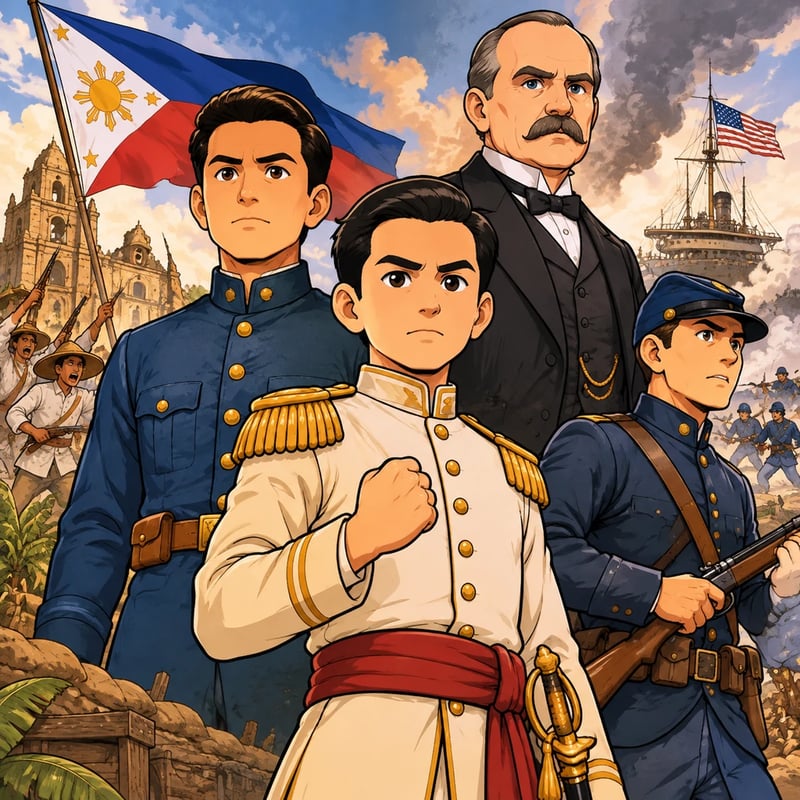
Journey through a pivotal historical era as a young Filipino scout named Mateo witnesses the dramatic shifts of 1898 and the fierce struggle for independence. This captivating narrative explores themes of courage, sovereignty, and resilience through breathtaking historical milestones. Discover a poignant tale of a nation fighting to forge its own destiny against overwhelming tides of change.
Generation Prompt(Sign in to view the full prompt)
Treaty of Paris & American Motives (1898) Treaty of Paris (Dec. 10, 1898): Spain ceded the Philippines, Guam, and Puerto Rico to the U.S. for $20 million and 10-year Spanish trade rights. U.S. Interests: Economic (surplus markets, raw materials like sugar/abaca), Military (Pacific bases like Subic and Sangley Point), and Political (Manifest Destiny). Outbreak & Key Events (1898–1901) Start of War: President Emilio Aguinaldo rejected U.S. President William McKinley’s Benevolent Assimilation Proclamation (Dec. 21, 1898). Fighting broke out on Feb. 4, 1899, in Sta. Mesa, Manila, after Pvt. William Grayson fired on Filipino troops. Bates Treaty (Aug. 20, 1899): Signed by Gen. John C. Bates and Sulu Sultan Jamalul Kiram II to avoid a two-front war; granted Sulu autonomy, subsidies, and religious freedom in exchange for recognizing U.S. sovereignty (later broken). Battle of Tirad Pass (Dec. 2, 1899): 24-year-old Gen. Gregorio del Pilar and 60 men delayed 300–500 U.S. troops in Ilocos Sur so Aguinaldo could escape. Guided by Januario Galut, U.S. forces flanked them, killing del Pilar and 52 others. Capture of Aguinaldo (March 23, 1901): Gen. Frederick Funston and Macabebe Scouts captured Aguinaldo in Palanan, Isabela, weakening organized resistance. Resistance & Aftermath (1901–1915) Balangiga Encounter (Sept. 1901): Valeriano Abanador and locals (under Gen. Vicente Lukban's plan) ambushed U.S. troops in Samar. Gen. Jacob H. Smith ordered brutal retaliation and seized the Balangiga bells (returned in 2018). Post-War Resistance (After July 4, 1902): Luzon: Miguel Malvar (surrendered April 1902) and Macario Sakay (Tagalog Republic; executed in 1907). Cordillera: Indigenous groups resisted taxes and forced education (e.g., Battle of Malupis, 1906). Mindanao & Sulu: Continued Moro resistance, marked by the Bud Dajo Massacre (1906) and Battle of Bud Bagsak (1913).