Join Lexi, a curious little explorer, as she discovers the world of words! This heartwarming tale gently guides young readers through the idea that some concepts are for grown-ups, while others are perfect for their blossoming minds, all while celebrating the joy of learning and kindness. A delightful adventure about choosing stories that make your heart happy.
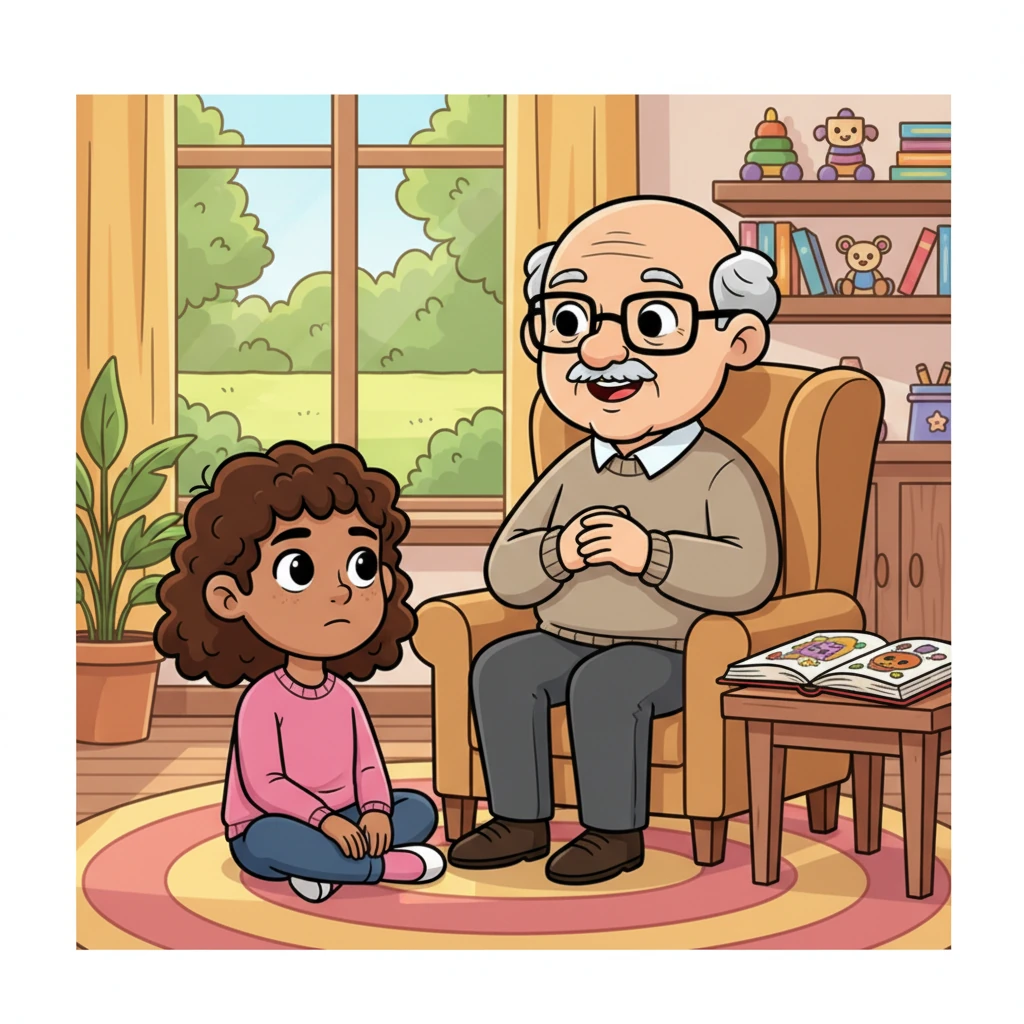
Little Lexi, with her bright pink bow and sparkling eyes, bounced into Grandpa Leo's cozy study. Sunlight streamed through the window, illuminating towering bookshelves filled with books of all sizes. Lexi spotted a very old, very big book on a low shelf, its cover dusty and mysterious.
With a giggle, Lexi pulled the giant book open, revealing pages filled with tiny, serious-looking words. Her finger traced a particularly long word: "Homicide." She tilted her head, a puzzled expression on her face, wondering what it meant.
Grandpa Leo, a wise old owl with spectacles perched on his nose, gently chuckled. He swooped down from his armchair, his feathery wing resting on the page. "Ah, Lexi, some words are like very tall, serious mountains, meant for grown-ups to explore with great care."
"This word, 'Homicide,' describes a very big, very sad grown-up problem about how important it is to keep everyone safe and never, ever hurt others deeply," Grandpa Leo explained softly. His voice was kind but firm, conveying the seriousness of the topic.
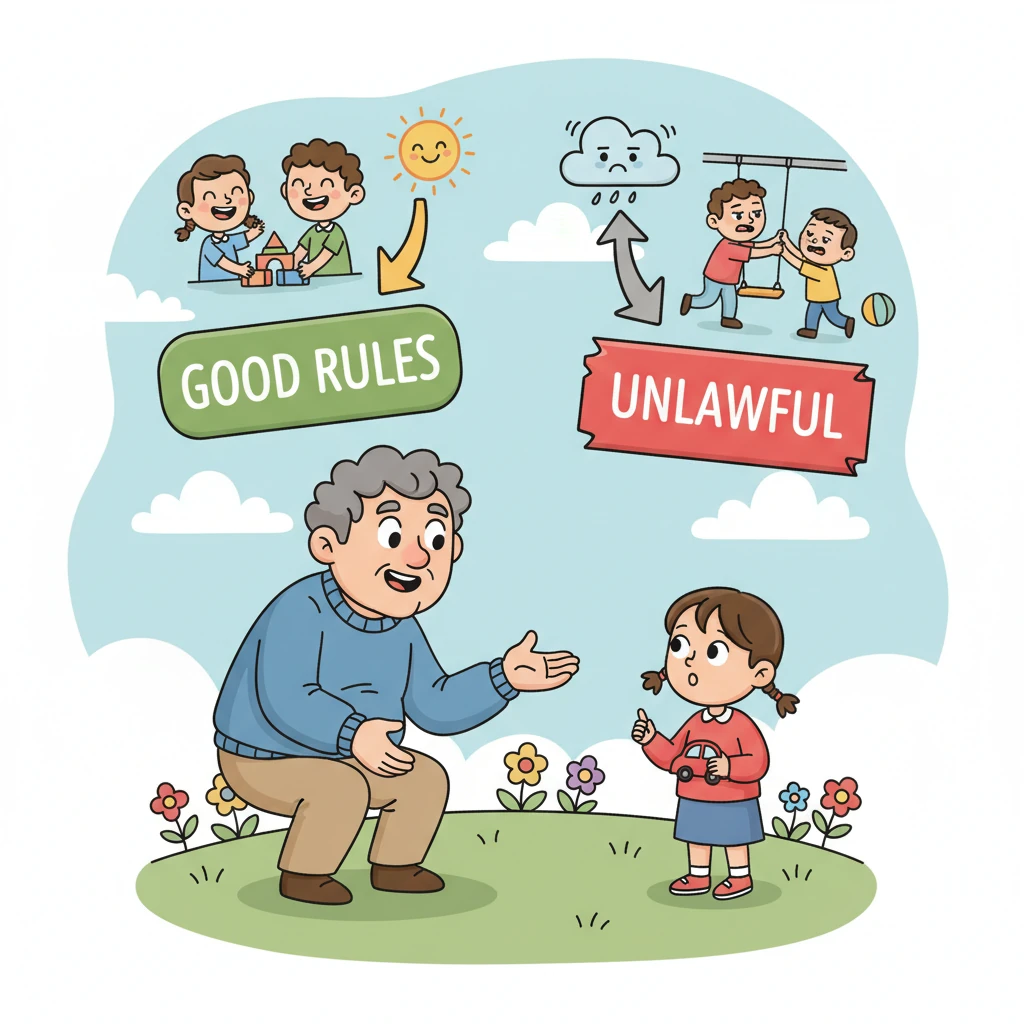
"And 'unlawful' means it goes against all the good rules we have to live by, rules that help us be kind and fair to everyone," Grandpa Leo explained. "It's like knowing it's not right to push someone or take their favorite toy without asking. Grown-ups have even bigger, more serious rules to follow to keep the whole world safe."
"Then there are words like 'intent,' which means thinking about what you're going to do before you do it," Grandpa Leo added. "Like when you intend to share your cookies, that's a happy intent! But sometimes, grown-ups talk about bad intentions, which are never good."
Grandpa Leo closed the big book gently. "These are important grown-up concepts, Lexi. For now, your stories should be about adventures, friendship, and all the wonderful things that make your heart sing." Lexi's eyes brightened, thinking of her favorite tales.
Lexi then picked up a colorful book with a smiling sun on the cover. "How about a story about a brave little rabbit who learns to share his carrots?" she asked, her voice full of excitement. Grandpa Leo smiled warmly, his eyes twinkling.
As Grandpa Leo read, Lexi imagined the little rabbit making new friends by sharing his crunchy carrots. She learned about kindness, empathy, and the joy of making others happy. Her heart felt warm and full, understanding the power of good choices.
Lexi snuggled close to Grandpa Leo, understanding that while grown-ups need to understand all sorts of words, her job was to learn about love, happiness, and making the world a brighter place with kind actions. She knew there were stories just right for her.
Generation Prompt(Sign in to view the full prompt)
Homicide is defined as the unlawful, meaning unjustified, taking of another person’s life. There are two primary types of homicide: murder and manslaughter. Murder does not have a single, simple definition that clearly separates it from other forms of killing. In general terms, murder is the unlawful and unjustified killing of another human being. To secure a murder conviction, the prosecution must prove several essential elements. First, there must be an actus reus. This means the defendant must have engaged in conduct, either by committing an affirmative act or by failing to act when there was a legal duty to do so. Second, the prosecution must establish the corpus delicti of the crime. This requires proof that the victim actually died, as the death of the victim is the core of the crime of murder. The prosecution does not need to produce the victim’s body to prove death. Like other elements of a crime, death may be established through circumstantial evidence. Third, the prosecution must prove the required mens rea, or mental state. Although this mental state is often referred to as “malice aforethought,” that phrase is a legal term of art rather than a precise description. The requirement may be satisfied by showing any one of several mental states. In most jurisdictions, and for purposes of the bar exam, these include an intent to kill, an intent to cause grievous bodily injury, a reckless indifference to the value of human life (often called a “depraved heart”), or an intent to commit certain dangerous non-homicide felonies. Finally, the prosecution must prove proximate cause. The defendant’s act or omission must be causally connected to the victim’s death. This means the defendant’s conduct must be both the cause in fact and the proximate cause of the death. In many jurisdictions, the common-law year-and-a-day rule still applies in murder cases. Under this rule, the victim’s death must occur within one year and one day of the defendant’s act or omission.