Join Maya on a heartwarming journey of discovery as she meets new friends and learns about the beautiful diversity of human experience! This charming story teaches children about different abilities with kindness and understanding. It's a must-read for promoting empathy, acceptance, and celebrating what makes everyone unique.
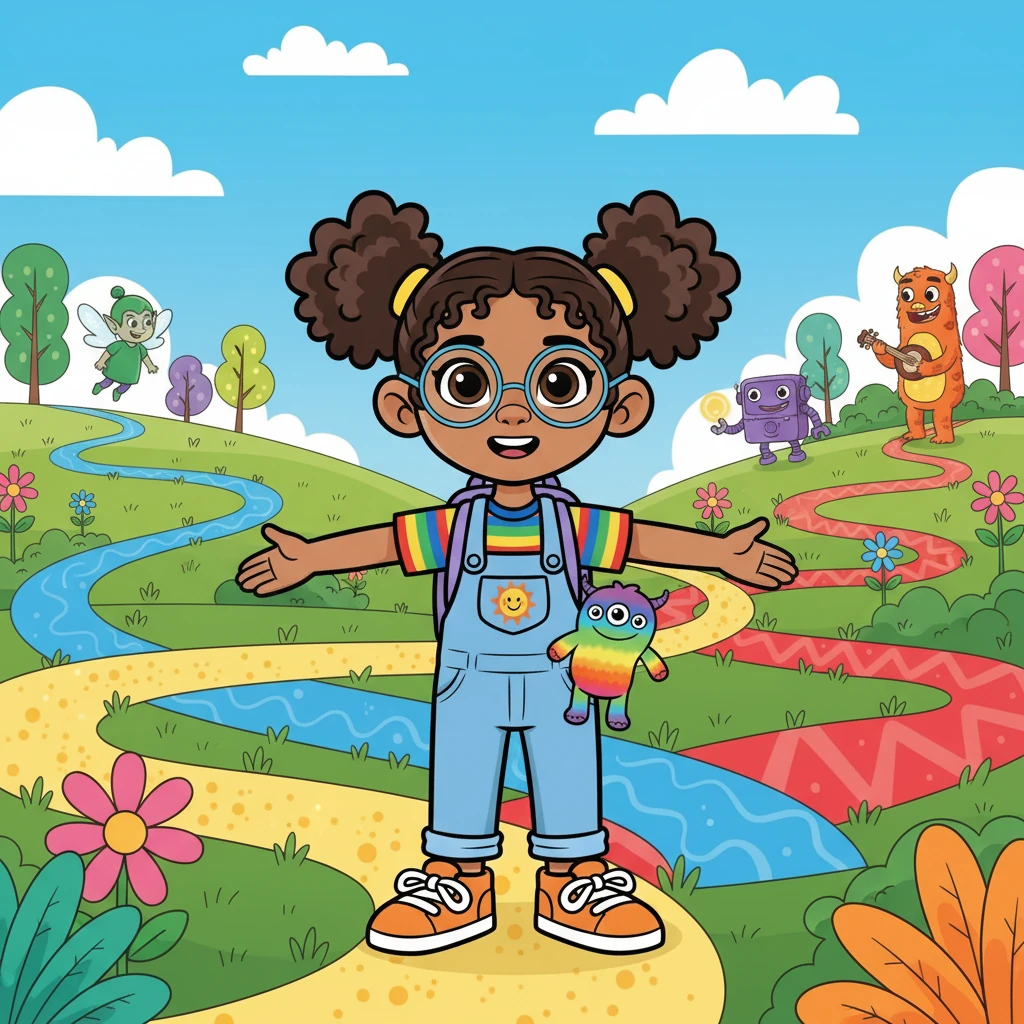
Maya, a girl with curly hair and glasses, stands with a big smile, a backpack on her back. Colorful paths stretch out behind her, each leading to a new friend with a unique ability. The title, in a playful font, sits at the top, promising an exciting adventure.
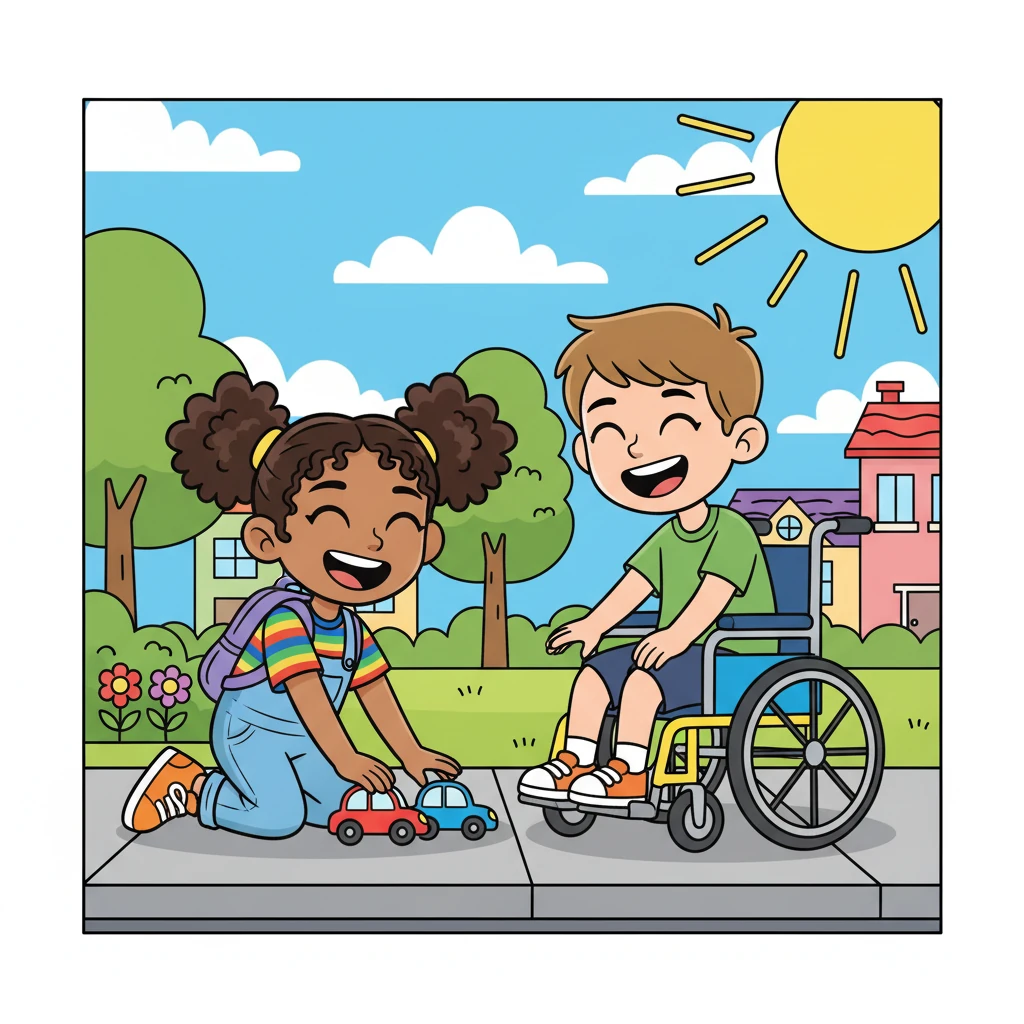
Maya meets Tom, who uses a wheelchair. They are racing toy cars on the sidewalk, both laughing with pure joy. The sun shines brightly, and the world seems full of possibilities for these two friends. It's a perfect day for fun and friendship.
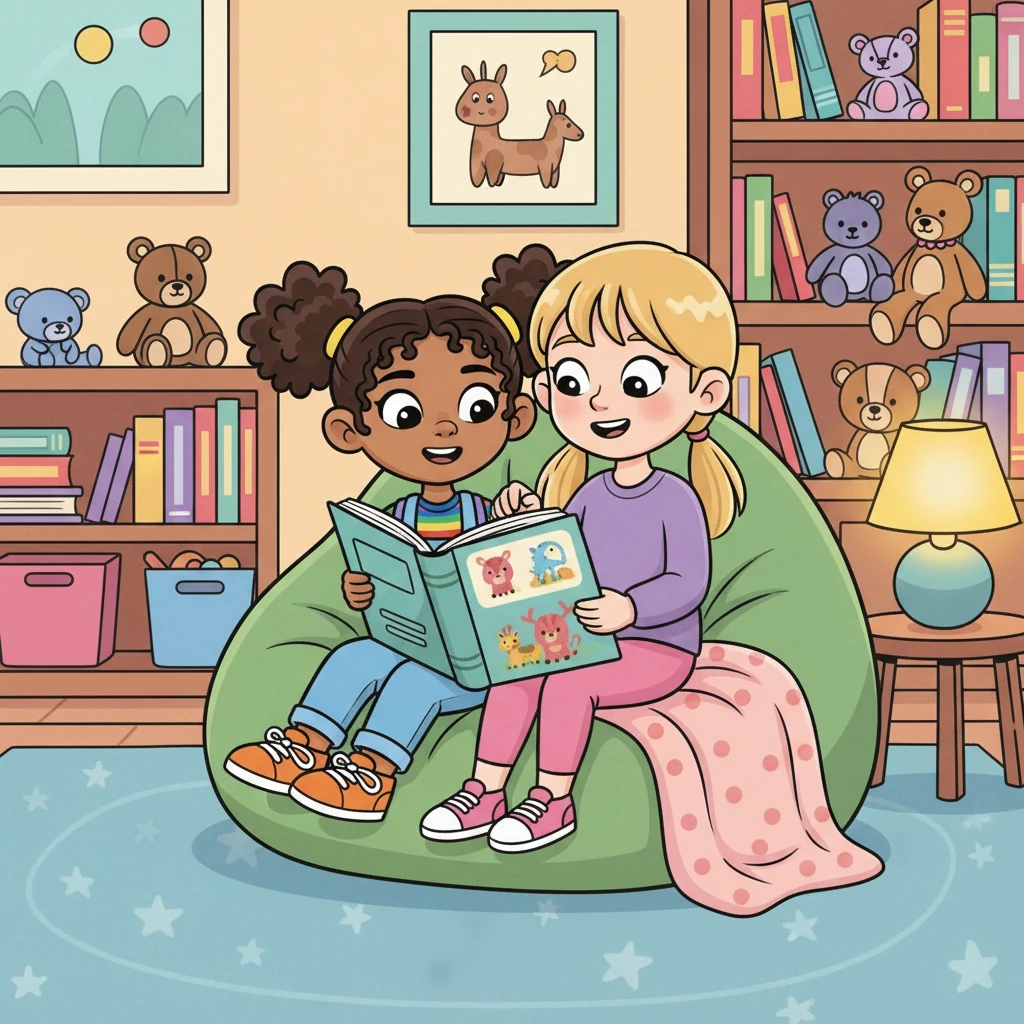
Next, Maya sits with Lilly, who has dyslexia, on a cozy beanbag chair. Lilly smiles as Maya points at pictures in a book. The room is filled with warmth and the shared joy of storytelling, where differences fade and friendship shines.
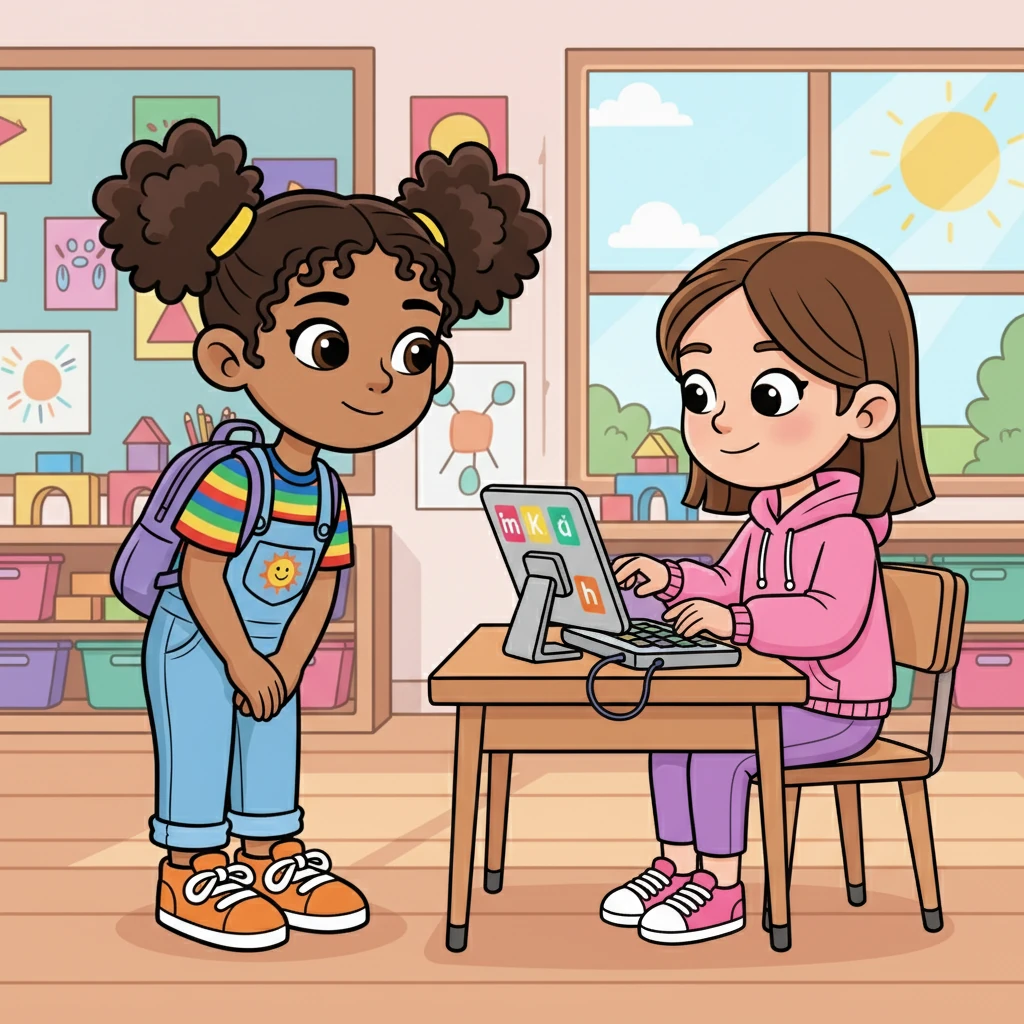
Maya encounters Leah, who uses a communication computer. Leah sits at a desk, typing on her tablet, which displays words in a speech bubble. Maya listens intently, her expression filled with empathy and understanding, showing the power of communication.
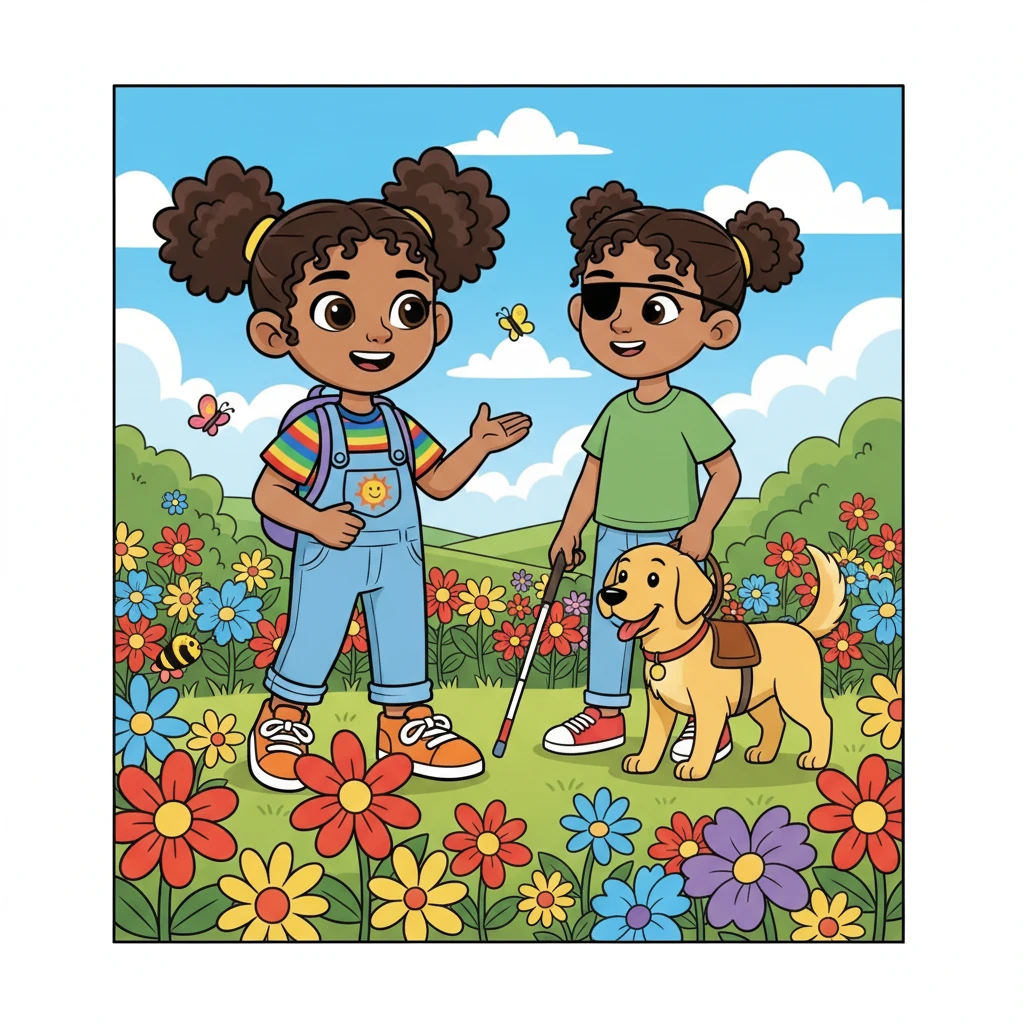
April, who is blind, walks with her guide dog, Sunny. Maya describes the colorful flowers nearby with a big smile. The scene emphasizes the beauty in every sense and the importance of describing the world in detail.
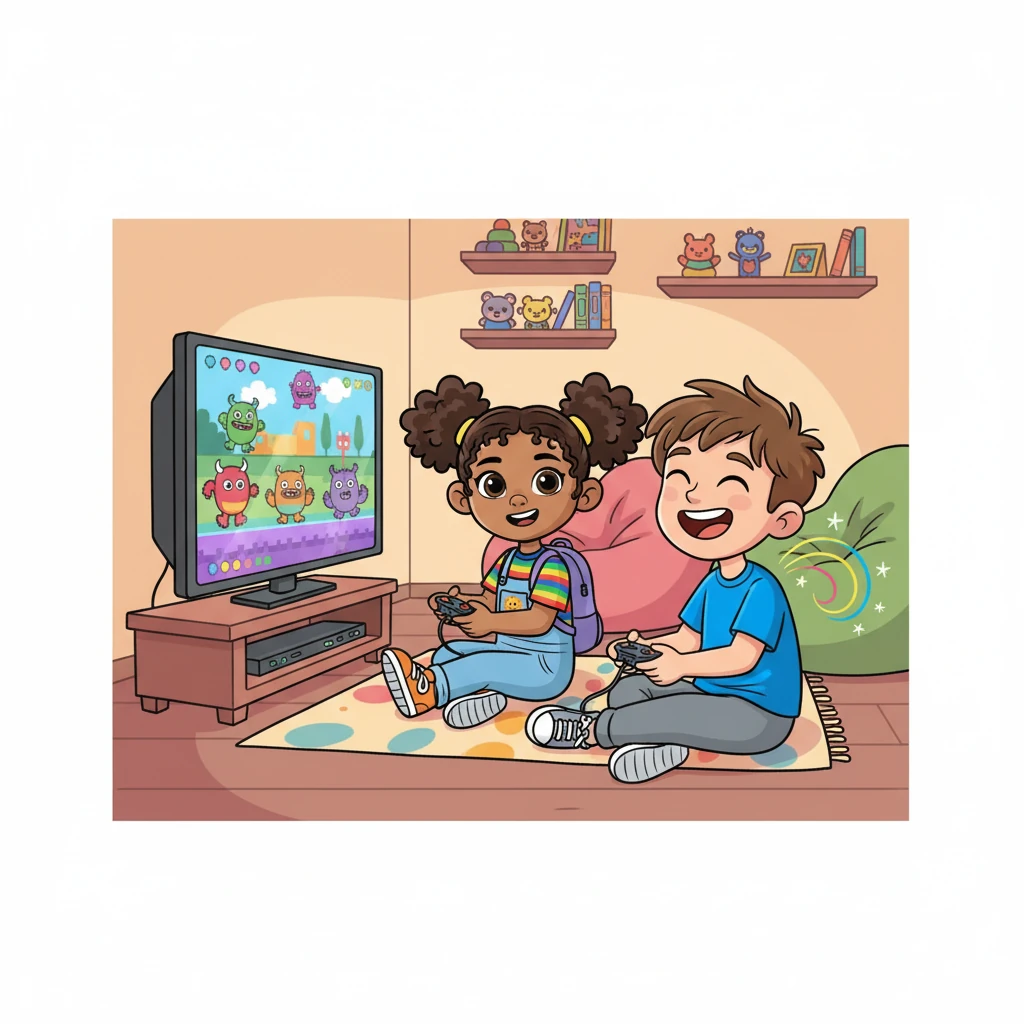
Finally, Maya plays video games with Frank, who has Tourette's. Frank is laughing, and a fun motion line shows one of his tics. The scene highlights that everyone's body is different and it's okay, fostering a sense of understanding and acceptance.
Generation Prompt(Sign in to view the full prompt)
Maya’s Amazing Friends — Learning About Disabilities By [Your Name] Page 1 – Meet Maya Hi! I’m Maya. I’m 9 years old, I wear glasses, and I love learning new things. Today, I’m going on an adventure to meet some amazing friends — and learn about disabilities! Everyone’s body and brain work differently, and that’s what makes the world special. Illustration Idea: Bright cover scene — Maya with curly hair and glasses, backpack on, waving. Behind her are colorful paths leading to new friends of all kinds. Title at top in playful font. Page 2 – Physical Disabilities Text: Some disabilities affect how someone’s body moves or works. Examples include: • Cerebral palsy • Muscular dystrophy • Spina bifida • Limb differences • Paralysis • Chronic pain This is Tom. He uses a wheelchair. Maya asks, “How can we be good friends, Tom?” Tom smiles, “Just include me and be kind! Some people use wheelchairs, crutches, or braces — and that’s okay!” ✅ Do: Offer help if asked, include them in play, be patient. ❌ Don’t: Touch someone’s wheelchair or make them feel different. Illustration Idea: Maya and Tom racing toy cars on the sidewalk; Tom in his wheelchair, both laughing. Page 3 – Neurodevelopmental & Learning Disabilities Text: These affect how someone’s brain learns or communicates. Examples: • Autism • ADHD • Dyslexia • Dyscalculia • Dysgraphia • Intellectual disabilities Maya meets Lilly, who has dyslexia. “Reading can be hard for me,” says Lilly, “but I’m great at remembering stories!” ✅ Do: Be kind, explain things clearly, include everyone. ❌ Don’t: Tease or call someone “weird.” Illustration Idea: Maya and Lilly reading together on a beanbag; Lilly smiles while Maya points at pictures in a book. Page 4 – Communication Disabilities Text: These affect how someone talks or understands language. Examples: • Speech delays • Stuttering • Apraxia of speech • Selective mutism • Nonverbal communication Maya meets Leah, who uses a communication computer to talk. Leah types, “We all have different ways to speak — and that’s okay!” ✅ Do: Listen patiently and try to understand. ❌ Don’t: Interrupt or make fun of how someone talks. Illustration Idea: Leah sitting at a desk, typing on a tablet that shows words in a speech bubble. Maya listens kindly. Page 5 – Sensory Disabilities Text: These affect how someone sees, hears, or experiences the world. Examples: • Blindness or low vision • Deafness or hearing loss • Sensory sensitivities Maya meets April, who is blind. April says, “I use my cane and my guide dog, Sunny!” ✅ Do: Face people when you talk, describe things clearly, and include them. ❌ Don’t: Shout, touch guide dogs, or assume they need help — ask first. Illustration Idea: April walking with her guide dog Sunny, Maya describing flowers nearby with a big smile. Page 6 – Neurological & Health Disabilities Text: These are medical conditions that affect energy, focus, or movement. Examples: • Tourette Syndrome • Epilepsy • Diabetes • Asthma • Chronic illness Maya meets Frank, who has Tourette’s. “Sometimes my body makes sounds or movements I can’t control,” says Frank. Maya nods, “That’s okay — everyone’s body does different things!” ✅ Do: Be understanding and patient. ❌ Don’t: Tease or say, “You don’t look sick.” Illustration Idea: Frank laughing with Maya while playing video games; his tic shown with a fun motion line, but everyone relaxed. Page 7 – Emotional & Mental Health Disabilities Text: These affect how someone feels, thinks, or handles emotions. Examples: • Anxiety • Depression • OCD • Bipolar disorder • PTSD Maya meets Kris, who has anxiety. “Sometimes I worry a lot,” says Kris, “but it helps when friends listen.” ✅ Do: Be supportive and kind. ❌ Don’t: Call someone “crazy” or make jokes. Illustration Idea: Maya and Kris sitting on a playground bench, sharing snacks and smiling calmly. Page 8 – Hidden or Invisible Disabilities Text: Some disabilities can’t be seen just by looking at someone. Examples: • Chronic pain • Autism • ADHD • Tourette’s • Anxiety • Hearing loss • Learning disabilities Maya meets Sara, who wears hearing aids. “You might not notice my disability,” she says, “but it’s still part of me!” Illustration Idea: Maya and Sara whispering secrets and laughing — little sparkles near Sara’s hearing aids showing sound waves. Page 9 – Maya’s Big Message Text: Maya smiles. “You can’t always see a disability — so always be kind and patient!” Illustration Idea: Maya and all her friends together in a park — Tom in his wheelchair, April with her guide dog, Leah with her tablet, everyone playing happily. Page 10 – What to Do & What Not to Do Text: ✅ Do: • Be kind and patient • Ask before helping • Treat everyone fairly • Learn about differences • Use people-first language (“a person who has…”) ❌ Don’t: • Tease, stare, or whisper • Assume what someone can or can’t do • Speak for them unless they ask • Leave anyone out of games or groups Illustration Idea: Two side-by-side panels — one “Do” panel showing kids playing together, one “Don’t” panel with crossed-out examples like teasing or whispering. Page 11 – The End Text: Maya waves goodbye with her friends. “Everyone is unique — and that’s what makes the world amazing!” 🌈 The End Illustration Idea: A joyful group photo of all the friends waving at the reader under a rainbow sky