Join young Aarav on a magical journey through time as his wise Dadu unveils the incredible history of books. Discover a world where knowledge was a rare treasure, and meet the brilliant inventor who changed everything, making stories and wisdom accessible to all. This heartwarming tale celebrates curiosity, perseverance, and the enduring power of printed words.
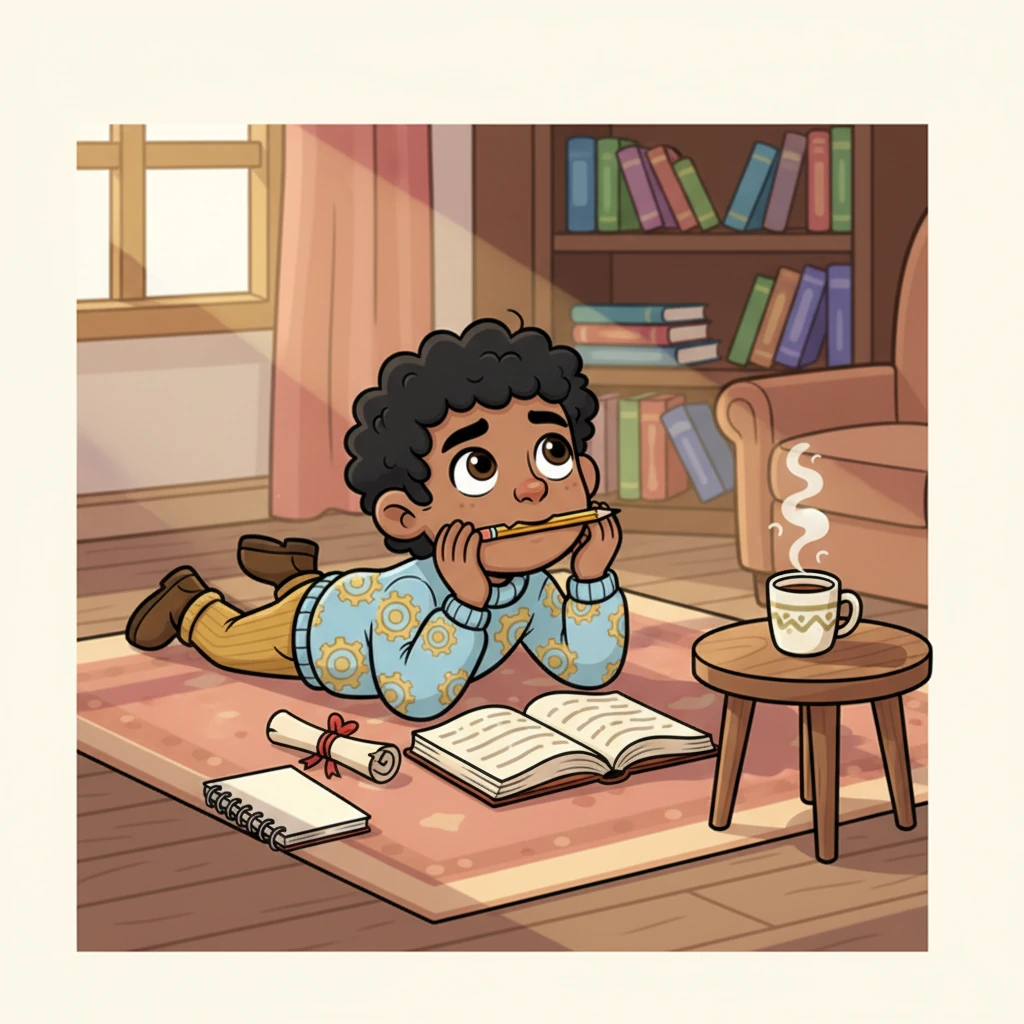
Aarav lay on his stomach, a book open, a pencil between his teeth, and his homework notebook still blank. The cozy room smelled of old paper and cardamom tea, with a thin afternoon sunbeam stretching across the carpet. He sighed dramatically, ready for a distraction.
Dadu, with a gentle smile, lowered his teacup and picked up Aarav's book, tracing the printed words. He explained that there was a time when a book like this was rarer than gold. Aarav's eyes widened, completely captivated by this surprising idea.
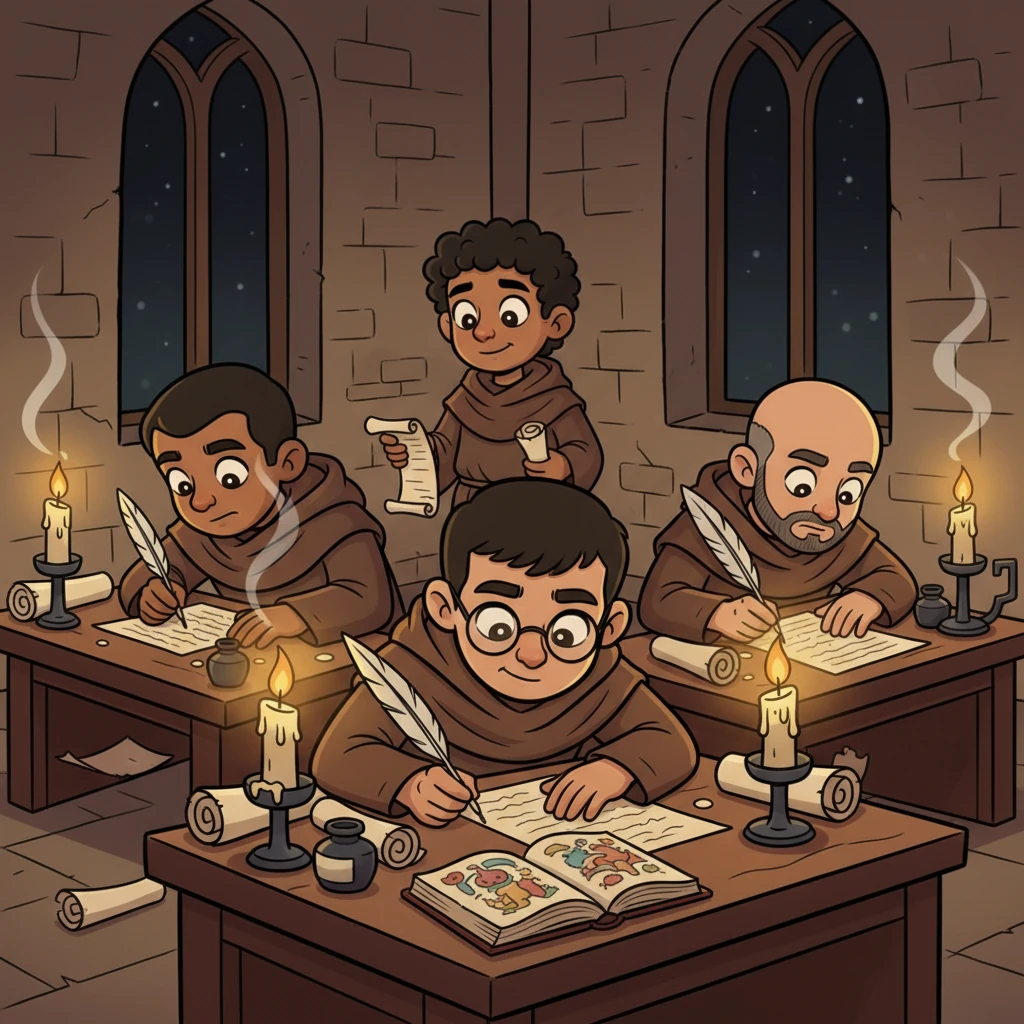
The scene shifts to a dimly lit stone room, where dedicated monks in simple robes hunched over wooden desks. By the flickering light of candles, they meticulously copied every word and letter by hand. The air smelled of wax and smoke as feather quills scratched rhythmically on parchment.
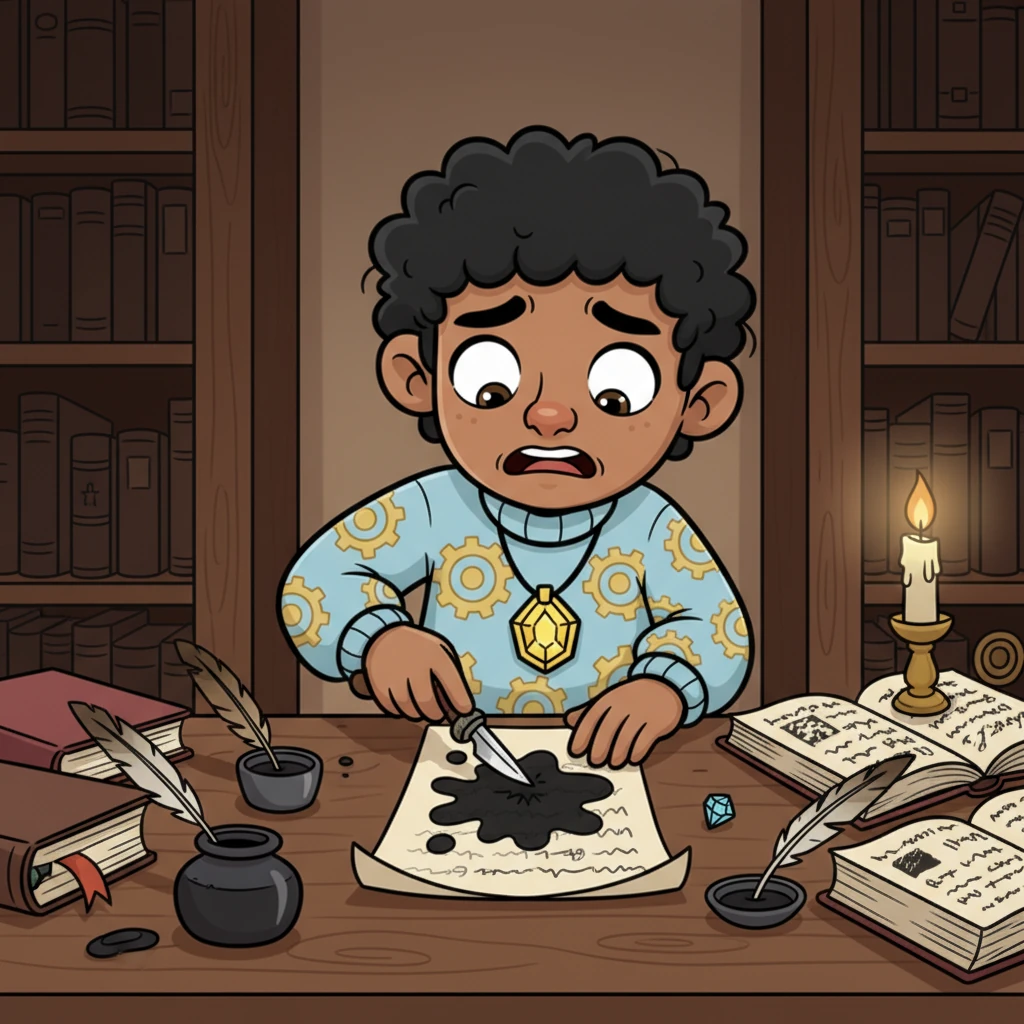
One monk, his hand trembling from hours of work, accidentally made a large blot of ink spread across a carefully copied page. His face showed dismay as he painstakingly scraped the ink with a knife, making the parchment dangerously thin. One mistake could ruin weeks of effort.
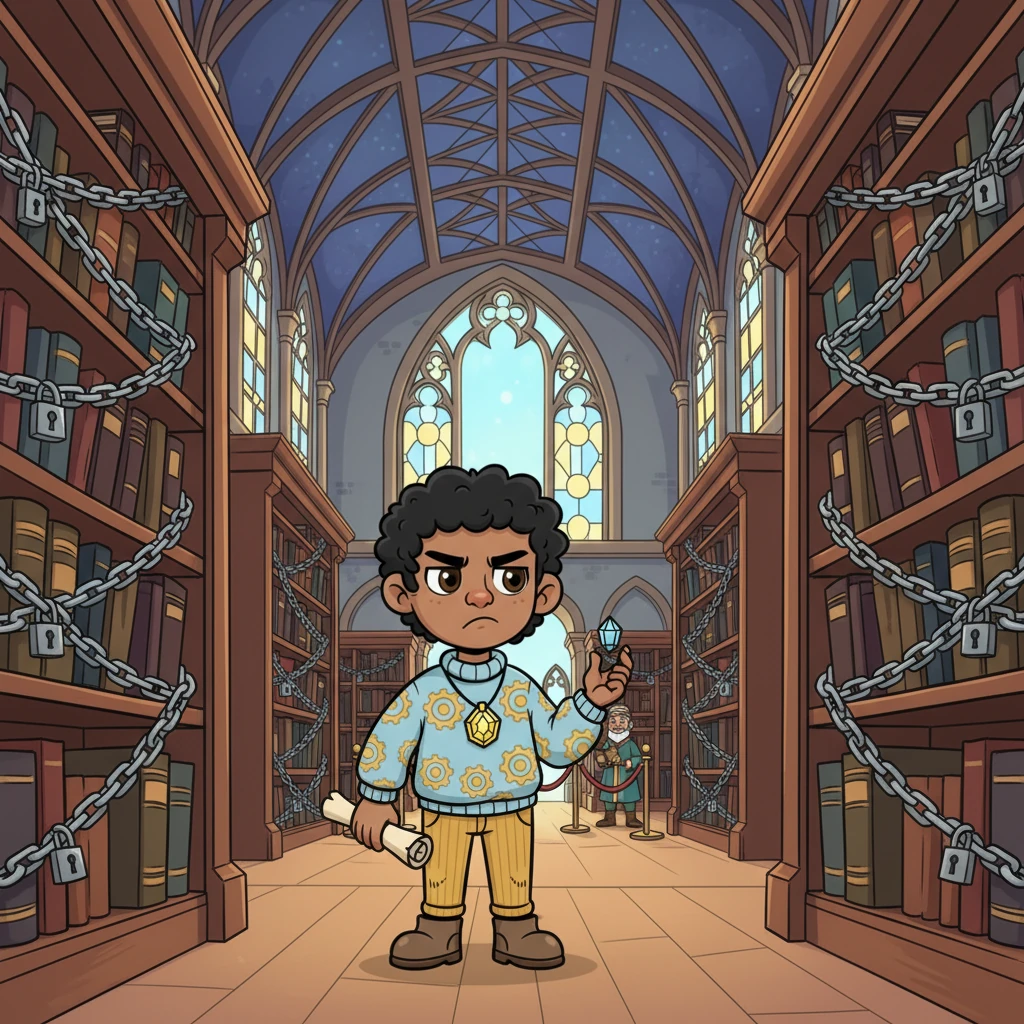
Books were incredibly precious, locked away in churches, stacked in grand palaces, and even chained to shelves to prevent theft. Aarav frowned, realizing that only the very rich had access to knowledge, which Dadu described as having 'walls'.
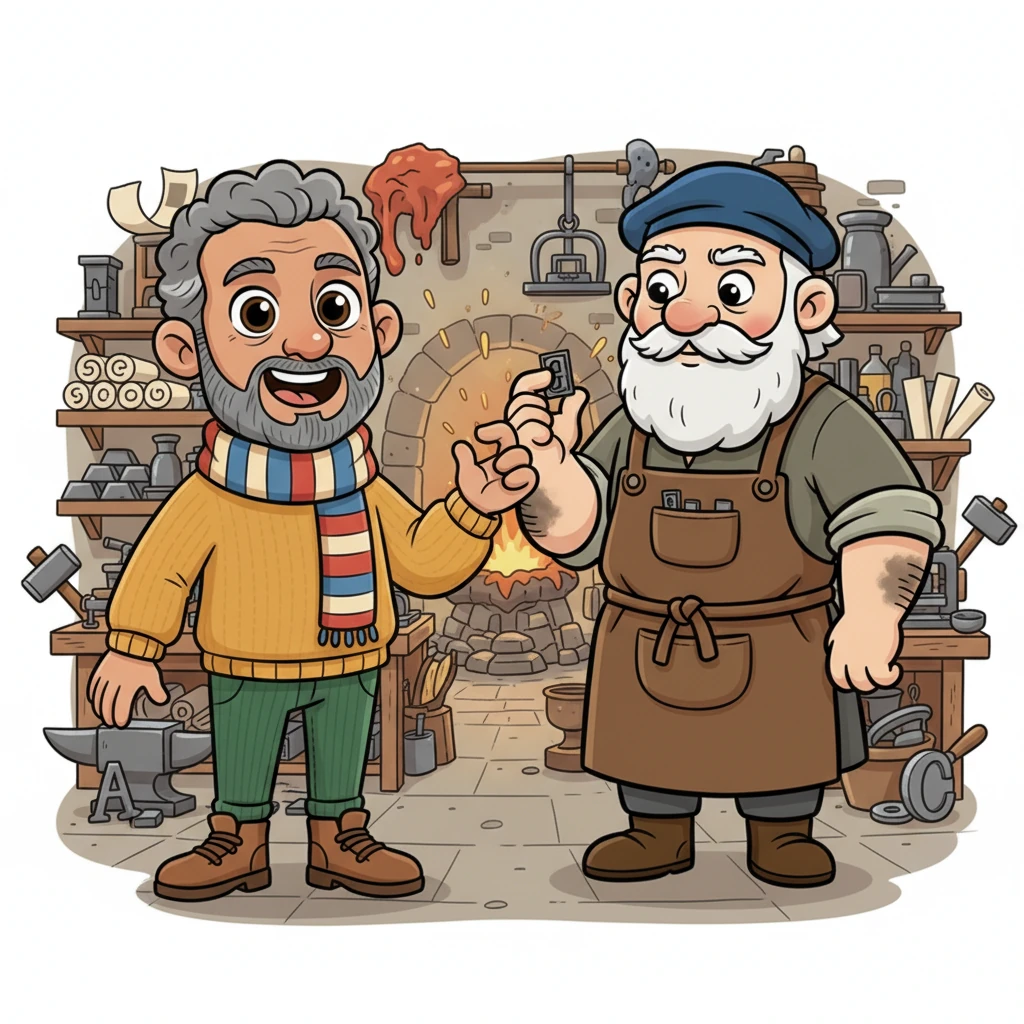
Dadu then introduced Johannes Gutenberg, a brilliant metalworker with rough, soot-darkened hands, standing in his bustling workshop. Surrounded by tools and the sharp smell of heated metal, Gutenberg examined a small, intricately engraved metal piece, deep in thought.
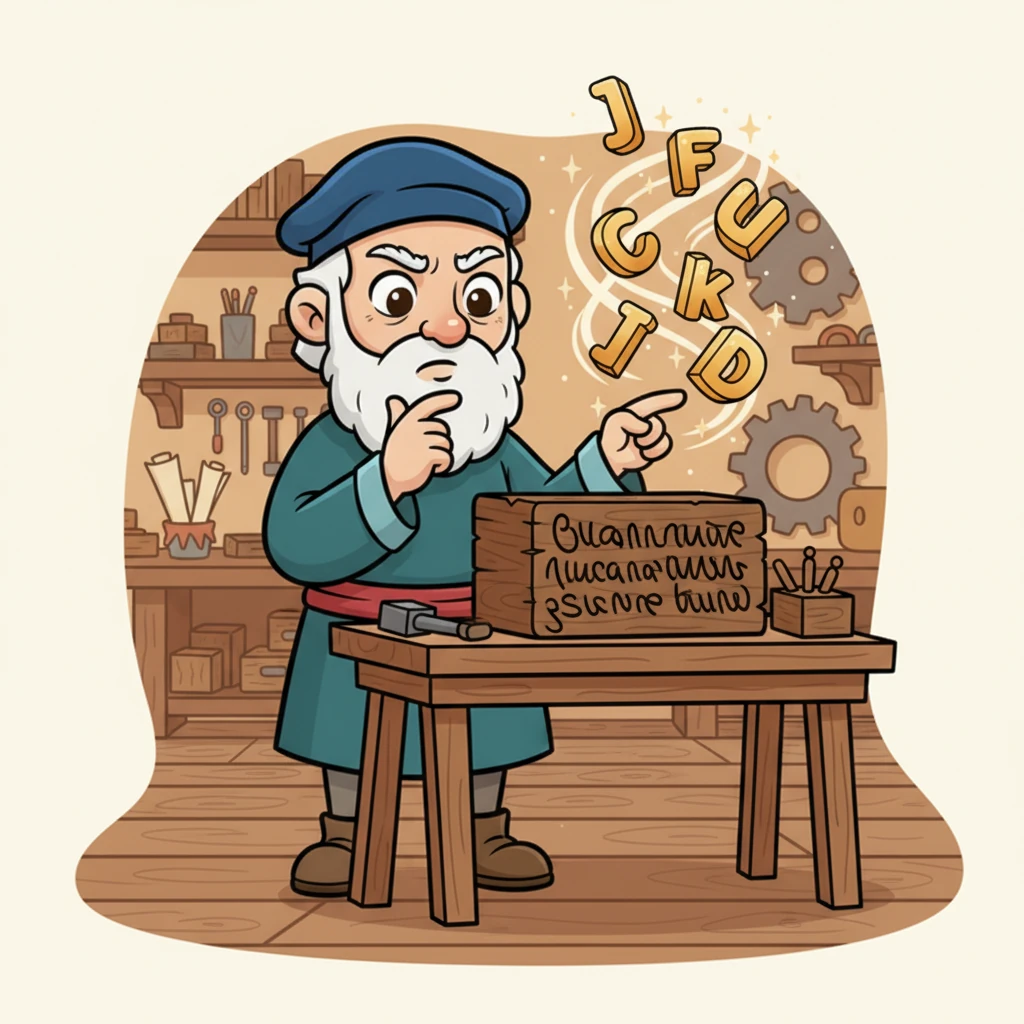
Gutenberg stared intently at a heavy wooden block carved with words, used in an older printing method. He knew this was too slow and cumbersome. He pondered a revolutionary idea: what if individual letters could move, multiply, and be rearranged?
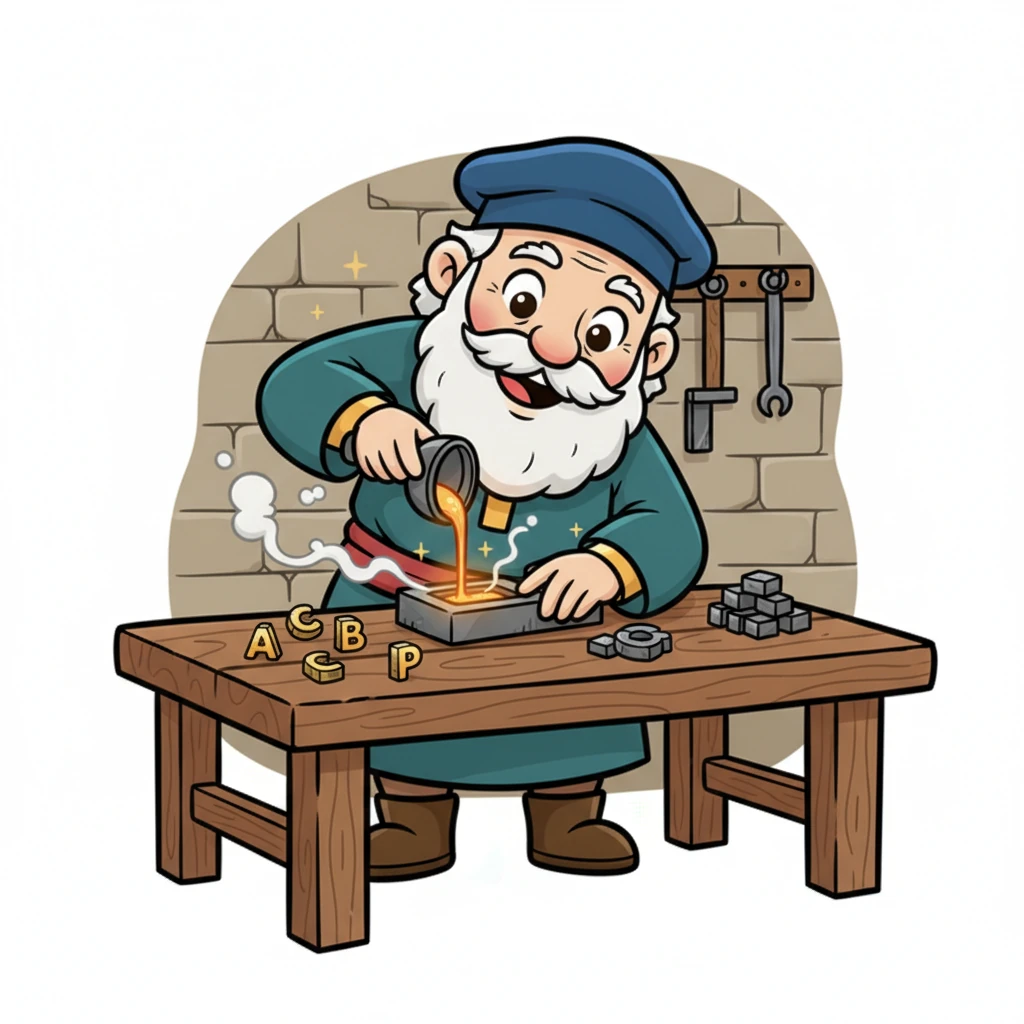
Driven by curiosity, Gutenberg began experimenting, pouring molten metal into tiny molds. One by one, small, shiny metal letters clinked onto his workbench, each perfectly formed and small enough to rest on a fingertip. He was creating the building blocks of a new world.
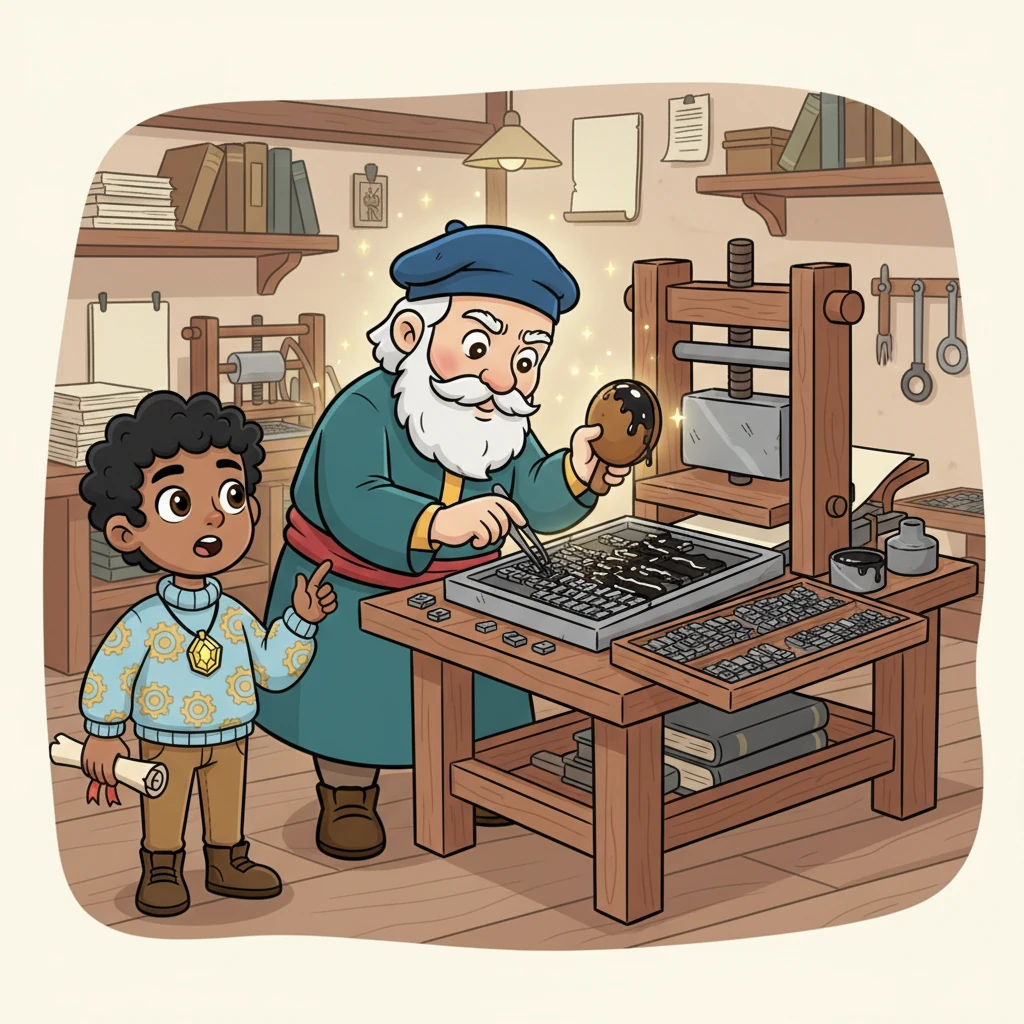
With meticulous care, Gutenberg arranged the tiny metal letters into a frame, forming words and lines. He then brushed thick, dark, oily ink over the raised letters, preparing them to transfer their message onto paper. The air in his workshop was thick with anticipation.
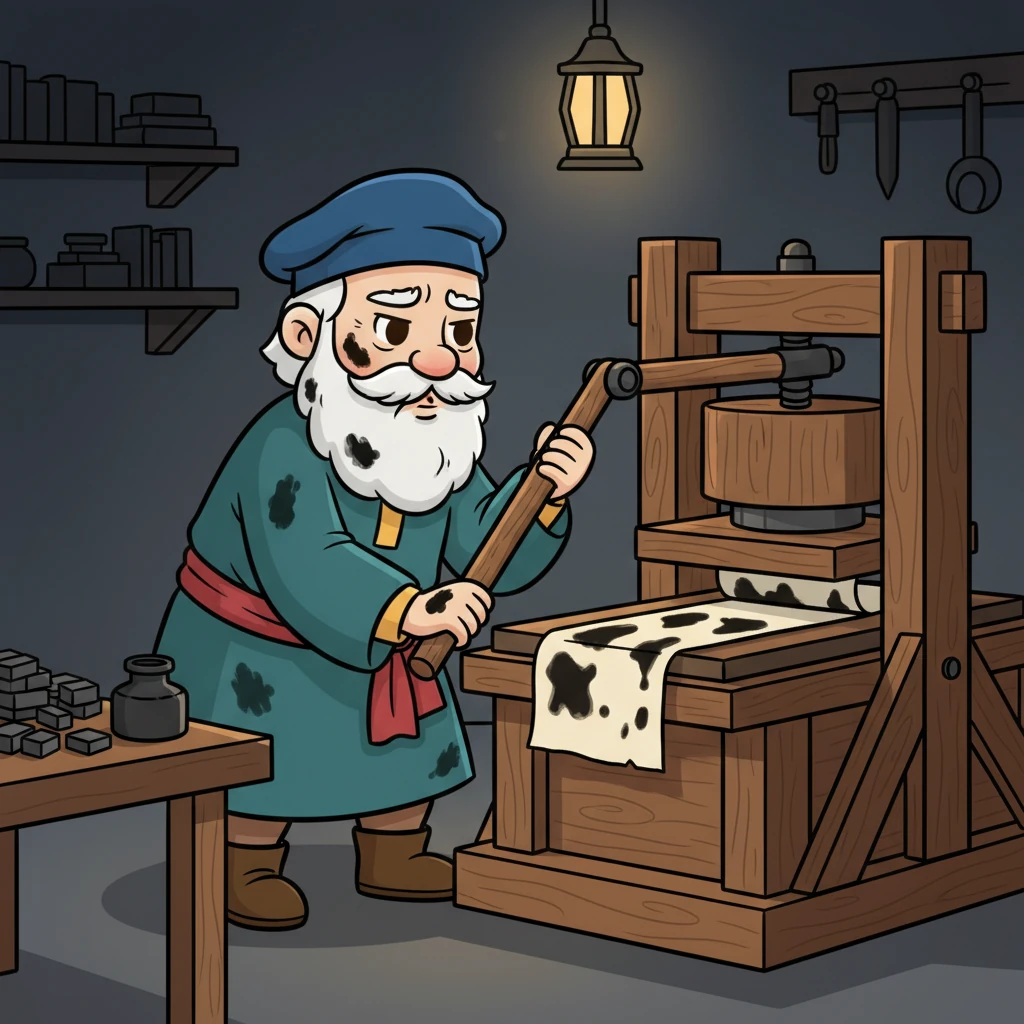
Gutenberg pulled the lever of his wooden press, but the first attempts were often frustrating. Paper tore, ink smudged, and letters blurred. His hands were black with ink, his back ached, but night after night, the faint glow from his workshop showed his unwavering determination.
生成提示词(登录后查看具体 Prompt)
Rarer Than Gold The room smelled of old paper and cardamom tea. A thin afternoon sun slipped through the curtains and settled on the carpet, where Aarav lay on his stomach with a pencil between his teeth and a book open in front of him. His homework notebook was still blank. He flipped a page, frowned, and sighed dramatically. “Dadu,” he said, without looking up, “who made books?” Across the room, his grandfather lowered his teacup slowly. He did not answer at once. He watched the boy for a moment, as if measuring the weight of the question. “Not who made books,” Dadu said at last. “Who made them possible for everyone.” Aarav rolled onto his back and stared at the ceiling. “Isn’t that the same thing?” Dadu smiled. He reached over, picked up the book, and ran his fingers across the printed words. “There was a time,” he said quietly, “when this was rarer than gold.” Aarav turned his head. “A book? Rarer than gold?” “Yes,” Dadu said. “Rarer than gold.” The room seemed to grow quieter. “There was a time,” Dadu continued, “when if you wanted a book, someone had to copy it by hand. Every word. Every letter.” The soft amber light of the room seemed to fade as his voice carried the boy backward in time. In a stone room lit only by candles, monks bent over wooden desks. The air smelled of wax and smoke. A feather quill scratched against parchment. Scratch. Scratch. Scratch. Ink stained their fingers. Wax dripped slowly down candle stands. Shadows trembled on cold walls. “One book,” Dadu said, “could take months to copy.” A monk paused. He stared at a page. His hand trembled. A blot of ink spread where it should not have been. “One mistake,” Dadu continued, “could ruin weeks of work.” The monk scraped the ink carefully with a knife. The page grew thin. “And still they wrote,” Dadu said softly. Aarav pushed himself up onto his elbows. “So… only monks made books?” “Mostly,” Dadu said. “And not many. Books were precious. They were locked in churches. Stacked in palaces. Chained to shelves so they would not be stolen.” “Wait,” Aarav interrupted. “Only rich people had books?” Dadu nodded. “Yes. Knowledge had walls.” Aarav frowned. “That’s not fair.” “No,” Dadu agreed. “It was not.” He leaned back in his chair. “But there was a man who did not like walls.” Aarav leaned closer. “His name was Johannes Gutenberg.” “Was he a king?” Aarav asked. “No.” “A priest?” “No.” “Then what was he?” Dadu smiled. “He was a metalworker.” In a small workshop filled with tools and the sharp smell of heated metal, a man stood at a wooden table. His sleeves were rolled to his elbows. A leather apron covered his chest. His hands were rough, darkened by soot and years of labor. He lifted a small metal piece and held it close to the light. Gutenberg was not a hero with a sword. He was not a wizard with spells. He was a craftsman. He understood metal. He understood engraving. He liked solving mechanical problems. “He was curious,” Dadu said. “And curiosity is powerful.” Gutenberg had seen books. He had seen how slowly they were made. He had seen how rare they were. “There was a time,” Dadu said, “when letters were trapped.” Aarav blinked. “Trapped?” “Yes,” Dadu said. “Each letter was written by hand. It could not move. It could not multiply.” In his workshop, Gutenberg stared at a wooden block carved with words. Woodblock printing already existed. But if you made a mistake, you had to carve a whole new block. It was slow. It was heavy. He frowned. “What if,” Dadu said, lowering his voice, “letters could move?” Gutenberg began experimenting. He poured molten metal into small molds. The smell of hot lead filled the air. Steam rose in thin curls. Clink. A tiny metal letter fell onto the table. Clink. Another. Each piece was small enough to rest on a fingertip. Each one carried a single letter. “Imagine,” Dadu said, holding his fingers like he was pinching something tiny, “little metal letters, like puzzle pieces.” Aarav’s eyes widened. “You could arrange them into words,” Dadu said. “Press them onto paper. Then rearrange them. Again. And again.” Clink. Clink. Clink. In the workshop, Gutenberg lined the letters carefully into a frame. He brushed thick ink over them. The ink smelled sharp and oily. He placed paper over the inked letters. The wooden press creaked as he pulled the lever. Clank. Pressure. He lifted the page. The ink smudged. The letters blurred. He exhaled slowly. “It did not work at first,” Dadu said. Metal cracked. Ink smeared. Paper tore under pressure. The workshop smelled of sweat, oil, and heated lead. His hands grew black with ink. His back ached from bending over the press. “Did he give up?” Aarav asked. Dadu shook his head. “And still he tried.” Night after night, the workshop glowed faintly. Outside, the town slept. Inside, Gutenberg adjusted molds, reshaped letters, tested new mixtures of metal. He needed money. Experiments cost more than he had.