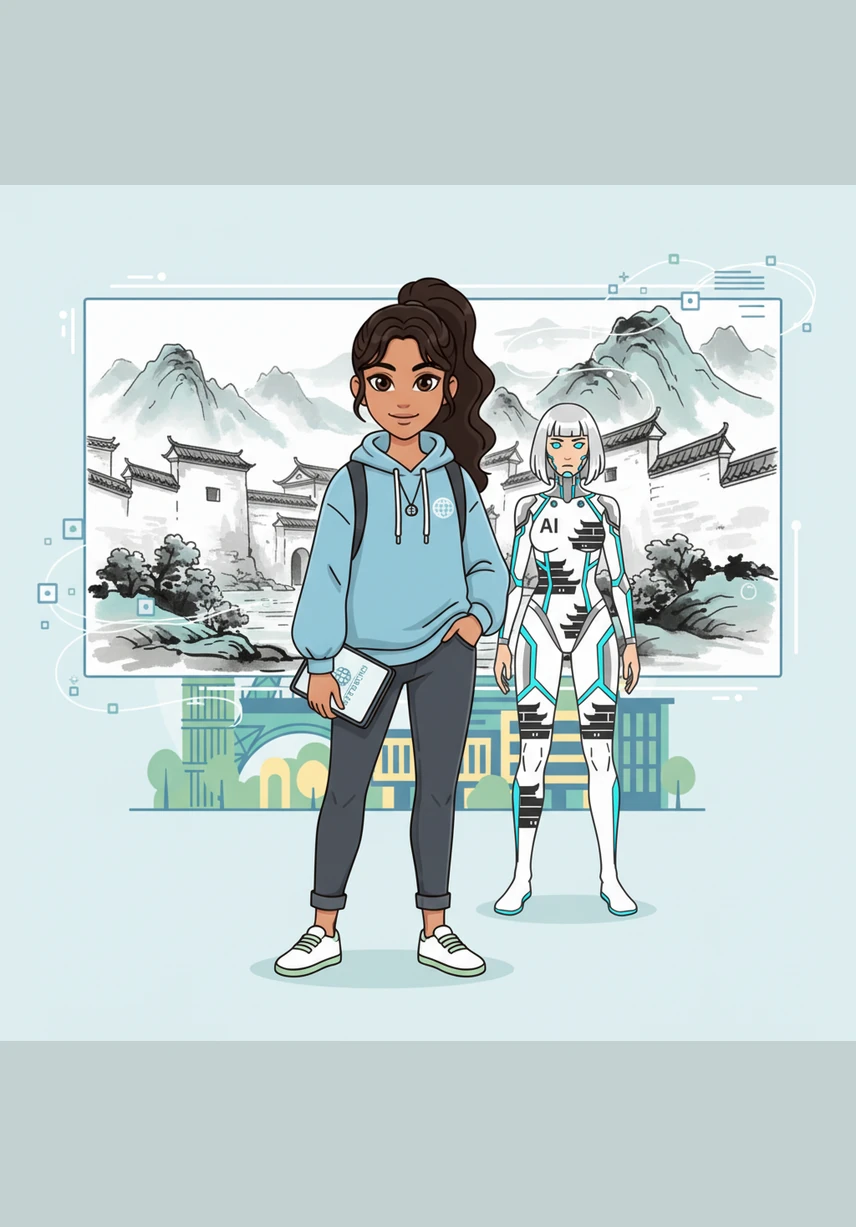
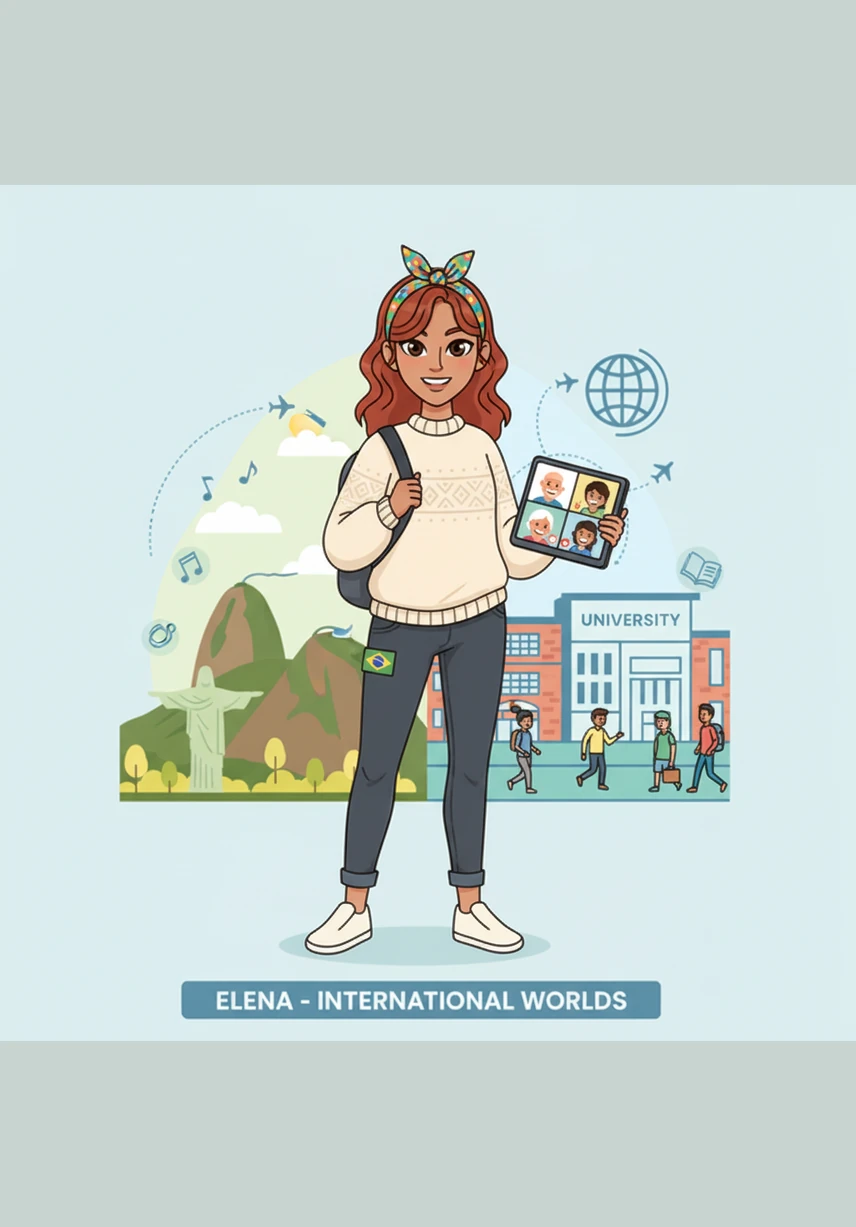
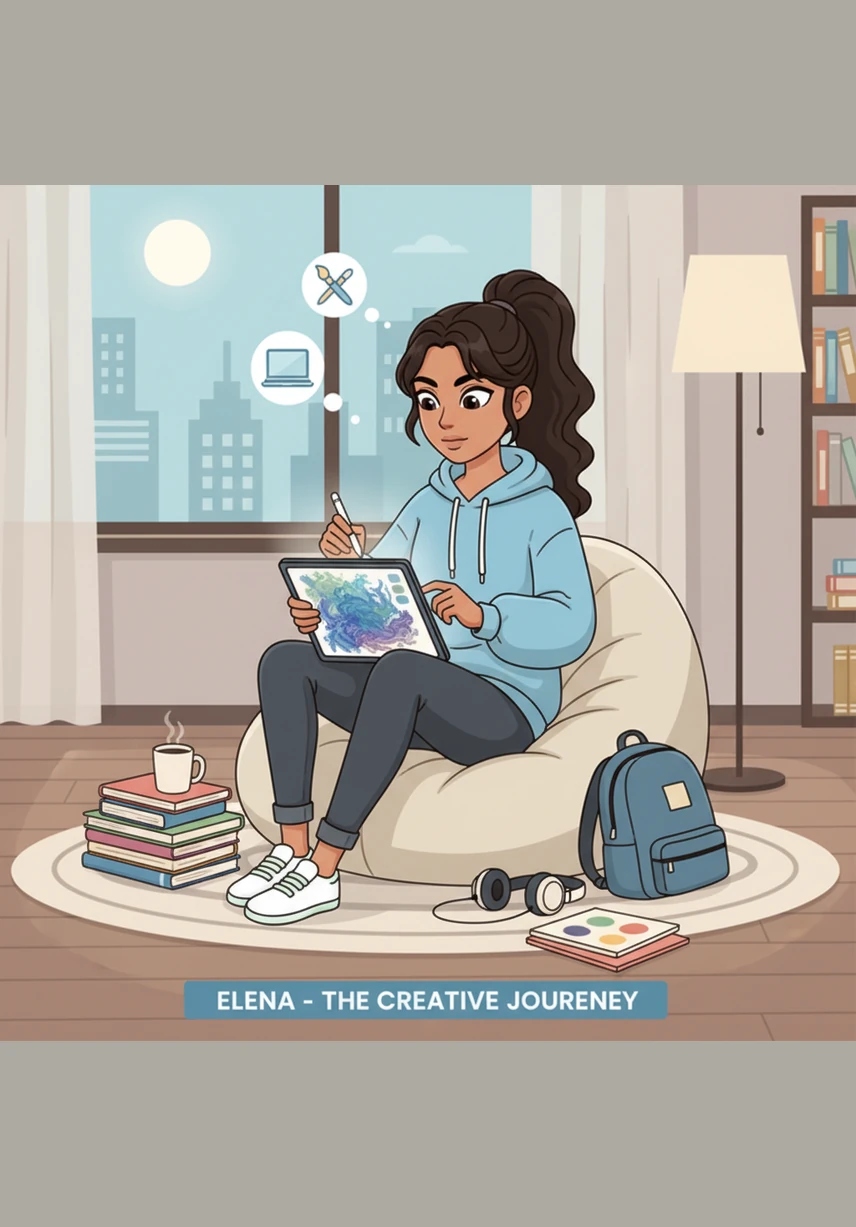
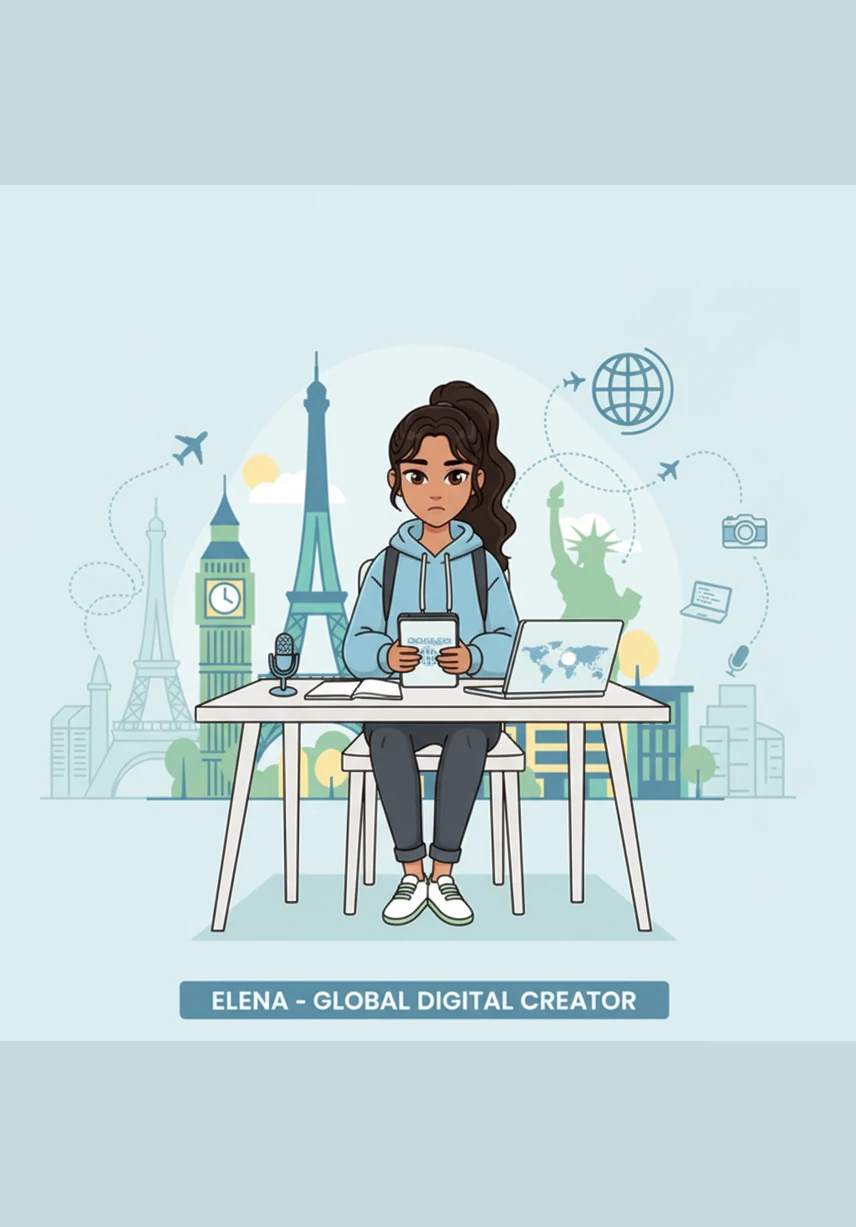
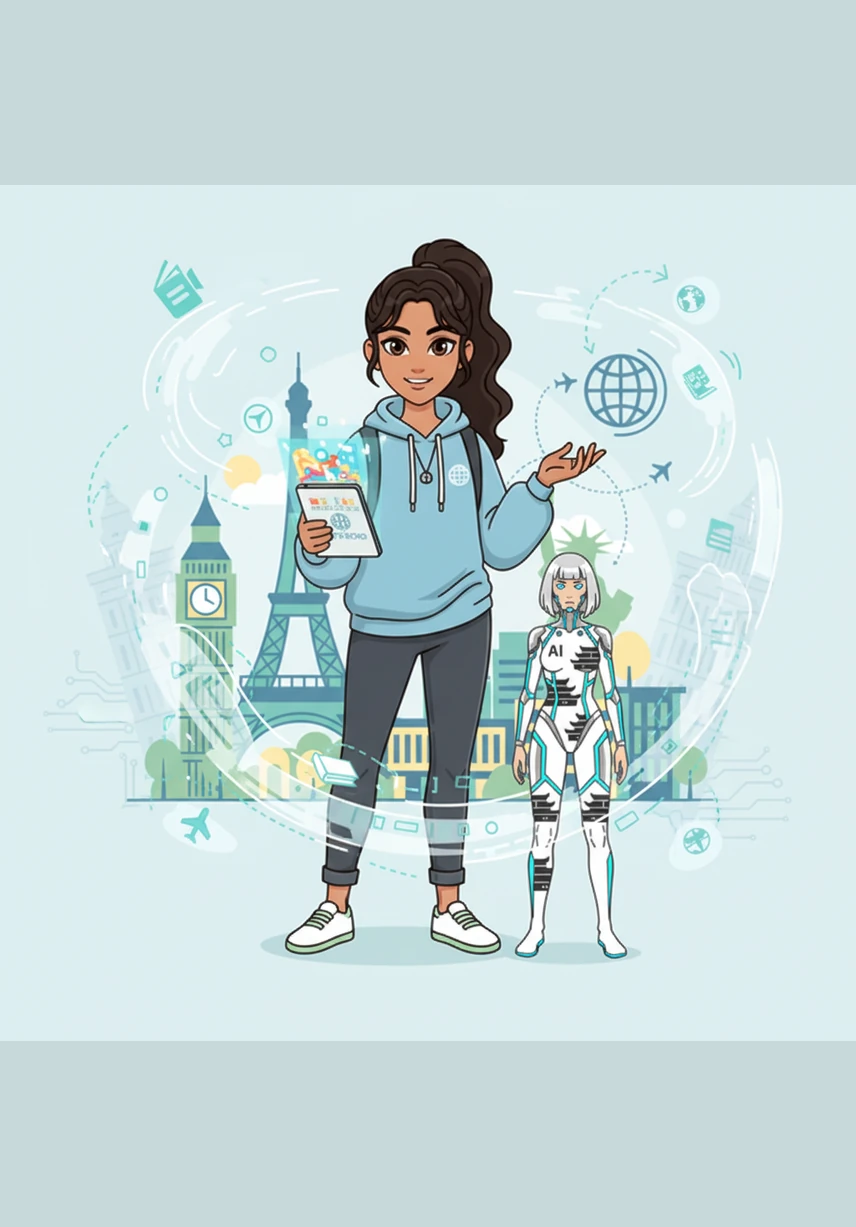
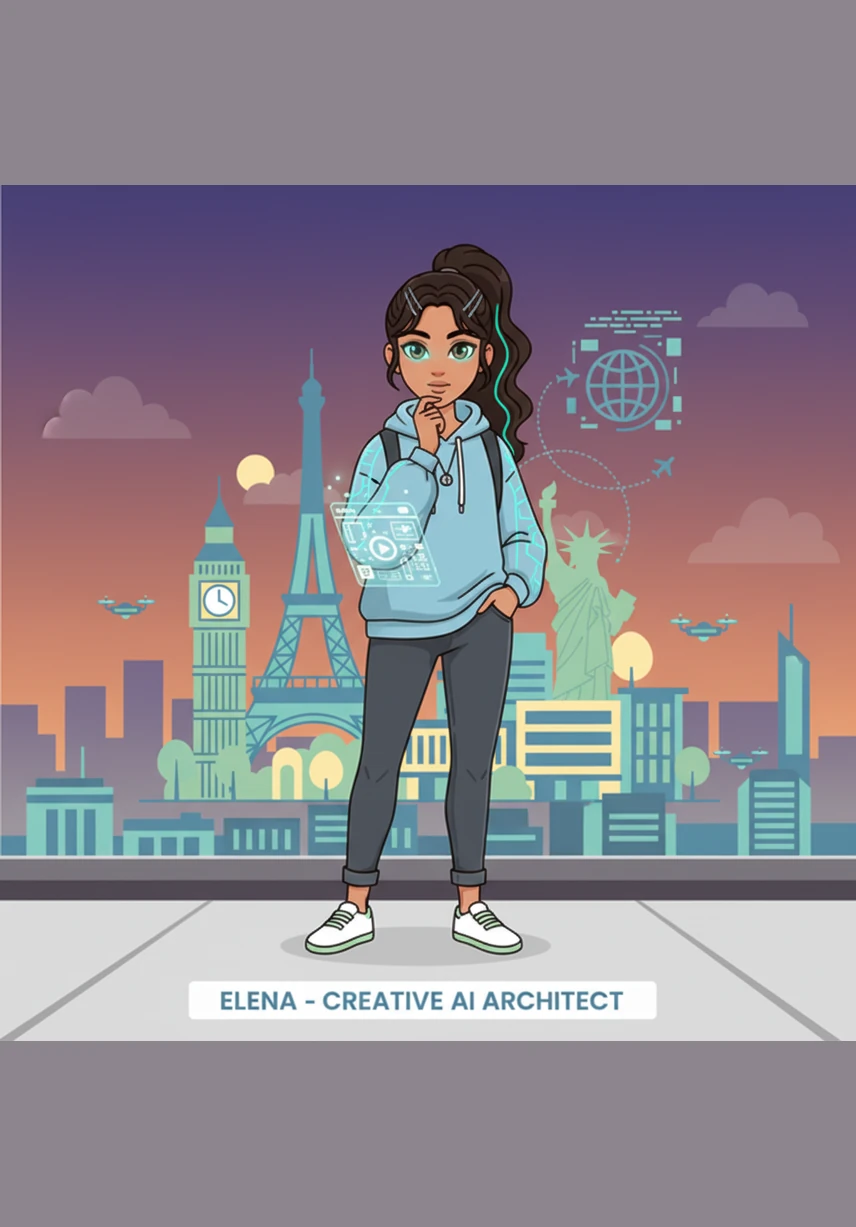
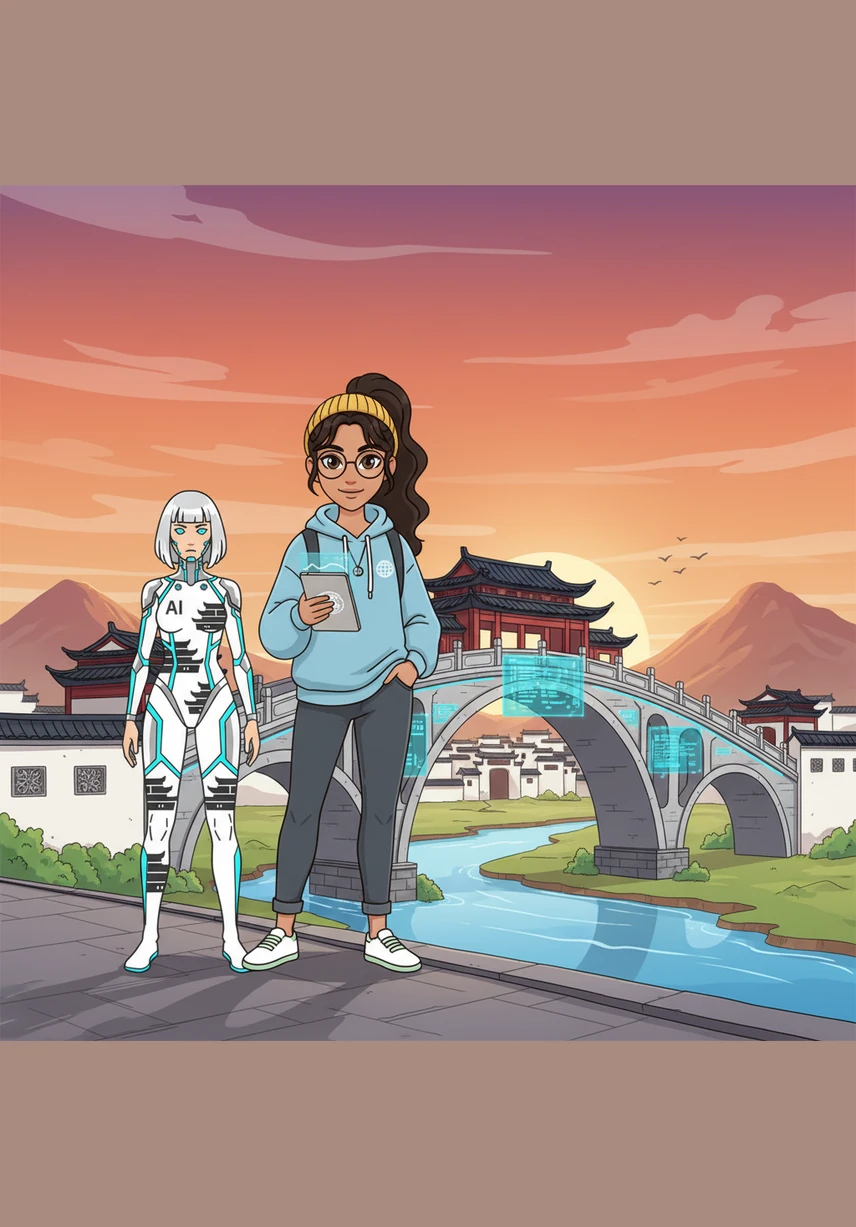
Experience a captivating tale of cultural discovery as Elena, a young artist, blends the ancient architectural beauty of Huizhou with her own vibrant heritage. Through her lens and digital tools, she navigates the challenges of technology to create a stunning vision of global harmony and artistic identity.
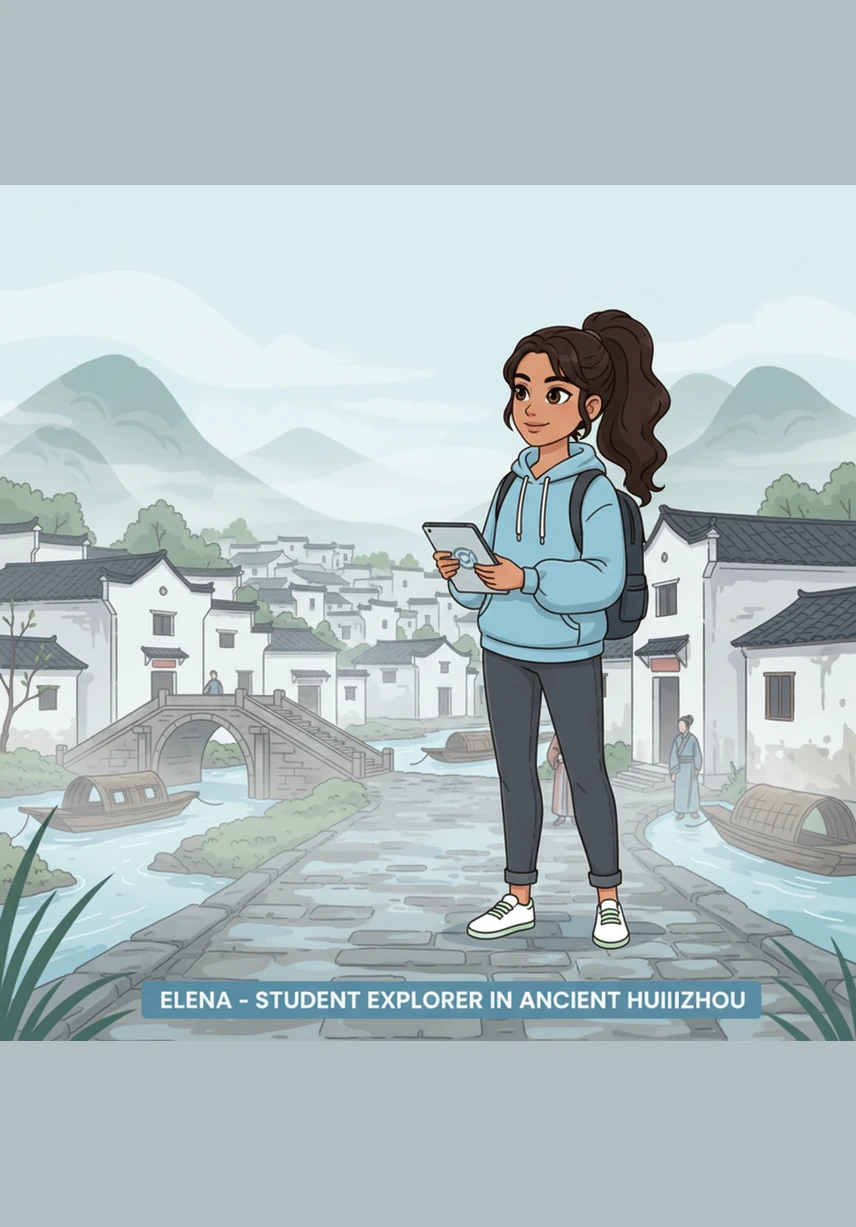
Elena arrives in a misty Huizhou village, her camera and tablet in hand as she gazes up at the towering white walls and dark tiled roofs. The air is cool and smells of ancient stone and rain, marking the beginning of her creative exploration.
She stops to sketch the iconic Horse-head walls, noting how they rise like elegant steps against the gray sky to protect the wooden homes from fire. These architectural symbols represent the pride and history of the families who built them centuries ago.
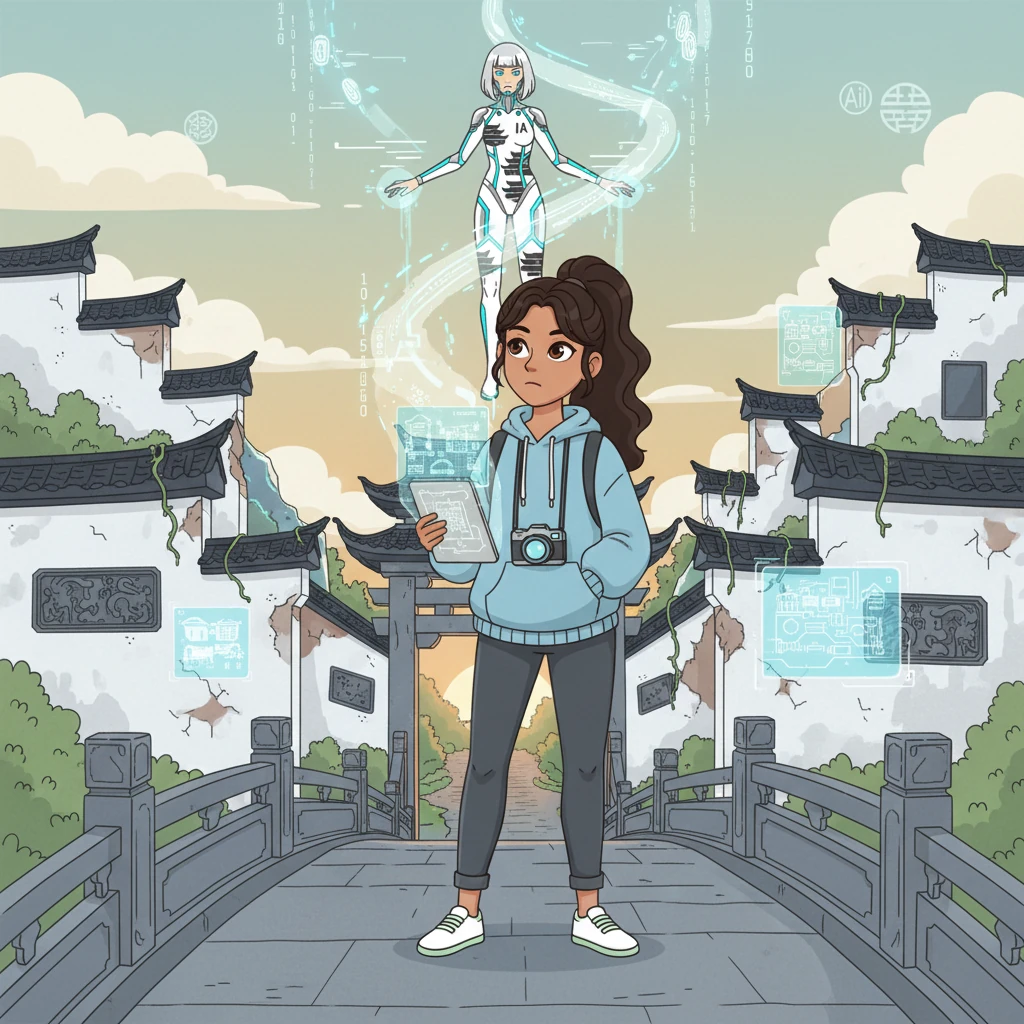
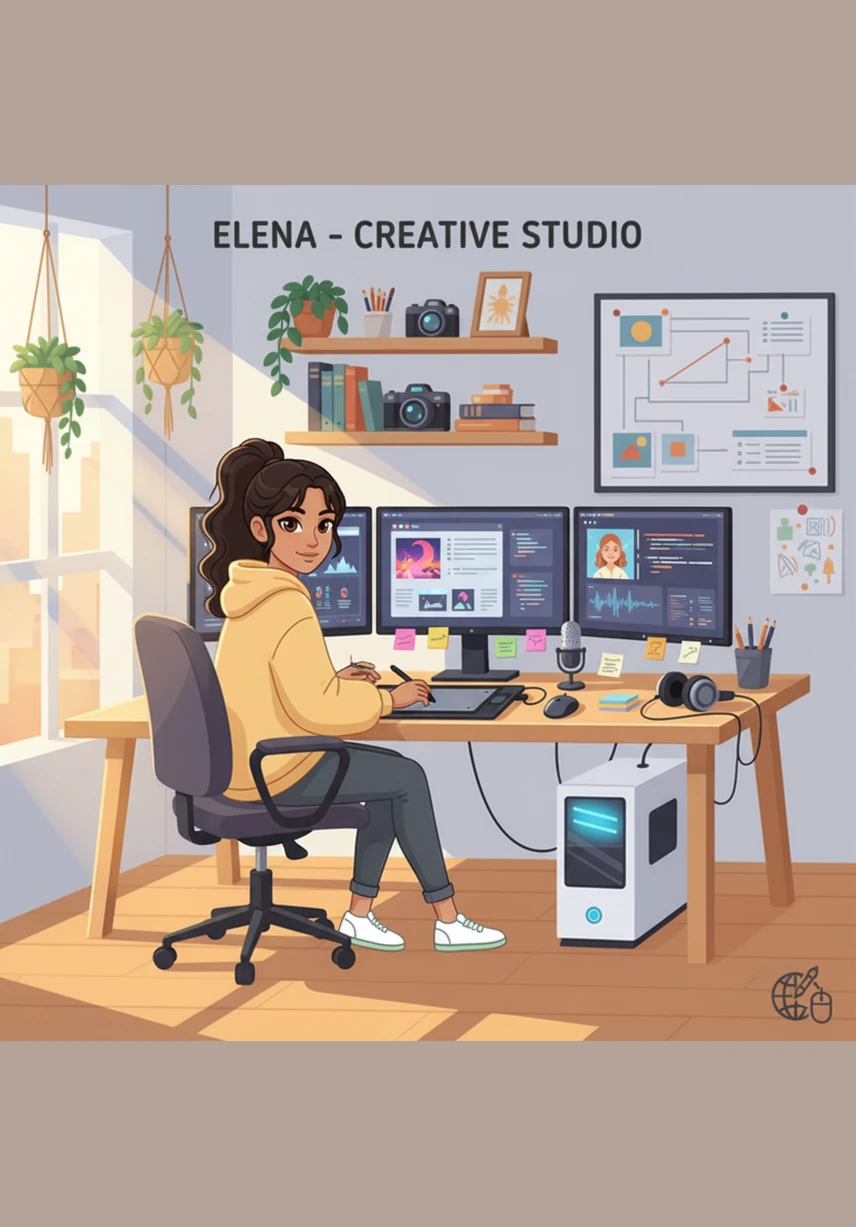
Back in her sunlit studio, Elena tries to recreate the scene using a digital AI tool, but the first result looks like a generic European castle. She realizes the computer does not yet understand the specific soul of Huizhou architecture and its unique silhouette.
Determined to fix this bias, Elena refines her English prompts, carefully adding terms like Ma-tou wall and Anhui ink-and-wash style. She watches as the digital canvas begins to shift, slowly capturing the authentic curve and height of the traditional structures.
Elena decides to infuse the scene with her own Brazilian heritage, blending vibrant tropical patterns into the intricate lattice of the Chinese windows. This fusion of colors and textures creates a bridge between her home culture and her new surroundings.
She carefully blends a high-resolution photo she took of an ancestral hall with her digital paintings to ground the story in reality. The contrast between the weathered texture of the old wood and the glowing digital light adds a magical depth to her work.
Focusing on the wood carvings, Elena ensures the digital details honor the traditional craftsmen who depicted legends on every beam and pillar. She spends hours adjusting the prompts to ensure the AI respects the precision of these ancient Huizhou stories.
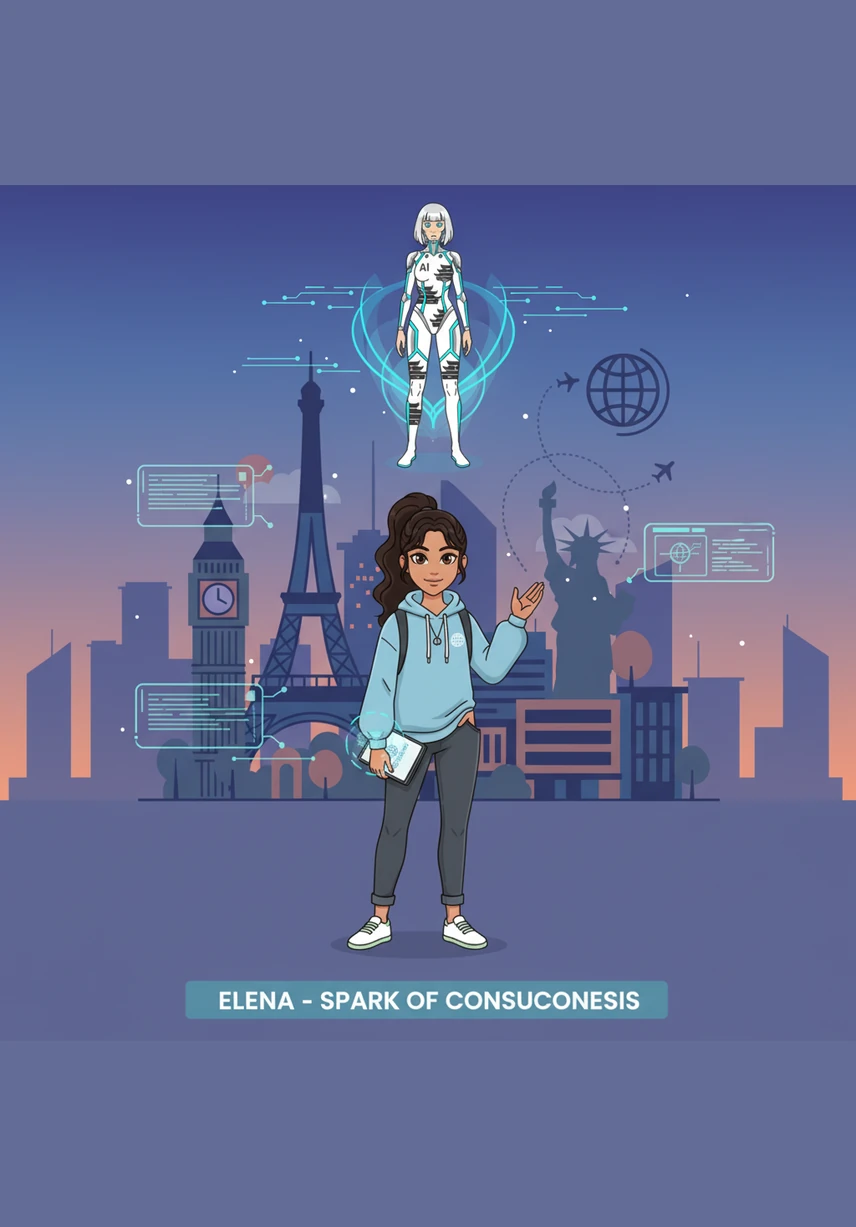
As the digital storybook takes shape, Elena realizes she has moved from being a simple observer to an active storyteller. She is no longer just looking at the culture; she is translating its beauty through her own unique perspective and modern tools.
She reflects on the power shift she experienced, learning to use technology as a brush rather than letting it dictate the final image. Each page of her book now represents a conscious choice to celebrate cultural precision and personal creativity.
Under a glowing Huizhou sunset that mirrors the colors in her book, Elena completes 'The Bridge of Walls.' Her project stands as a testament to the harmony that can exist when technology, tradition, and personal identity meet.
Generation Prompt(Sign in to view the full prompt)
Cycle 1: Student Self-Checklist for Digital Storybook of Huizhou Culture Submission Deadline: March 30 Format: PDF or Digital Link 1. Visual Translation & Cultural Fusion 1.1. Core Elements: Have I identified specific Huizhou architectural symbols (e.g., Horse-head walls, or ancestral halls)? 1.2. Cultural Hybridity: Does my imagery show a clear fusion between China and my home culture (e.g., colors, patterns, or daily life scenes familiar to my people)? 1.3. Mixed Media: If I used real photos, are they blended meaningfully with AI-generated elements to enhance the story? and 2. Algorithmic Agency & Bias Correction 2.1. Bias Identification: Did I identify any "Algorithmic Bias" during the process (e.g., AI making Huizhou look like places in other countries or too stereotypical)? 2.2. Prompt Evolution: Can I show how my English prompts evolved to fix these biases guide the AI toward a more authentic representation? 2.3. Evidence of Iteration: Do I have documented evidence of at least THREE rounds of "Prompt -> Feedback -> Correction"? 3. English Narrative & Cultural Precision 3.1. Terminology: Have I used specific Chinese cultural terms correctly in English (e.g., " /Horse-head Wall")? 3.2. Narrative Intent: Does my writing clearly explain why I made certain visual choices to make the story relatable to my audience back home? 3.3. Language Quality: Is my grammar clear and professional, avoiding heavy reliance on simple machine translation? 4. Structural Logic & Data Integrity 4.1. Reading Length: Is my storybook between 8 and 12 pages? (Designed for a 3-minute reading experience). 4.2. The Logic Chain: Does my storybook show the full "Evidence Chain": Real Photo Initial AI Draft My Correction Final Reconstructed Image? 4.3. Submission Package: Have I included the mandatory Prompt Log and Reflective Statement (300 words) in my final submission? 5. Self-Reflection & Narrative Identity 5.1. Role Transition: In my reflection, have I explained how I moved from just "observing" Chinese culture to "telling" its story from my own perspective? 5.2. Power Shift: Did I describe the "Power Shift"-how I used AI as a tool to express my ideas rather than just accepting the Al's default output?