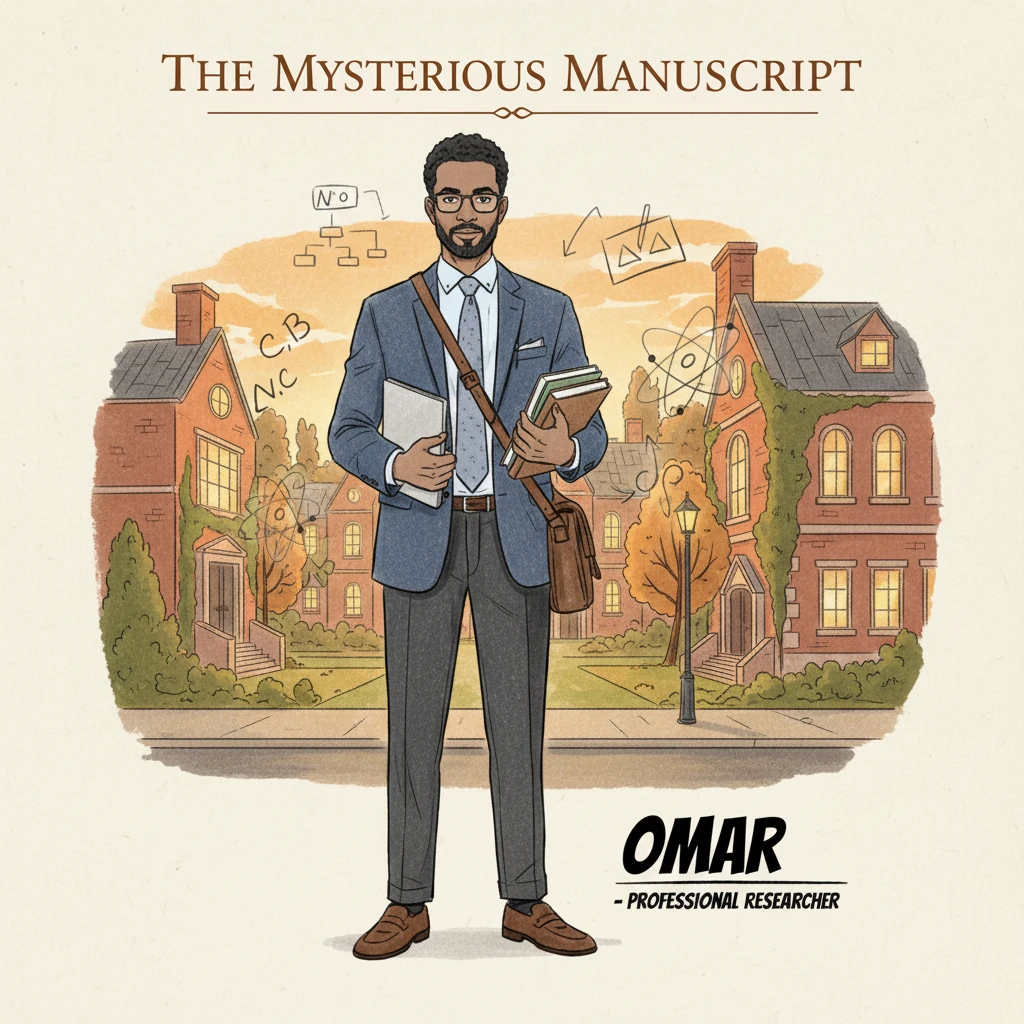
Embark on an enlightening journey with Omar, a young researcher who bridges the gap between ancient wisdom and modern science. This captivating story explores the miraculous descriptions of human development found in the Quran, revealing how they align with discoveries made centuries later. It is a profound exploration of faith, biology, and the wonders of creation.
Omar, a dedicated researcher, stands in a light-filled laboratory where ancient manuscripts meet cutting-edge technology. He begins his investigation into the origins of human life, bridging the gap between centuries of wisdom and modern scientific discovery.
Looking through a powerful lens, Omar observes the Nutfa, the mingled drop described in Surah Al-Insan. He reflects on how this fusion of sperm and ovum was only understood by science in the 17th century after the invention of the microscope.
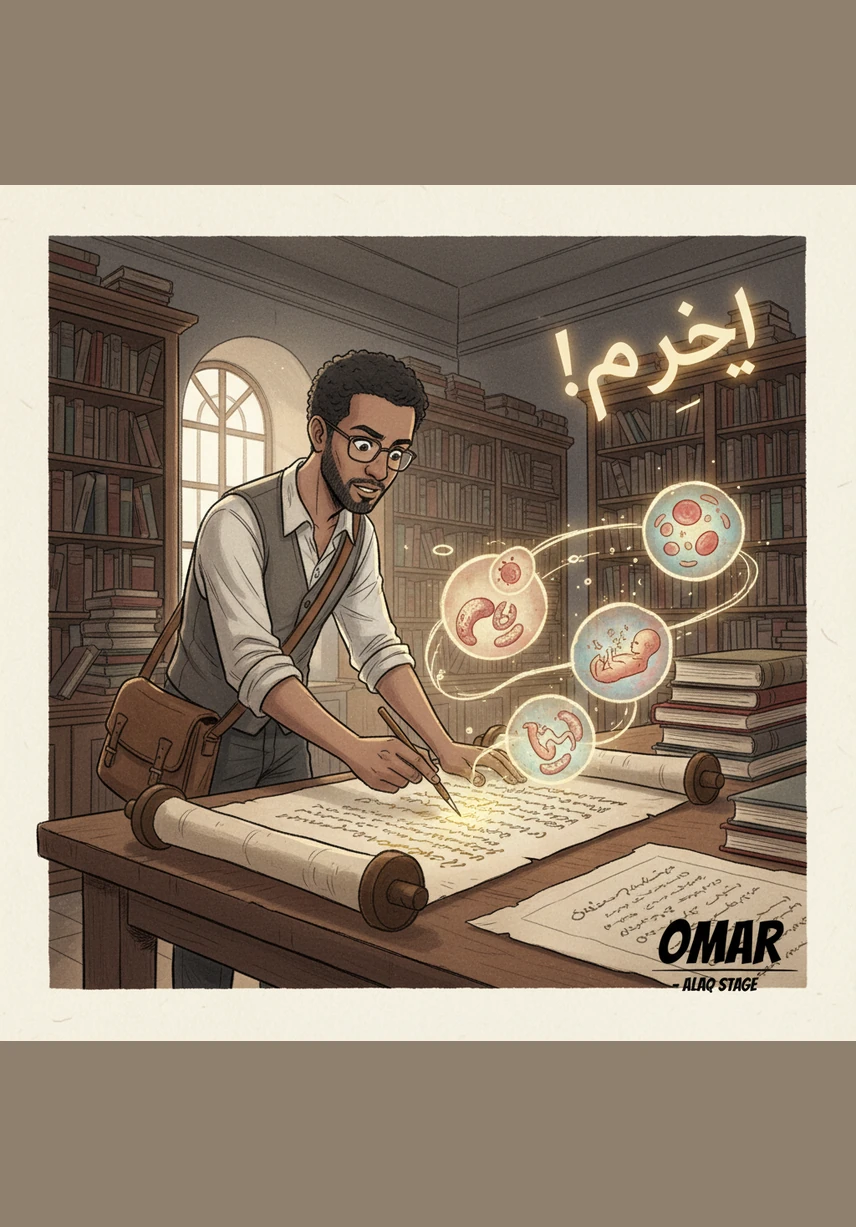
The journey continues to the Alaq stage, where the embryo begins to cling to the uterine wall. Omar marvels at the precision of the term, which describes something that hangs or is suspended, much like a tiny explorer finding its first home.
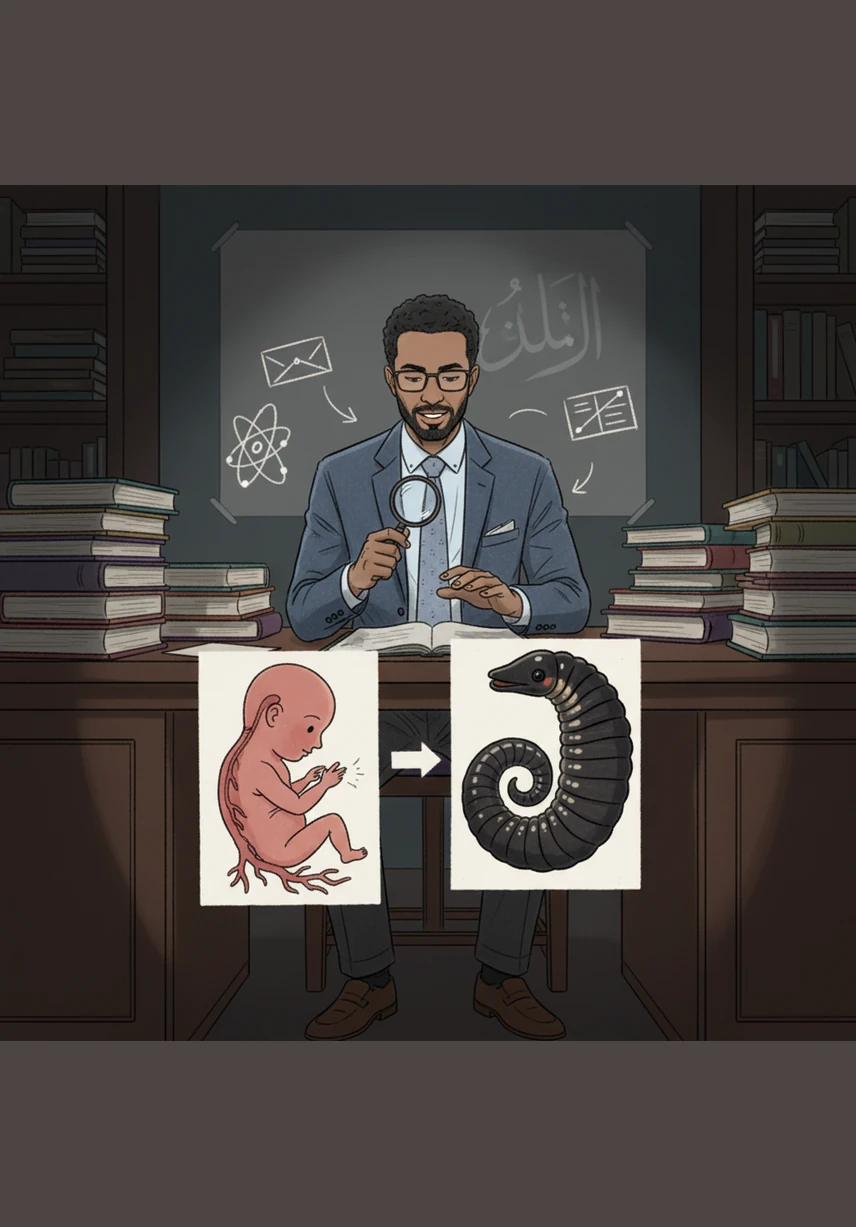
Omar compares the embryo's physical form to a leech, noting the striking similarity in appearance and function. This leech-like stage, mentioned in the Quran, aligns perfectly with the way the embryo draws nourishment from its mother.
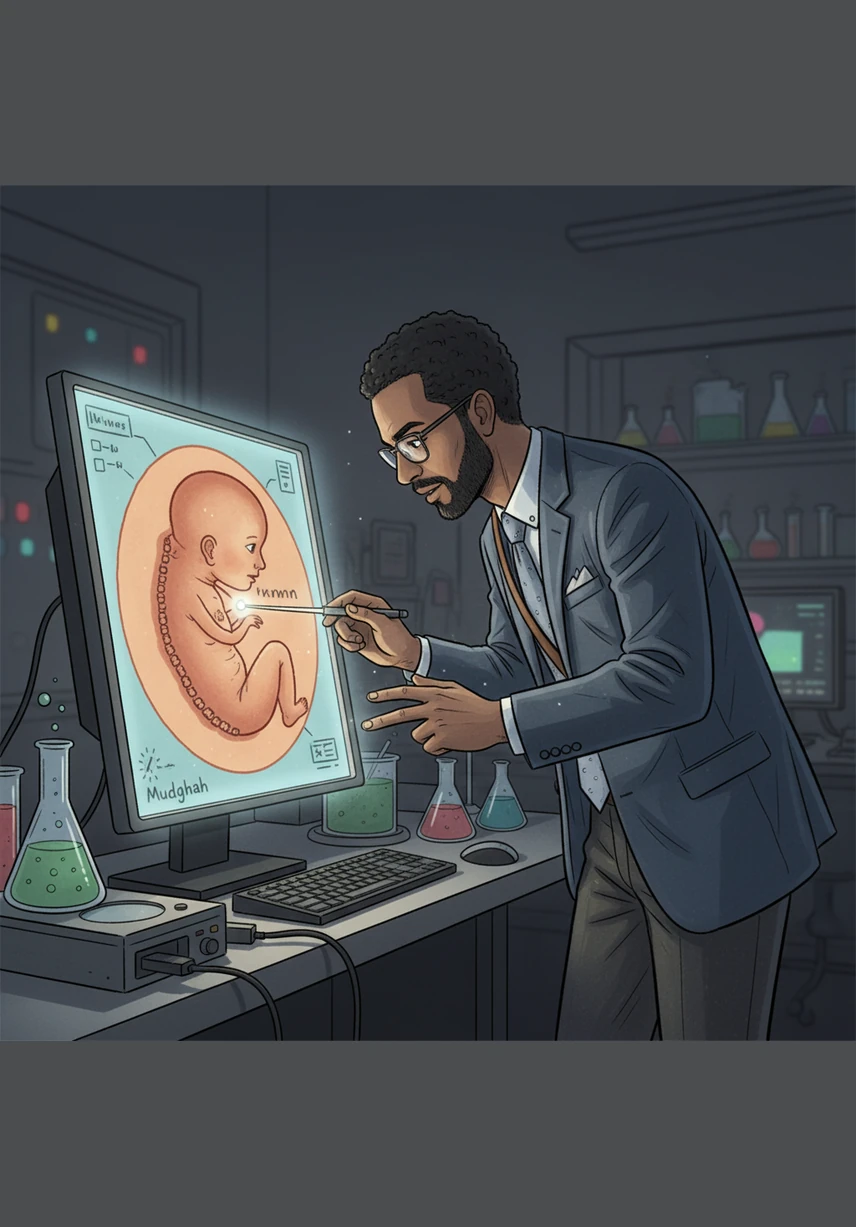
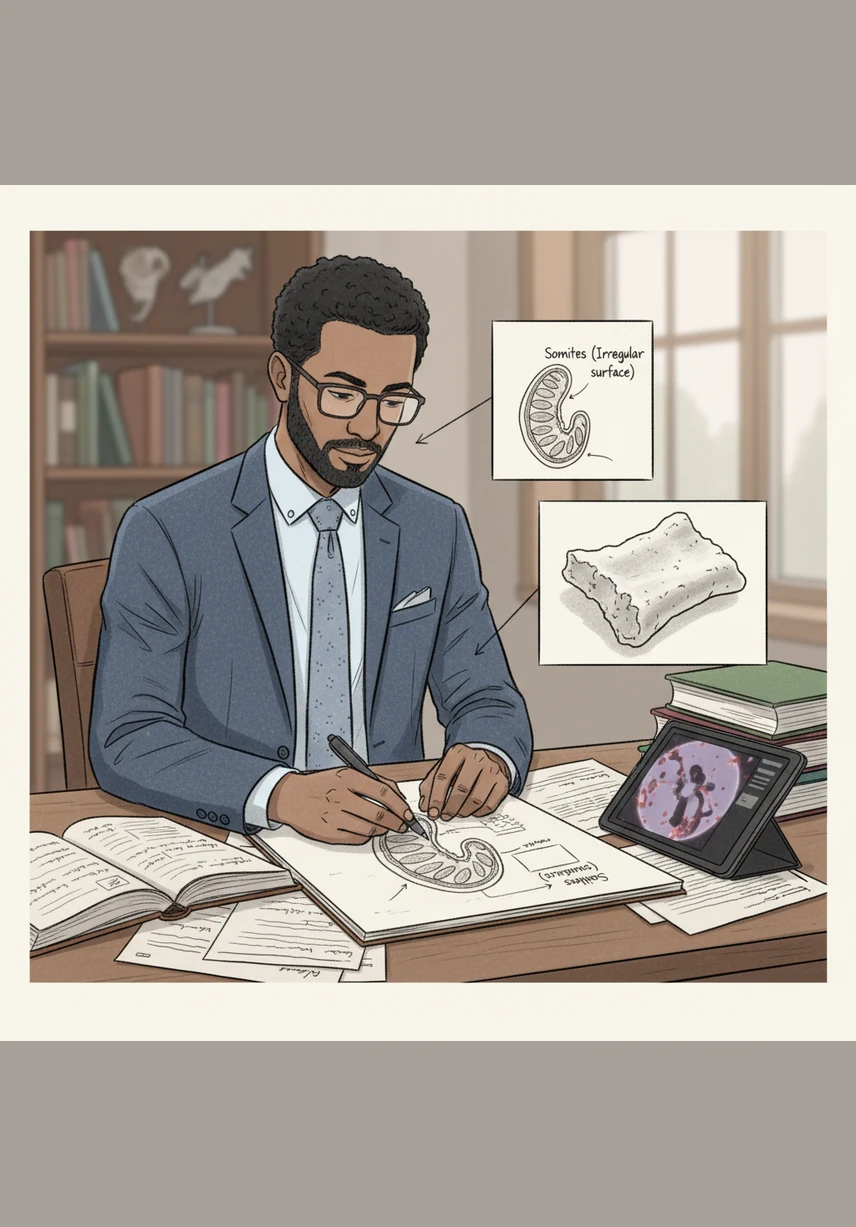
As the embryo transforms into the Mudghah, it takes on the appearance of a chewed substance. Omar examines the somites, the small segments that look like teeth marks, which will eventually become the foundation of the spine.
The scientific discovery of somites provides a clear explanation for the Quranic description in Surah Al-Mu'minun. Omar sketches the embryo, noting how the irregular surface resembles a piece of gum that has been bitten.
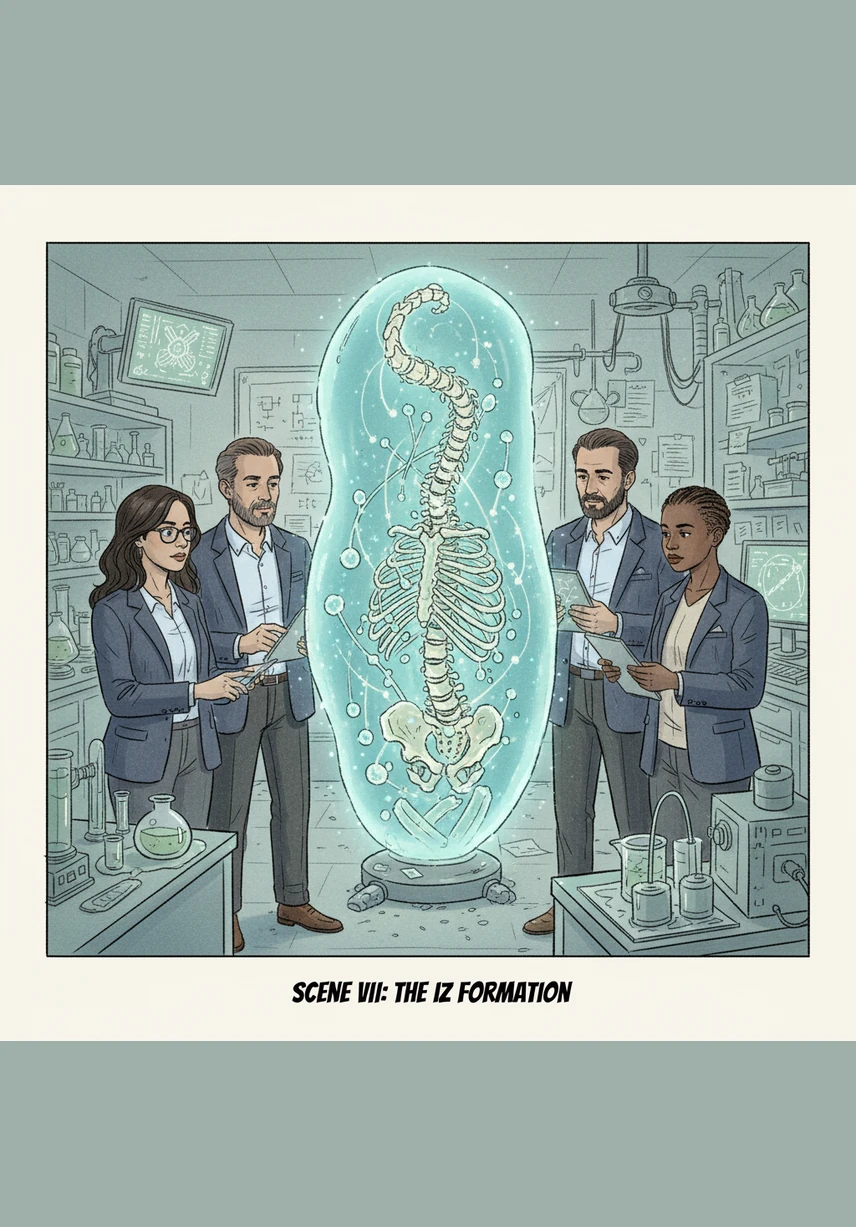
The story moves to the formation of Izam, or bones, which develop as a distinct framework within the growing life. Modern embryology confirms that the skeletal system begins its formation before the surrounding muscles are fully integrated.
Omar observes the next phase where the bones are clothed with Lahm, or flesh and muscle. This specific chronological sequence, recorded in the 7th century, was only verified by advanced medical science in the 19th and 20th centuries.
Deep within the protective womb, Omar identifies the Three Veils of Darkness mentioned in Surah Az-Zumar. He maps out the abdominal wall, the uterine wall, and the amniotic membrane, three distinct layers that shield the developing child.
Having completed his study, Omar closes his journal with a profound sense of enlightenment and awe. The harmony between the ancient verses and modern biological facts reveals a timeless blueprint of human creation.
Generation Prompt(Sign in to view the full prompt)
"Write a detailed and scientifically grounded chapter for my book about the miracles of the Quran regarding Embryology. Use a professional, enlightening, and objective tone. For each stage mentioned below, provide the Quranic Verse (English translation), the scientific explanation, and the specific date or era when modern science finally discovered this fact.Structure the content into these key sections:The Origin (Nutfa): Explain the 'mingled drop' mentioned in Surah Al-Insan ($76:2$) and how it aligns with the fusion of sperm and ovum, discovered only after the invention of the microscope in the 17th century.The Clinging Stage (Alaq): Describe the three meanings of 'Alaq' (Leech-like, Suspended, Blood Clot) from Surah Al-Alaq ($96:1-2$). Contrast this with modern embryology's discovery of the blastocyst's implantation in the uterine wall.The Chewed Substance (Mudghah): Detail Surah Al-Mu'minun ($23:14$) regarding the 'chewed-like' appearance of the embryo. Reference the discovery of 'somites' (the precursors to the vertebrae) which give the embryo a teeth-mark appearance.Bone and Muscle Formation: Explain the sequence in the Quran where bones ($Izam$) are formed before being clothed with flesh ($Lahm$). Mention how modern science confirmed this specific chronological order in the 19th and 20th centuries.The Three Veils of Darkness: Discuss Surah Az-Zumar ($39:6$) and the 'three veils' (Abdominal wall, Uterine wall, and Amniotic membrane).