Discover the heartwarming true stories of Filipino resilience and adaptability in the face of natural disasters. This captivating picture book, filled with vibrant illustrations, showcases the incredible spirit of community, generosity, and collective action. Join us on a journey that celebrates the triumph of humanity and the unwavering power of love.
A cartoon style drawing of a book cover. The title 'The Logic of Love: Water and Meat, Acts of Filipino Resilience' is in large, friendly letters. Below it, 'Analyzing Adaptability (Pag-aangkop) and Resilience (Pagkababanat) in the face of Natural Calamity' is in a smaller font. The visual shows a group of diverse people on a sidewalk, some looking a bit sad but hopeful, asking for help, representing victims of a calamity.
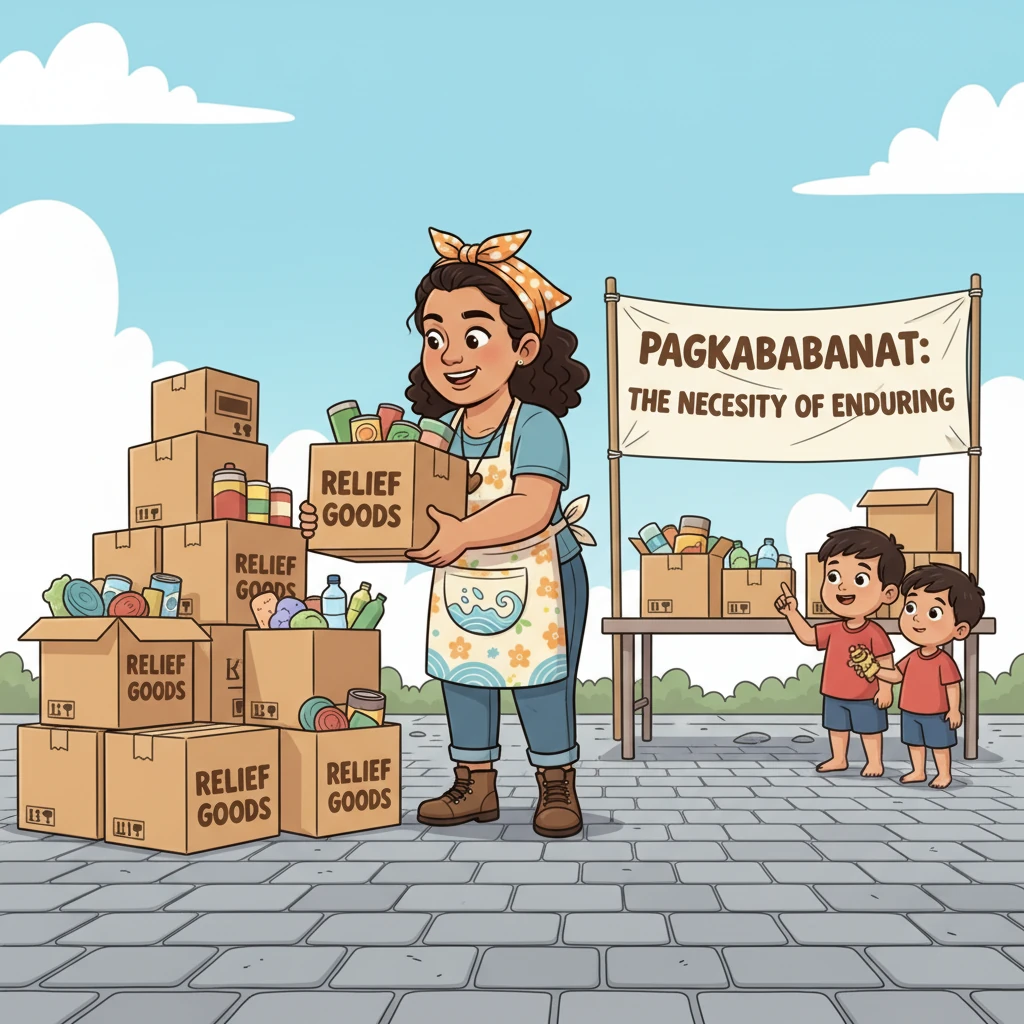
A cartoon style drawing of Ate Maya, a kind-looking woman with a warm smile, standing proudly beside neatly stacked boxes labeled 'Relief Goods'. The boxes are filled with various items, and a banner behind her reads 'Pagkababanat: The Necessity of Enduring'. The scene conveys a sense of organized effort and hope.
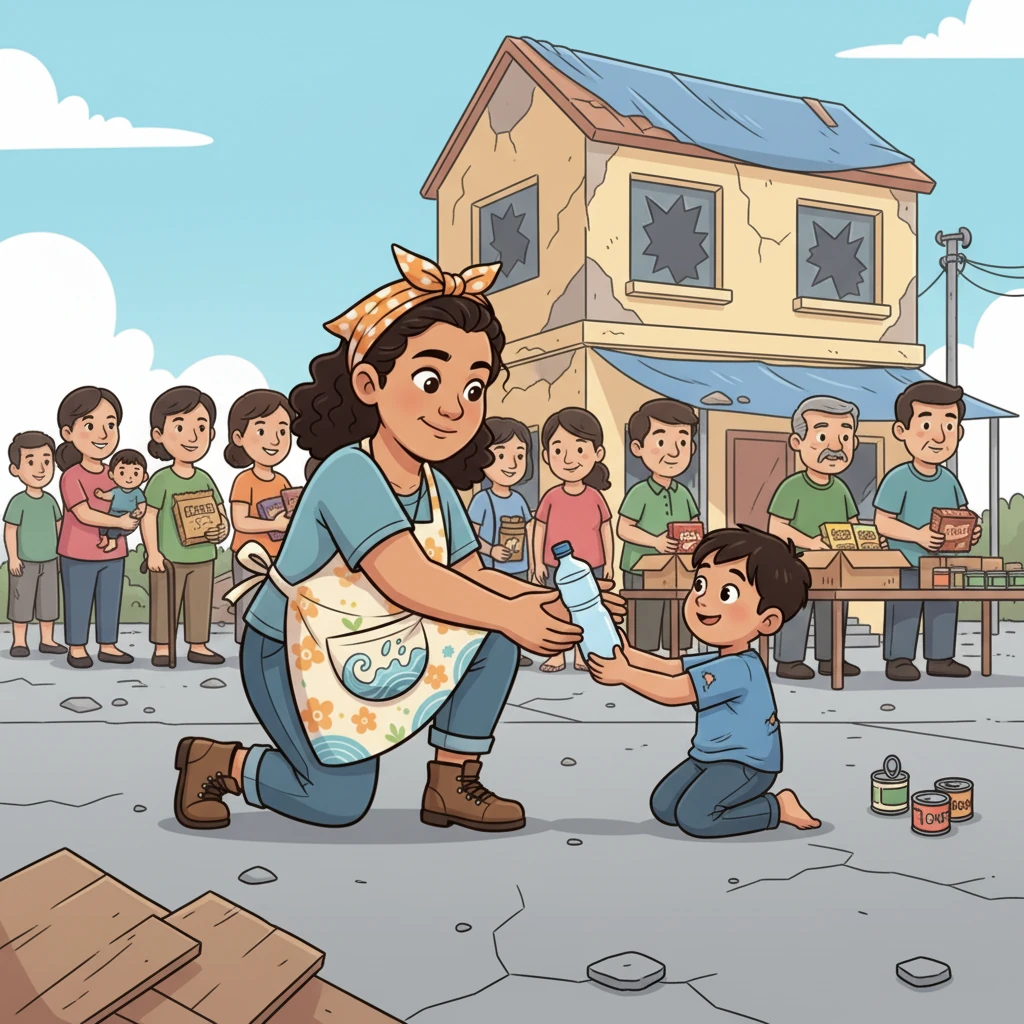
A cartoon style drawing of a bustling relief operation. Volunteers are handing out water bottles, biscuit packs, and canned goods to a line of grateful people. The background shows a slightly damaged building, hinting at an earthquake. The overall atmosphere is one of immediate, coordinated assistance.
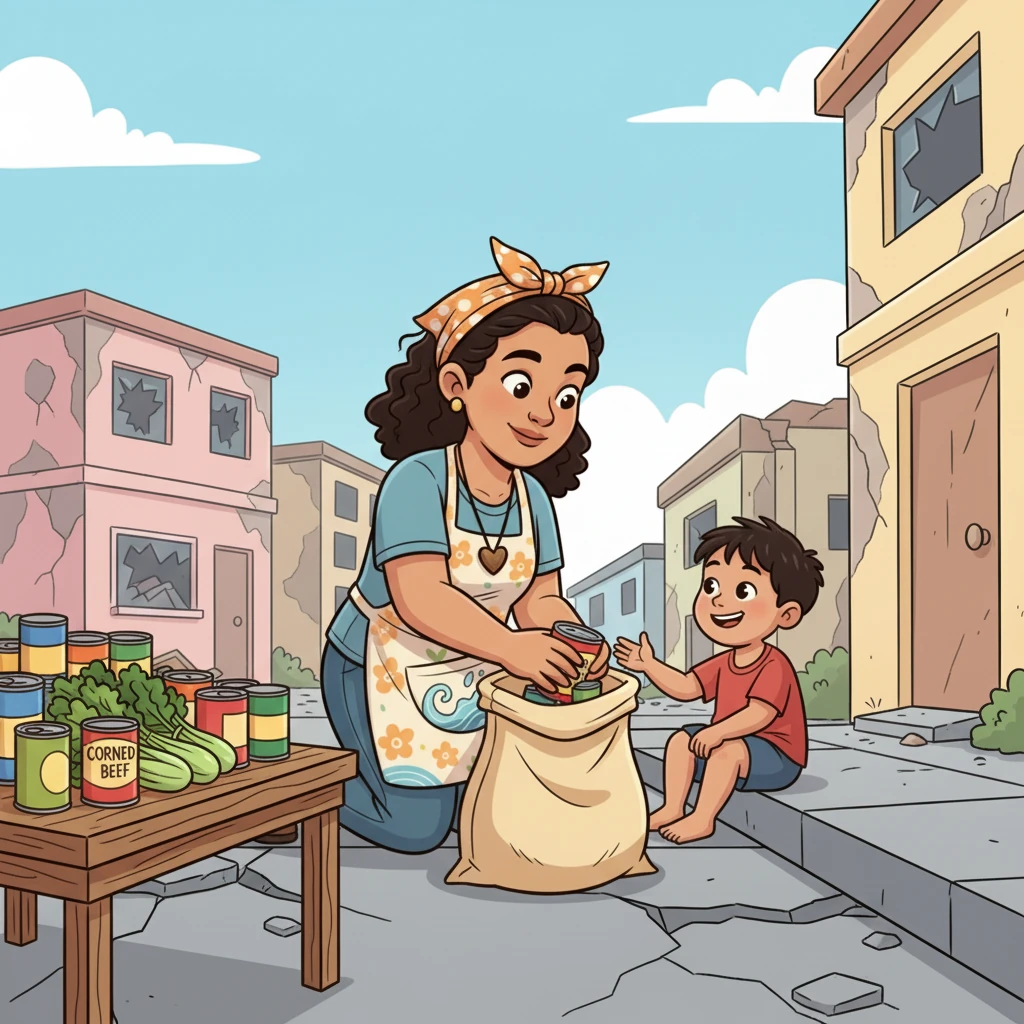
A cartoon style drawing of an organized relief distribution point. Volunteers are carefully placing bottled water, canned goods (like corned beef), and fresh vegetables into bags for affected families. The scene emphasizes the adaptive shift to more comprehensive nutritional support after a flood, with water marks visible on the walls of nearby cartoon houses.
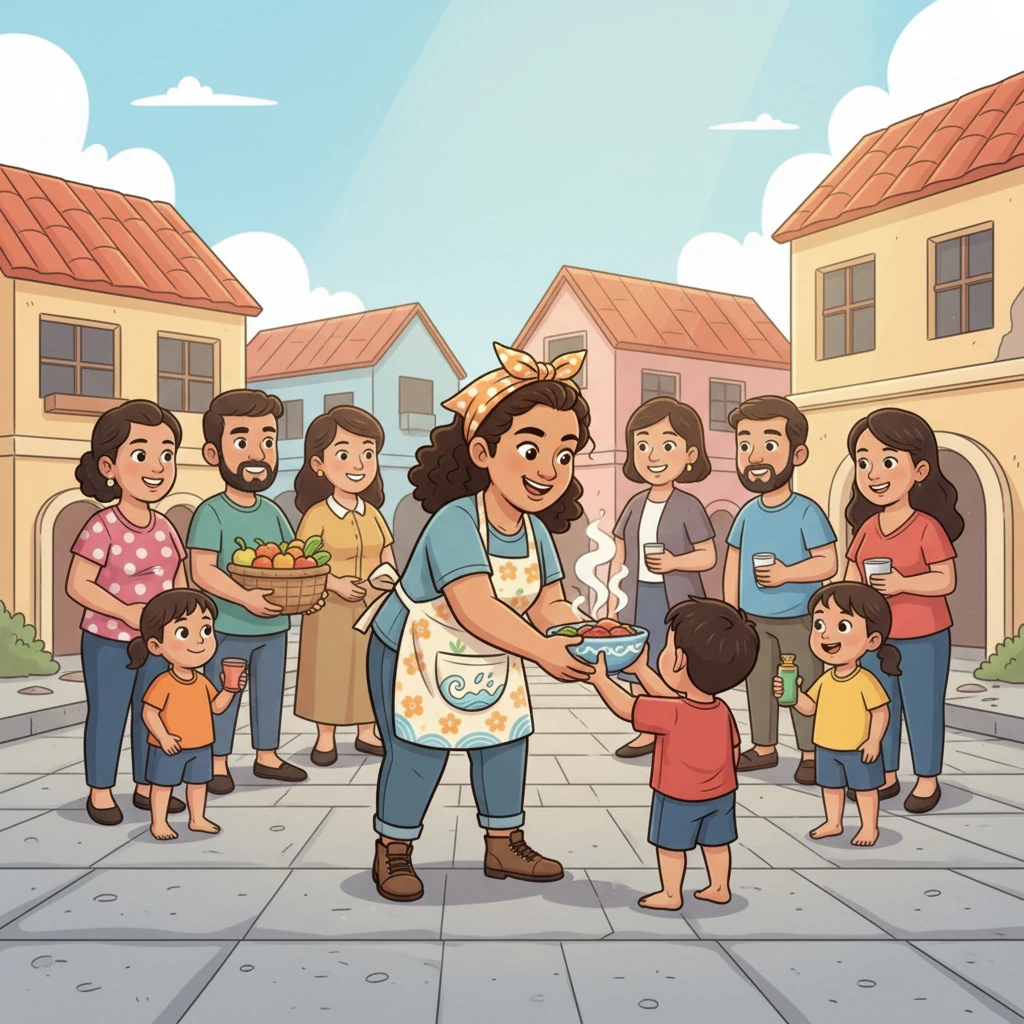
A cartoon style drawing of a community working together. Ate Maya is smiling, surrounded by other volunteers and community members who are happily helping each other. They are all sharing food and resources, showcasing 'Bayanihan' (community spirit) and 'Pagkabukas-palad' (generosity). The sun shines brightly, symbolizing hope and collective spirit.
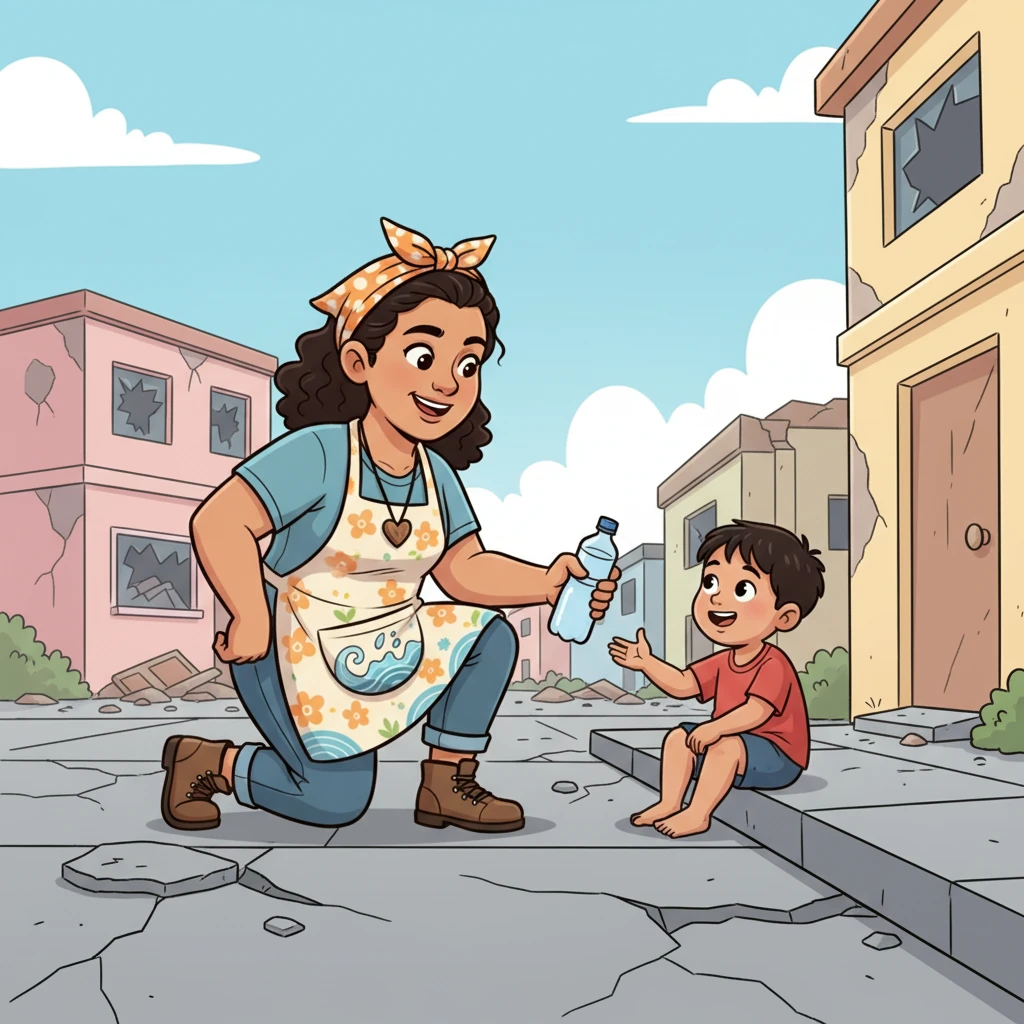
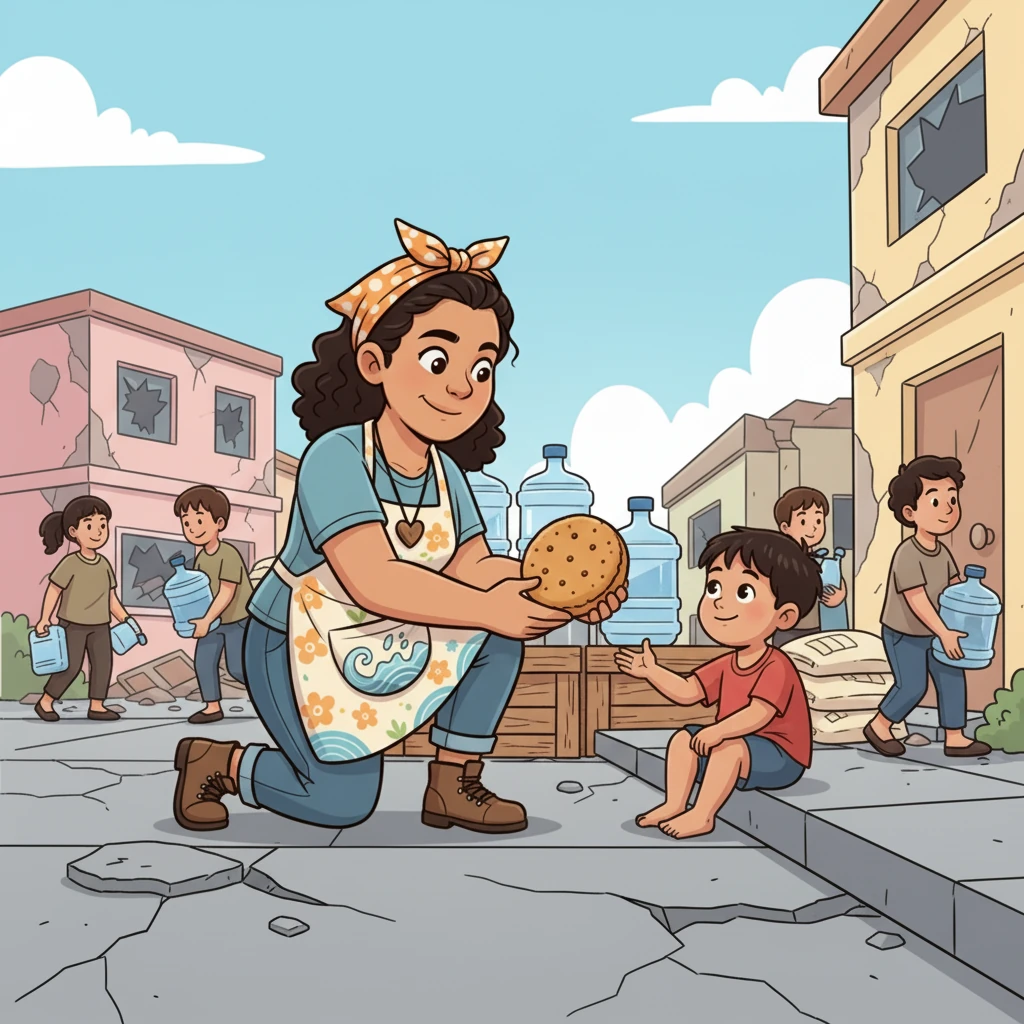
A cartoon style drawing of the aftermath of an earthquake in Bogo City. Buildings are slightly cracked, but people are helping each other, carrying supplies. Ate Maya and her team are quickly setting up a water station and distributing biscuits, showing swift 'Pag-aangkop' (adaptability) in action.
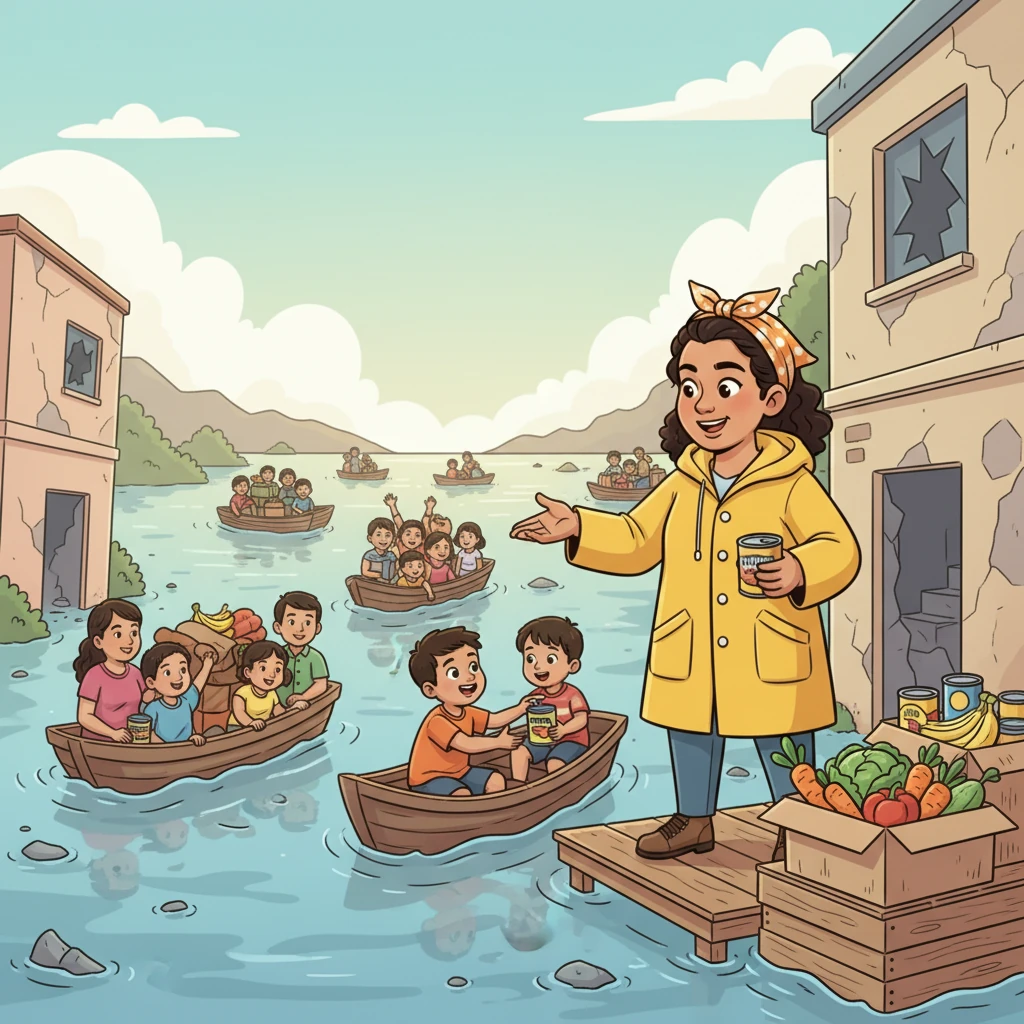
A cartoon style drawing of a flooded landscape after Typhoon Tino. Water levels are high, but people are being rescued in small boats, and relief efforts are focused on providing essential food. Ate Maya is seen directing the distribution of canned goods and fresh vegetables, demonstrating a strategic shift in aid.
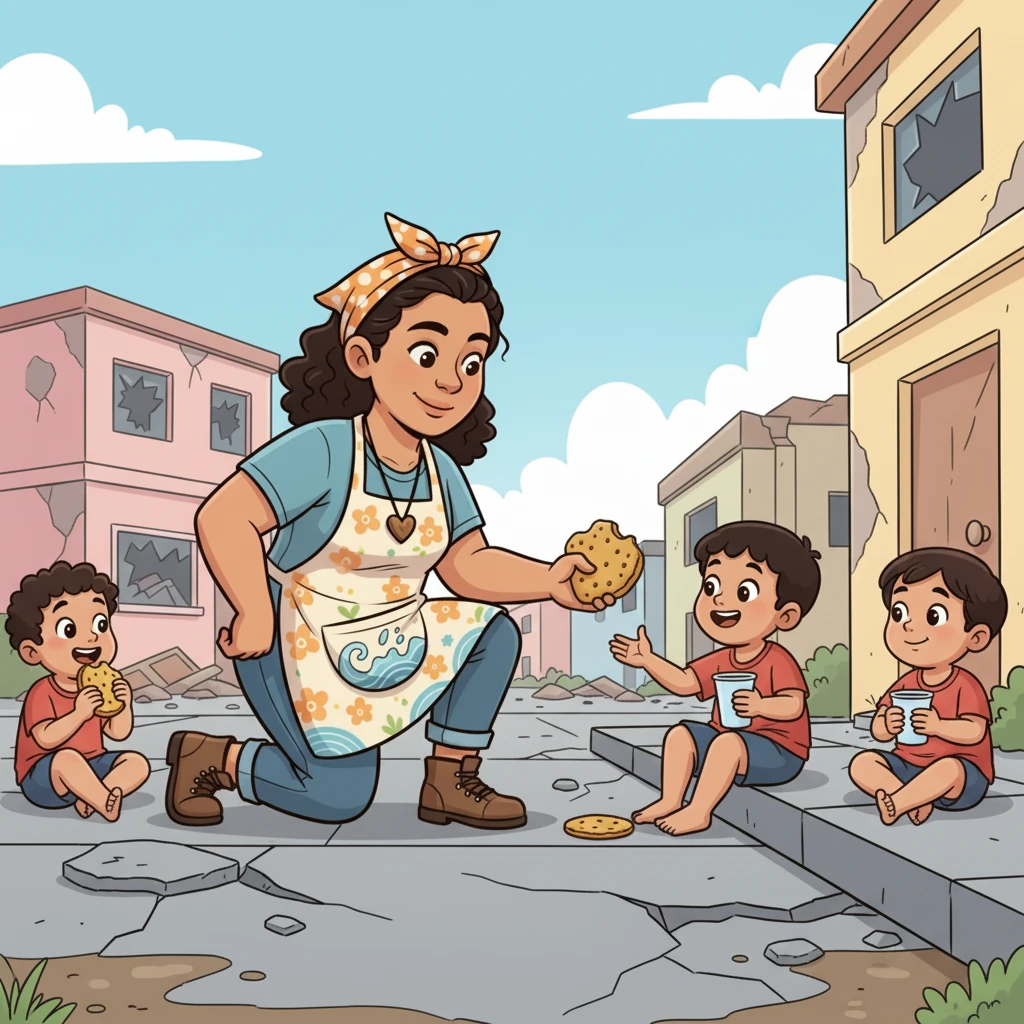
A cartoon style drawing of a group of children happily eating biscuits and drinking water, their faces showing relief and gratitude. Ate Maya is kneeling beside them, offering a comforting smile, highlighting the immediate impact of the relief efforts on the most vulnerable.
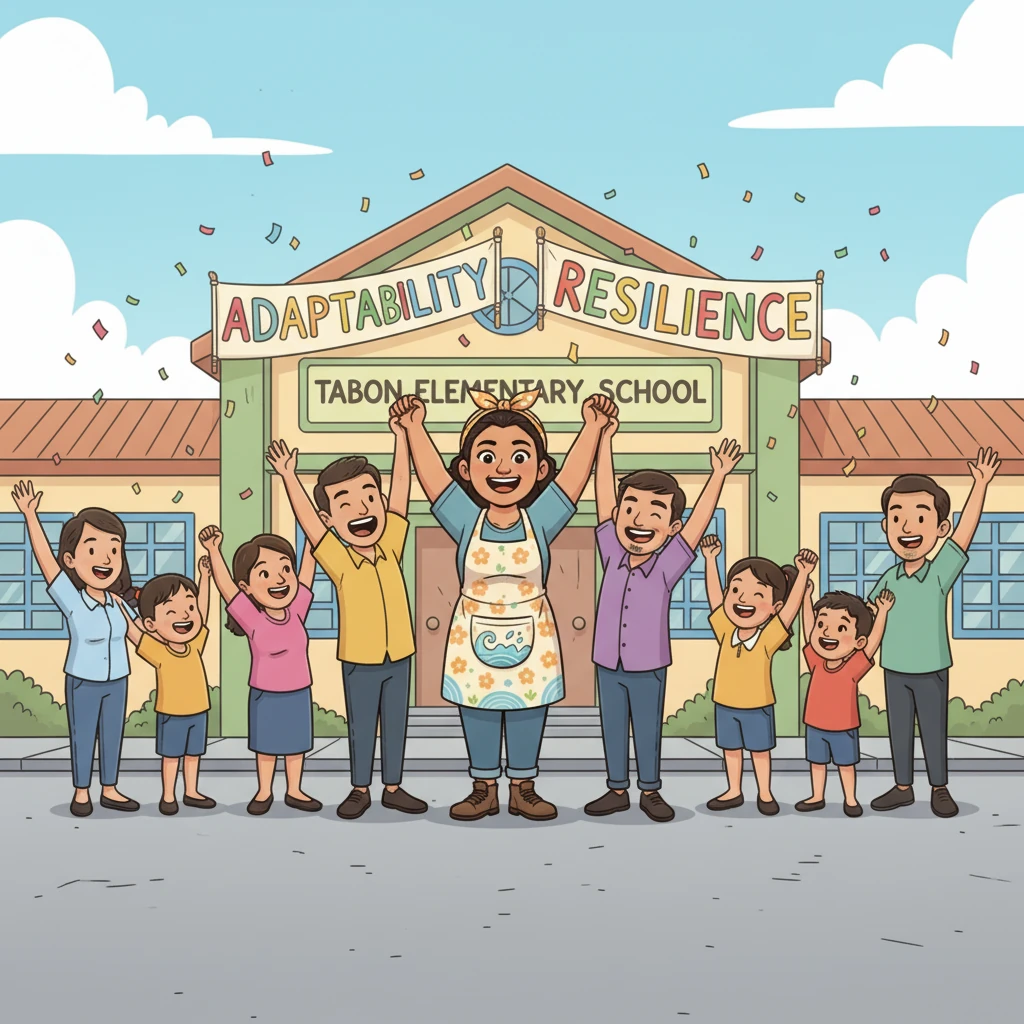
A cartoon style drawing of a large group of community members, including Ate Maya and her colleagues from Tabon Elementary School, standing together with arms linked, smiling broadly. They are celebrating their successful relief efforts, with banners of 'Adaptability' and 'Resilience' in the background, symbolizing their collective triumph.
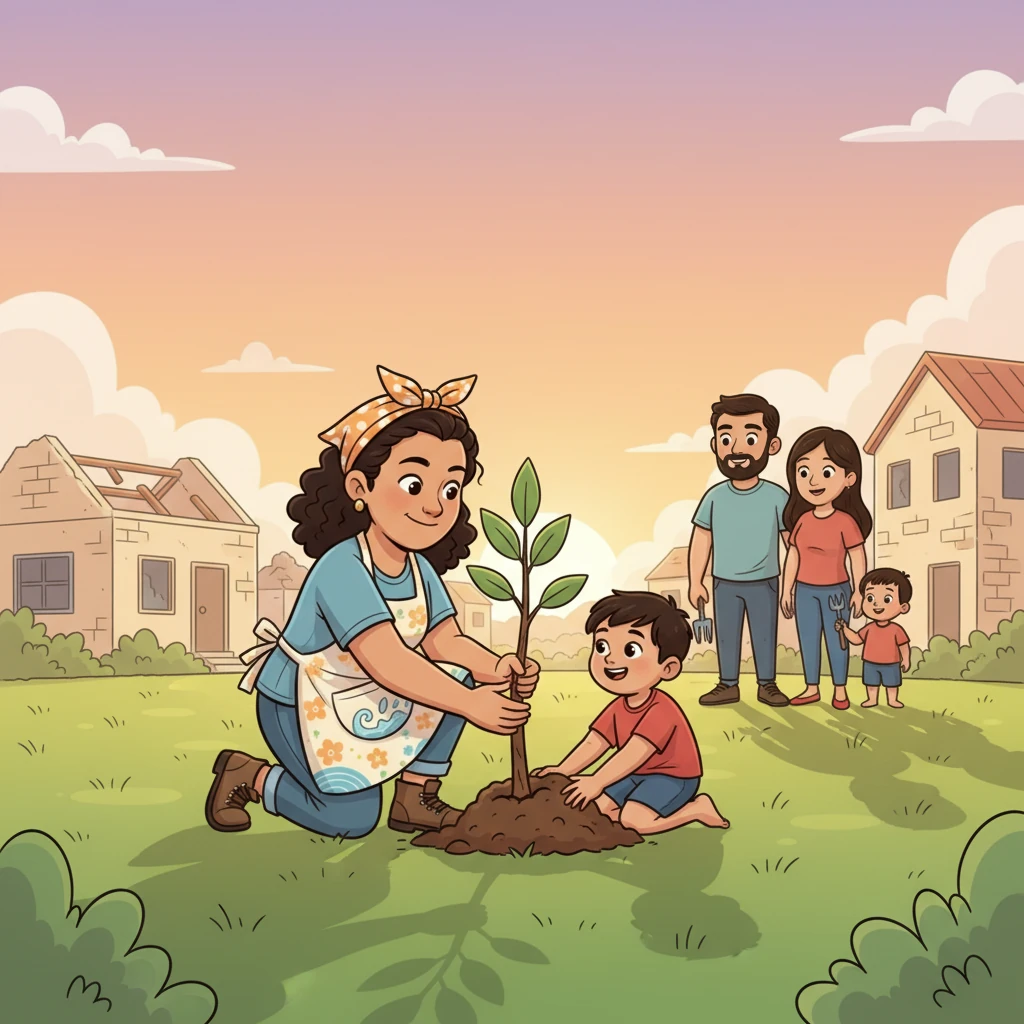
A cartoon style drawing of Ate Maya and a child planting a small tree together in a green field, symbolizing rebuilding and hope for the future. The sun is setting, casting a warm glow, and other community members are visible in the background, working together to restore their homes and lives. This final image encapsulates sustained resilience and growth.
生成提示词(登录后查看具体 Prompt)
The Crisis & Response Story Book (Creative Format) The Photo Essay/Story Book format is used to present the narrative and analysis through a series of captioned pages, utilizing your personal images as evidence. Self-Paced Activity: The Crisis & Response Story Book (Creative Format) The Photo Essay/Story Book format is used to present the narrative and analysis through a series of captioned pages, utilizing your personal images as evidence. Cover Page: The Logic of Love ,Title (Large Font),:The Logic of Love: Water and Meat, Acts of Filipino Resilience,SubtitleAnalyzing Adaptability (Pag-aangkop) and Resilience (Pagkababanat) in the face of Natural Calamity,Visual photos of people on the sidewalk asking for help, these are the victims,Page 1: The Call to Action & Analysis,Heading,Pagkababanat: The Necessity of Enduring,Body,The Filipino spirit of Resilience (Pagkababanat) is a deep historical response to recurrent threats like natural disasters and economic hardships. This communal ability to absorb shock and quickly recover is vital for a developing nation. This necessary resilience is a national priority, explicitly urged by Balisacan (2015), who called for strengthening the capacity of communities to prepare for and recover from such catastrophes. Our school's collaboration in relief efforts is the community-level fulfillment of this national imperative.",Visual,An image showing the organized relief boxes. Page 2: Case Study 1: Bogo City Earthquake,Heading:When the Ground Shook: Water, Biscuits, and Canned Goods,Body:The earthquake that affected Bogo City presented an immediate crisis of displacement and basic survival. Our adaptive response was immediate and multi-faceted: we secured large stocks of water for hydration, along with biscuits and canned goods for quick, reliable energy and non-perishable food security. This integrated approach, led by Tabon Elementary School, demonstrates Adaptability (Pag-aangkop)—a strategic, quick response to the immediate, diverse needs of a community in shock."Visual:Images that highlight the earthquake aid, Page 3: Case Study 2: Typhoon Tino Flood,Heading:When the Waters Rose: The Adaptive Shift to Nutritional Support,Body:Following the devastating floods caused by Typhoon Tino, the community's need shifted to longer-term food security and health. Our adaptive response changed accordingly: while water and canned goods (like corned beef) provided baseline sustenance, we strategically included vegetables. This deliberate pivot in the type of relief illustrates the essence of adaptability and Generosity (Pagkabukas-palad), ensuring that resources are continuously matched to the deeper, evolving nutritional needs of the affected community, thus strengthening their overall recovery and resilience."Visual,Images that highlight the canned goods.Page 4: Conclusion and Personal Reflection,Heading:Triumph of the Collective Spirit, Body:"Participating in these two distinct relief efforts confirmed that Filipino resilience is not a passive trait but an active commitment to collective survival. The collaboration of Tabon Elementary School in organizing and providing these essentials reinforced the bonds of community (Bayanihan), transforming our resources into a vital social safety net. My colleagues and I derived deep satisfaction (kasiyahan) from witnessing this solidarity. These actions prove that adaptability and resilience are inseparable, allowing the community to not just survive tragedy, but to collaboratively rebuild and persist through the open sharing of our blessings."Visual:A concluding image of the people involved. Can you make me a story book with the details i have given?